
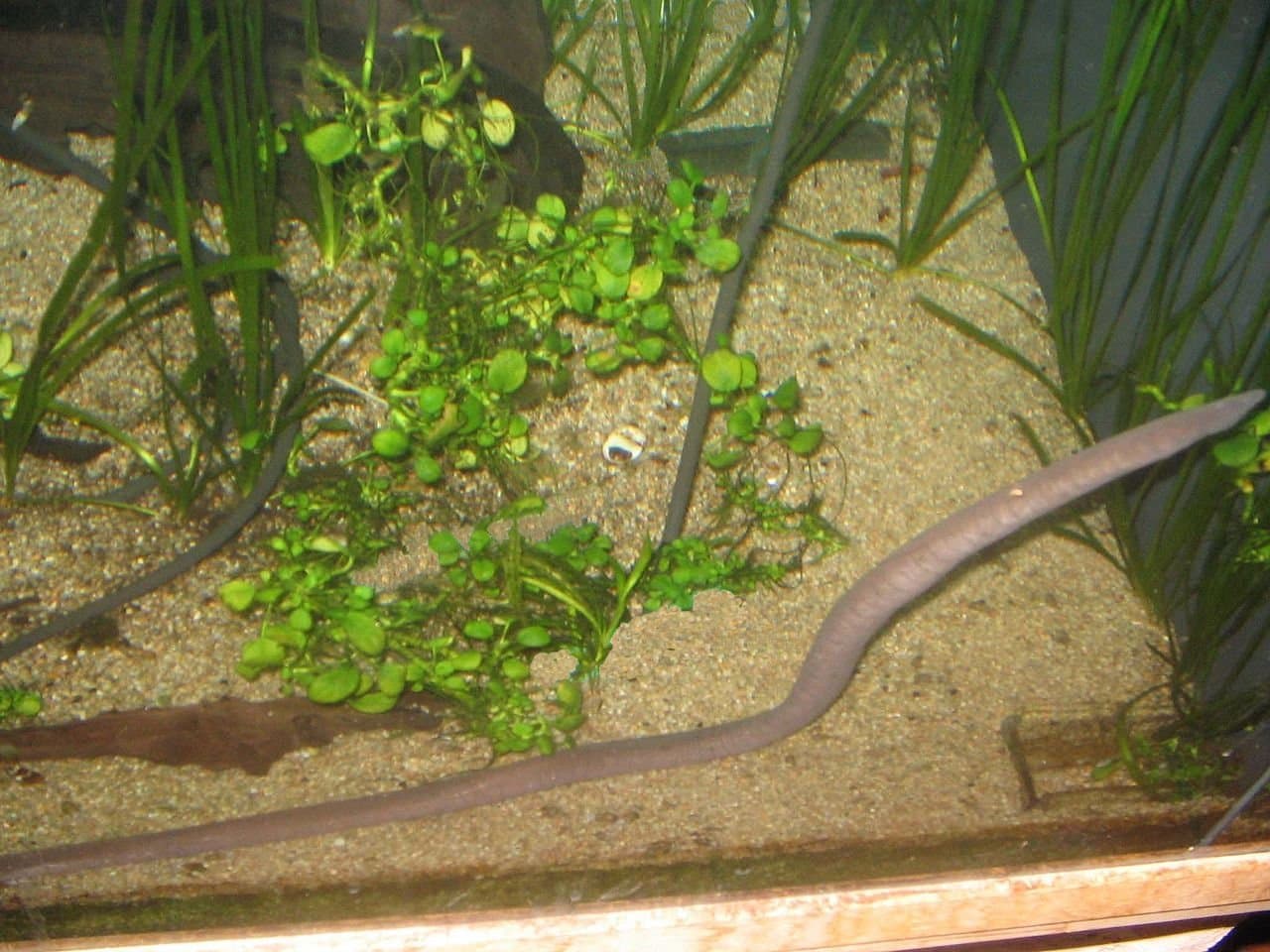
Aquatic Caecilian
Typhlonectes natans
A legless, worm-like South American amphibian, nicknamed the 'rubber eel,' that lives in rivers.
Checking teacher reviews…
About the Aquatic Caecilian
Aquatic caecilians, also called rubber eels, are 18 to 22 inches long with smooth, slimy, dark gray skin and rings around the body. They have no legs. They live in lowland rivers and streams of Colombia and Venezuela, burrowing in sand and leaf litter. They are carnivores that slowly approach, then quickly grab insect larvae, worms and small fish with peg-like teeth.[1]
Quick facts
- Scientific name
- Typhlonectes natans[1]
- Size
- 18 to 22 inches long.[1]
- Lifespan
- 4 to 5 years in the wild; mid-teens in human care.[1]
- Diet
- Carnivore. Insect larvae, worms and small fish.[1]
- Habitat
- Lowland rivers and streams.[1]
- Where it lives
- Colombia and Venezuela.[1]
- Babies
- Live young.[1]
- Conservation status
- Least Concern (IUCN Red List, assessed 2020).[2]
Fun facts
Vocabulary
- amphibian
- A cold-blooded animal, such as a frog or salamander, that usually starts life in water and has moist skin.
- caecilian
- A legless amphibian that looks like a worm.
- tentacle
- A long, flexible body part used to feel or sense.
- carnivore
- An animal that eats mostly meat.
- least concern
- A conservation label meaning a species is widespread and not at risk of dying out soon.
See it in person
- Smithsonian's National ZooWashington, D.C. · AmazoniaSee this animal on the zoo's website ↗
These zoos had this animal when we gathered our information, but animals sometimes move. Check the zoo's website or contact the zoo before you visit.
Sources
- [1] Smithsonian's National Zoo & Conservation Biology Institute. “Aquatic caecilian.” https://nationalzoo.si.edu/animals/aquatic-caecilian (accessed 2026-10-08)
- [2] IUCN Red List of Threatened Species. “Typhlonectes natans (Rio Cauca Caecilian).” https://www.iucnredlist.org/species/59601/85909110 (accessed 2026-10-08)
Facts last checked 2026-10-08.