
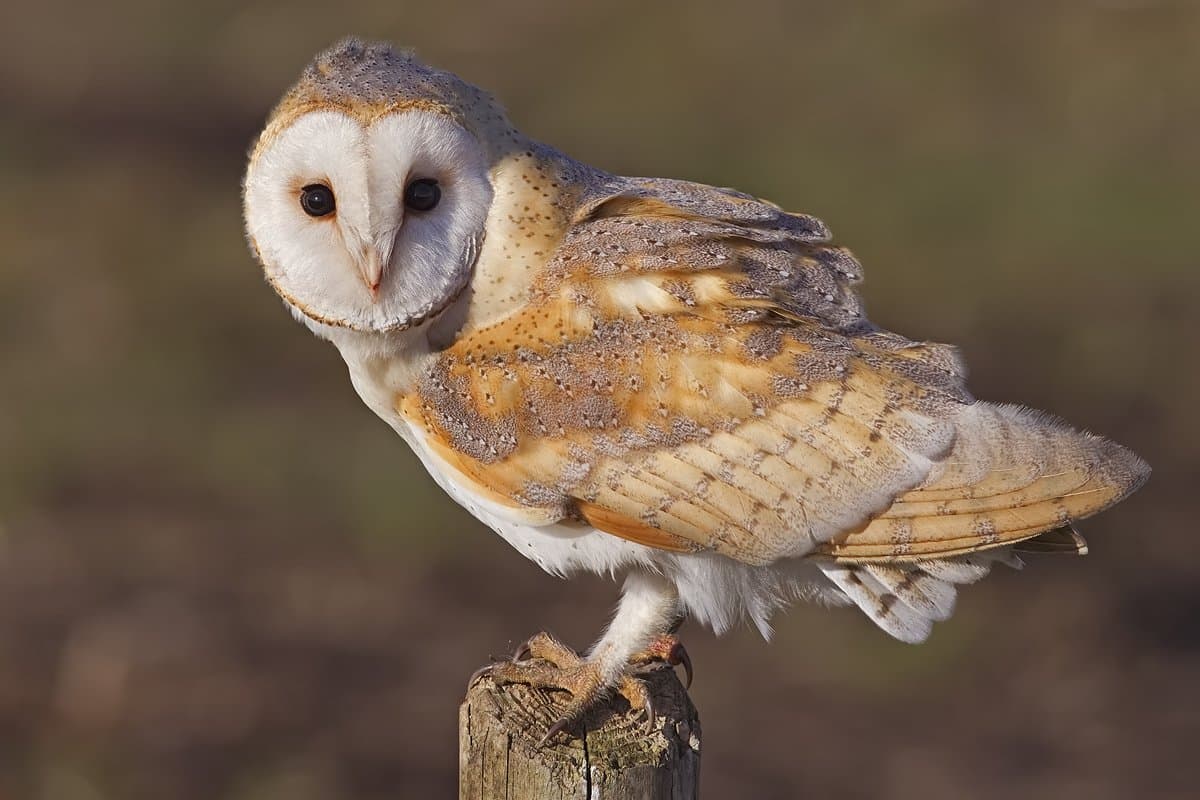
Barn Owl
Tyto alba
A pale owl with a white heart-shaped face, found on every continent except Antarctica, that hunts mice and voles by sound alone.
Checking teacher reviews…
About the Barn Owl
Barn owls are found on every continent except Antarctica, in forests, grasslands, deserts, marshes and even cities. They got their name because they often nest in barns and other buildings. Their backs are light brown, golden or gray, and their heart-shaped face is usually bright white. They eat mostly voles, mice and rats. Barn owls screech instead of hooting.[1]
Quick facts
- Scientific name
- Tyto alba[1]
- Lifespan
- 2 to 5 years in the wild. Up to 15 in human care.[1]
- Diet
- Carnivore. Mostly voles, mice and rats, sometimes frogs, insects and fish.[1]
- Habitat
- Forests, grasslands, deserts, marshes and towns.[1]
- Where it lives
- Every continent except Antarctica.[1]
- Group life
- Nocturnal. Usually found in pairs.[1]
- Babies
- 3 to 6 white eggs, incubated 30 to 34 days by the female.[1]
- Conservation status
- Least Concern (IUCN Red List, assessed 2016).[2]
Fun facts
Vocabulary
- nocturnal
- Active mainly at night.
- owl pellet
- A ball of bones, fur and feathers that an owl coughs up because it can't digest them.
- facial disc
- The flat, round face of an owl, which helps funnel sound to its ears.
- asymmetrical
- Not the same on both sides.
- monogamous
- Having one mate at a time, sometimes for life.
See it in person
- San Francisco Zoo & GardensSan Francisco, California · BirdsSee this animal on the zoo's website ↗
These zoos had this animal when we gathered our information, but animals sometimes move. Check the zoo's website or contact the zoo before you visit.
Sources
- [1] San Francisco Zoo & Gardens. “Barn Owl.” https://www.sfzoo.org/barn-owl/ (accessed 2026-10-02)
- [2] IUCN Red List of Threatened Species. “Tyto alba (Common Barn-owl).” https://www.iucnredlist.org/species/22688504/155542941 (accessed 2026-10-02)
Facts last checked 2026-10-02.


