
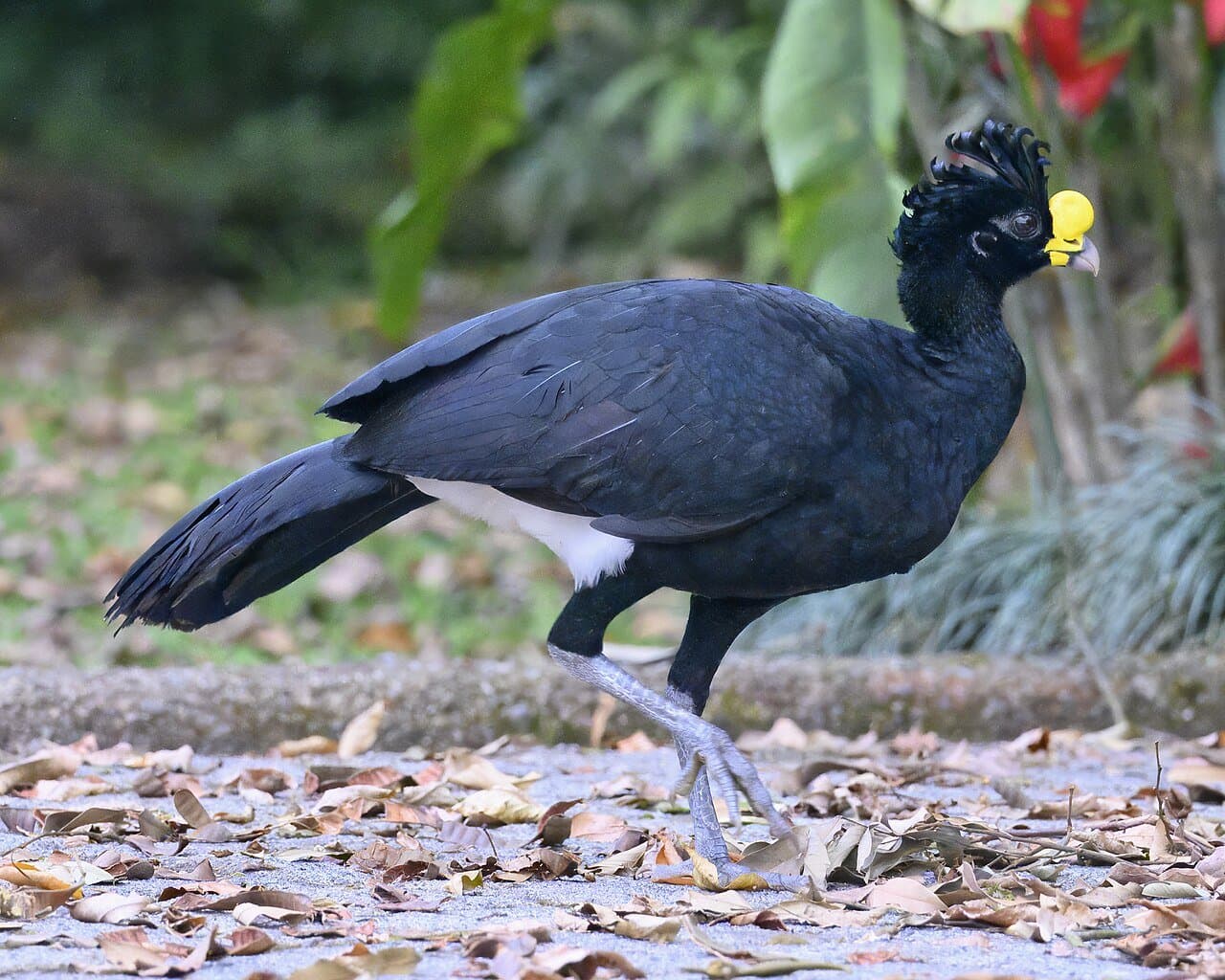
Great Curassow
Crax rubra
A vulnerable fruit-eating forest bird of Mexico, Central America and northwestern South America.
Checking teacher reviews…
About the Great Curassow
Great curassows live in humid evergreen forests, some dry forests and mangroves, from Mexico south through Central America to western Colombia, and very rarely western Ecuador. They mainly eat fruit, and now and then pick insects and small animals from leaves and the forest floor. They are usually seen alone, in pairs or in small groups.[1]
Quick facts
- Scientific name
- Crax rubra[1]
- Diet
- Mostly fruit, with some invertebrates and small vertebrates.[1]
- Habitat
- Humid evergreen forest, some seasonally dry forest, and mangroves.[1]
- Where it lives
- Mexico through Central America to western Colombia, and very rarely western Ecuador.[1]
- Group life
- Seen alone, in pairs or in small groups.[1]
- Conservation status
- Vulnerable (IUCN Red List, assessed 2020). About 40,000 to 50,000 mature birds, decreasing.[2]
Fun facts
Vocabulary
- frugivore
- An animal that eats mostly fruit.
- evergreen forest
- A forest whose trees keep their leaves all year.
- fragmented
- Broken into small, separated pieces.
- subspecies
- A group within a species that lives in a certain area and looks a little different from other groups.
- vulnerable
- A conservation label meaning a species faces a high risk of dying out in the wild.
See it in person
- Montgomery ZooMontgomery, Alabama · South AmericaSee this area on the zoo's website ↗
These zoos had this animal when we gathered our information, but animals sometimes move. Check the zoo's website or contact the zoo before you visit.
Sources
- [1] BirdLife International DataZone. “Great Curassow Crax rubra: species factsheet.” https://datazone.birdlife.org/species/factsheet/great-curassow-crax-rubra (accessed 2026-10-02)
- [2] IUCN Red List of Threatened Species. “Crax rubra (Great Curassow).” https://www.iucnredlist.org/species/22678521/178001922 (accessed 2026-10-02)
Facts last checked 2026-10-02.


