
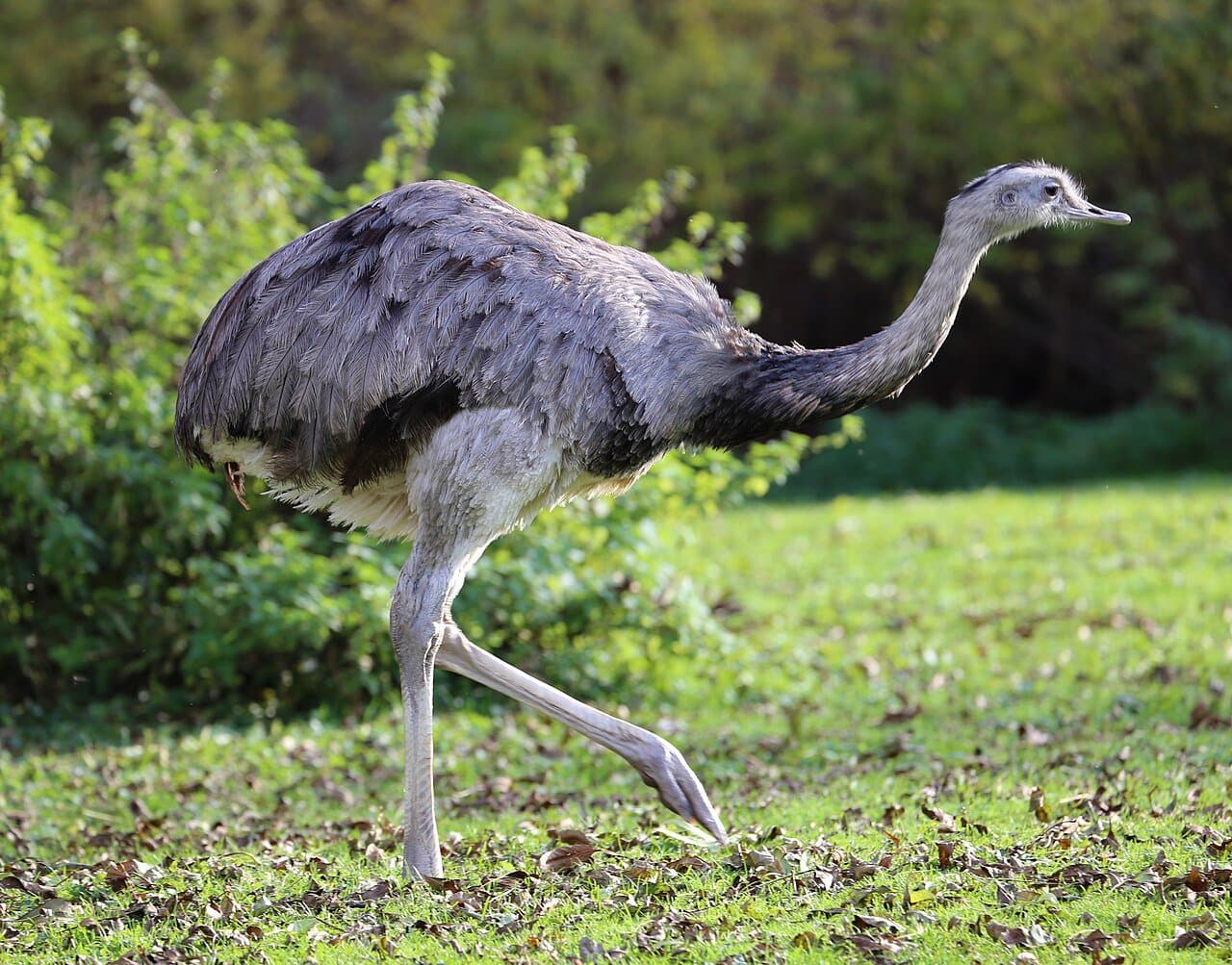
Greater Rhea
Rhea americana
South America's largest bird, a flightless runner related to ostriches; fathers hatch and raise the chicks.
Checking teacher reviews…
About the Greater Rhea
Greater rheas are the largest birds in South America, standing 3 to 5 feet tall and weighing 33 to 66 pounds. They have long necks and legs, three toes on each foot and no tail feathers. They live in grasslands and dry scrub in Brazil, Bolivia, Uruguay, Paraguay and Argentina. They eat broad-leafed plants and clover, plus seeds, fruit, insects and small animals like lizards and frogs.[1]
Quick facts
- Scientific name
- Rhea americana[1]
- Size
- 3 to 5 feet tall.[1]
- Weight
- 33 to 66 pounds.[1]
- Diet
- Omnivore. Broad-leafed plants and clover, plus seeds, roots, fruit, insects and small animals.[1]
- Habitat
- Grasslands and dry scrublands, near water when breeding.[1]
- Where it lives
- Southeastern South America: Brazil, Bolivia, Uruguay, Paraguay and Argentina.[1]
- Group life
- Groups; breeding males are alone part of the year.[1]
- Babies
- Several females lay up to 60 eggs in one male's nest; he incubates them for about 6 weeks.[1]
- Conservation status
- Near Threatened (IUCN Red List, assessed 2022).[2]
Fun facts
Vocabulary
- flightless
- Unable to fly.
- rudder
- A flat part used to steer a boat or plane.
- incubate
- To keep eggs warm so they can hatch.
- omnivore
- An animal that eats both plants and other animals.
- near threatened
- A conservation label meaning a species may soon be at risk of dying out if things don't improve.
See it in person
- Smithsonian's National ZooWashington, D.C. · Bird HouseSee this animal on the zoo's website ↗
These zoos had this animal when we gathered our information, but animals sometimes move. Check the zoo's website or contact the zoo before you visit.
Sources
- [1] Smithsonian's National Zoo & Conservation Biology Institute. “Greater rhea.” https://nationalzoo.si.edu/animals/greater-rhea (accessed 2026-10-08)
- [2] IUCN Red List of Threatened Species. “Rhea americana (Greater Rhea).” https://www.iucnredlist.org/species/22678073/219615764 (accessed 2026-10-08)
Facts last checked 2026-10-08.


