
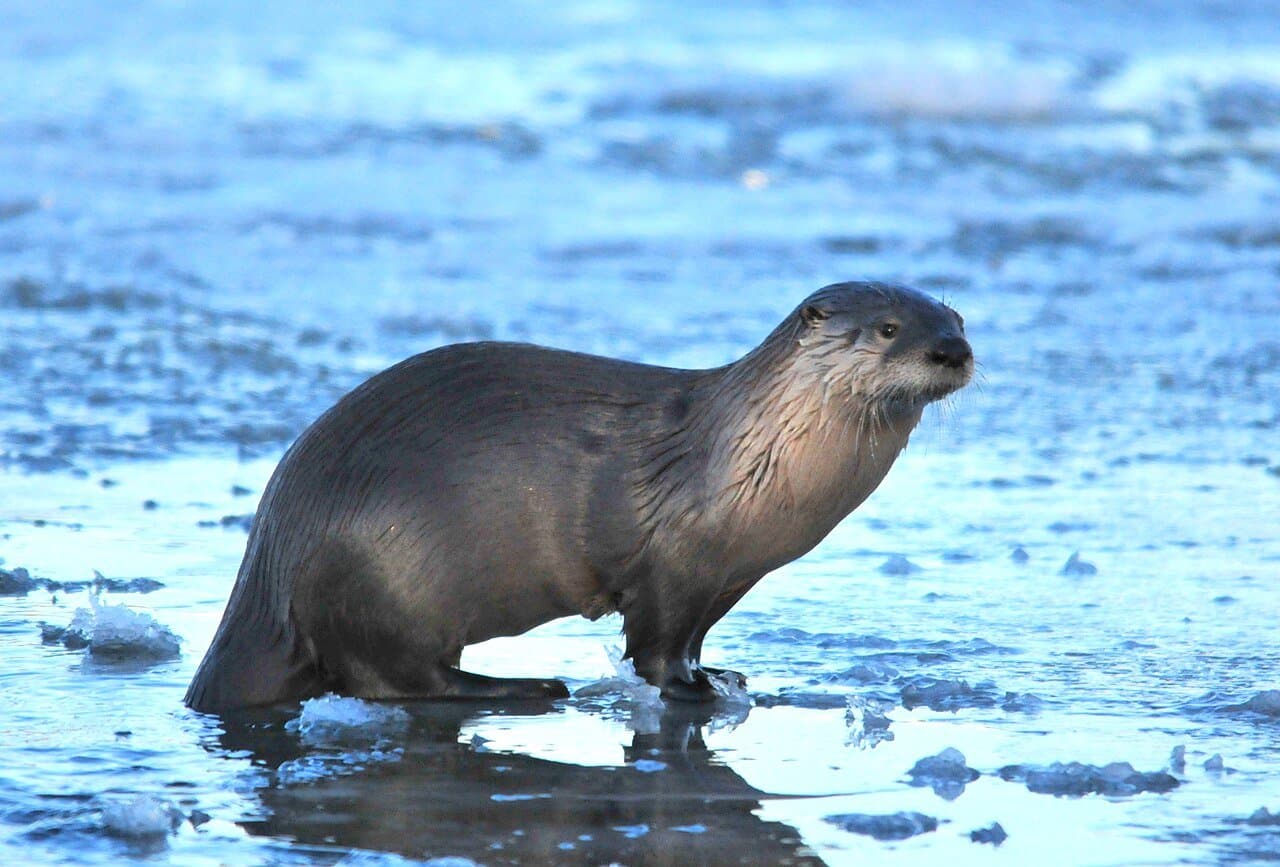
North American River Otter
Lontra canadensis
A playful, streamlined otter of North American rivers and wetlands that slides, swims and eats up to a fifth of its weight each day.
Checking teacher reviews…
About the North American River Otter
North American river otters have long, streamlined bodies, paddle-like tails, webbed feet and nostrils that close underwater. Their thick, waterproof fur keeps them warm in cold water. They live in rivers, marshes, swamps and estuaries across North America, but they avoid polluted water. They eat fish, amphibians, crustaceans, turtles, eggs and small mammals.[1]
Quick facts
- Scientific name
- Lontra canadensis[1]
- Lifespan
- 8 to 9 years in the wild; up to 20 in human care.[1]
- Diet
- Carnivore. Fish, amphibians, crustaceans, turtles, eggs and small mammals.[1]
- Habitat
- Rivers, marshes, swamps and estuaries with fresh water.[1]
- Where it lives
- North America.[1]
- Group life
- Mothers with pups, or bachelor groups of males. Active day and night.[1]
- Babies
- Usually 2 or 3 pups.[1]
- Conservation status
- Least Concern (IUCN Red List, assessed 2020).[2]
Fun facts
Vocabulary
- metabolism
- How fast an animal's body uses energy.
- cathemeral
- Active at different times of day and night.
- estuary
- Where a river meets the sea.
- webbed feet
- Feet with skin between the toes for swimming.
- least concern
- A conservation label meaning a species is widespread and not at risk of dying out soon.
See it in person
- Oakland ZooOakland, California · Children's ZooSee this animal on the zoo's website ↗
These zoos had this animal when we gathered our information, but animals sometimes move. Check the zoo's website or contact the zoo before you visit.
Sources
- [1] Oakland Zoo. “North American River Otter.” https://www.oaklandzoo.org/animals/north-american-river-otter/ (accessed 2026-10-02)
- [2] IUCN Red List of Threatened Species. “Lontra canadensis (North American River Otter).” https://www.iucnredlist.org/species/12302/164577078 (accessed 2026-10-02)
Facts last checked 2026-10-02.

