
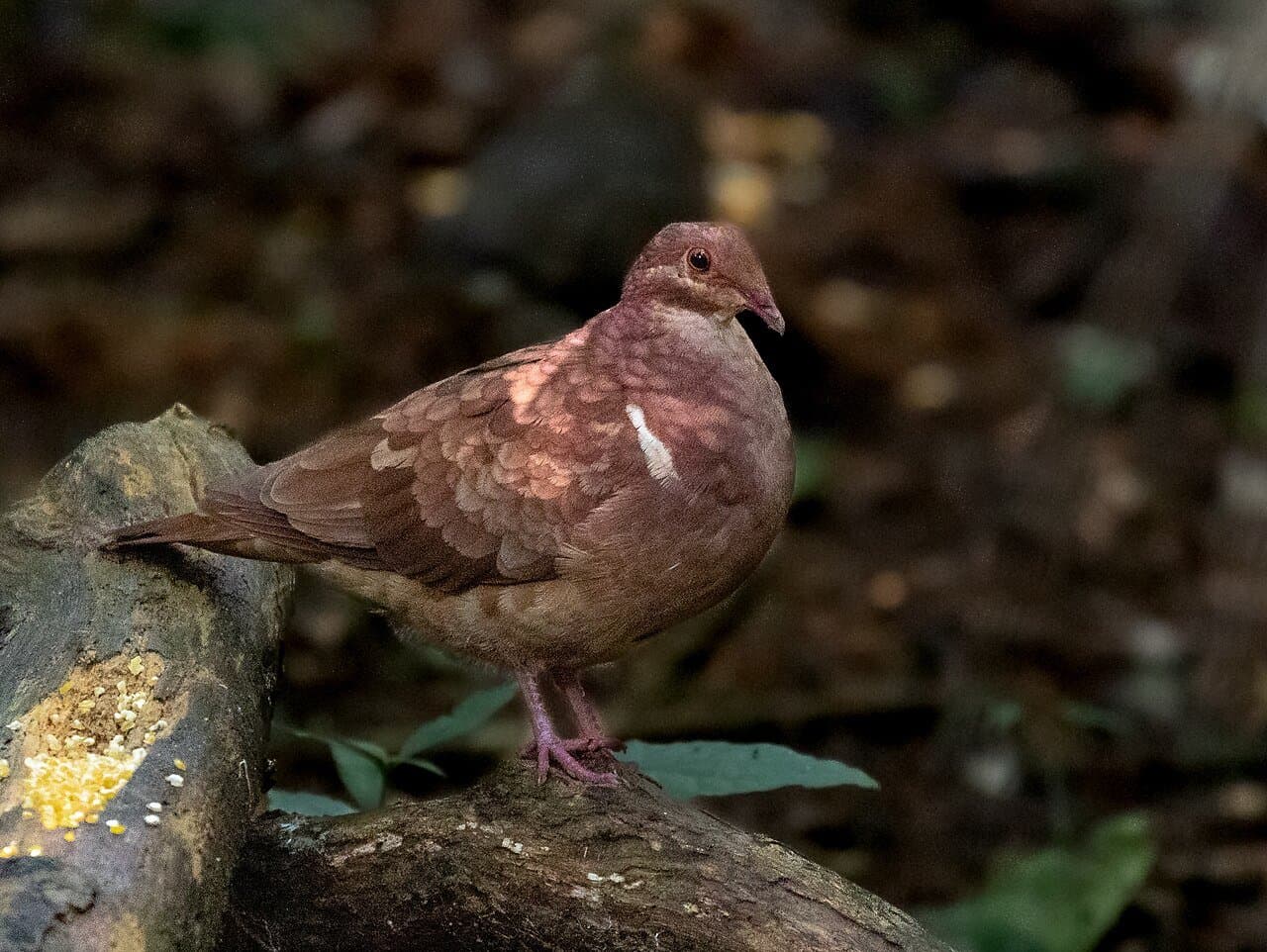
Ruddy Quail-dove
Geotrygon montana
A shy, cinnamon-colored tropical forest dove that walks quietly on the ground looking for fruit and seeds.
Checking teacher reviews…
About the Ruddy Quail-dove
Ruddy quail-doves are 9 to 10 inches long and weigh 4 to 5 ounces, about as much as an apple. Males are rusty red-brown with a light stripe under the eye. They live in woodlands, tropical forests and shady farms from Central America and the Caribbean into tropical South America. They walk quietly on the forest floor looking for fruit, seeds and insects.[1]
Quick facts
- Scientific name
- Geotrygon montana[1]
- Size
- 9 to 10 inches long.[1]
- Weight
- 4 to 5 ounces.[1]
- Diet
- Fruit, seeds and insects.[1]
- Habitat
- Woodlands, tropical forests and shady farms.[1]
- Where it lives
- Central America and the Caribbean into tropical South America.[1]
- Group life
- Mostly solitary; pairs to nest.[1]
- Babies
- About 2 eggs, incubated by both parents for about 11 days.[1]
- Conservation status
- Least Concern (IUCN Red List, assessed 2019).[2]
Fun facts
Vocabulary
- dove
- A small pigeon.
- forest floor
- The ground of a forest, covered with leaves and plants.
- incubate
- To keep eggs warm so they can hatch.
- clutch
- A group of eggs laid at one time.
- least concern
- A conservation label meaning a species is widespread and not at risk of dying out soon.
See it in person
- Smithsonian's National ZooWashington, D.C. · Bird HouseSee this animal on the zoo's website ↗
These zoos had this animal when we gathered our information, but animals sometimes move. Check the zoo's website or contact the zoo before you visit.
Sources
- [1] Smithsonian's National Zoo & Conservation Biology Institute. “Ruddy quail-dove.” https://nationalzoo.si.edu/animals/ruddy-quail-dove (accessed 2026-10-08)
- [2] IUCN Red List of Threatened Species. “Geotrygon montana (Ruddy Quail-Dove).” https://www.iucnredlist.org/species/22690966/139747376 (accessed 2026-10-08)
Facts last checked 2026-10-08.

