
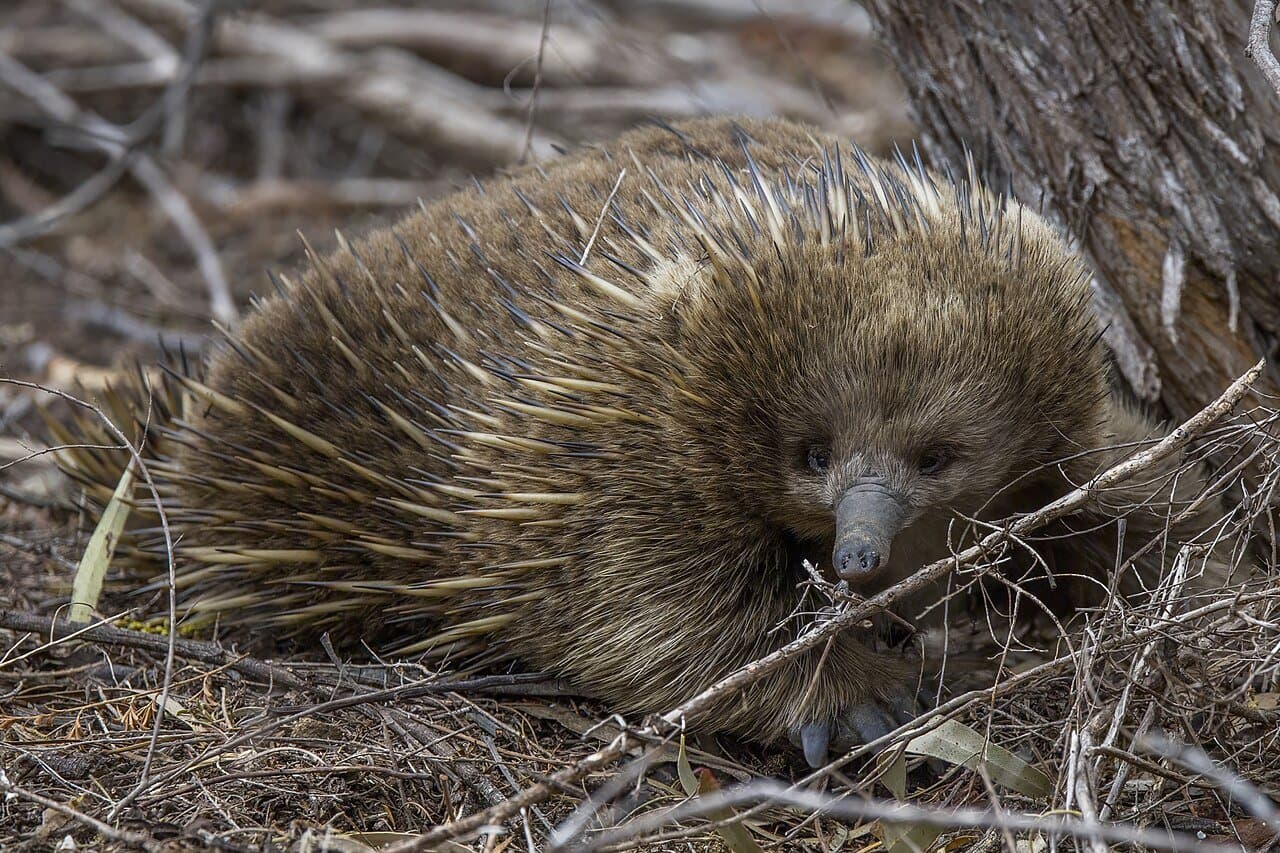
Short-Beaked Echidna
Tachyglossus aculeatus
A spiny, egg-laying mammal of Australia and New Guinea that slurps up ants and termites with a long, sticky tongue.
Checking teacher reviews…
About the Short-Beaked Echidna
Short-beaked echidnas live in scrubland, deserts and mountain forests throughout Australia, including Tasmania, and on New Guinea. Their dark fur is almost hidden by 2-inch spines. They sniff out food with a long beak that can also sense the electric signals of insects, then tear into nests with sharp claws. They eat ants, termites and earthworms.[1]
Quick facts
- Scientific name
- Tachyglossus aculeatus[1]
- Diet
- Ants, termites and earthworms.[1]
- Habitat
- Scrubland, desert and mountain forest.[1]
- Where it lives
- Australia, including Tasmania, and New Guinea.[1]
- Group life
- Solitary.[1]
- Babies
- One egg; the baby, called a puggle, hatches in 10 days.[1]
- Conservation status
- Least Concern (IUCN Red List, assessed 2015).[2]
Fun facts
Vocabulary
- monotreme
- A mammal that lays eggs, like an echidna or platypus.
- puggle
- A baby echidna.
- quill
- A stiff, sharp spine.
- pouch
- A pocket of skin on an animal's belly where babies grow.
- least concern
- A conservation label meaning a species is widespread and not at risk of dying out soon.
See it in person
- Omaha's Henry Doorly Zoo and AquariumOmaha, Nebraska · Mahoney Kingdoms of the NightSee this area on the zoo's website ↗
These zoos had this animal when we gathered our information, but animals sometimes move. Check the zoo's website or contact the zoo before you visit.
Sources
- [1] San Diego Zoo Wildlife Alliance. “Echidna.” https://animals.sandiegozoo.org/animals/echidna (accessed 2026-10-02)
- [2] IUCN Red List of Threatened Species. “Tachyglossus aculeatus (Short-beaked Echidna).” https://www.iucnredlist.org/species/41312/21964662 (accessed 2026-10-02)
Facts last checked 2026-10-02.