
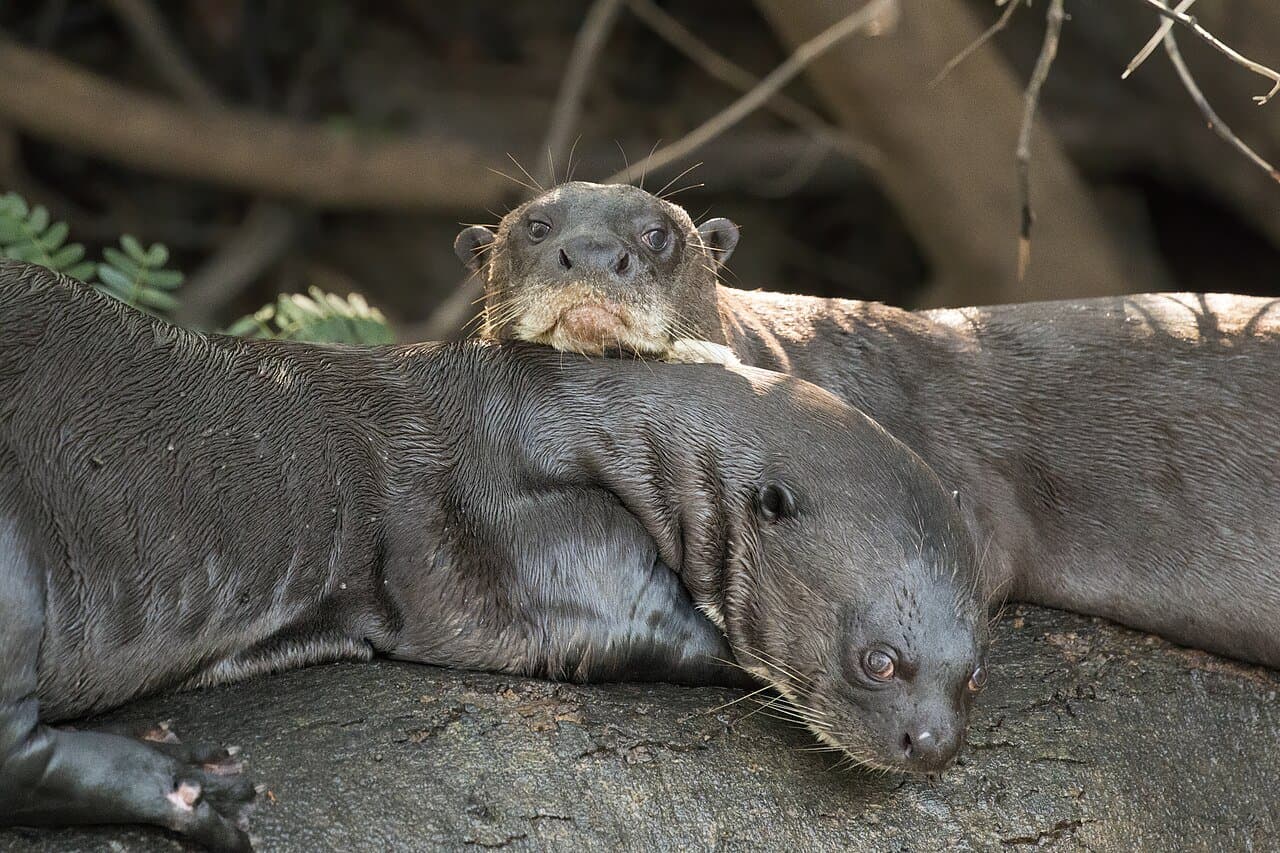
Giant Otter
Pteronura brasiliensis
The longest otter in the world, a fish-hunting "river wolf" of the Amazon that lives and hunts in family groups.
Checking teacher reviews…
About the Giant Otter
Giant otters live in rivers, streams and wetlands across almost the whole Amazon Basin and north into countries like Suriname and Guyana. Males are 5 to 6 feet long. Thick fur keeps their skin dry while they swim, and long whiskers help them feel for prey in murky water. They eat mostly fish, plus prawns, frogs, small caimans and snakes.[1]
Quick facts
- Scientific name
- Pteronura brasiliensis[1]
- Size
- Males 5 to 6 feet long. Tail can be longer than 27 inches.[1]
- Weight
- Males 55 to 70 pounds. Females are slightly smaller.[1]
- Lifespan
- About 10 to 12 years on average.[1]
- Diet
- Carnivore. Mostly fish, plus prawns, frogs, small caimans and snakes.[1]
- Habitat
- Rivers, streams and wetlands.[1]
- Where it lives
- The Amazon Basin and the Guiana Shield, in countries such as Suriname and Guyana.[1]
- Group life
- Family groups of up to 10. Active during the day.[1]
- Babies
- Pregnancy lasts 65 to 70 days. One to five pups, usually two.[1]
- Conservation status
- Endangered (IUCN Red List, assessed 2020).[2]
Fun facts
Vocabulary
- mustelid
- A member of the weasel family, which includes otters, mink and badgers.
- predator
- An animal that hunts other animals for food.
- whiskers
- Long, stiff hairs on an animal's face that sense touch and movement.
- murky
- Dark and cloudy, hard to see through.
- endangered
- A conservation label meaning a species faces a very high risk of dying out in the wild.
See it in person
- Zoo AtlantaAtlanta, Georgia · All AnimalsSee this animal on the zoo's website ↗
Sources
- [1] Zoo Atlanta. “Giant Otter.” https://zooatlanta.org/animal/giant-otter/ (accessed 2026-10-02)
- [2] IUCN Red List of Threatened Species. “Pteronura brasiliensis (Giant Otter).” https://www.iucnredlist.org/species/18711/222719180 (accessed 2026-10-02)
Facts last checked 2026-10-02.