
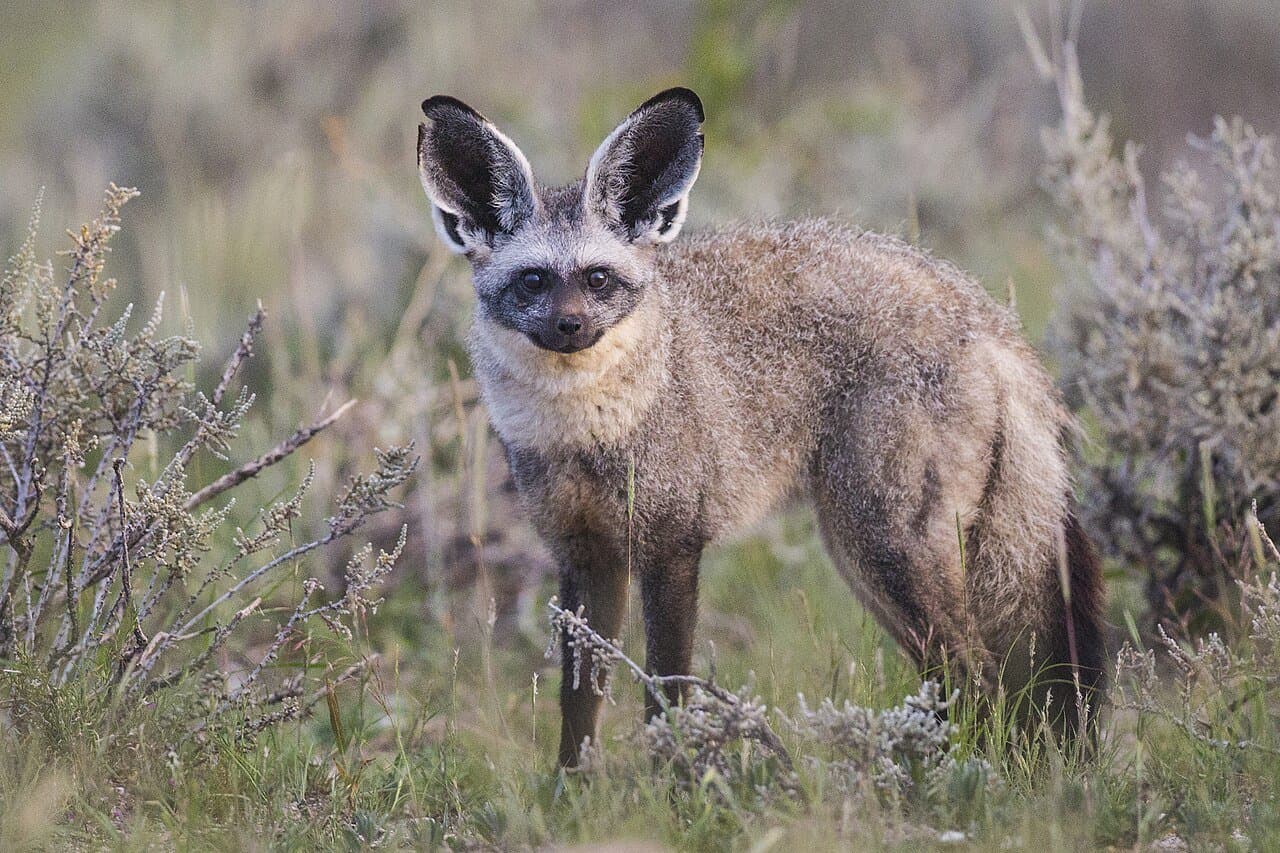
Bat-eared Fox
Otocyon megalotis
An African fox with huge ears that can hear termites underground, and more teeth than almost any other mammal.
Checking teacher reviews…
About the Bat-eared Fox
Bat-eared foxes weigh 6 to 10 pounds, with bodies 18 to 26 inches long and a 12-inch tail. They live in short-grass plains, savannas and dry scrublands of Africa. About 90 to 95 percent of what they eat is insects, especially harvester termites, plus beetles and grubs. They rest in burrows during the day and come out at night.[1]
Quick facts
- Scientific name
- Otocyon megalotis[1]
- Size
- Body 18 to 26 inches, plus a 12-inch tail.[1]
- Weight
- 6 to 10 pounds.[1]
- Lifespan
- About 6 years in the wild; up to 13 in human care.[1]
- Diet
- Mostly insects, especially harvester termites; sometimes small animals and fruit.[1]
- Habitat
- Short-grass plains, savannas and dry scrublands.[1]
- Where it lives
- Africa.[1]
- Group life
- Pairs or small family groups. Nocturnal.[1]
- Babies
- 1 to 6 pups after a 60- to 70-day pregnancy.[1]
- Conservation status
- Least Concern (IUCN Red List, assessed 2014).[2]
Fun facts
Vocabulary
- insectivore
- An animal that eats mainly insects.
- vixen
- A female fox.
- savanna
- A grassland with scattered trees.
- nocturnal
- Active mainly at night.
- least concern
- A conservation label meaning a species is widespread and not at risk of dying out soon.
See it in person
- Smithsonian's National ZooWashington, D.C. · Great CatsSee this animal on the zoo's website ↗
These zoos had this animal when we gathered our information, but animals sometimes move. Check the zoo's website or contact the zoo before you visit.
Sources
- [1] Smithsonian's National Zoo & Conservation Biology Institute. “Bat-eared fox.” https://nationalzoo.si.edu/animals/bat-eared-fox (accessed 2026-10-08)
- [2] IUCN Red List of Threatened Species. “Otocyon megalotis (Bat-eared Fox).” https://www.iucnredlist.org/species/15642/46123809 (accessed 2026-10-08)
Facts last checked 2026-10-08.


