
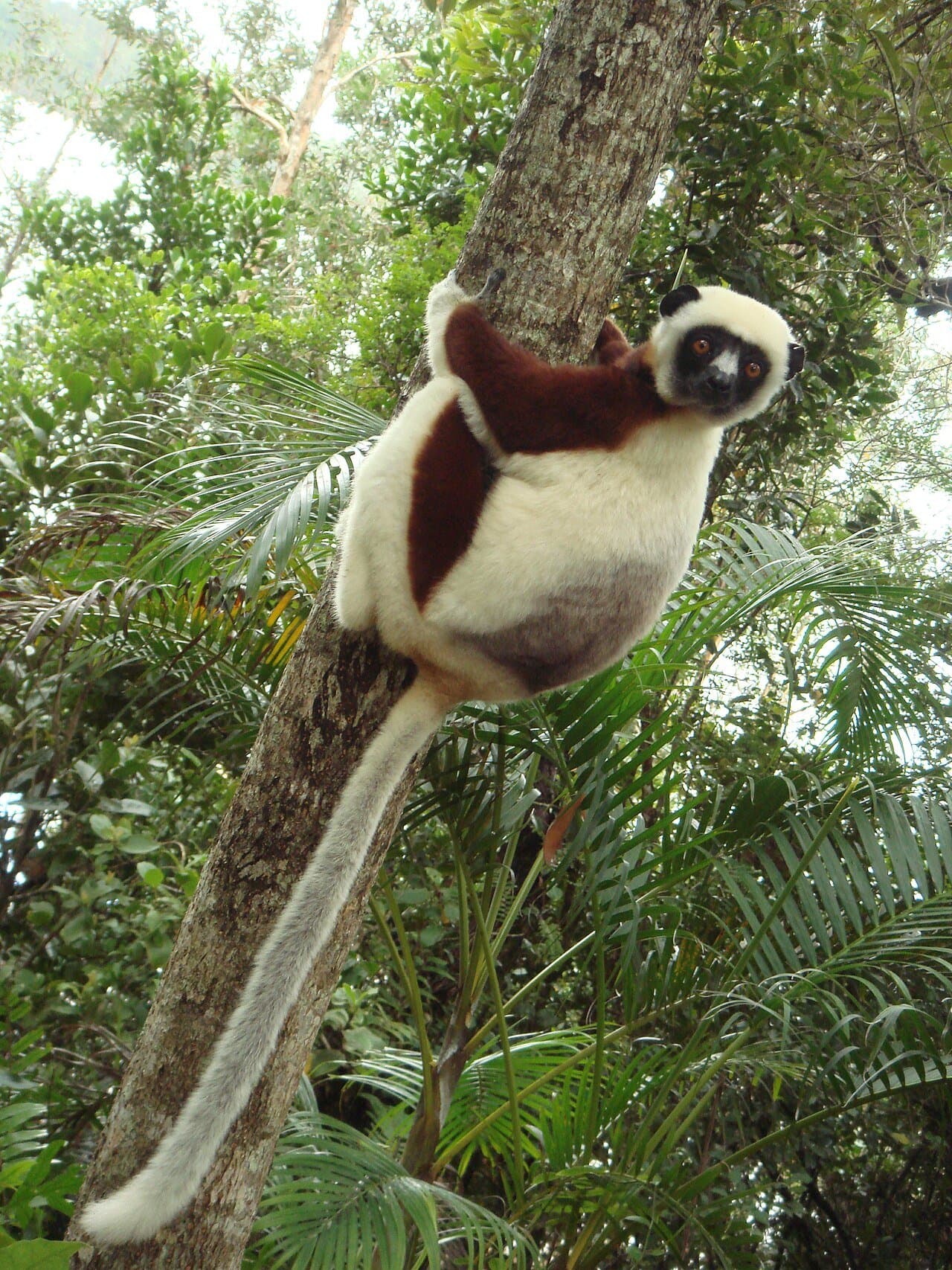
Coquerel's Sifaka
Propithecus coquereli
A white-and-brown lemur of northwestern Madagascar that leaps between trees and hops sideways on the ground.
Checking teacher reviews…
About the Coquerel's Sifaka
Coquerel's sifakas live in dry forests and coastal mangroves of northwestern Madagascar. They are mostly white with brown patches on the chest, arms and thighs, a bare black face and yellow eyes. Long, powerful legs let them leap 20 to 30 feet from tree to tree. On the ground they hop upright on two legs with their arms out. They eat mostly leaves, plus fruit, flowers, seeds and bark.[1]
Quick facts
- Scientific name
- Propithecus coquereli[1]
- Lifespan
- 25 to 30 years.[1]
- Diet
- Mostly leaves, plus fruit, flowers, seeds and bark.[1]
- Habitat
- Dry deciduous and mixed forest, and coastal mangroves.[1]
- Where it lives
- Northwestern Madagascar.[1]
- Group life
- Groups of 3 to 10, led by females. Active during the day.[1]
- Conservation status
- Critically Endangered (IUCN Red List, assessed 2018).[2]
Fun facts
Vocabulary
- lemur
- A primate found in the wild only on Madagascar.
- vertical clinging and leaping
- Moving by holding onto tree trunks upright and jumping between them.
- mangrove
- A tree or swamp forest that grows in salty water along tropical coasts.
- matriarchal
- Led by females.
- critically endangered
- A conservation label meaning a species faces an extremely high risk of dying out in the wild.
See it in person
- San Francisco Zoo & GardensSan Francisco, California · MammalsSee this animal on the zoo's website ↗
Sources
- [1] San Francisco Zoo & Gardens. “Coquerel's sifaka.” https://www.sfzoo.org/coquerels-sifaka/ (accessed 2026-10-02)
- [2] IUCN Red List of Threatened Species. “Propithecus coquereli (Coquerel's Sifaka).” https://www.iucnredlist.org/species/18355/115572275 (accessed 2026-10-02)
Facts last checked 2026-10-02.
More Lemurs
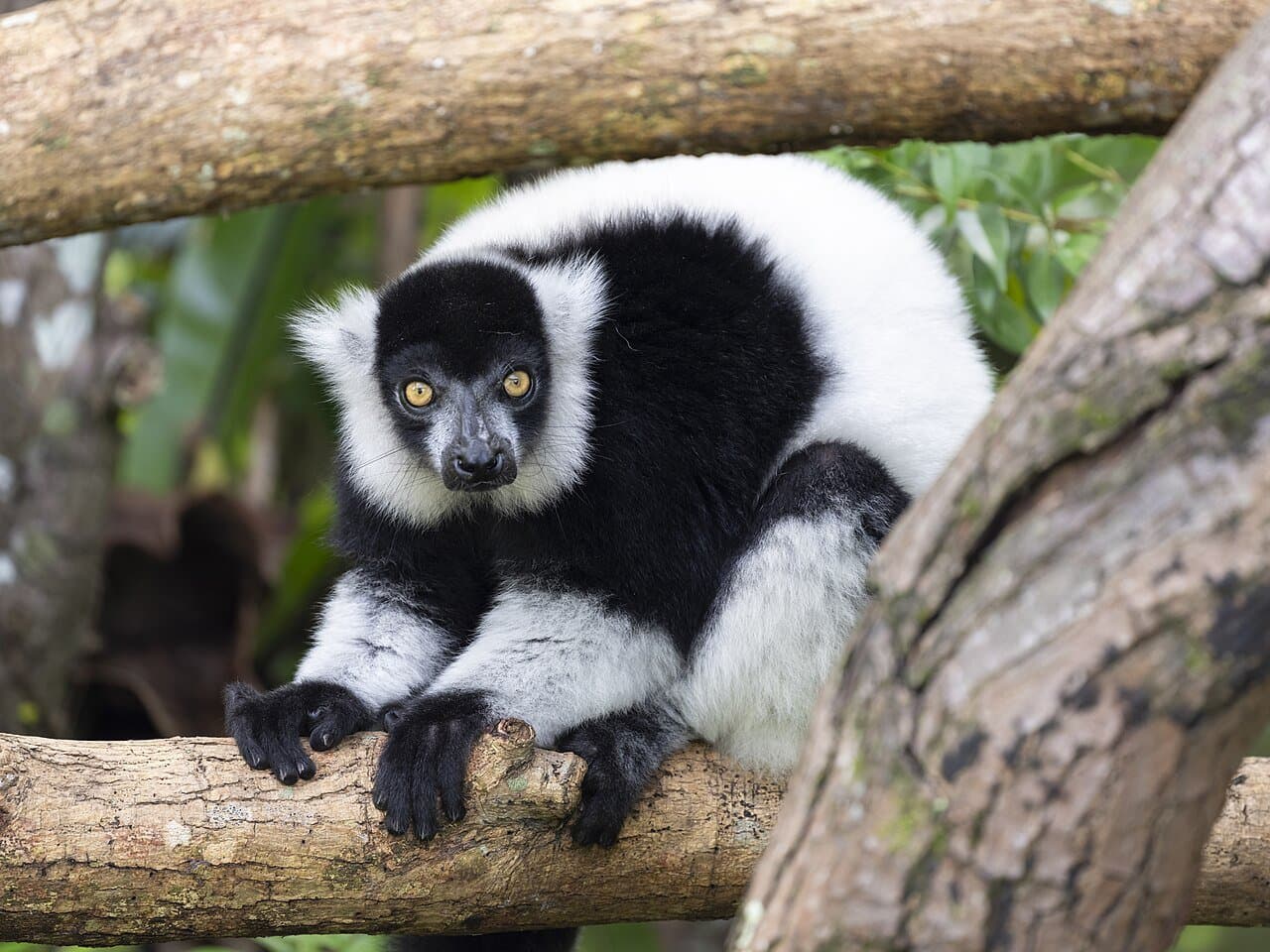 Black-and-White Ruffed LemurVarecia variegataThe largest lemur, a critically endangered fruit-eater of eastern Madagascar's rainforests that raises its babies in nests.
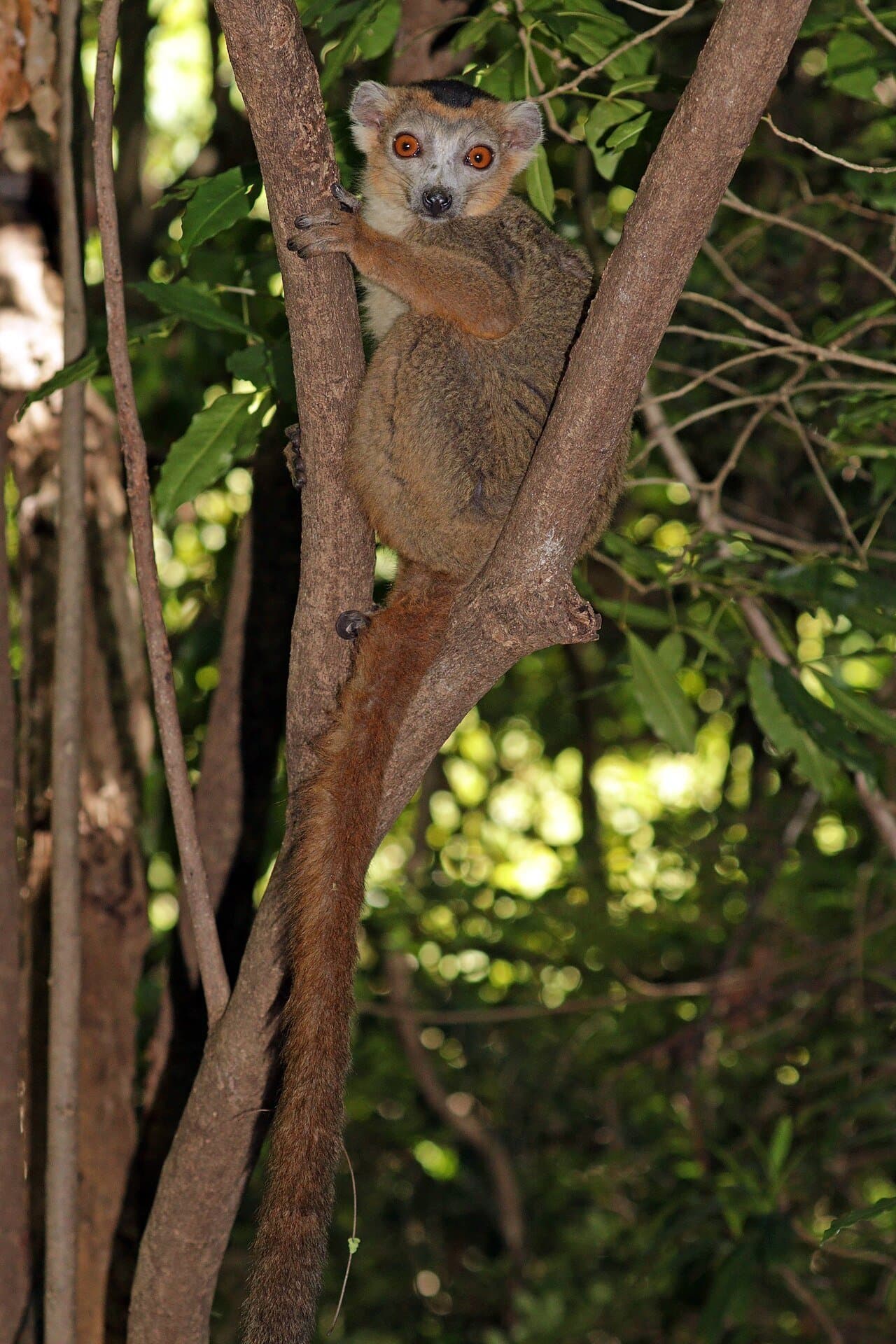 Crowned LemurEulemur coronatusA small, fruit-eating lemur of northern Madagascar whose males and females look so different they were once easy to tell apart at a glance.
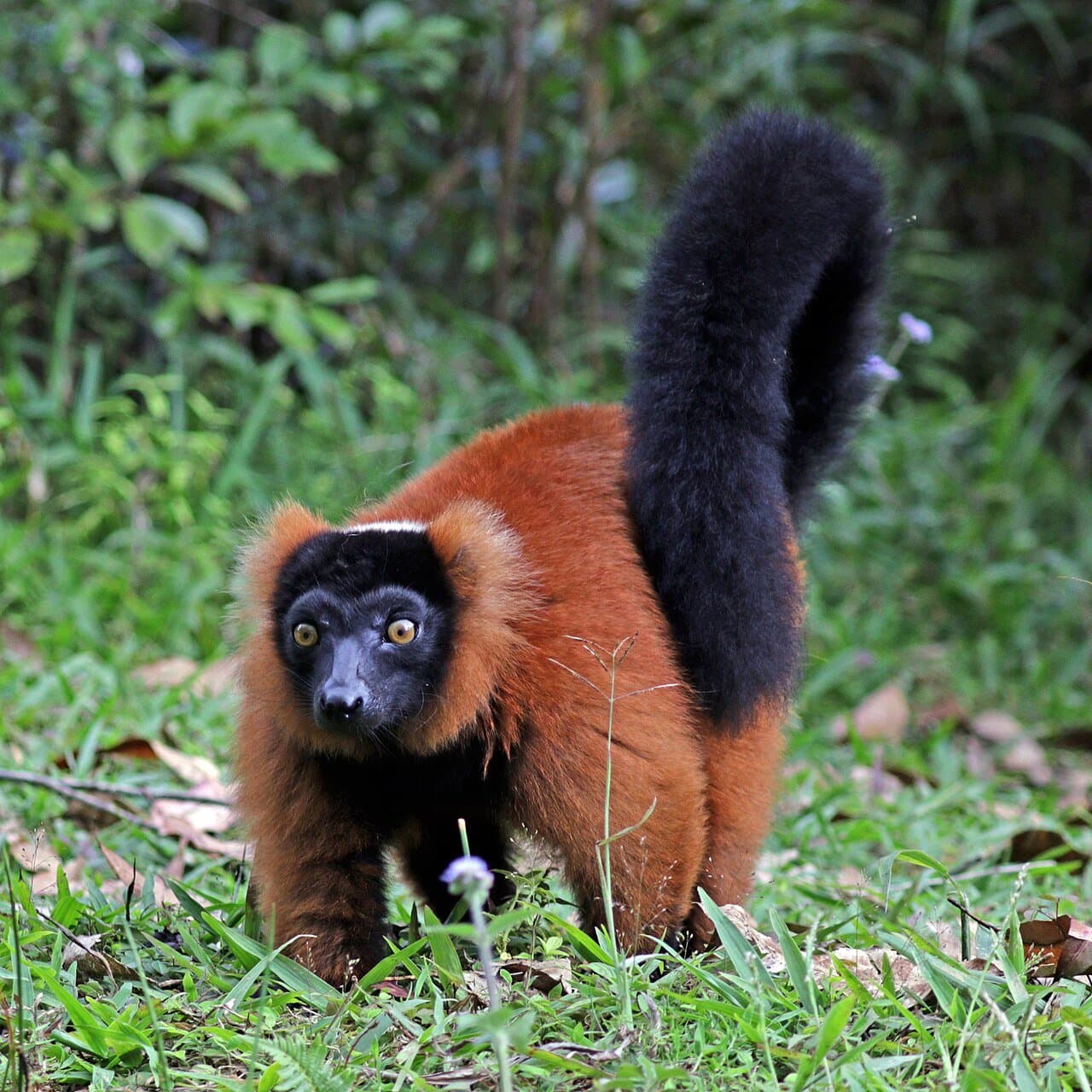 Red Ruffed LemurVarecia rubraA critically endangered orange-red lemur with a black face and a thick neck ruff, found only on Madagascar's Masoala Peninsula.
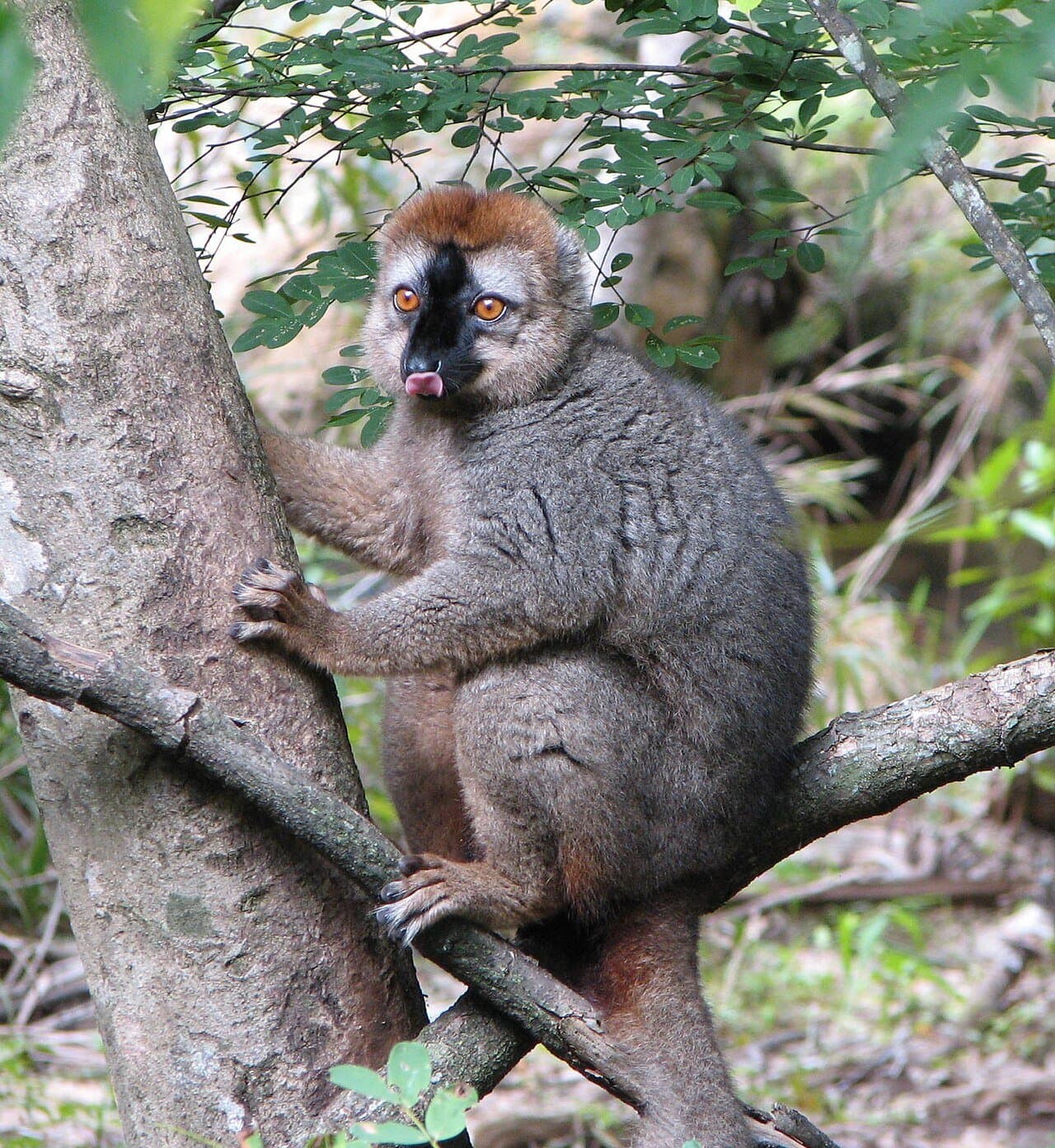 Red-Fronted Brown LemurEulemur rufifronsA fruit-eating Madagascar lemur whose males and females are different colors, and one of the few lemurs not led by females.
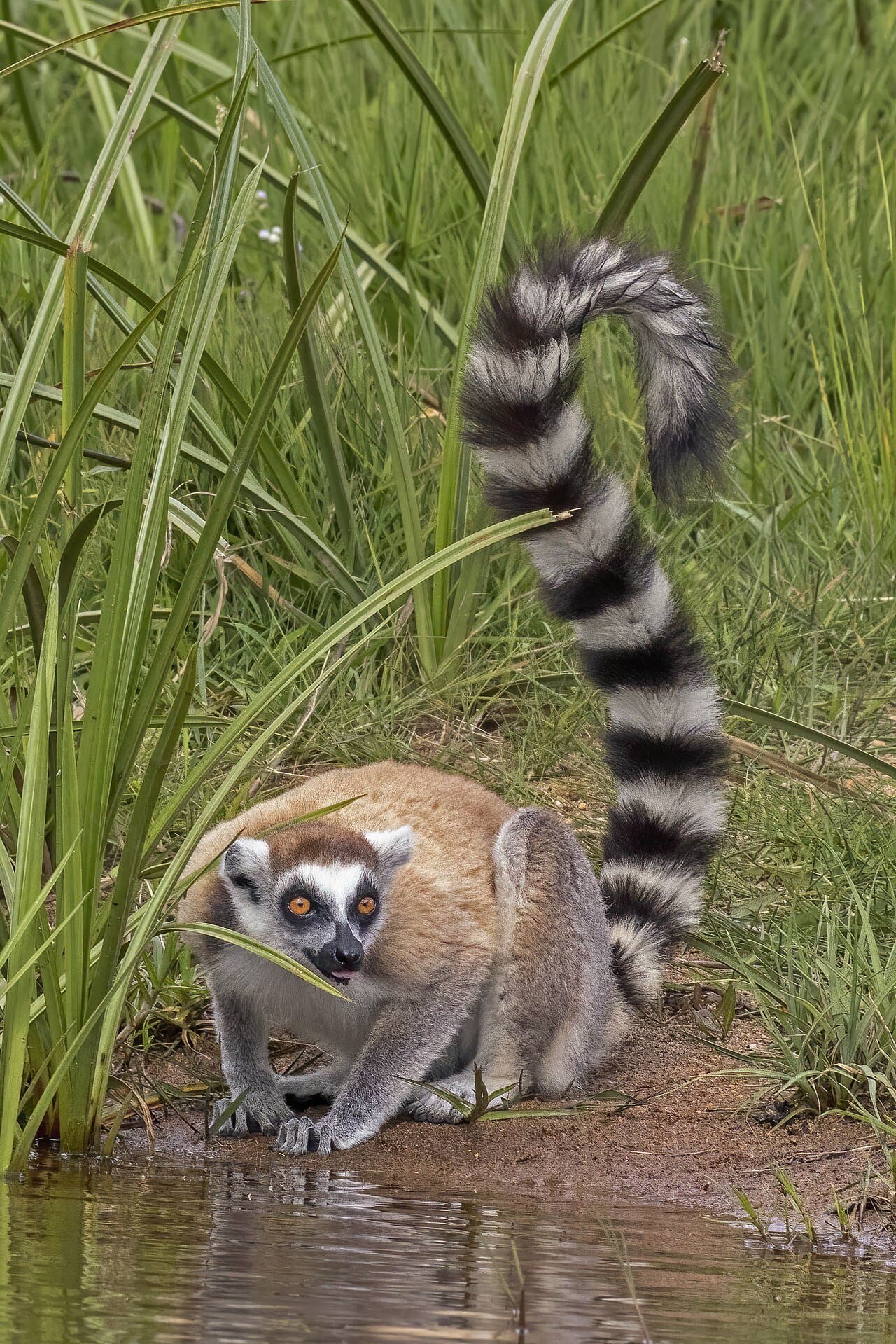 Ring-Tailed LemurLemur cattaAn endangered primate of southwestern Madagascar with a black-and-white striped tail, female-led troops and a love of sunbathing.