
Animals at San Francisco Zoo & Gardens
Every animal below can be seen at San Francisco Zoo & Gardens in San Francisco, California. Use these pages to prepare for a field trip or follow up afterward.
Visit the San Francisco Zoo & Gardens website ↗Mammals (32)
See this area on the zoo's website ↗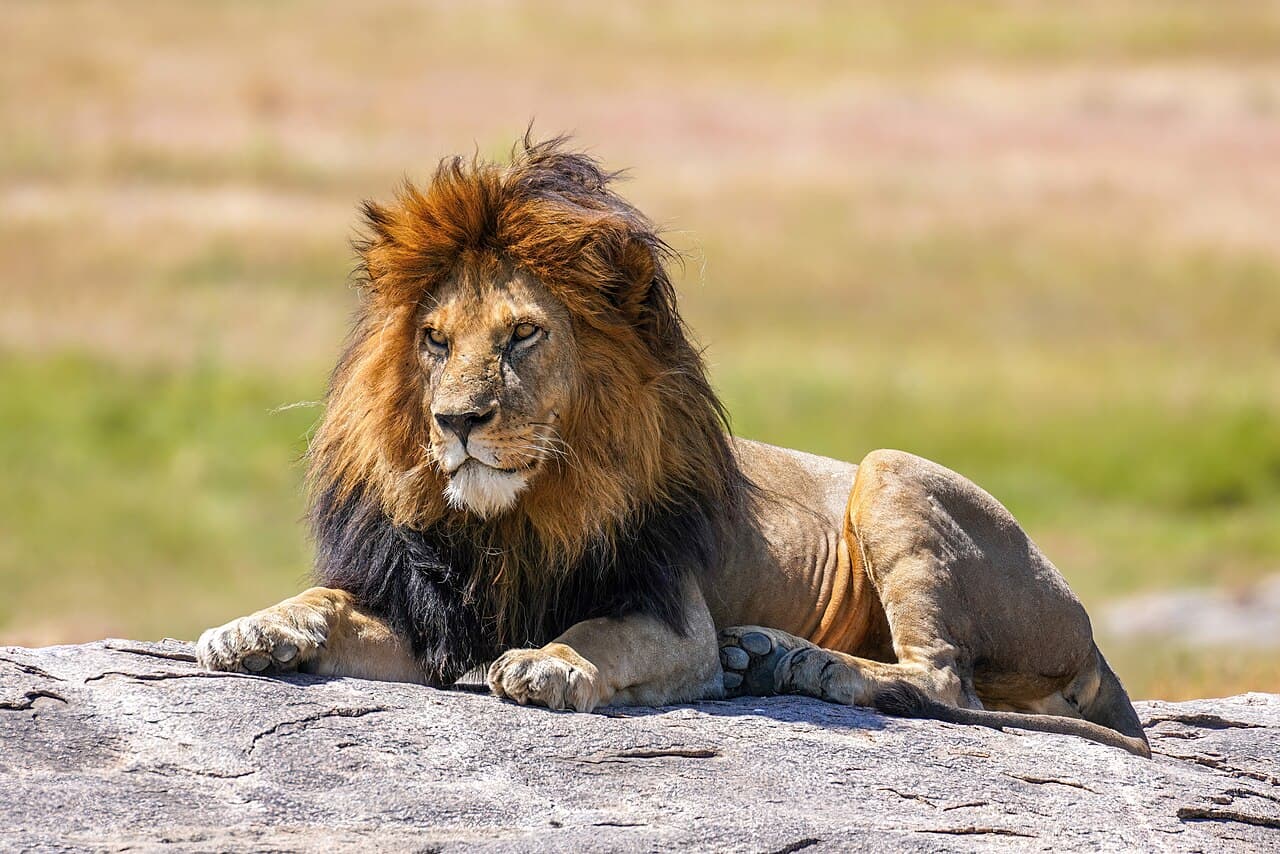 LionPanthera leoA large wild cat of the African savanna that lives in family groups called prides.
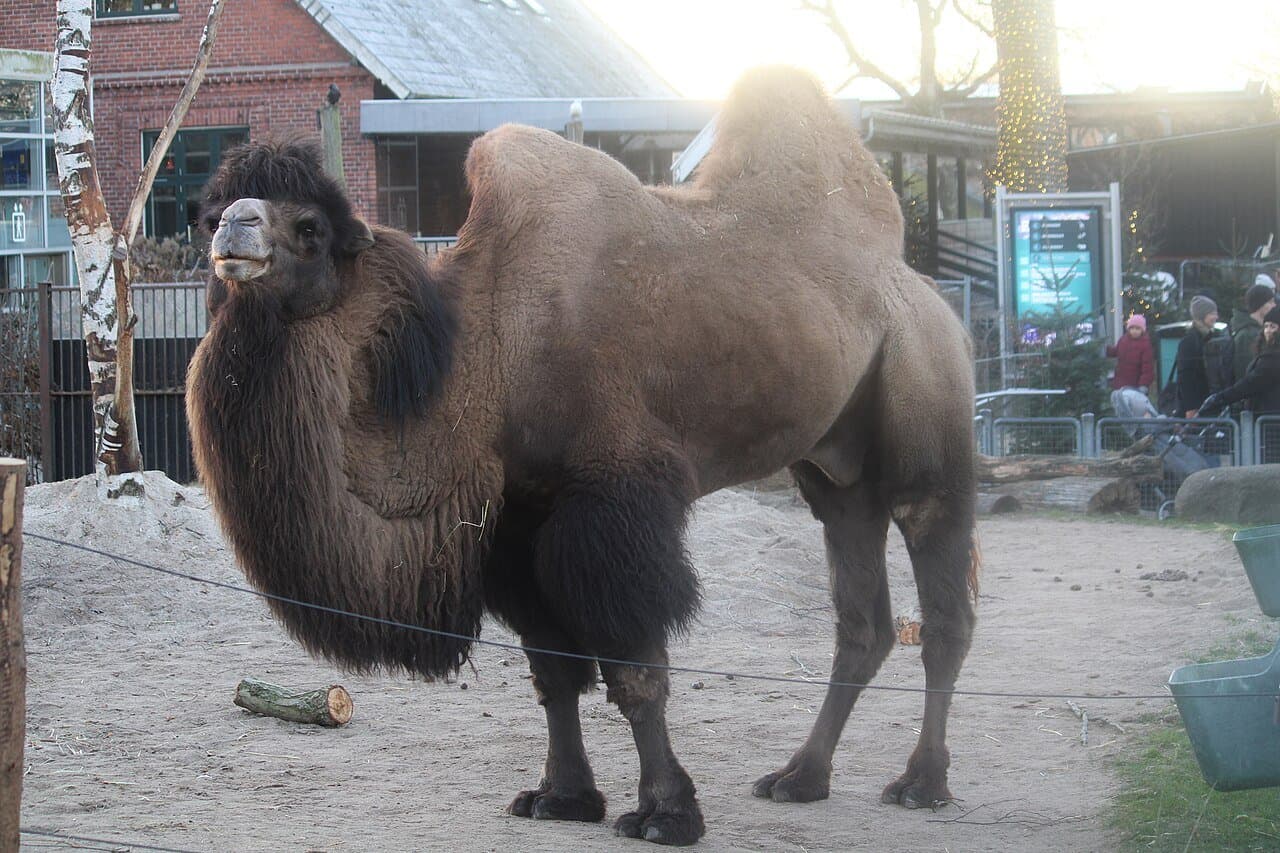 Bactrian CamelCamelus bactrianus (domestic); wild relative Camelus ferusA two-humped camel of Central Asian deserts, domesticated thousands of years ago as a pack animal that can go a long time without food or water.
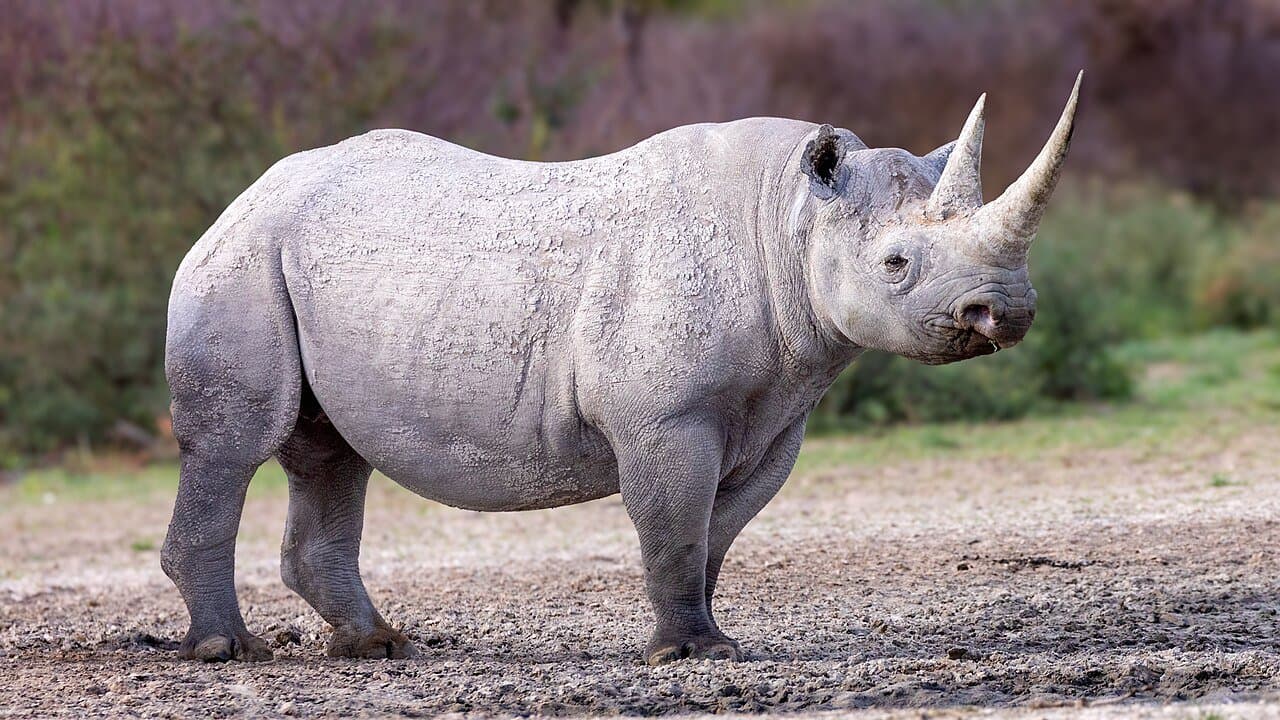 Black RhinocerosDiceros bicornisA critically endangered two-horned rhino of eastern and southern Africa that browses on shrubs with a pointed, grasping lip.
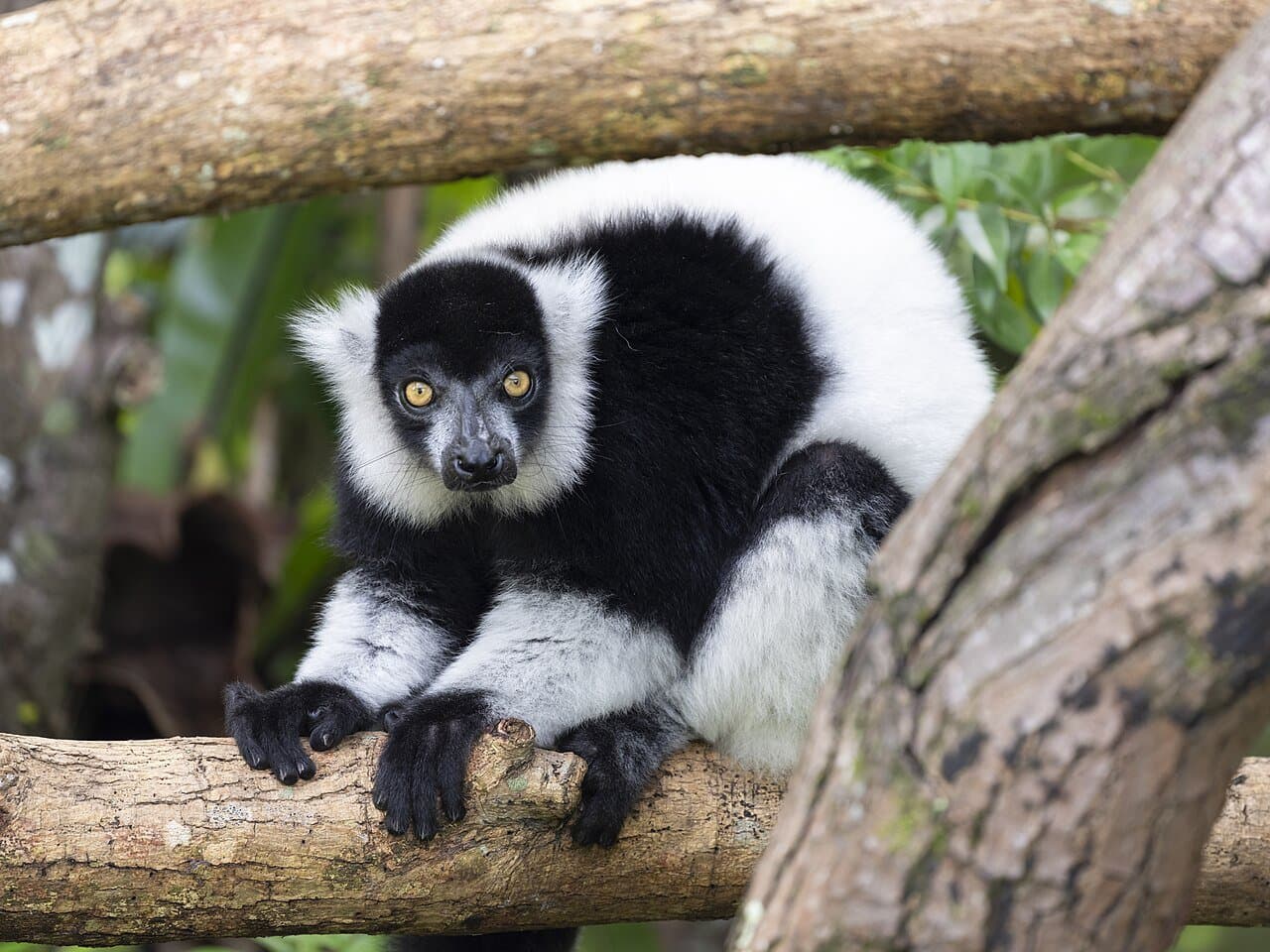 Black-and-White Ruffed LemurVarecia variegataThe largest lemur, a critically endangered fruit-eater of eastern Madagascar's rainforests that raises its babies in nests.
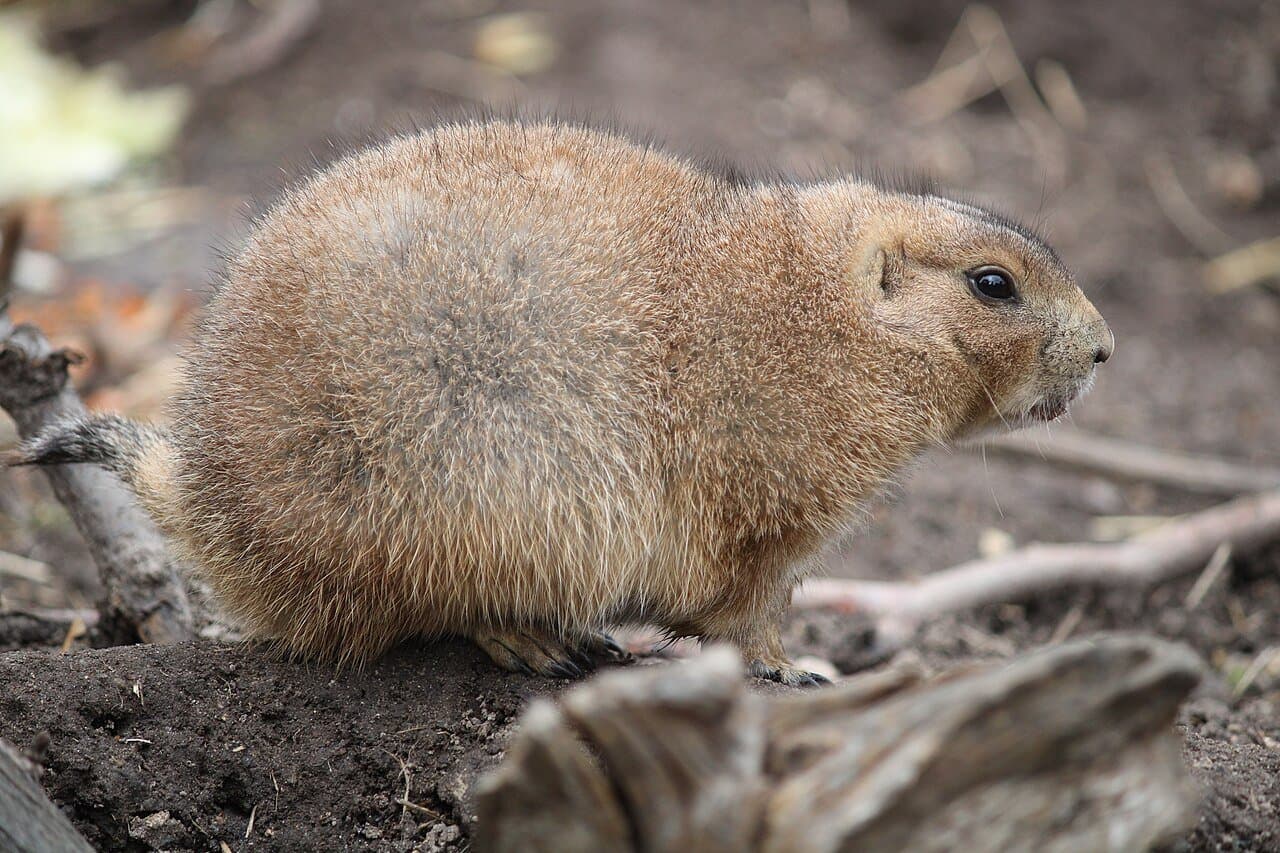 Black-Tailed Prairie DogCynomys ludovicianusA burrowing ground squirrel of the Great Plains that lives in huge "towns" and barks to warn of danger.
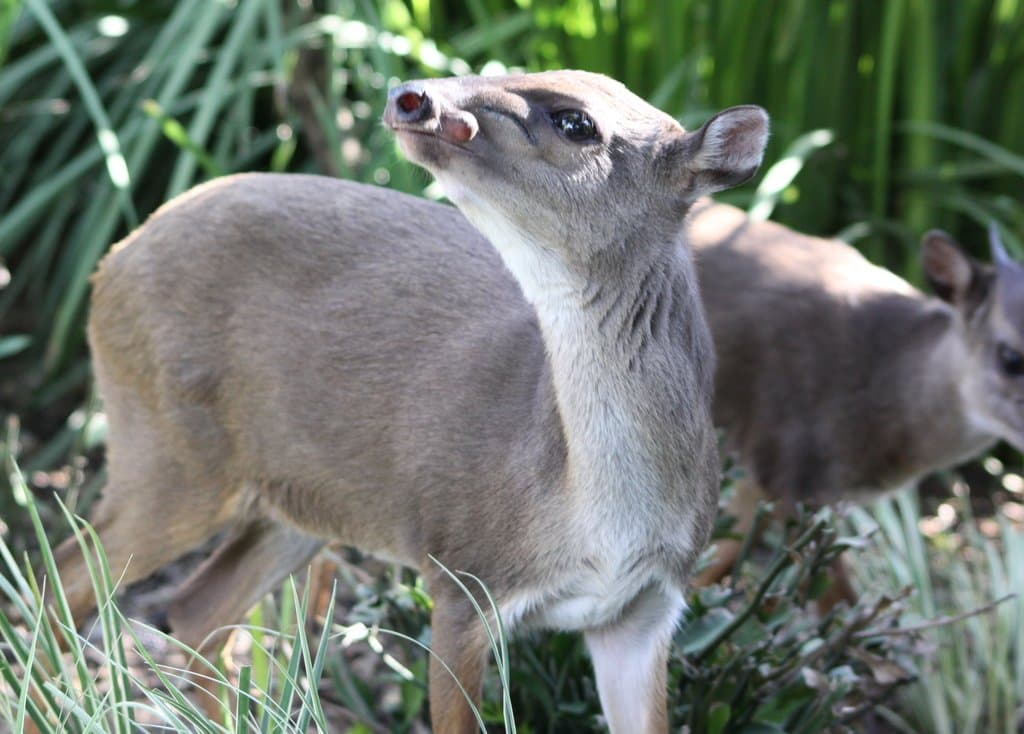 Blue DuikerPhilantomba monticolaA tiny forest antelope of central and southern Africa that weighs only 9 to 13 pounds and lives in pairs.
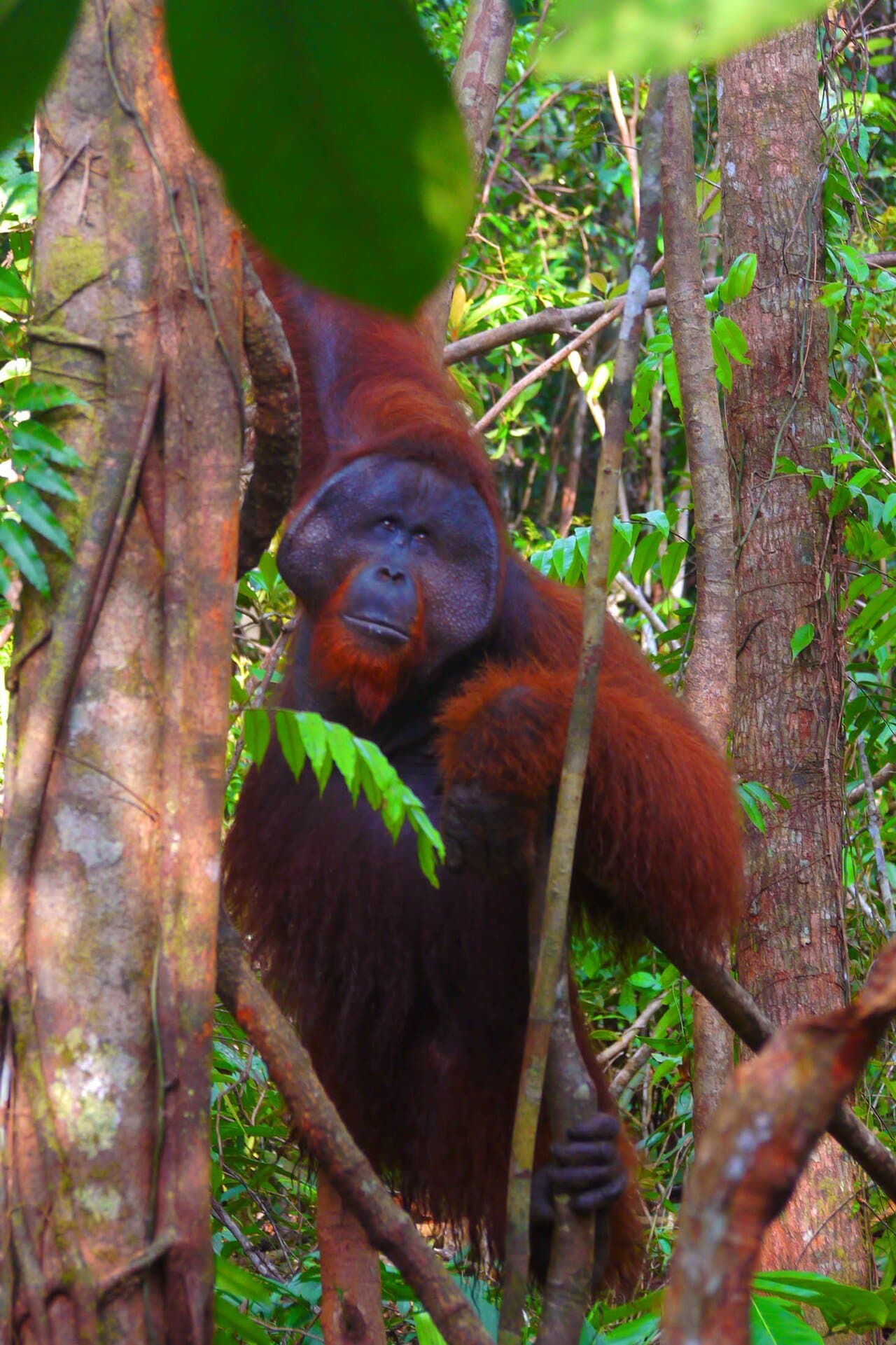 Bornean OrangutanPongo pygmaeusA critically endangered red-haired great ape of Borneo's rainforests that lives mostly alone in the treetops and eats mostly fruit.
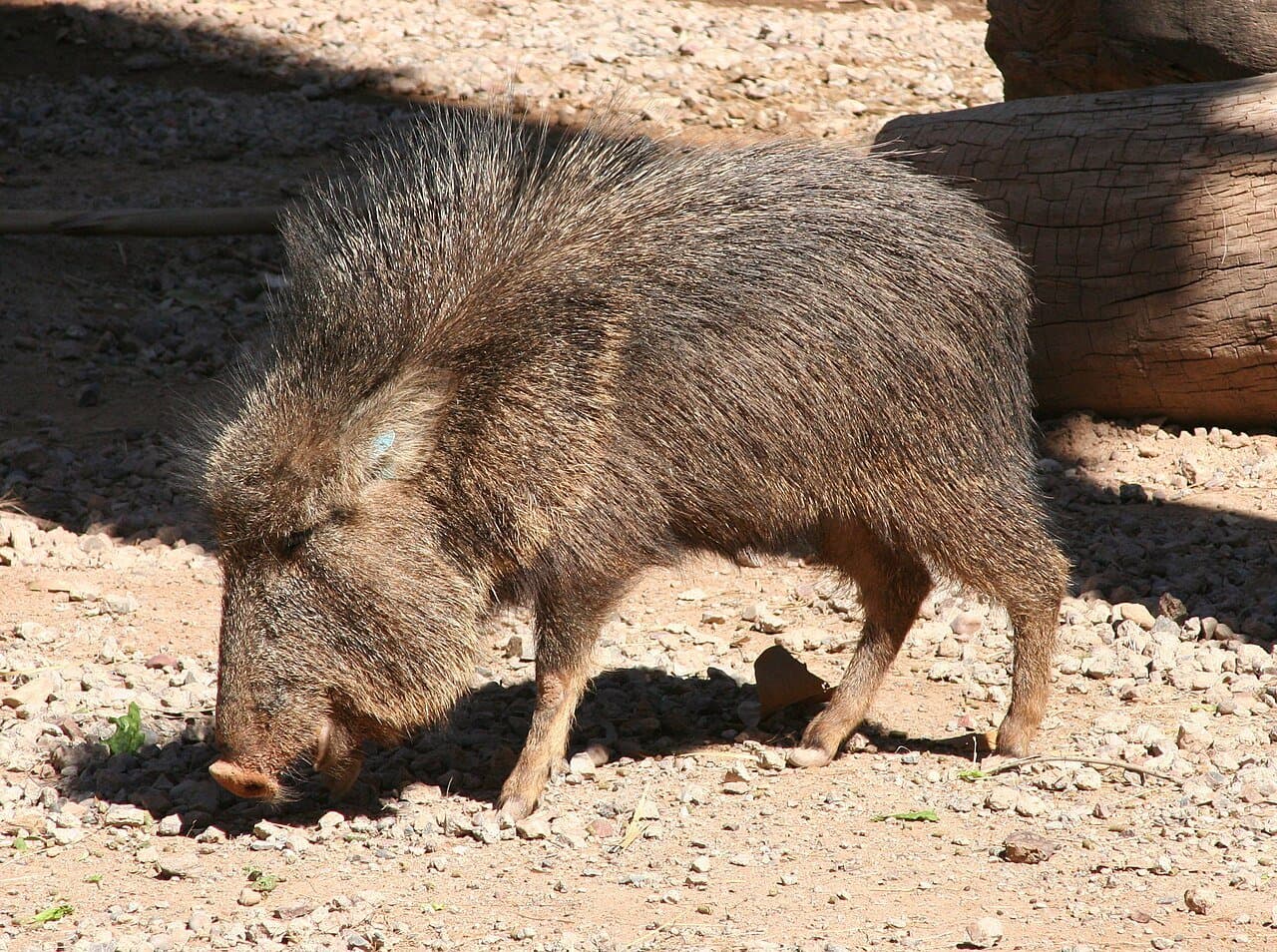 Chacoan PeccaryCatagonus wagneriA pig-like hoofed mammal of South America's dry Gran Chaco, known only from fossils until it was found alive in 1975.
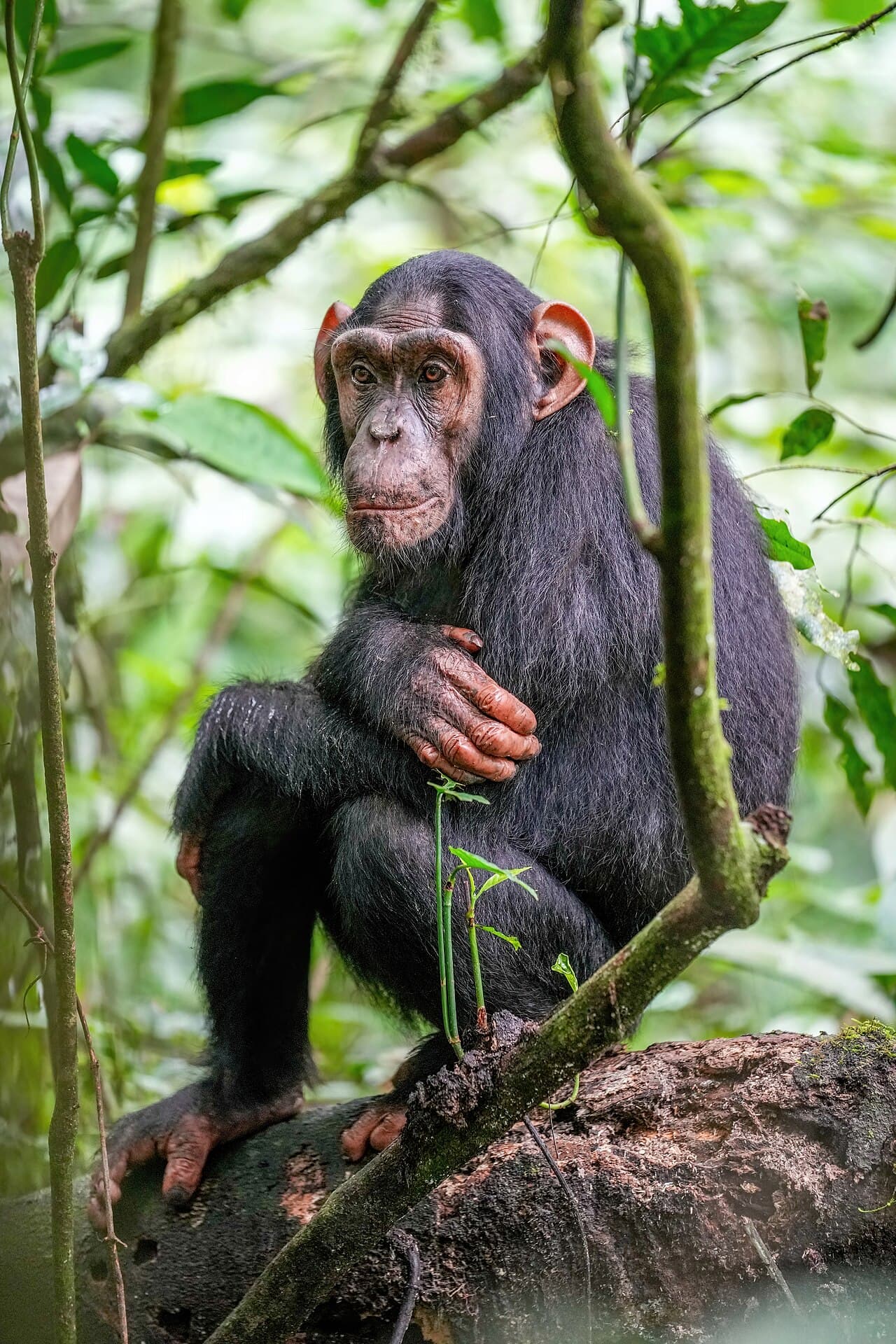 ChimpanzeePan troglodytesAn endangered, tool-using great ape of African forests that lives in large communities.
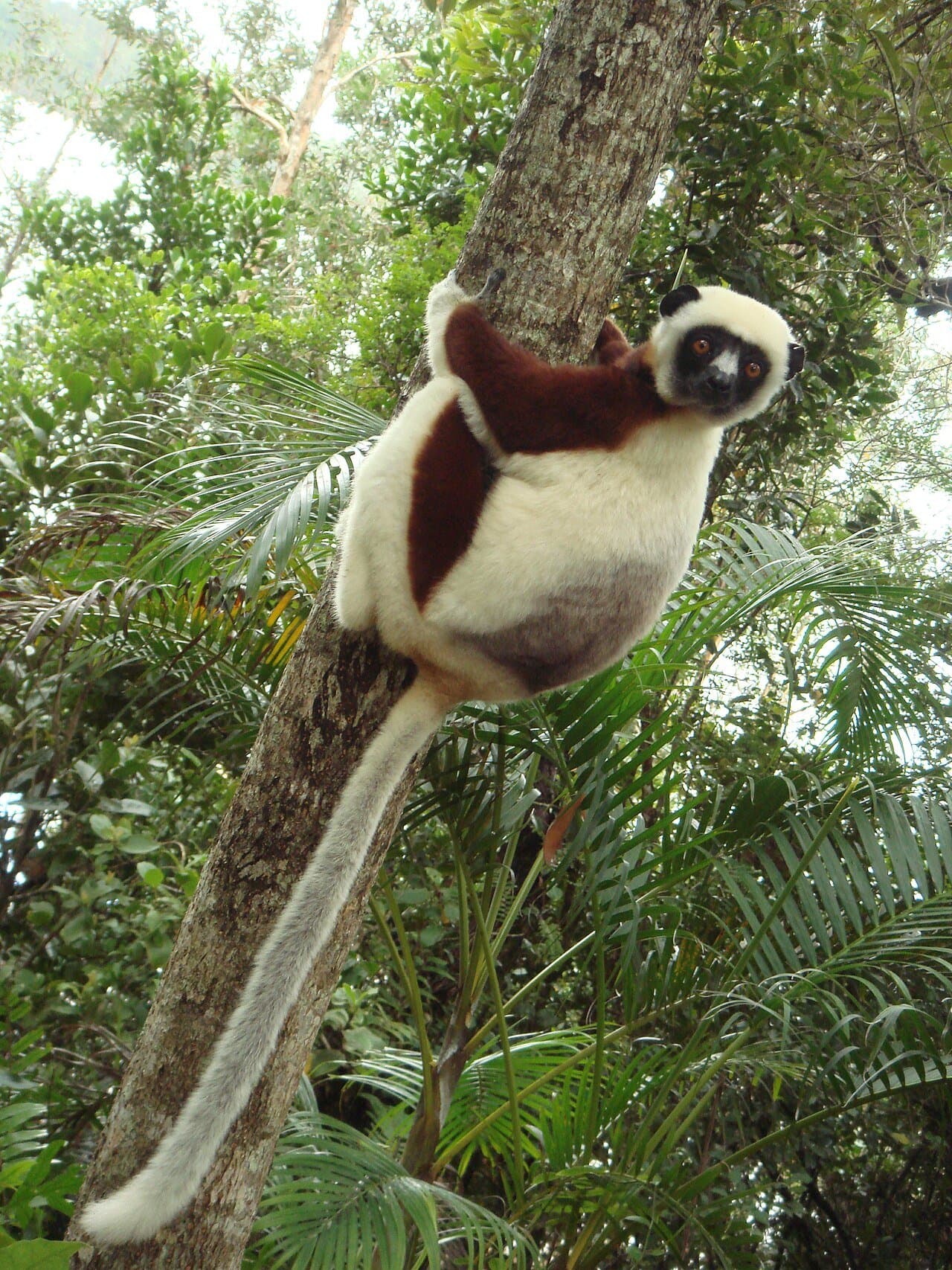 Coquerel's SifakaPropithecus coquereliA white-and-brown lemur of northwestern Madagascar that leaps between trees and hops sideways on the ground.
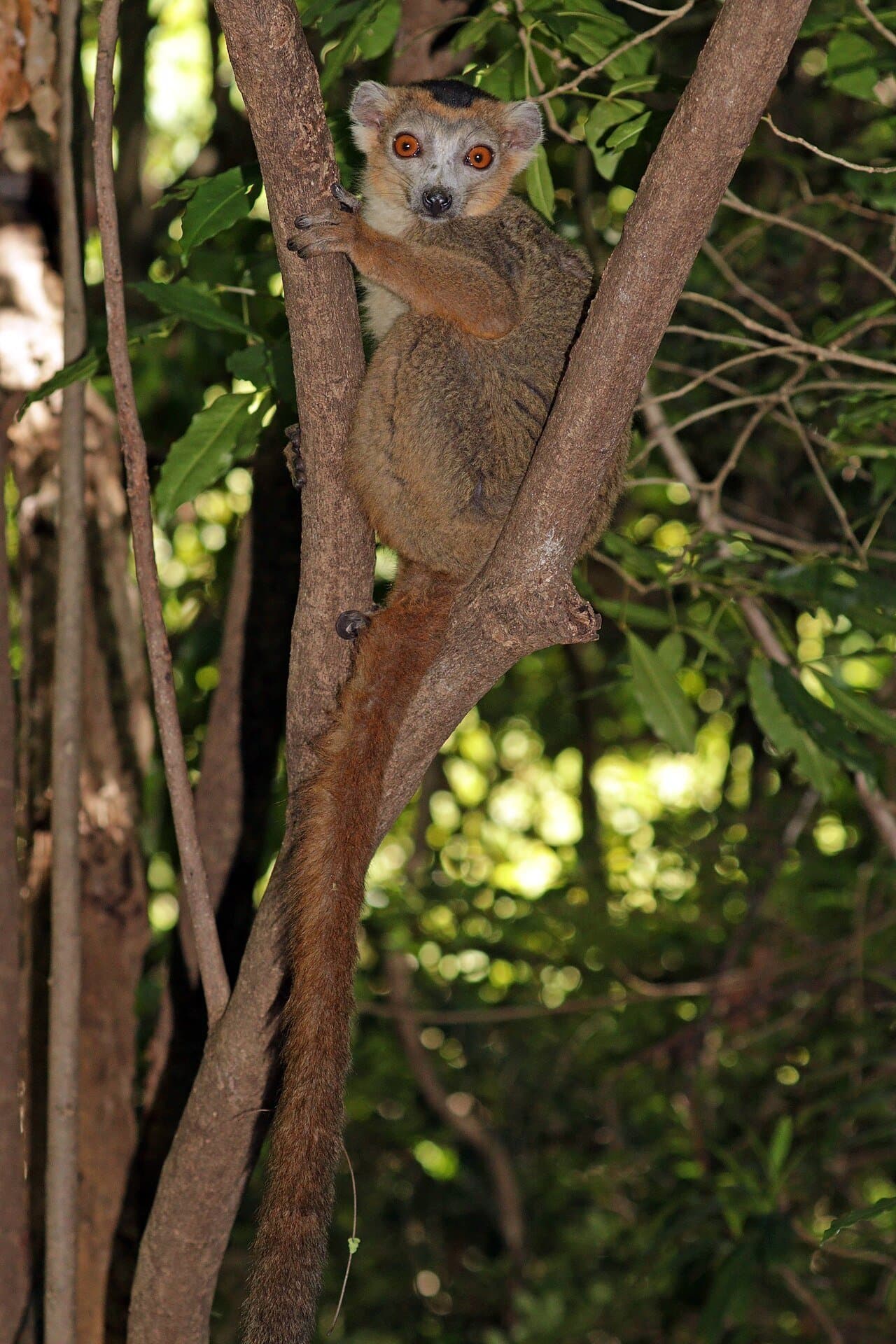 Crowned LemurEulemur coronatusA small, fruit-eating lemur of northern Madagascar whose males and females look so different they were once easy to tell apart at a glance.
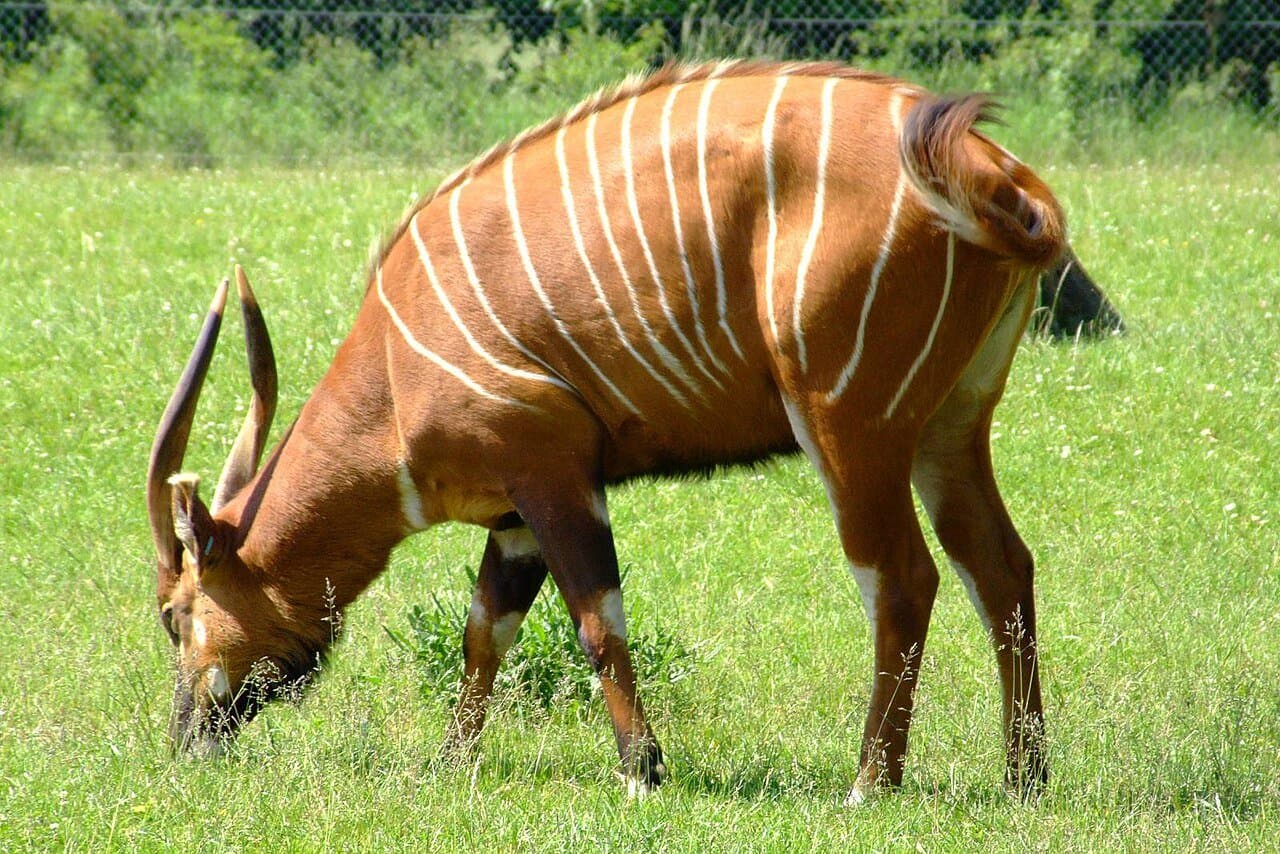 BongoTragelaphus eurycerusA large forest antelope of tropical Africa with 10 to 15 pale stripes down each side and horns up to 3 feet long.
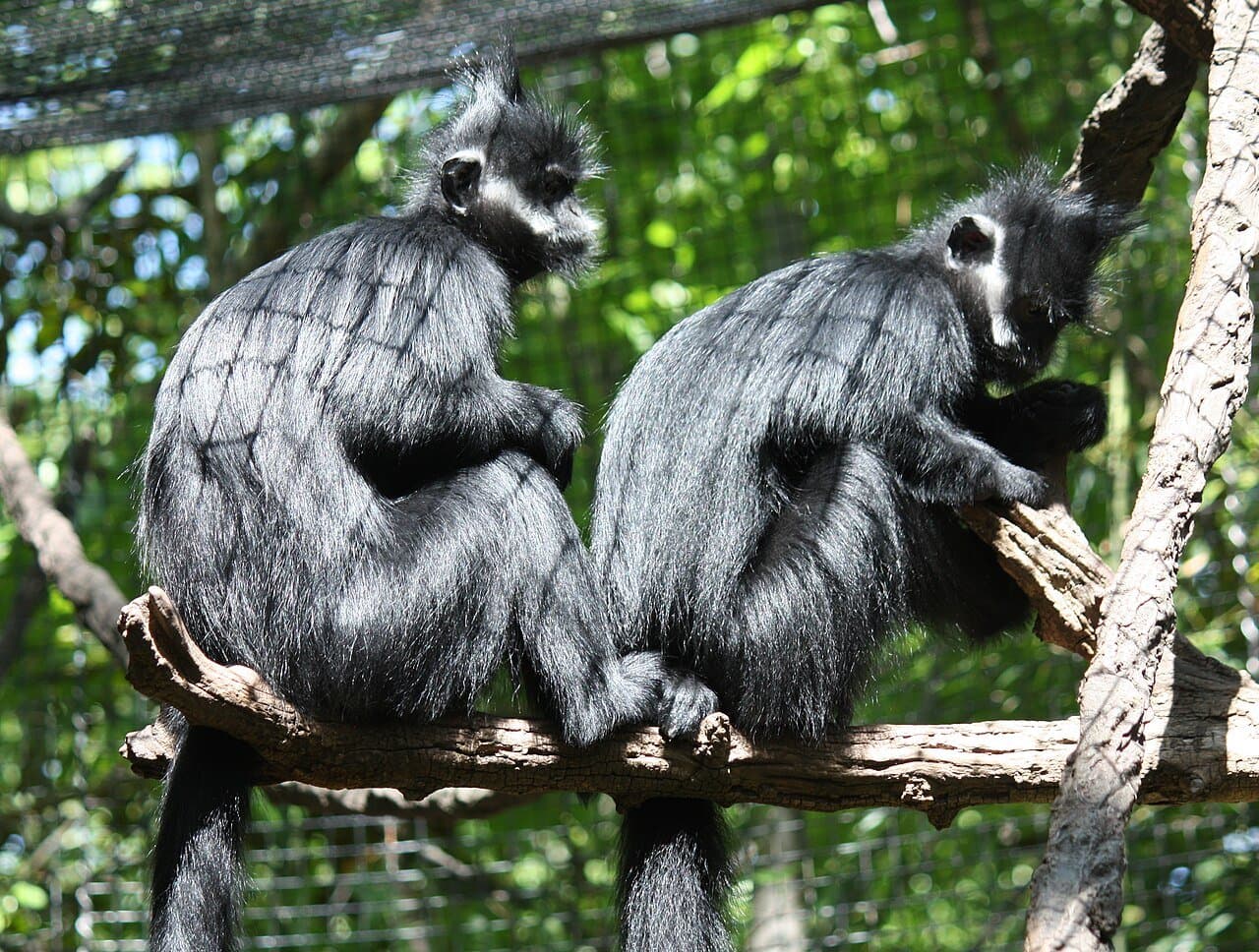 François' LangurTrachypithecus francoisiA slender black leaf-eating monkey of southern China and northern Vietnam with white sideburns and bright orange babies.
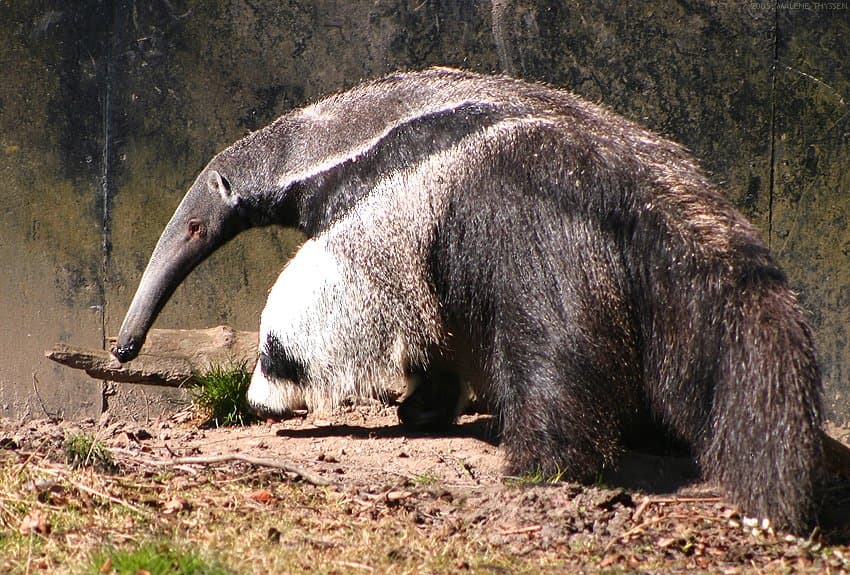 Giant AnteaterMyrmecophaga tridactylaA toothless insect-eater of Central and South America that flicks its 2-foot tongue up to 150 times a minute.
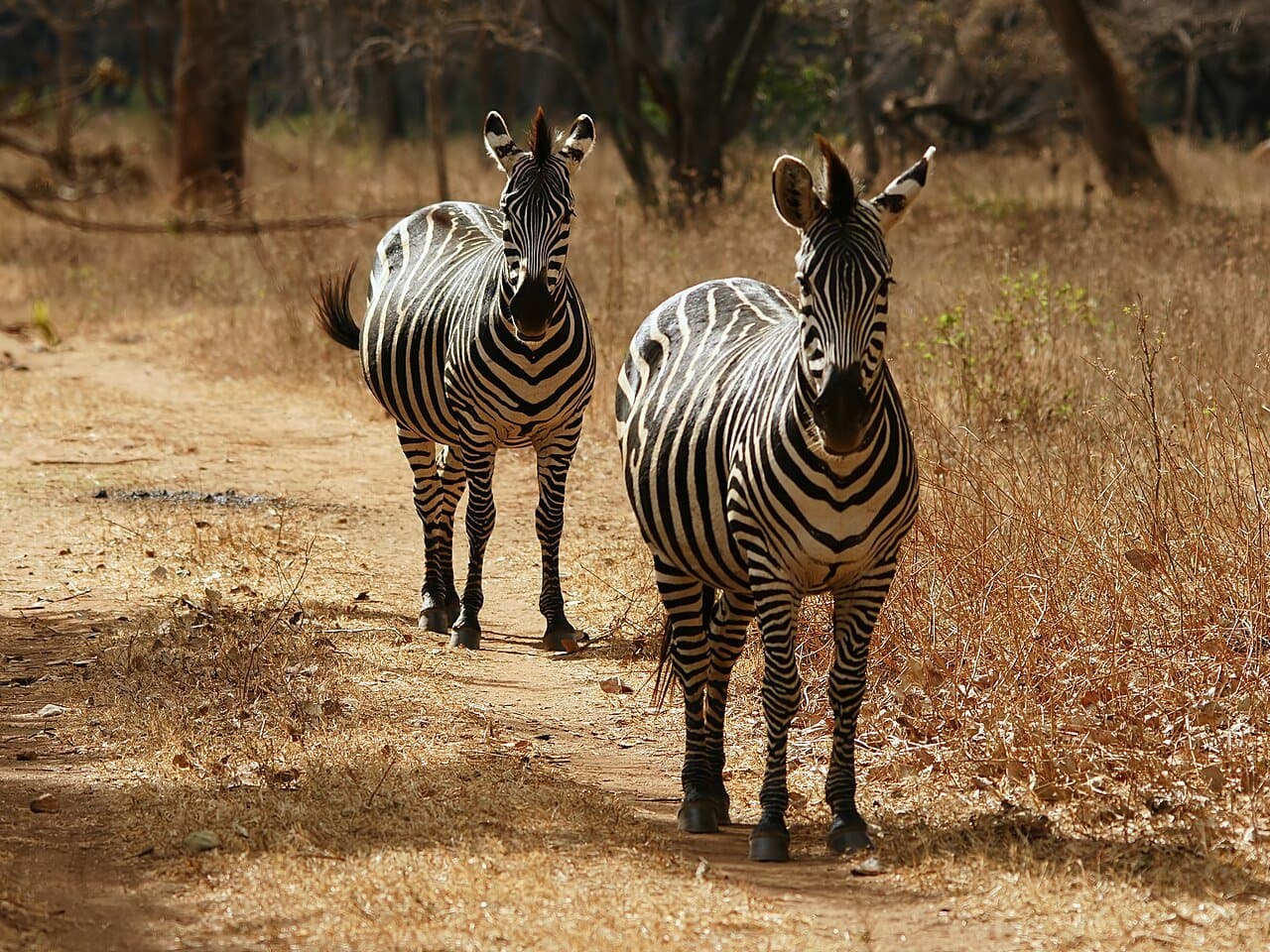 Plains ZebraEquus quagga (subspecies include Grant's zebra)The most common zebra, a grass-grazing striped horse relative of eastern and southern Africa whose stripe pattern is one-of-a-kind on every animal. Grant's zebra is one kind.
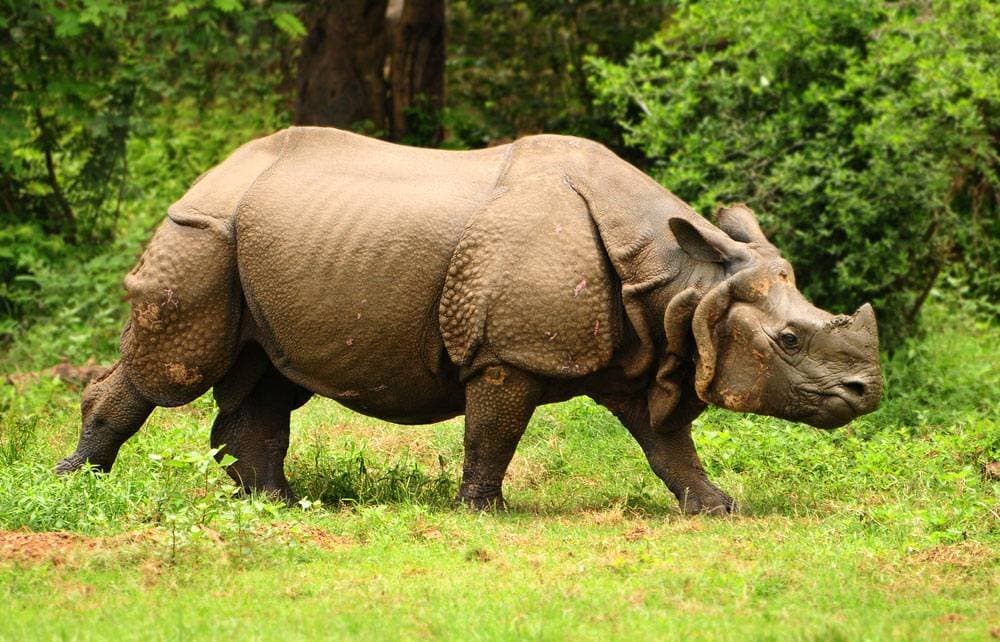 Greater One-Horned RhinocerosRhinoceros unicornisA huge, armor-looking rhino of India and Nepal with a single horn, whose numbers have recovered from about 150 animals to thousands.
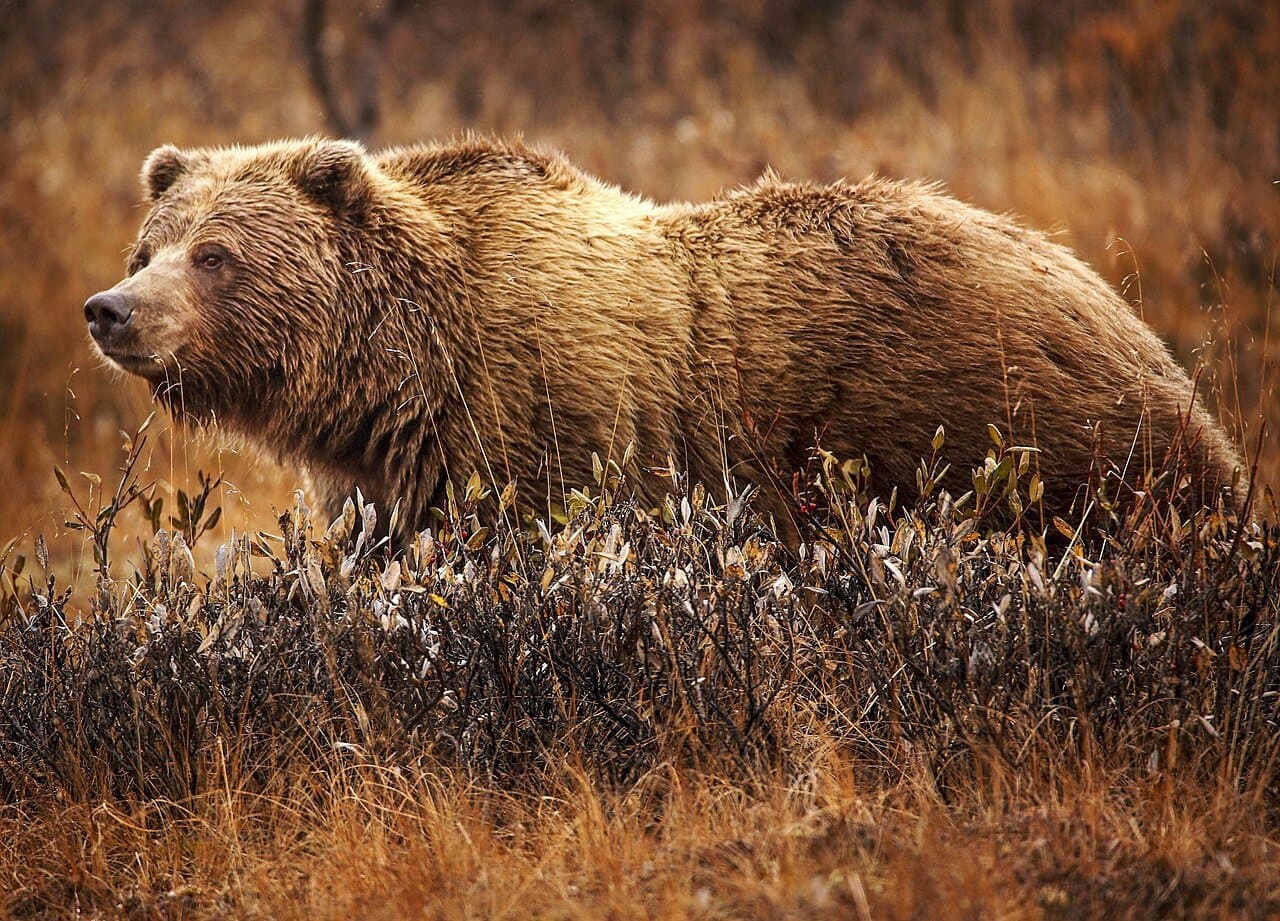 Grizzly BearUrsus arctos (grizzly bears are a subspecies of brown bear)A big North American brown bear with a shoulder hump and silver-tipped fur, and the symbol on California's state flag.
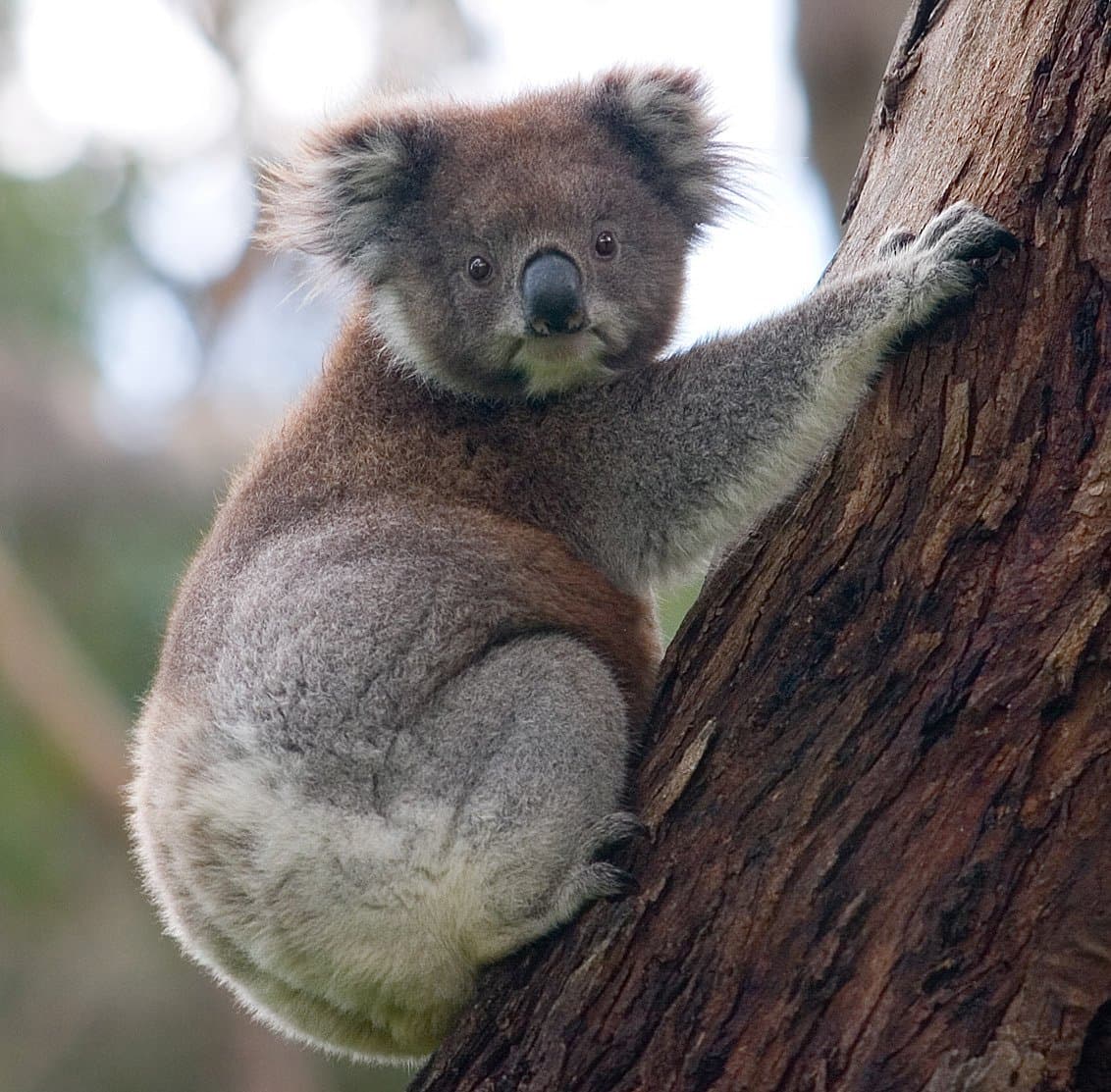 KoalaPhascolarctos cinereusA tree-dwelling Australian marsupial that eats only eucalyptus leaves and gets most of its water from them.
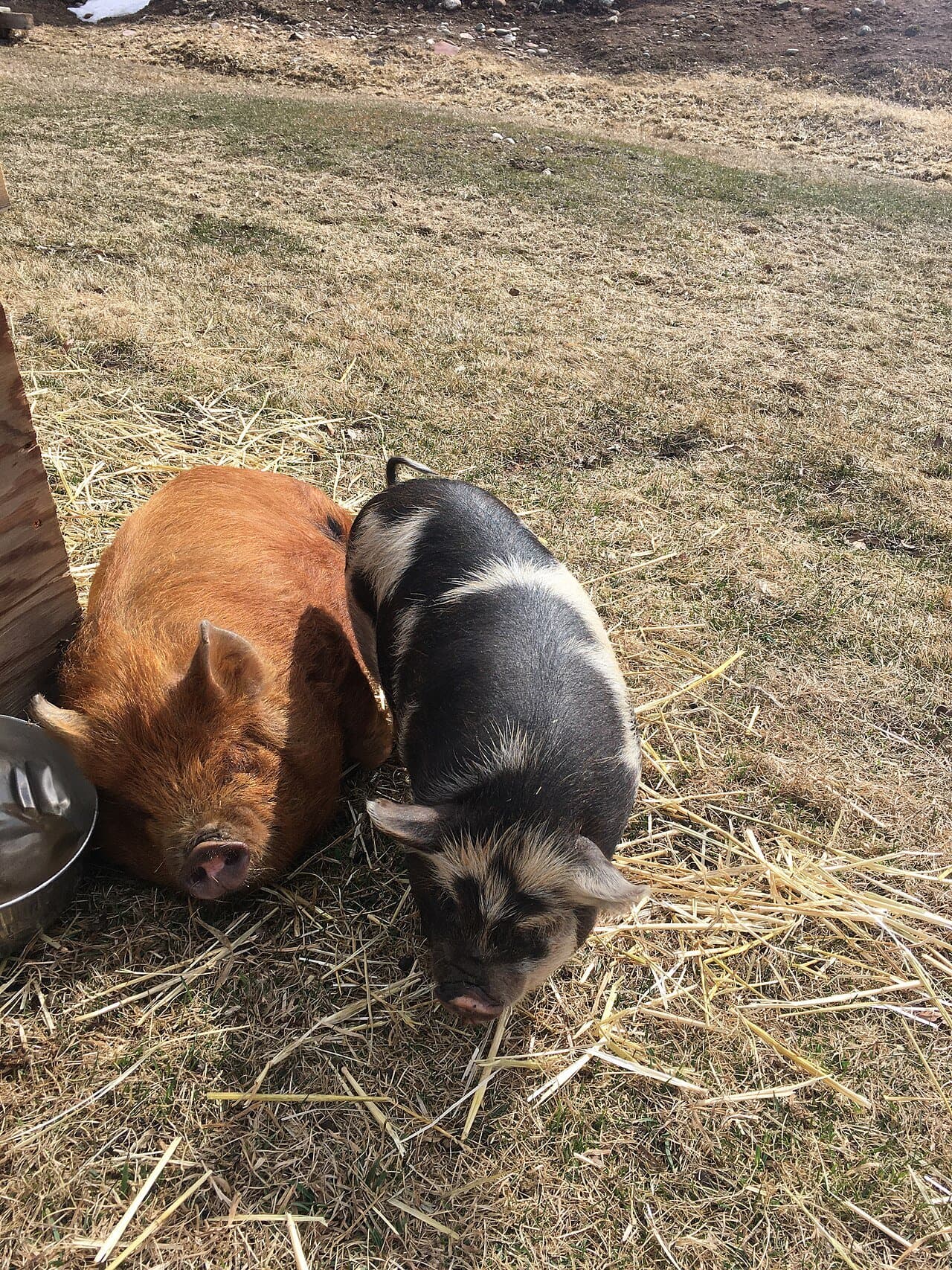 Kunekune PigSus scrofa domesticusA small, round, short-snouted pig breed kept by the Maori people of New Zealand, often with two tassels hanging from its chin.
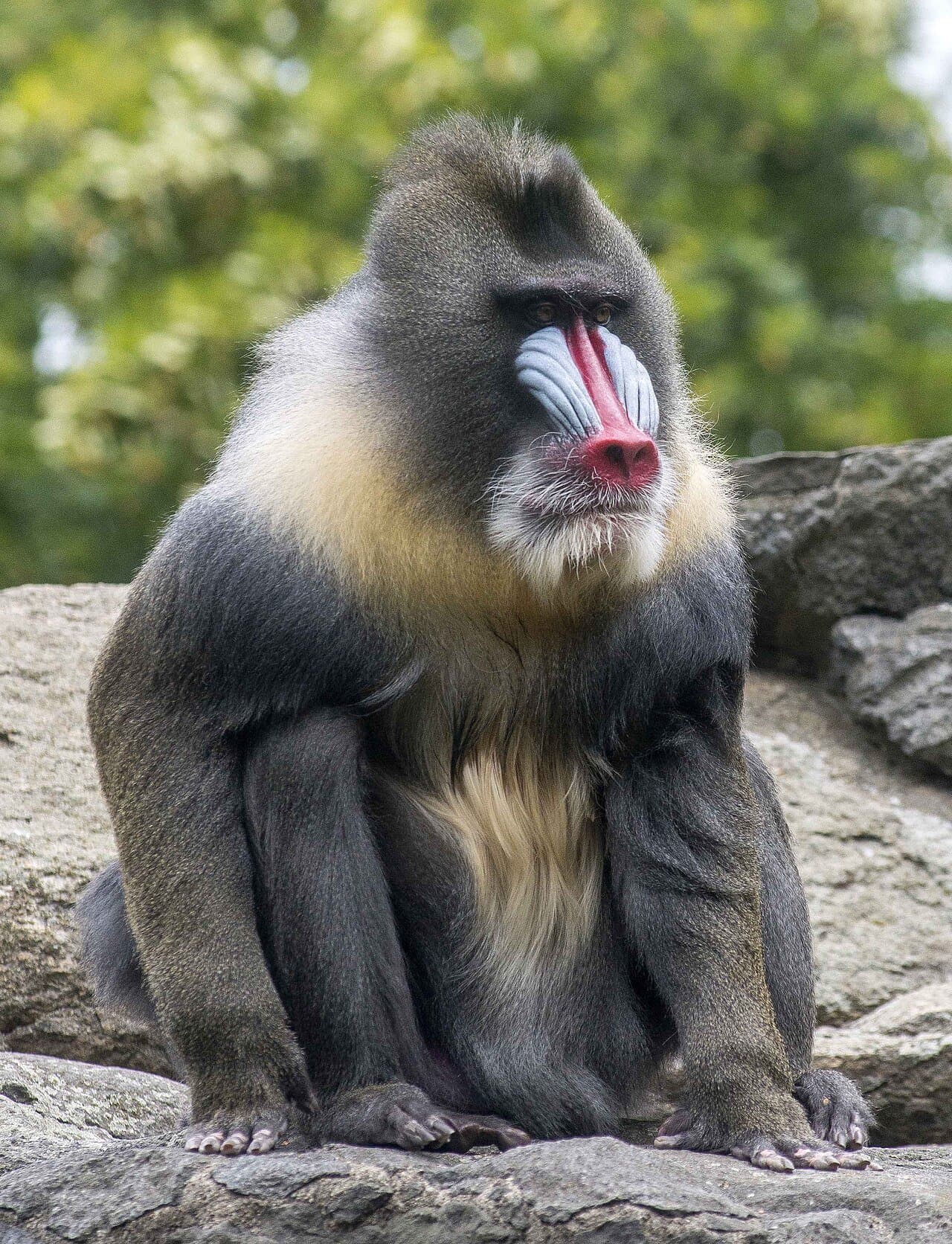 MandrillMandrillus sphinxThe largest monkey in the world, whose males have a bright red-and-blue face and colorful rump.
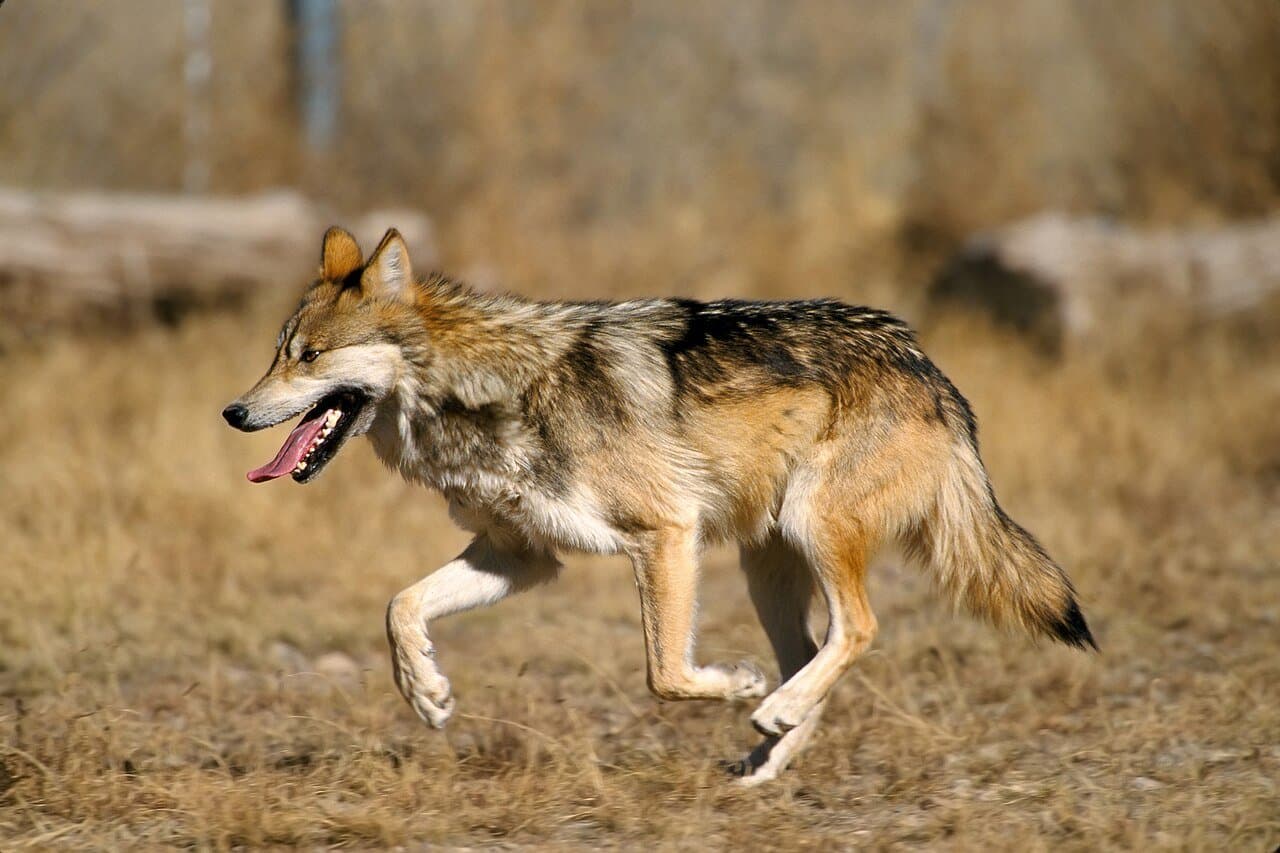 Mexican Gray WolfCanis lupus baileyiThe smallest gray wolf, nicknamed "el lobo," which was wiped out in the U.S. by the 1970s and is now making a small comeback in the Southwest.
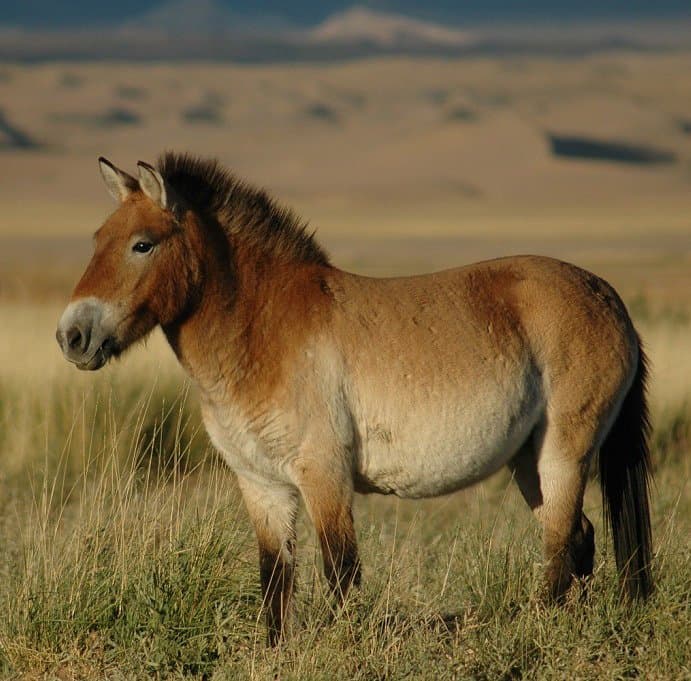 Przewalski's HorseEquus ferus przewalskiiThe last truly wild horse, a stocky dun-colored horse of Mongolia that was extinct in the wild and has been brought back.
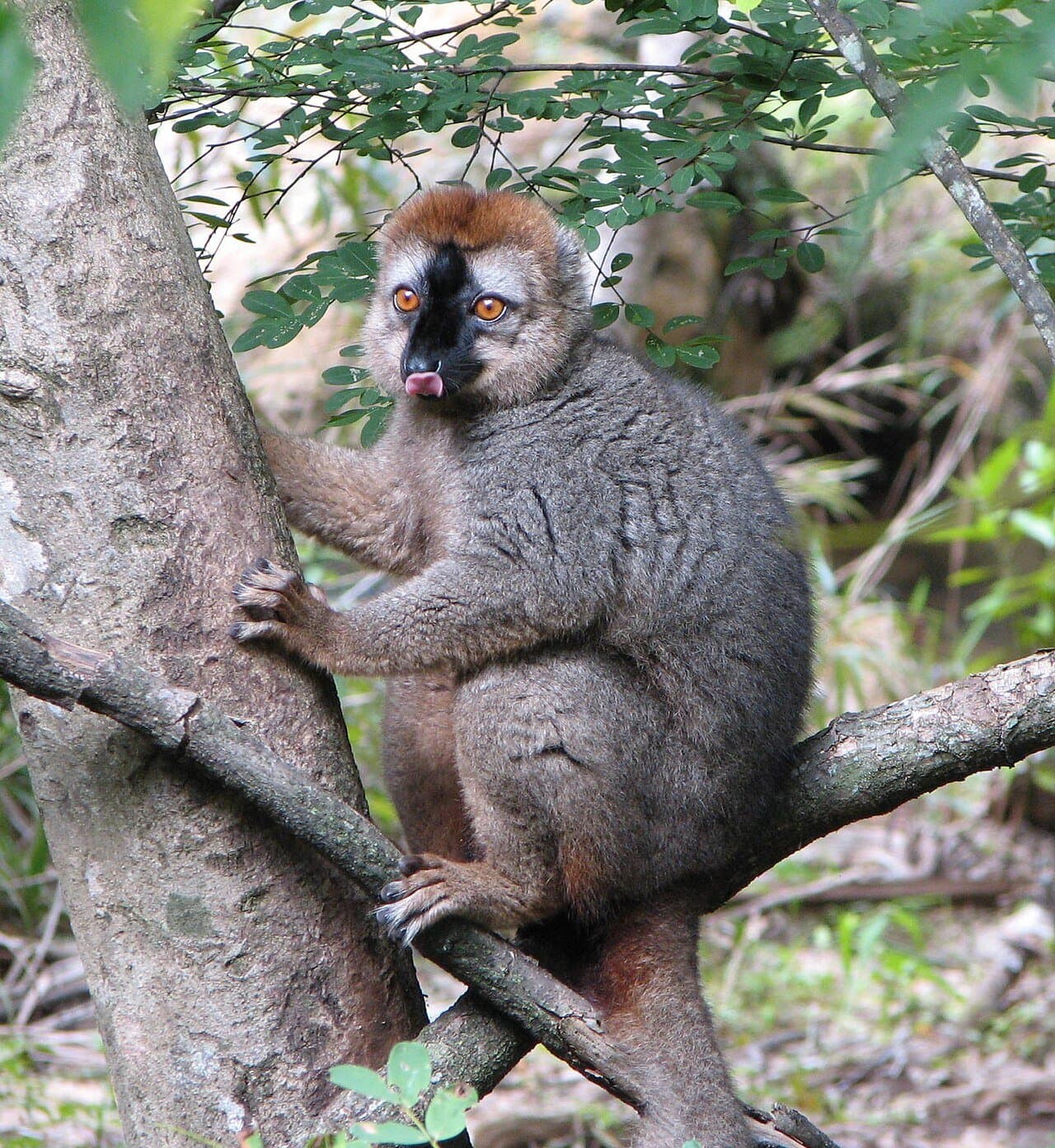 Red-Fronted Brown LemurEulemur rufifronsA fruit-eating Madagascar lemur whose males and females are different colors, and one of the few lemurs not led by females.
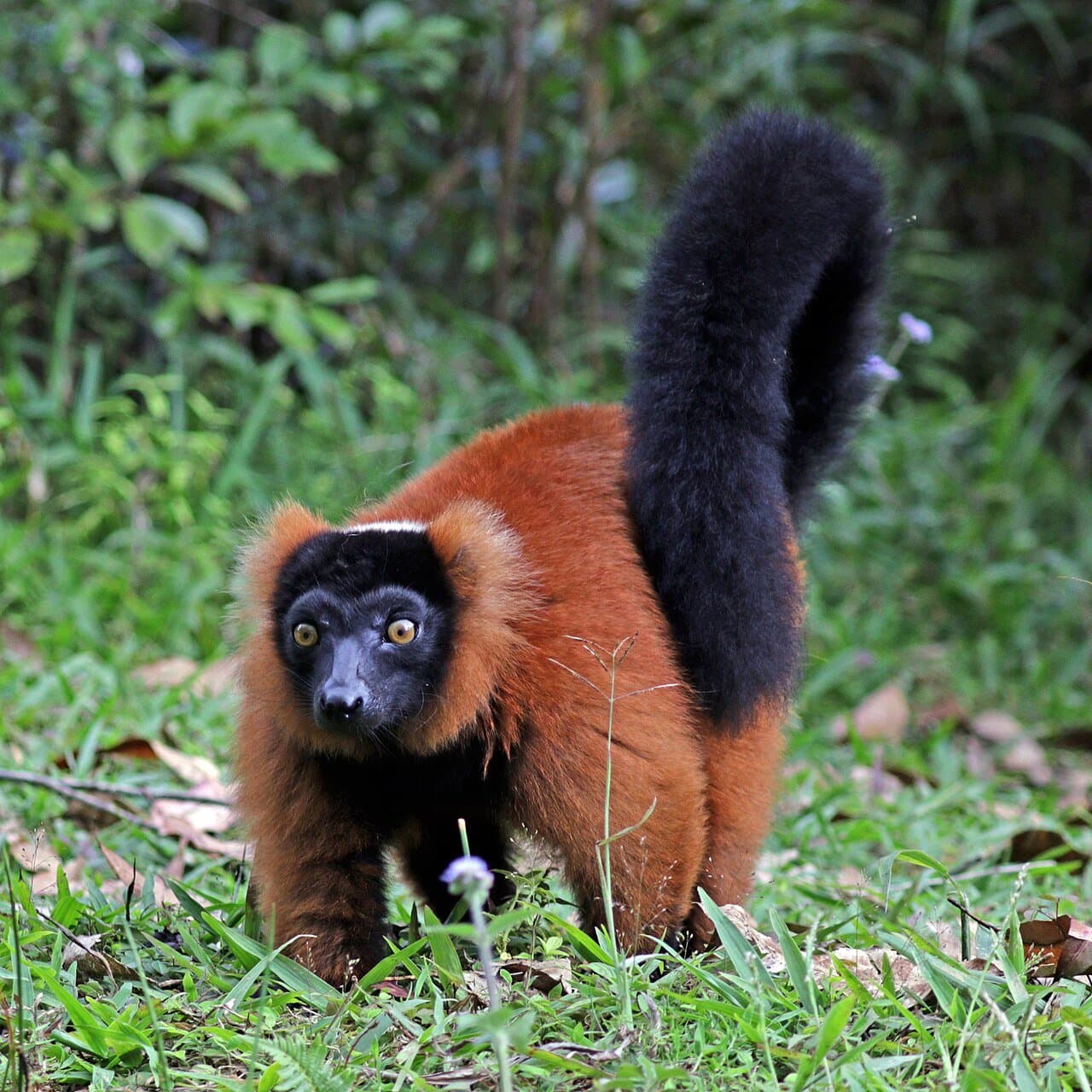 Red Ruffed LemurVarecia rubraA critically endangered orange-red lemur with a black face and a thick neck ruff, found only on Madagascar's Masoala Peninsula.
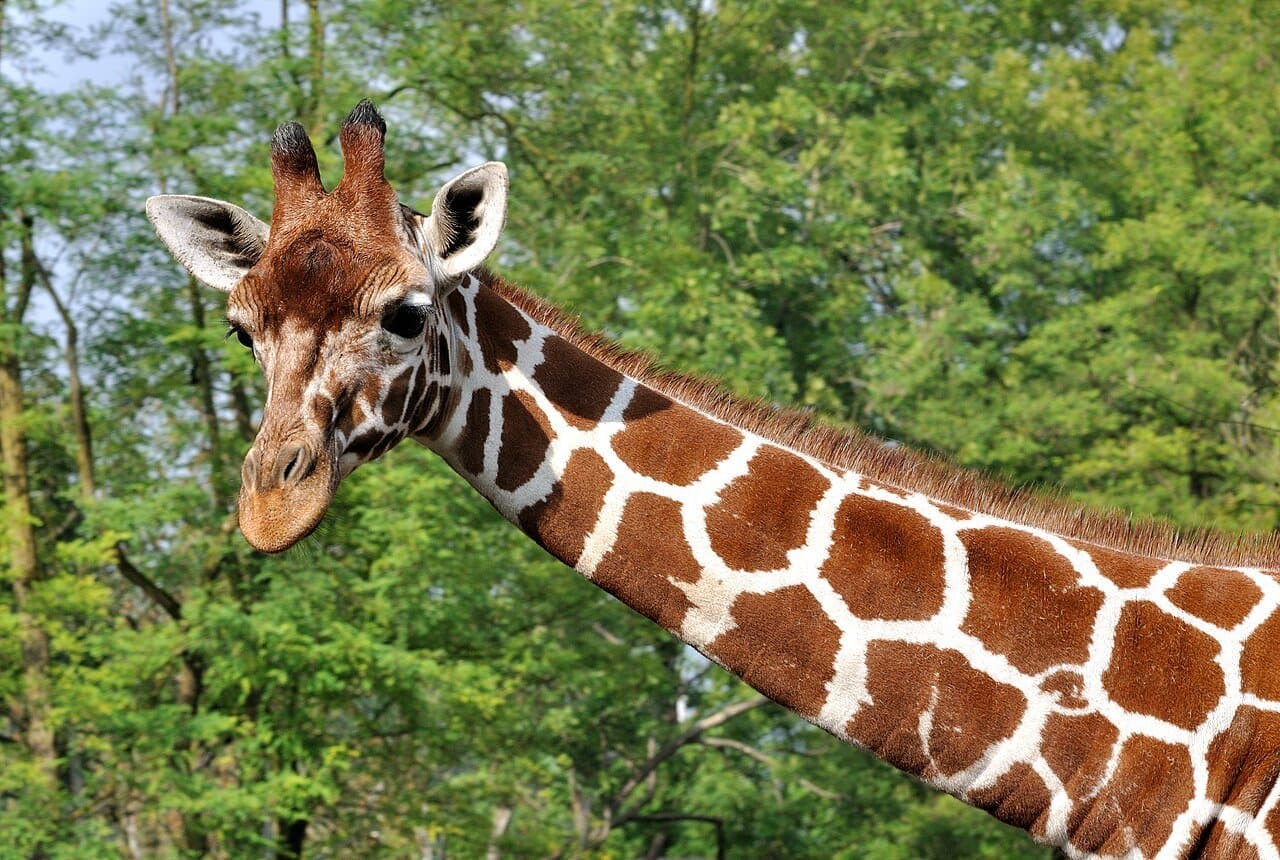 Reticulated GiraffeGiraffa reticulata (also listed as Giraffa camelopardalis reticulata)An endangered giraffe of northern Kenya with orange-brown patches outlined by a network of bright white lines.
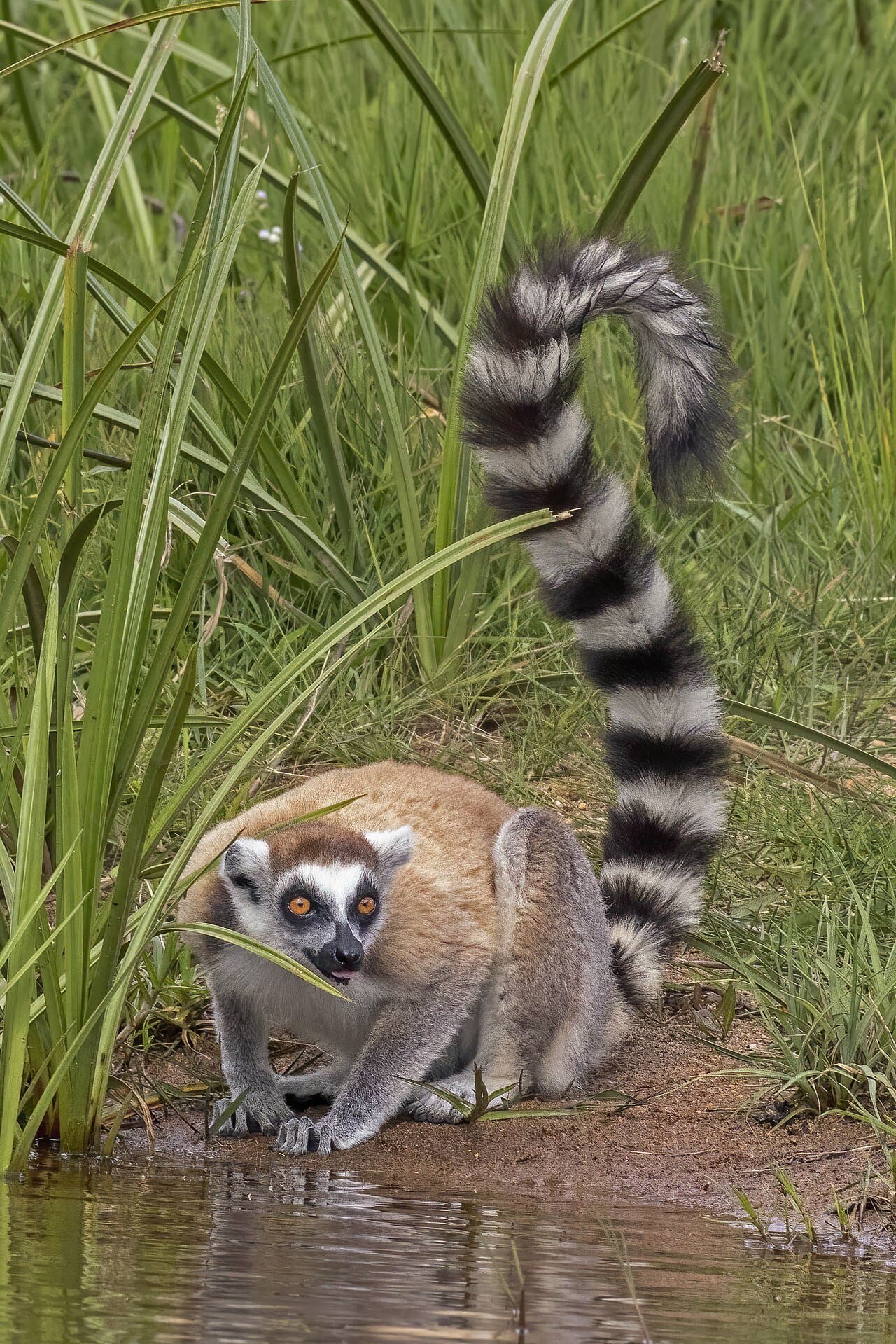 Ring-Tailed LemurLemur cattaAn endangered primate of southwestern Madagascar with a black-and-white striped tail, female-led troops and a love of sunbathing.
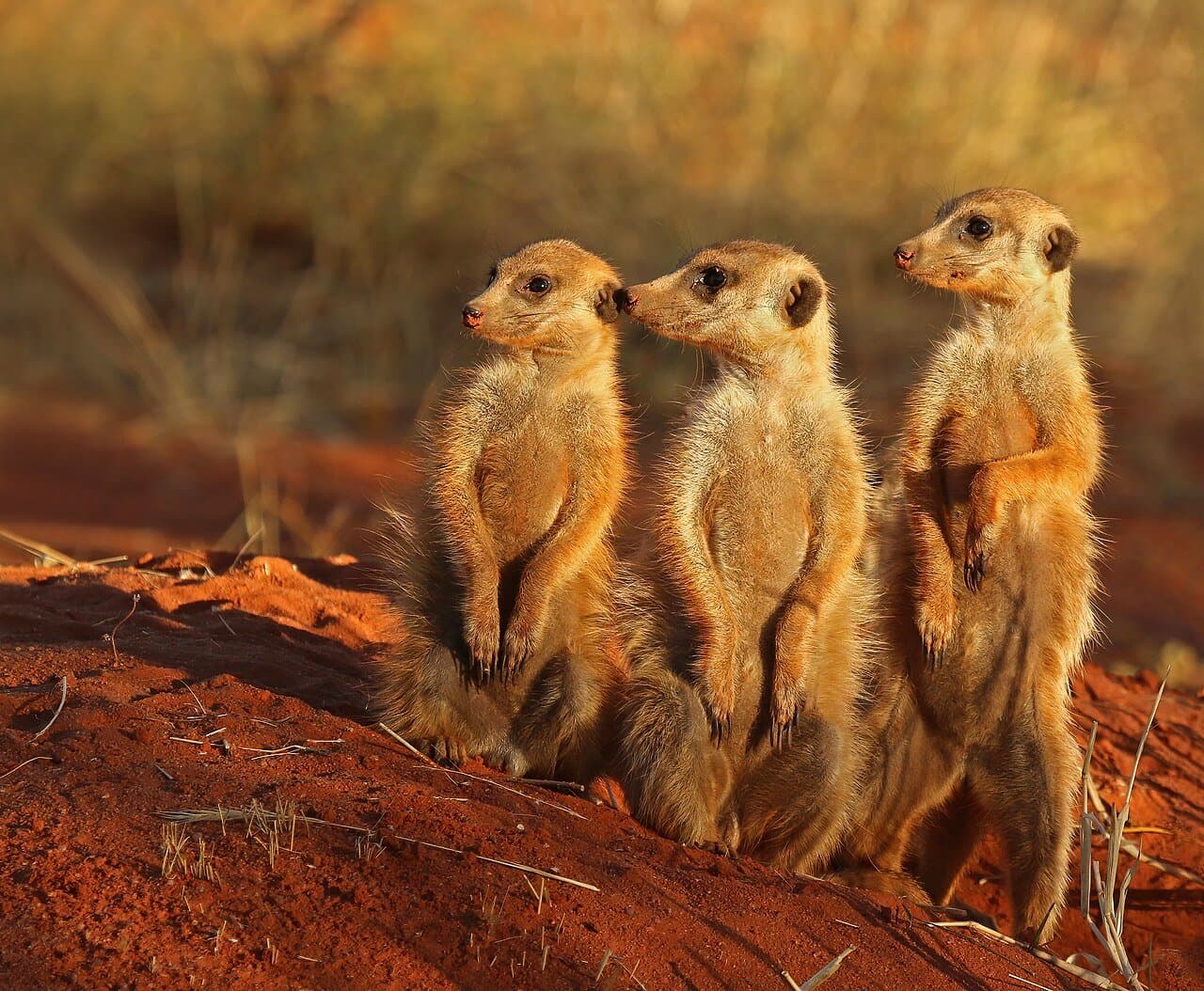 MeerkatSuricata suricattaA small, social desert mammal of southern Africa, also called the slender-tailed meerkat, that takes turns standing guard.
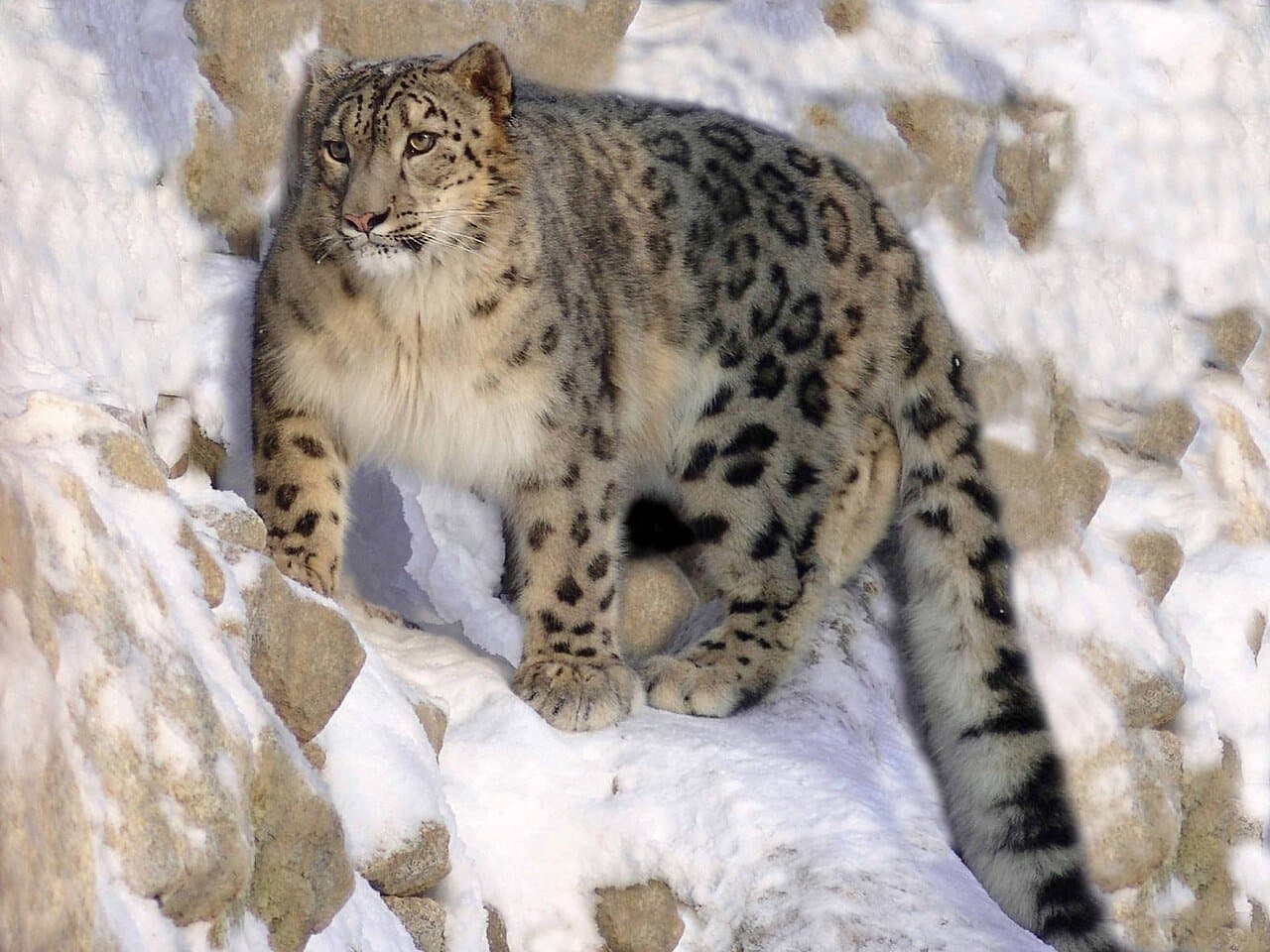 Snow LeopardPanthera unciaA smoky-gray big cat of Central Asia's high mountains with huge furry paws and a long tail it wraps around itself for warmth.
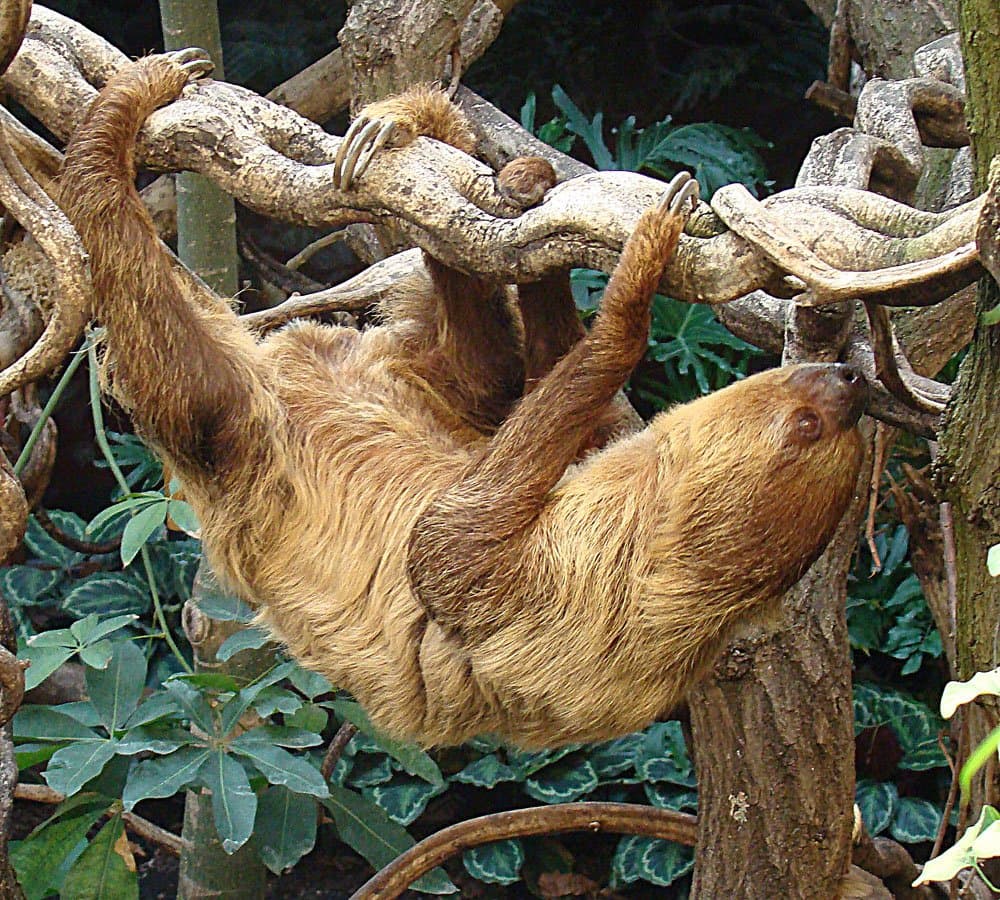 Two-Toed SlothCholoepus didactylusAn upside-down rainforest mammal of Central and South America that sleeps about 15 hours a day and grows algae in its fur.
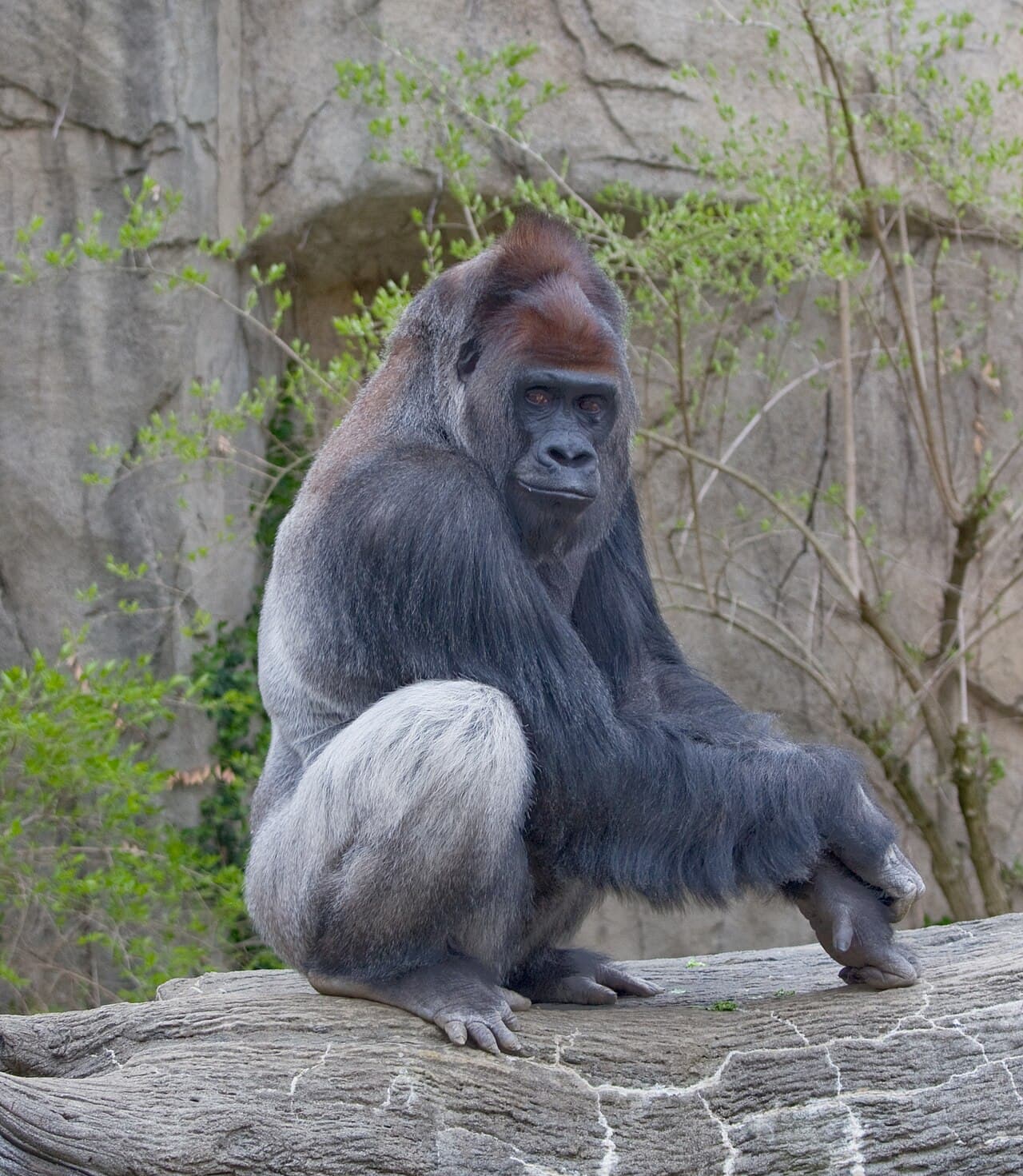 Western Lowland GorillaGorilla gorilla gorillaA critically endangered great ape of Central Africa that lives in small family troops led by a silverback.
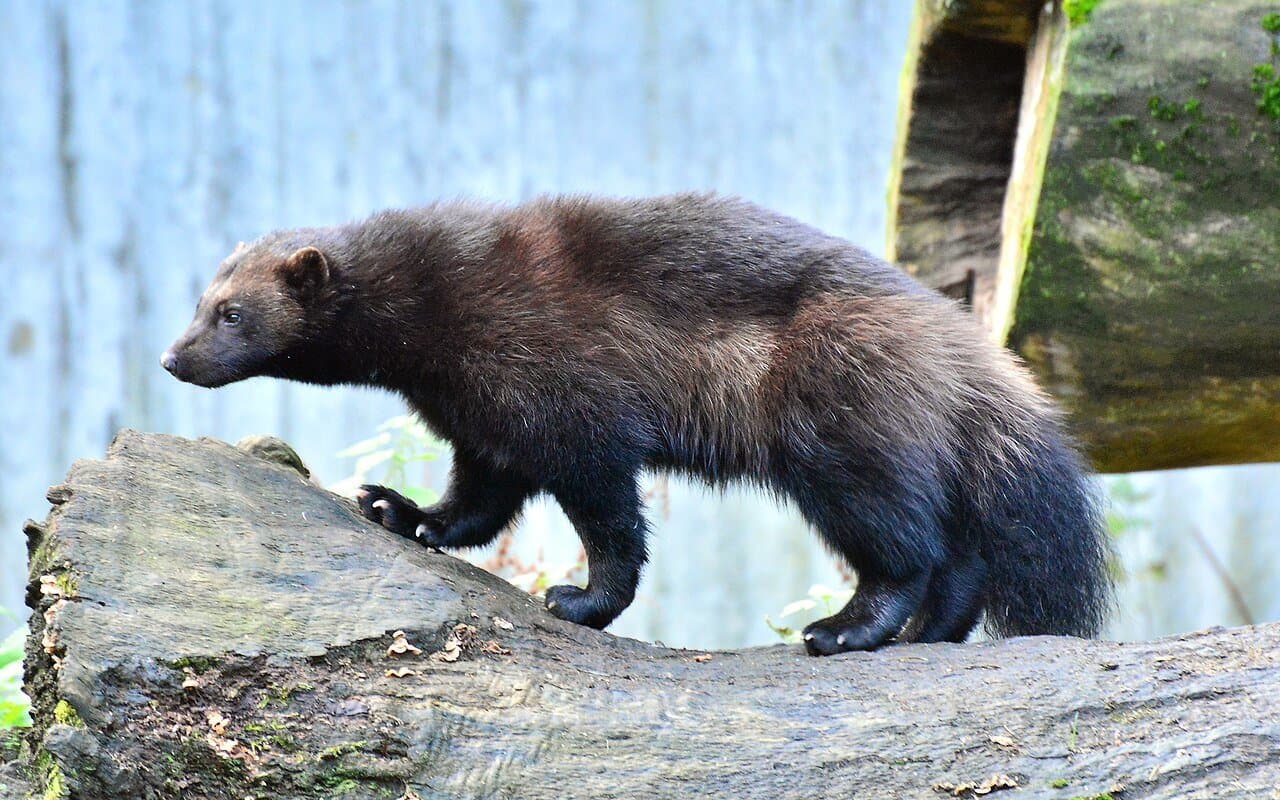 WolverineGulo guloA tough, stocky member of the weasel family from the far north that can drive bears and wolves away from food.
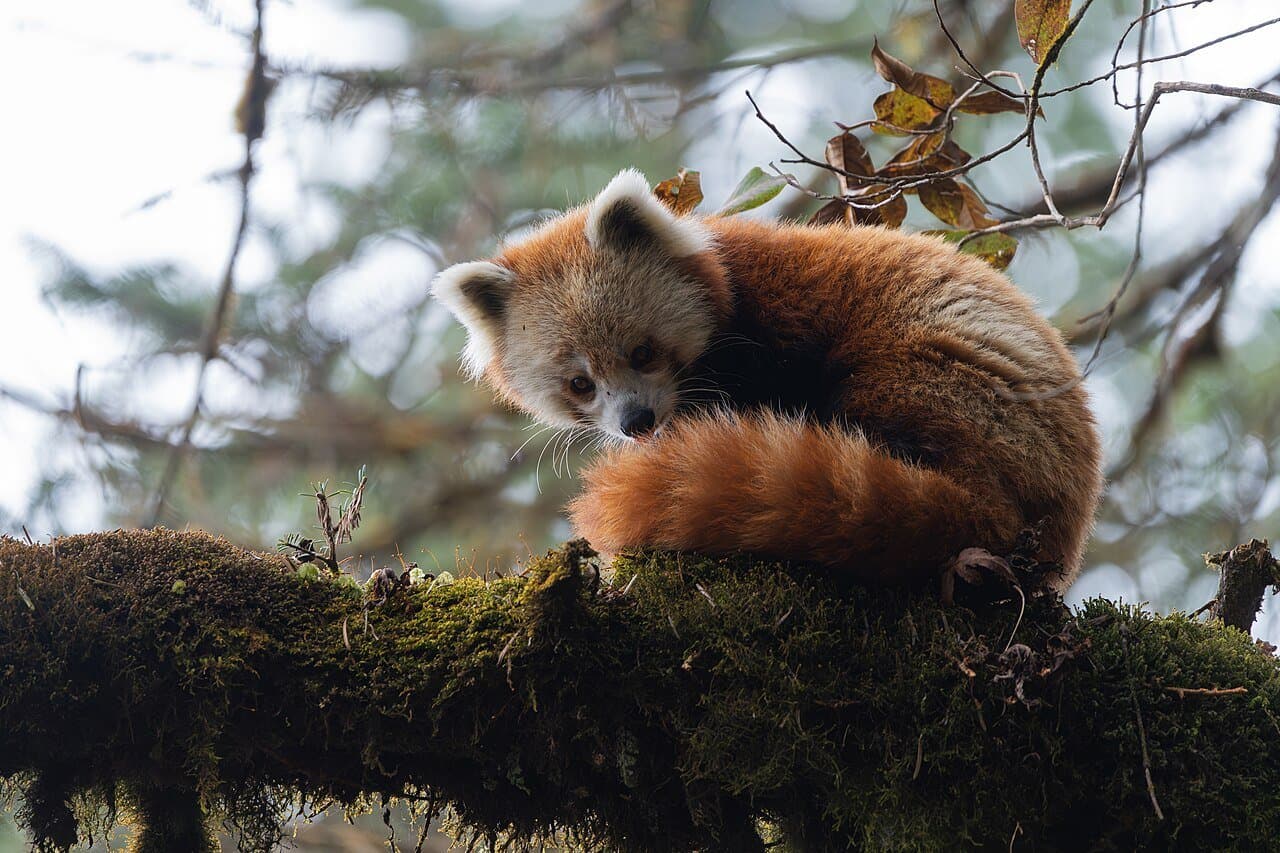 Red PandaAilurus fulgensA red, bushy-tailed tree climber of Himalayan and Chinese mountain forests that eats bamboo but is not related to the giant panda.
Birds (32)
See this area on the zoo's website ↗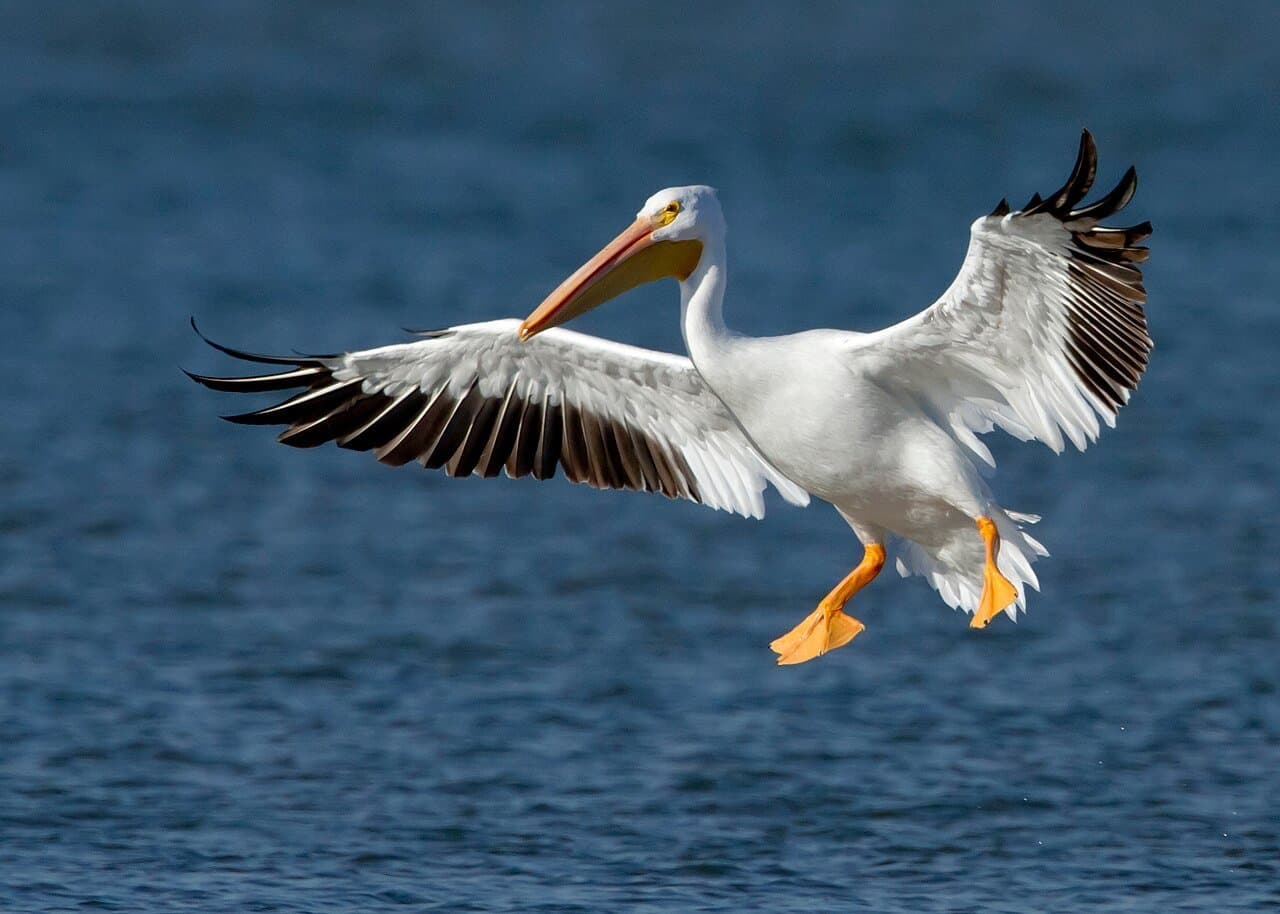 American White PelicanPelecanus erythrorhynchosA huge white North American pelican with a nine-foot wingspan that scoops up fish with its pouched bill, often while fishing in teams.
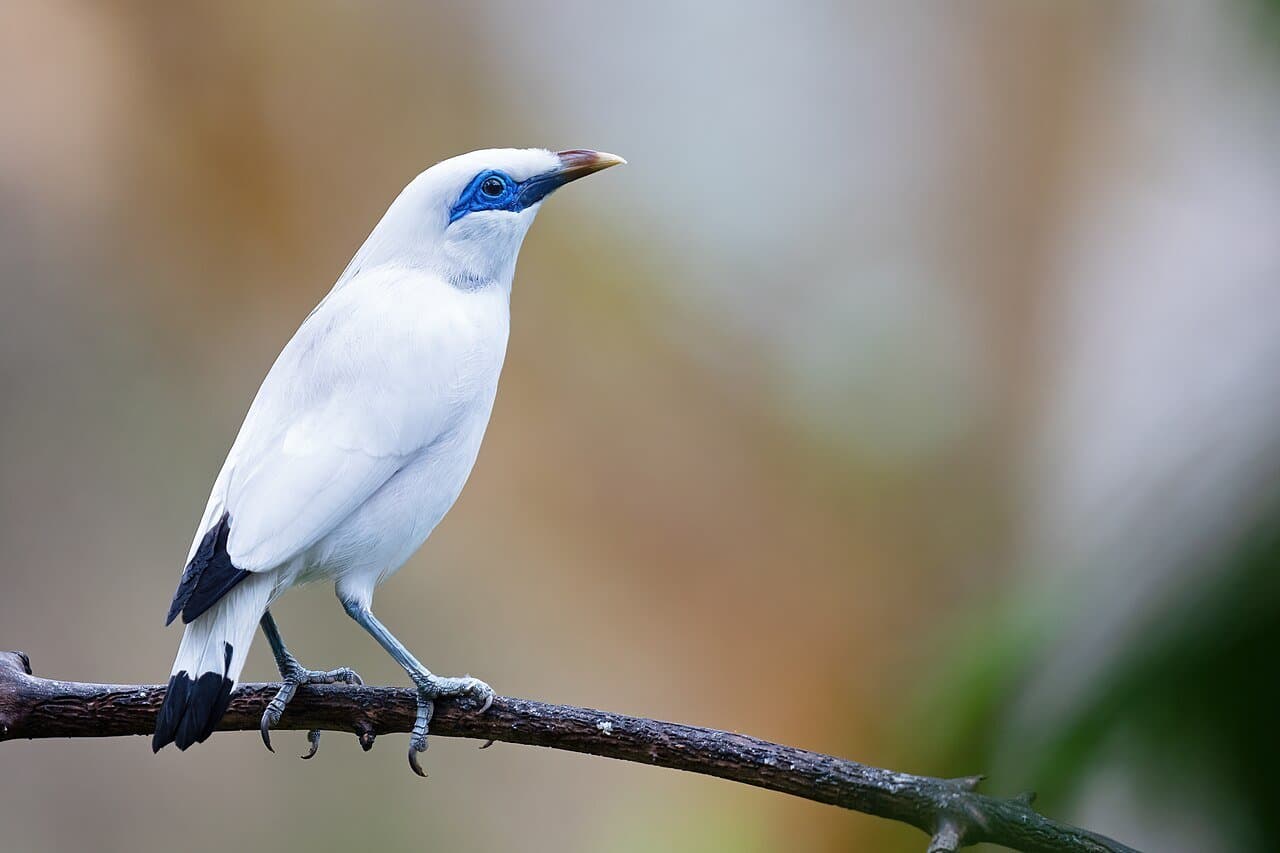 Bali MynahLeucopsar rothschildiA critically endangered white songbird with a bright blue face mask, found in the wild only on part of the Indonesian island of Bali.
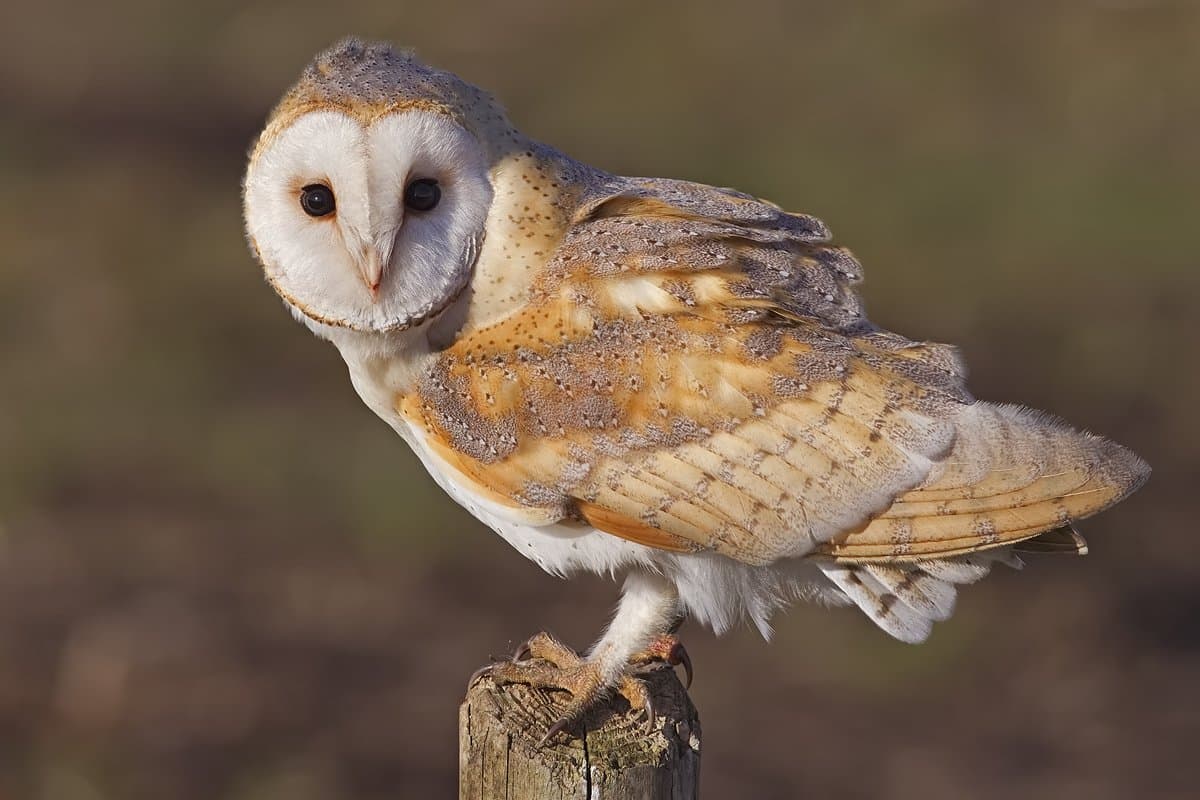 Barn OwlTyto albaA pale owl with a white heart-shaped face, found on every continent except Antarctica, that hunts mice and voles by sound alone.
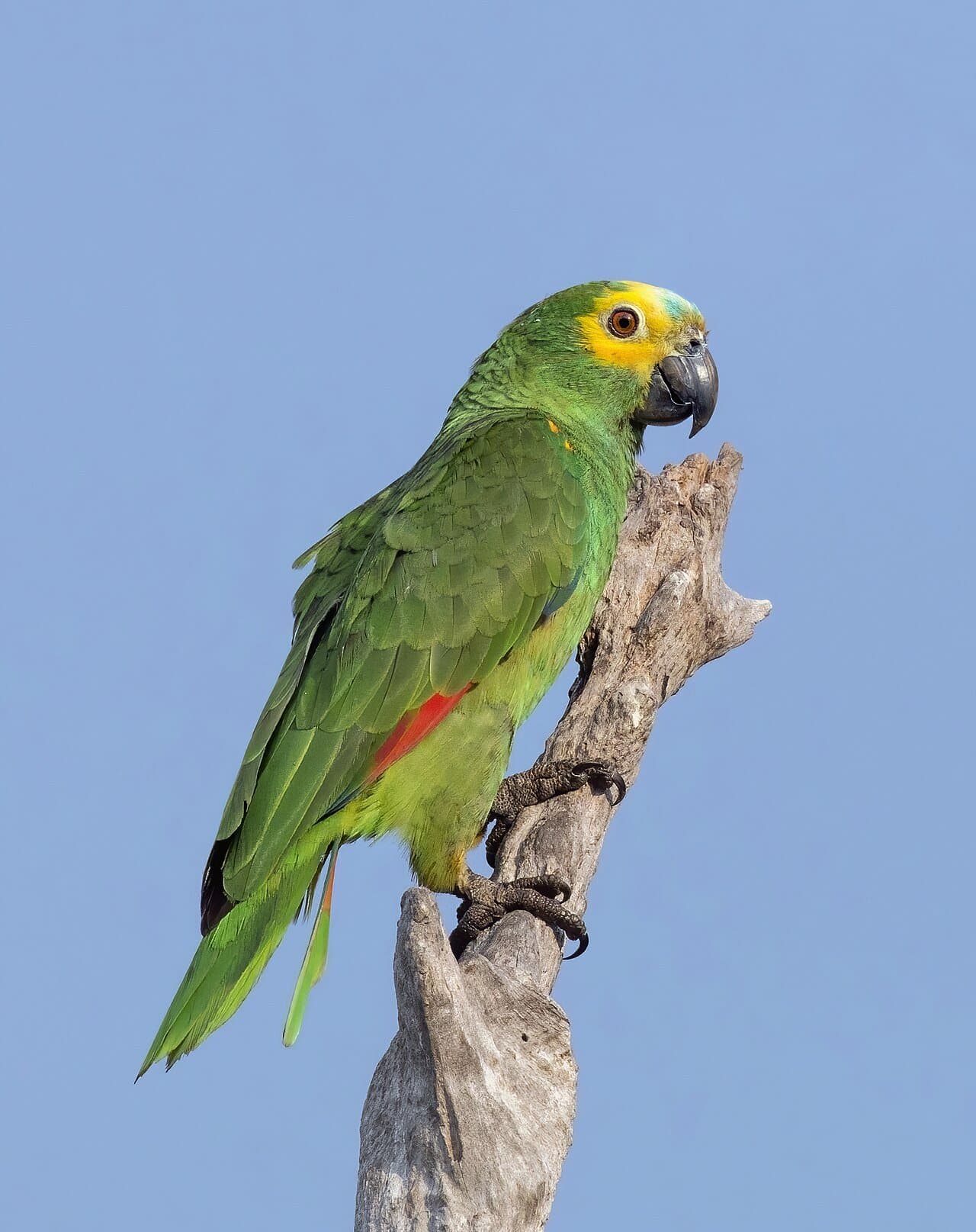 Blue-Fronted AmazonAmazona aestivaA green South American parrot with a blue forehead and yellow face, also called the turquoise-fronted amazon.
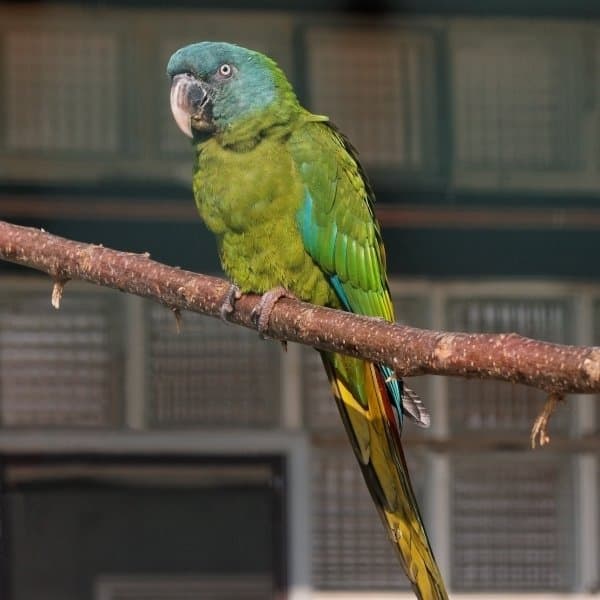 Blue-Headed MacawPrimolius couloniA small "mini-macaw" of the western Amazon with a blue head and green body.
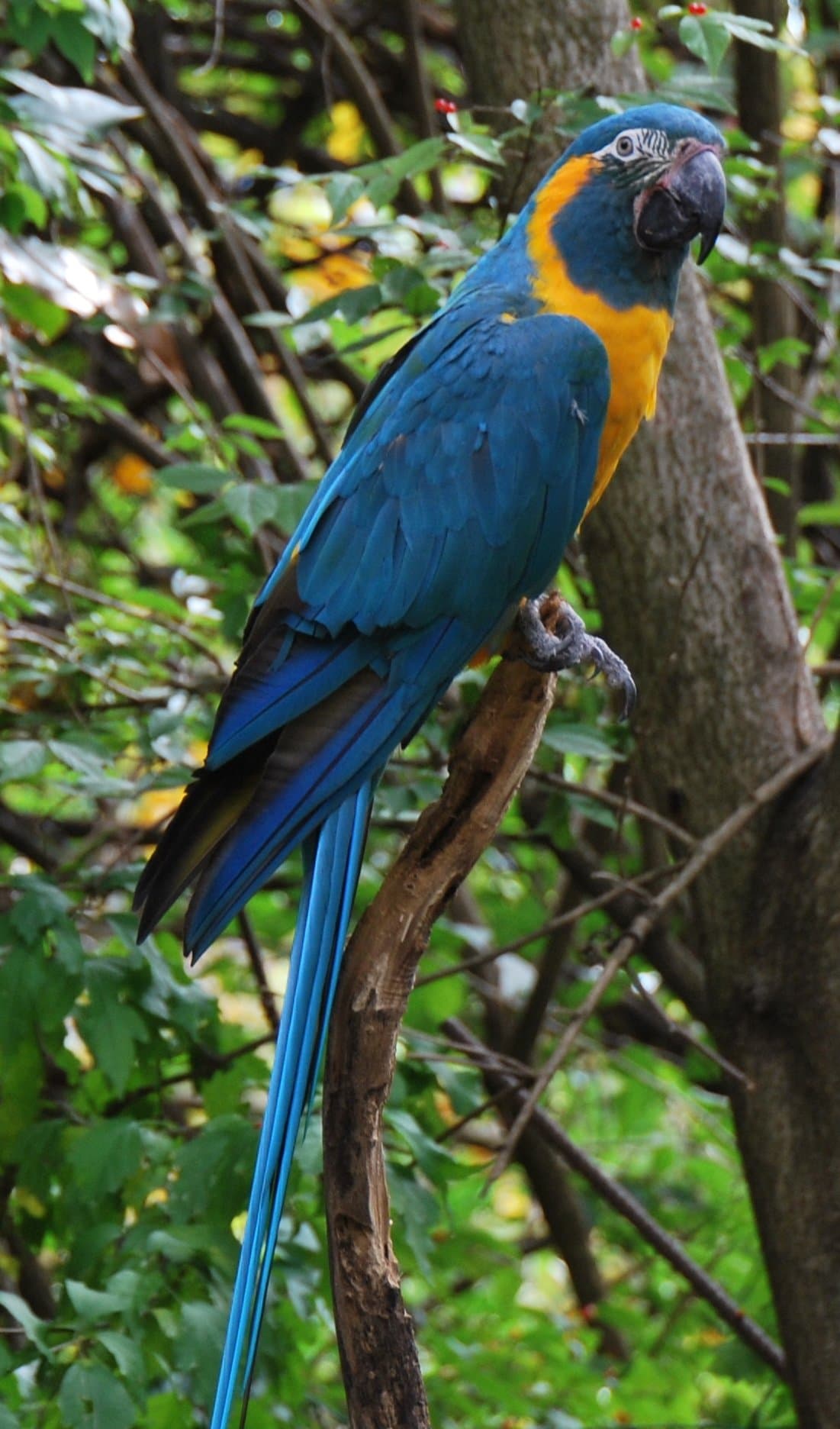 Blue-Throated MacawAra glaucogularisThe rarest macaw in the world, a blue-and-gold parrot of Bolivia's flooded Beni savanna with only about 400 left in the wild.
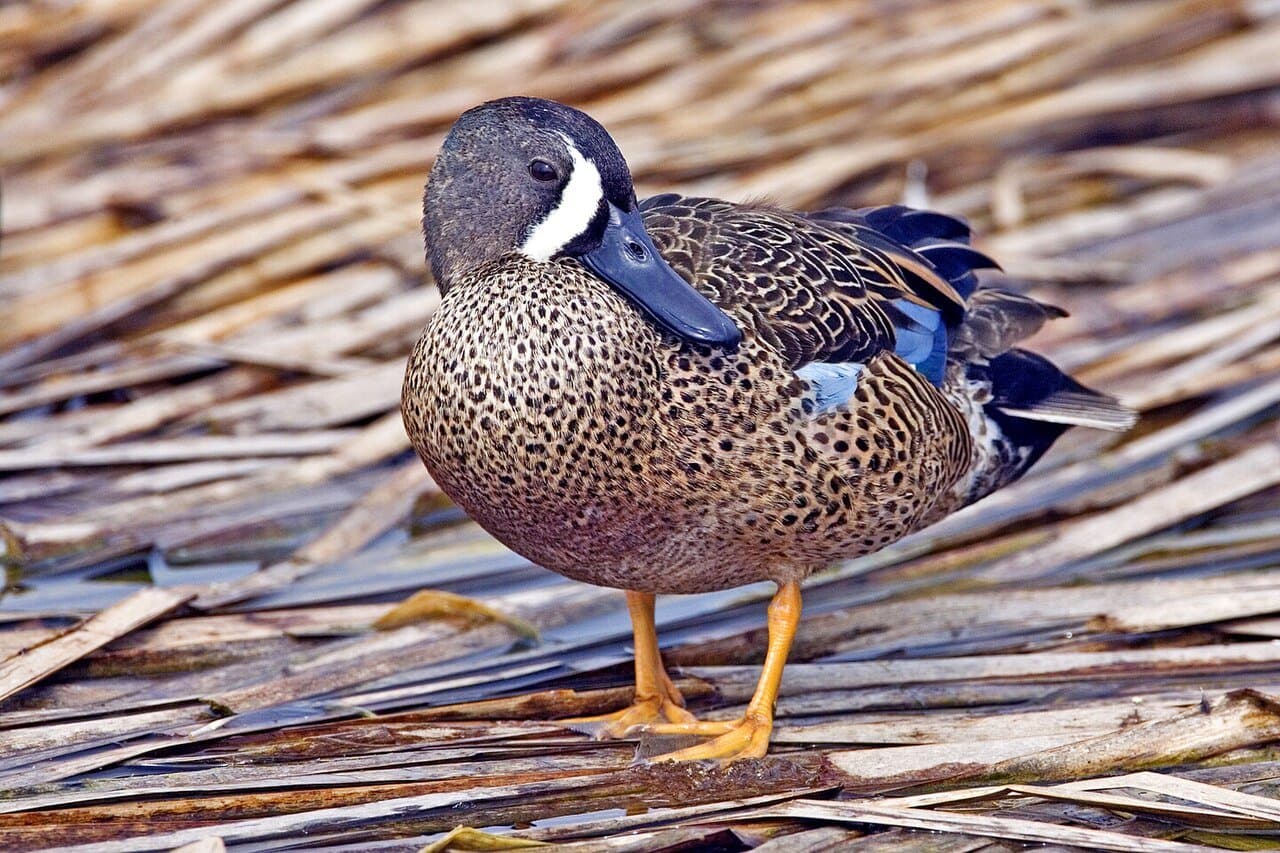 Blue-Winged TealSpatula discorsA small dabbling duck that flies from North America as far as South America each fall, flashing a powder-blue wing patch.
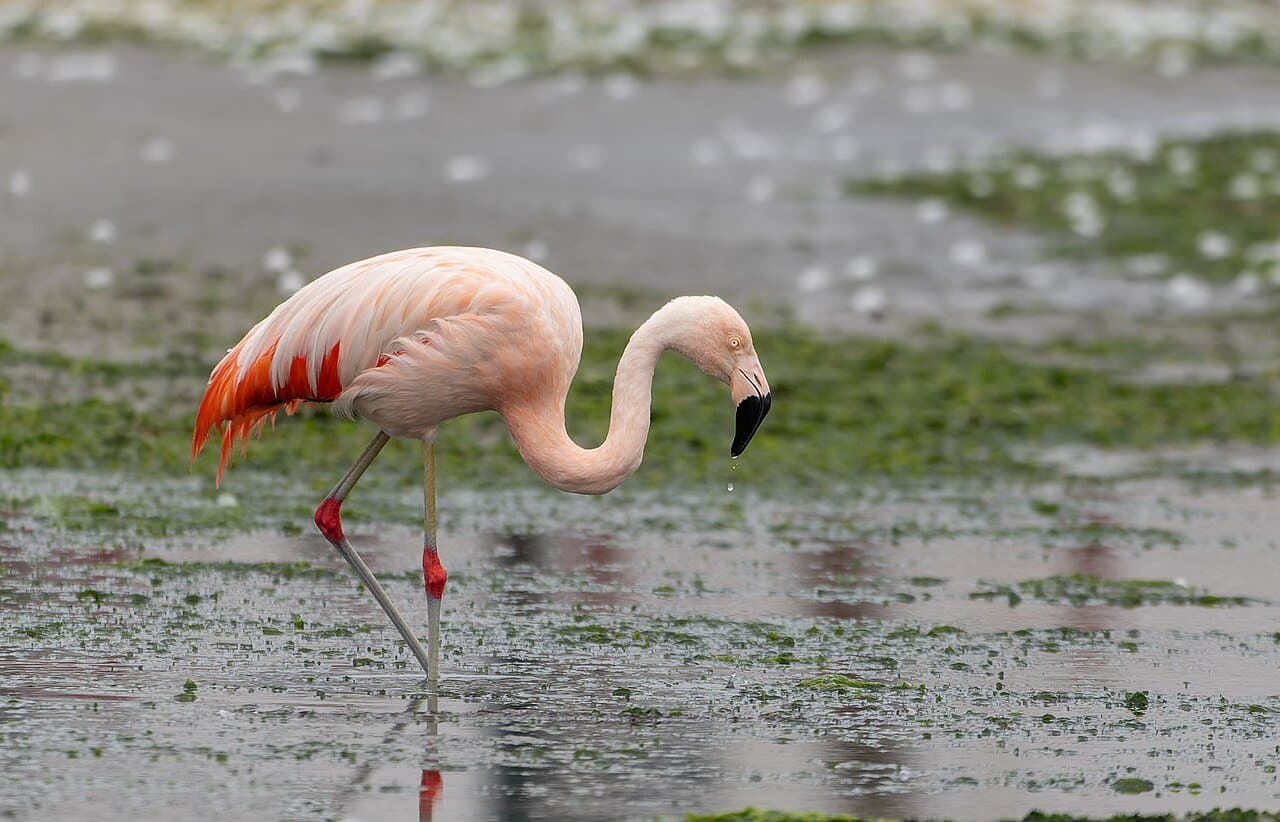 Chilean FlamingoPhoenicopterus chilensisA pink flamingo of the high, cold salt flats of the southern Andes that feeds with its head upside down.
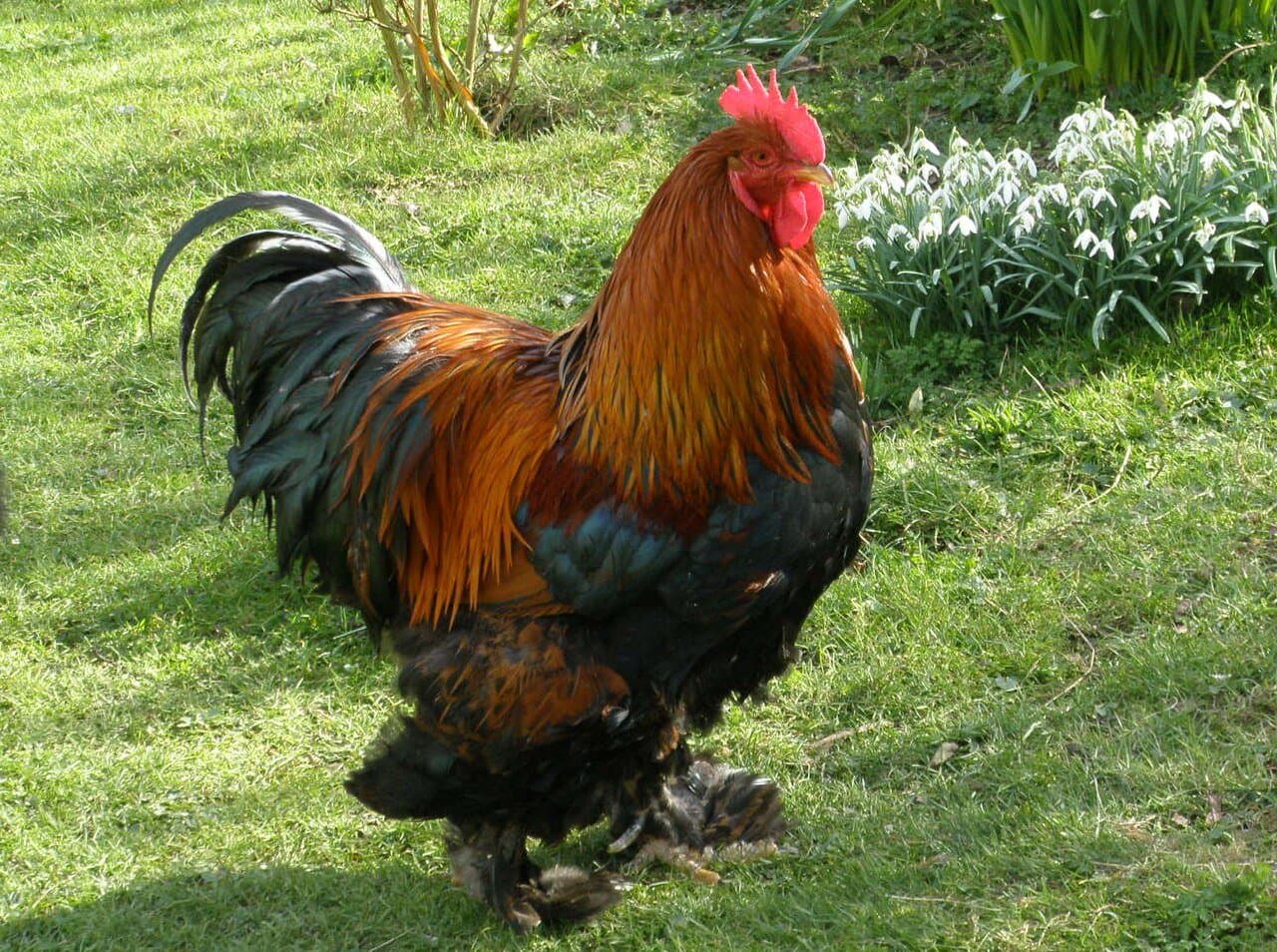 Cochin ChickenGallus gallus domesticusA big, fluffy, calm chicken breed with feathers all the way down its feet.
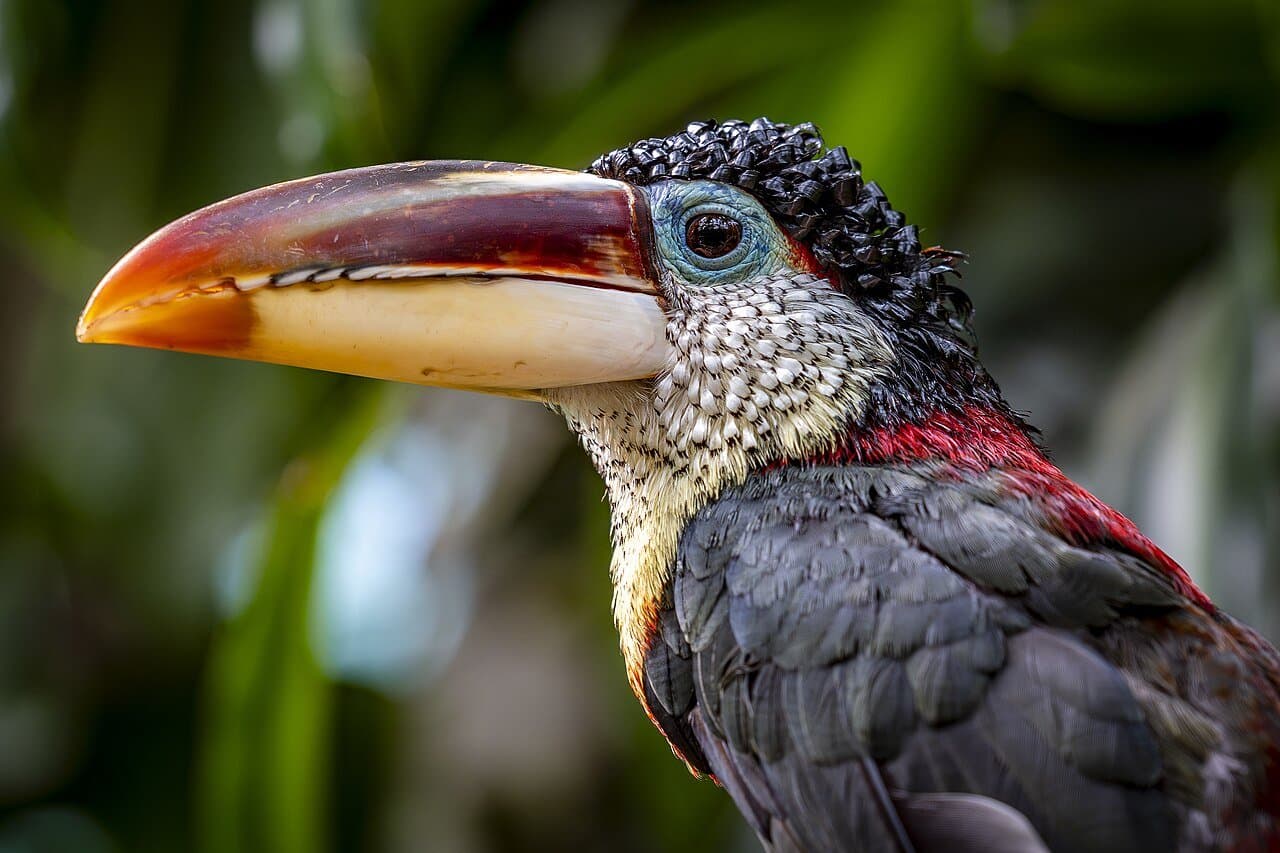 Curl-Crested AraçariPteroglossus beauharnaesiiA small, colorful toucan of the western Amazon with shiny, curled black feathers on its head that look like plastic.
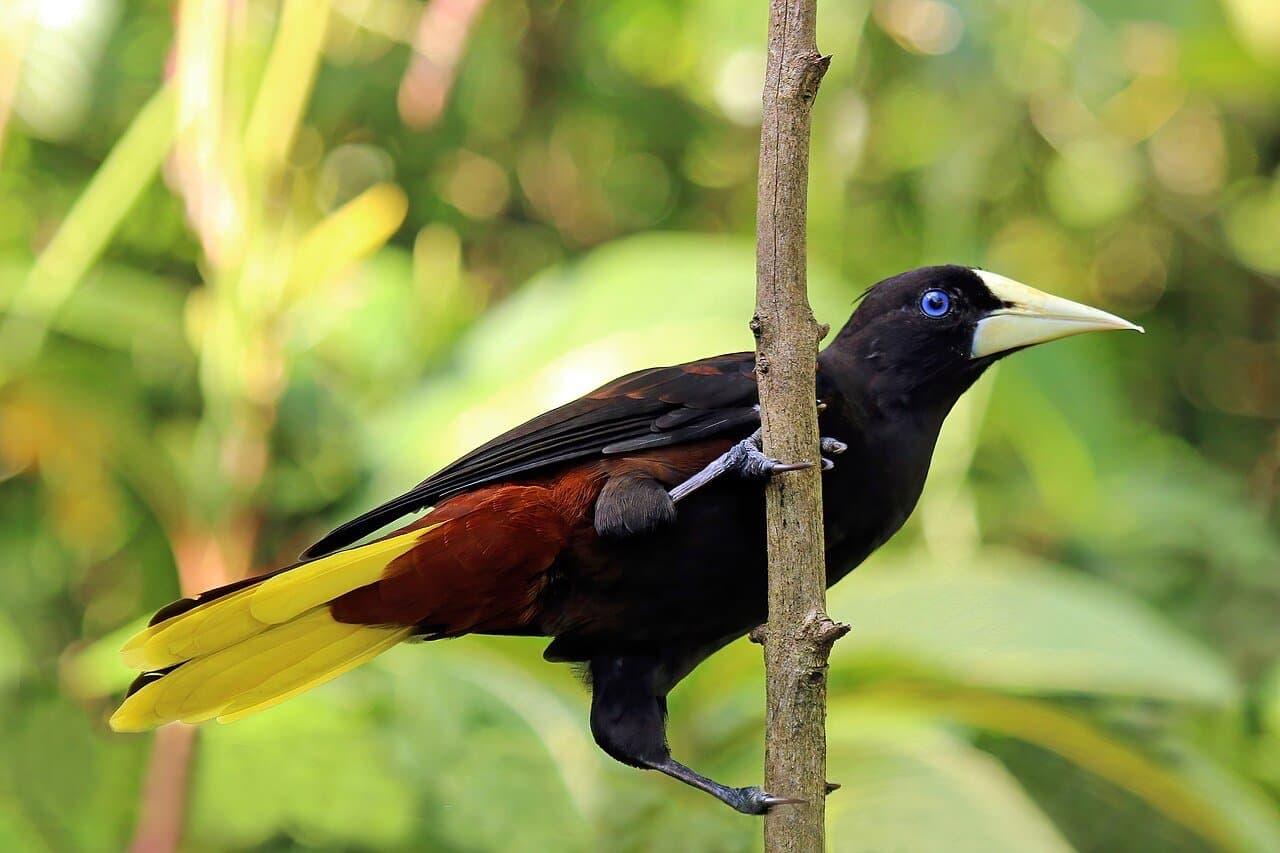 Crested OropendolaPsarocolius decumanusA black-and-yellow South American bird that weaves long hanging nests, with males that bow upside down to court females.
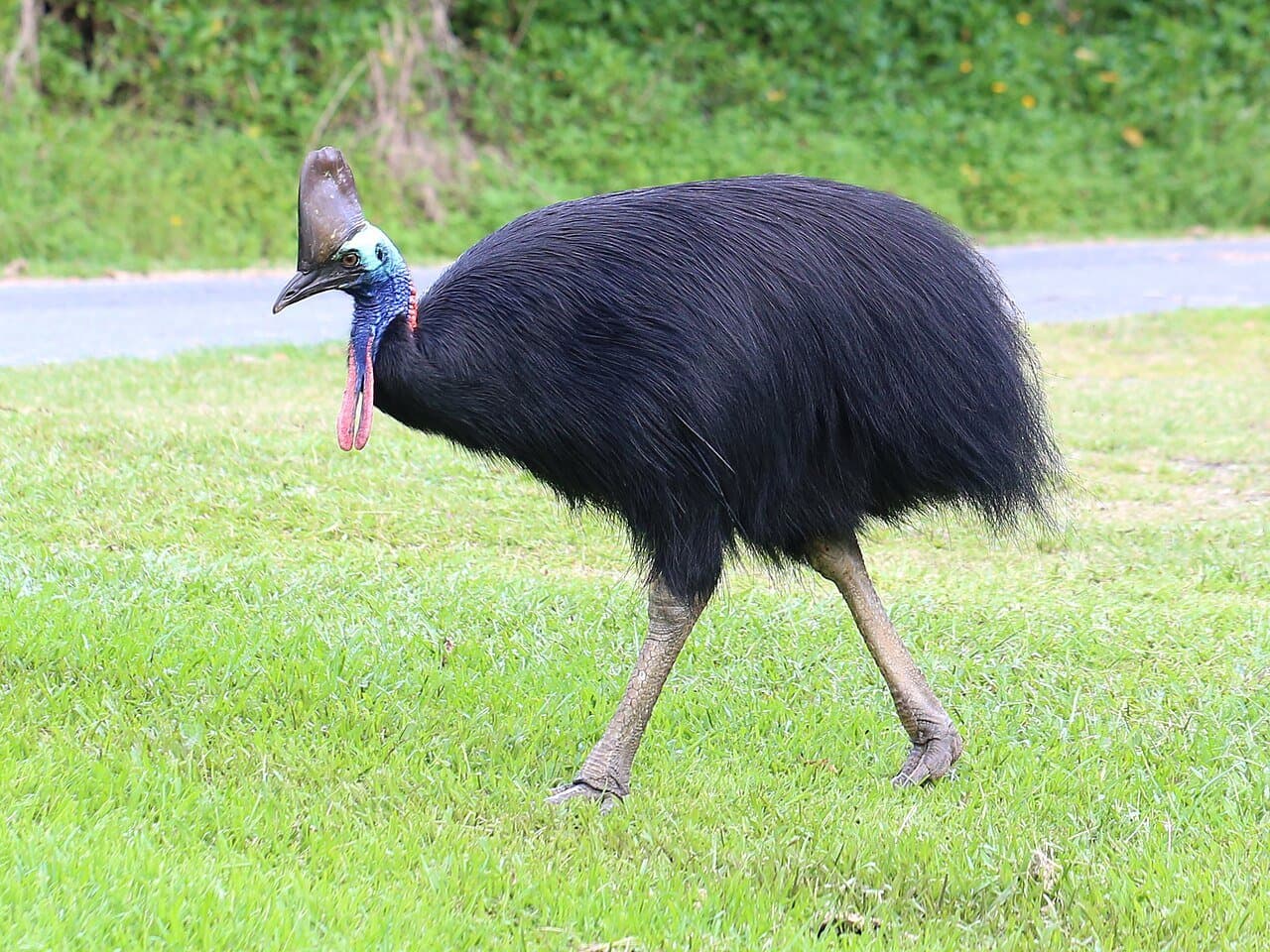 Southern CassowaryCasuarius casuariusA huge flightless rainforest bird of New Guinea and Australia with a bony helmet, a blue-and-red neck and a dagger-like claw.
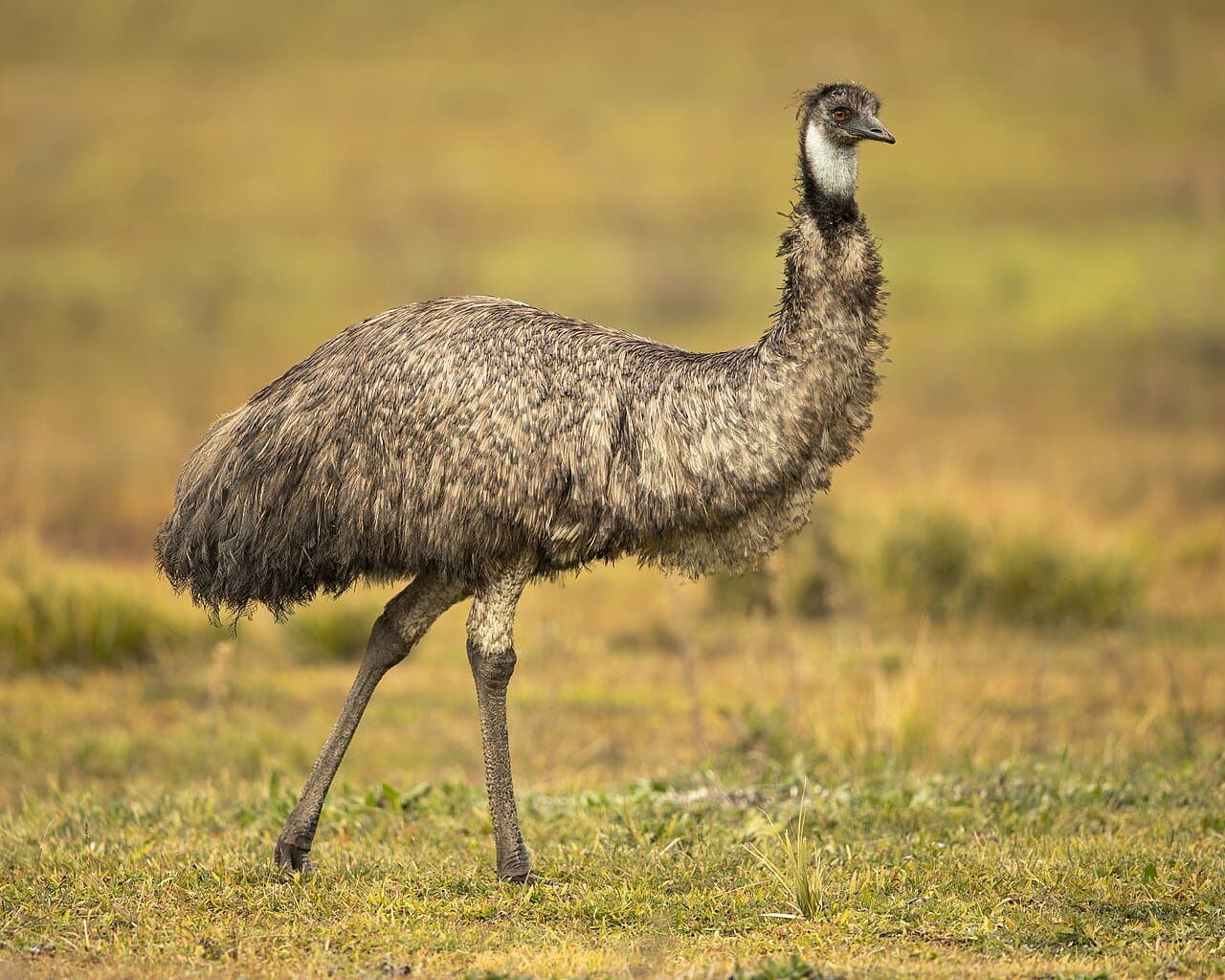 EmuDromaius novaehollandiaeAustralia's largest bird, a shaggy flightless runner whose fathers hatch the eggs and raise the chicks.
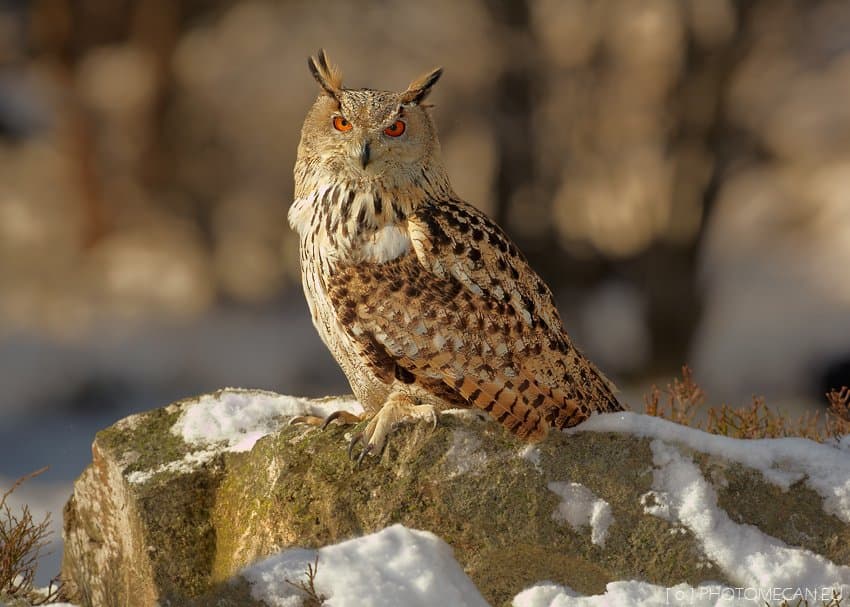 Eurasian Eagle-OwlBubo buboOne of the world's largest owls, with orange eyes, tall ear tufts and a wingspan up to six feet.
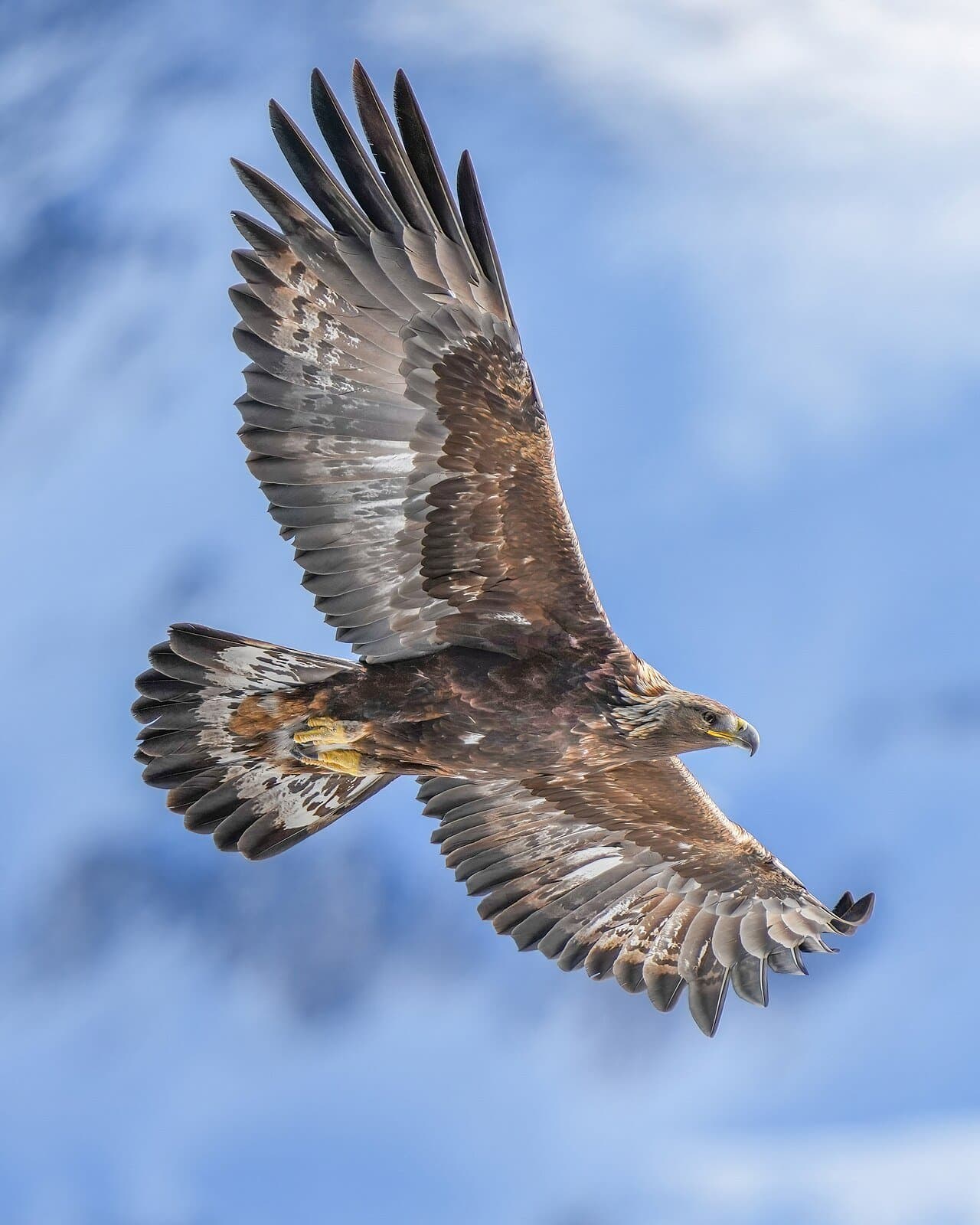 Golden EagleAquila chrysaetosNorth America's largest bird of prey, a brown eagle with golden feathers on its neck that can dive at 200 miles per hour.
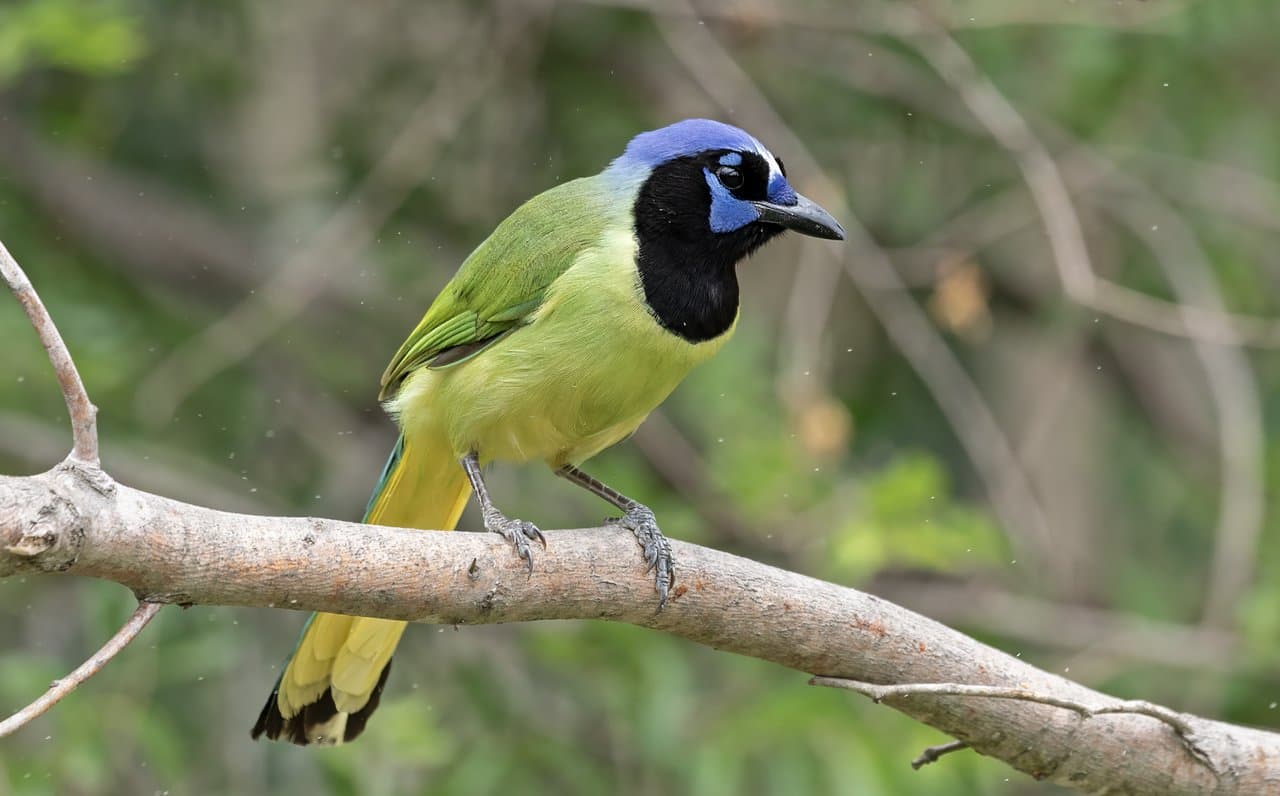 Green JayCyanocorax yncasA bright green, yellow, blue and black jay from southern Texas to South America that uses sticks as tools to dig out insects.
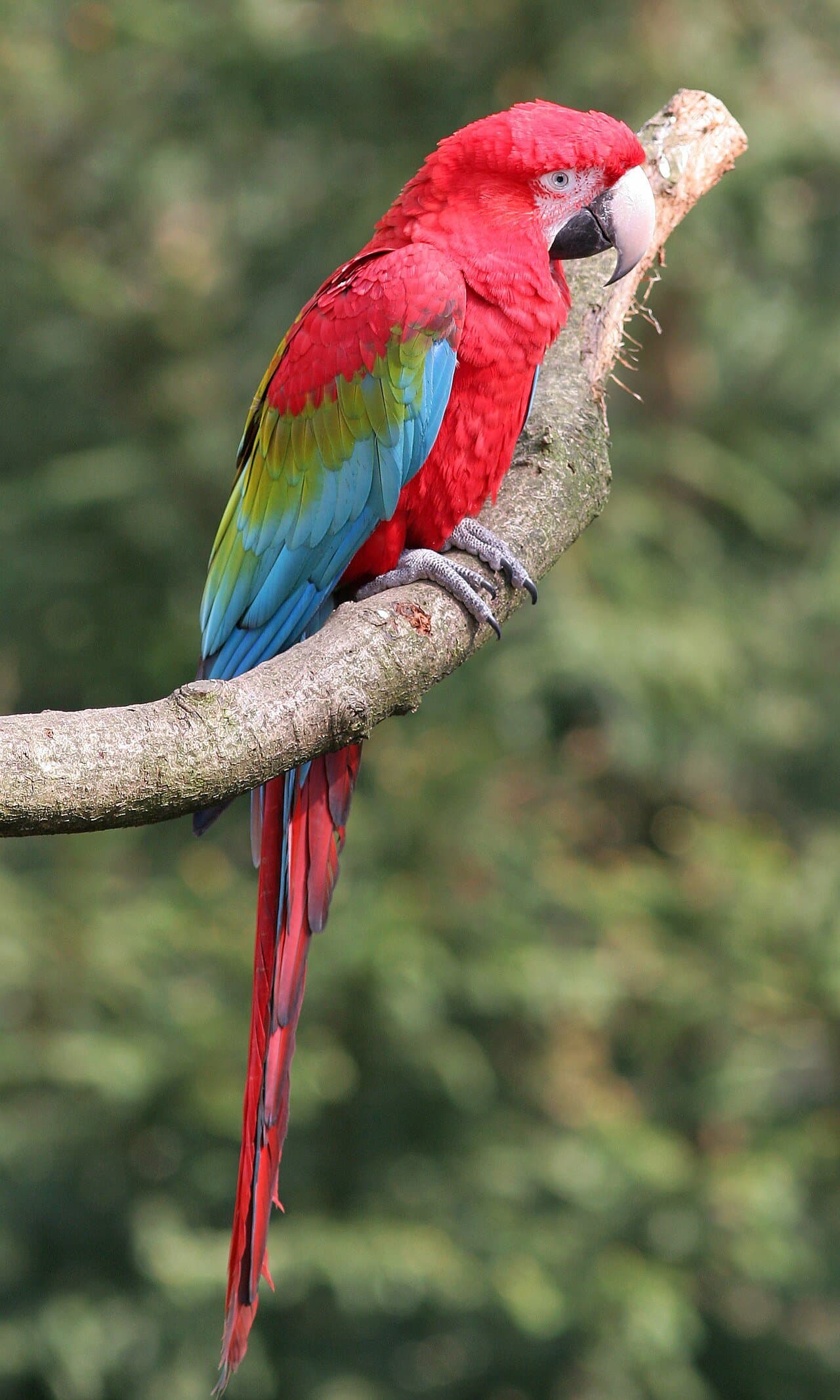 Green-Winged MacawAra chloropterusA big red South American macaw, also called the red-and-green macaw, with green and blue wings and lines of tiny red feathers on its face.
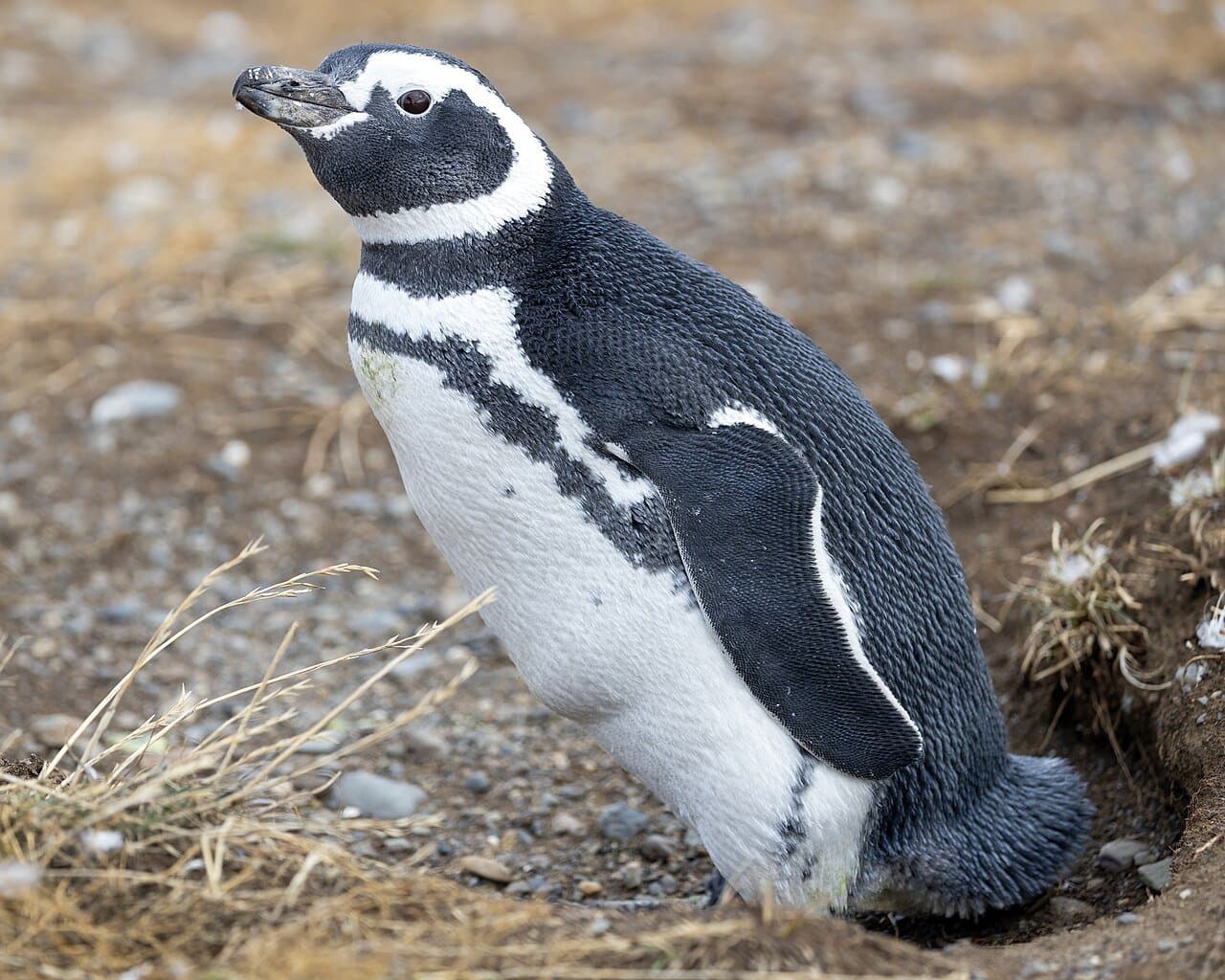 Magellanic PenguinSpheniscus magellanicusA burrow-nesting penguin of the coasts of Chile, Argentina and the Falkland Islands, named for the Strait of Magellan.
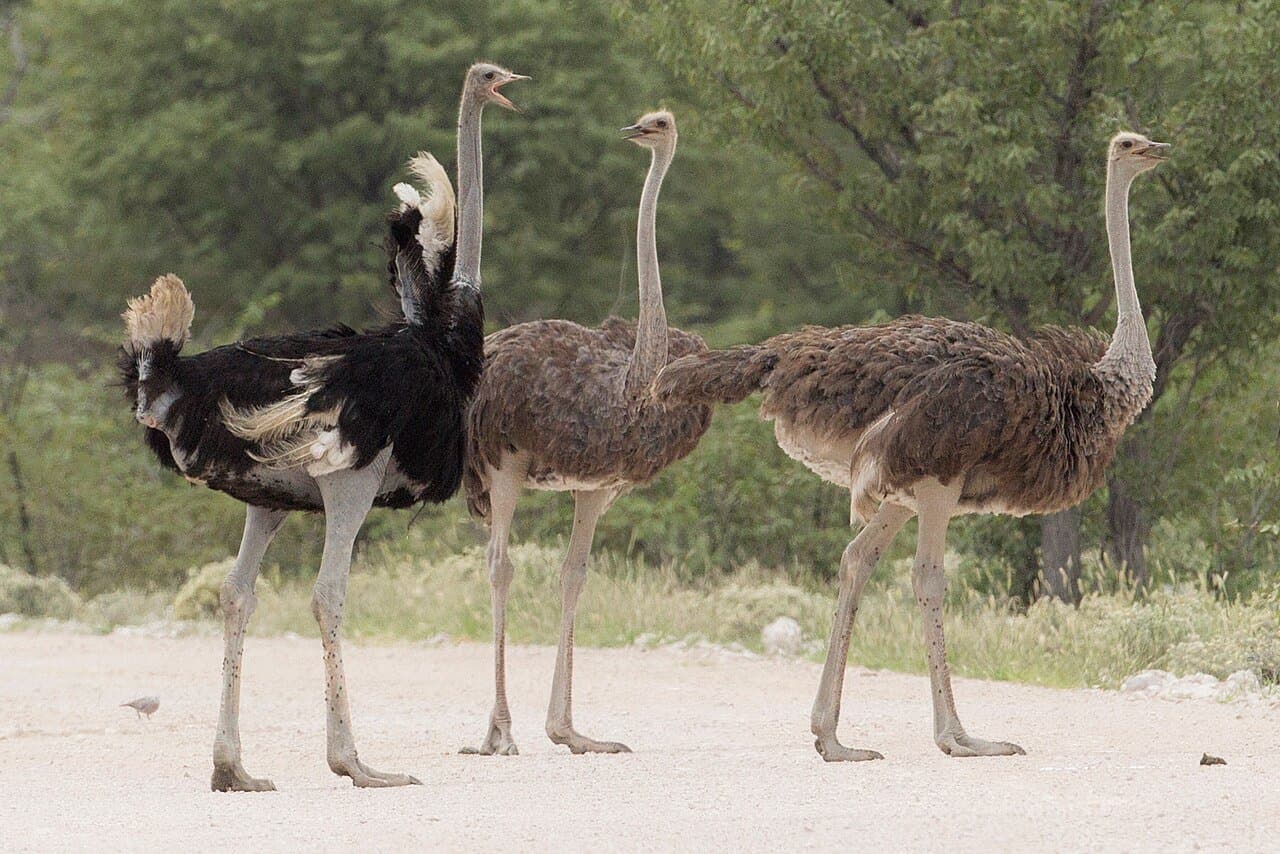 OstrichStruthio camelusThe world's largest bird, a fast-running flightless bird of African savannas that lays the largest egg on Earth.
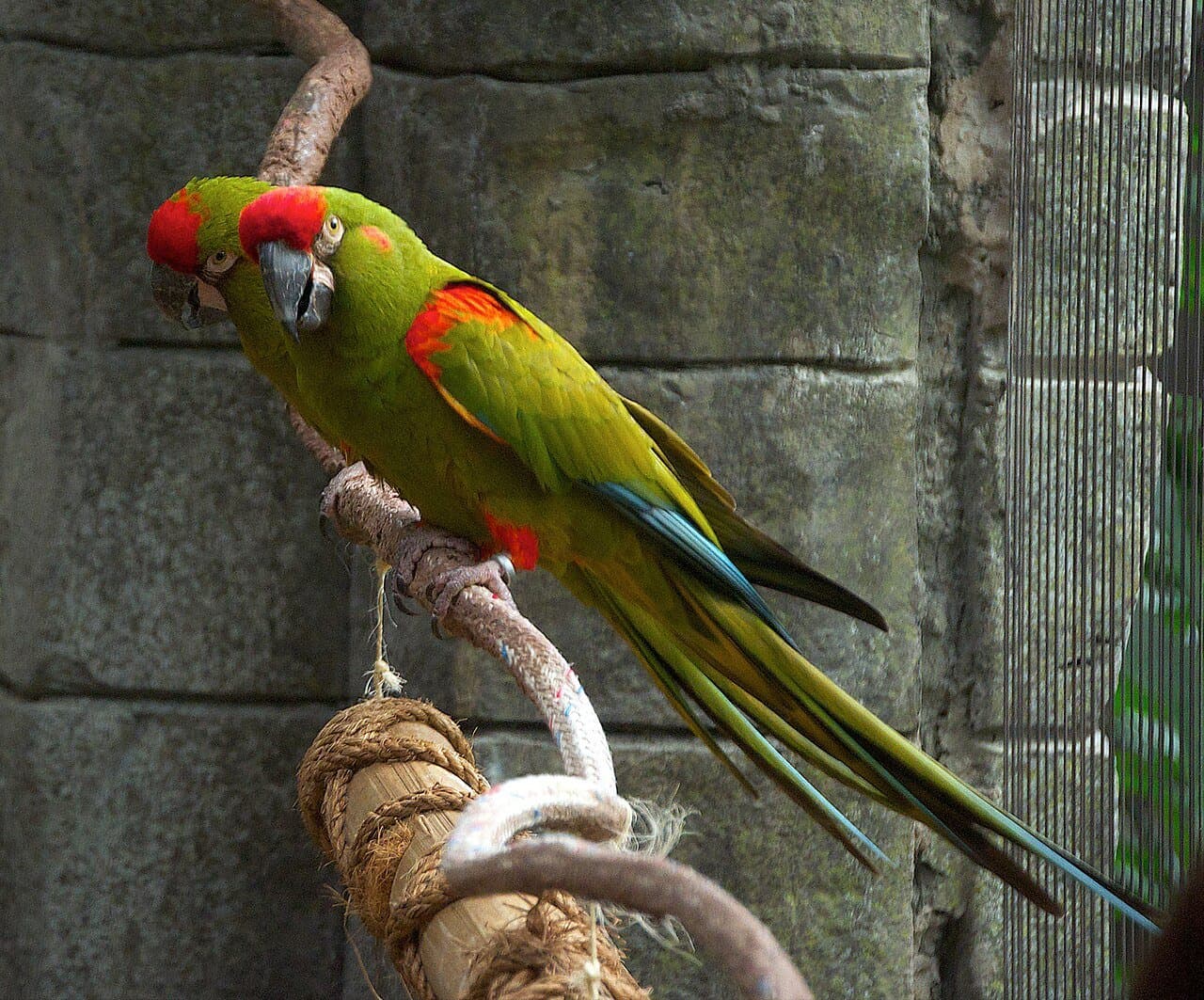 Red-Fronted MacawAra rubrogenysA critically endangered green macaw with a red forehead that lives only in dry mountain valleys of central Bolivia.
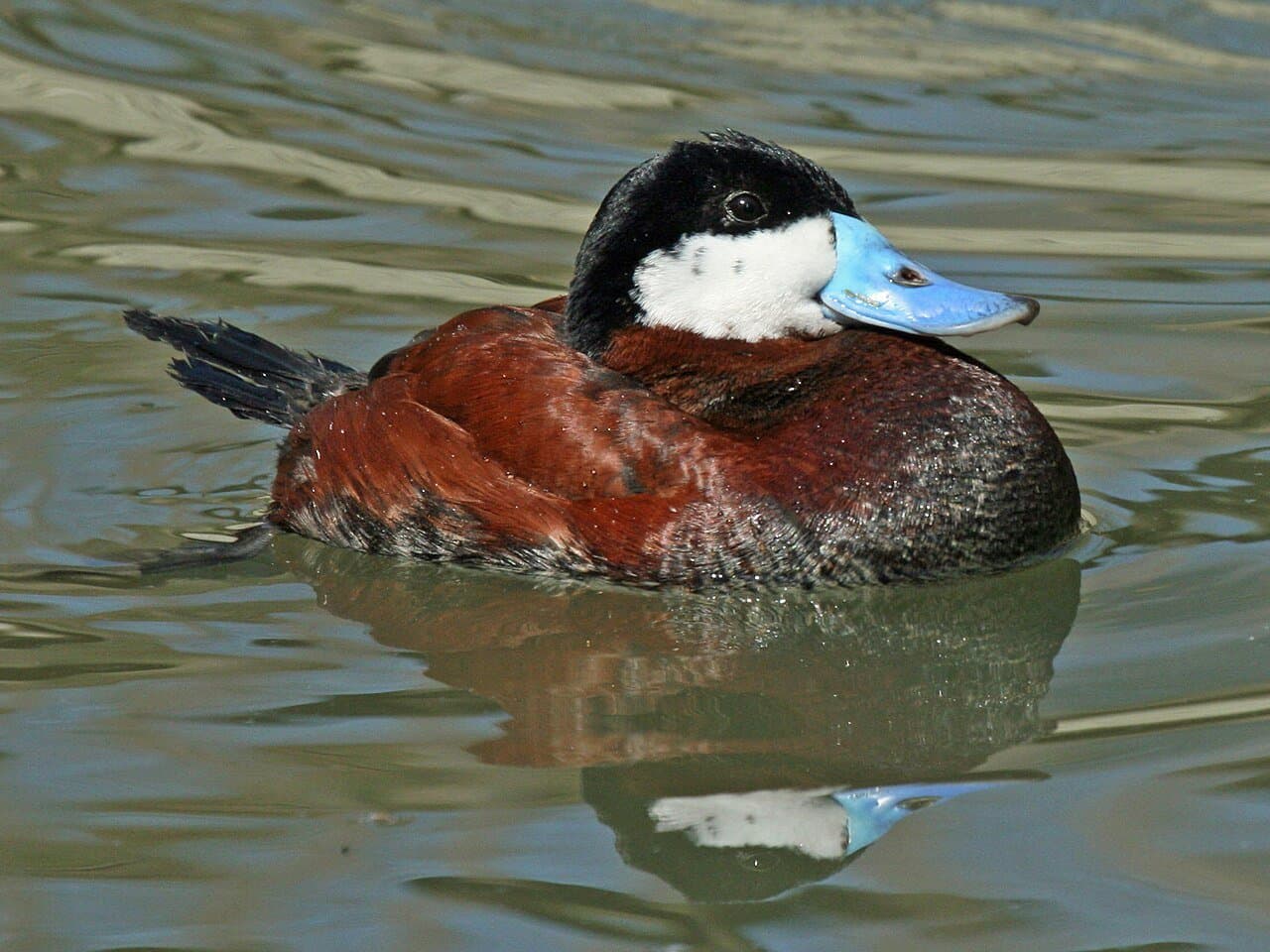 Ruddy DuckOxyura jamaicensisA small diving duck of the Americas with a bright blue bill, whose males drum their bills to make bubbles when courting.
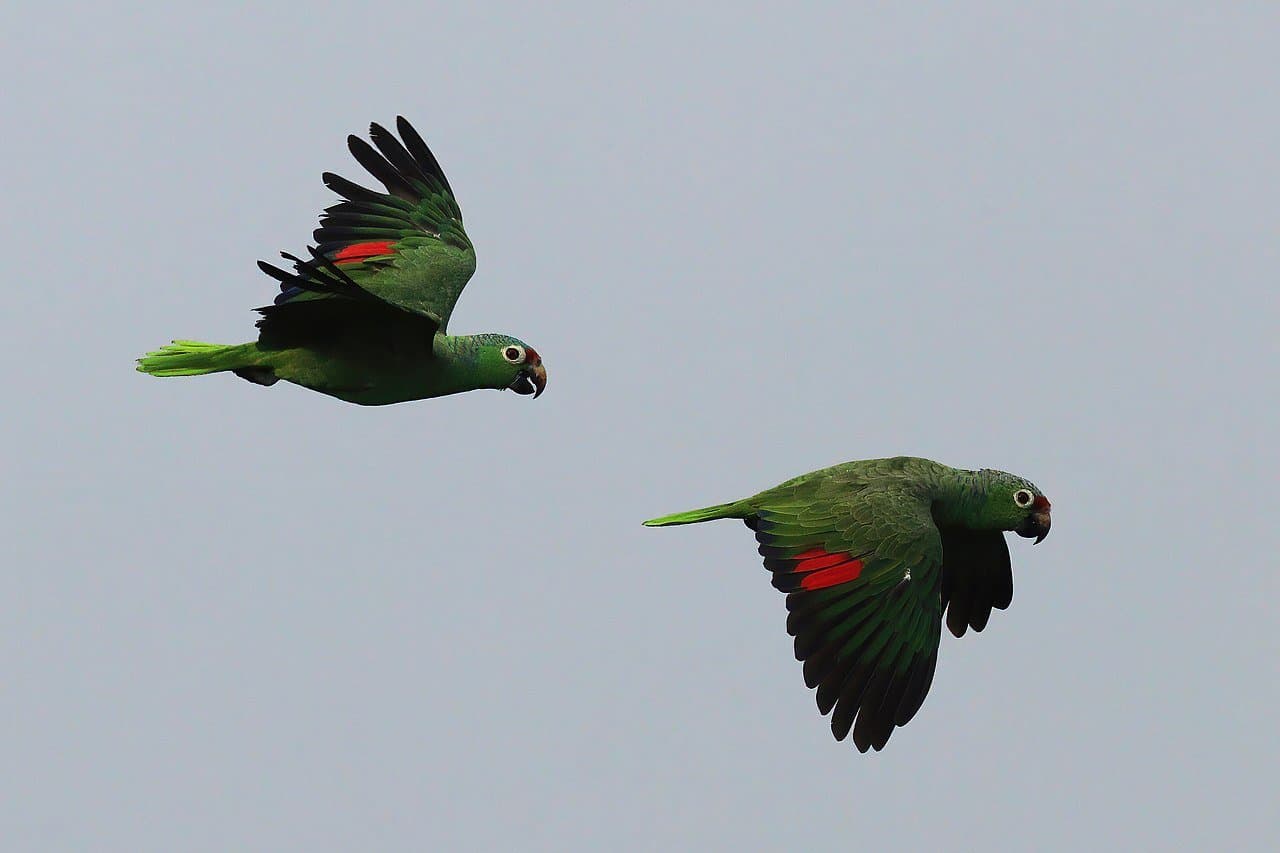 Red-Lored AmazonAmazona autumnalis (Salvin's amazon is the subspecies A. a. salvini)A green Central and South American parrot with red feathers above its beak. The Salvin's amazon is one of its subspecies.
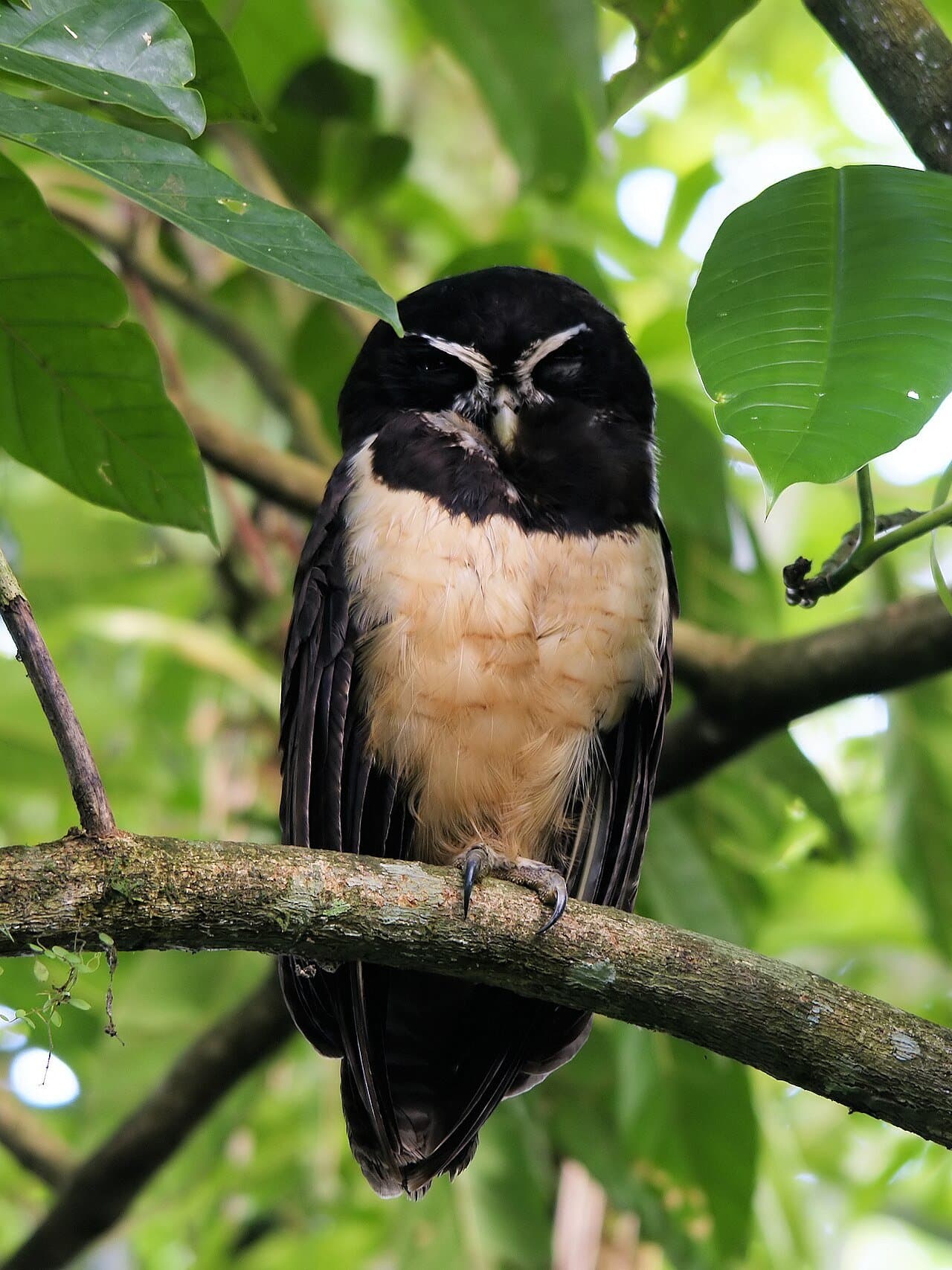 Spectacled OwlPulsatrix perspicillataThe largest tropical owl of the Americas, a brown owl with white "eyeglasses" around its yellow eyes.
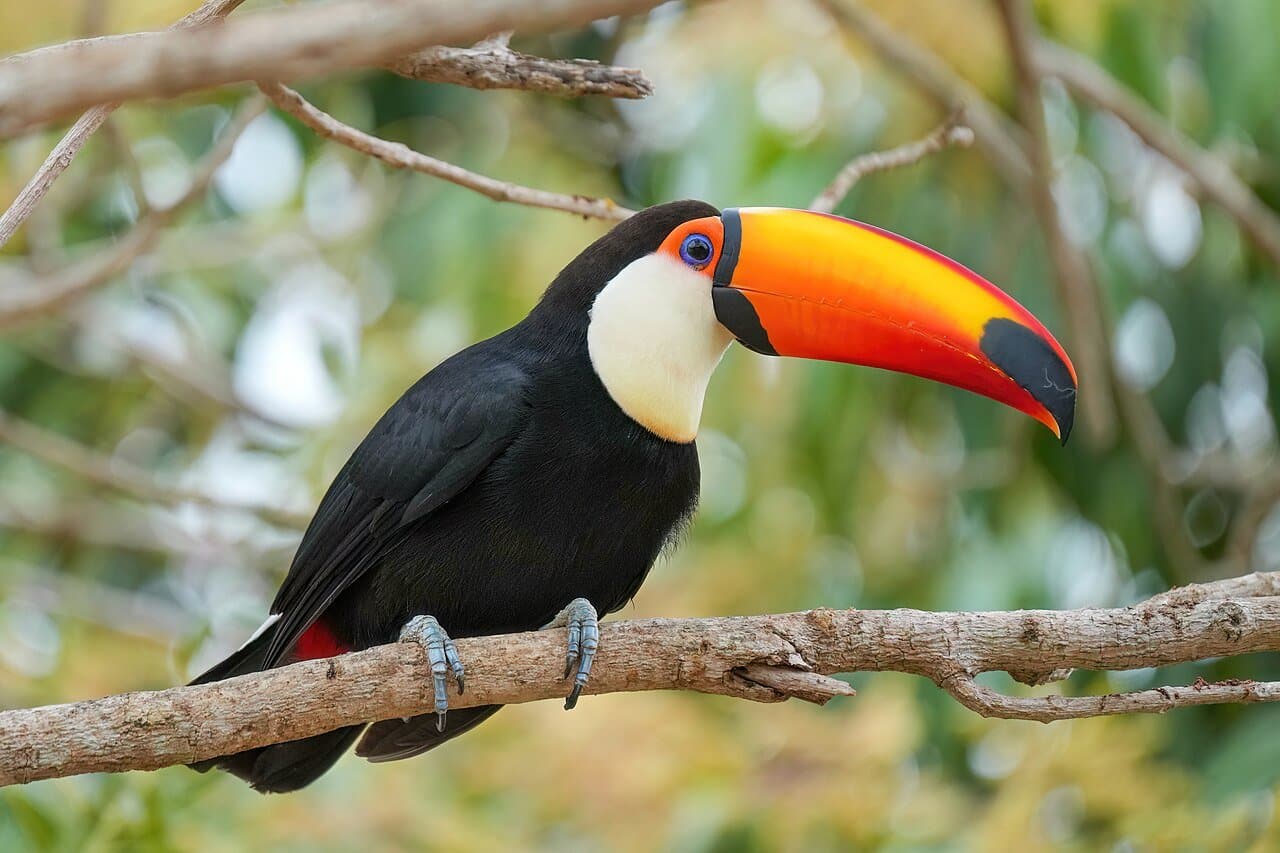 Toco ToucanRamphastos tocoThe largest toucan, with a huge orange bill that is light because it is made of keratin.
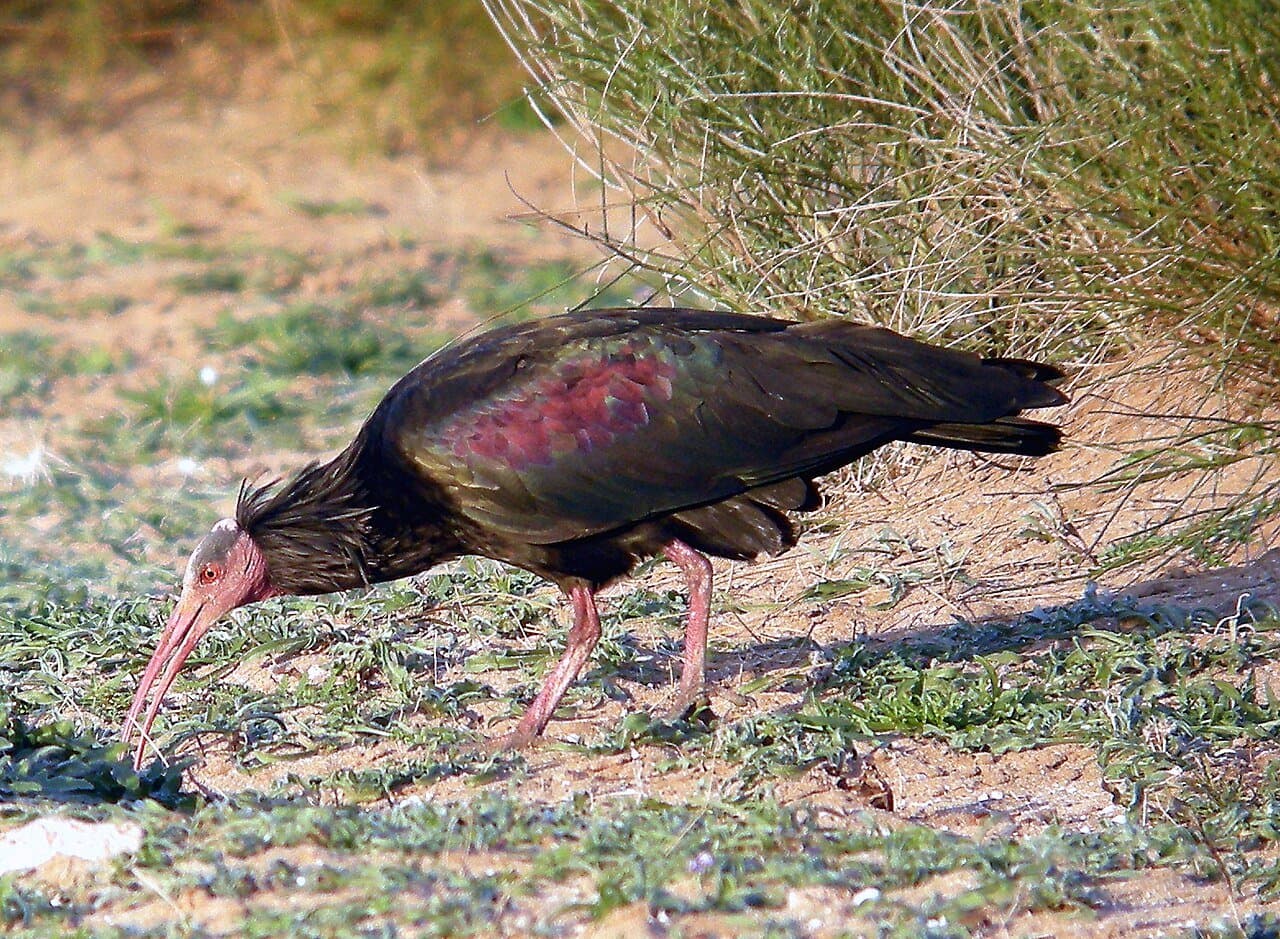 Northern Bald IbisGeronticus eremitaA glossy black ibis with a bald red head, also called the waldrapp, that was once common in Europe and is now one of the world's rarest birds.
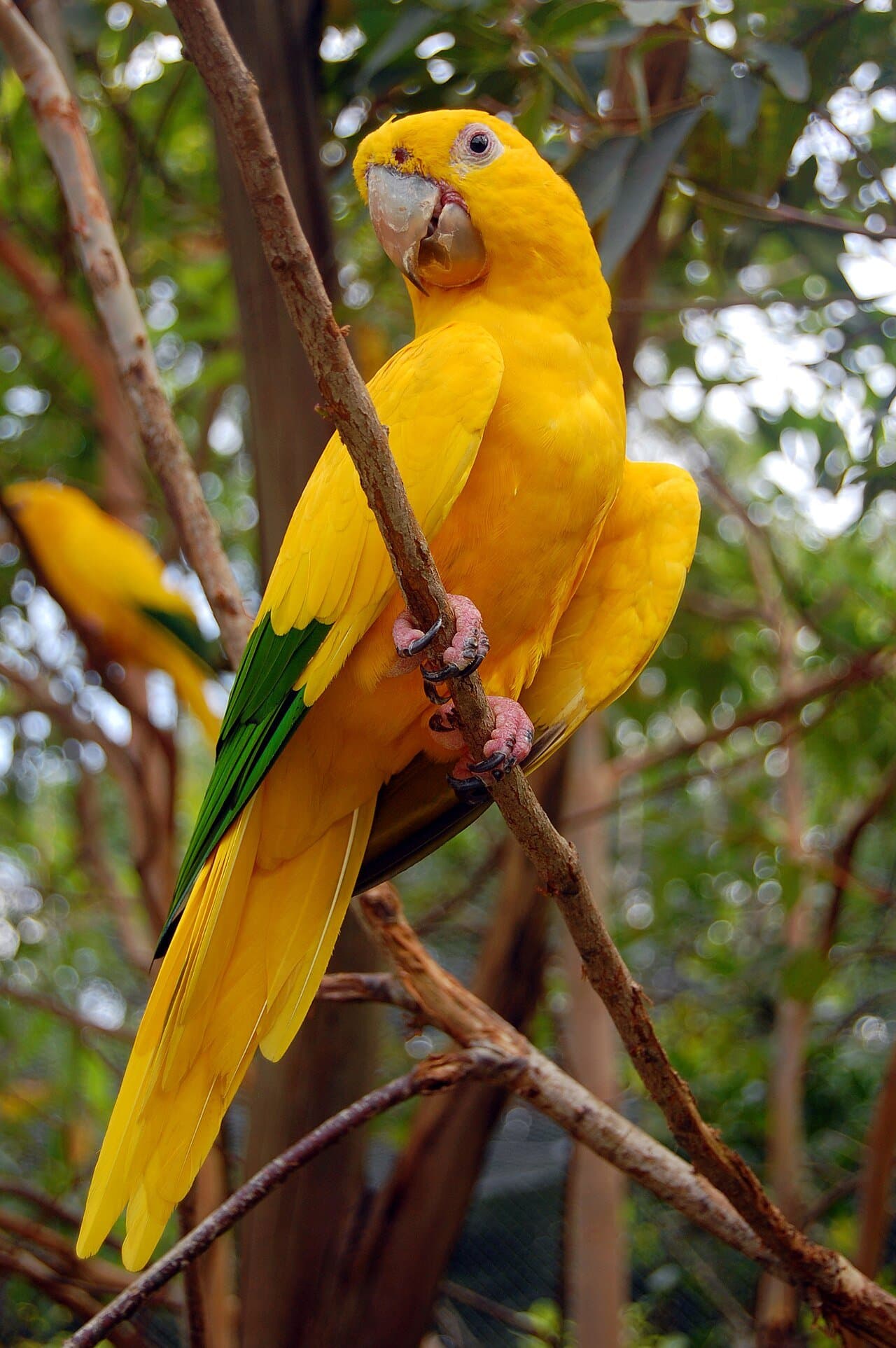 Golden ConureGuaruba guaroubaA bright yellow-and-green Brazilian parrot whose flock members help raise each other's chicks.
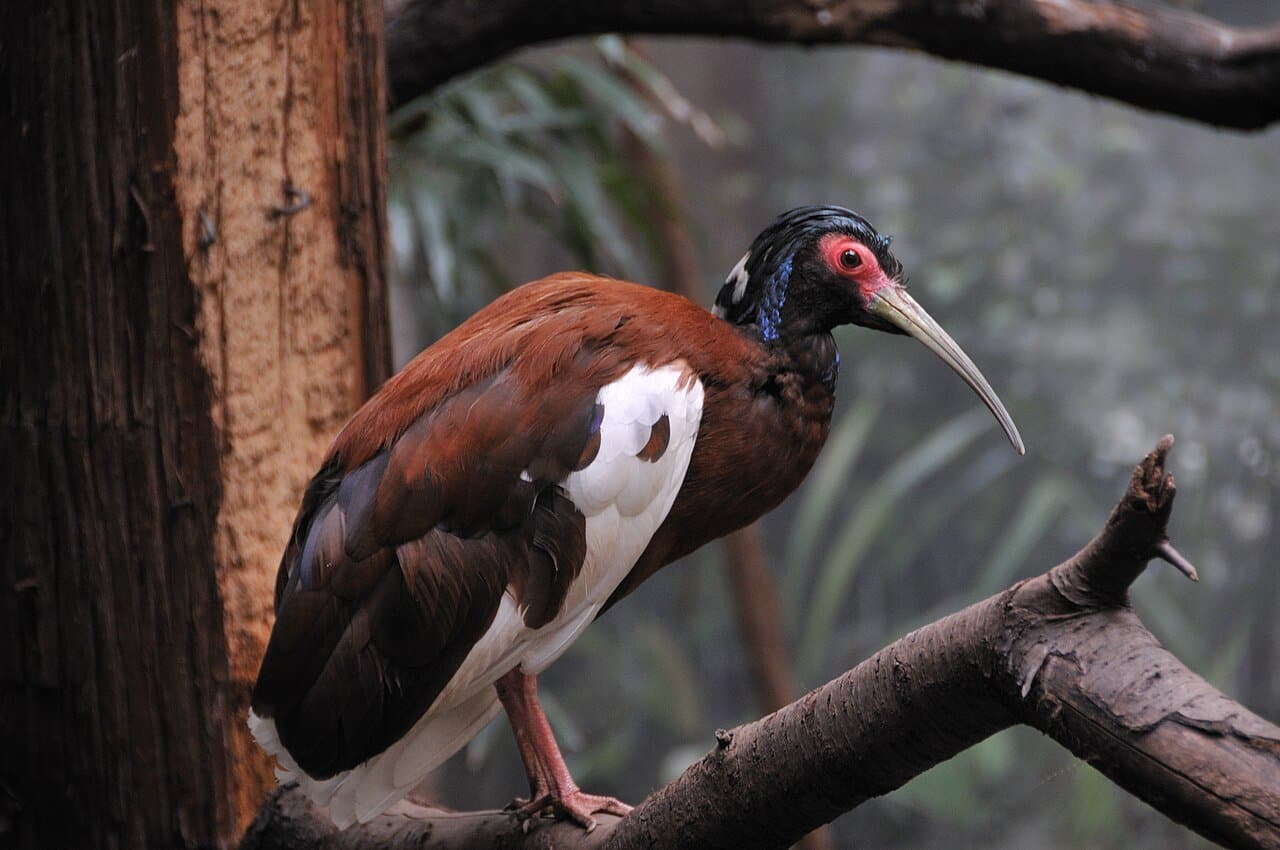 Madagascar Crested IbisLophotibis cristataA forest ibis found only on Madagascar, with a brown body, white wings and a shiny greenish-blue crest.
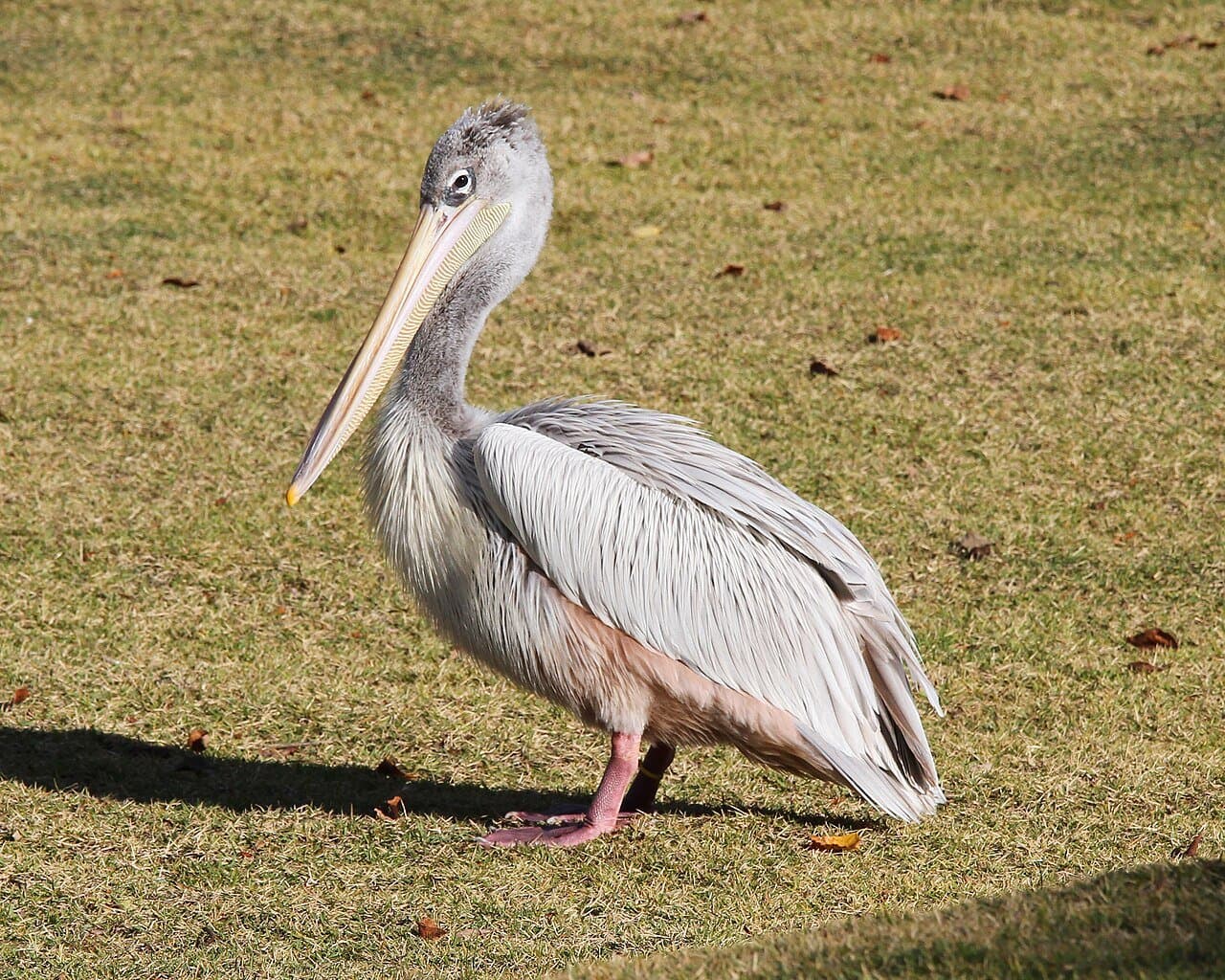 Pink-Backed PelicanPelecanus rufescensOne of the smallest pelicans, a gray African pelican with a pinkish back that nests in trees.
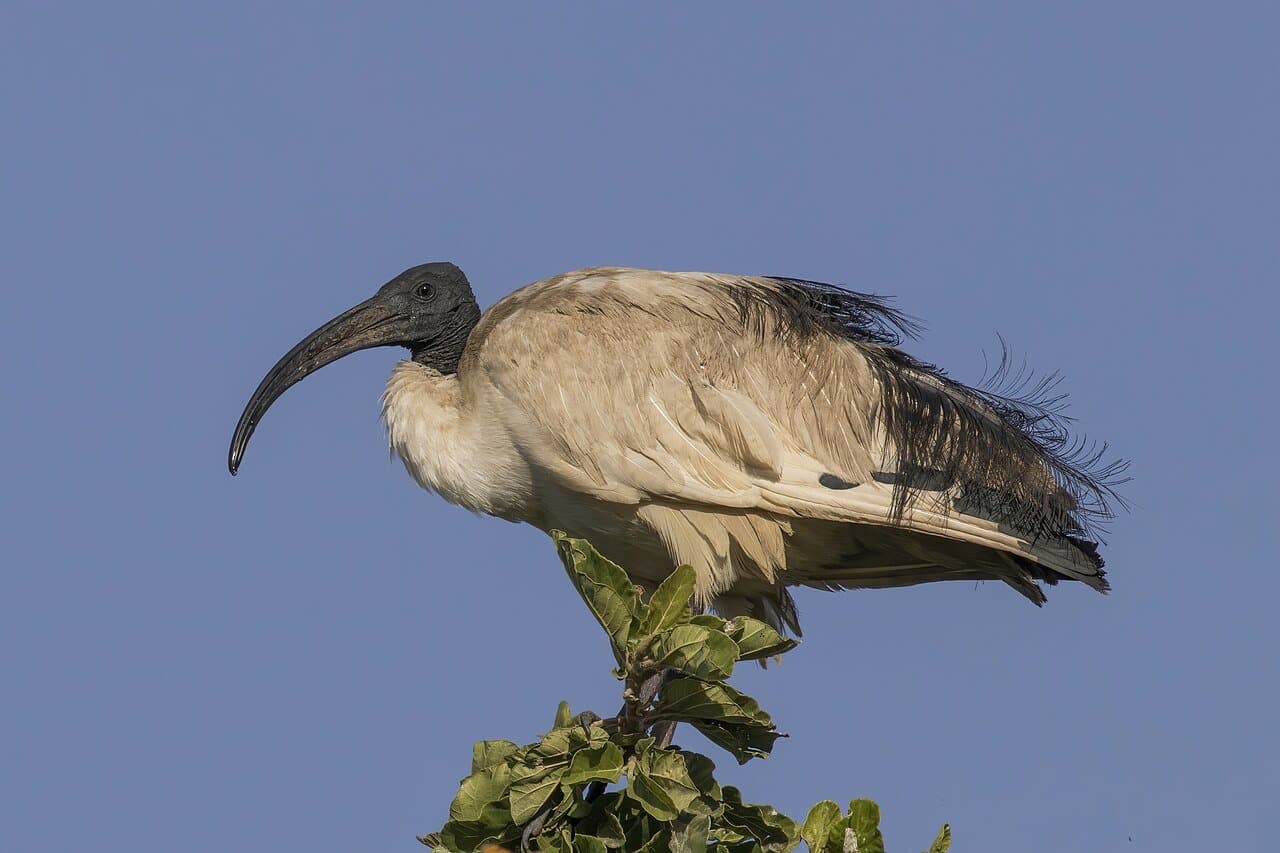 African Sacred IbisThreskiornis aethiopicusA white ibis with a black head and neck that ancient Egyptians honored as a symbol of the god Thoth.
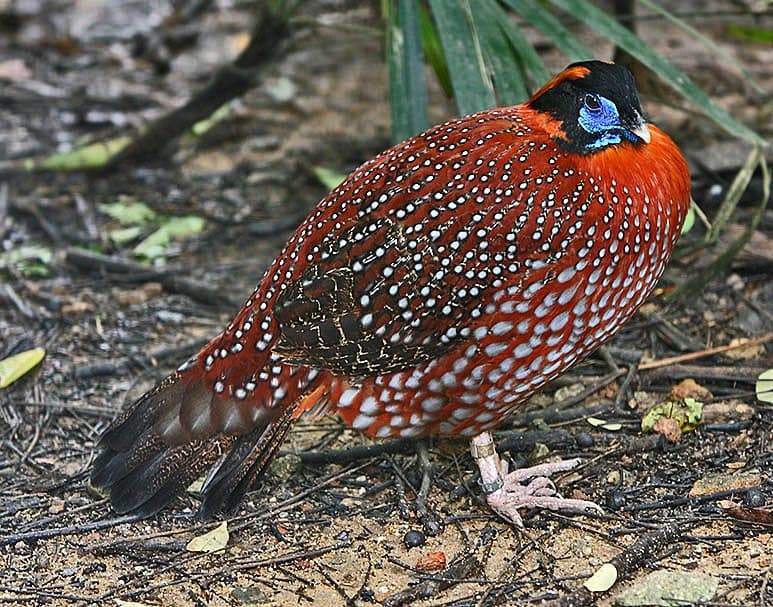 Temminck's TragopanTragopan temminckiiA colorful Asian pheasant whose males puff out a bright blue-and-red throat flap and blue "horns" to court females.
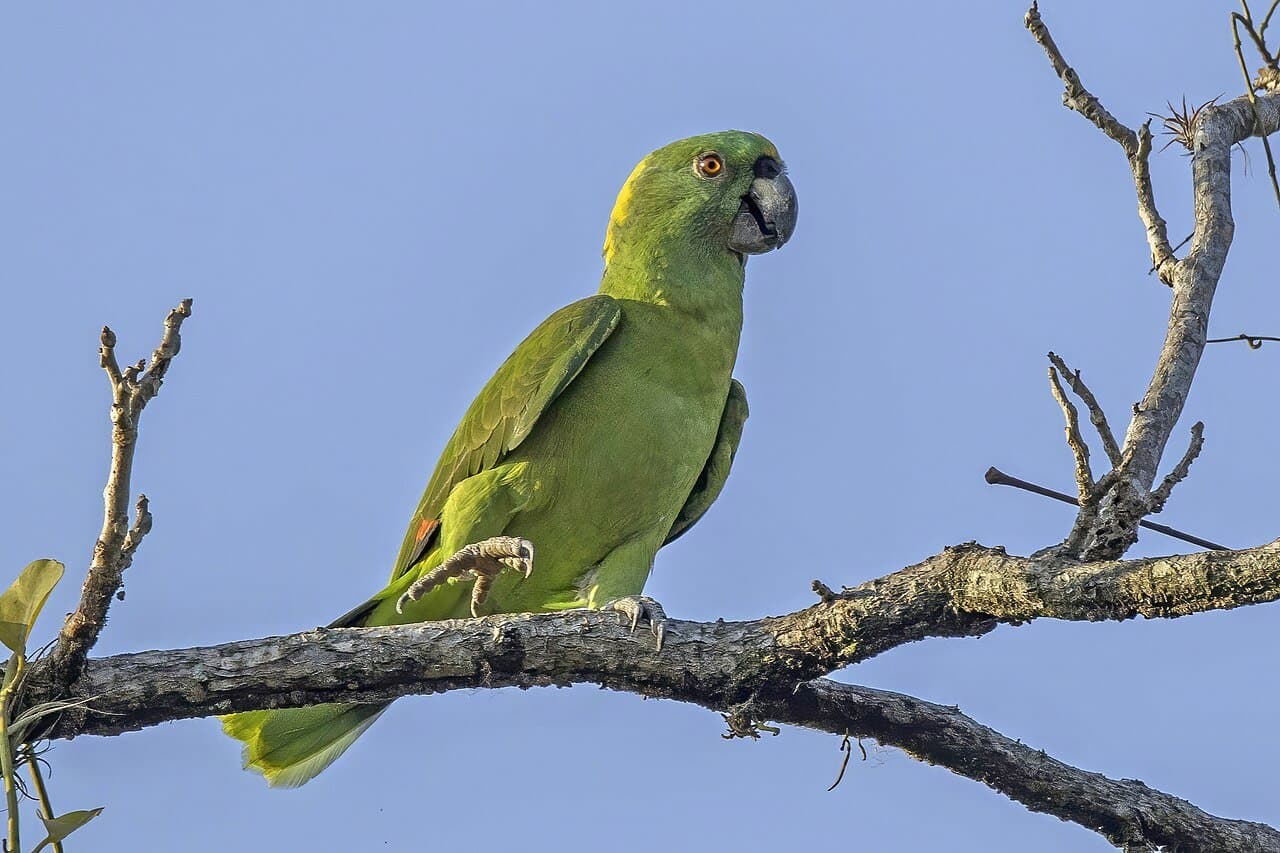 Yellow-Naped AmazonAmazona auropalliataA green Central American parrot with a yellow patch on the back of its neck, now critically endangered because of the pet trade.
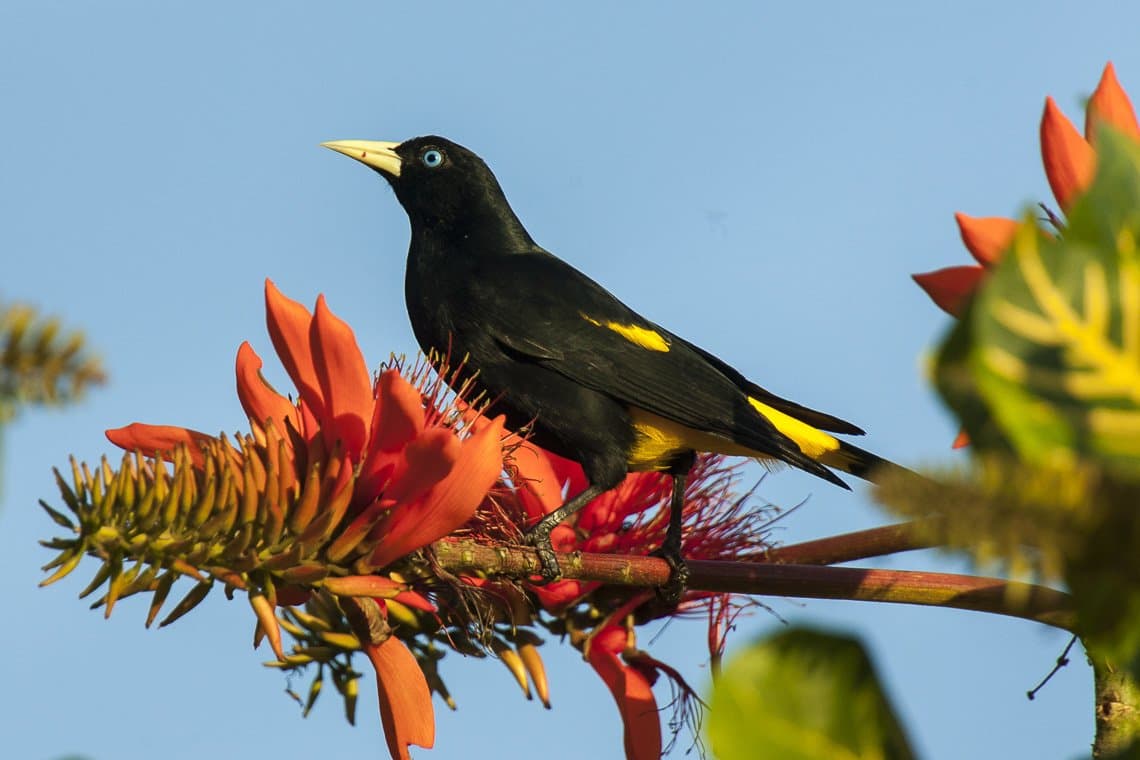 Yellow-Rumped CaciqueCacicus celaA black-and-yellow South American bird that weaves hanging nests in colonies, often next to wasp nests for protection.
Reptiles (14)
See this area on the zoo's website ↗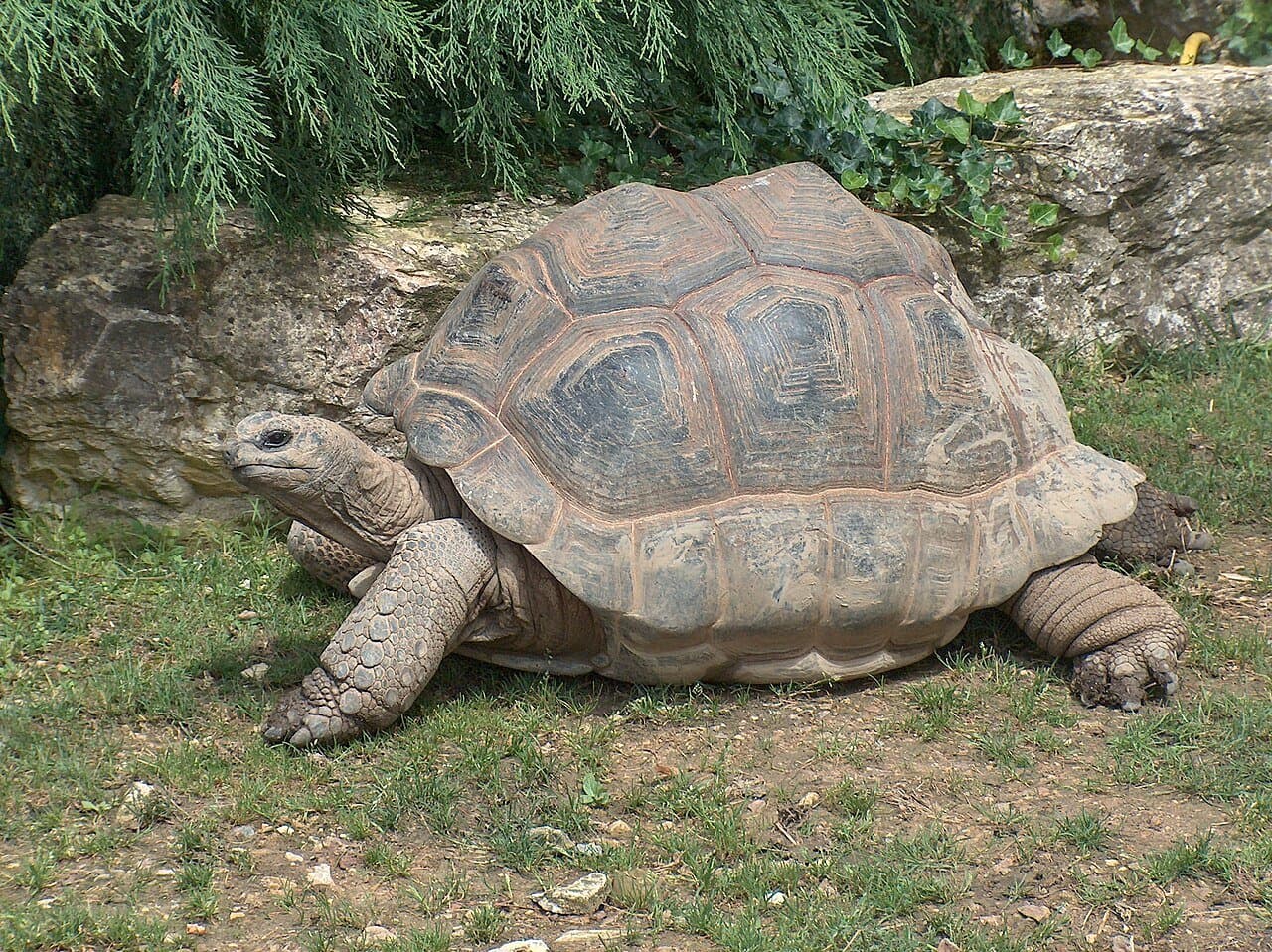 Aldabra TortoiseAldabrachelys giganteaOne of the world's largest tortoises, from the Aldabra Atoll in the Seychelles, which can weigh 550 pounds and may live 150 years.
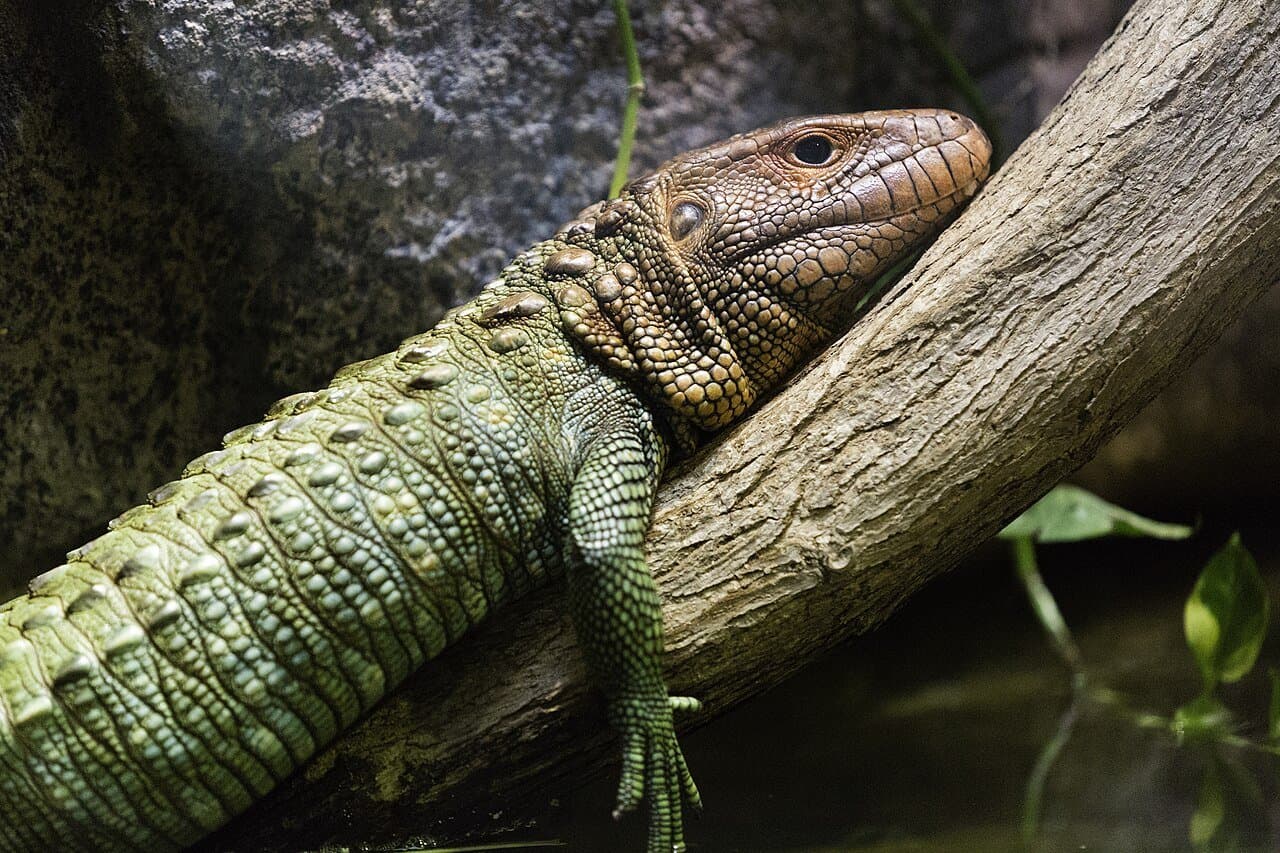 Caiman LizardDracaena guianensisA green, red-headed South American lizard with crocodile-like scales that swims well and crushes snails with its strong jaws.
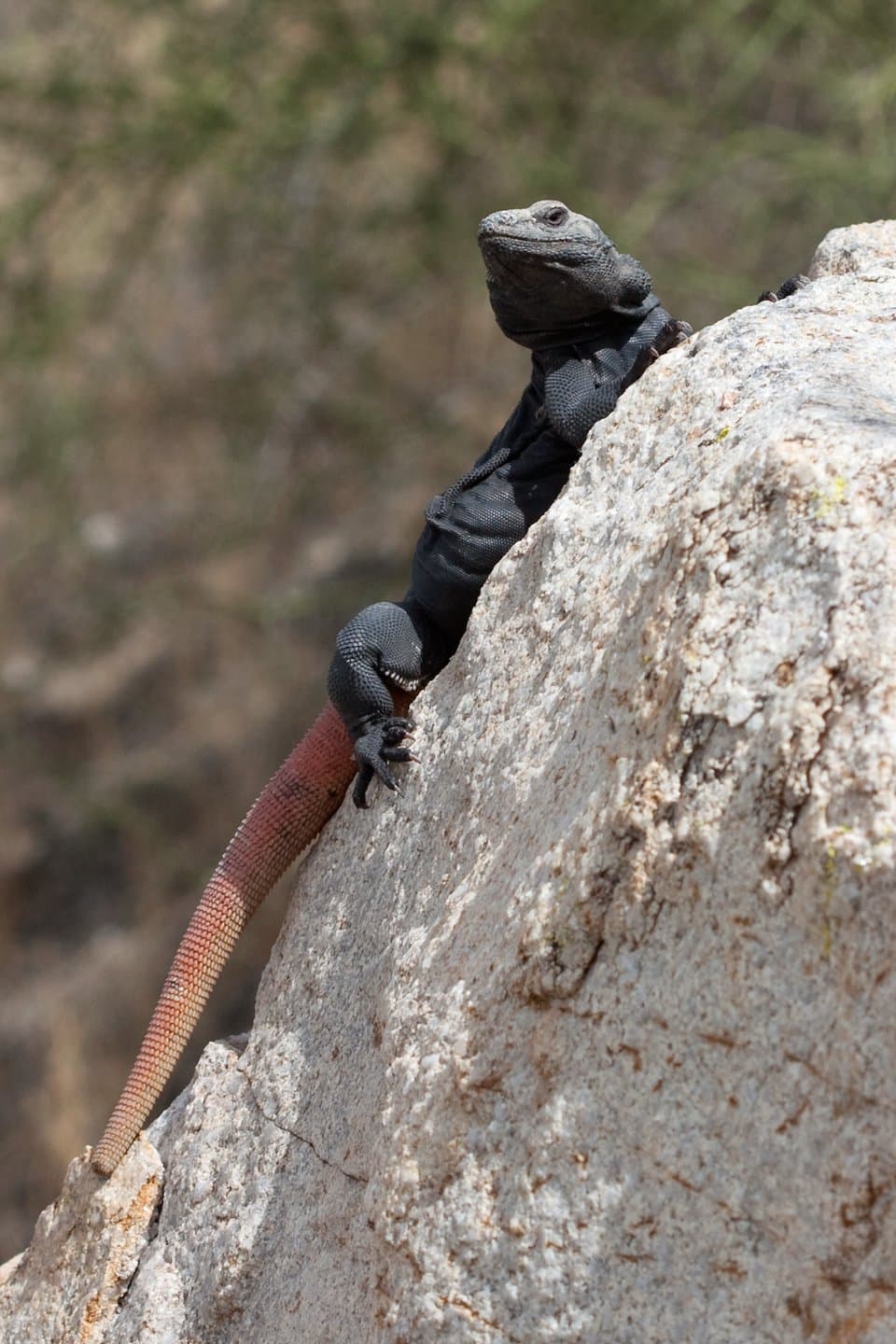 Common ChuckwallaSauromalus aterA chunky desert lizard of the American Southwest that wedges itself into rock cracks by puffing up its body.
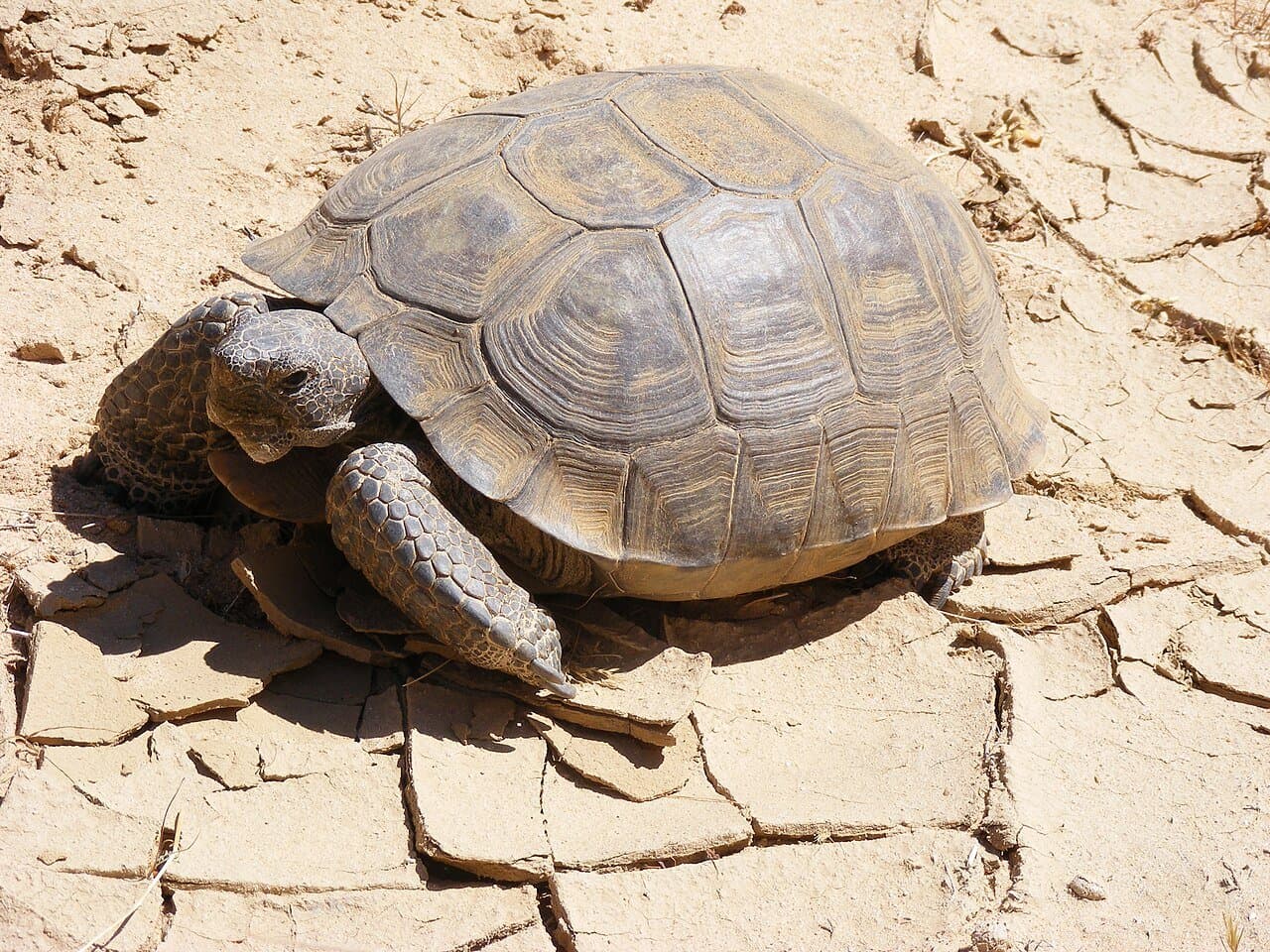 Mojave Desert TortoiseGopherus agassiziiCalifornia's state reptile, a burrowing tortoise of the southwestern deserts that is now critically endangered.
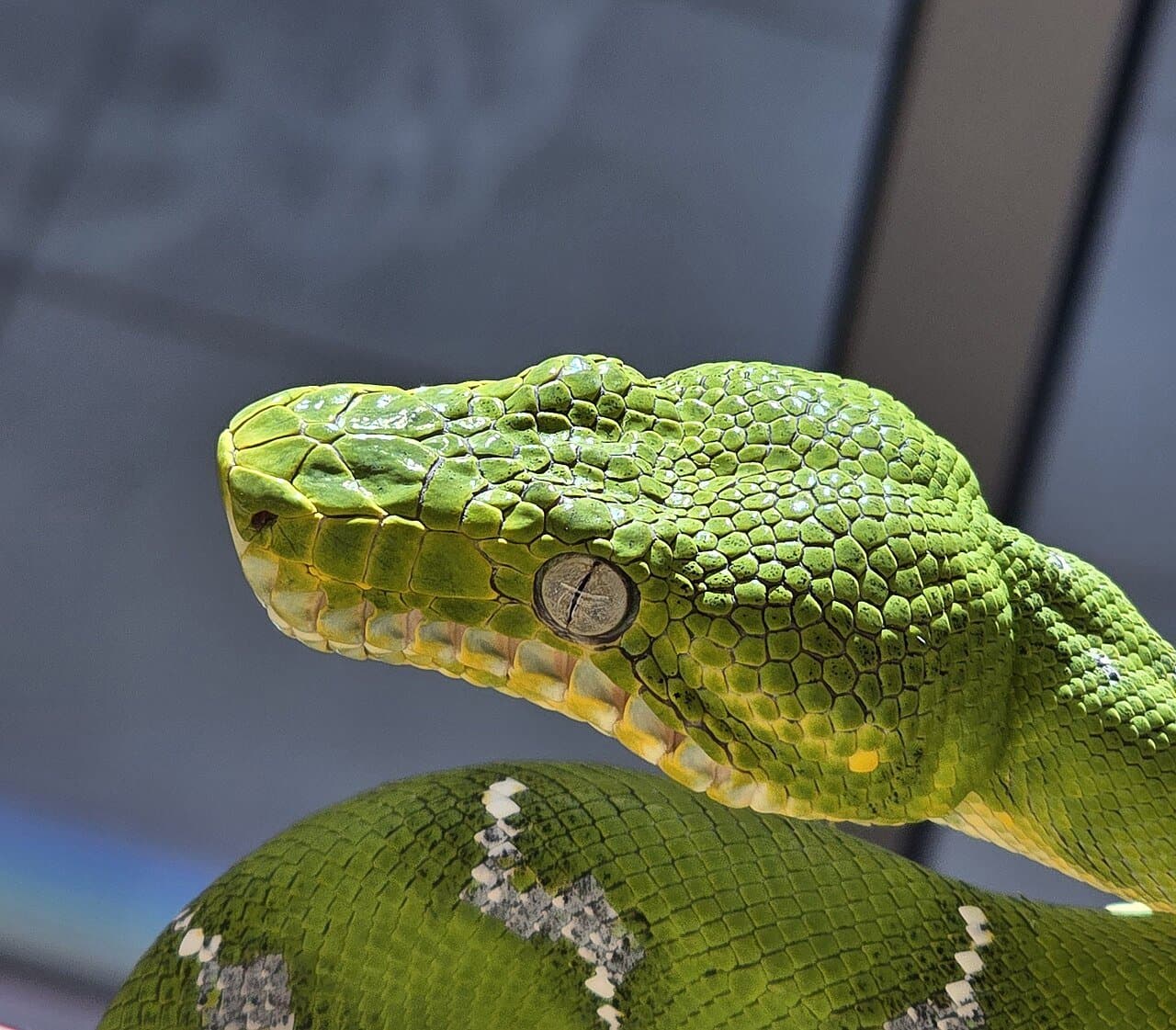 Emerald Tree BoaCorallus caninusA bright green Amazon tree snake with white zigzags that coils over branches and senses the heat of its prey.
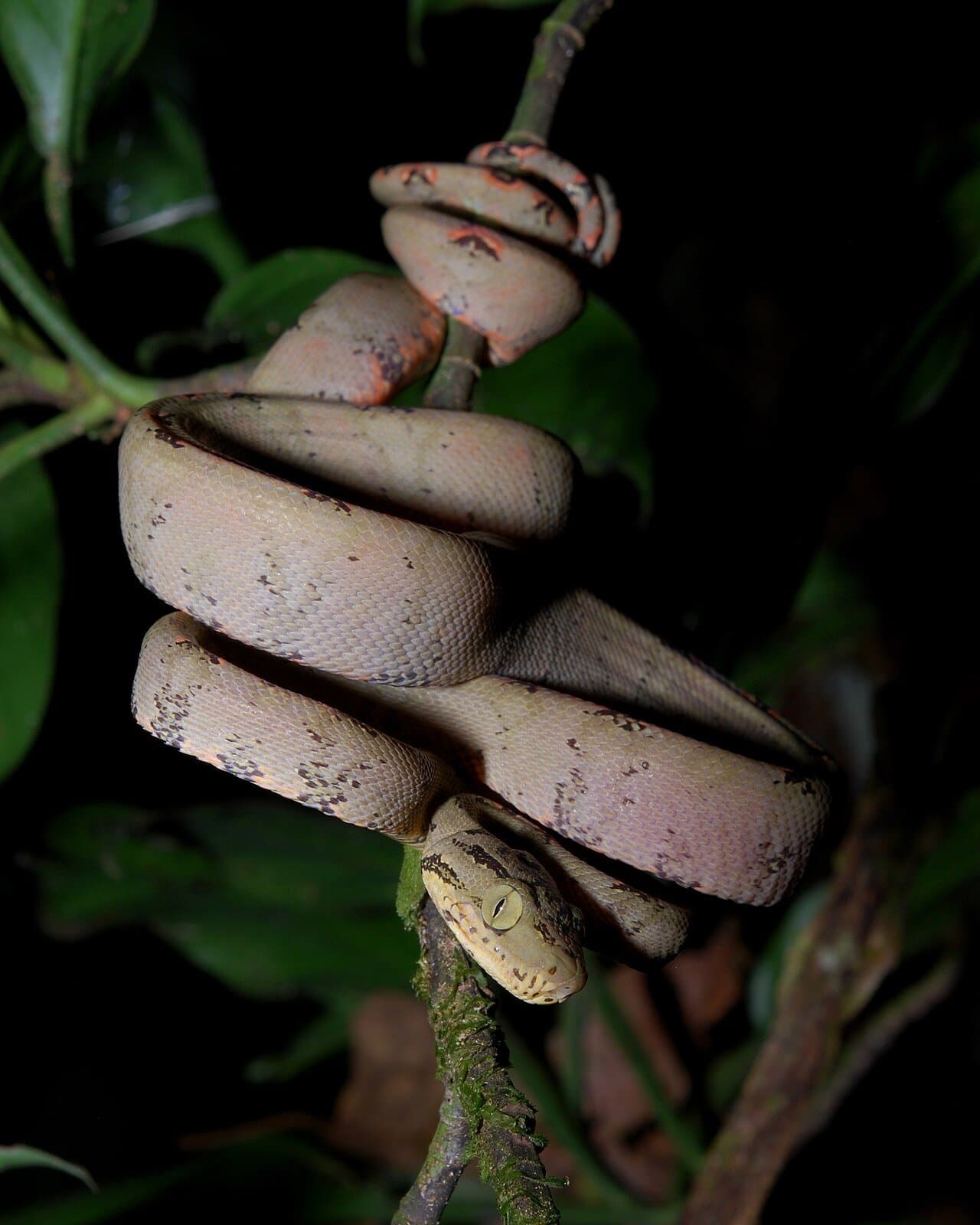 Amazon Tree BoaCorallus hortulanaA slender, many-colored tree boa of South America that hangs from branches in an S shape to ambush prey.
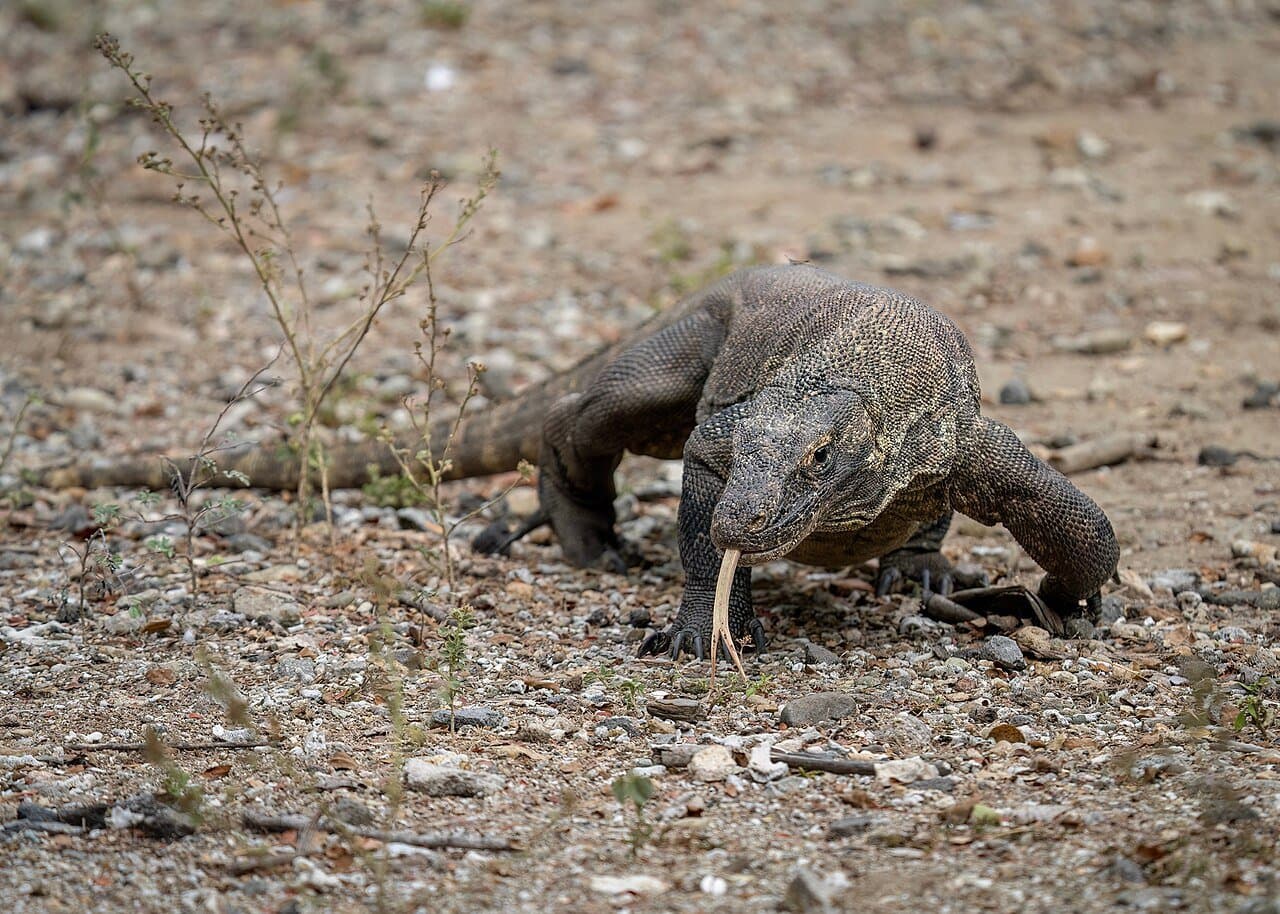 Komodo DragonVaranus komodoensisThe largest living lizard, a venomous predator found only on a few Indonesian islands that can smell food miles away.
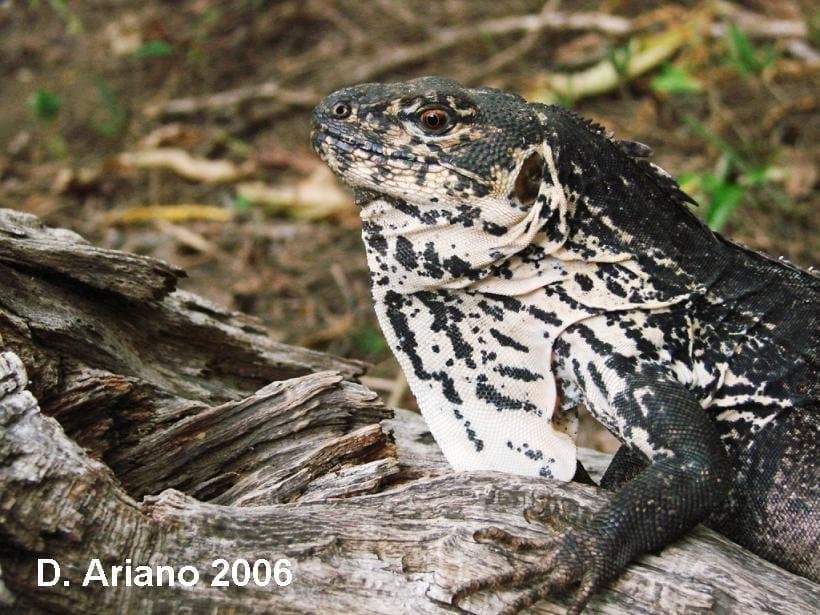 Motagua Spiny-Tailed IguanaCtenosaura palearisAn endangered iguana found only in Guatemala's dry Motagua Valley, which blocks its hiding hole with its spiny tail.
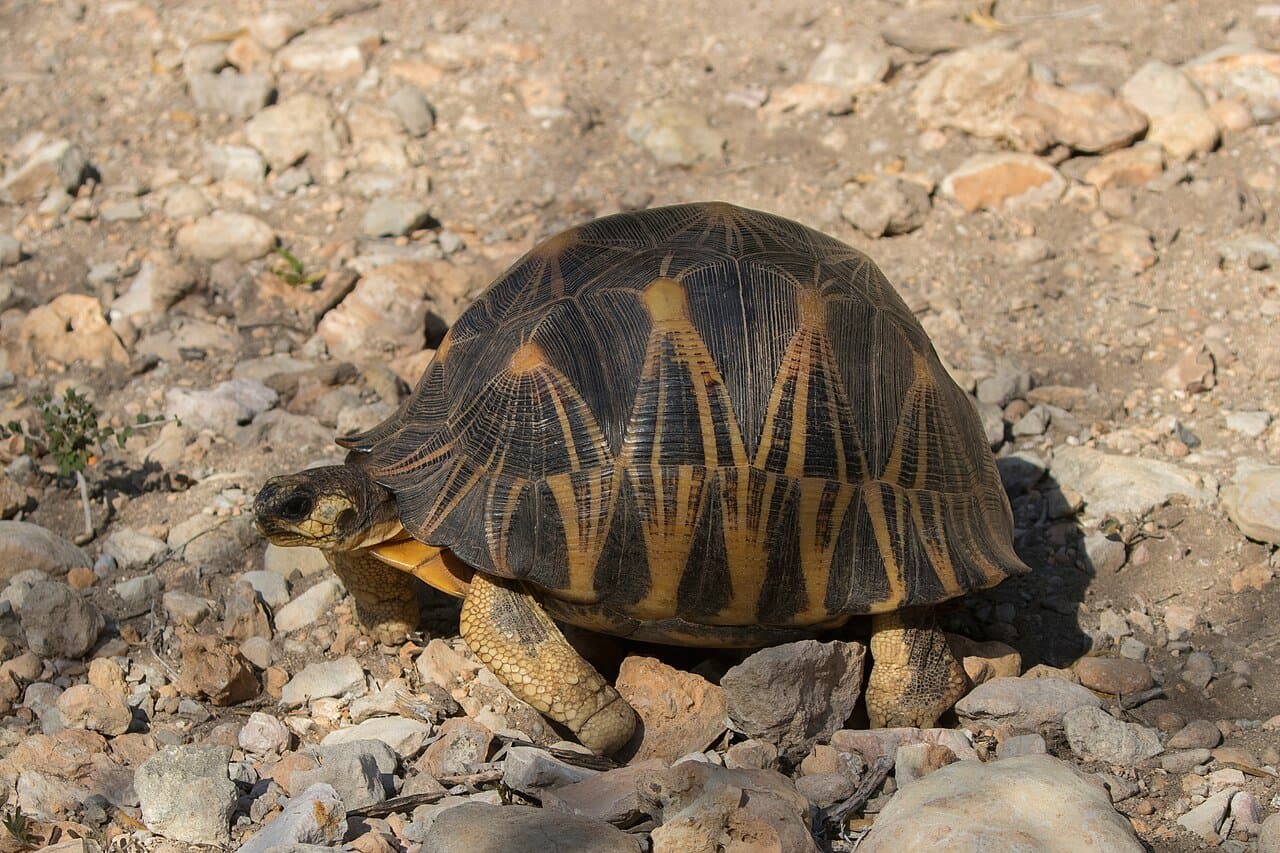 Radiated TortoiseAstrochelys radiataA critically endangered Madagascar tortoise named for the yellow star-like lines on its high, domed shell.
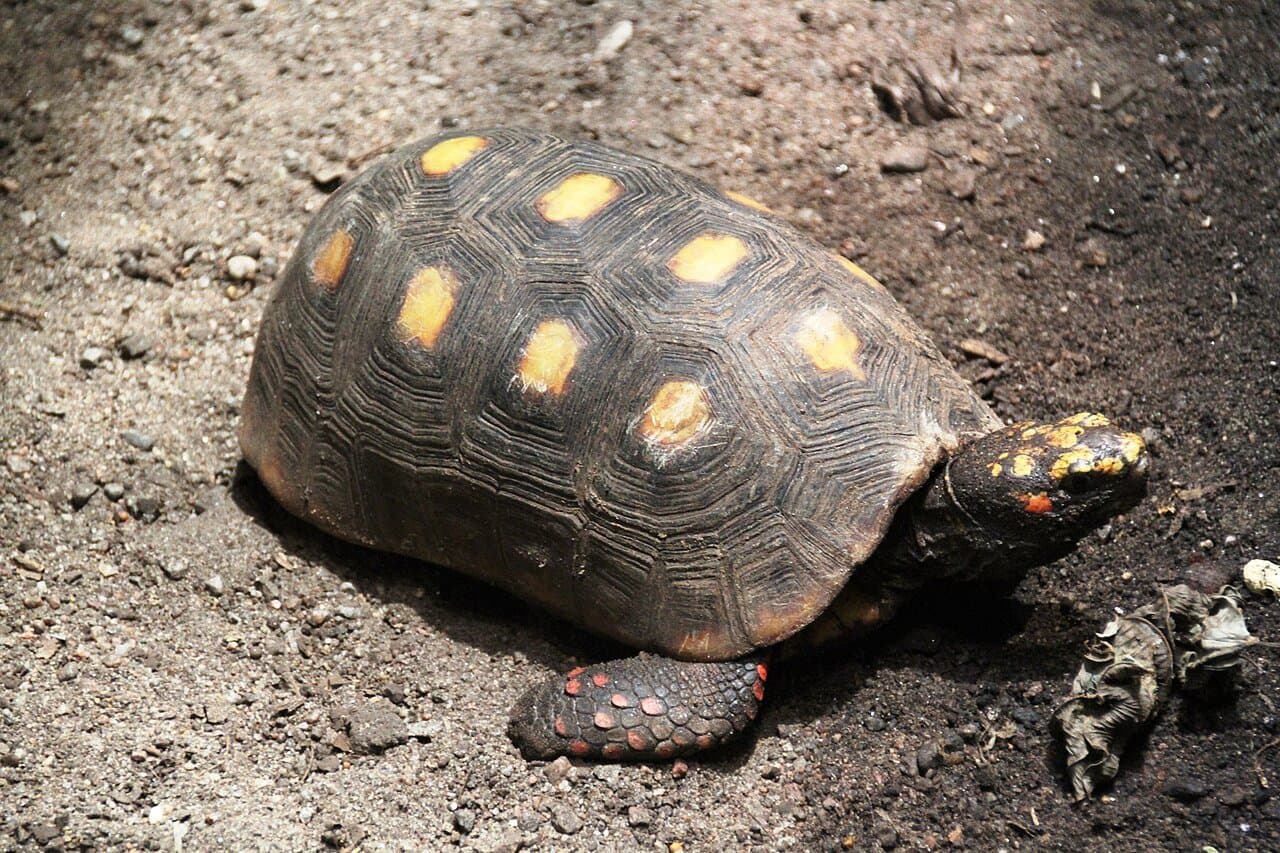 Red-Footed TortoiseChelonoidis carbonariaA South American tortoise with black skin and red patches like glowing coals that spreads seeds by eating fruit.
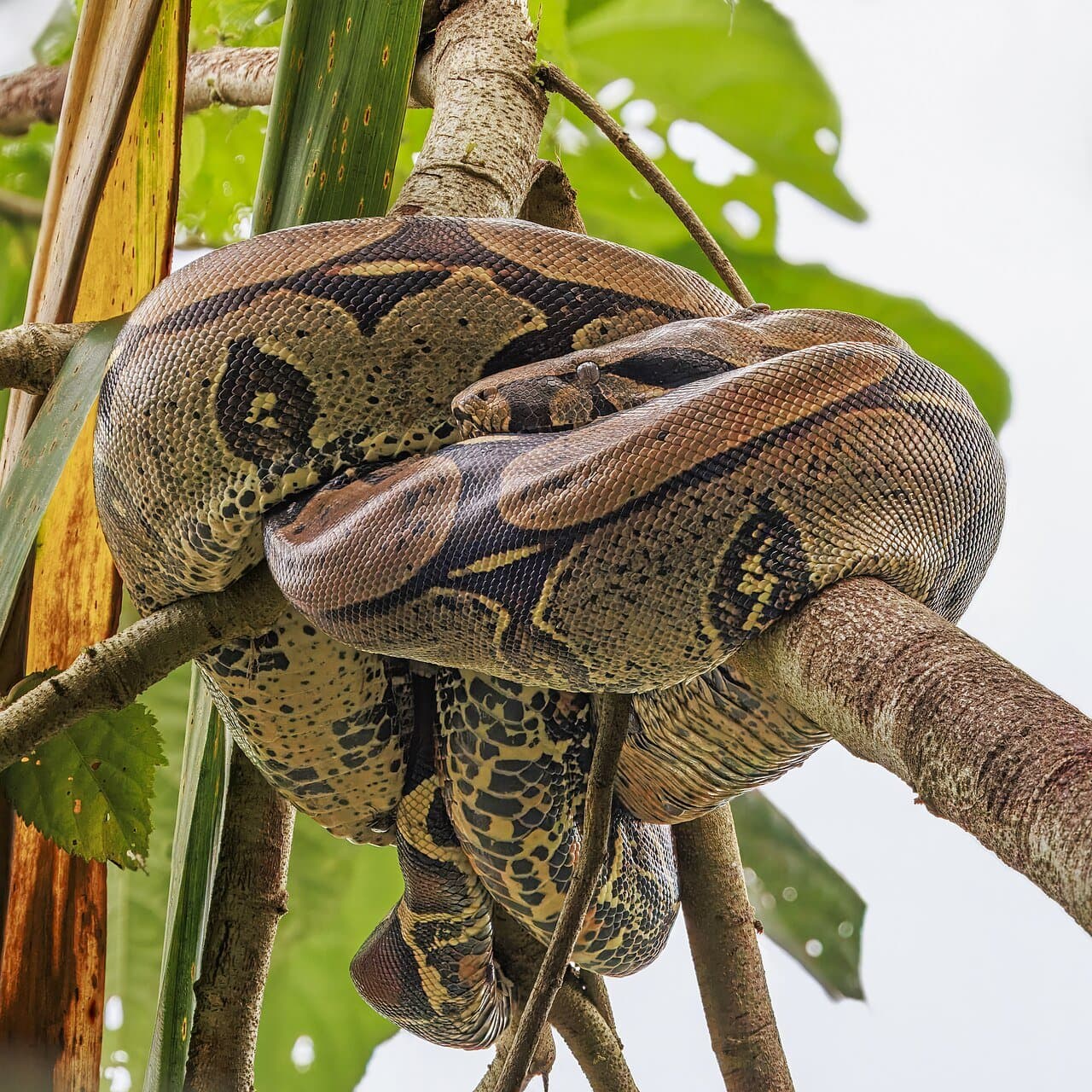 Boa ConstrictorBoa constrictorA large, nonvenomous snake of Central and South America, also called the red-tailed boa, that squeezes its prey.
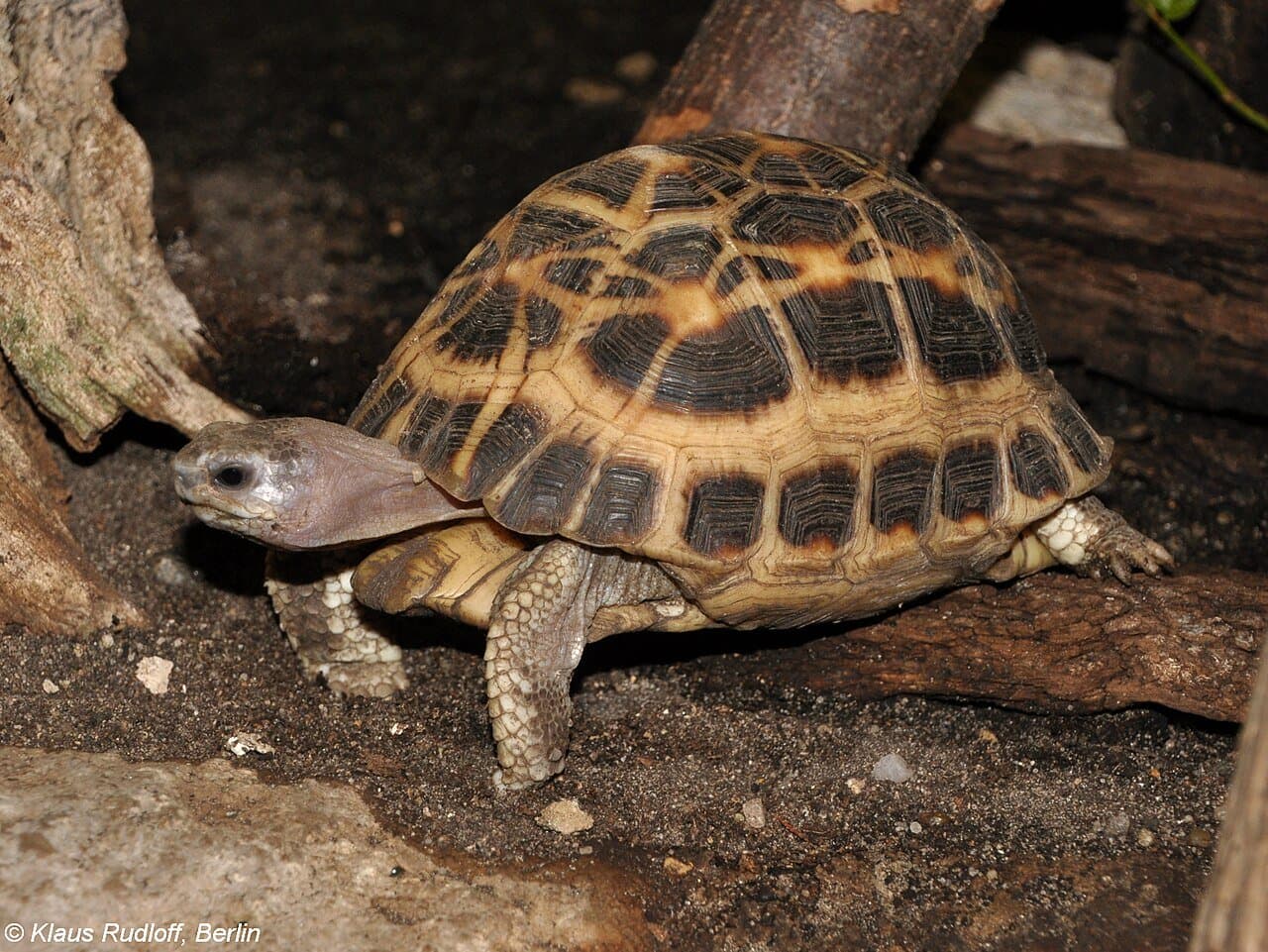 Spider TortoisePyxis arachnoidesA tiny, critically endangered Madagascar tortoise named for the web-like yellow lines on its dark shell.
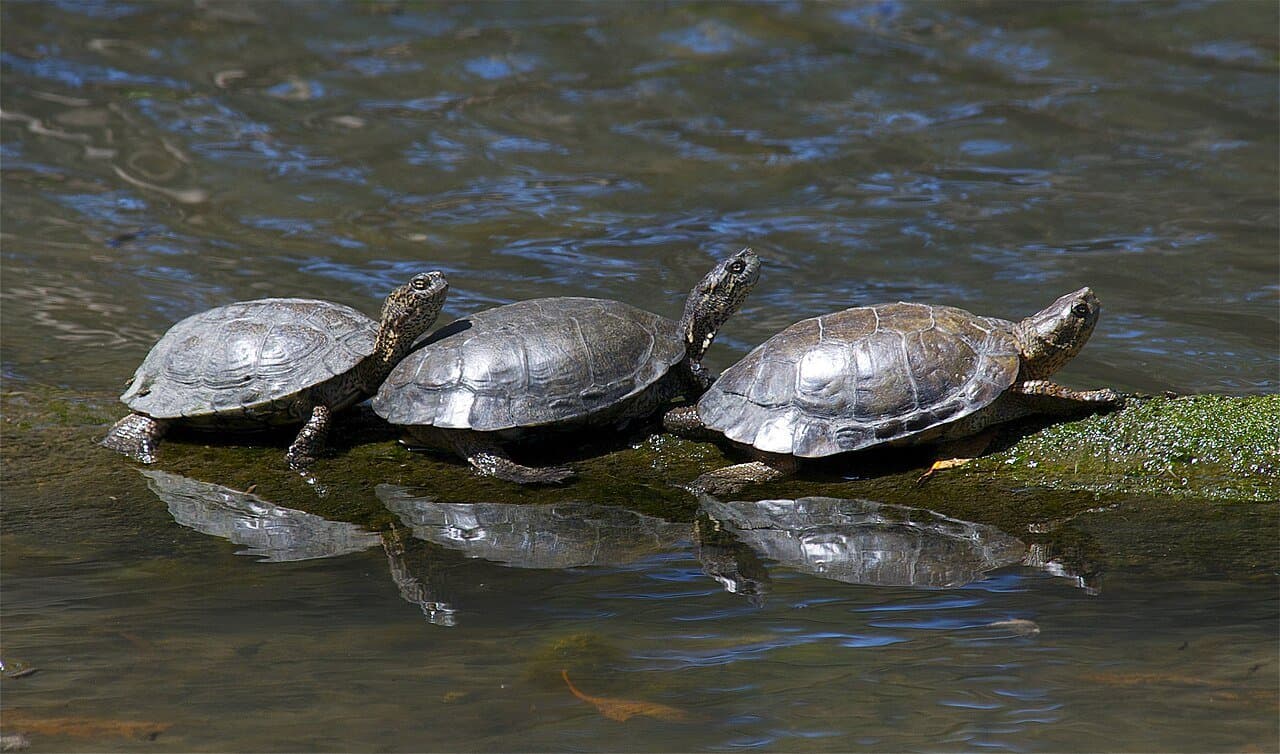 Western Pond TurtleActinemys marmorataCalifornia's only native freshwater turtle, a small olive-brown turtle that zoos help return to local ponds.
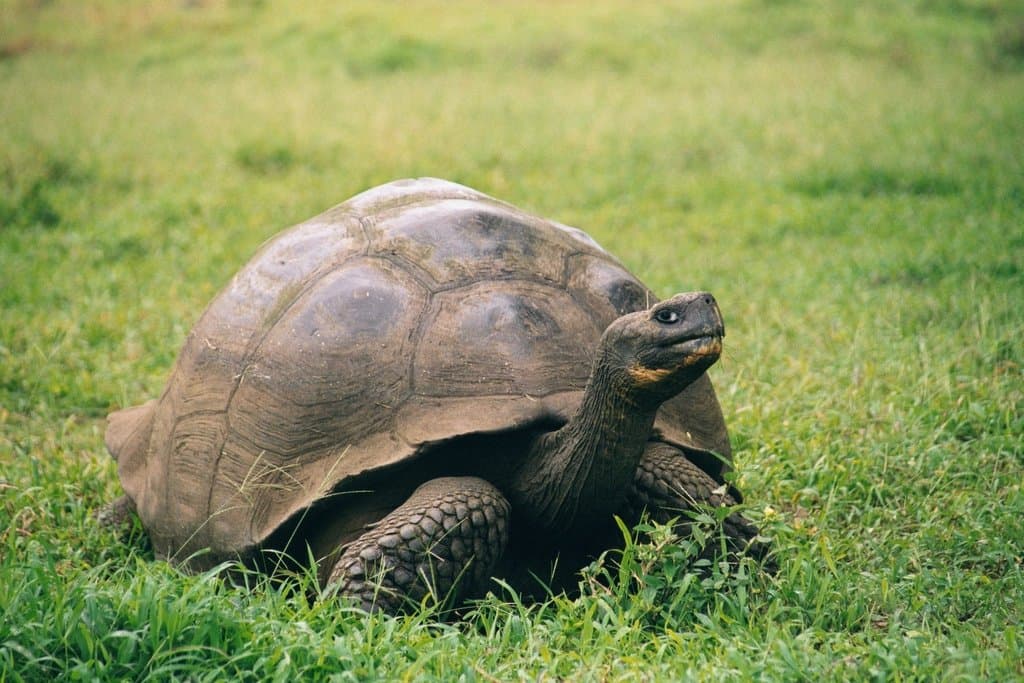 Western Santa Cruz Galápagos TortoiseChelonoidis porteriA huge, dome-shelled Galápagos tortoise from Santa Cruz Island that migrates along "tortoise highways."
Amphibians (8)
See this area on the zoo's website ↗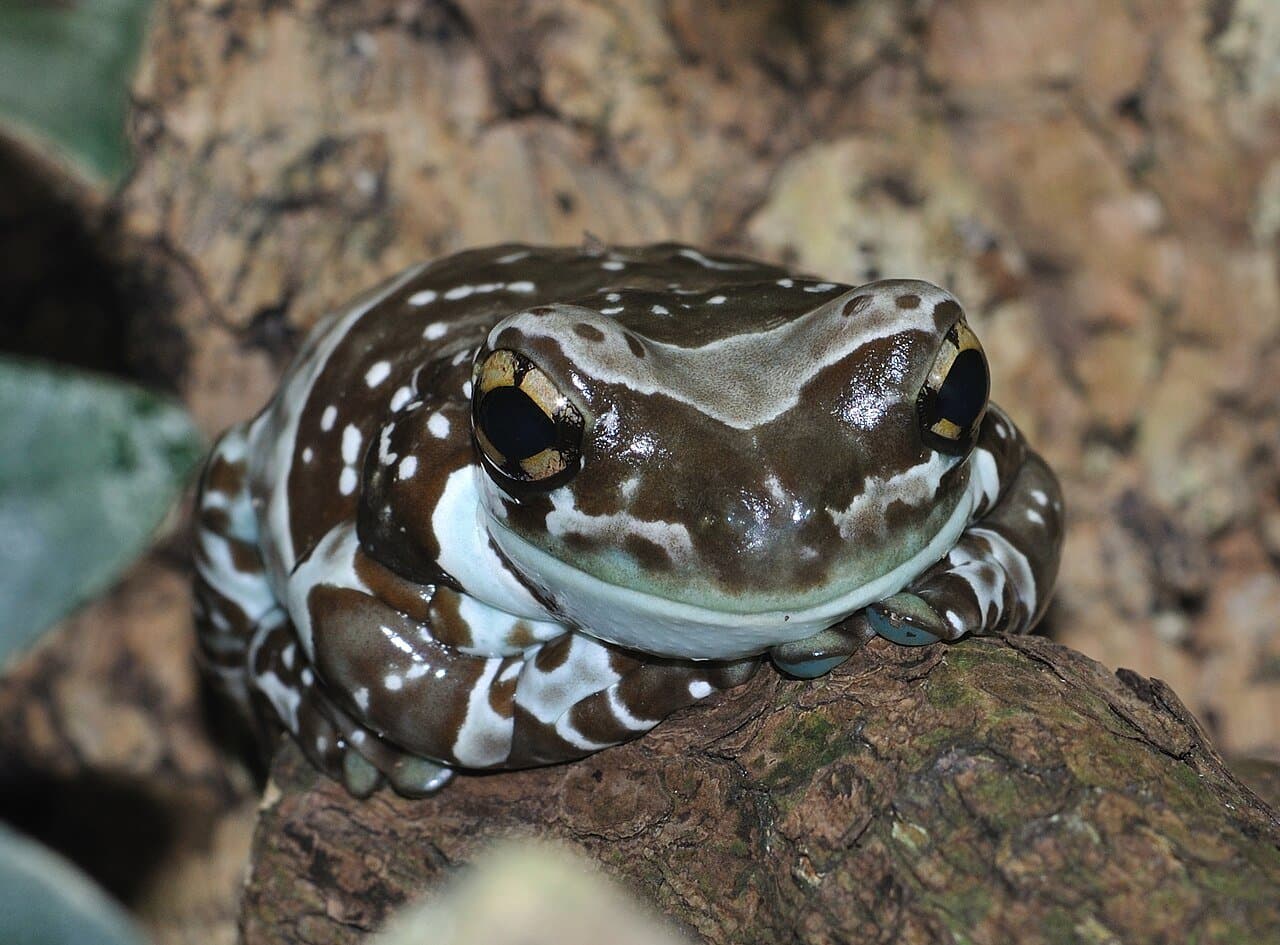 Amazon Milk FrogTrachycephalus resinifictrixA bumpy gray-and-brown rainforest tree frog that oozes a milky, poisonous liquid when threatened.
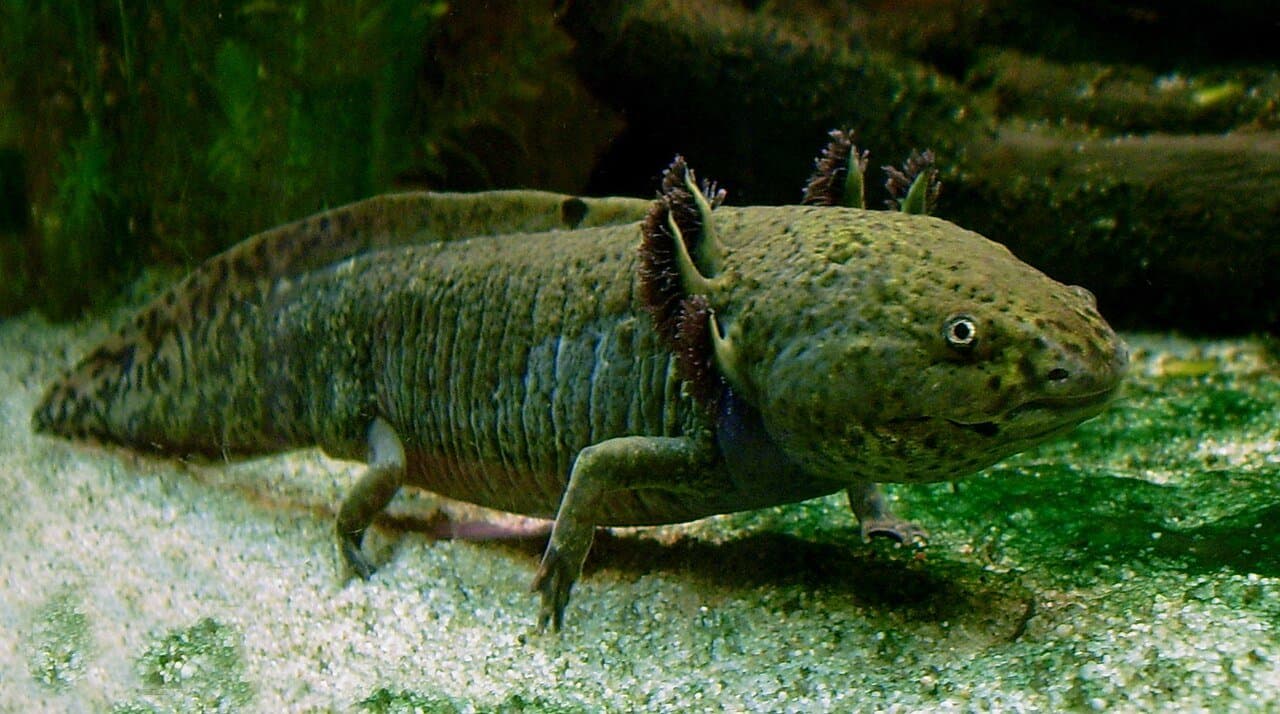 AxolotlAmbystoma mexicanumA Mexican salamander that keeps its feathery gills and stays in the water its whole life, famous for regrowing lost body parts.
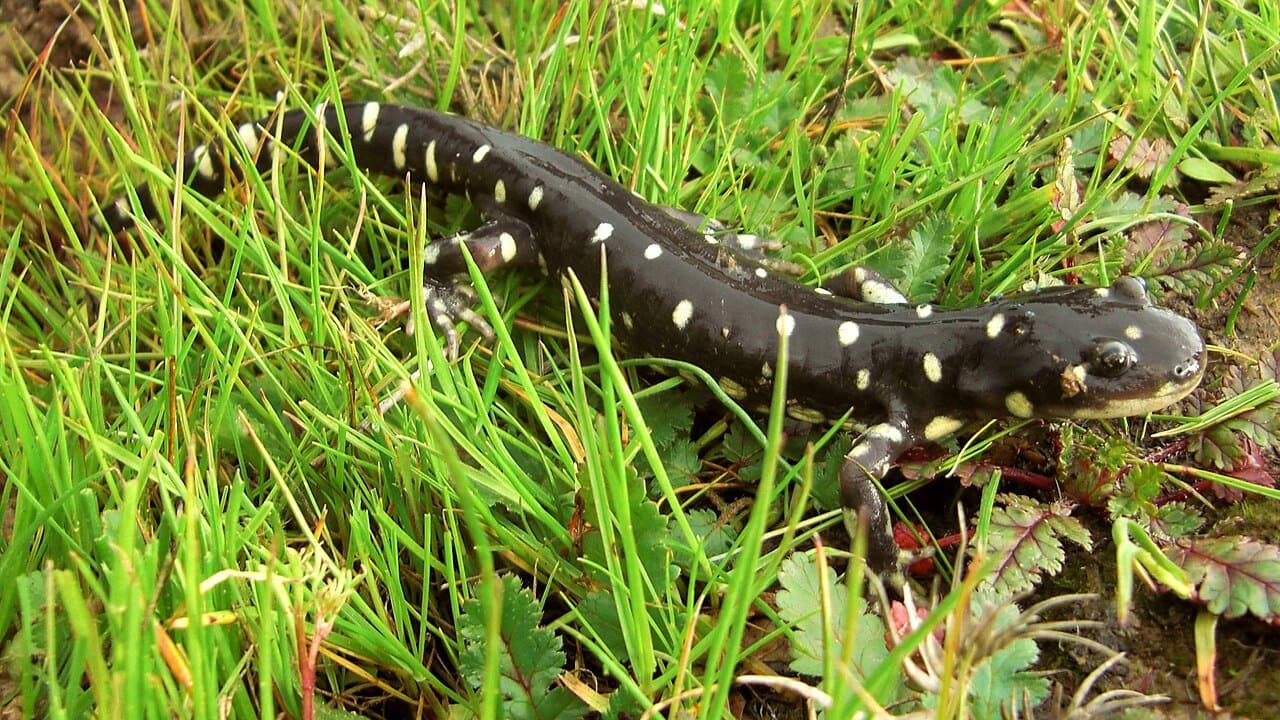 California Tiger SalamanderAmbystoma californienseA big black salamander with yellow spots that lives in ground-squirrel burrows and breeds in seasonal pools in central California.
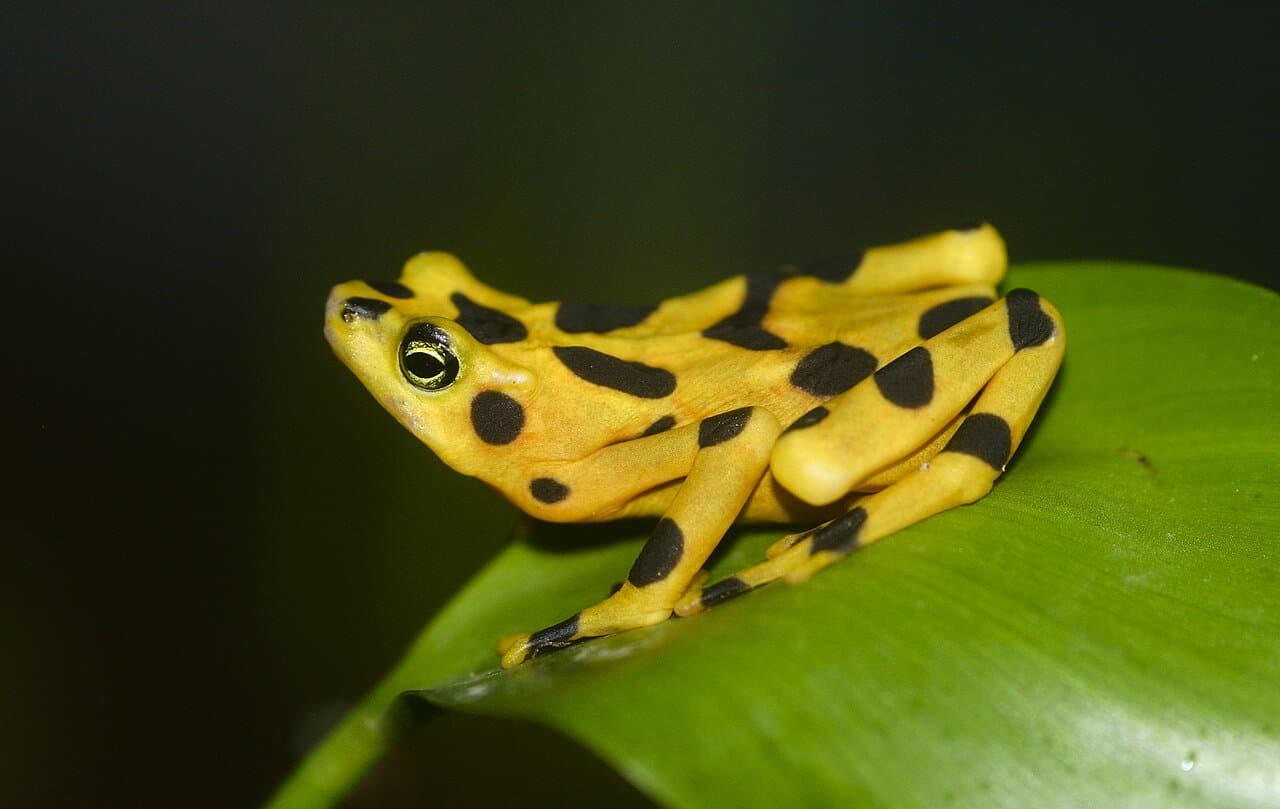 Panamanian Golden FrogAtelopus zetekiA bright golden, poisonous frog that is Panama's symbol of good luck. It has not been seen in the wild since 2009 and survives in zoo breeding programs.
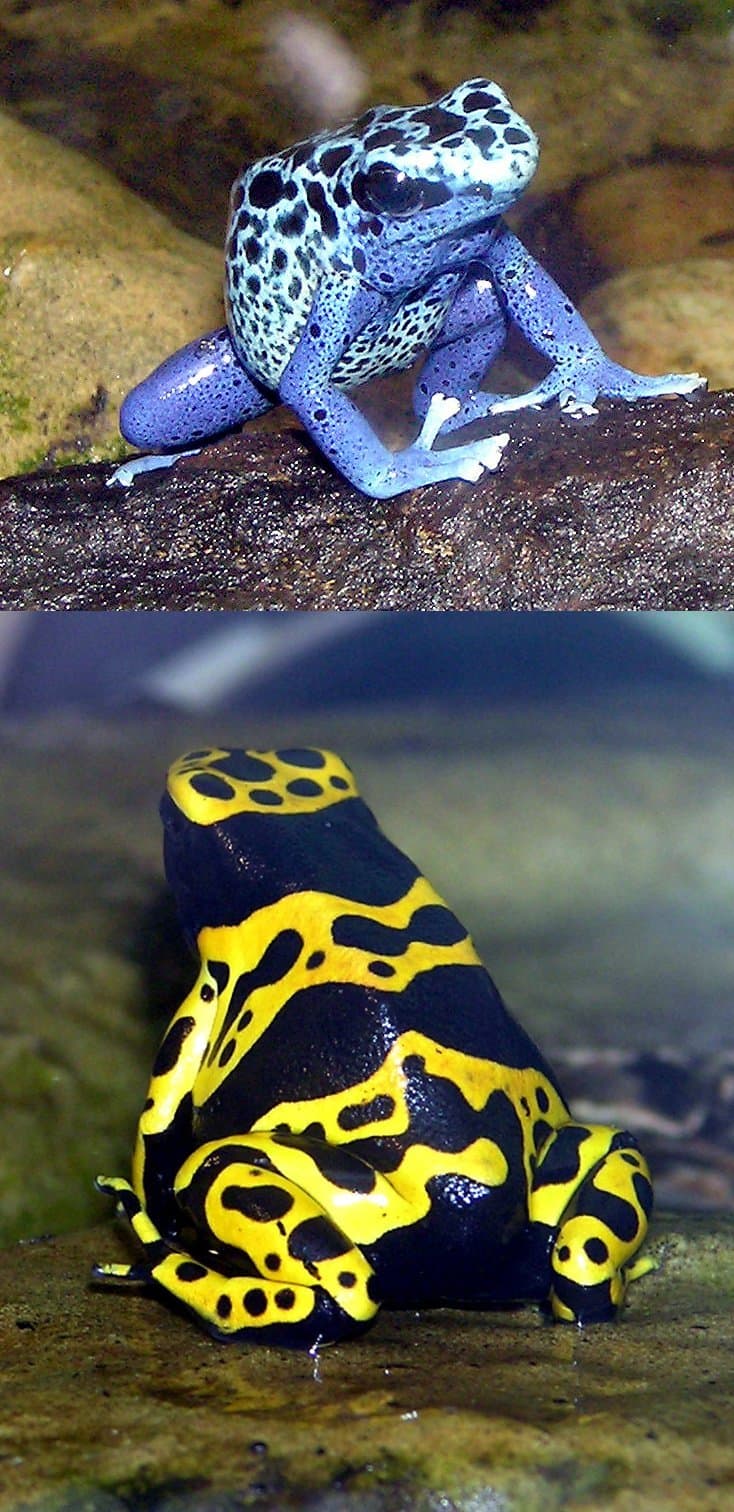 Poison Dart FrogsFamily Dendrobatidae (about 220 species)A family of about 220 tiny, brightly colored rainforest frogs whose bold colors warn predators that their skin is poisonous.
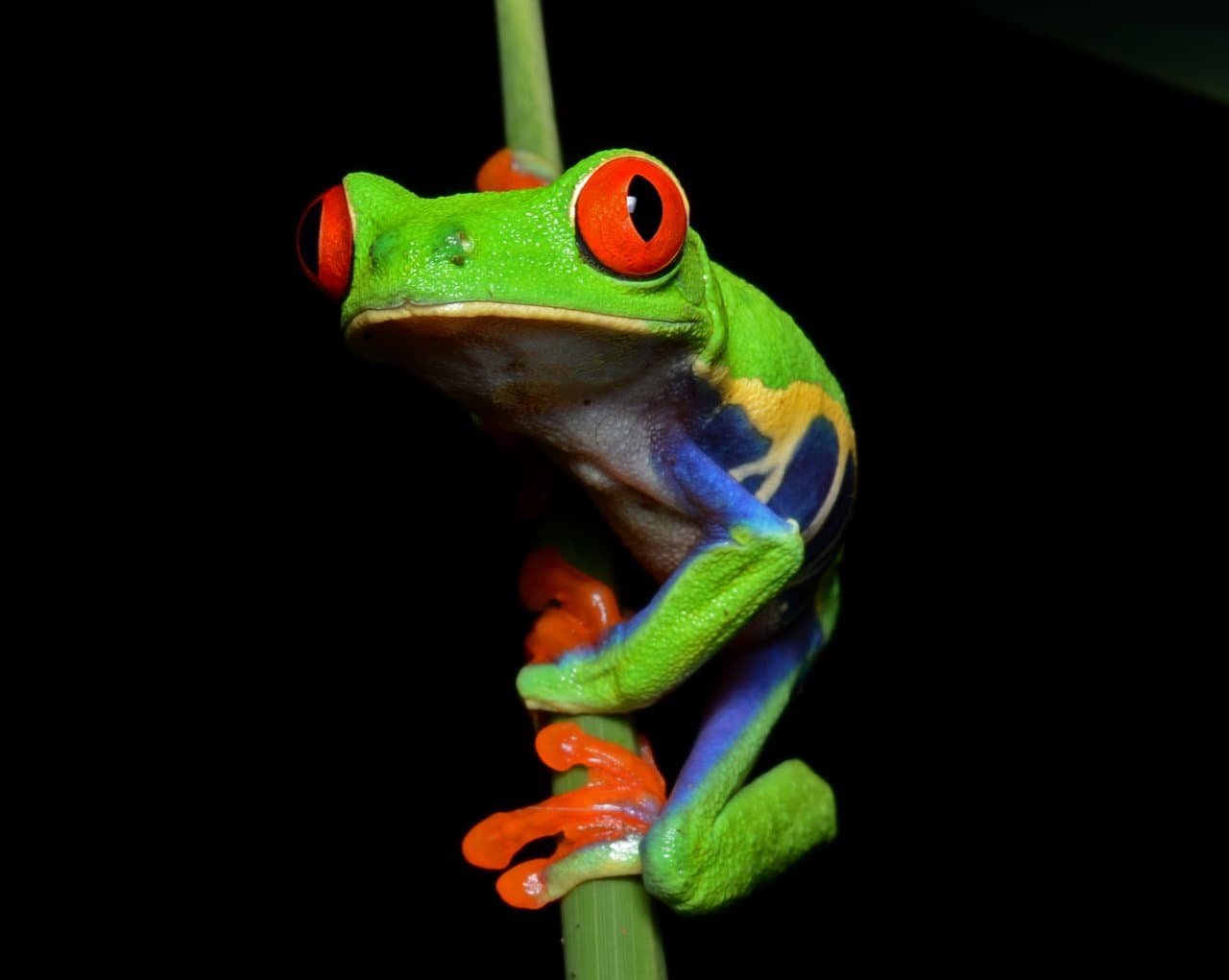 Red-Eyed Tree FrogAgalychnis callidryasA bright green Central American tree frog with big red eyes, blue sides and orange feet.
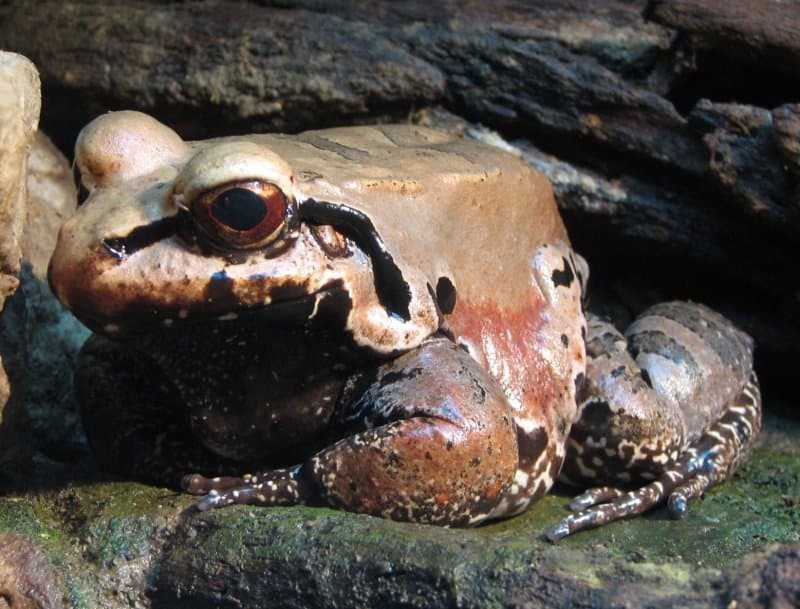 Smoky Jungle FrogLeptodactylus pentadactylusA big South American frog up to seven inches long that puffs up and shrieks to scare predators.
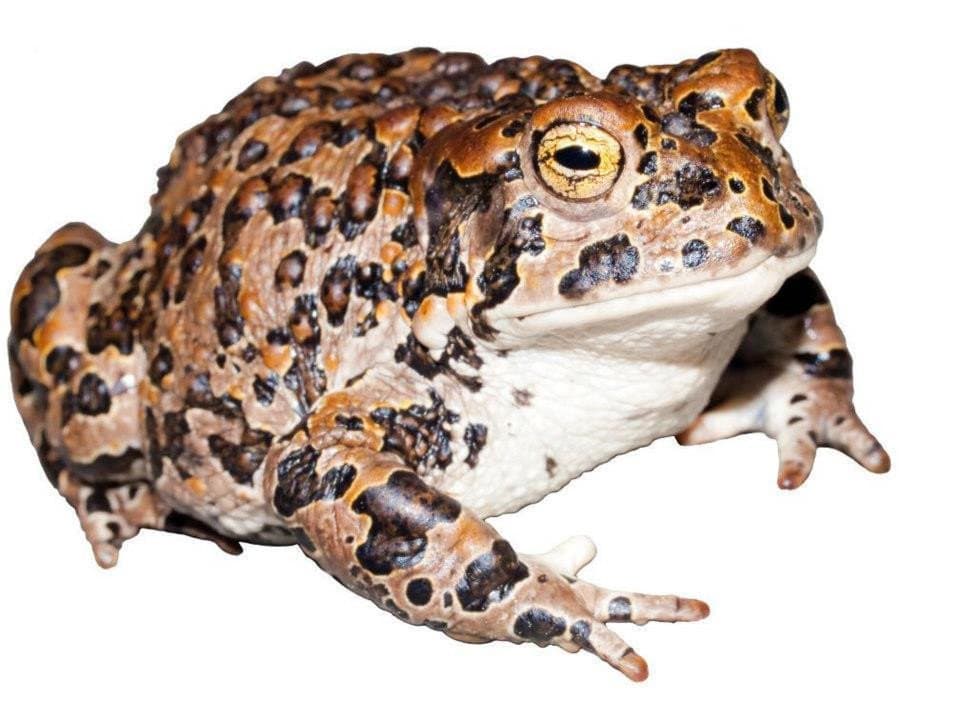 Yosemite ToadAnaxyrus canorusA Sierra Nevada mountain toad that walks instead of hopping, with males and females that look very different.
Invertebrates (12)
See this area on the zoo's website ↗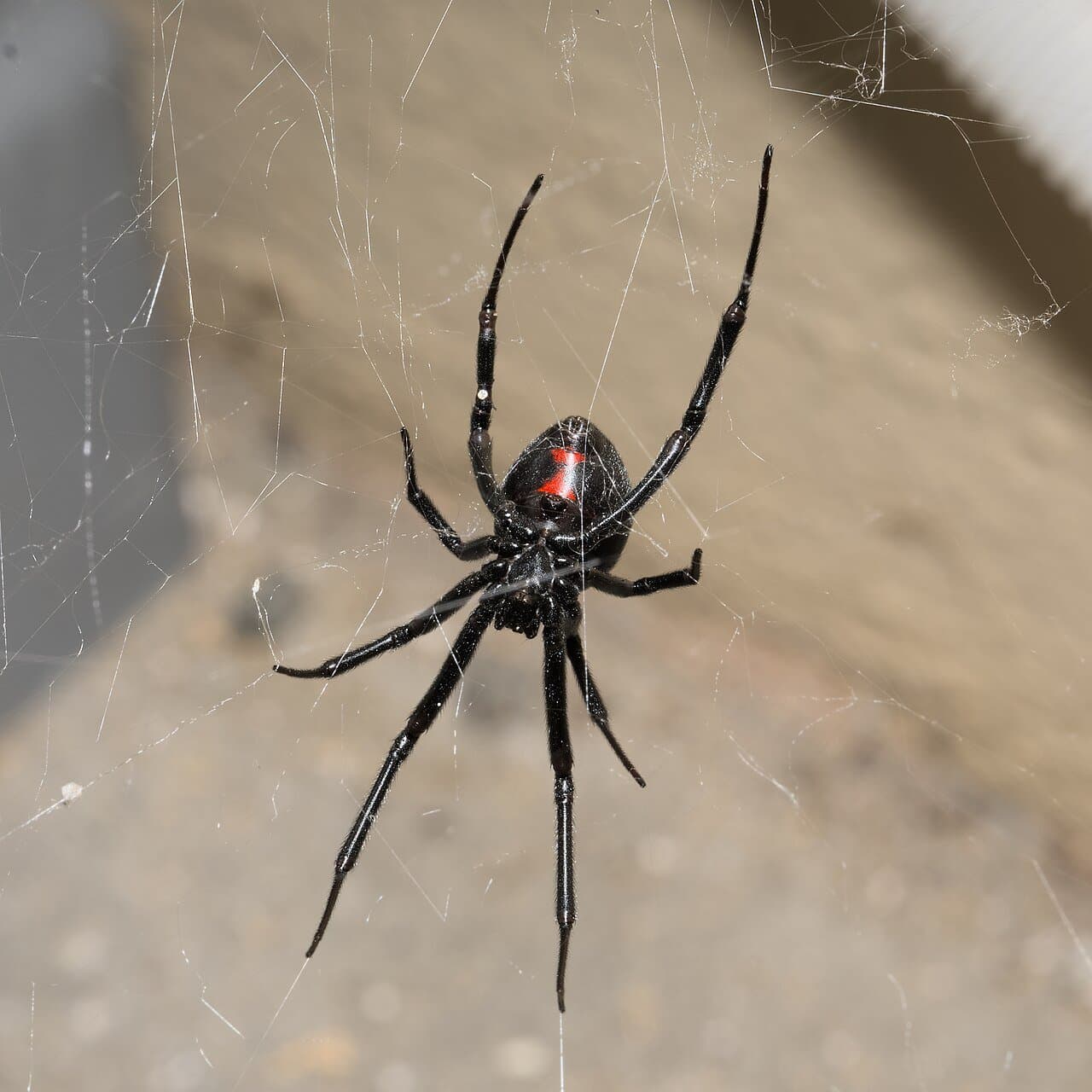 Western Black WidowLatrodectus hesperusA shy, venomous North American spider whose shiny black females have a red hourglass mark on the belly.
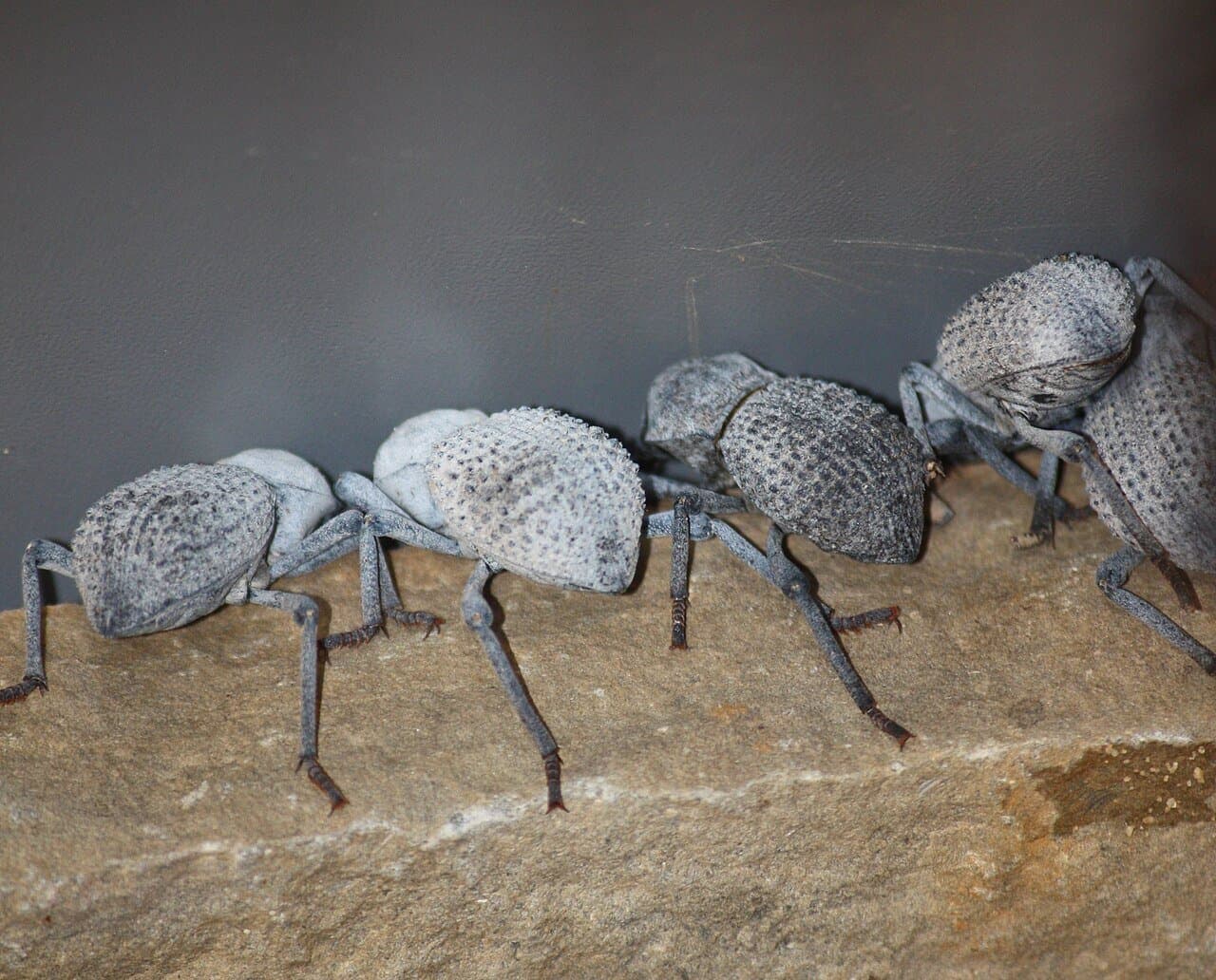 Blue Death-Feigning BeetleCryptoglossa verrucosaA pale blue desert beetle from the southwestern U.S. that flops over and plays dead when startled.
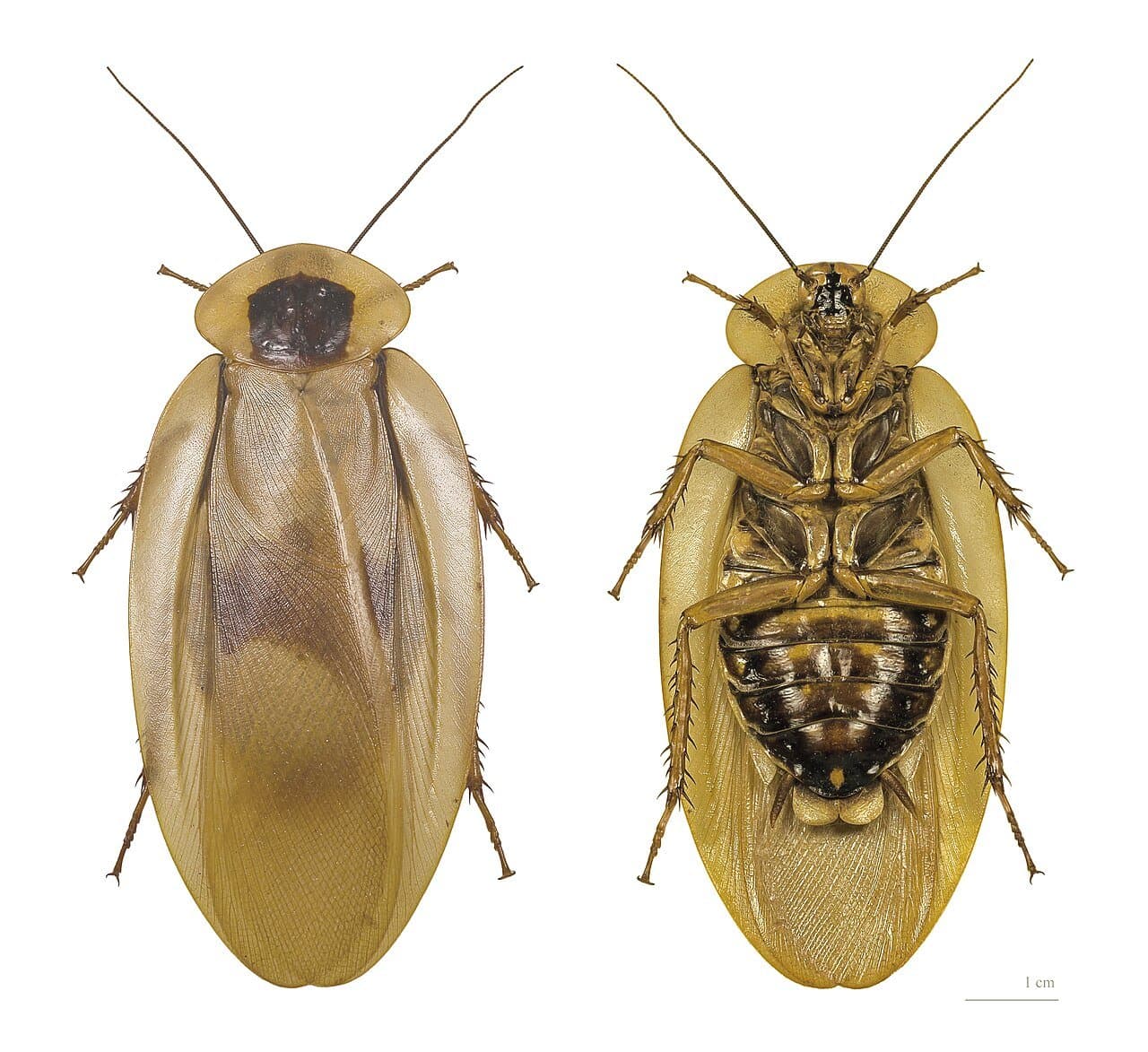 Giant CockroachBlaberus speciesA big, glossy tropical cockroach from Central and South America that grows three inches long and helps break down dead plants.
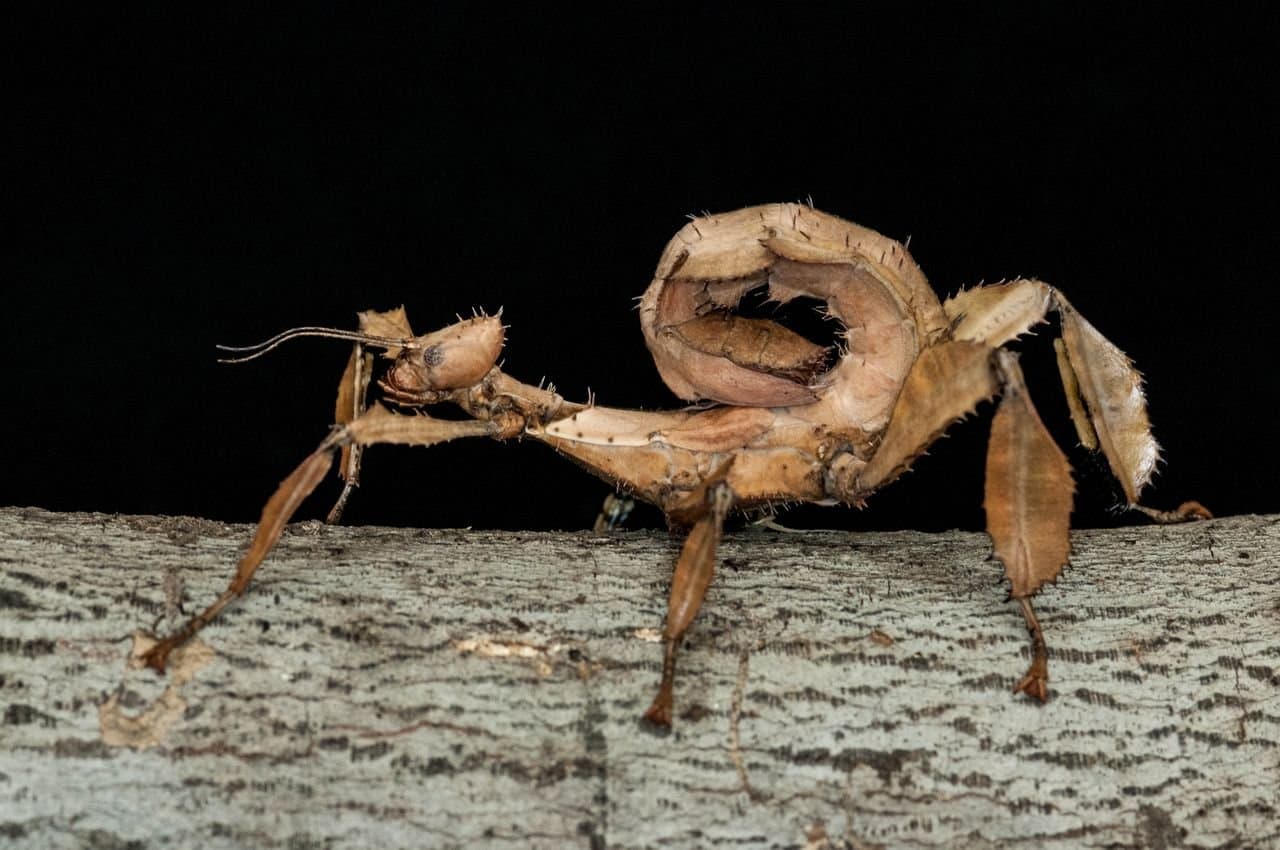 Giant Prickly Stick InsectExtatosoma tiaratumA spiky Australian stick insect, also called the Australian walking stick, that curls its tail up like a scorpion to scare predators.
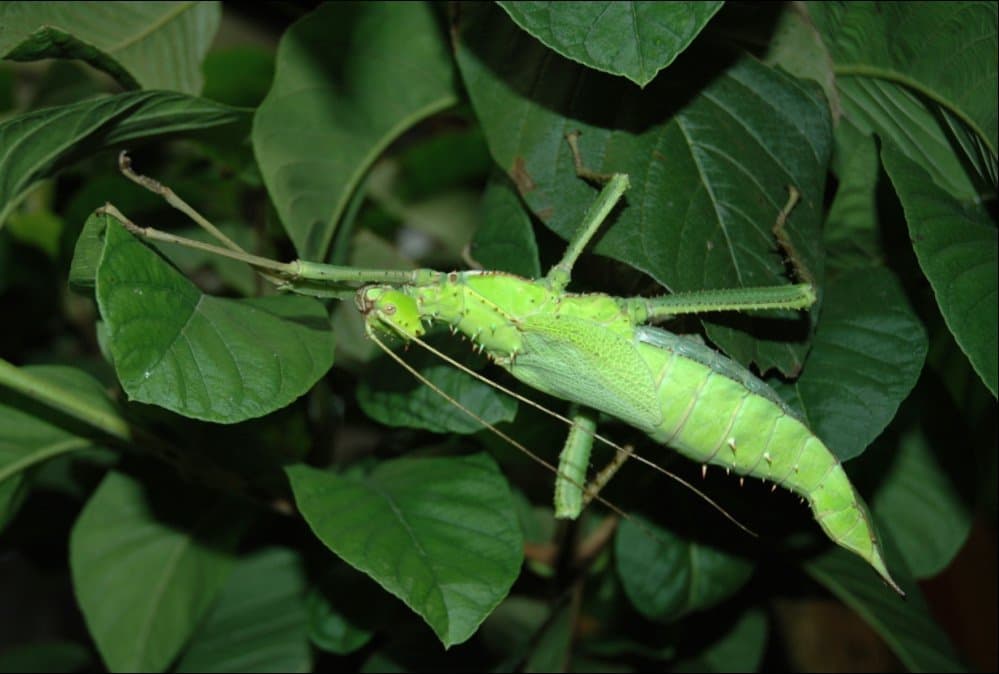 Jungle NymphHeteropteryx dilatataA big, thorny, leaf-green stick insect of tropical rainforests whose females snap their spiny back legs together in defense.
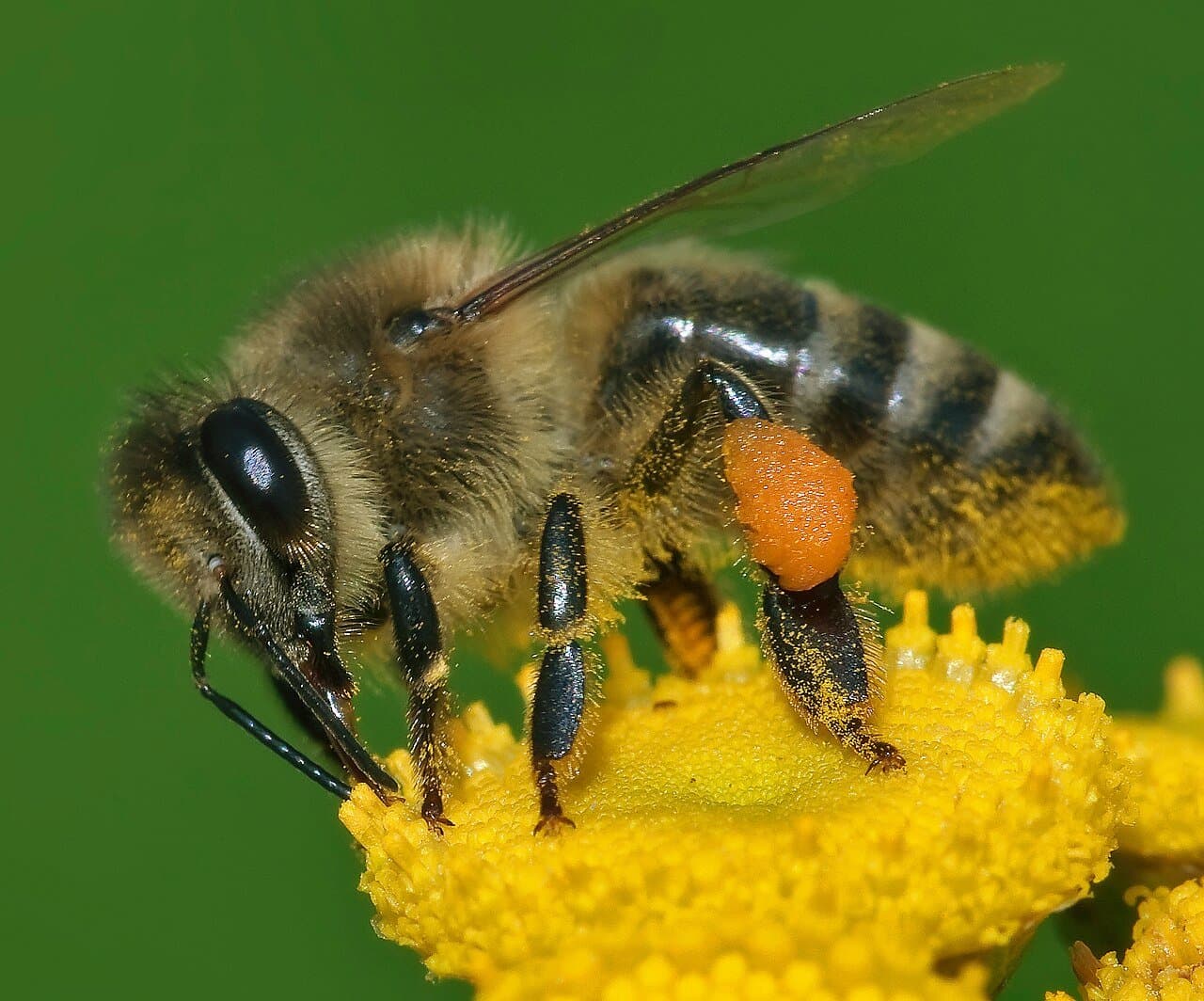 Western Honey BeeApis melliferaThe familiar honey-making bee, which lives in large, organized hives with a queen, drones and workers.
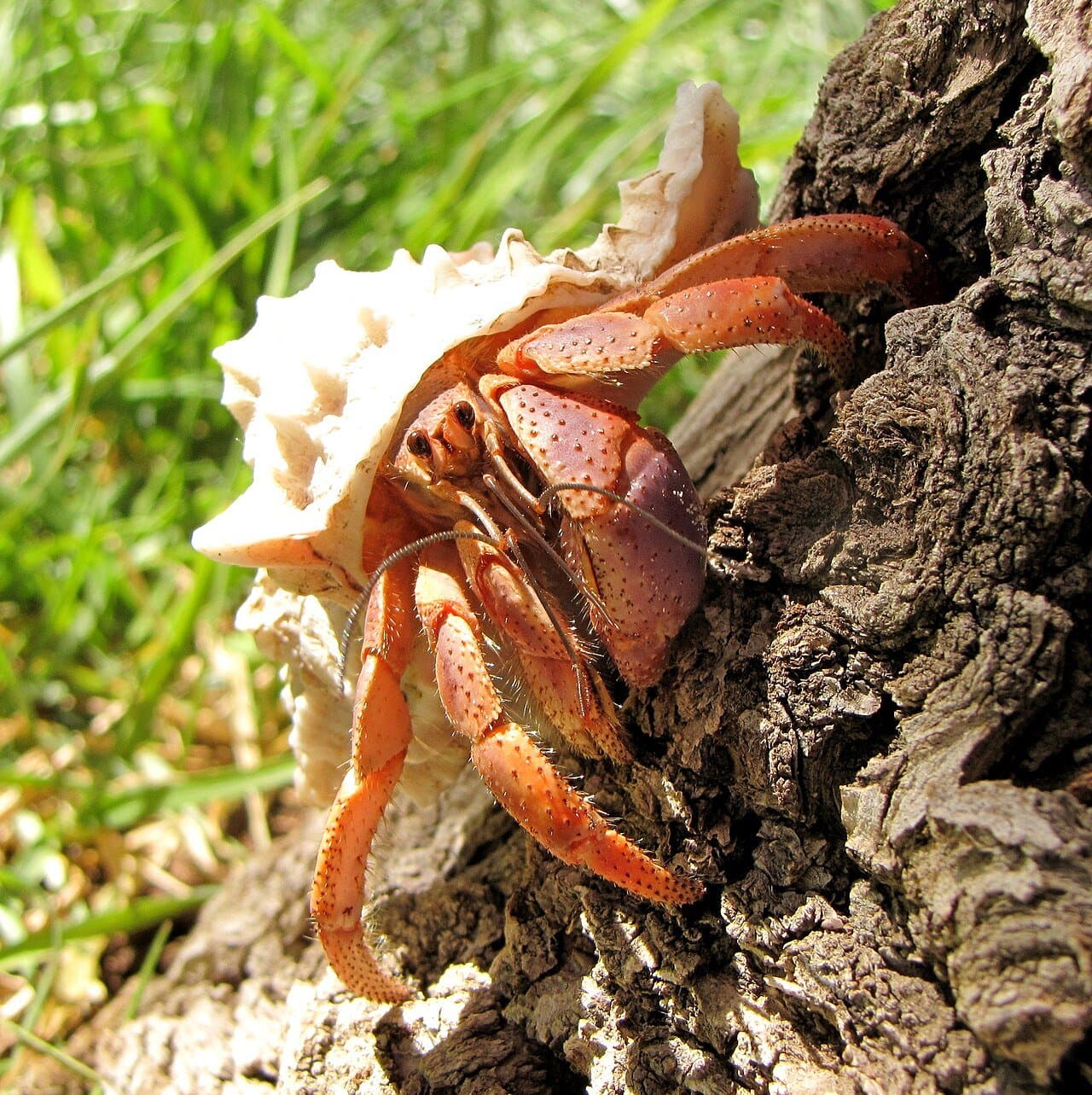 Caribbean Hermit CrabCoenobita clypeatusA land-dwelling hermit crab of tropical Atlantic shores that protects its soft body inside a borrowed seashell.
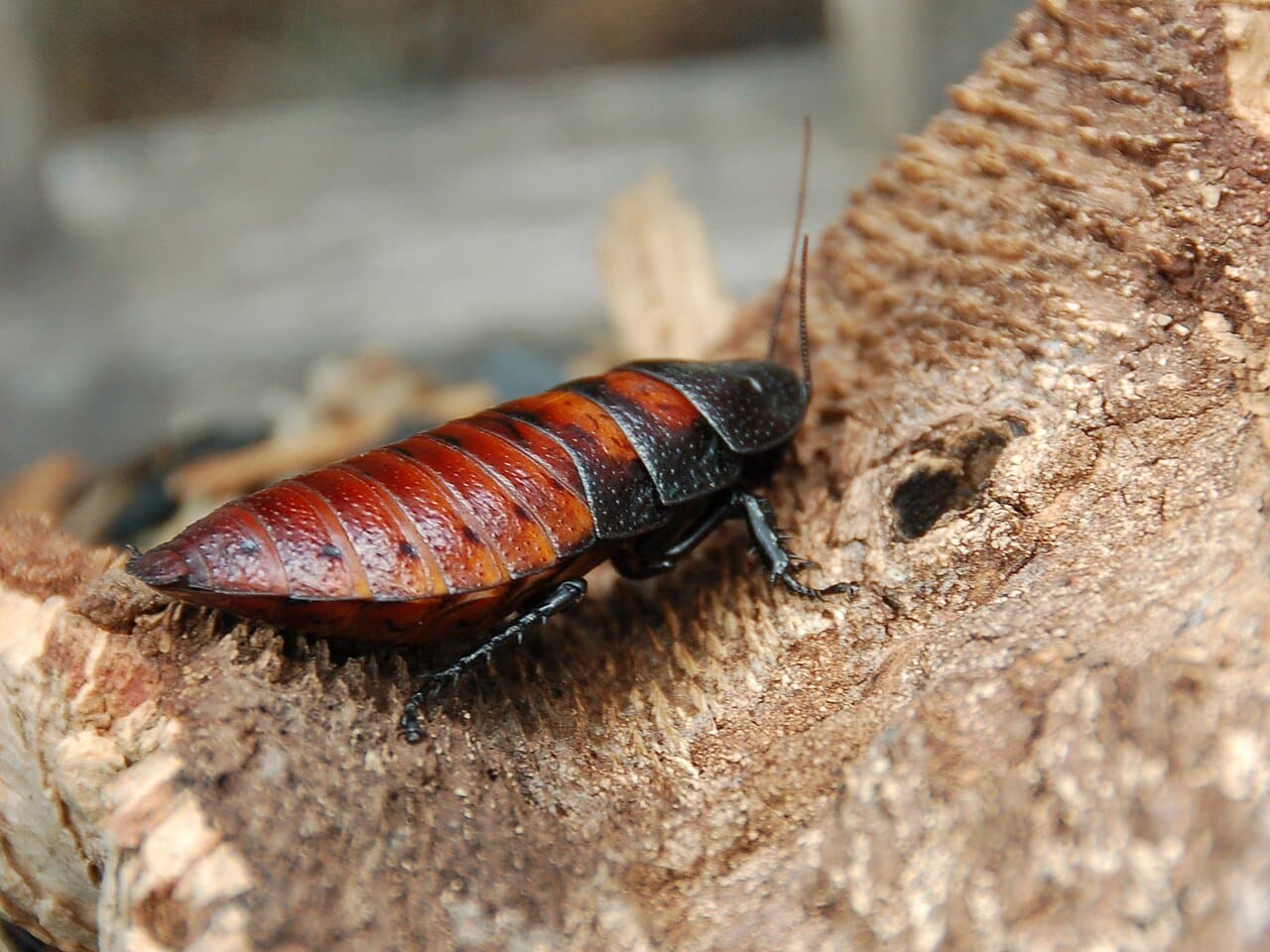 Madagascar Hissing CockroachGromphadorhina portentosaA large, wingless cockroach from Madagascar that hisses by pushing air out of its breathing holes.
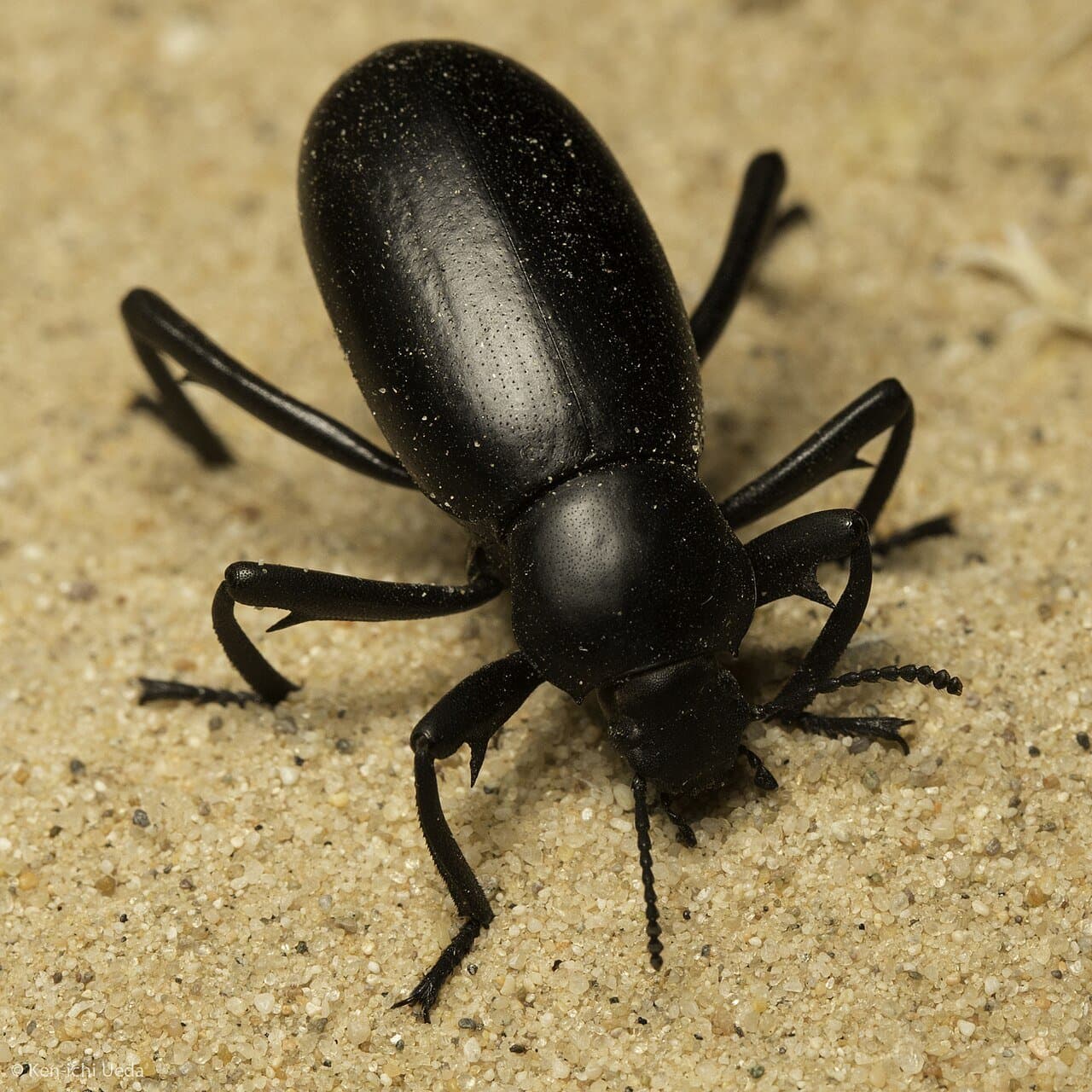 Pinacate BeetleEleodes speciesA black desert darkling beetle of the western U.S., also called the stink beetle, that does a headstand and sprays a bad smell.
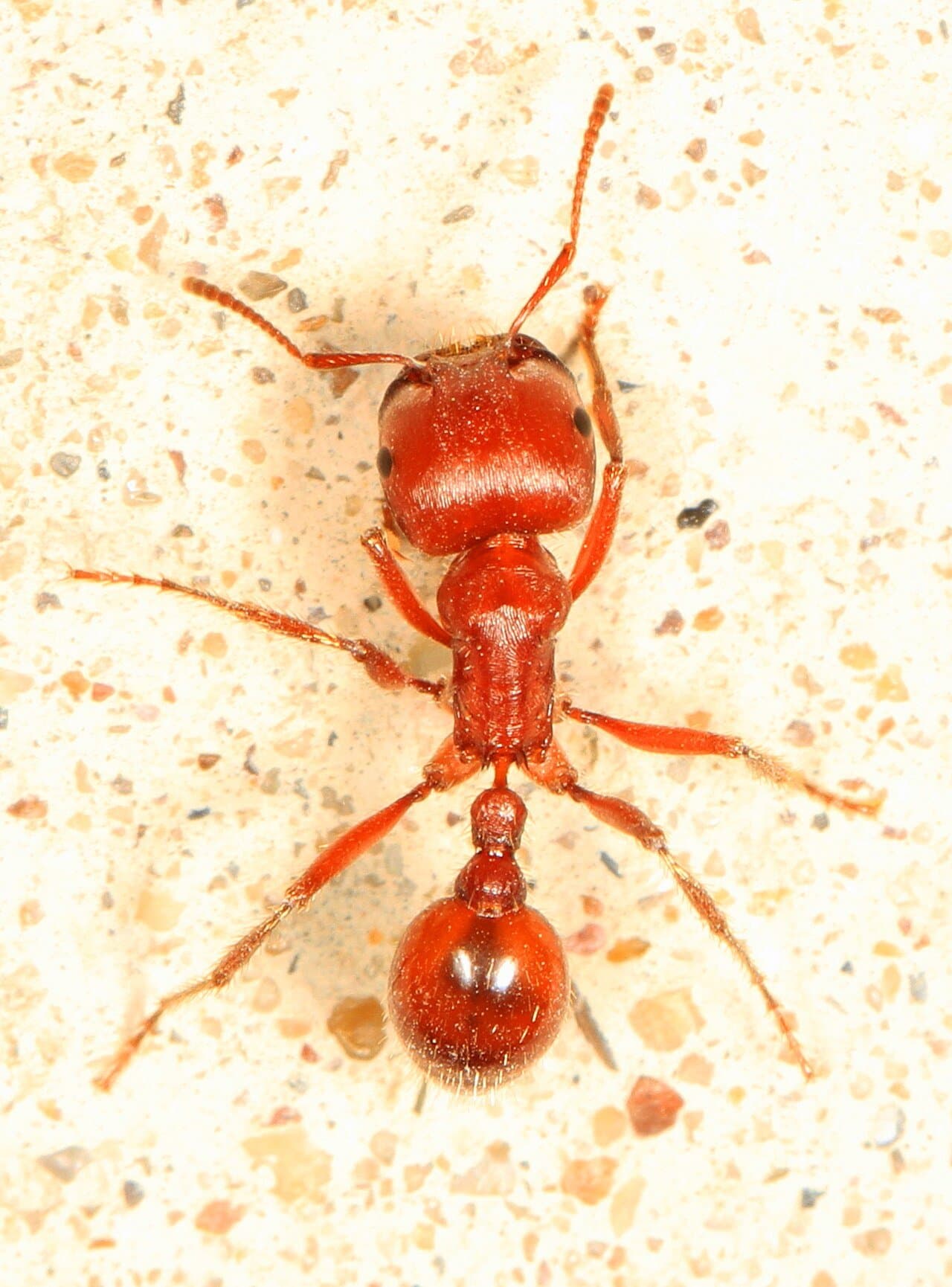 Red Harvester AntPogonomyrmex barbatusA seed-collecting desert ant of the southwestern U.S. with a painful sting, often mistaken for fire ants.
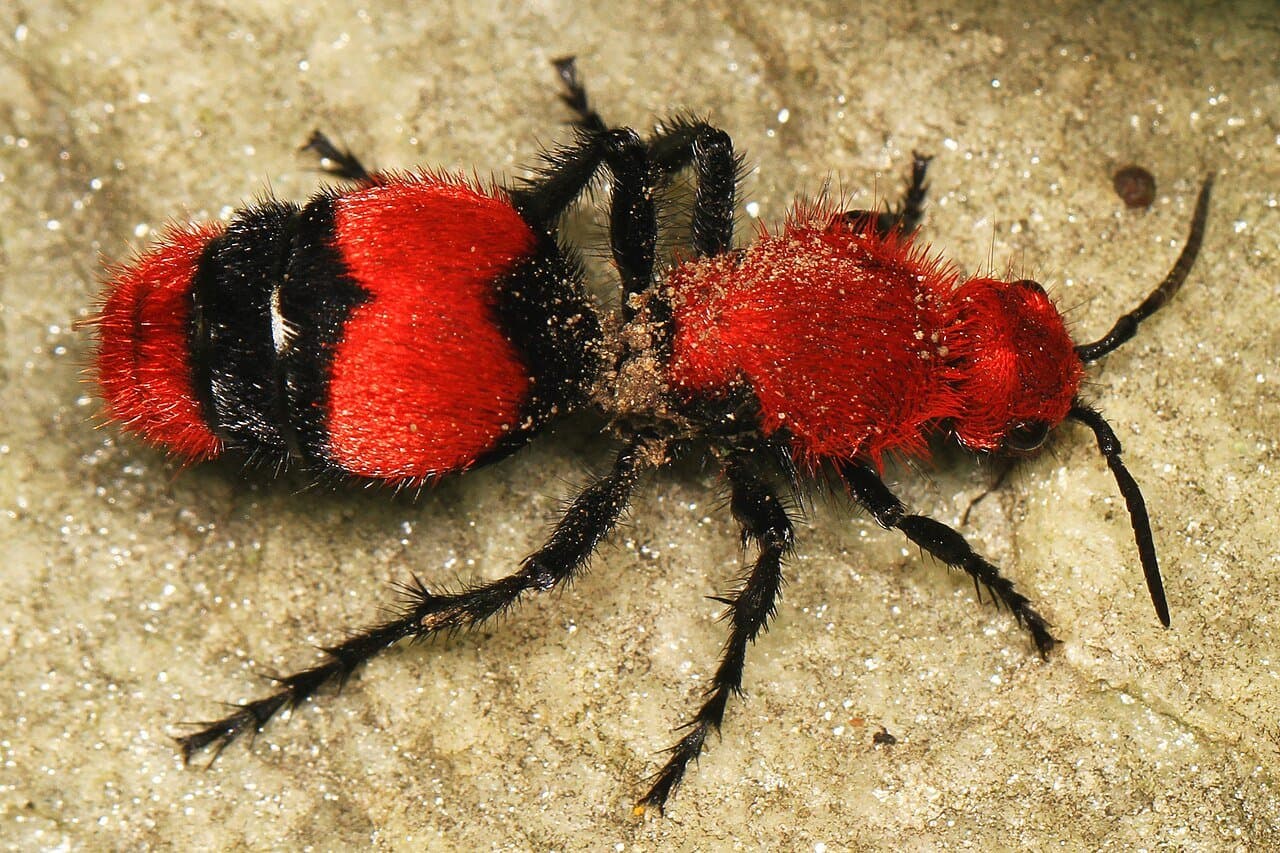 Velvet AntFamily MutillidaeNot an ant at all: a fuzzy, brightly colored wasp whose wingless females have a very painful sting.
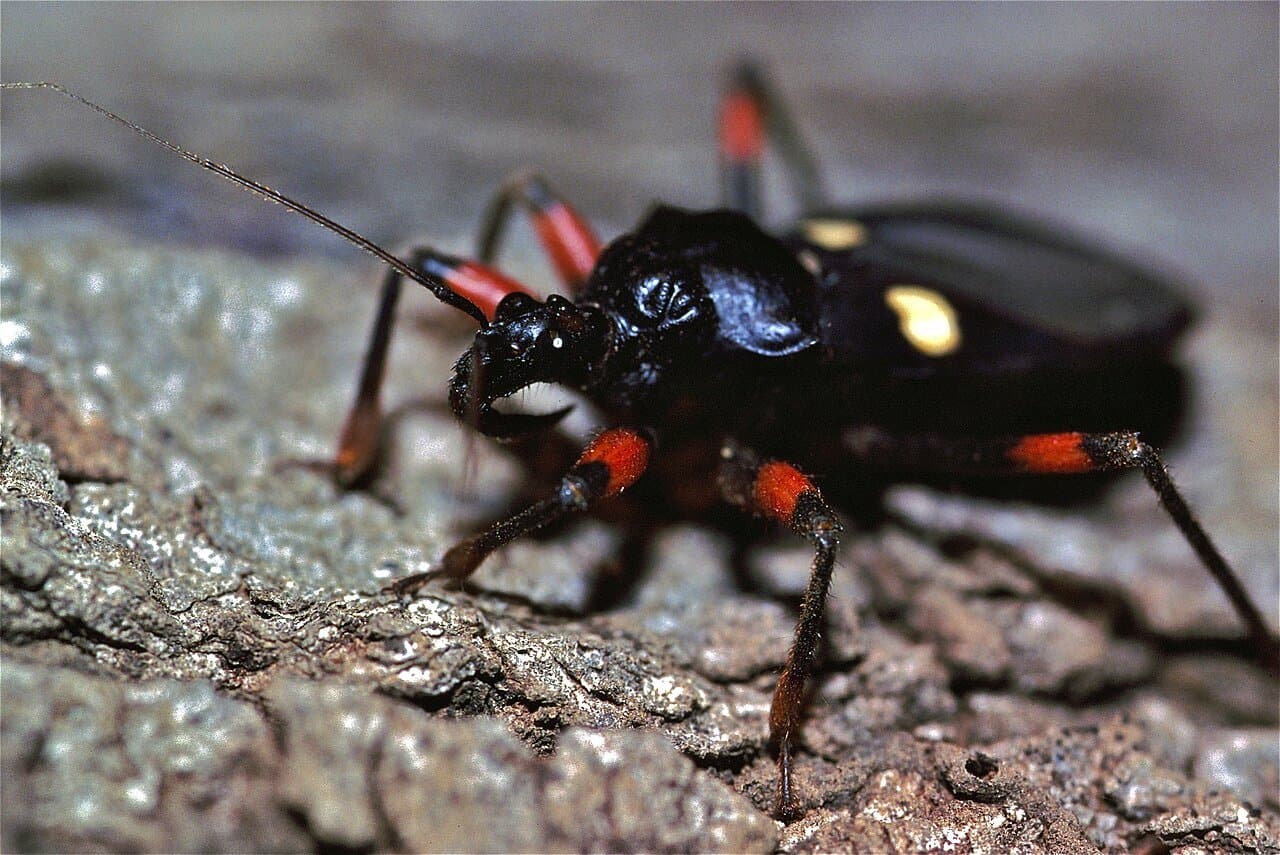 White-Spotted Assassin BugPlatymeris biguttataA black African assassin bug with two big white spots that stabs insect prey with its beak and injects digestive juices.