
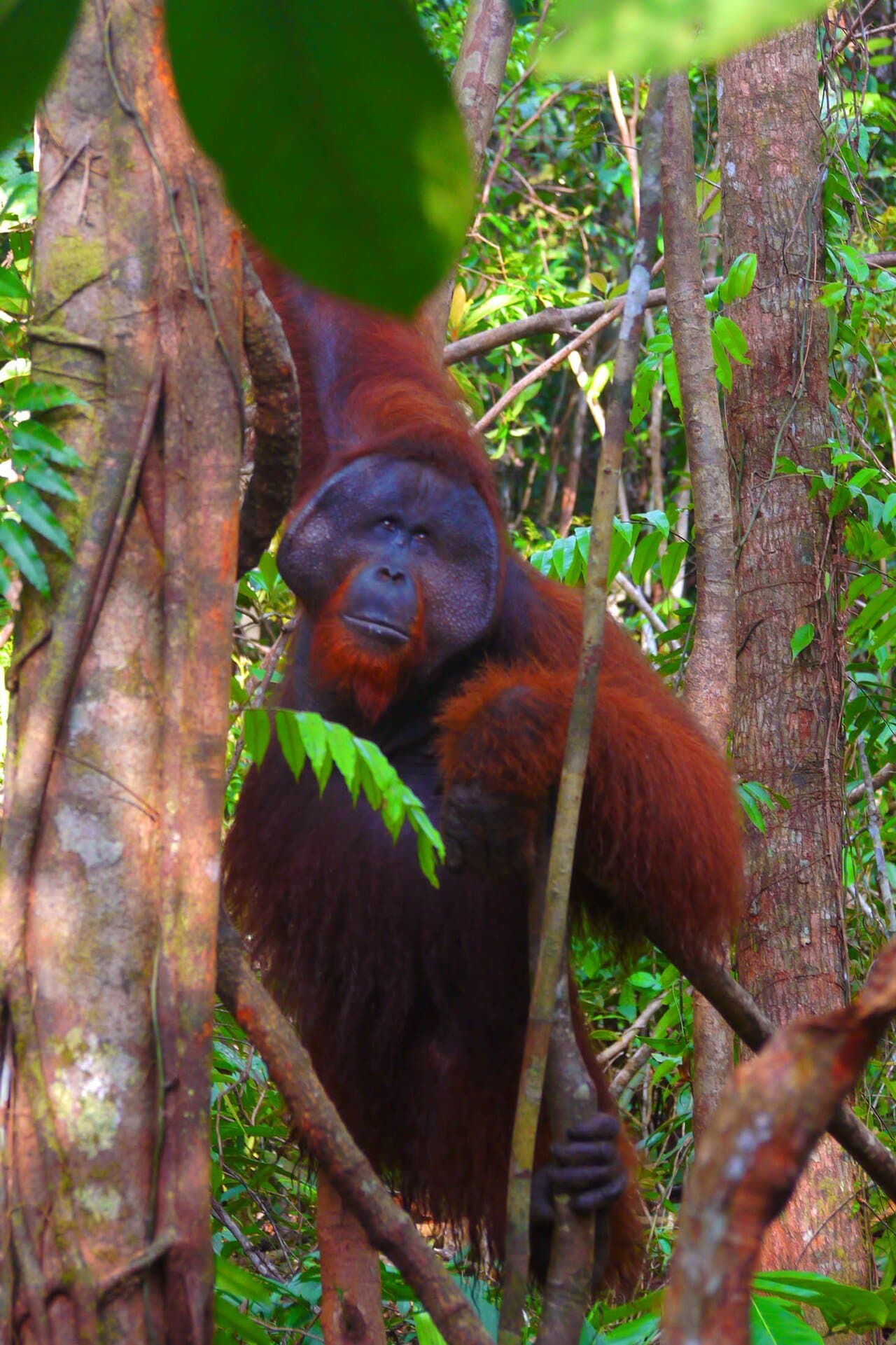
Bornean Orangutan
Pongo pygmaeus
A critically endangered red-haired great ape of Borneo's rainforests that lives mostly alone in the treetops and eats mostly fruit.
Checking teacher reviews…
About the Bornean Orangutan
Bornean Orangutans live in the rainforests of Borneo, from 20 to 200 feet off the ground. Their arms are twice as long as their legs, and their arm span is 8 to 9 feet. They can grip with their feet as well as their hands. Orangutans spend 60 percent or more of their day finding and eating food. They eat more than 300 kinds of fruit, plus leaves, bark, shoots and flowers. Bornean orangutans have darker hair than Sumatran orangutans, and males grow big, fleshy cheek pads.[1]
Quick facts
- Scientific name
- Pongo pygmaeus[1]
- Size
- Adult males average 54 inches tall; females about 45 inches. Arm span 8 to 9 feet.[1]
- Weight
- Males 200 to 250 pounds. Females about 80 to 120 pounds.[1]
- Lifespan
- 25 to 30 years in the wild. Up to 50 to 60 years in zoos.[1]
- Diet
- Mostly fruit (more than 300 kinds), plus leaves, bark, shoots and flowers.[1]
- Habitat
- Tropical rainforests, including mountain, peat swamp and lowland forests.[1]
- Where it lives
- The island of Borneo.[1]
- Group life
- Adults usually live alone. Mothers care for their young for years.[1]
- Babies
- Pregnancy lasts about 8.5 months. Newborns weigh 3 to 4 pounds.[1]
- Conservation status
- Critically Endangered (IUCN Red List, assessed 2016).[2]
Fun facts
Vocabulary
- great ape
- A large primate with no tail, such as an orangutan, gorilla, chimpanzee or bonobo.
- arboreal
- Living mostly in trees.
- frugivore
- An animal that eats mostly fruit.
- arm span
- The distance from fingertip to fingertip when the arms are stretched out wide.
- critically endangered
- A conservation label meaning a species faces an extremely high risk of dying out in the wild.
See it in person
- Zoo AtlantaAtlanta, Georgia · All AnimalsSee this animal on the zoo's website ↗
Sources
- [1] Zoo Atlanta. “Bornean Orangutan.” https://zooatlanta.org/animal/bornean-orangutan/ (accessed 2026-10-02)
- [2] IUCN Red List of Threatened Species. “Pongo pygmaeus (Bornean Orangutan).” https://www.iucnredlist.org/species/17975/259043172 (accessed 2026-10-02)
Facts last checked 2026-10-02.
More Great Apes
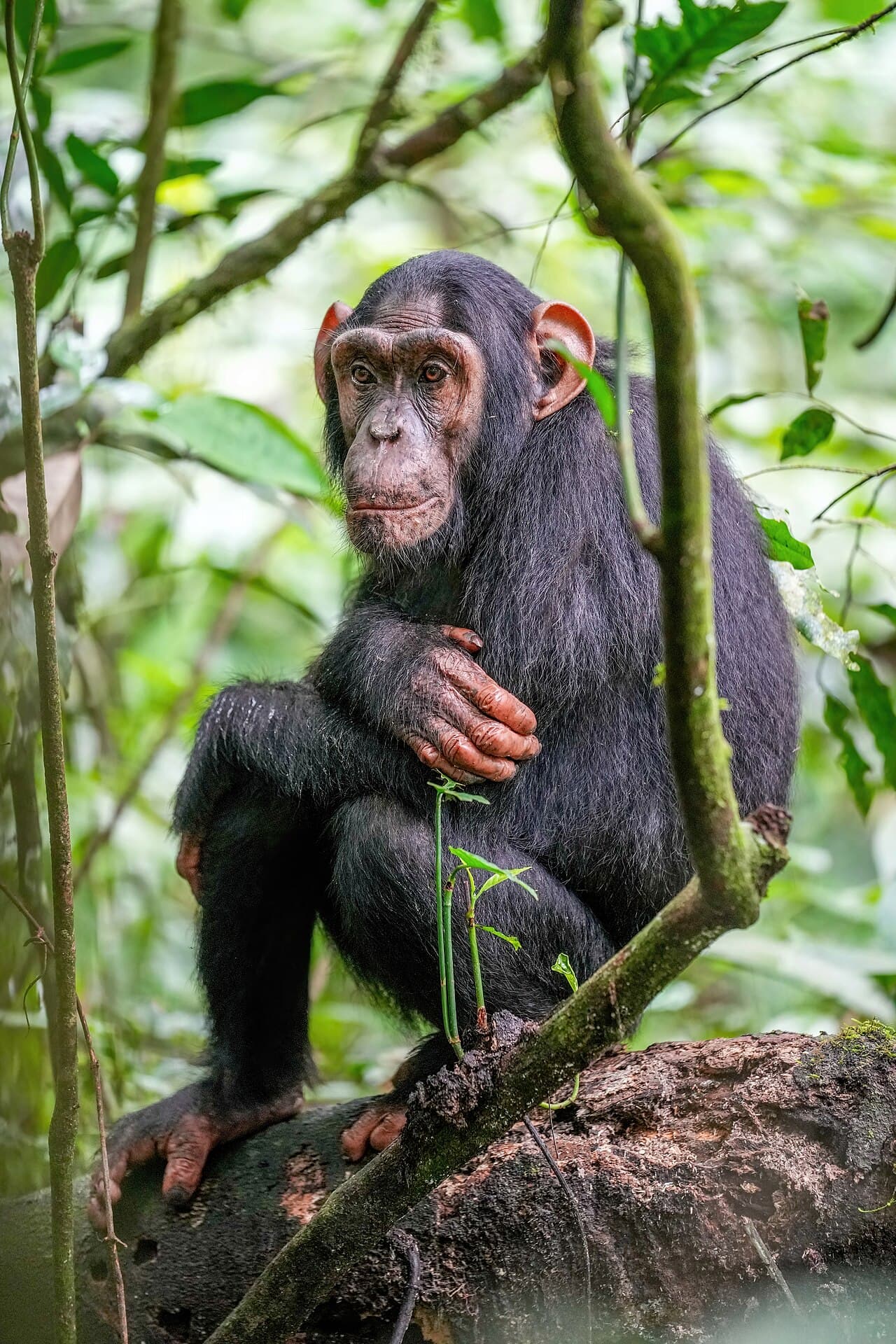 ChimpanzeePan troglodytesAn endangered, tool-using great ape of African forests that lives in large communities.
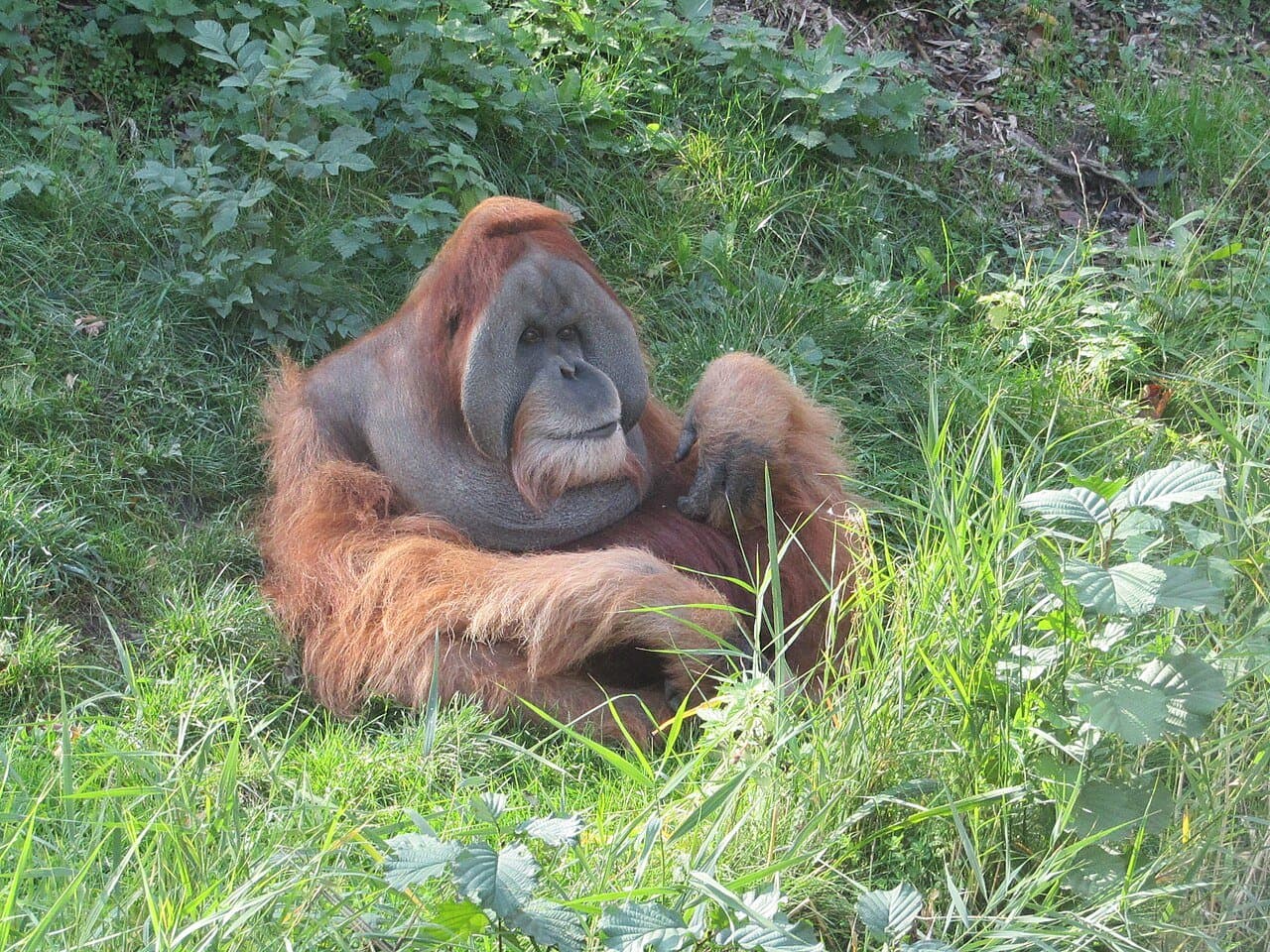 Sumatran OrangutanPongo abeliiA critically endangered red-haired great ape of Sumatra's rainforests that lives mostly alone in the treetops and eats mostly fruit.
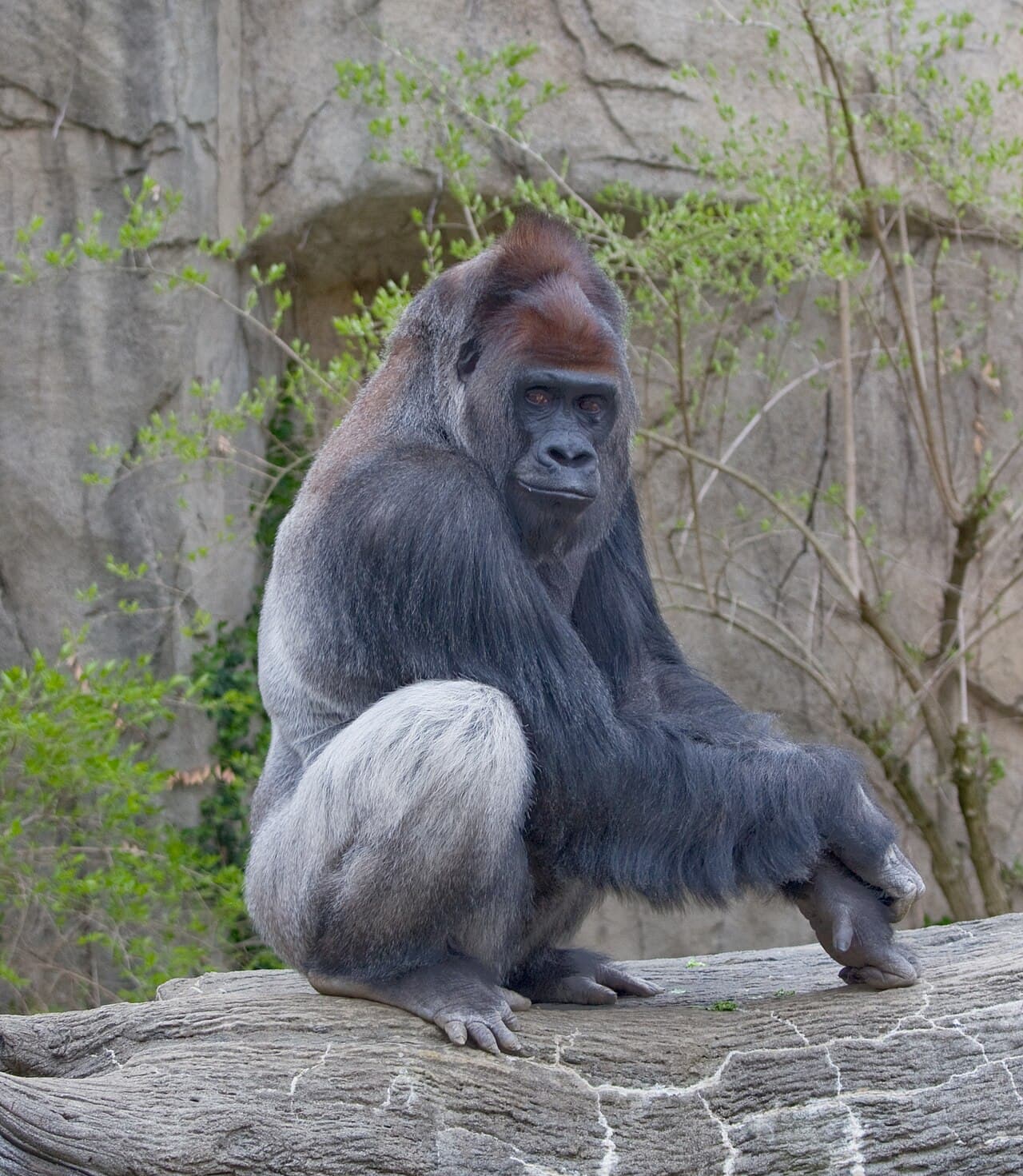 Western Lowland GorillaGorilla gorilla gorillaA critically endangered great ape of Central Africa that lives in small family troops led by a silverback.