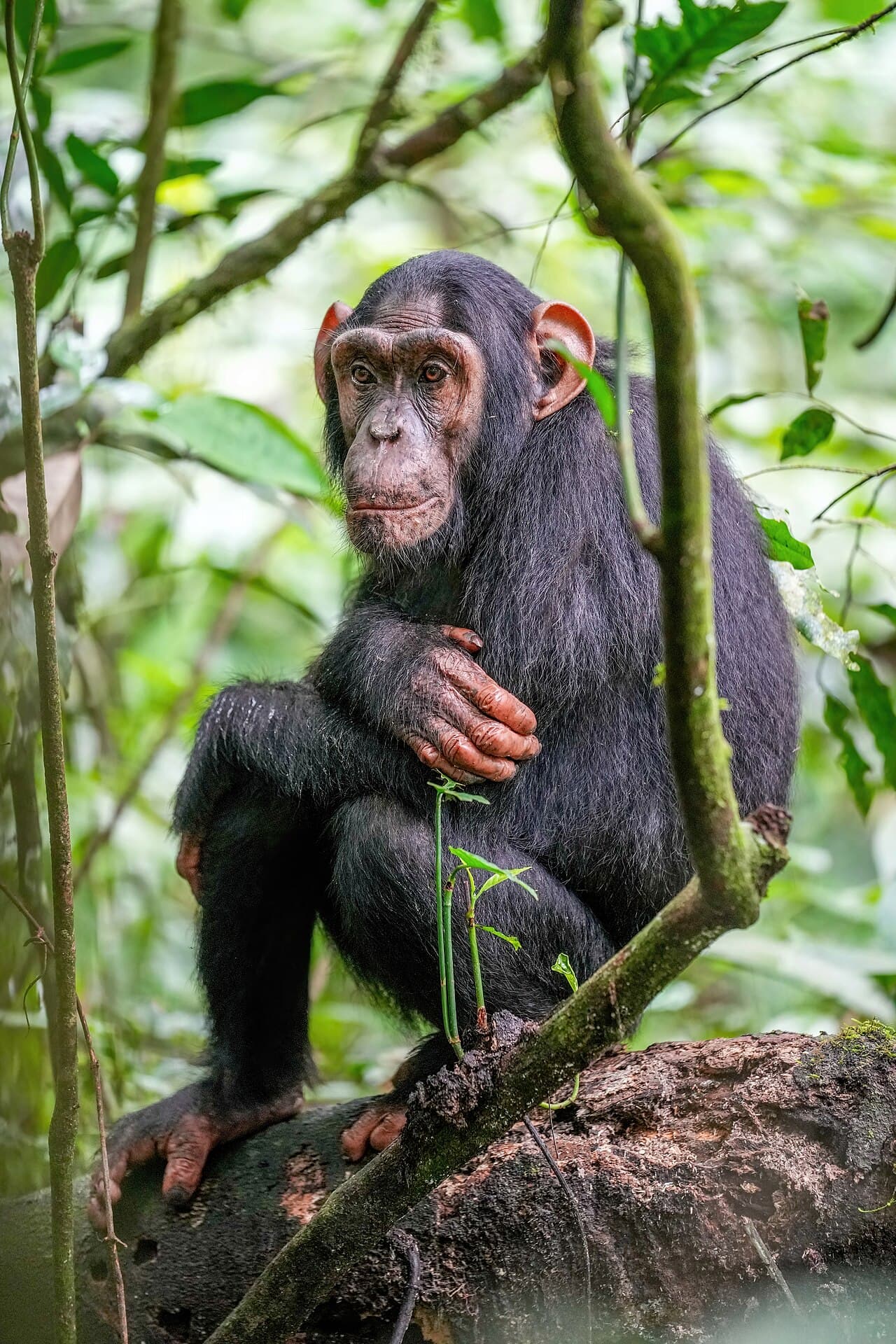
Chimpanzee
Pan troglodytes
An endangered, tool-using great ape of African forests that lives in large communities.
Checking teacher reviews…
About the Chimpanzee
Chimpanzees live in tropical rainforests and other forests across western and Central Africa. They eat about 80 different kinds of food, including fruit, seeds, leaves, bark, honey, flowers and insects, and sometimes meat. A chimpanzee will strip the leaves off a branch and poke it into a termite or ant nest to pull out a snack. They also chew leaves into a sponge to soak up water to drink.[1]
Quick facts
- Scientific name
- Pan troglodytes[1]
- Size
- About 3 feet (0.9 m) from head to rump.[1]
- Weight
- Males: 90 to 120 pounds. Females: 70 to 100 pounds.[1]
- Lifespan
- On average, 32 years for males and 40 years for females.[1]
- Diet
- Omnivore. About 80 different foods, including seeds, fruit, leaves, bark, honey, flowers, insects and sometimes meat.[1]
- Habitat
- Tropical rainforests and lowland and mountain forests.[1]
- Where it lives
- Western and Central Africa.[1]
- Group life
- Communities of up to 100 chimpanzees, made of smaller family groups of about 6 to 10.[1]
- Babies
- Pregnancy lasts about 7.5 months. Usually one baby, weighing about 4 pounds (1.9 kg). Young chimps depend on their mothers until about age 7.[1]
- Conservation status
- Endangered.[1]
Fun facts
- Chimpanzees go "termite fishing": they strip the leaves off a branch and dip it into a termite or ant nest to catch insects.[1]
- They chew leaves to make a sponge for soaking up water.[1]
- According to scientists, chimpanzees and people share about 98 percent of their genes.[1]
- A young chimpanzee stays dependent on its mother until it is about seven years old.[1]
Vocabulary
- omnivore
- An animal that eats both plants and other animals.
- tool
- An object used to help do a job, like a stick used to reach food.
- community
- A large group of chimpanzees that share the same home area.
- endangered
- A conservation label meaning a species faces a very high risk of dying out in the wild.
- habitat loss
- When the place an animal lives is destroyed or changed so it can no longer live there.
See it in person
- Montgomery ZooMontgomery, Alabama · AfricaSee this area on the zoo's website ↗
Sources
- [1] San Diego Zoo Wildlife Alliance. “Chimpanzee.” https://animals.sandiegozoo.org/animals/chimpanzee (accessed 2026-10-01)
Facts last checked 2026-10-01.
More Great Apes
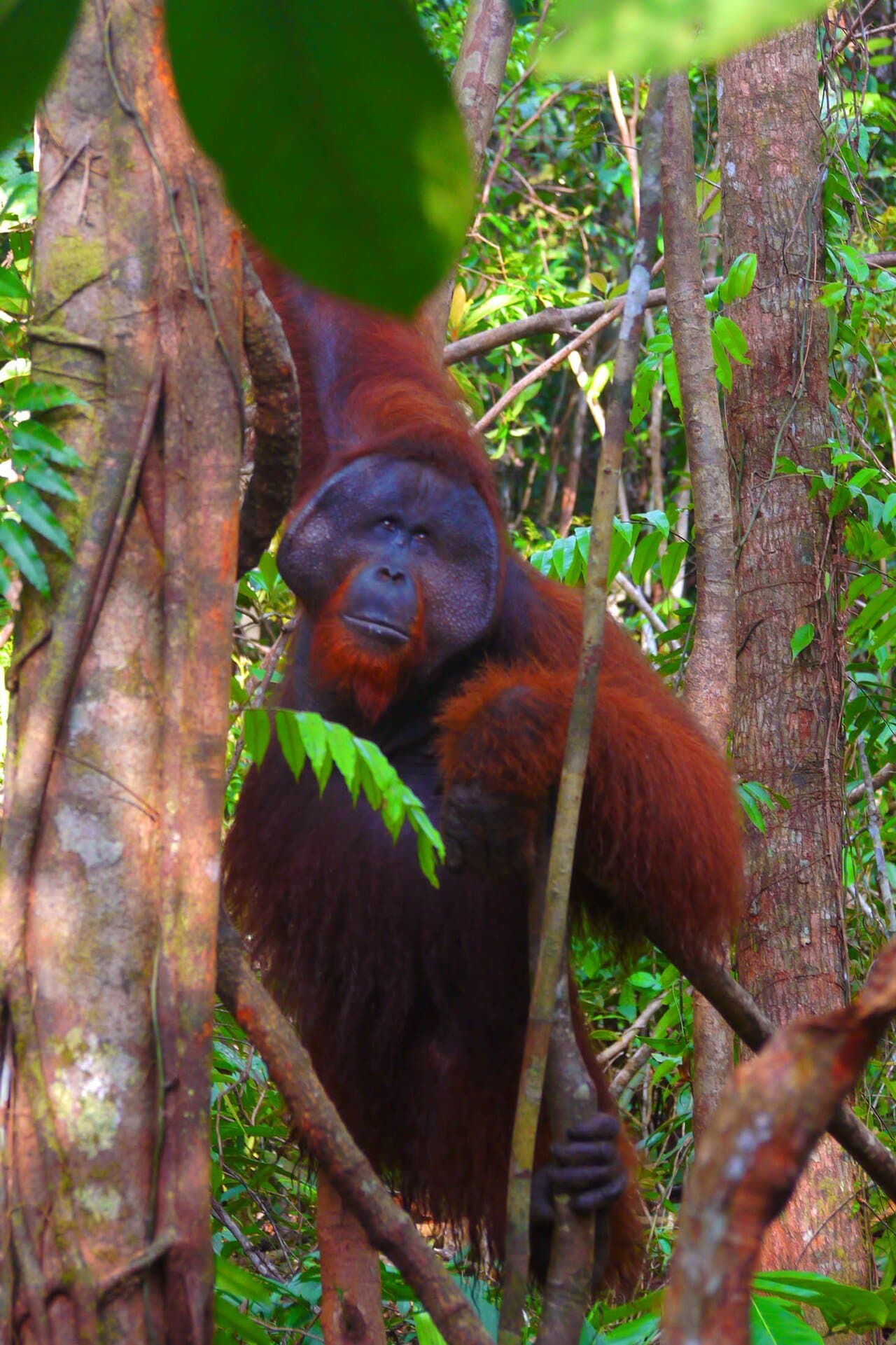 Bornean OrangutanPongo pygmaeusA critically endangered red-haired great ape of Borneo's rainforests that lives mostly alone in the treetops and eats mostly fruit.
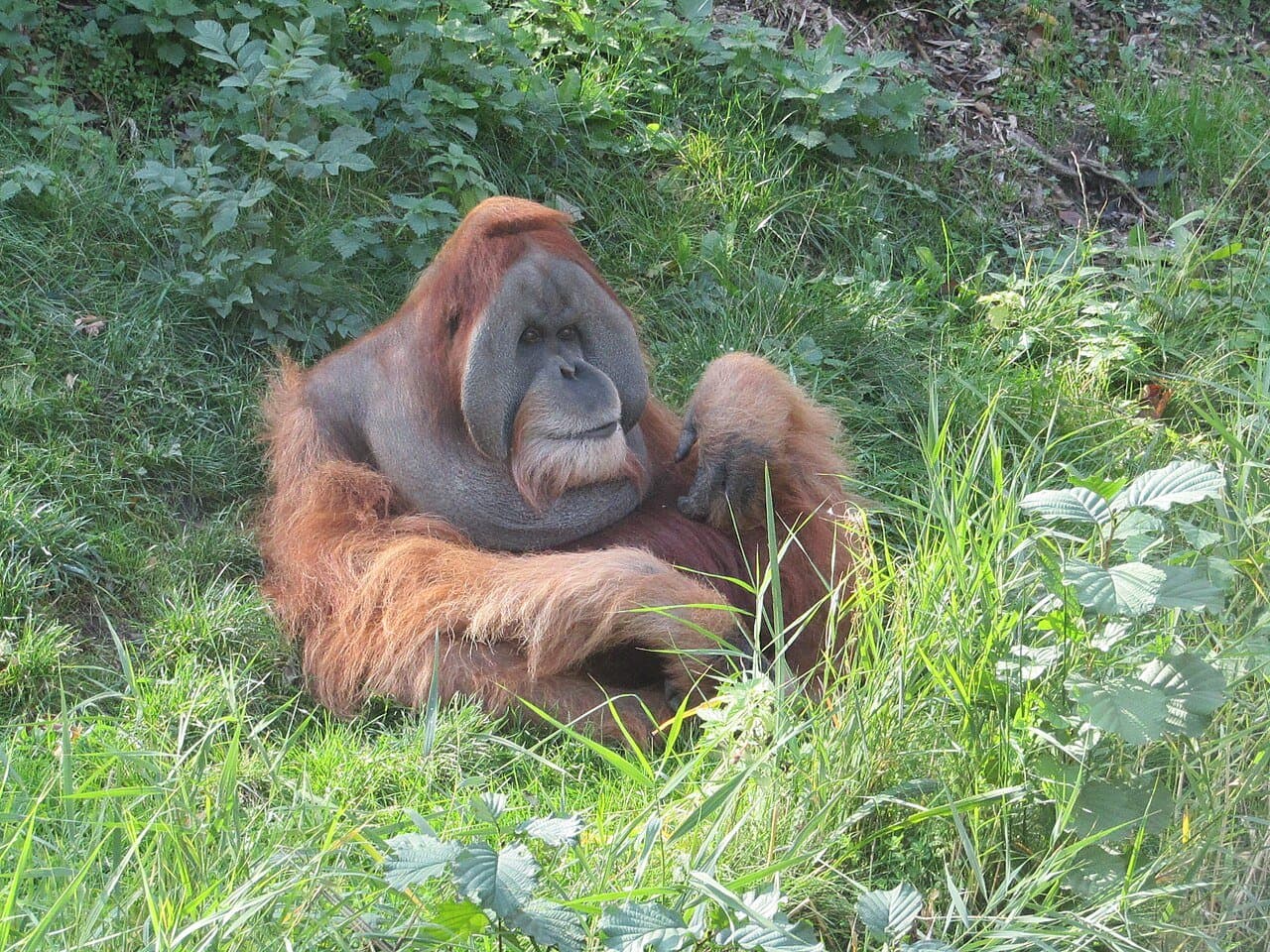 Sumatran OrangutanPongo abeliiA critically endangered red-haired great ape of Sumatra's rainforests that lives mostly alone in the treetops and eats mostly fruit.
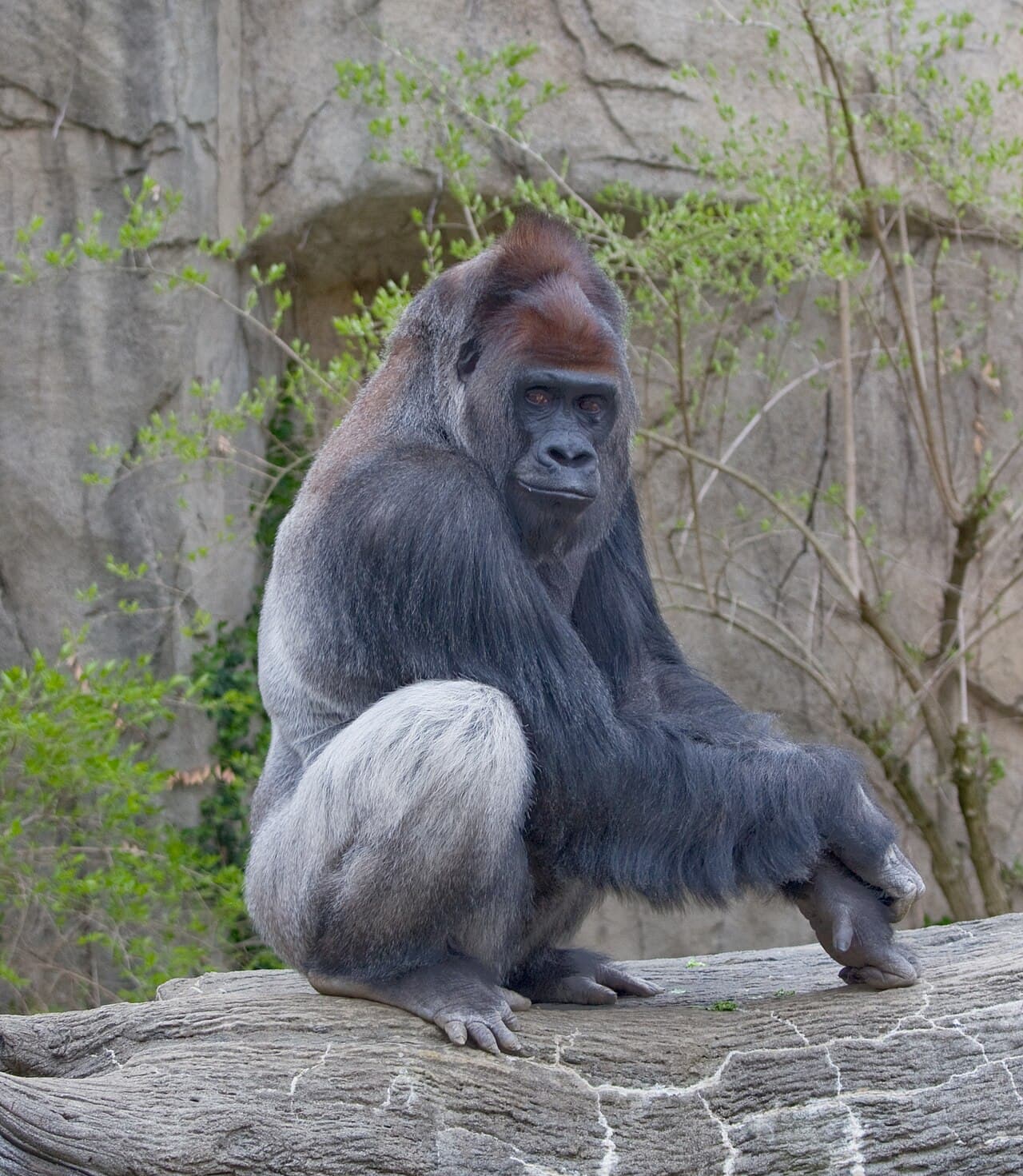 Western Lowland GorillaGorilla gorilla gorillaA critically endangered great ape of Central Africa that lives in small family troops led by a silverback.