
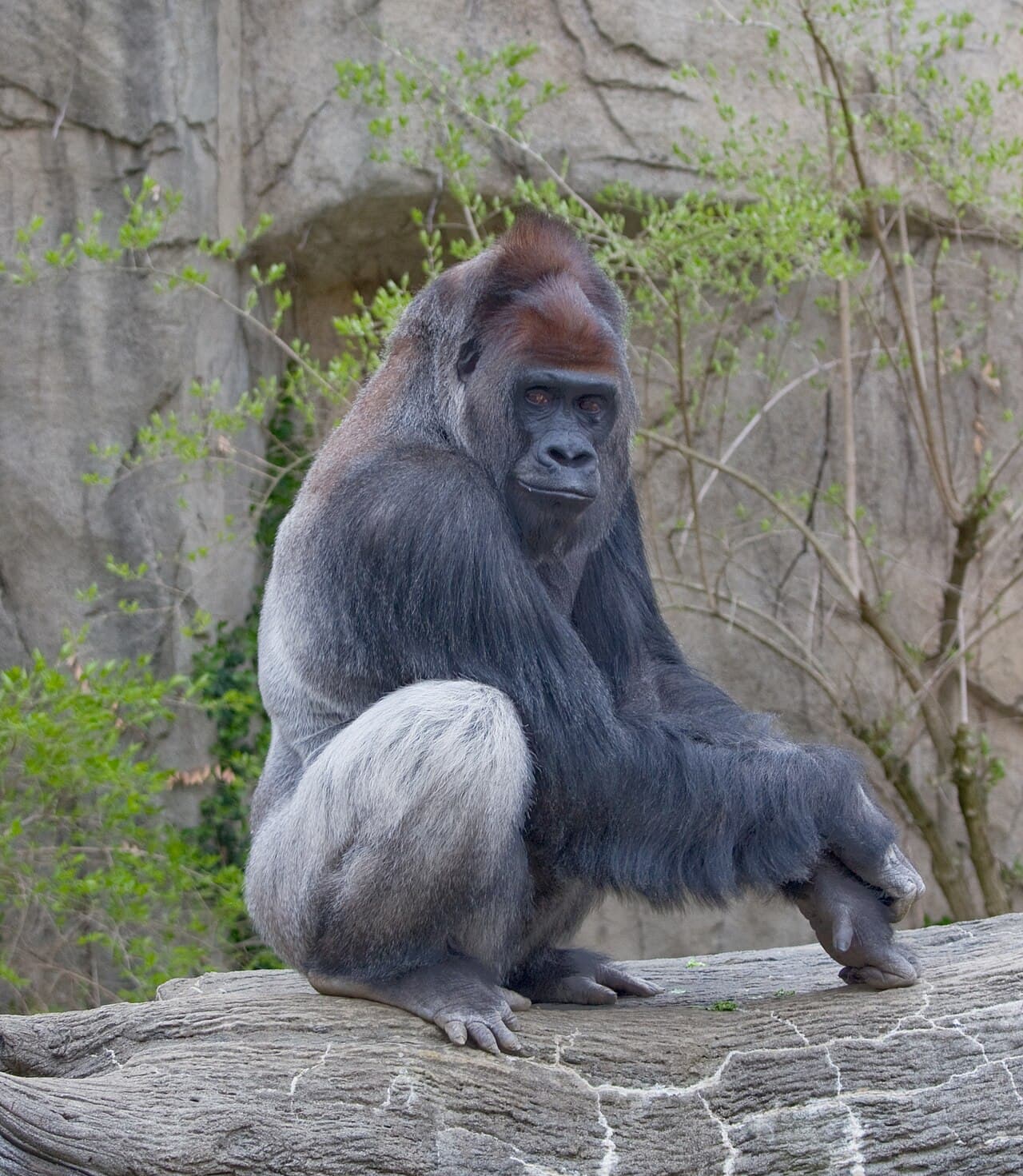
Western Lowland Gorilla
Gorilla gorilla gorilla
A critically endangered great ape of Central Africa that lives in small family troops led by a silverback.
Checking teacher reviews…
About the Western Lowland Gorilla
Western lowland gorillas live in the Congo Basin of Central Africa, in countries such as Gabon, Cameroon and the Republic of Congo. They eat mostly leaves and stems of herbs, shrubs and vines, plus fleshy fruits. A troop usually has a silverback male, a few adult females and their young, and averages about five gorillas. Every gorilla older than three builds nests: day nests for resting and night nests for sleeping.[1]
Quick facts
- Scientific name
- Gorilla gorilla gorilla[1]
- Size
- Males stand up to 6 feet (1.8 m) with an arm span of about 8 feet. Females stand up to 4.5 feet (1.4 m) with an arm span of about 6.5 feet.[1]
- Weight
- Males: up to 500 pounds (226.8 kg). Females: 150 to 200 pounds.[1]
- Lifespan
- 30 to 40 years in the wild. Into their 50s in human care.[1]
- Diet
- Mostly herbivore. Eats leaves and stems of herbs, shrubs and vines, plus fleshy fruits.[1]
- Where it lives
- The Congo Basin, including Gabon, the Central African Republic, Cameroon, Angola, Equatorial Guinea and the Republic of Congo.[1]
- Group life
- Troops with a silverback male, sometimes younger blackback males, several adult females and their young. Western lowland troops average about five gorillas.[1]
- Babies
- Pregnancy lasts about eight and a half months. Newborns weigh about 4 pounds (2 kg).[1]
- Conservation status
- Critically Endangered (IUCN Red List, since 2007).[1]
Fun facts
Vocabulary
- silverback
- An adult male gorilla, named for the silver-gray hair on his back.
- troop
- A family group of gorillas or other primates.
- great ape
- A large primate with no tail, such as a gorilla, chimpanzee, bonobo or orangutan.
- critically endangered
- A conservation label meaning a species faces an extremely high risk of dying out in the wild.
- arm span
- The distance from fingertip to fingertip when the arms are stretched out wide.
See it in person
- Zoo AtlantaAtlanta, Georgia · All AnimalsSee this animal on the zoo's website ↗
Sources
- [1] Smithsonian's National Zoo & Conservation Biology Institute. “Western Lowland Gorilla.” https://nationalzoo.si.edu/animals/western-lowland-gorilla (accessed 2026-10-01)
Facts last checked 2026-10-01.
More Great Apes
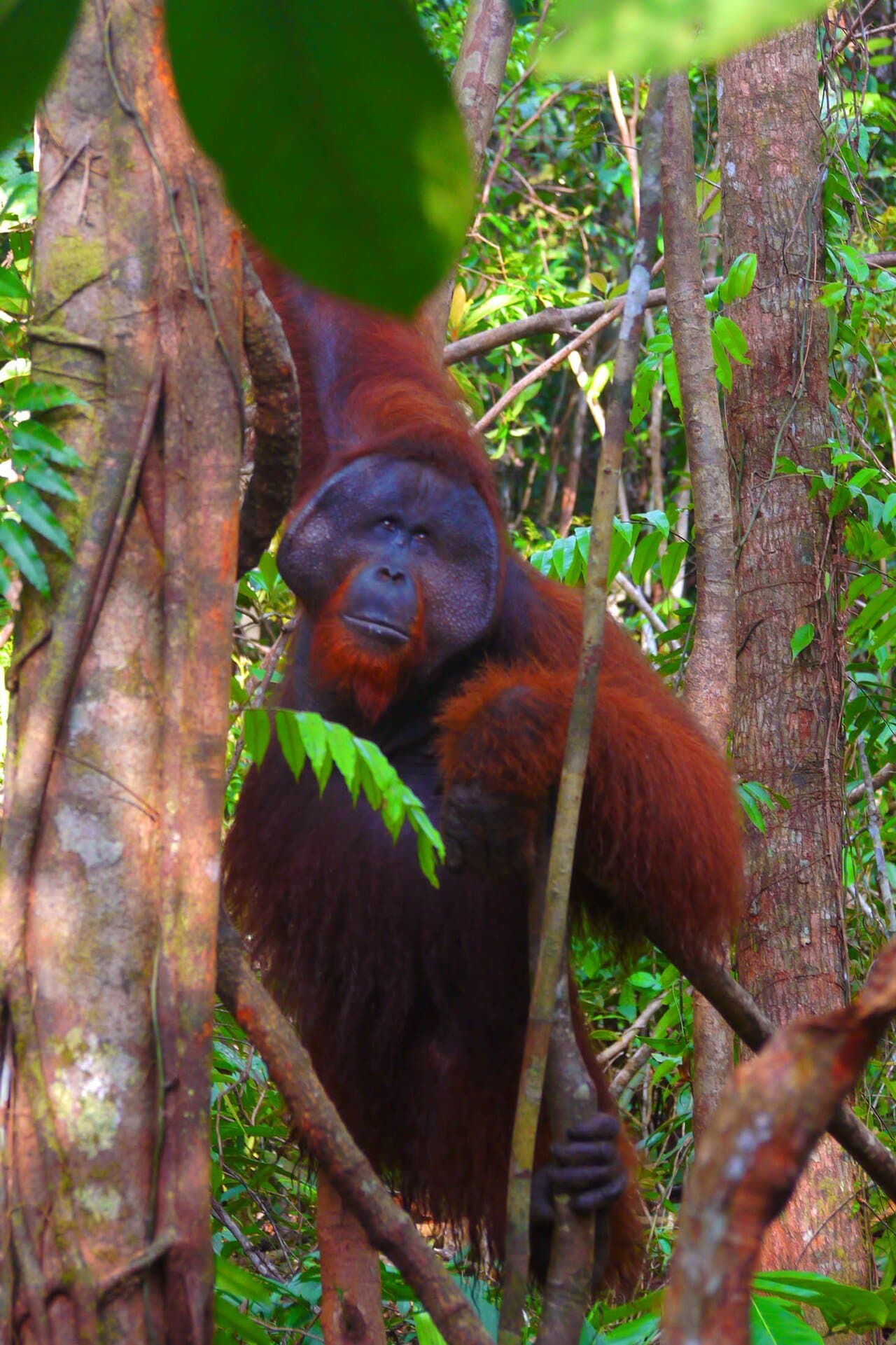 Bornean OrangutanPongo pygmaeusA critically endangered red-haired great ape of Borneo's rainforests that lives mostly alone in the treetops and eats mostly fruit.
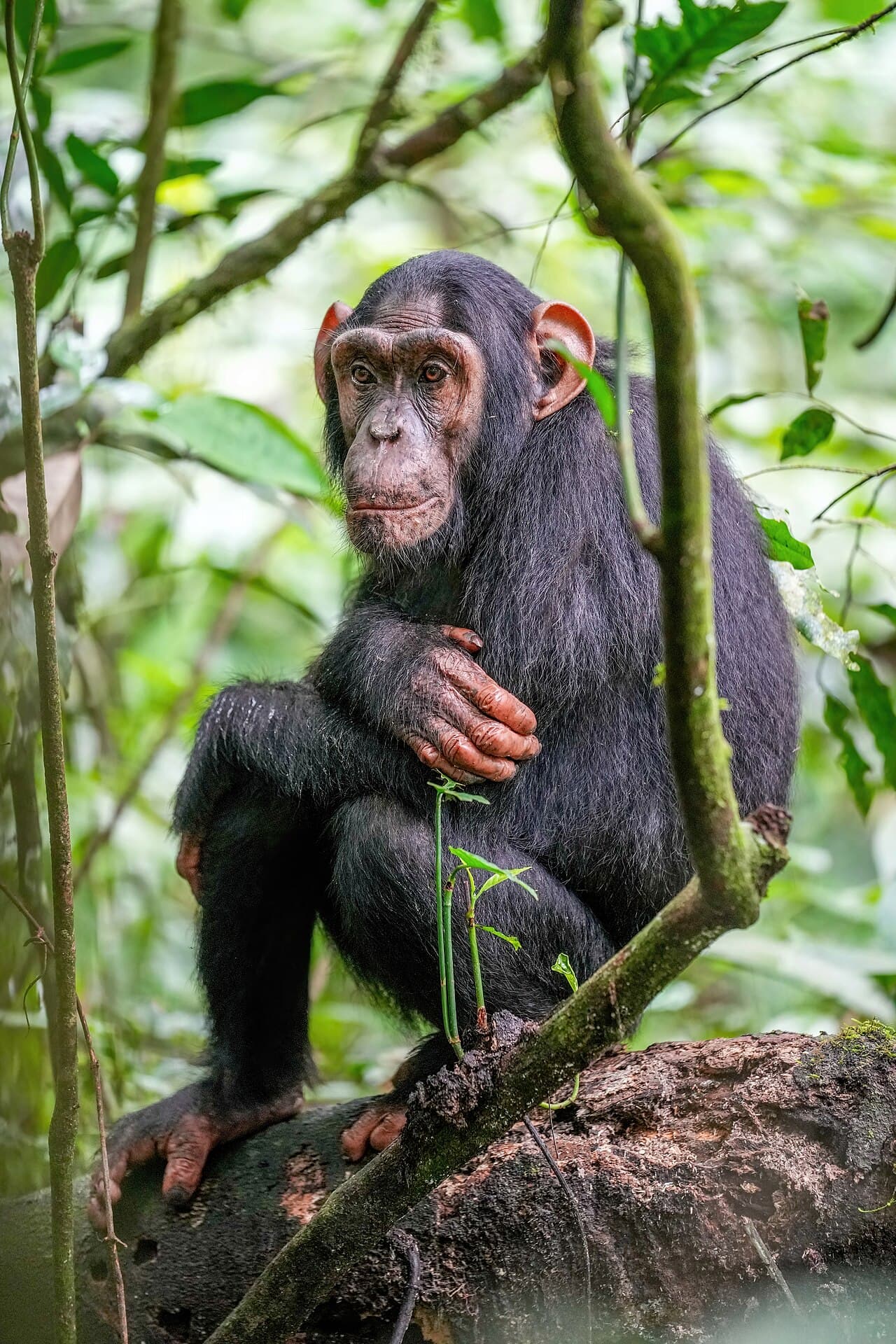 ChimpanzeePan troglodytesAn endangered, tool-using great ape of African forests that lives in large communities.
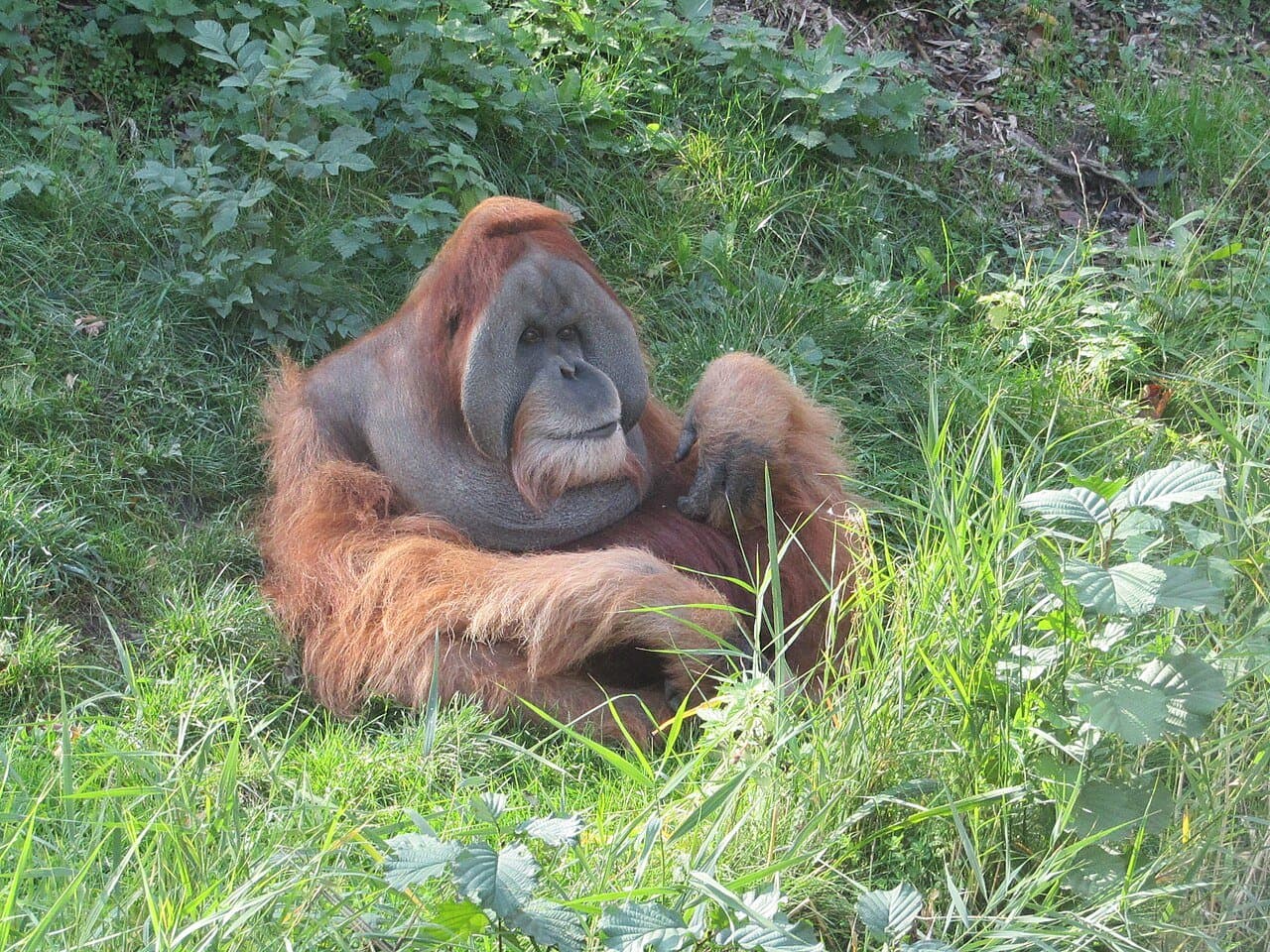 Sumatran OrangutanPongo abeliiA critically endangered red-haired great ape of Sumatra's rainforests that lives mostly alone in the treetops and eats mostly fruit.