Emu
Dromaius novaehollandiae
Australia's largest bird, a shaggy flightless runner whose fathers hatch the eggs and raise the chicks.
Checking teacher reviews…
About the Emu
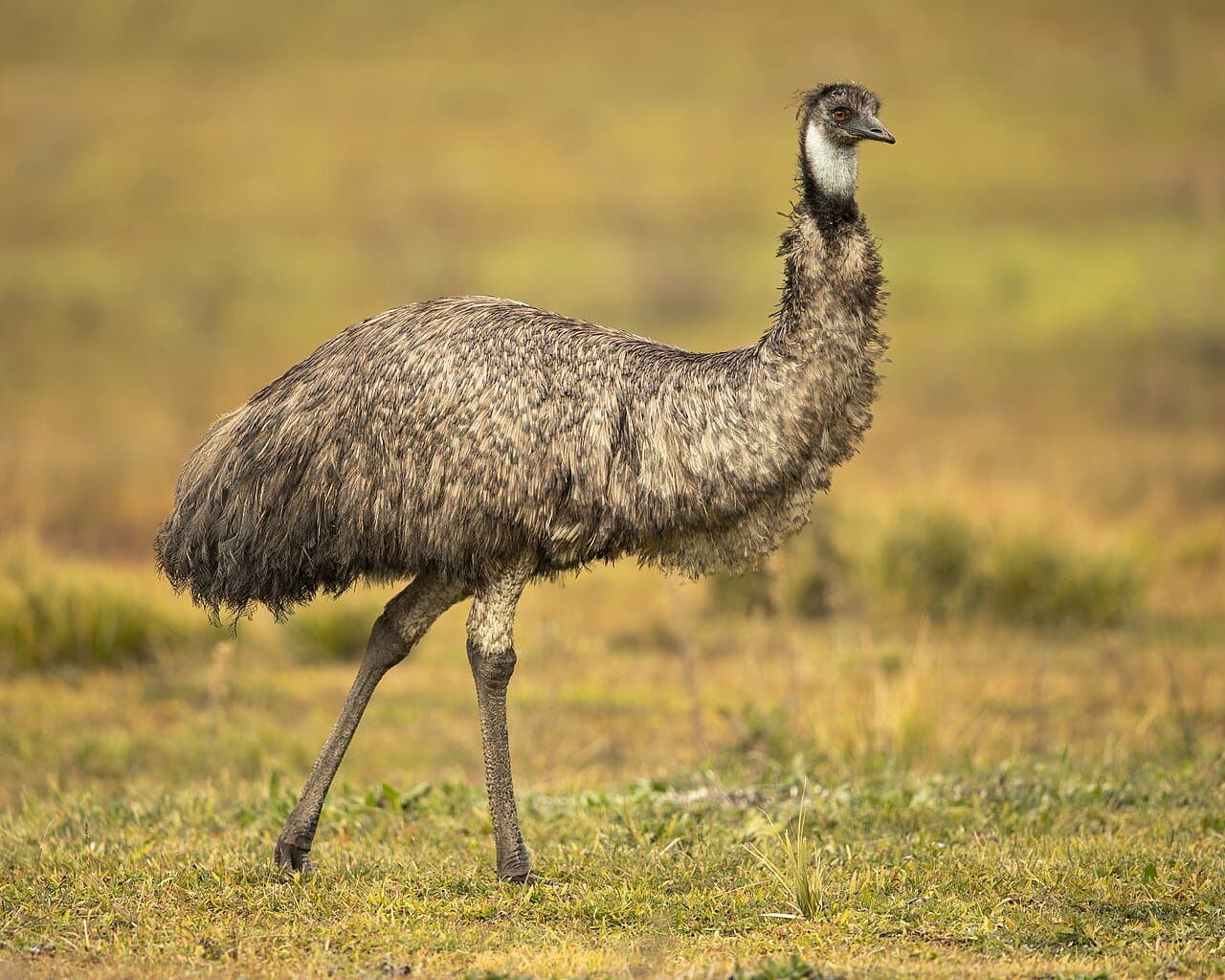
Emus can grow 6 feet tall and weigh 80 to 120 pounds; females are bigger than males. They have shaggy brownish-gray feathers, long strong legs with three toes, and tiny 7-inch wings. They can sprint up to 30 miles per hour. Emus live across Australia in savanna woodlands, grasslands and dry forests near water, and eat seeds, grasses, insects, fruit and small lizards.[1]
Quick facts
- Scientific name
- Dromaius novaehollandiae[1]
- Size
- Up to 6 feet tall.[1]
- Weight
- 80 to 120 pounds. Females are larger.[1]
- Lifespan
- 10 to 20 years in the wild. Up to 35 in human care.[1]
- Diet
- Omnivore. Seeds, grasses, insects, fruit and small lizards.[1]
- Habitat
- Savanna woodlands, grasslands and dry forests near water.[1]
- Where it lives
- Across mainland Australia.[1]
- Group life
- Mostly solitary. Pairs form during breeding season.[1]
- Babies
- 5 to 15 greenish-blue eggs, incubated 48 to 56 days by the male.[1]
- Conservation status
- Least Concern (IUCN Red List, assessed 2018).[2]
Fun facts
Vocabulary
- ratite
- A large flightless bird with a flat breastbone, such as an ostrich, emu or cassowary.
- vestigial
- Still present but no longer used for its original job, like an emu's tiny wings.
- clutch
- A group of eggs laid at one time.
- omnivore
- An animal that eats both plants and other animals.
- forage
- To search for food.
See it in person
- San Francisco Zoo & GardensSan Francisco, California · BirdsSee this animal on the zoo's website ↗
Sources
- [1] San Francisco Zoo & Gardens. “Emu.” https://www.sfzoo.org/emu/ (accessed 2026-10-02)
- [2] IUCN Red List of Threatened Species. “Dromaius novaehollandiae (Emu).” https://www.iucnredlist.org/species/22678117/131902466 (accessed 2026-10-02)
Facts last checked 2026-10-02.