
Golden Conure
Guaruba guarouba
A bright yellow-and-green Brazilian parrot whose flock members help raise each other's chicks.
Checking teacher reviews…
About the Golden Conure
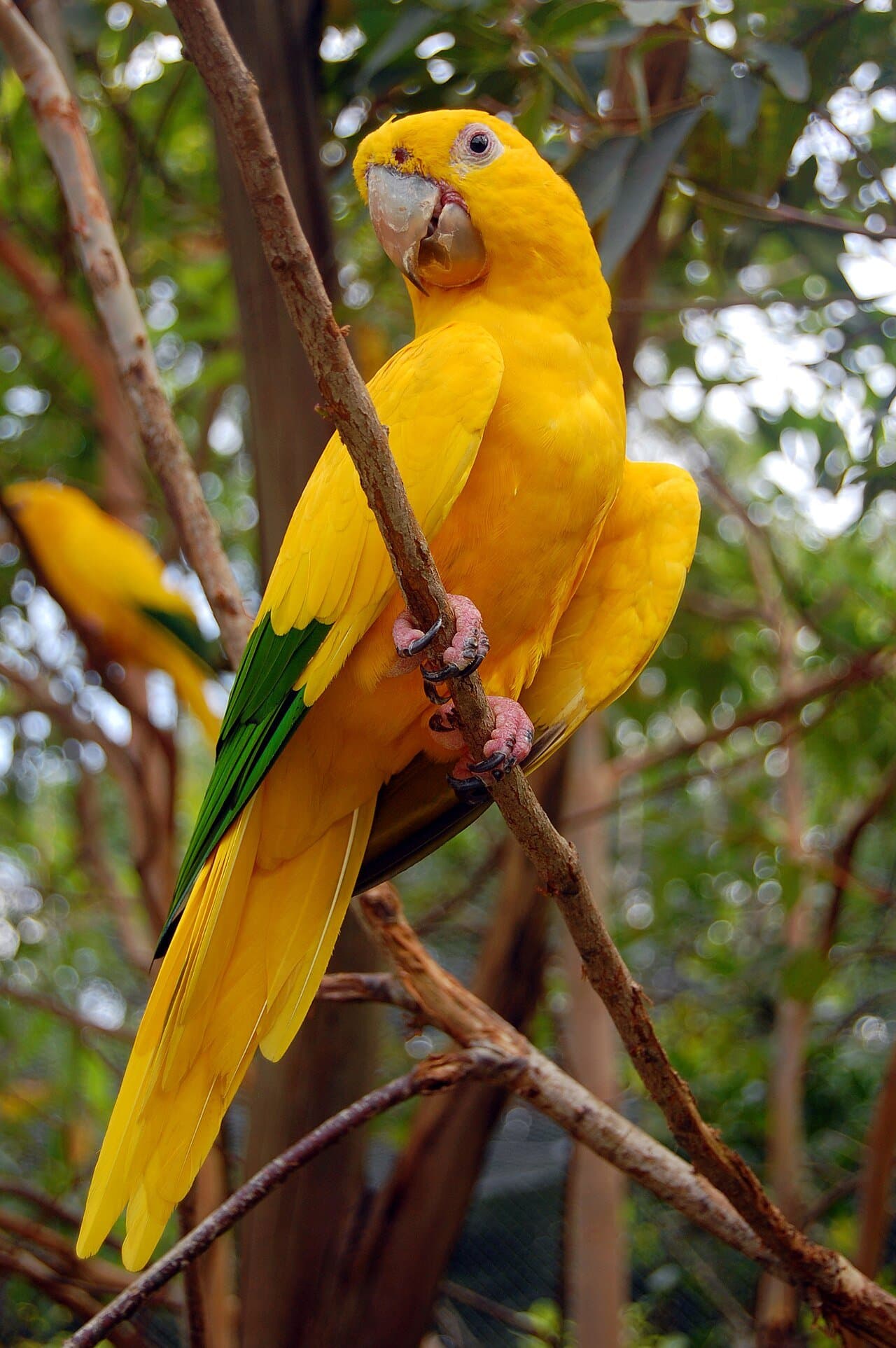
Golden conures, also called golden parakeets, are 13 to 14 inches long. They are bright yellow with dark green flight feathers and a gray beak. They live in rainforests, flooded forests and grasslands near rivers in the Amazon basin of northeastern Brazil, and eat fruits, buds and flowers. Their scientific name, Guaruba, comes from a Tupi word meaning "yellow bird."[1]
Quick facts
- Scientific name
- Guaruba guarouba[1]
- Size
- 13 to 14 inches long.[1]
- Diet
- Fruits, buds and flowers; sometimes crops like corn.[1]
- Habitat
- Tropical rainforests, seasonally flooded forests and grasslands near rivers.[1]
- Where it lives
- The Amazon basin of northeastern Brazil.[1]
- Group life
- Flocks that live, feed, breed and sleep together.[1]
- Babies
- 2 or 3 eggs in a tall tree, incubated about 30 days.[1]
- Conservation status
- Vulnerable (IUCN Red List, assessed 2018).[2]
Fun facts
Vocabulary
- conure
- A small to medium-size parrot of Central and South America with a long tail.
- flock
- A group of birds that live and travel together.
- fragmentation
- When a habitat is broken into small, separate pieces.
- pet trade
- Buying and selling wild animals as pets, which can take too many from the wild.
- vulnerable
- A conservation label meaning a species faces a high risk of dying out in the wild.
See it in person
- San Francisco Zoo & GardensSan Francisco, California · BirdsSee this animal on the zoo's website ↗
Sources
- [1] San Francisco Zoo & Gardens. “Golden conure.” https://www.sfzoo.org/golden-conure/ (accessed 2026-10-02)
- [2] IUCN Red List of Threatened Species. “Guaruba guarouba (Golden Parakeet).” https://www.iucnredlist.org/species/22724703/132029835 (accessed 2026-10-02)
Facts last checked 2026-10-02.
More Parrots
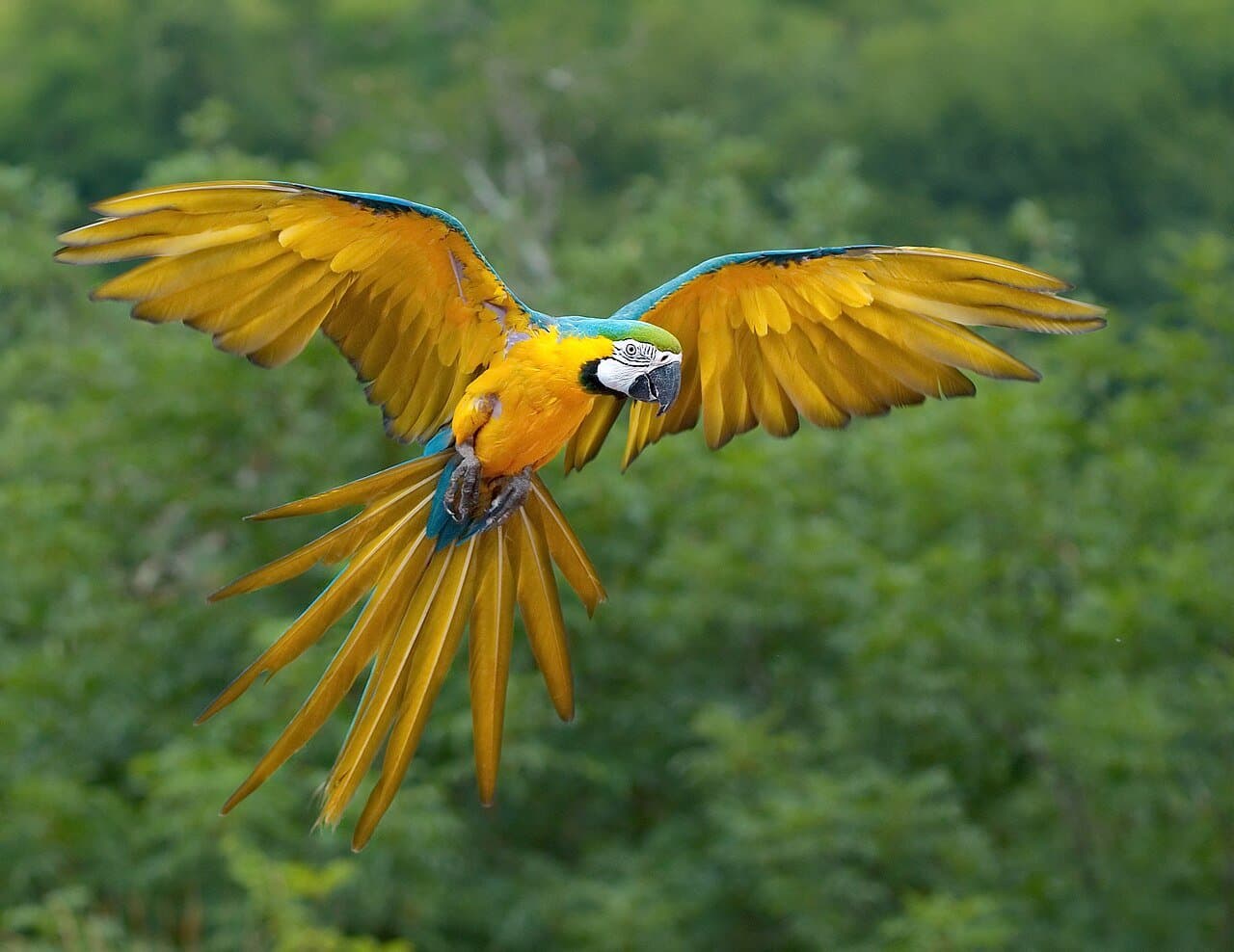 Blue-and-Yellow MacawAra araraunaA big blue-and-gold parrot of South American rainforests that mates for life and eats clay from riverbanks.
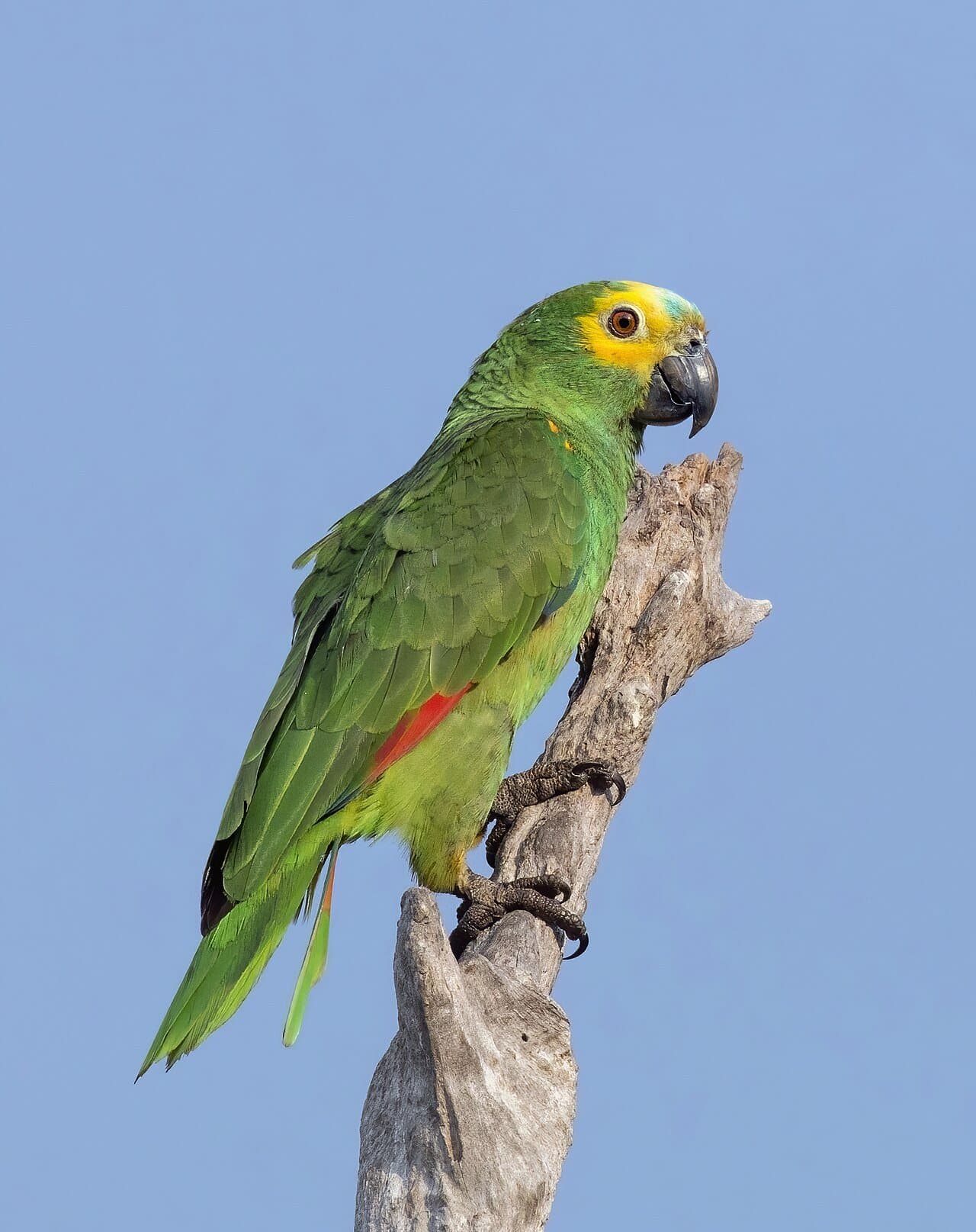 Blue-Fronted AmazonAmazona aestivaA green South American parrot with a blue forehead and yellow face, also called the turquoise-fronted amazon.
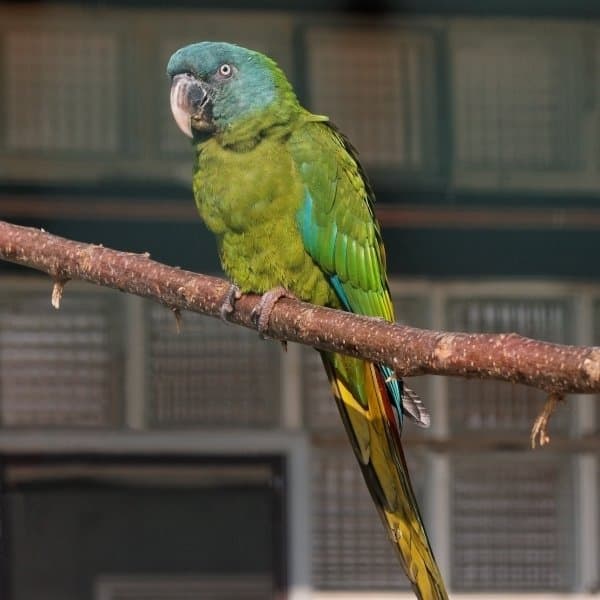 Blue-Headed MacawPrimolius couloniA small "mini-macaw" of the western Amazon with a blue head and green body.
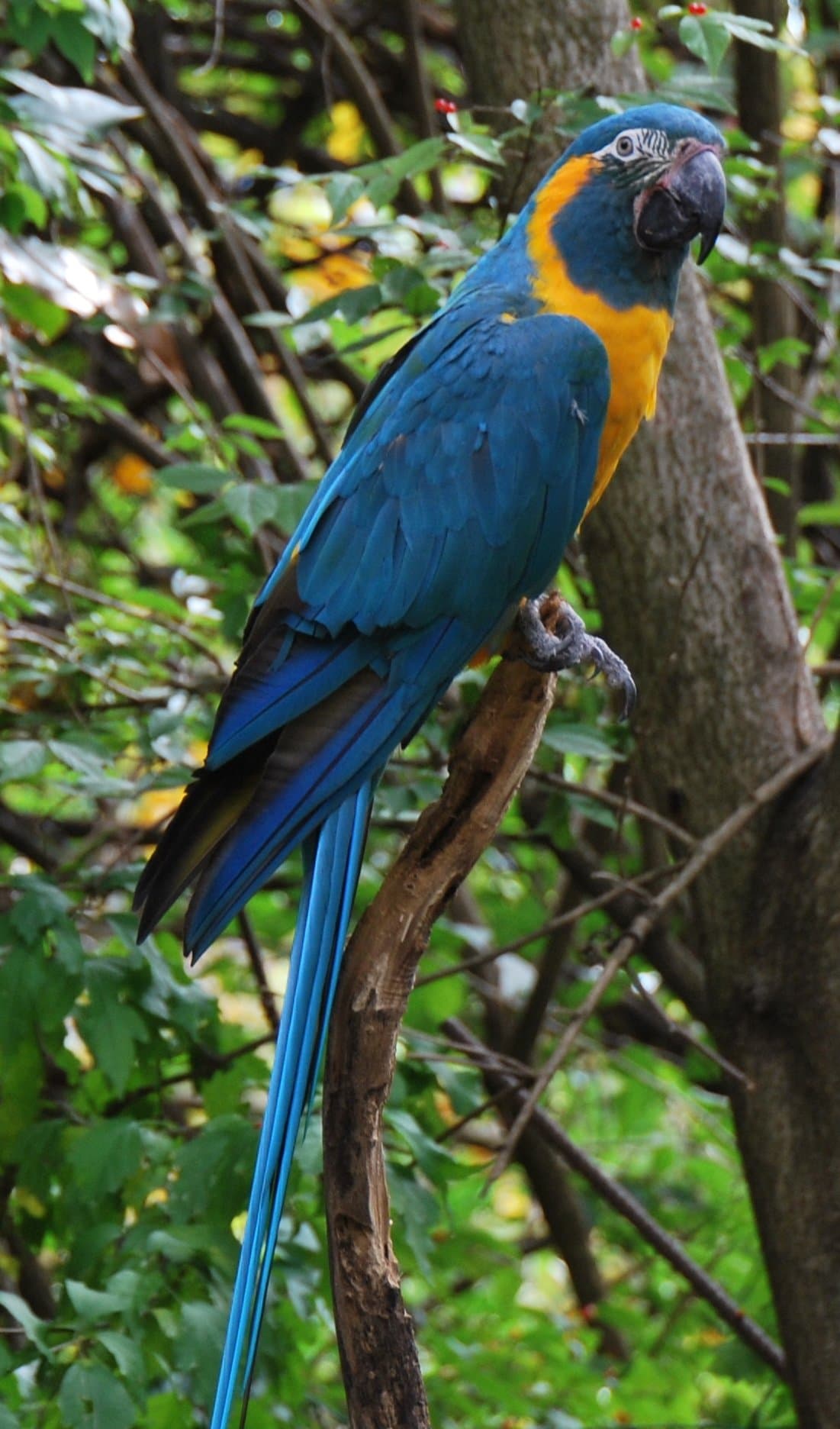 Blue-Throated MacawAra glaucogularisThe rarest macaw in the world, a blue-and-gold parrot of Bolivia's flooded Beni savanna with only about 400 left in the wild.
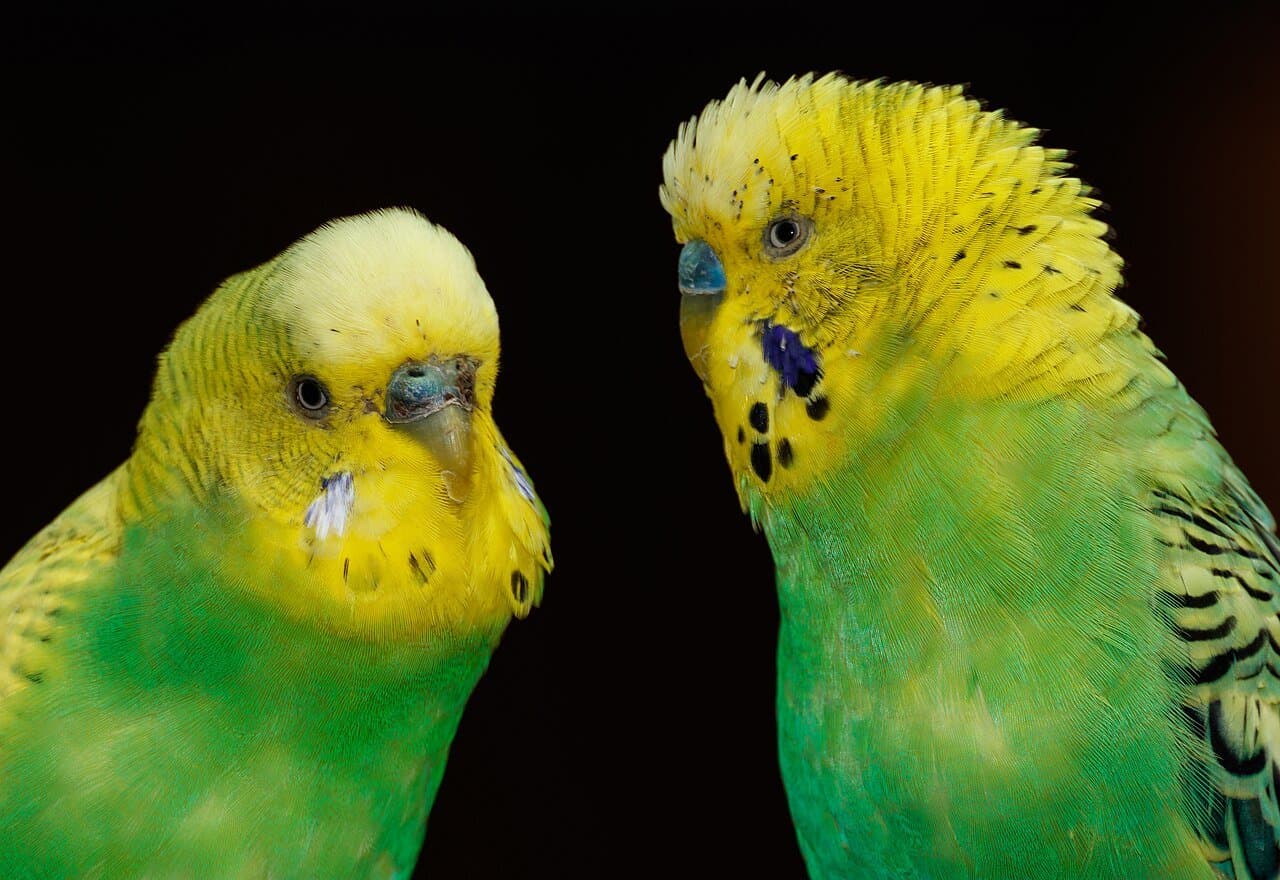 BudgerigarMelopsittacus undulatusA small green-and-yellow parrot of Australia's dry interior, and the most widely known pet bird in the world.
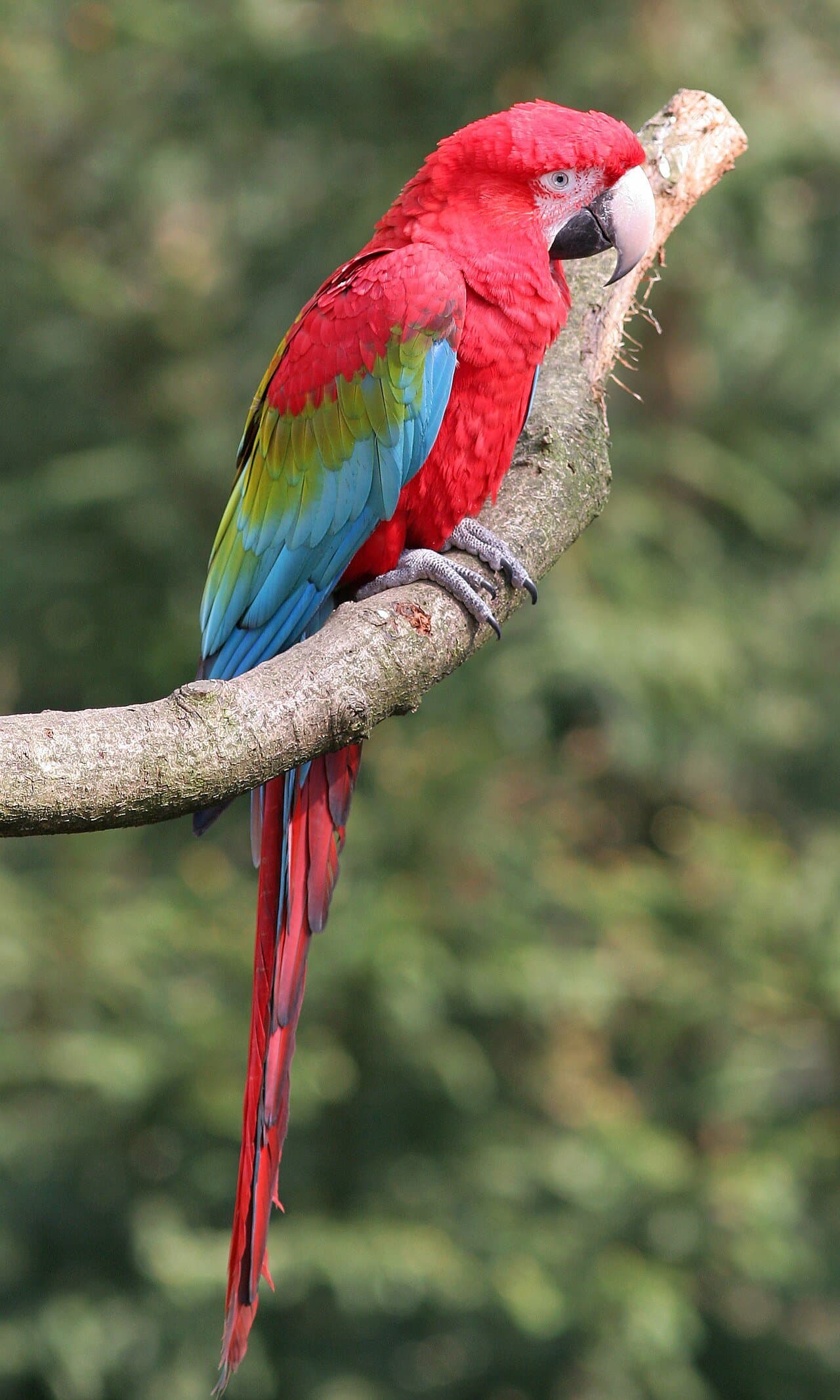 Green-Winged MacawAra chloropterusA big red South American macaw, also called the red-and-green macaw, with green and blue wings and lines of tiny red feathers on its face.
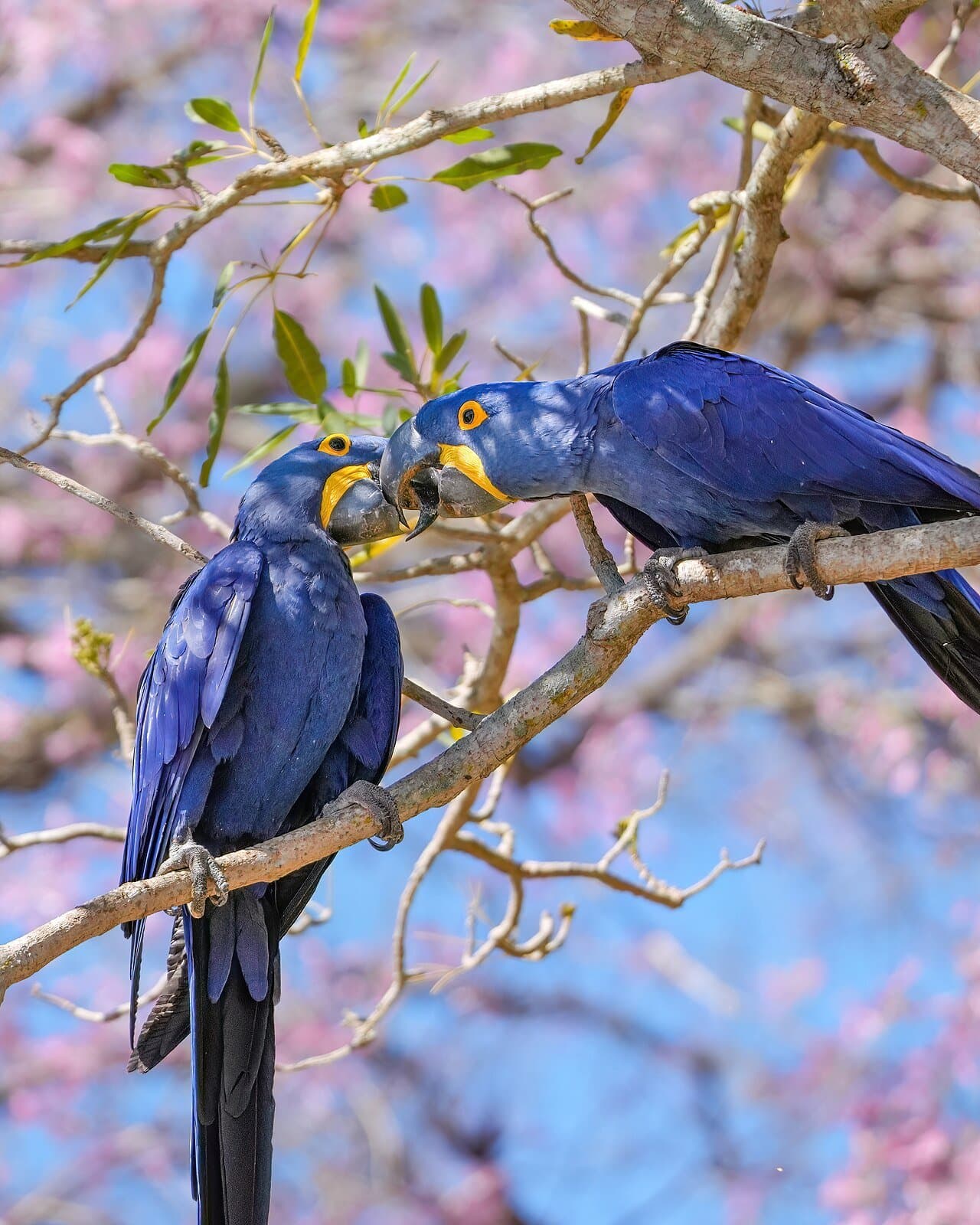 Hyacinth MacawAnodorhynchus hyacinthinusThe largest macaw, a bright blue parrot of central South America with yellow rings around its eyes.
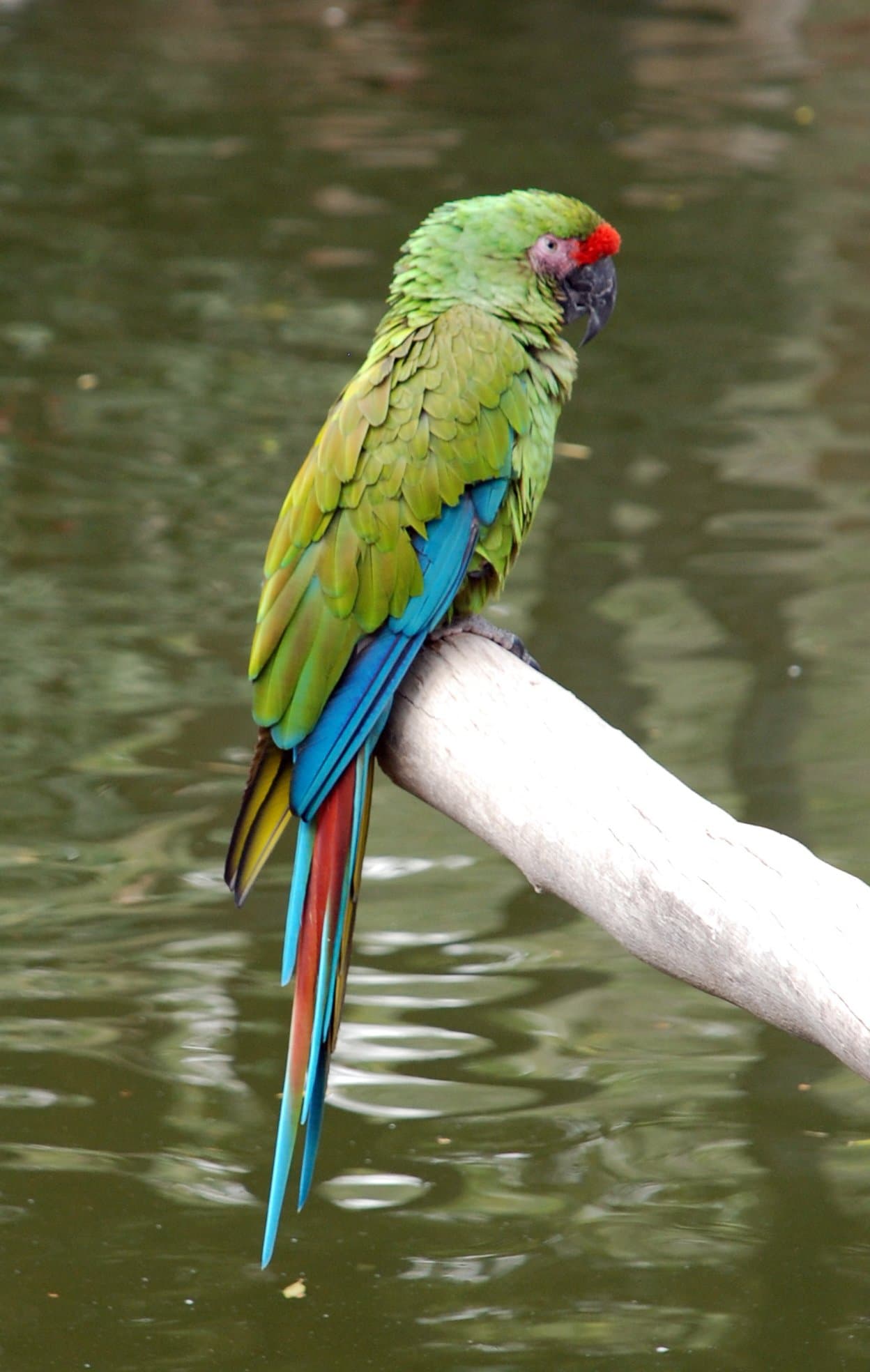 Military MacawAra militarisA green macaw with a red forehead that lives in scattered mountain and forest populations from Mexico to Argentina.
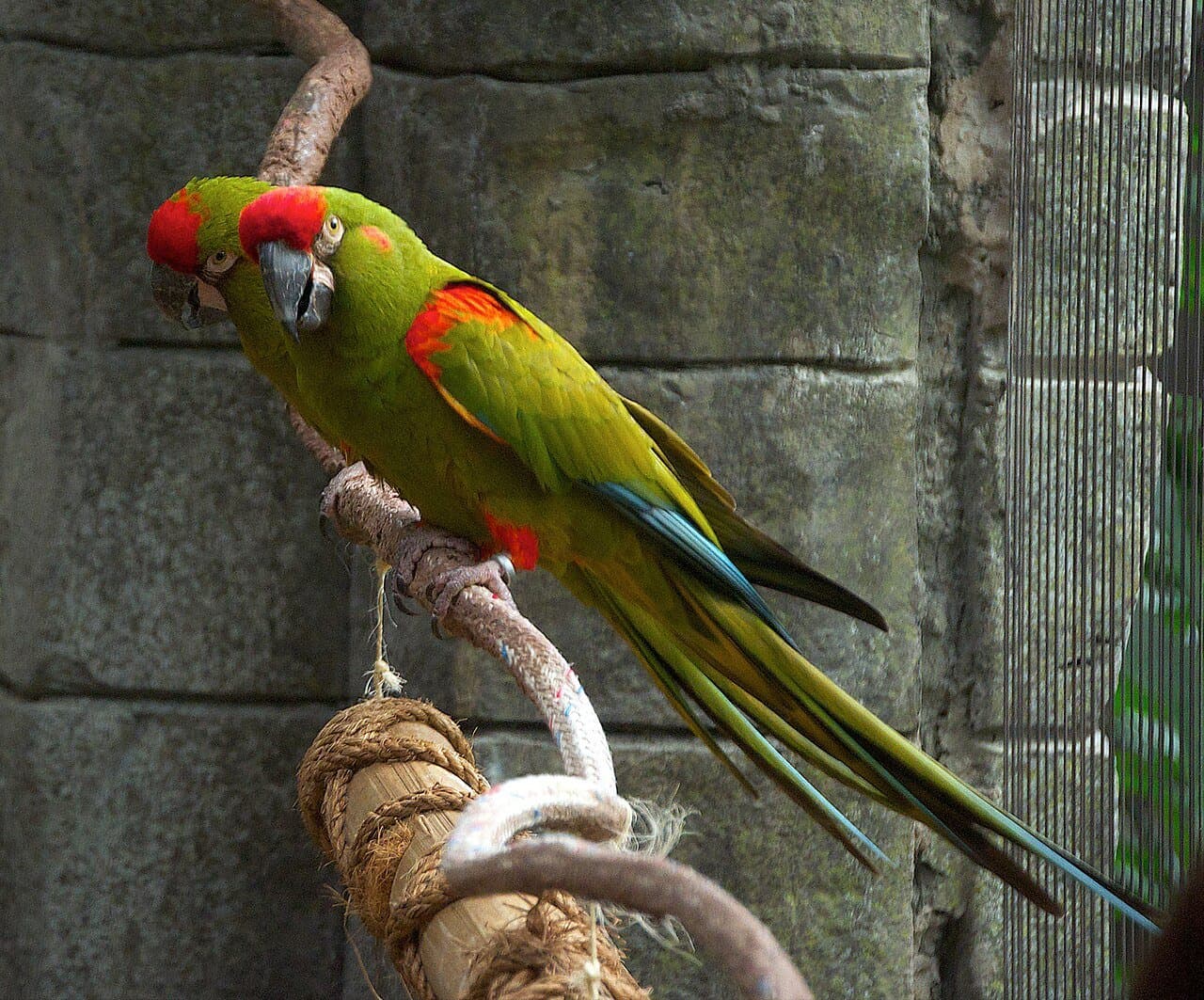 Red-Fronted MacawAra rubrogenysA critically endangered green macaw with a red forehead that lives only in dry mountain valleys of central Bolivia.
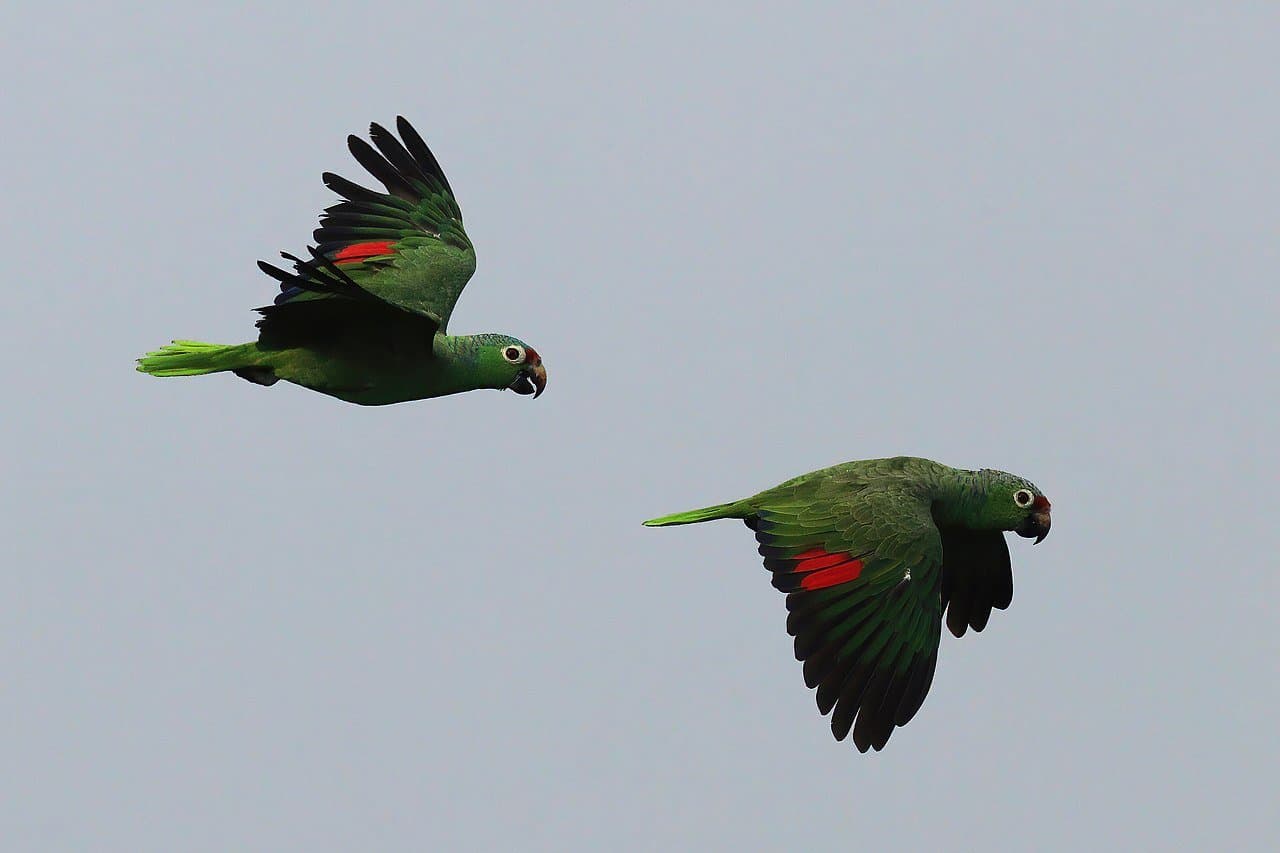 Red-Lored AmazonAmazona autumnalis (Salvin's amazon is the subspecies A. a. salvini)A green Central and South American parrot with red feathers above its beak. The Salvin's amazon is one of its subspecies.
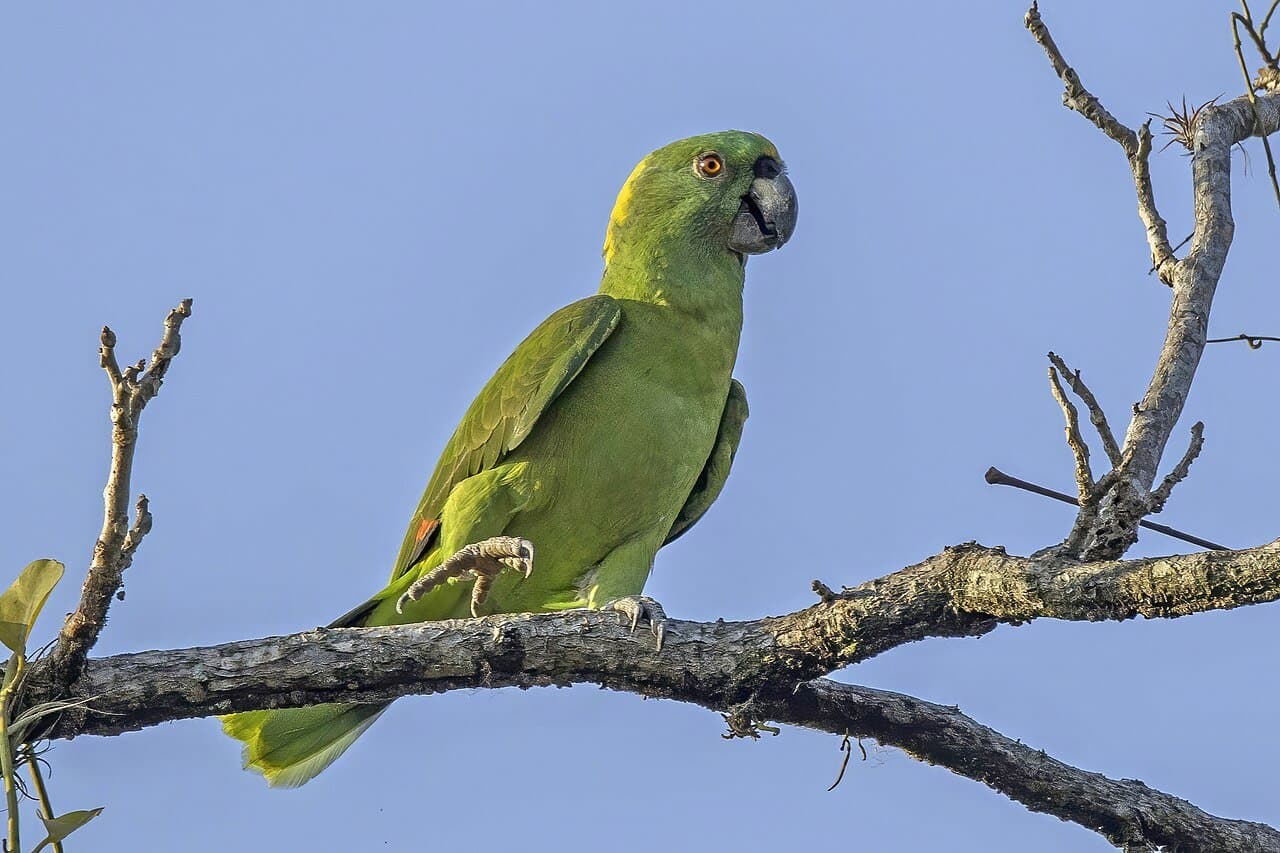 Yellow-Naped AmazonAmazona auropalliataA green Central American parrot with a yellow patch on the back of its neck, now critically endangered because of the pet trade.