
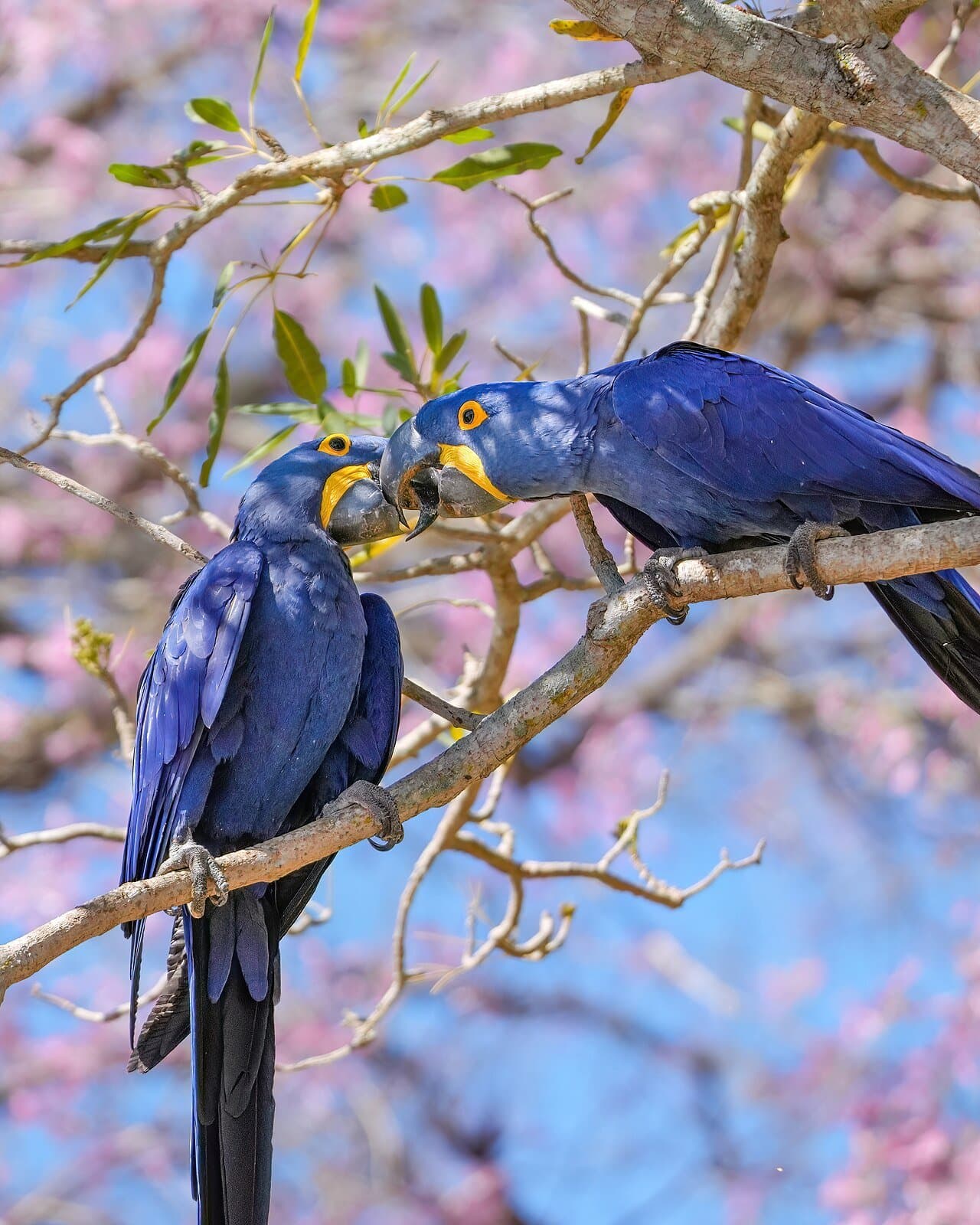
Hyacinth Macaw
Anodorhynchus hyacinthinus
The largest macaw, a bright blue parrot of central South America with yellow rings around its eyes.
Checking teacher reviews…
About the Hyacinth Macaw
Hyacinth macaws live in tall trees and palms in swamps, forests and along rivers in southern Brazil and western Bolivia. They are about 100 cm (39 inches) long, making them the largest macaws, and they can fly up to 35 miles per hour. They eat seeds, fruits, nuts and berries using a strongly hooked beak.[1]
Quick facts
- Scientific name
- Anodorhynchus hyacinthinus[1]
- Size
- About 100 cm (39 inches) long.[1]
- Weight
- About 1,550 to 1,600 g (3 to 3.5 pounds).[1]
- Lifespan
- 30 to 50 years or more.[1]
- Diet
- Seeds, fruits, nuts and berries.[1]
- Habitat
- Tall trees and palms in swamps, forests and near rivers.[1]
- Where it lives
- Southern Brazil and western Bolivia.[1]
- Babies
- 2 or 3 eggs, which hatch after about 29 days.[1]
Fun facts
Vocabulary
- macaw
- A large, long-tailed parrot from Central and South America.
- pet trade
- Buying and selling animals as pets; taking wild animals for it can harm them.
- hooked beak
- A beak that curves down to a sharp point.
- palm
- A tropical tree with a tall trunk and large leaves at the top.
- vulnerable
- A conservation label meaning a species faces a high risk of dying out in the wild.
See it in person
- Montgomery ZooMontgomery, Alabama · South AmericaSee this area on the zoo's website ↗
Sources
- [1] SeaWorld Parks & Entertainment Animal Info. “Hyacinth Macaw.” https://seaworld.org/animals/facts/birds/hyacinth-macaw/ (accessed 2026-10-02)
- [2] IUCN Red List of Threatened Species. “Anodorhynchus hyacinthinus (Hyacinth Macaw).” https://www.iucnredlist.org/species/22685516/93077457 (accessed 2026-10-02)
Facts last checked 2026-10-02.
More Parrots
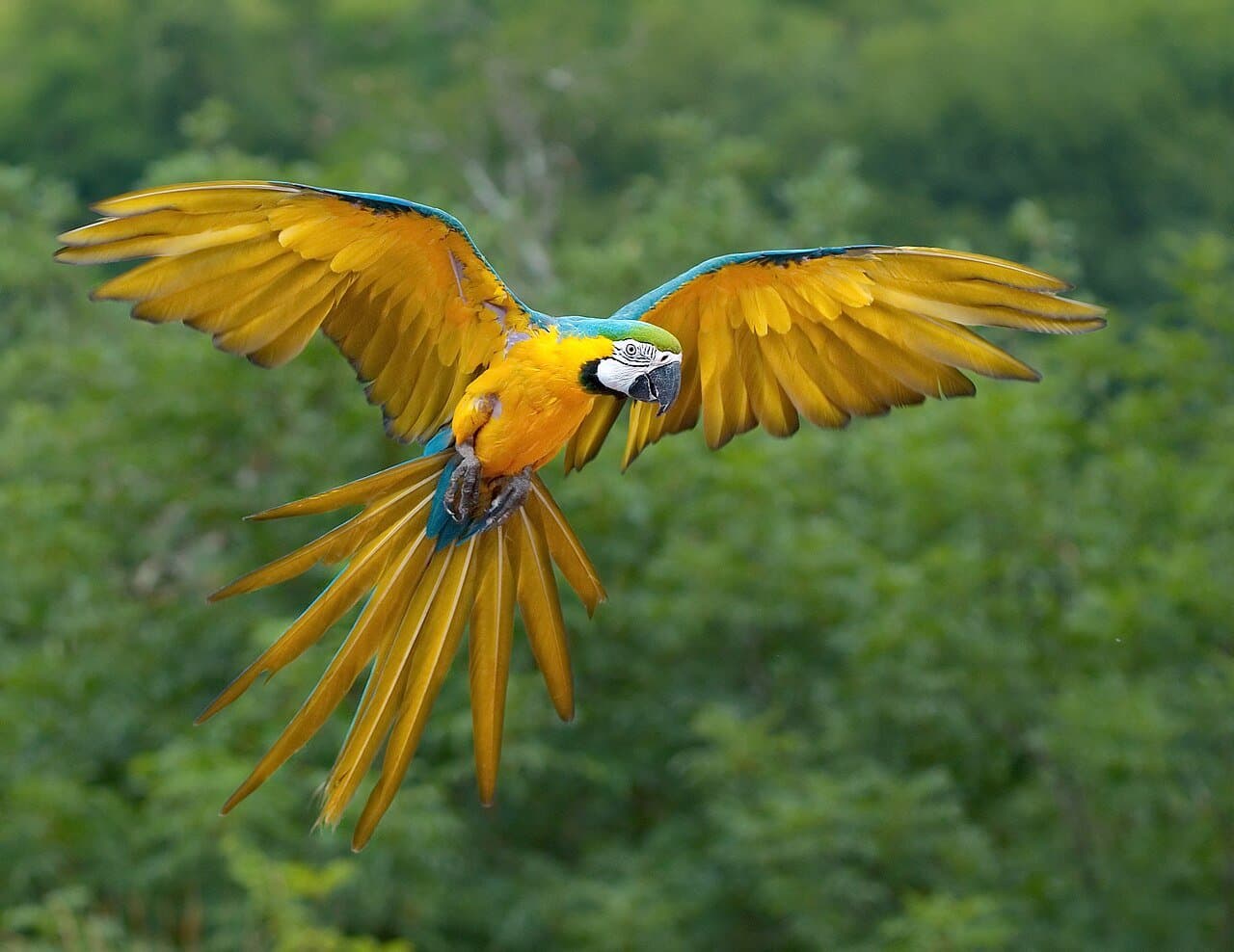 Blue-and-Yellow MacawAra araraunaA big blue-and-gold parrot of South American rainforests that mates for life and eats clay from riverbanks.
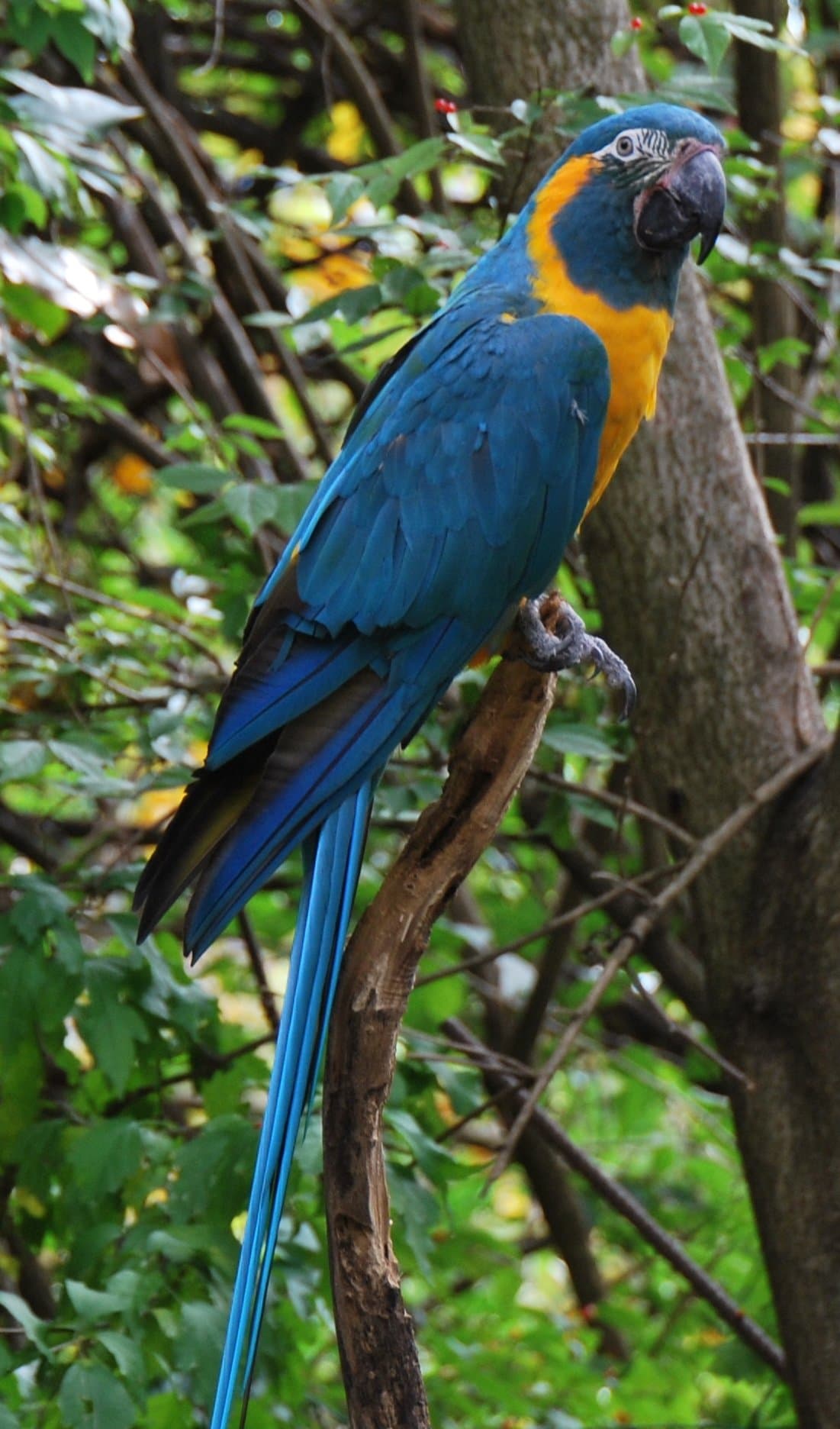 Blue-Throated MacawAra glaucogularisThe rarest macaw in the world, a blue-and-gold parrot of Bolivia's flooded Beni savanna with only about 400 left in the wild.
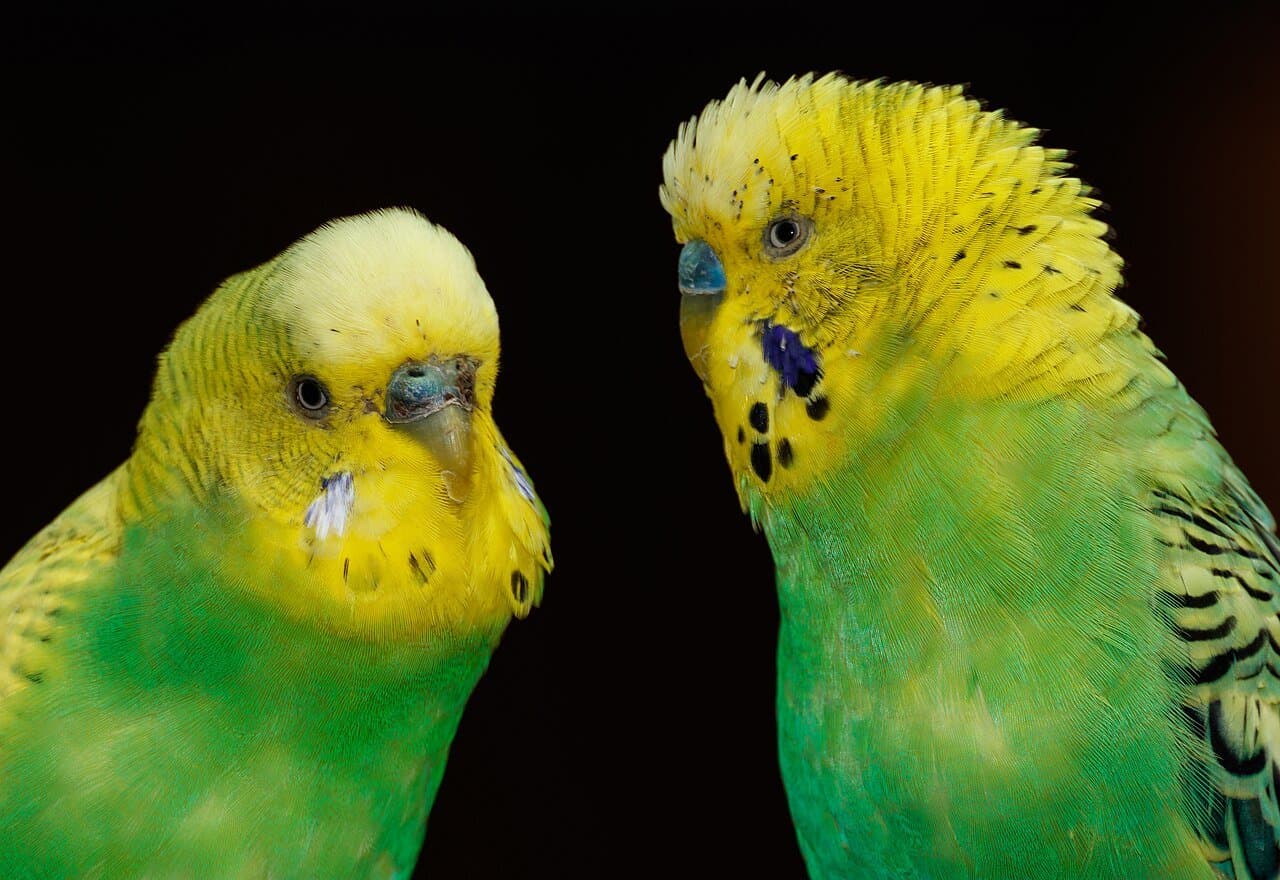 BudgerigarMelopsittacus undulatusA small green-and-yellow parrot of Australia's dry interior, and the most widely known pet bird in the world.
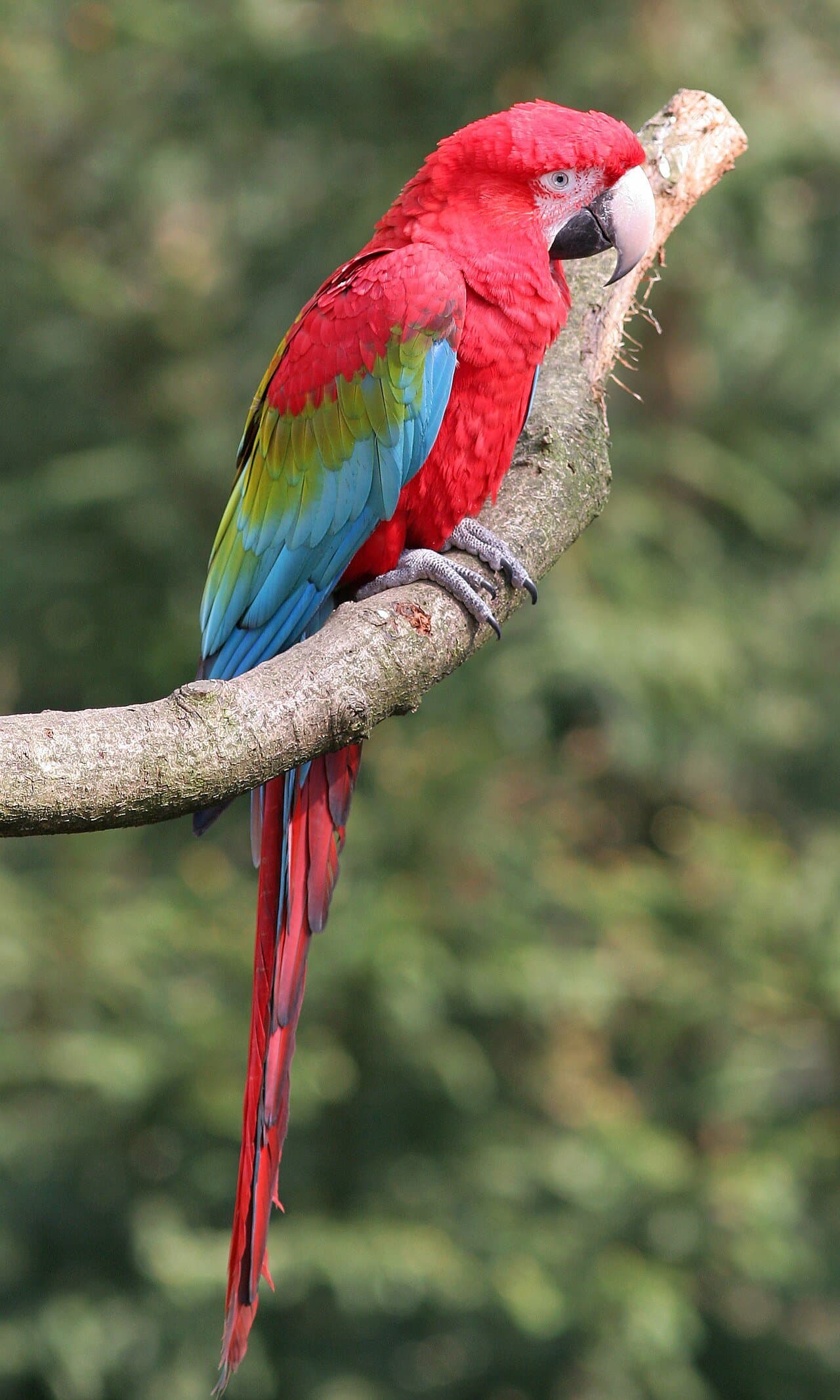 Green-Winged MacawAra chloropterusA big red South American macaw, also called the red-and-green macaw, with green and blue wings and lines of tiny red feathers on its face.
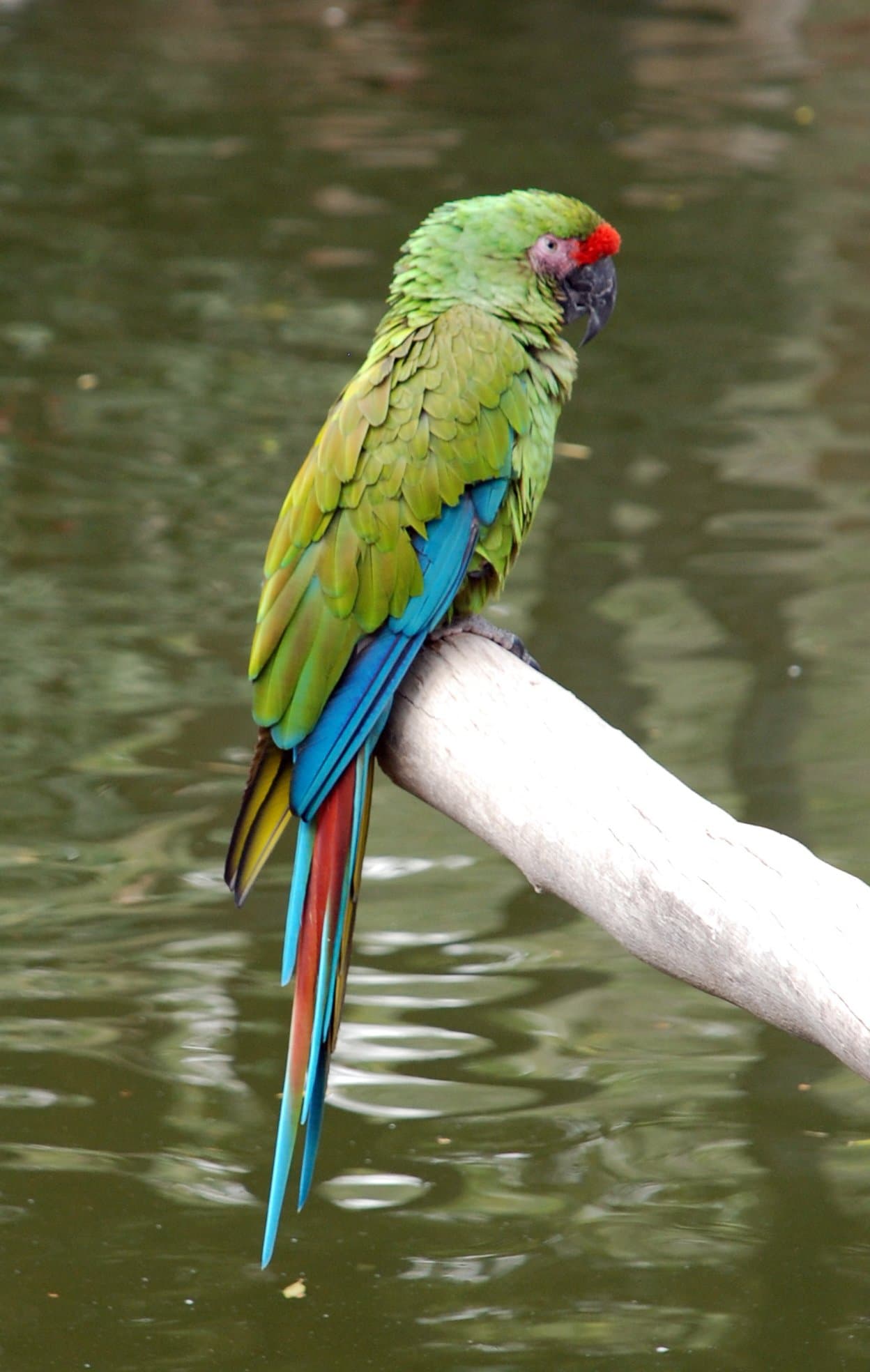 Military MacawAra militarisA green macaw with a red forehead that lives in scattered mountain and forest populations from Mexico to Argentina.