
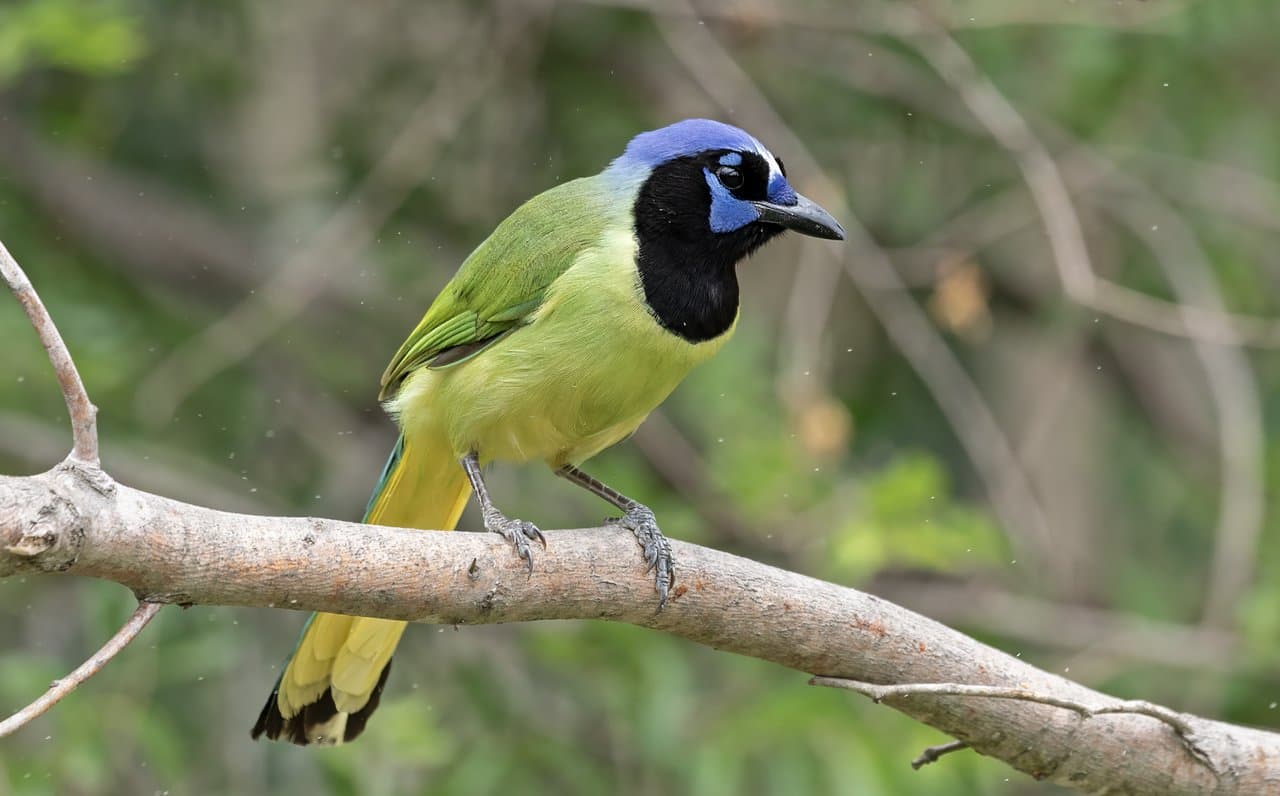
Green Jay
Cyanocorax yncas
A bright green, yellow, blue and black jay from southern Texas to South America that uses sticks as tools to dig out insects.
Checking teacher reviews…
About the Green Jay
Green jays are about the size of blue jays. They live from southern Texas to Honduras and from northern Venezuela to Bolivia, in woodlands, citrus groves, brush and rainforests. They eat fruit, insects, seeds, spiders, eggs, chicks of other birds, small rodents and lizards. Like many birds, they use tools to pull insects from tree bark.[1]
Quick facts
- Scientific name
- Cyanocorax yncas[1]
- Lifespan
- 10 to 11 years.[1]
- Diet
- Omnivore. Fruit, insects, seeds, spiders, eggs, small rodents and lizards.[1]
- Habitat
- Woodlands, citrus groves and brush in Texas; rainforests and mountain forests farther south.[1]
- Where it lives
- Southern Texas to Honduras, and northern Venezuela to Bolivia.[1]
- Group life
- Northern birds are solitary; southern birds live in small family flocks.[1]
- Babies
- 3 to 5 pale green eggs, incubated 17 to 18 days.[1]
- Conservation status
- Least Concern (IUCN Red List, assessed 2016).[2]
Fun facts
Vocabulary
- tool use
- When an animal uses an object to help it do a job.
- cooperative breeding
- When helpers, often older siblings, help raise young that aren't their own.
- population
- All the animals of one kind living in an area.
- omnivore
- An animal that eats both plants and other animals.
- least concern
- A conservation label meaning a species is widespread and not at risk of dying out soon.
See it in person
- San Francisco Zoo & GardensSan Francisco, California · BirdsSee this animal on the zoo's website ↗
Sources
- [1] San Francisco Zoo & Gardens. “Green Jay.” https://www.sfzoo.org/green-jay/ (accessed 2026-10-02)
- [2] IUCN Red List of Threatened Species. “Cyanocorax yncas (Green Jay).” https://www.iucnredlist.org/species/22705738/118810850 (accessed 2026-10-02)
Facts last checked 2026-10-02.
More Songbirds
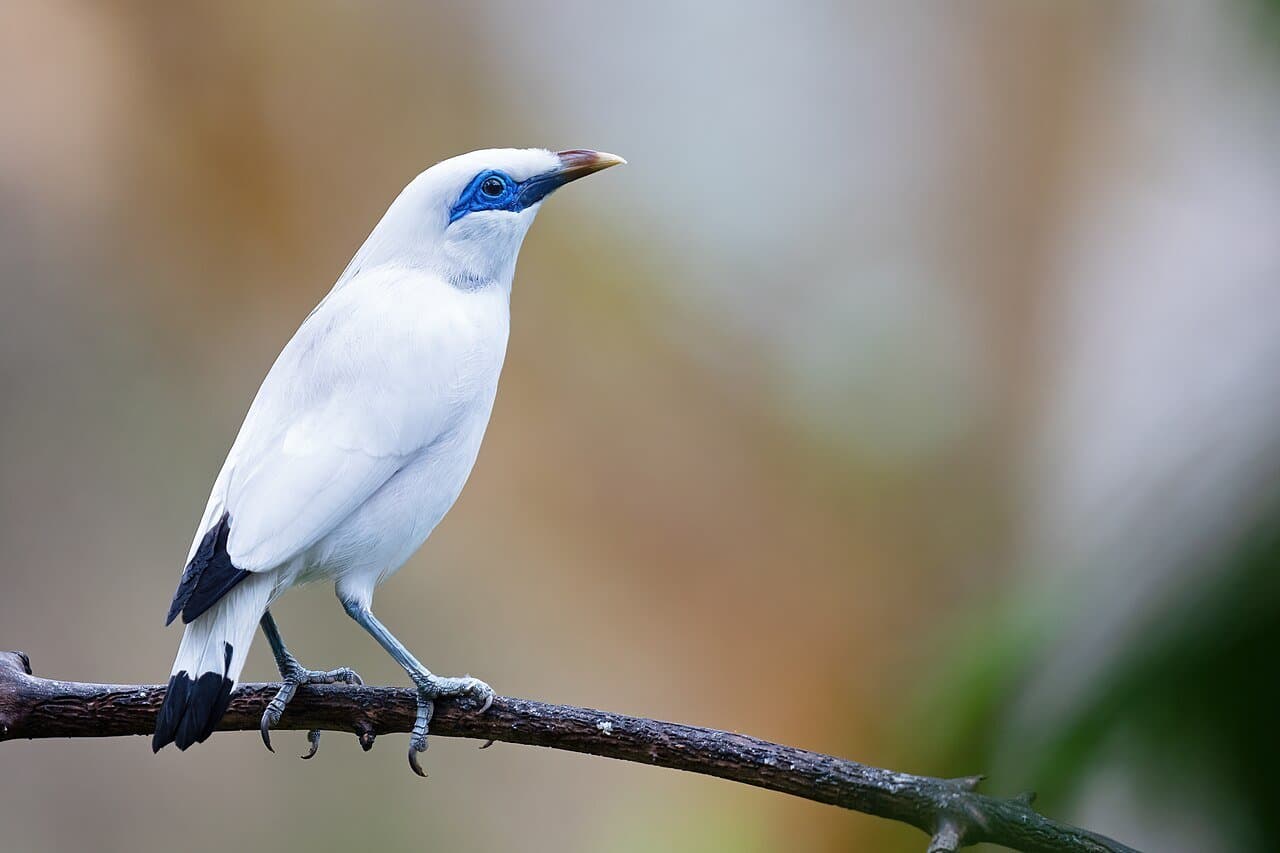 Bali MynahLeucopsar rothschildiA critically endangered white songbird with a bright blue face mask, found in the wild only on part of the Indonesian island of Bali.
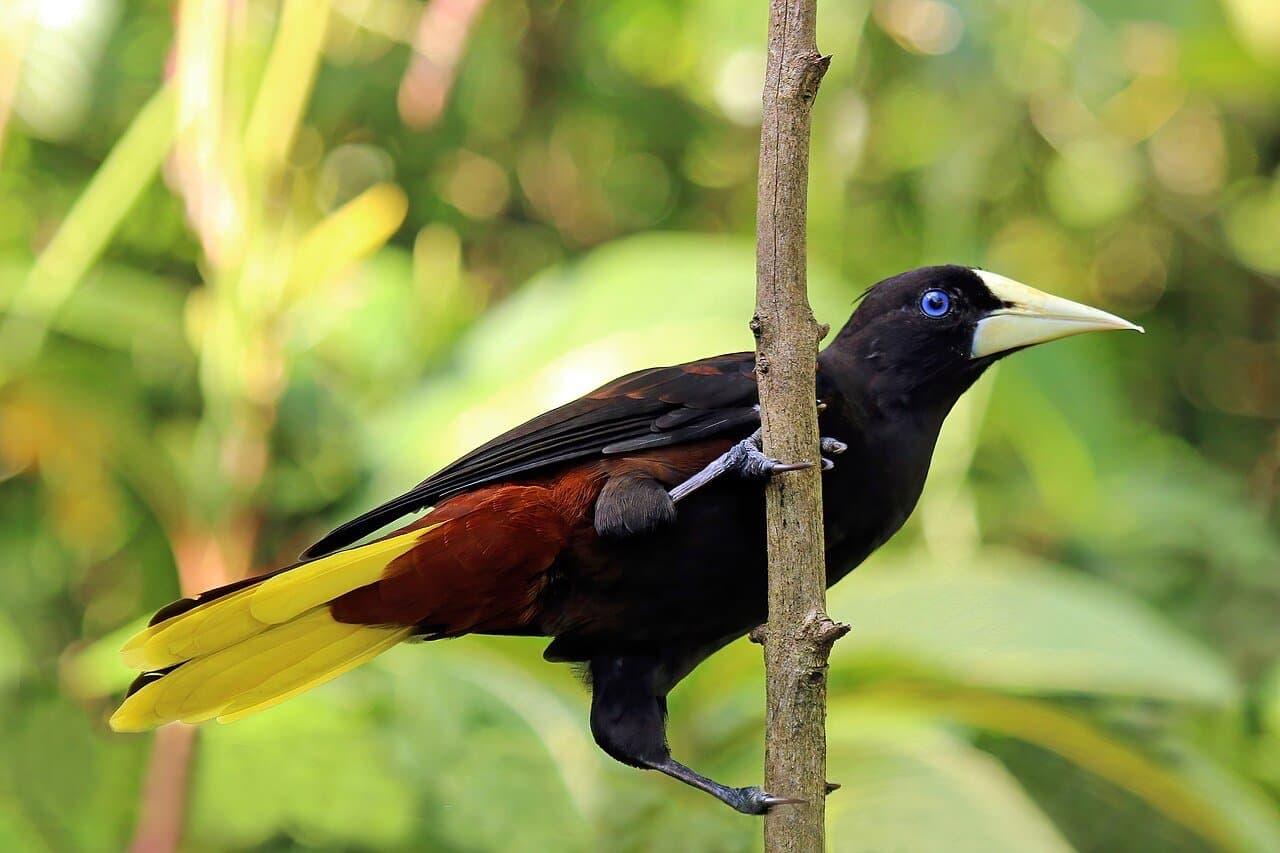 Crested OropendolaPsarocolius decumanusA black-and-yellow South American bird that weaves long hanging nests, with males that bow upside down to court females.
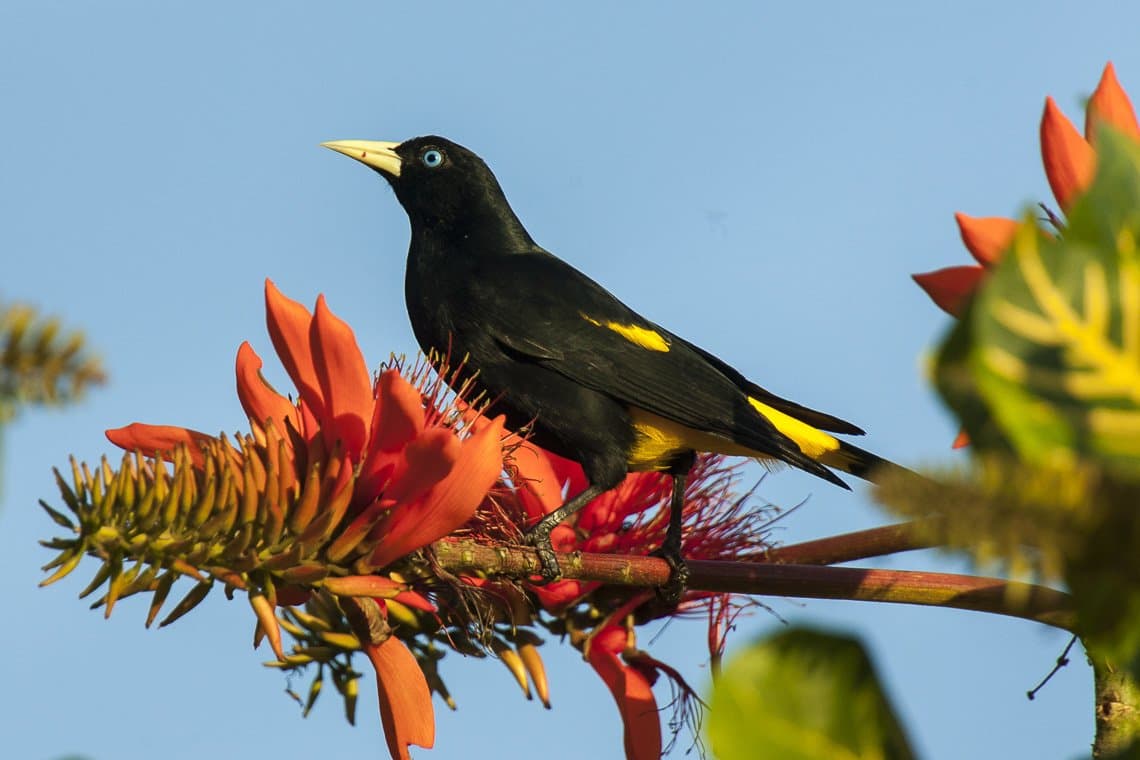 Yellow-Rumped CaciqueCacicus celaA black-and-yellow South American bird that weaves hanging nests in colonies, often next to wasp nests for protection.