
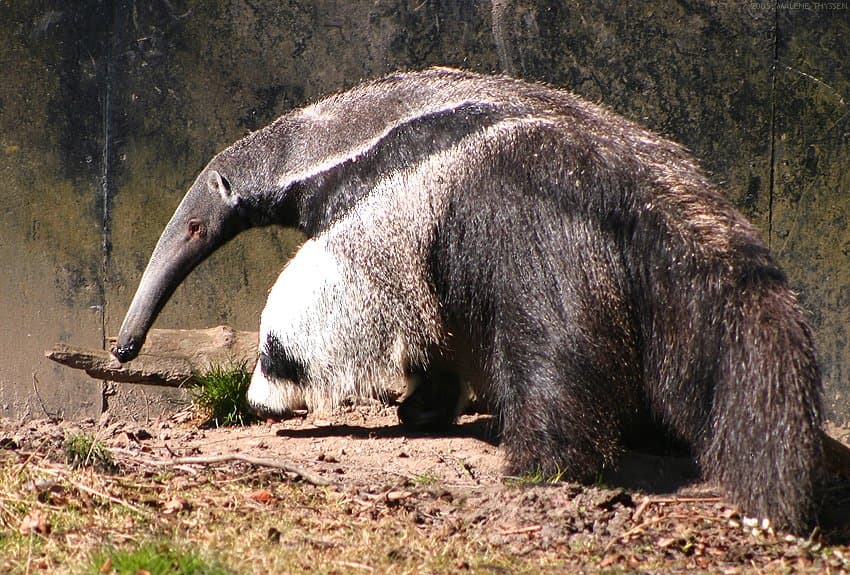
Giant Anteater
Myrmecophaga tridactyla
A toothless insect-eater of Central and South America that flicks its 2-foot tongue up to 150 times a minute.
Checking teacher reviews…
About the Giant Anteater
Giant anteaters live in wetlands, grasslands and tropical forests of Central and South America. They use sharp front claws to rip open ant and termite nests, then flick their 2-foot tongue in and out up to 150 times a minute. An anteater eats only about 140 insects from each mound before moving on. To protect its claws, it walks on its front knuckles.[1]
Quick facts
- Scientific name
- Myrmecophaga tridactyla[1]
- Size
- 6 to 8 feet (1.8 to 2.4 m) long, including the tail.[1]
- Weight
- 60 to 100 pounds (27 to 45 kg).[1]
- Lifespan
- Up to 26 years in human care.[1]
- Diet
- Insectivore. Ants and termites.[1]
- Habitat
- Wetlands, grasslands and tropical forests.[1]
- Where it lives
- Central and South America.[1]
- Group life
- Solitary, except during mating or when a mother is caring for her baby.[1]
- Babies
- Pregnancy lasts about 180 days. One baby rides on its mother's back for up to a year.[1]
- Conservation status
- Vulnerable (IUCN Red List, assessed 2013).[2]
Fun facts
Vocabulary
- insectivore
- An animal that eats mostly insects.
- termite
- A small insect that lives in large colonies and eats wood.
- mound
- A hill of dirt built by insects such as termites.
- knuckle
- A joint where a finger bends.
- vulnerable
- A conservation label meaning a species faces a high risk of dying out in the wild.
See it in person
- Montgomery ZooMontgomery, Alabama · South AmericaSee this area on the zoo's website ↗
Sources
- [1] Smithsonian's National Zoo & Conservation Biology Institute. “Giant anteater.” https://nationalzoo.si.edu/animals/giant-anteater (accessed 2026-10-02)
- [2] IUCN Red List of Threatened Species. “Myrmecophaga tridactyla (Giant Anteater).” https://www.iucnredlist.org/species/14224/47441961 (accessed 2026-10-02)
Facts last checked 2026-10-02.
More Sloths and Anteaters
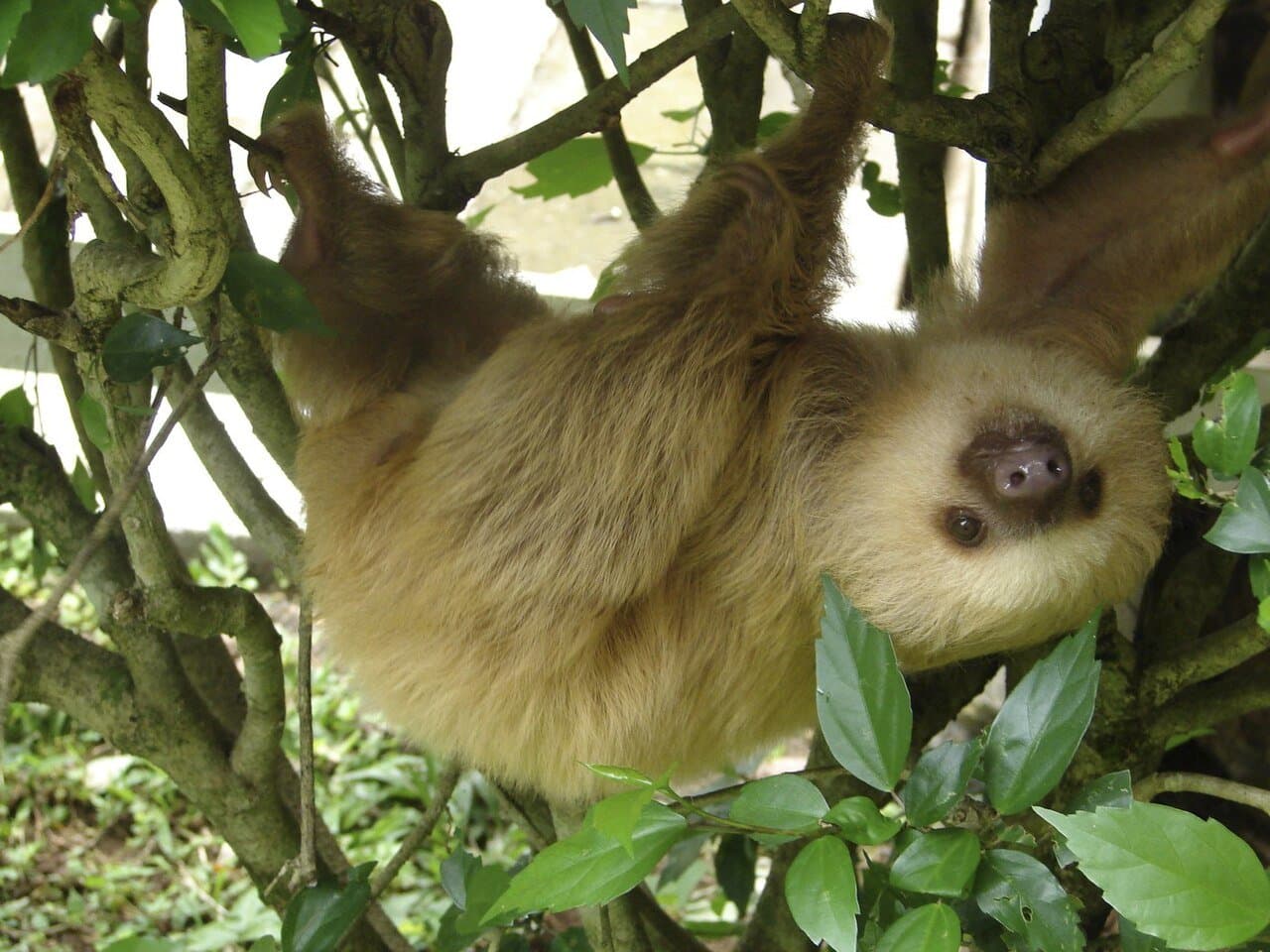 Hoffmann's Two-Toed SlothCholoepus hoffmanniA slow, upside-down rainforest sloth of Central America and northwestern South America that sleeps about 15 hours a day.
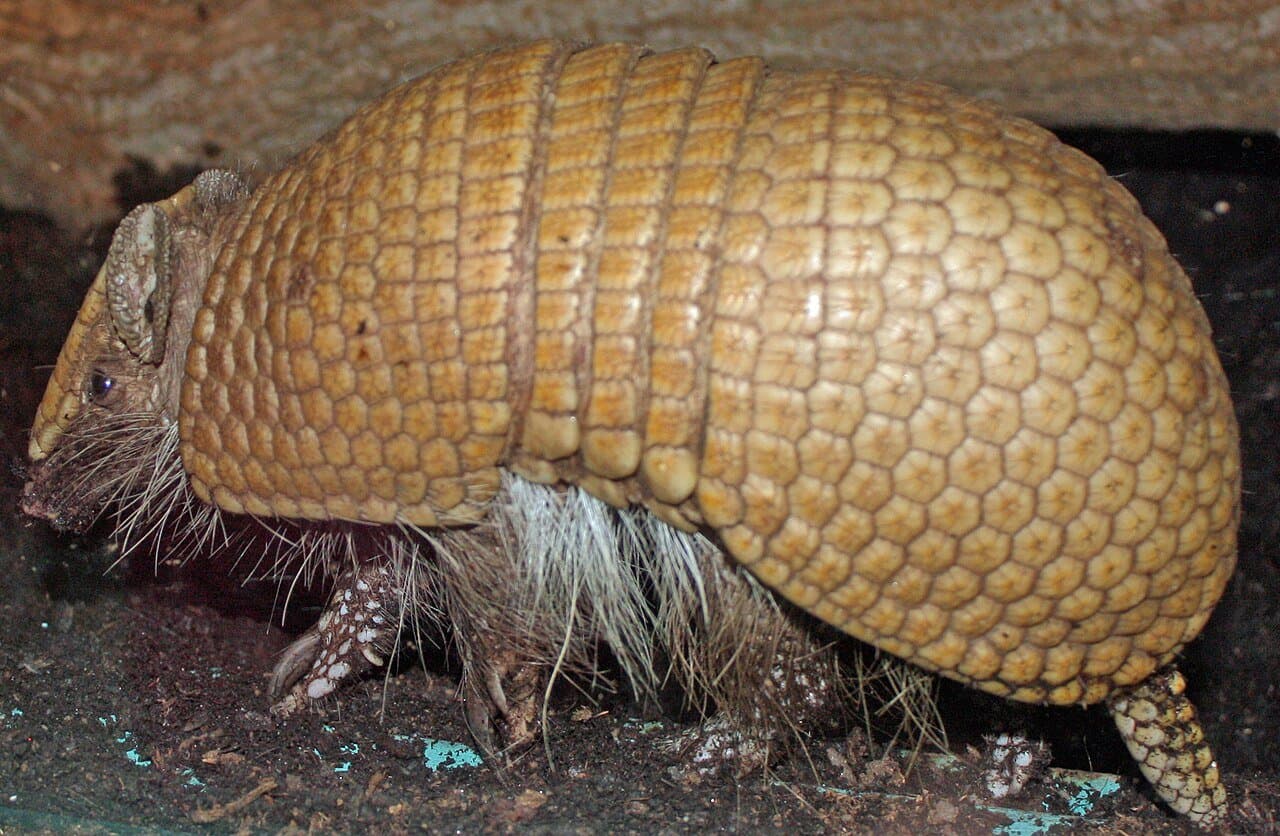 Southern Three-Banded ArmadilloTolypeutes matacusA small South American armadillo, the only kind that can roll up into a complete armored ball.
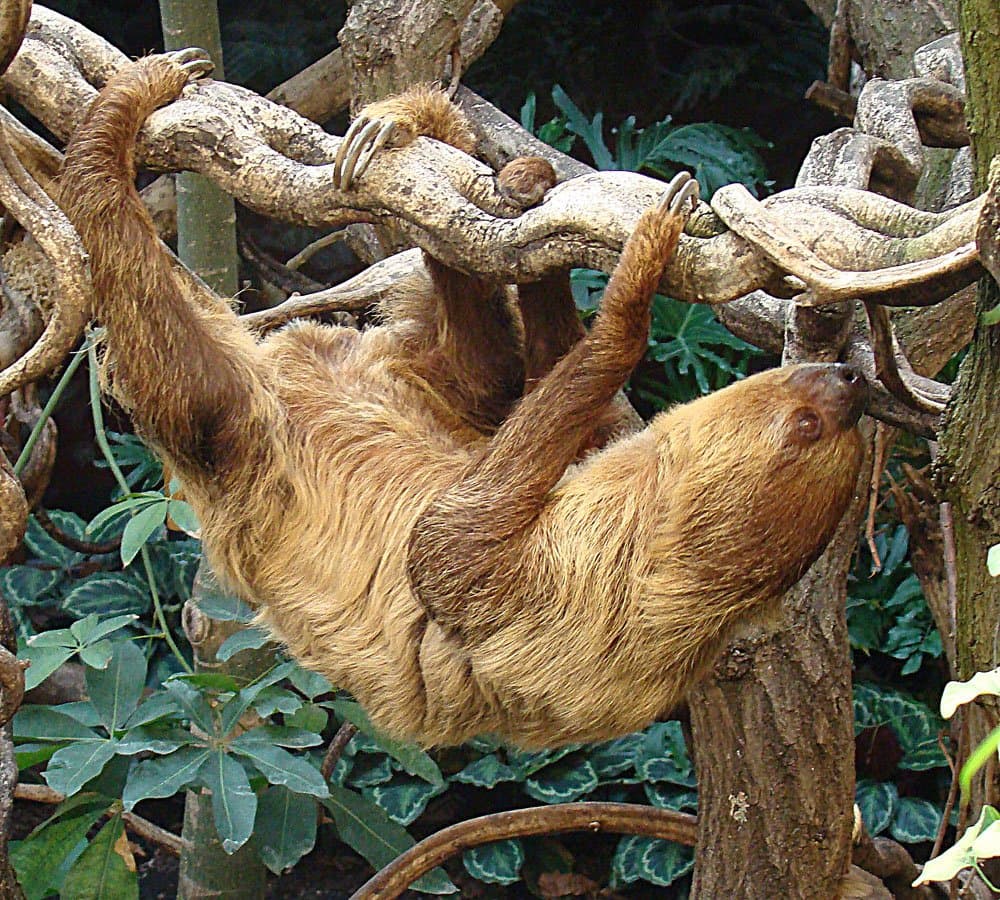 Two-Toed SlothCholoepus didactylusAn upside-down rainforest mammal of Central and South America that sleeps about 15 hours a day and grows algae in its fur.