
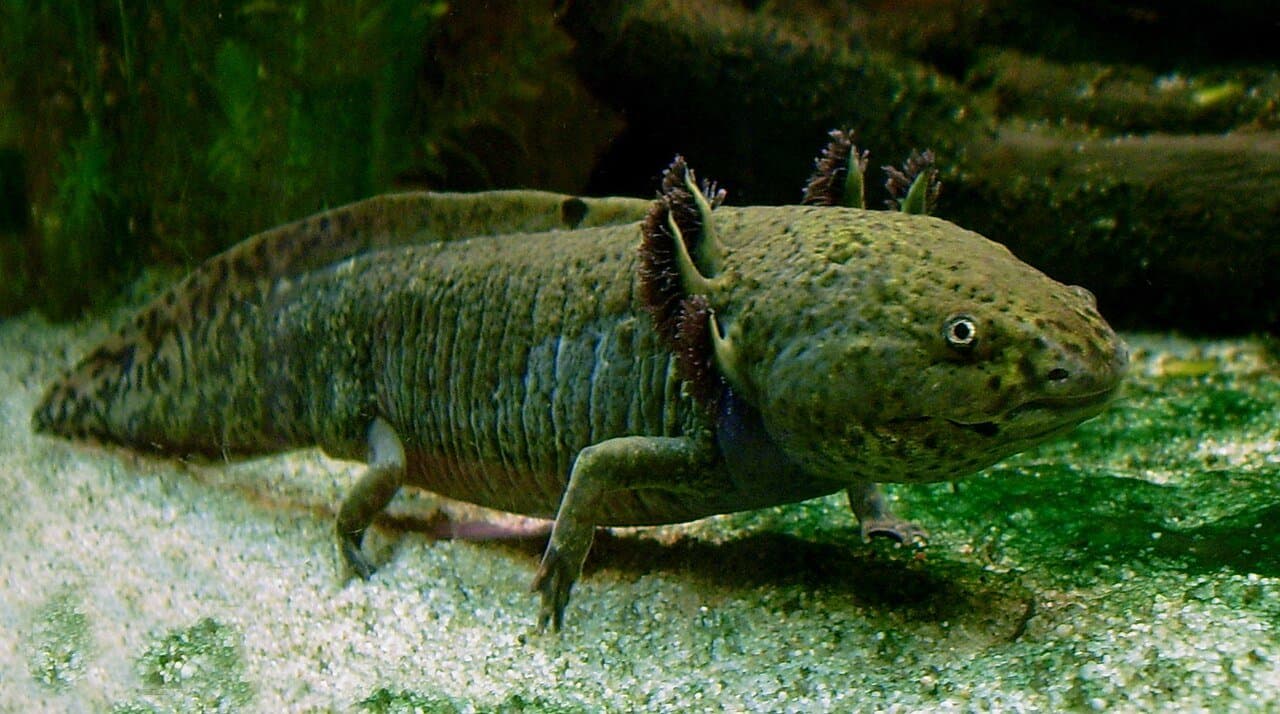
Axolotl
Ambystoma mexicanum
A Mexican salamander that keeps its feathery gills and stays in the water its whole life, famous for regrowing lost body parts.
Checking teacher reviews…
About the Axolotl
Axolotls are 9 to 12 inches long, and wild ones are dark grayish-green. Most salamanders go through metamorphosis and move onto land, but axolotls keep their young features as adults, including feathery outside gills and a finned tail. They once lived in high-altitude lakes near Mexico City; now they are found in just a few spots in and around Lake Xochimilco. They eat invertebrates, fish and other small animals.[1]
Quick facts
- Scientific name
- Ambystoma mexicanum[1]
- Size
- 9 to 12 inches long.[1]
- Lifespan
- Usually 5 to 6 years; up to 15.[1]
- Diet
- Carnivore. Invertebrates, other amphibians, fish and mollusks.[1]
- Habitat
- Freshwater lakes and canals.[1]
- Where it lives
- In and around Lake Xochimilco, Mexico City.[1]
- Group life
- Solitary. Active day or night.[1]
- Babies
- 100 to 300 eggs stuck to rocks or plants; hatch in 10 to 14 days.[1]
- Conservation status
- Critically Endangered (IUCN Red List, assessed 2019).[2]
Fun facts
Vocabulary
- neoteny
- Keeping young features as an adult.
- regenerate
- To regrow a lost body part.
- gills
- Body parts that let an animal breathe underwater.
- metamorphosis
- A big change in body form as an animal grows up, like a tadpole becoming a frog.
- critically endangered
- A conservation label meaning a species faces an extremely high risk of dying out in the wild.
See it in person
- San Francisco Zoo & GardensSan Francisco, California · AmphibiansSee this animal on the zoo's website ↗
Sources
- [1] San Francisco Zoo & Gardens. “Axolotl.” https://www.sfzoo.org/axolotl/ (accessed 2026-10-02)
- [2] IUCN Red List of Threatened Species. “Ambystoma mexicanum (Axolotl).” https://www.iucnredlist.org/species/1095/53947343 (accessed 2026-10-02)
Facts last checked 2026-10-02.
More Salamanders
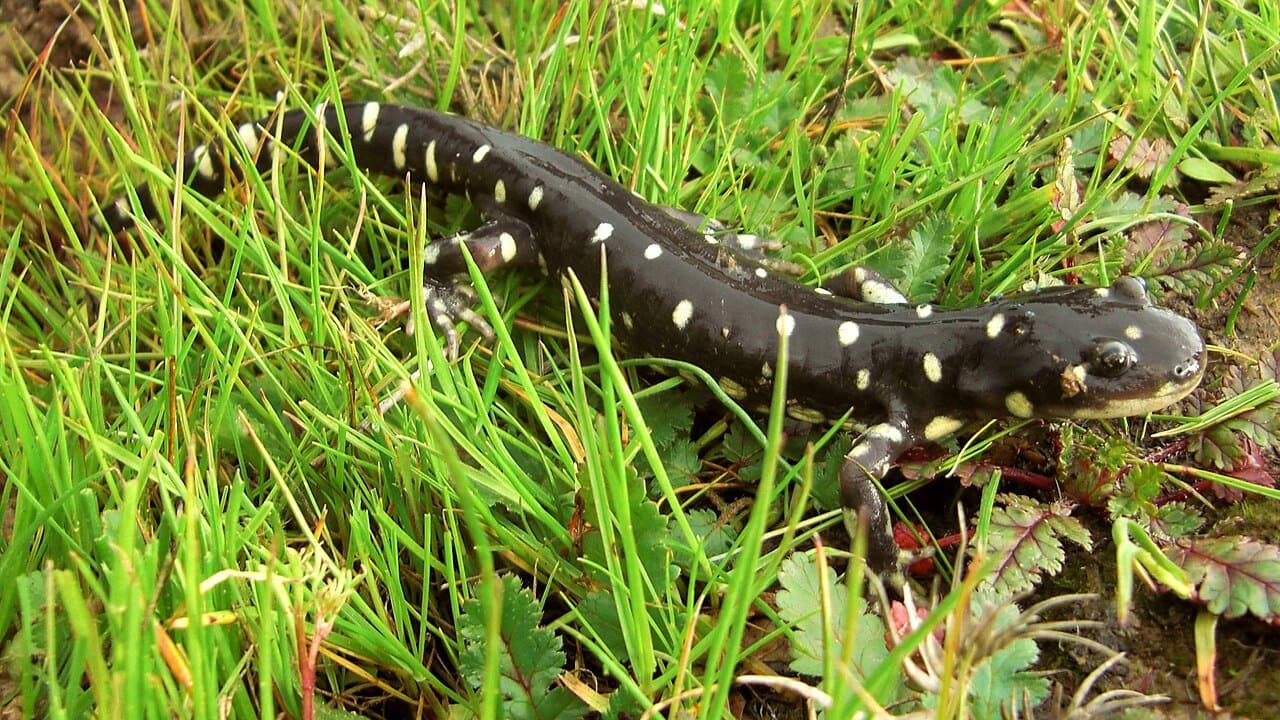 California Tiger SalamanderAmbystoma californienseA big black salamander with yellow spots that lives in ground-squirrel burrows and breeds in seasonal pools in central California.
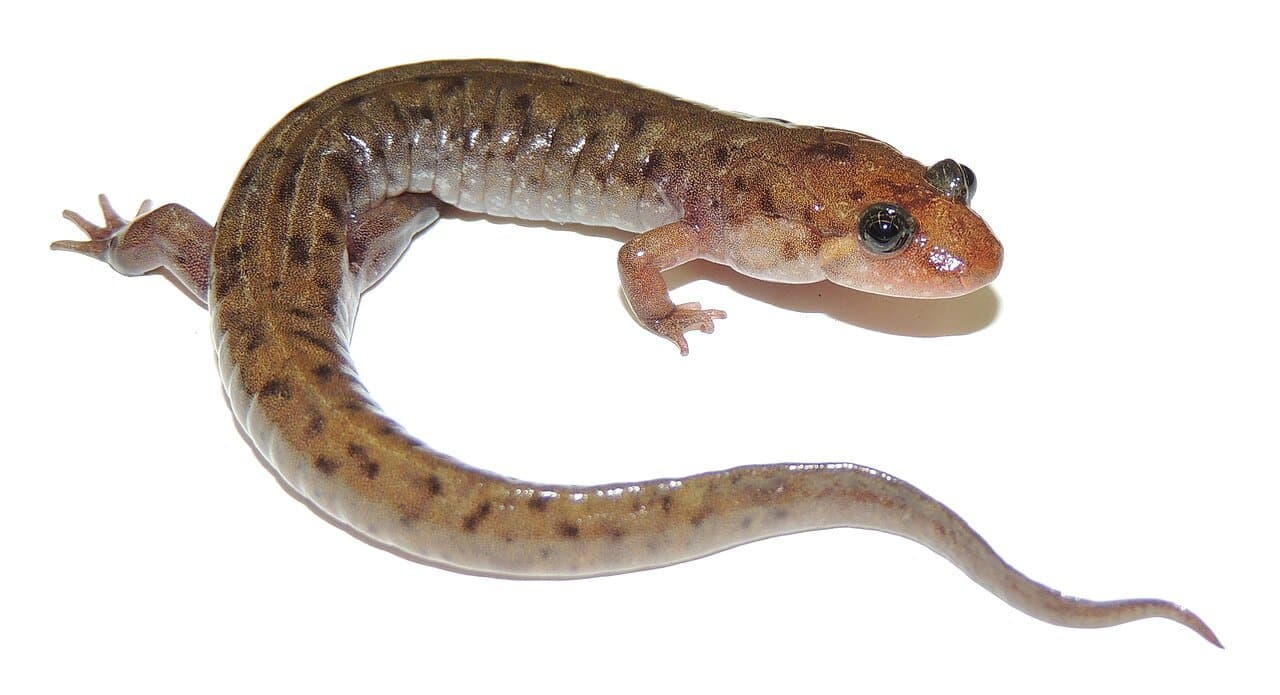 Seal SalamanderDesmognathus monticolaA lungless stream salamander of the Appalachian Mountains that breathes through its skin and hides under rocks in shallow water.