
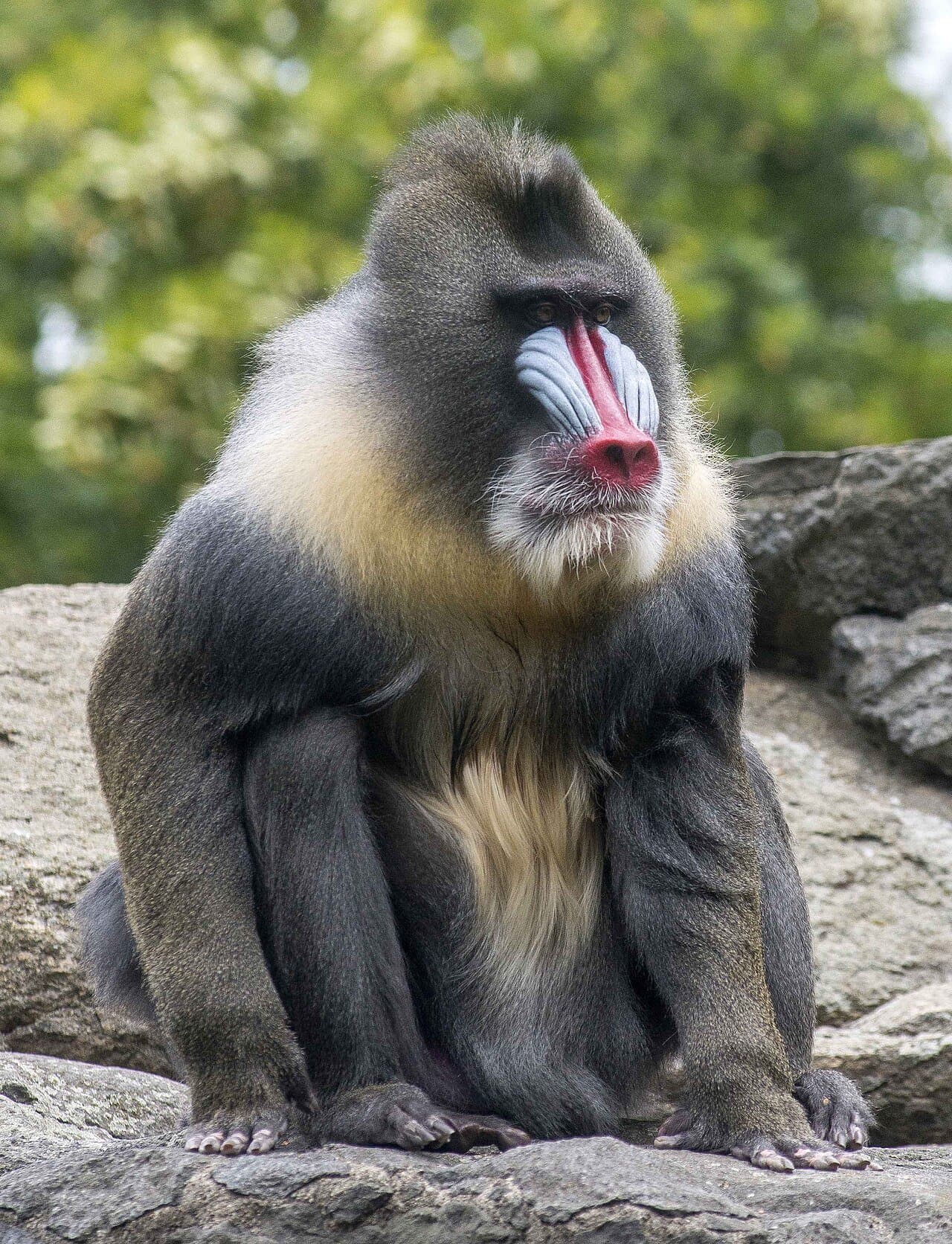
Mandrill
Mandrillus sphinx
The largest monkey in the world, whose males have a bright red-and-blue face and colorful rump.
Checking teacher reviews…
About the Mandrill
Mandrills live in forests of southwestern Cameroon, western Gabon, Equatorial Guinea and southwestern Congo. Males weigh 44 to 62 pounds, while females weigh up to 25. Adult males have a bright red nose, ridged blue cheeks, a yellow beard and a blue-purple rump; females and young are duller. Mandrills eat fruit, roots, leaves, seeds, nuts, fungi, insects and more, and carry food in large cheek pouches.[1]
Quick facts
- Scientific name
- Mandrillus sphinx[1]
- Weight
- Males 44 to 62 pounds. Females up to 25 pounds.[1]
- Diet
- Omnivore. Fruit, roots, leaves, seeds, nuts, fungi, insects, snails and worms.[1]
- Habitat
- Subtropical forests.[1]
- Where it lives
- Southwestern Cameroon, western Gabon, Equatorial Guinea and southwestern Congo.[1]
- Group life
- Family groups of one male and several females, sometimes joining larger troops.[1]
- Conservation status
- Vulnerable (IUCN Red List, assessed 2016).[2]
Fun facts
Vocabulary
- troop
- A group of monkeys or other primates that live together.
- cheek pouch
- A stretchy pocket inside the cheek used to carry food.
- hormone
- A chemical messenger in the body that controls how it works.
- intimidate
- To frighten someone in order to get your way.
- vulnerable
- A conservation label meaning a species faces a high risk of dying out in the wild.
See it in person
- San Francisco Zoo & GardensSan Francisco, California · MammalsSee this animal on the zoo's website ↗
Sources
- [1] San Francisco Zoo & Gardens. “Mandrill.” https://www.sfzoo.org/mandrill/ (accessed 2026-10-02)
- [2] IUCN Red List of Threatened Species. “Mandrillus sphinx (Mandrill).” https://www.iucnredlist.org/species/12754/17952325 (accessed 2026-10-02)
Facts last checked 2026-10-02.
More Monkeys
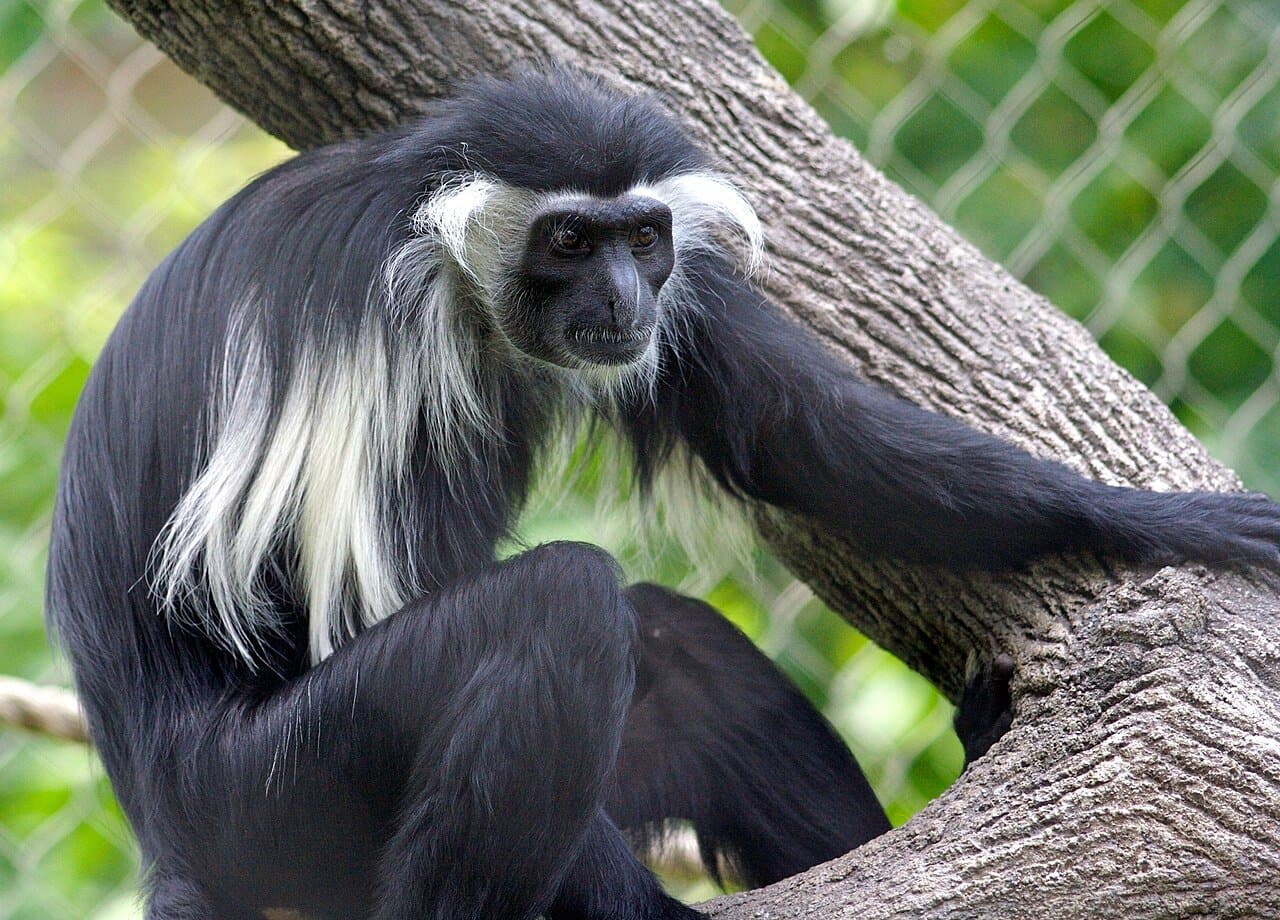 Angolan Colobus MonkeyColobus angolensisA black-and-white leaf-eating monkey of central Africa with a long, bushy-tipped tail and babies that are born all white.
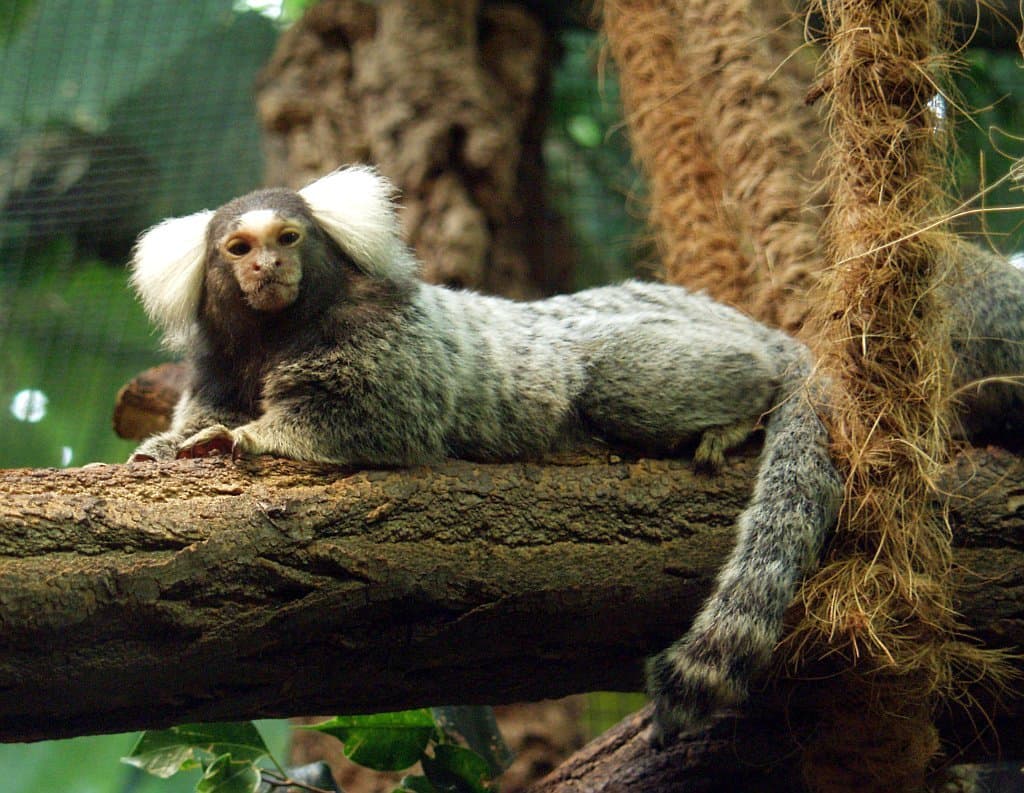 Common MarmosetCallithrix jacchusA tiny tree-sap-eating monkey of northeastern Brazil with white ear tufts, usually born as twins.
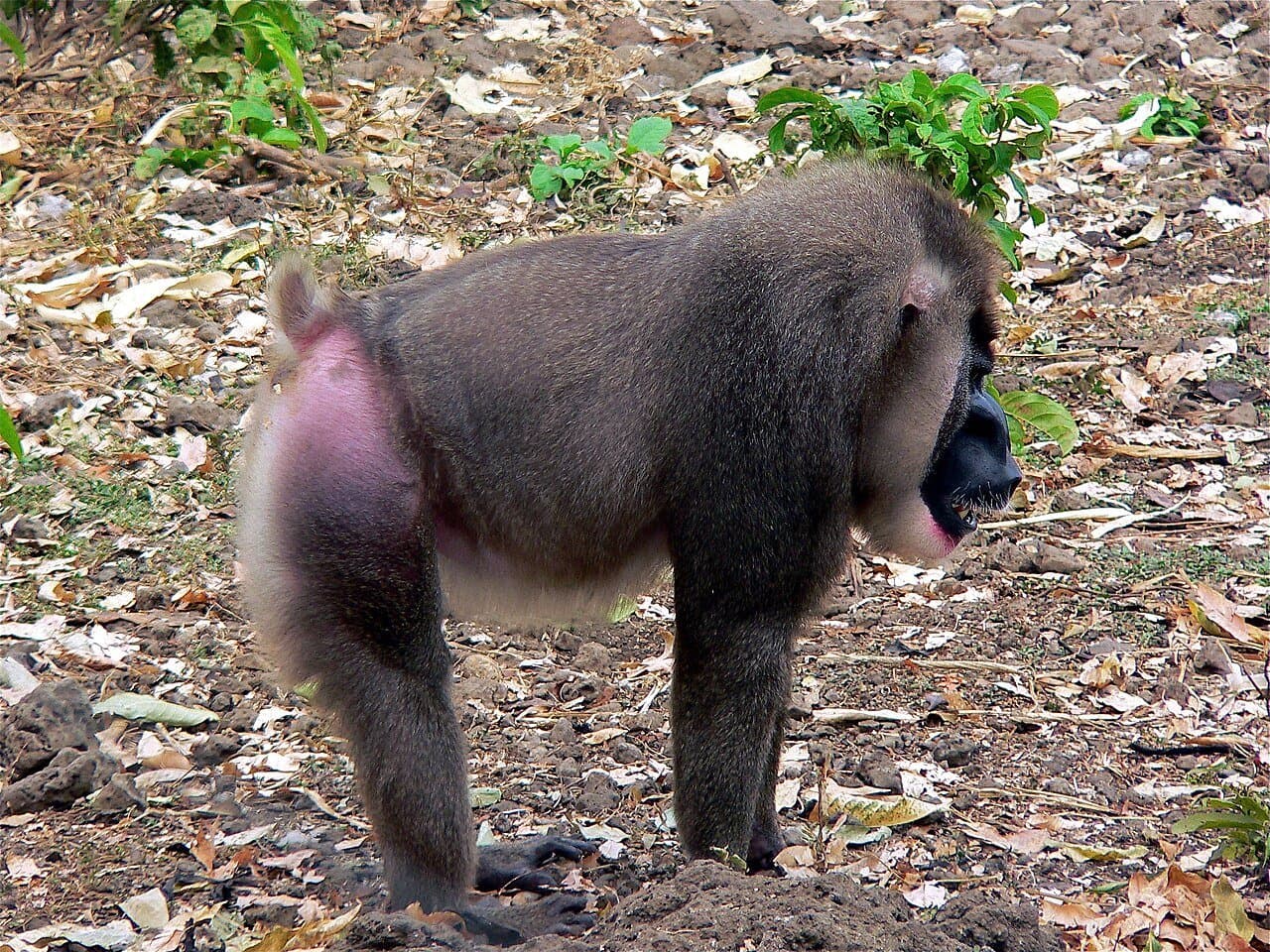 DrillMandrillus leucophaeusAn endangered baboon relative of West-Central African rainforests whose males have a bright red chin and a mane.
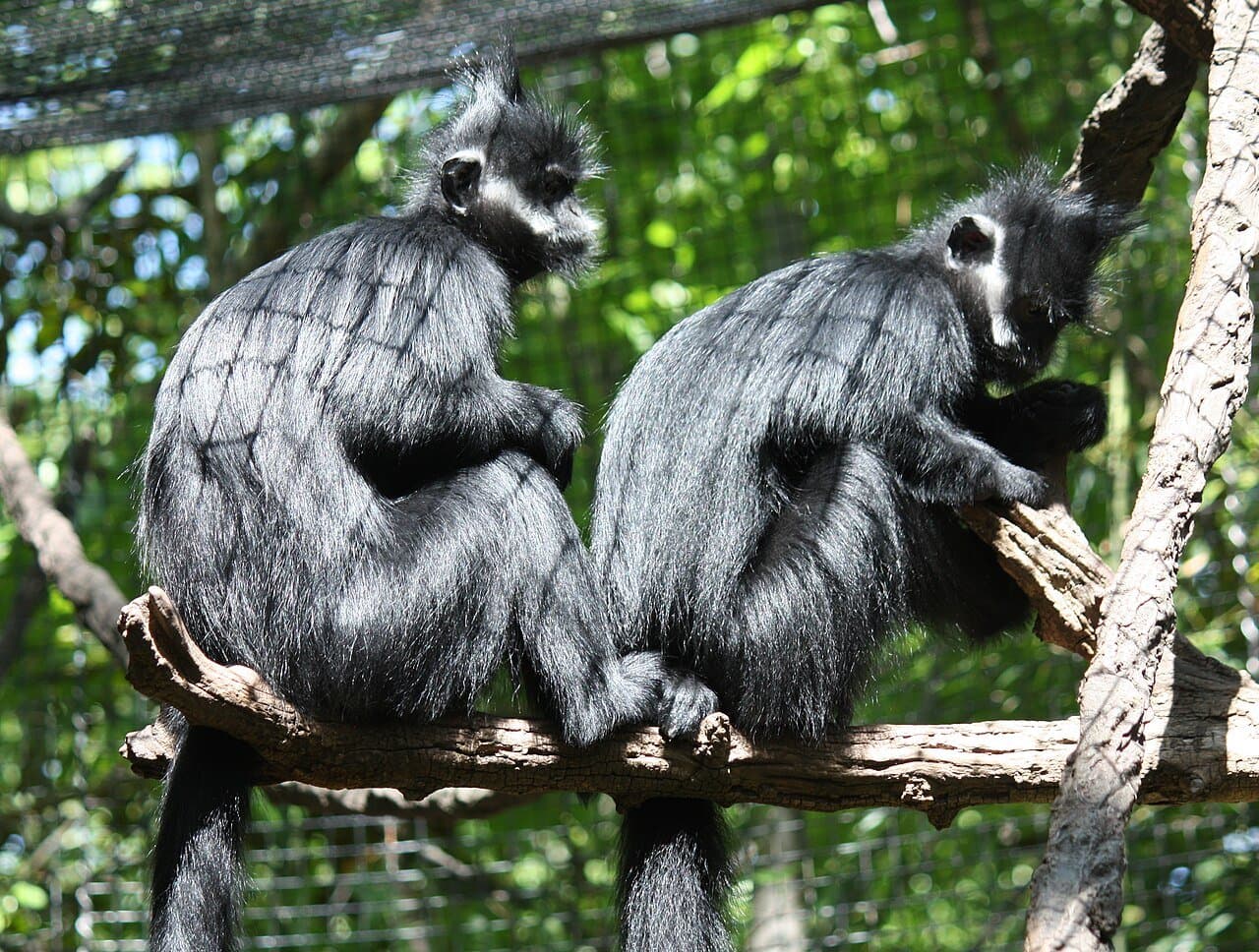 François' LangurTrachypithecus francoisiA slender black leaf-eating monkey of southern China and northern Vietnam with white sideburns and bright orange babies.
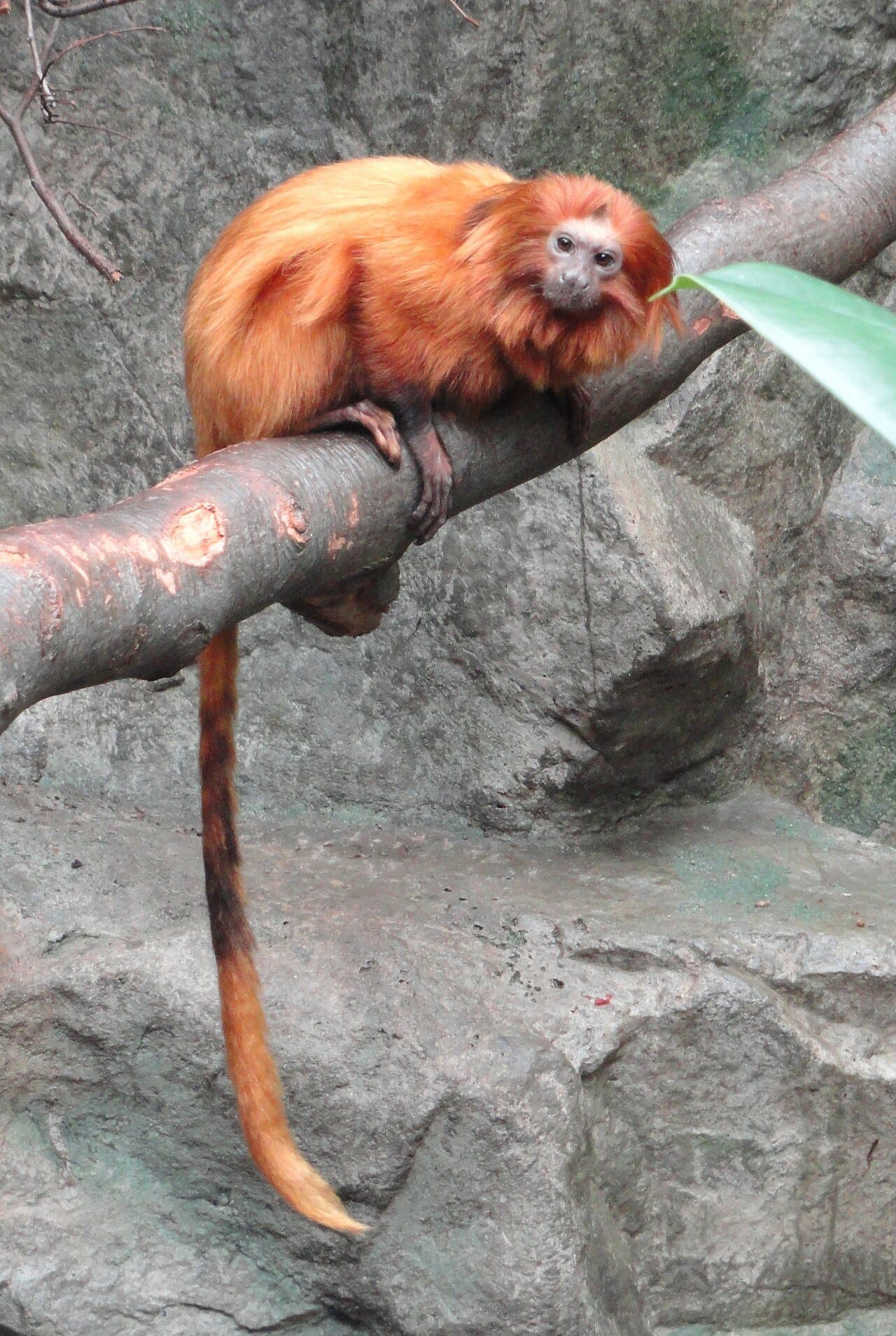 Golden Lion TamarinLeontopithecus rosaliaA tiny, bright-orange monkey with a lion-like mane that lives only in Brazil's Atlantic Coastal Forest.
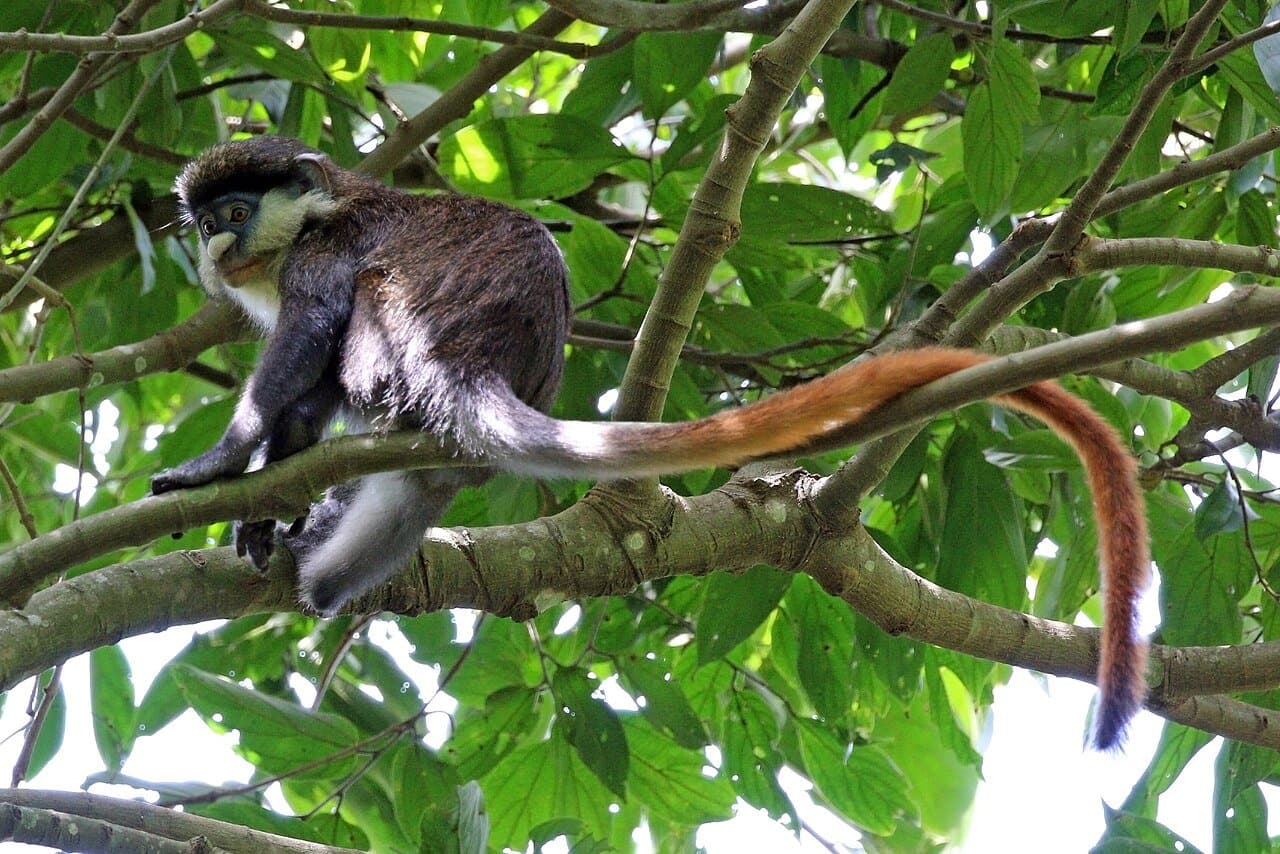 Schmidt's GuenonCercopithecus ascanius schmidtiA colorful African monkey with a white nose and a chestnut-red tail, also called the red-tailed monkey, that stuffs its cheek pouches with food.
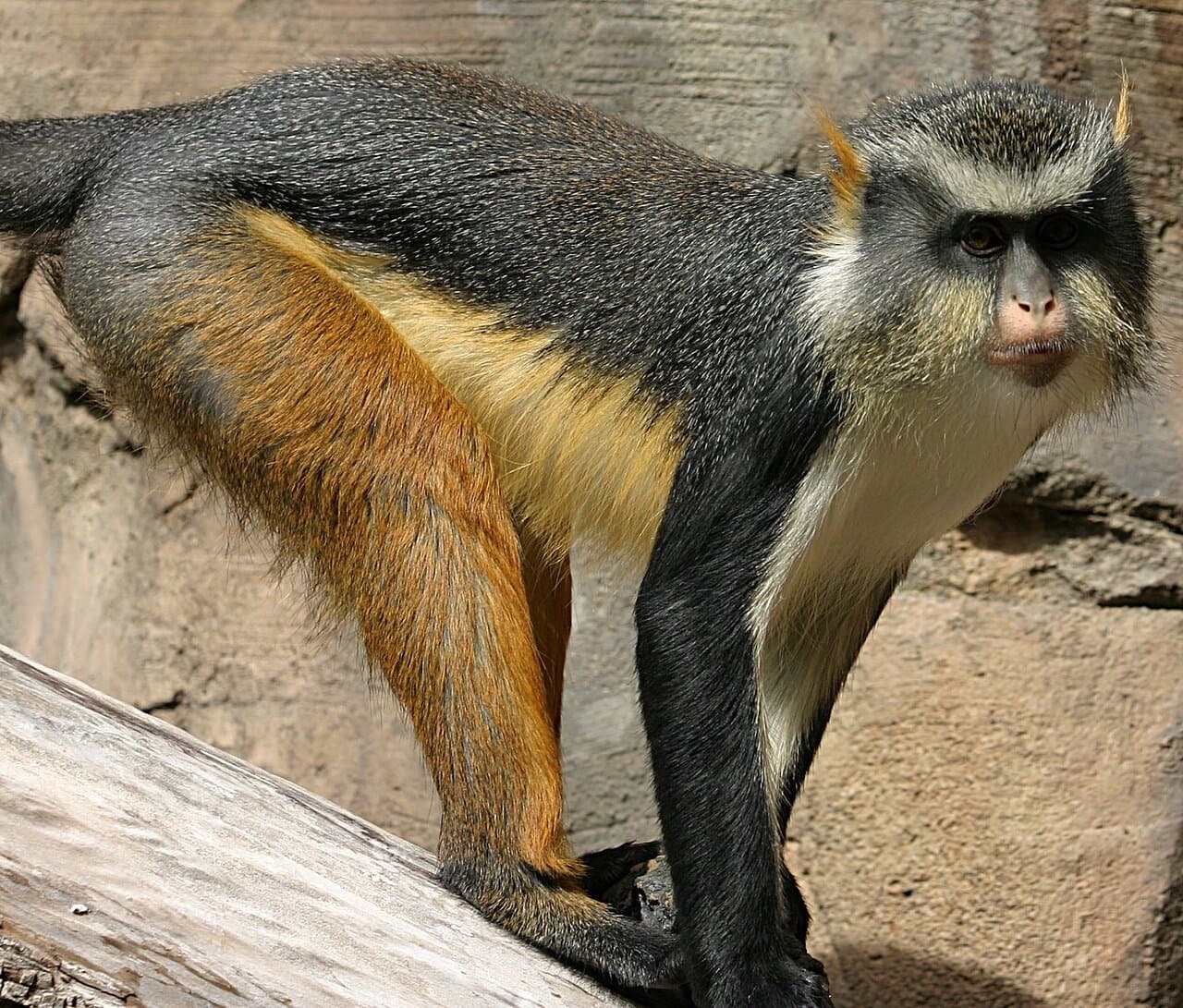 Wolf's GuenonCercopithecus wolfiA gray, red-saddled African forest monkey named after the person who discovered it, not after wolves.