
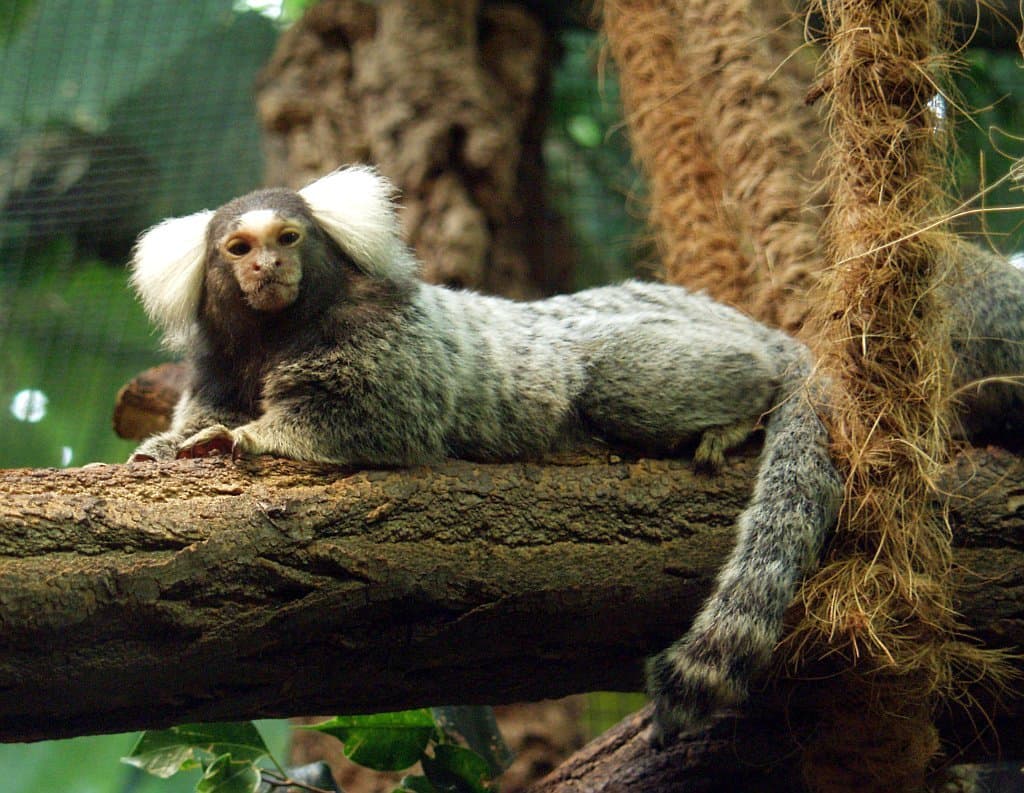
Common Marmoset
Callithrix jacchus
A tiny tree-sap-eating monkey of northeastern Brazil with white ear tufts, usually born as twins.
Checking teacher reviews…
About the Common Marmoset
Common marmosets live in the forests of northeastern Brazil, often along forest edges. An adult weighs only 300 to 360 grams, less than a pound. Marmosets feed mainly on tree sap, plus insects, spiders, fruit, flowers and nectar. They live in family groups of 2 to 13, and mothers usually give birth to twins.[1]
Quick facts
- Scientific name
- Callithrix jacchus[1]
- Size
- Body 12 to 15 cm long, with a 29.5 to 35 cm tail.[1]
- Weight
- 300 to 360 grams (under 1 pound).[1]
- Lifespan
- About 10 years in the wild. 12 to 16 years in captivity.[1]
- Diet
- Mainly tree sap, plus insects, spiders, fruit, flowers and nectar.[1]
- Habitat
- Forest edges and coastal rainforest.[1]
- Where it lives
- Northeastern Brazil.[1]
- Group life
- Family groups of 2 to 13.[1]
- Babies
- Usually twins. Fathers and older siblings help care for them.[1]
- Conservation status
- Least Concern (IUCN Red List, assessed 2015).[2]
Fun facts
Vocabulary
- sap
- The sticky liquid that flows inside trees.
- ear tuft
- A clump of long hair that sticks out from the ear.
- twins
- Two babies born at the same time to the same mother.
- sibling
- A brother or sister.
- primate
- A mammal with grasping hands and forward-facing eyes, like monkeys, apes and humans.
See it in person
- Montgomery ZooMontgomery, Alabama · South AmericaSee this area on the zoo's website ↗
Sources
- [1] Animal Diversity Web, University of Michigan Museum of Zoology. “Callithrix jacchus (common marmoset).” https://animaldiversity.org/accounts/Callithrix_jacchus/ (accessed 2026-10-02)
- [2] IUCN Red List of Threatened Species. “Callithrix jacchus (Common Marmoset).” https://www.iucnredlist.org/species/41518/191705043 (accessed 2026-10-02)
Facts last checked 2026-10-02.
More Monkeys
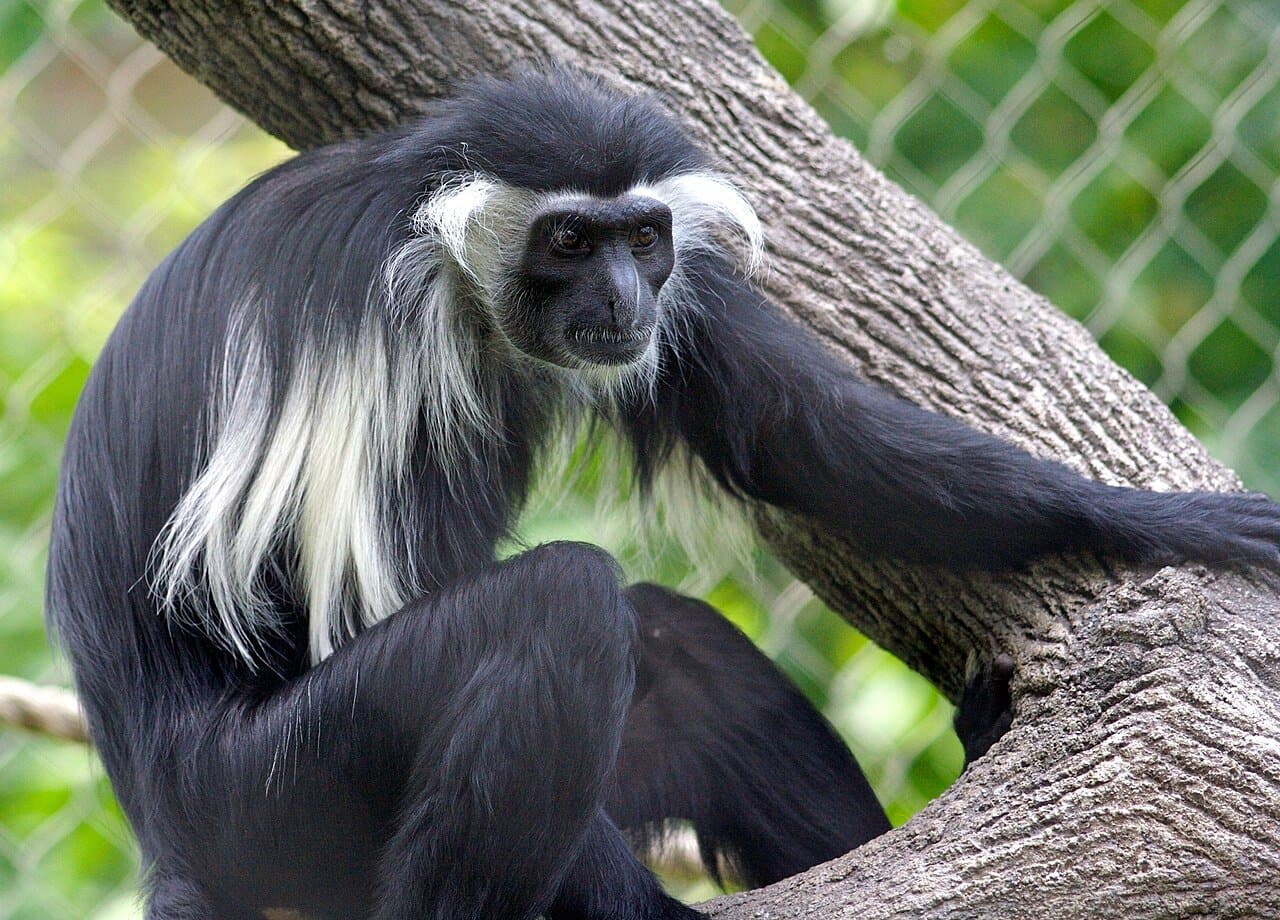 Angolan Colobus MonkeyColobus angolensisA black-and-white leaf-eating monkey of central Africa with a long, bushy-tipped tail and babies that are born all white.
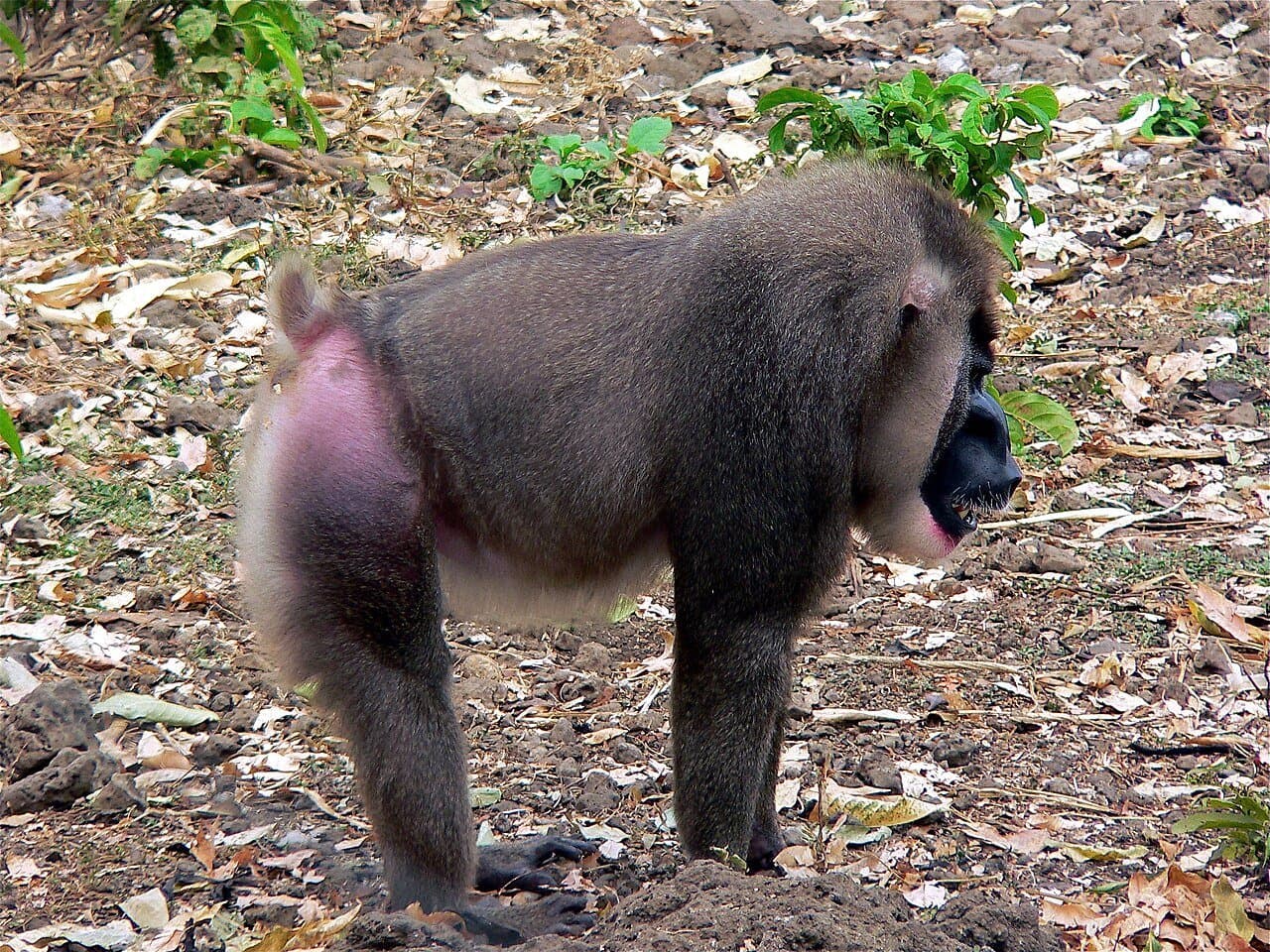 DrillMandrillus leucophaeusAn endangered baboon relative of West-Central African rainforests whose males have a bright red chin and a mane.
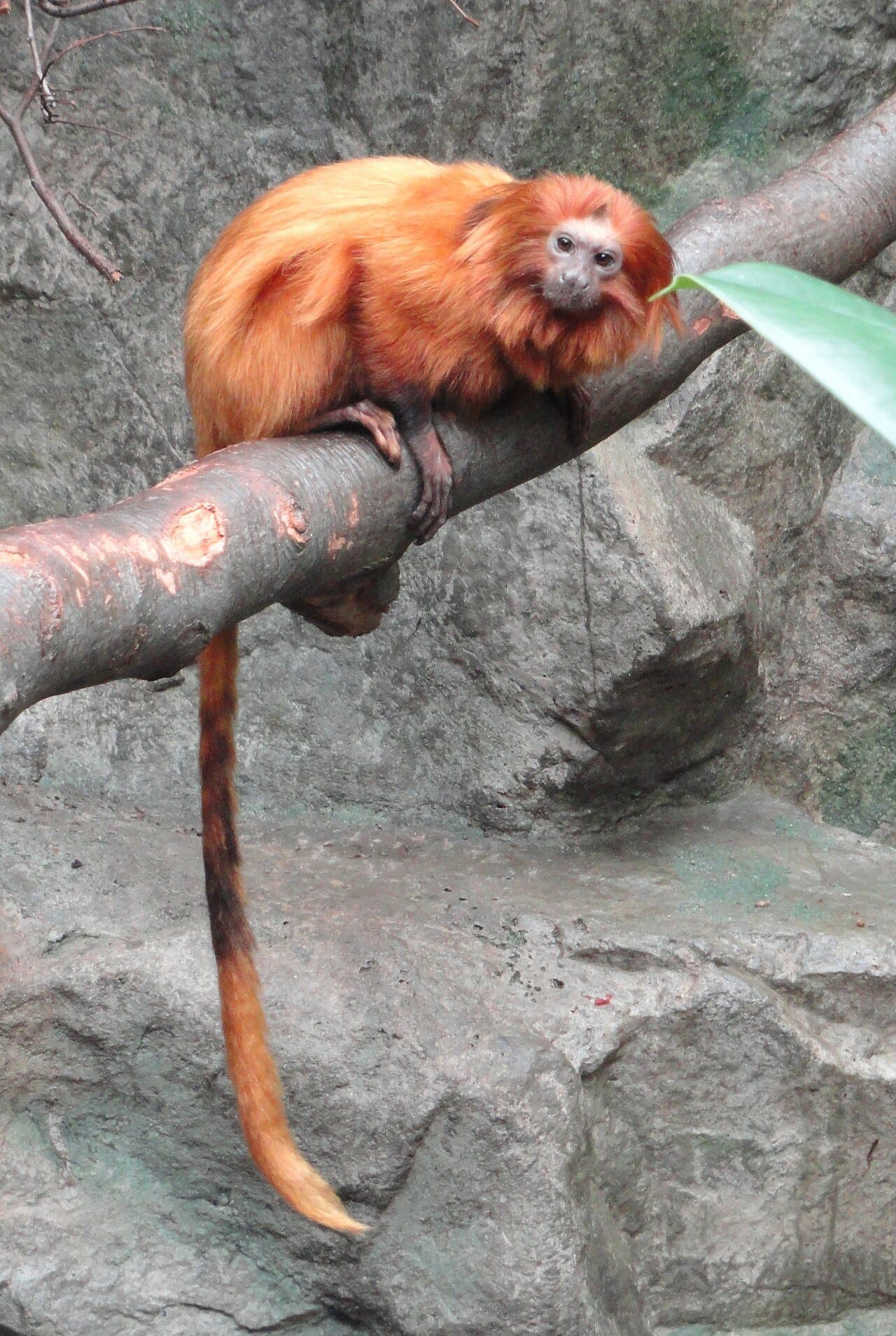 Golden Lion TamarinLeontopithecus rosaliaA tiny, bright-orange monkey with a lion-like mane that lives only in Brazil's Atlantic Coastal Forest.
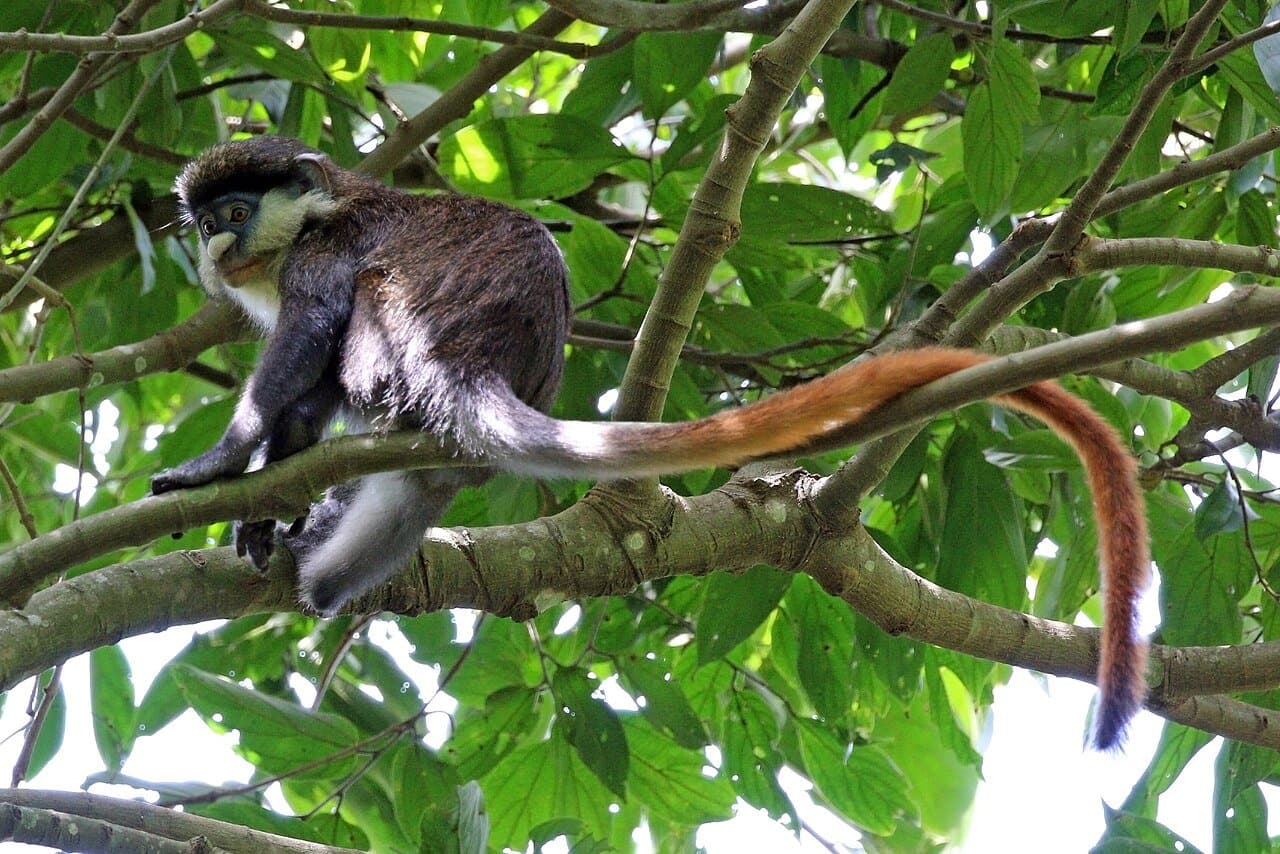 Schmidt's GuenonCercopithecus ascanius schmidtiA colorful African monkey with a white nose and a chestnut-red tail, also called the red-tailed monkey, that stuffs its cheek pouches with food.
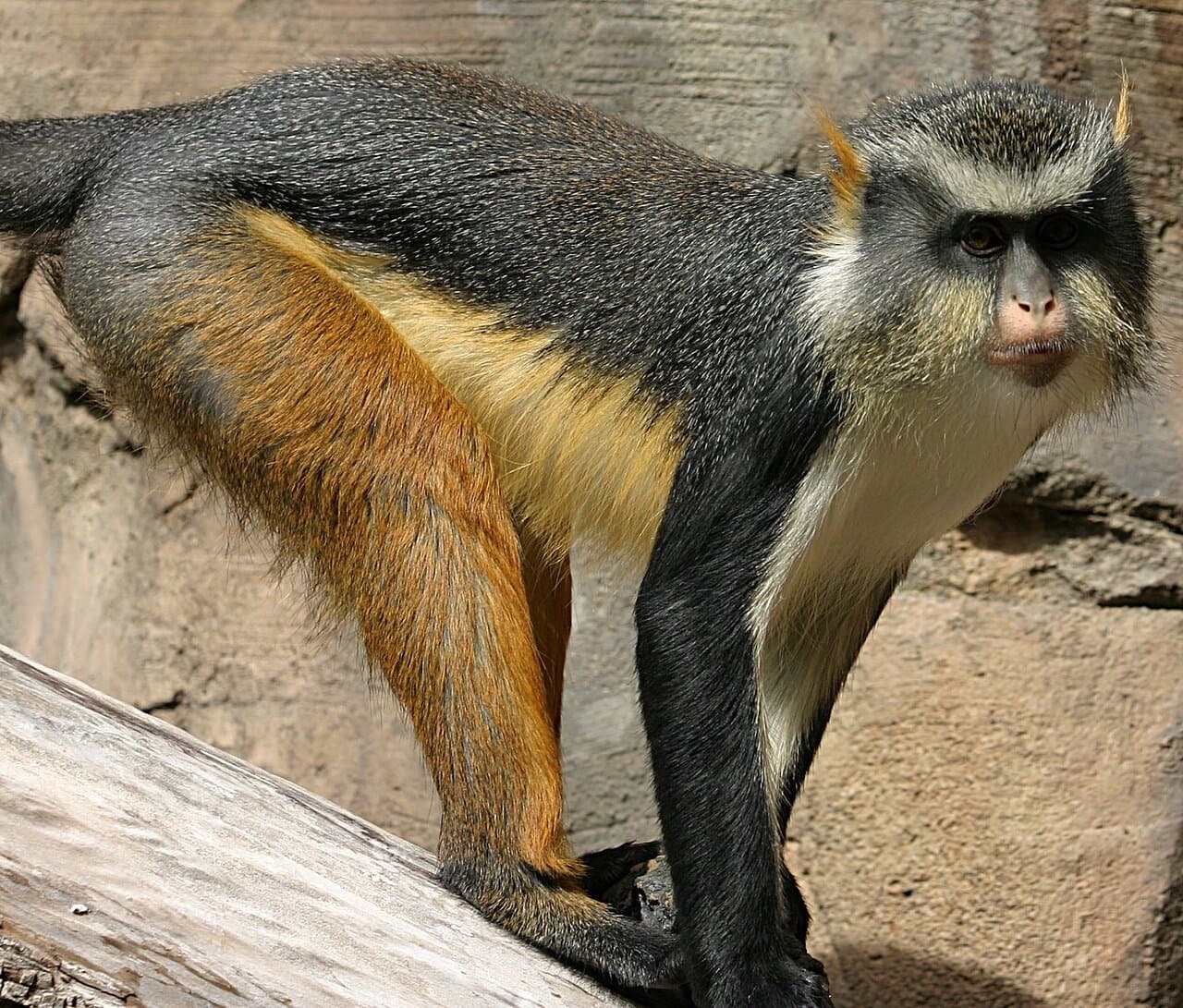 Wolf's GuenonCercopithecus wolfiA gray, red-saddled African forest monkey named after the person who discovered it, not after wolves.