
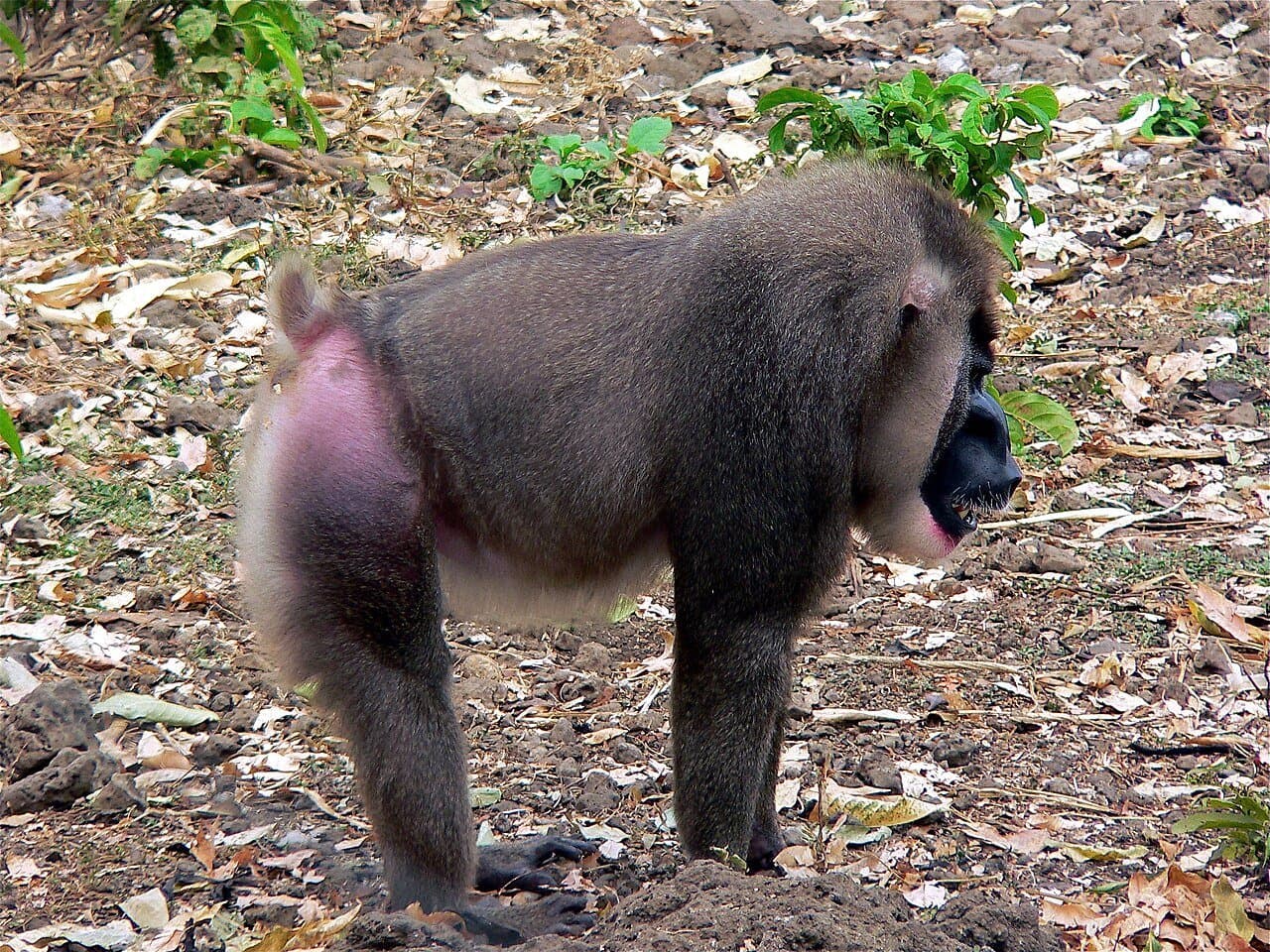
Drill
Mandrillus leucophaeus
An endangered baboon relative of West-Central African rainforests whose males have a bright red chin and a mane.
Checking teacher reviews…
About the Drill
Drills live only in large, undisturbed lowland rainforests in Cameroon, Nigeria and the island of Bioko. Males weigh 80 to 110 pounds, much more than females at 30 to 45 pounds. Drills eat mostly plants and some small invertebrates. They can store food in cheek pouches that hold as much as their stomachs. Troops of 20 or more are led by one dominant male.[1]
Quick facts
- Scientific name
- Mandrillus leucophaeus[1]
- Weight
- Males 80 to 110 pounds. Females 30 to 45 pounds.[1]
- Lifespan
- About 20 years in the wild. Up to 46 in a zoo.[1]
- Diet
- Mostly plants, plus small invertebrates.[1]
- Habitat
- Large, undisturbed lowland rainforest.[1]
- Where it lives
- West-central Africa: Cameroon, Nigeria and the island of Bioko.[1]
- Group life
- Troops of 20 or more with one dominant male.[1]
- Babies
- Pregnancy lasts 5.5 to 6 months. Usually one baby.[1]
- Conservation status
- Endangered (IUCN Red List, assessed 2017).[2]
Fun facts
Vocabulary
- troop
- A group of monkeys or other primates that live together.
- groom
- To clean another animal's fur, which also builds friendships.
- cheek pouch
- A stretchy pocket inside the cheek used to carry food.
- bushmeat
- Meat from wild animals hunted for food or sale.
- endangered
- A conservation label meaning a species faces a very high risk of dying out in the wild.
See it in person
- Zoo AtlantaAtlanta, Georgia · All AnimalsSee this animal on the zoo's website ↗
Sources
- [1] Zoo Atlanta. “Drill.” https://zooatlanta.org/animal/drill/ (accessed 2026-10-02)
- [2] IUCN Red List of Threatened Species. “Mandrillus leucophaeus (Drill).” https://www.iucnredlist.org/species/12753/17952490 (accessed 2026-10-02)
Facts last checked 2026-10-02.
More Monkeys
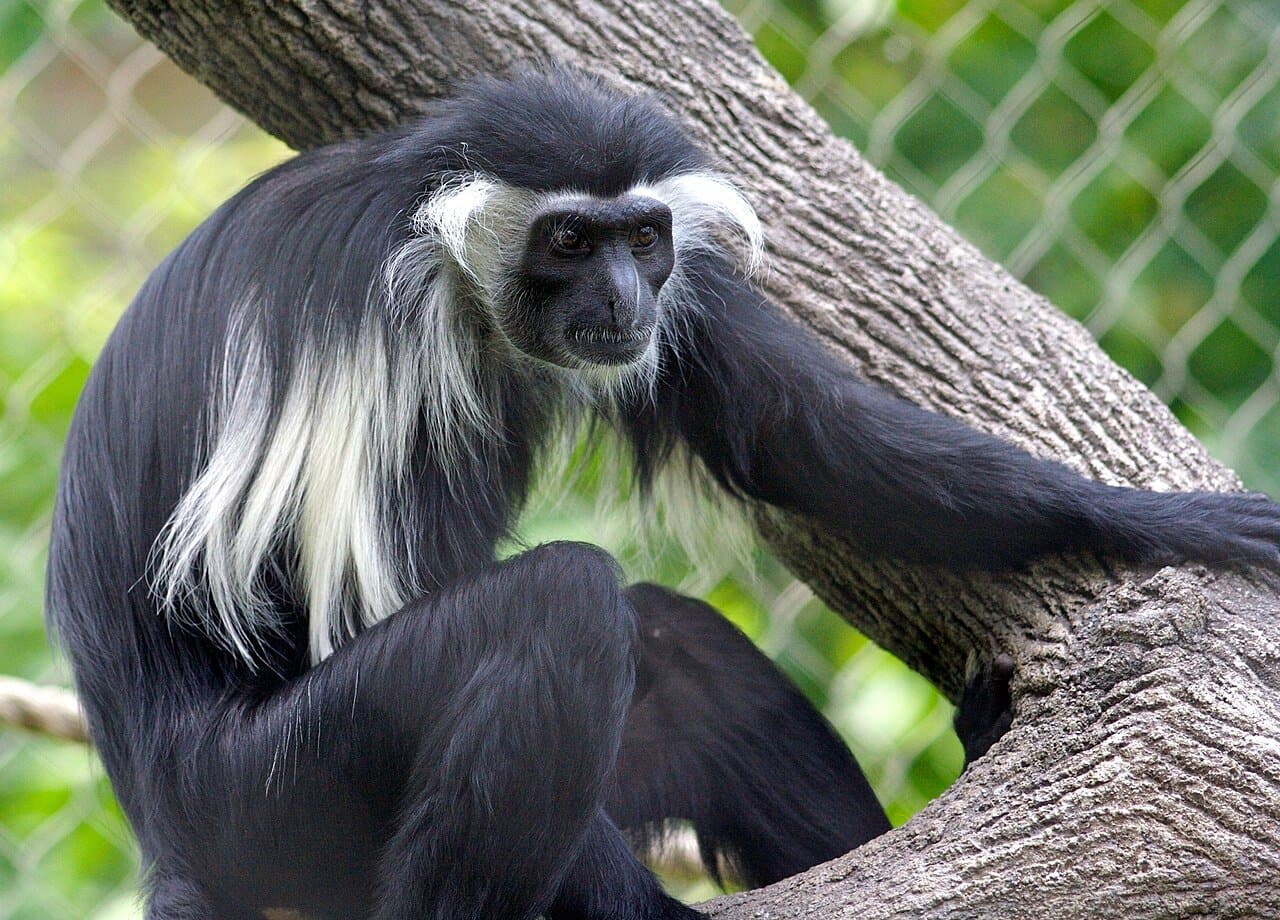 Angolan Colobus MonkeyColobus angolensisA black-and-white leaf-eating monkey of central Africa with a long, bushy-tipped tail and babies that are born all white.
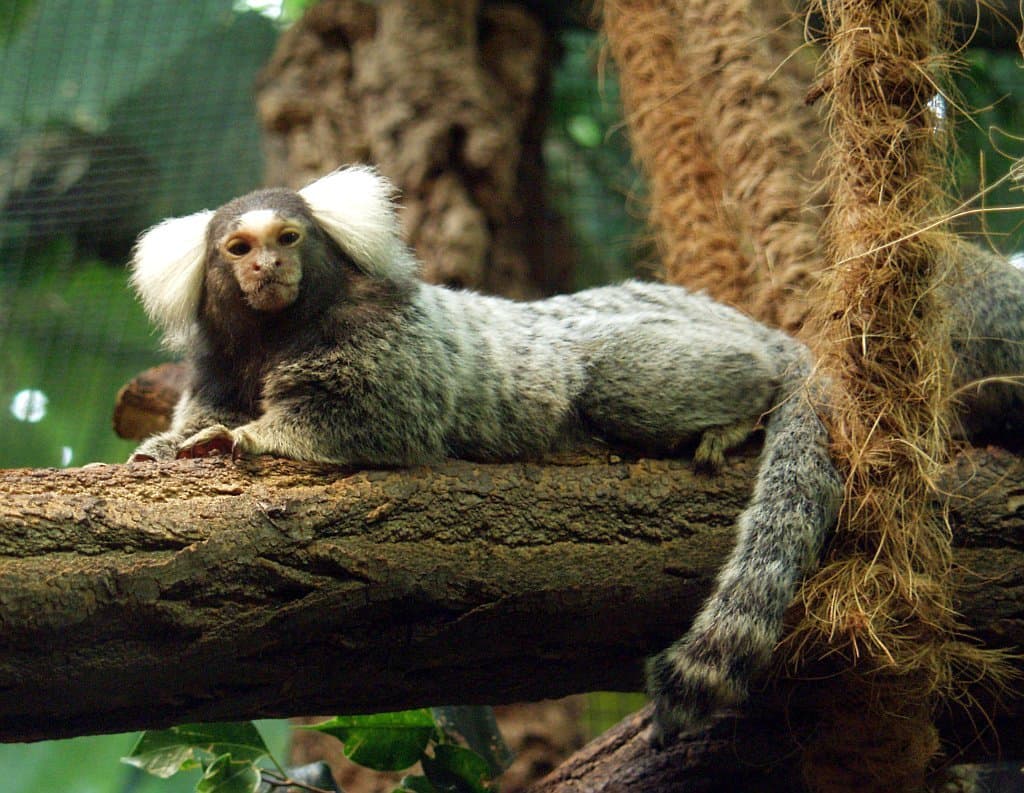 Common MarmosetCallithrix jacchusA tiny tree-sap-eating monkey of northeastern Brazil with white ear tufts, usually born as twins.
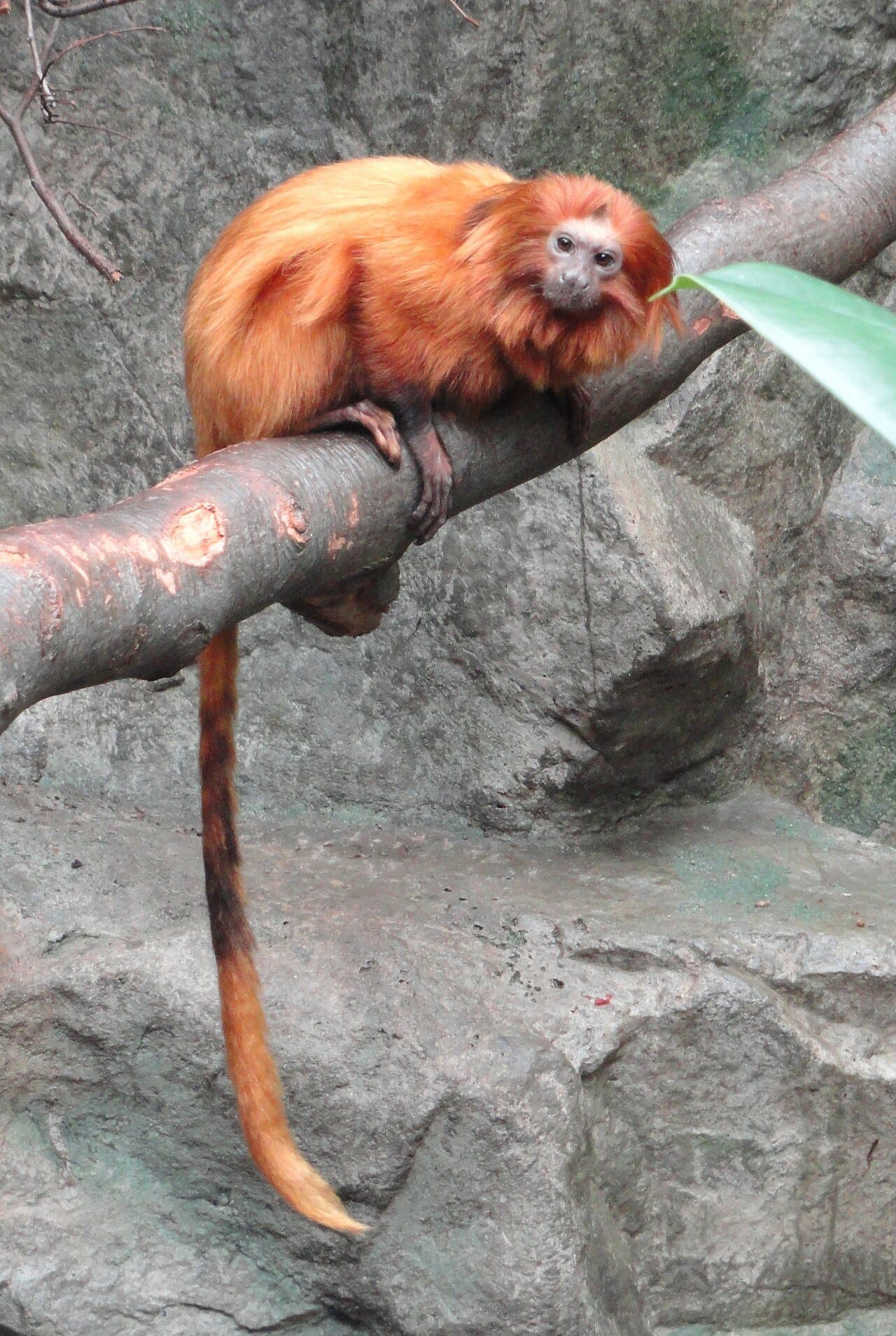 Golden Lion TamarinLeontopithecus rosaliaA tiny, bright-orange monkey with a lion-like mane that lives only in Brazil's Atlantic Coastal Forest.
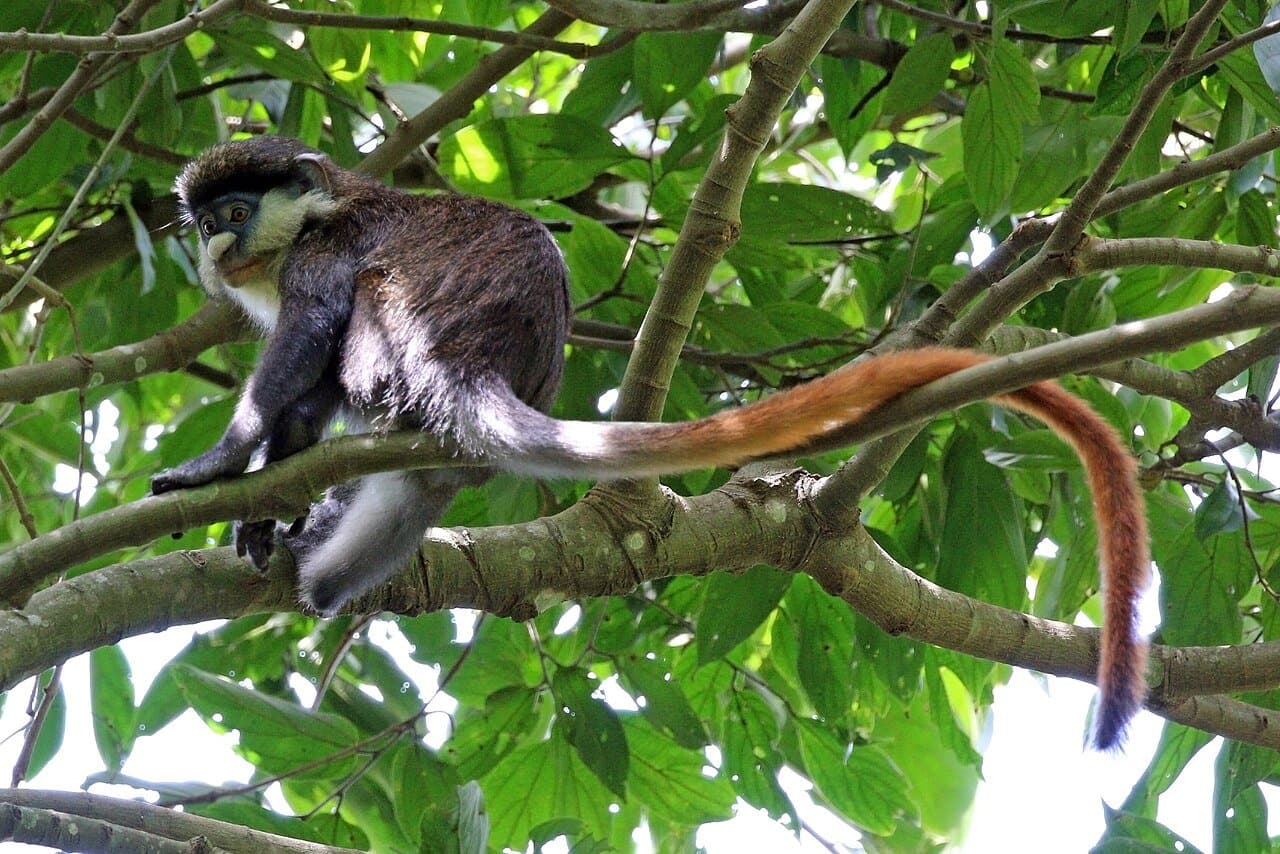 Schmidt's GuenonCercopithecus ascanius schmidtiA colorful African monkey with a white nose and a chestnut-red tail, also called the red-tailed monkey, that stuffs its cheek pouches with food.
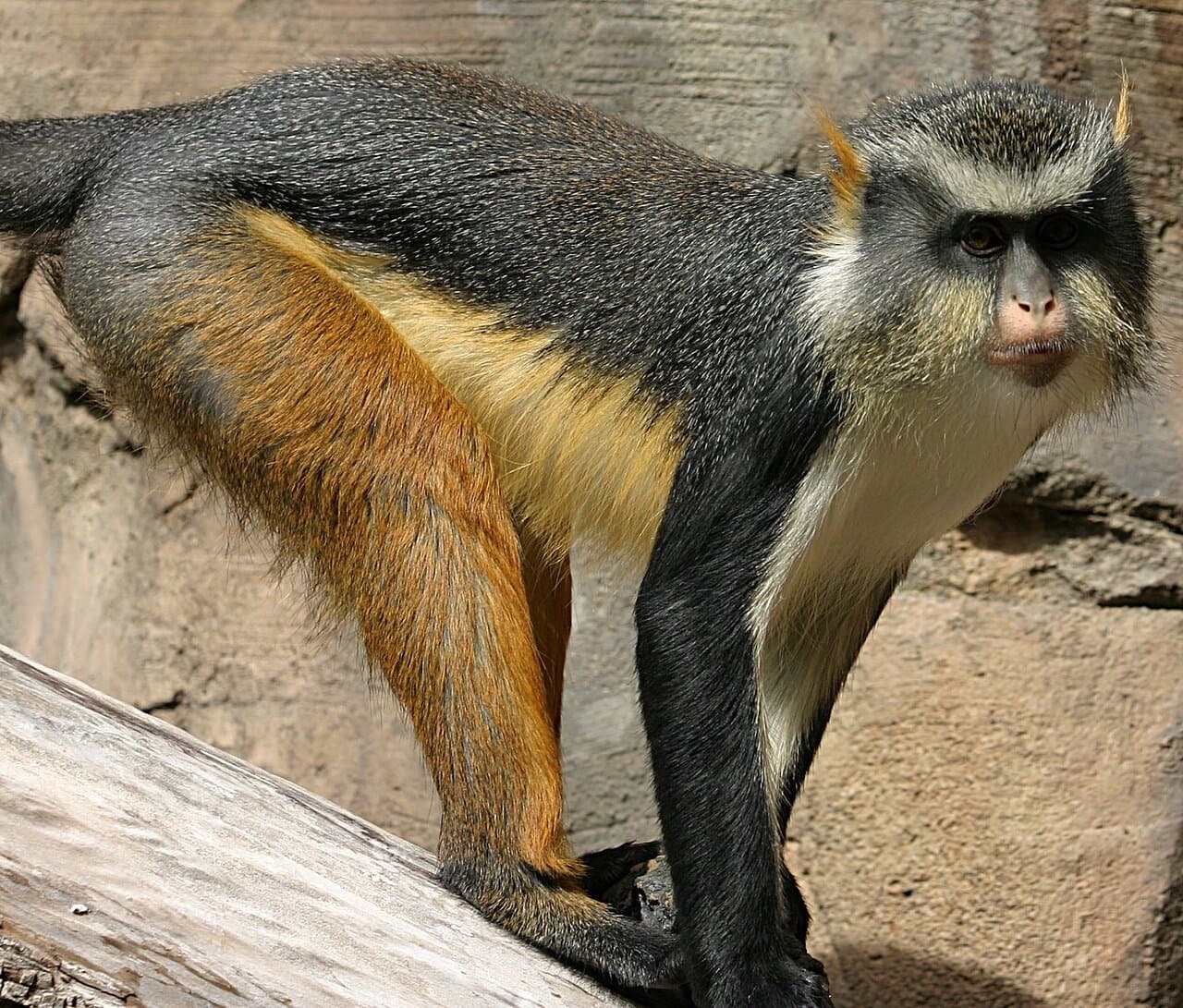 Wolf's GuenonCercopithecus wolfiA gray, red-saddled African forest monkey named after the person who discovered it, not after wolves.