
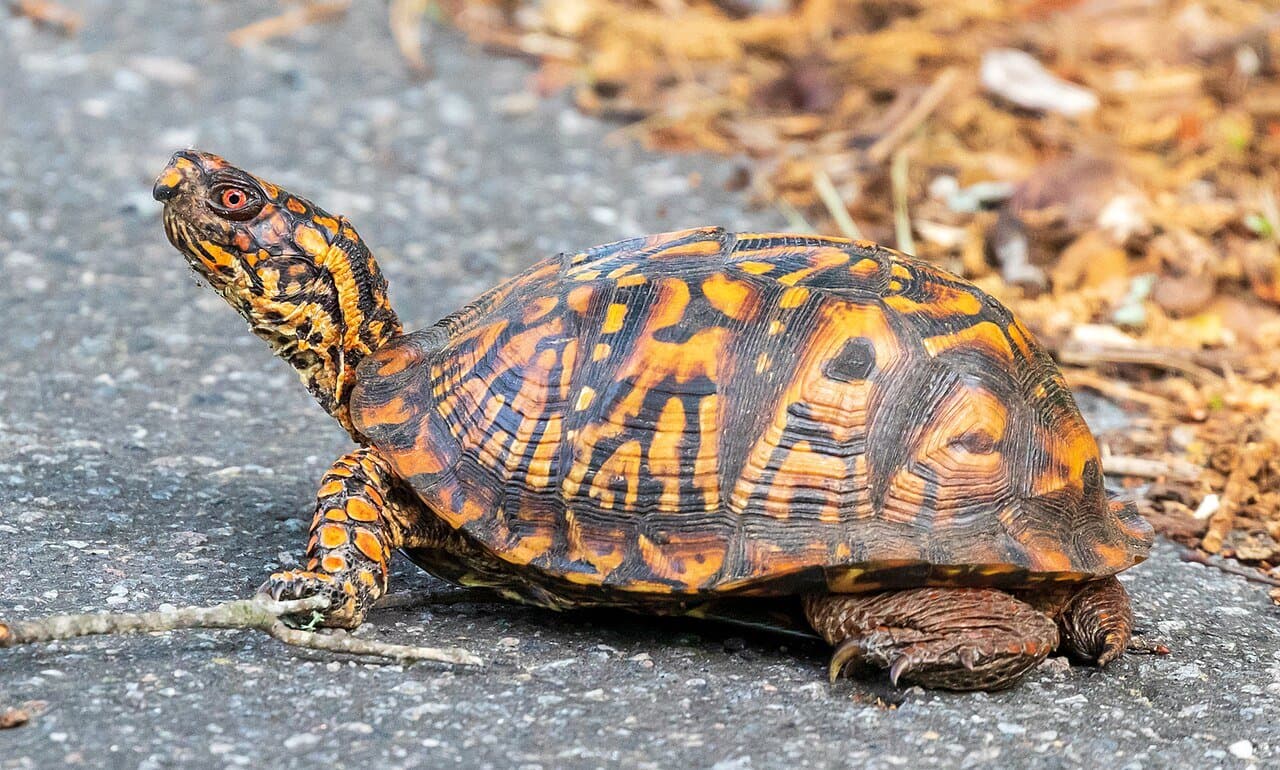
Eastern Box Turtle
Terrapene carolina
A land turtle of the eastern United States that can close its shell like a box and may live more than 100 years.
Checking teacher reviews…
About the Eastern Box Turtle
Box turtles live in open woods, pastures and marshy meadows from southern Maine to Florida and west to Michigan, Illinois, Kansas, Oklahoma and Texas. A hinge on the bottom shell lets them close up almost completely. They eat snails, insects, berries, mushrooms, worms, roots and flowers. Young turtles eat mostly animals, while adults eat mostly plants. Many stay within an area about 250 yards across.[1]
Quick facts
- Size
- Shell 11 to 18 cm (4.3 to 7 inches) long.[1]
- Lifespan
- Can live over 100 years. The oldest recorded was 138.[1]
- Diet
- Omnivore. Snails, insects, berries, mushrooms, slugs, worms, roots and flowers.[1]
- Habitat
- Open woodlands, pastures and marshy meadows.[1]
- Where it lives
- Eastern United States, from southern Maine to Florida and west to Michigan, Illinois, Kansas, Oklahoma and Texas.[1]
- Babies
- 3 to 8 eggs, usually 4 or 5. Incubation usually lasts about three months.[1]
- Conservation status
- Vulnerable (IUCN Red List, common box turtle, assessed 2010).[2]
Fun facts
Vocabulary
- plastron
- The bottom part of a turtle's shell.
- carapace
- The top part of a turtle's shell.
- hinge
- A joint that lets something open and close, like a door.
- hibernate
- To spend the winter in a deep, inactive sleep.
- omnivore
- An animal that eats both plants and other animals.
See it in person
- Montgomery ZooMontgomery, Alabama · Reptile JunctionSee this area on the zoo's website ↗
Sources
- [1] Animal Diversity Web, University of Michigan Museum of Zoology. “Terrapene carolina (box turtle).” https://animaldiversity.org/accounts/Terrapene_carolina/ (accessed 2026-10-02)
- [2] IUCN Red List of Threatened Species. “Terrapene carolina (Eastern Box Turtle).” https://www.iucnredlist.org/species/21641/9303747 (accessed 2026-10-02)
Facts last checked 2026-10-02.
More Turtles and Tortoises
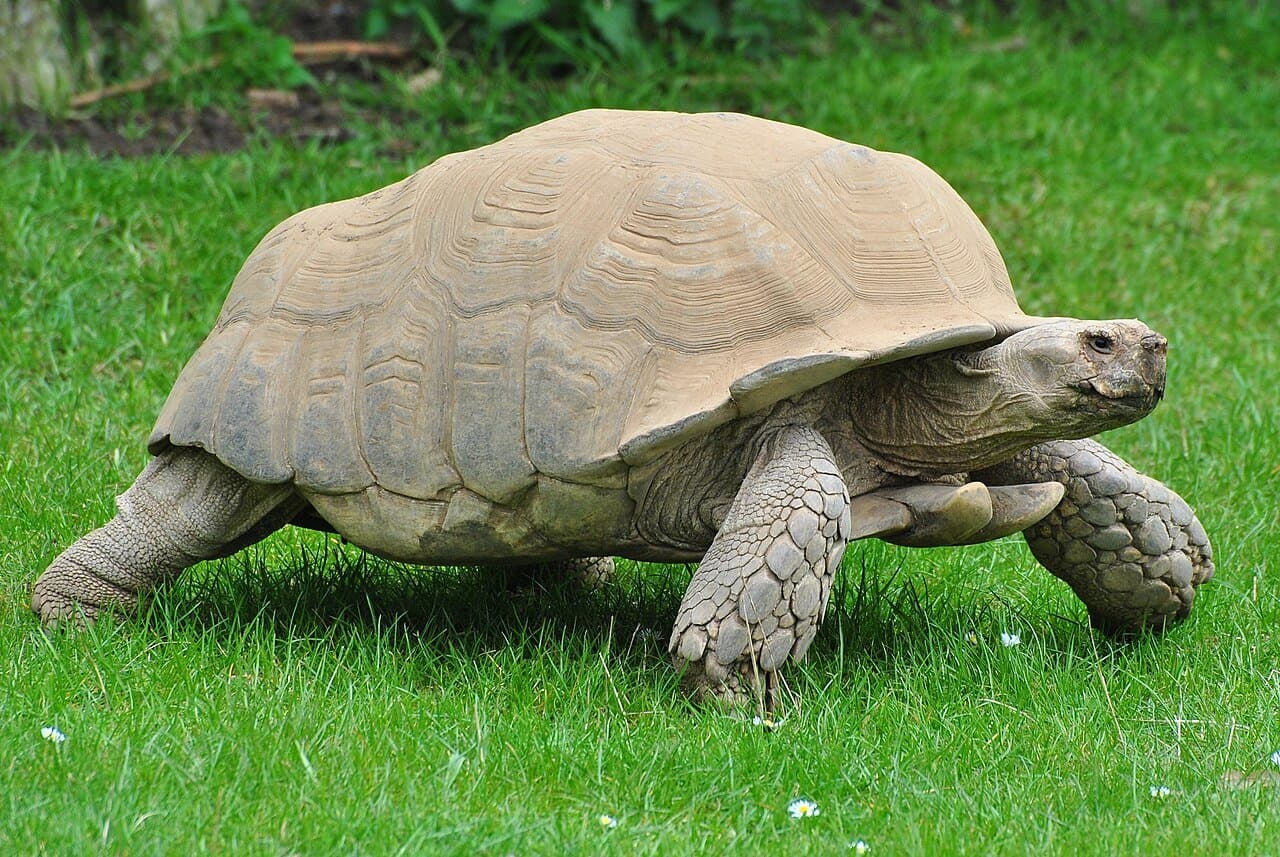 African Spurred TortoiseCentrochelys sulcata (also called Geochelone sulcata)The largest mainland African tortoise, a burrowing plant-eater of the dry lands south of the Sahara, also called the sulcata tortoise.
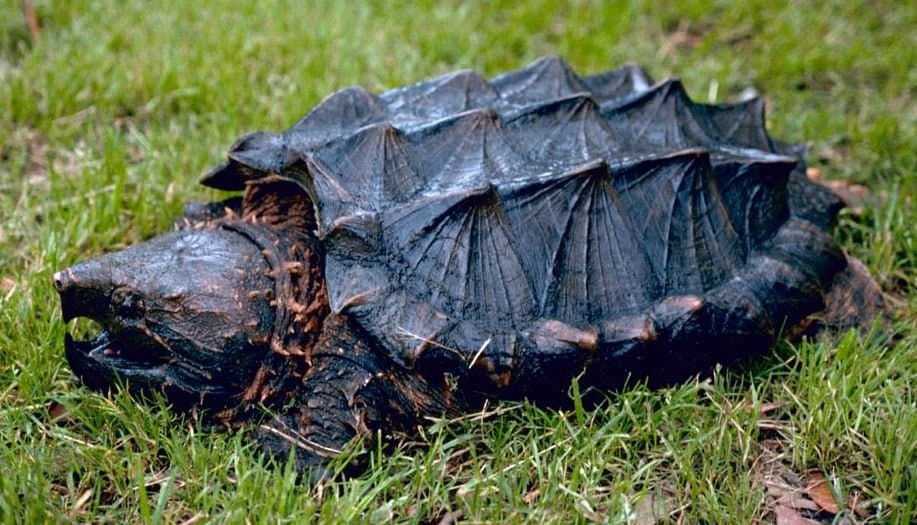 Alligator Snapping TurtleMacrochelys temminckiiThe largest freshwater turtle in the United States, which lures fish into its open jaws with a worm-like bit on its tongue.
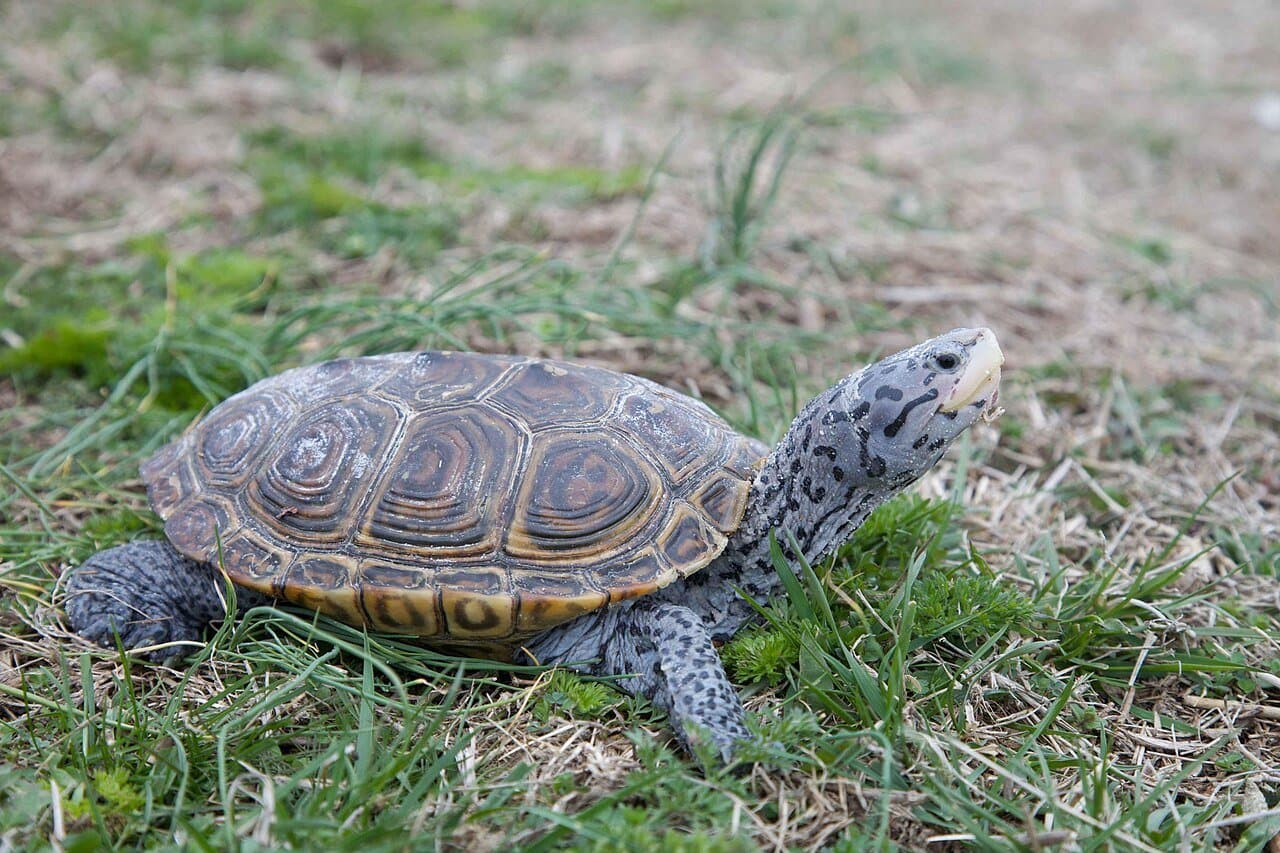 Diamondback TerrapinMalaclemys terrapinA colorful turtle of coastal salt marshes from the Atlantic to the Gulf of Mexico, the only turtle besides sea turtles that lives in brackish water.
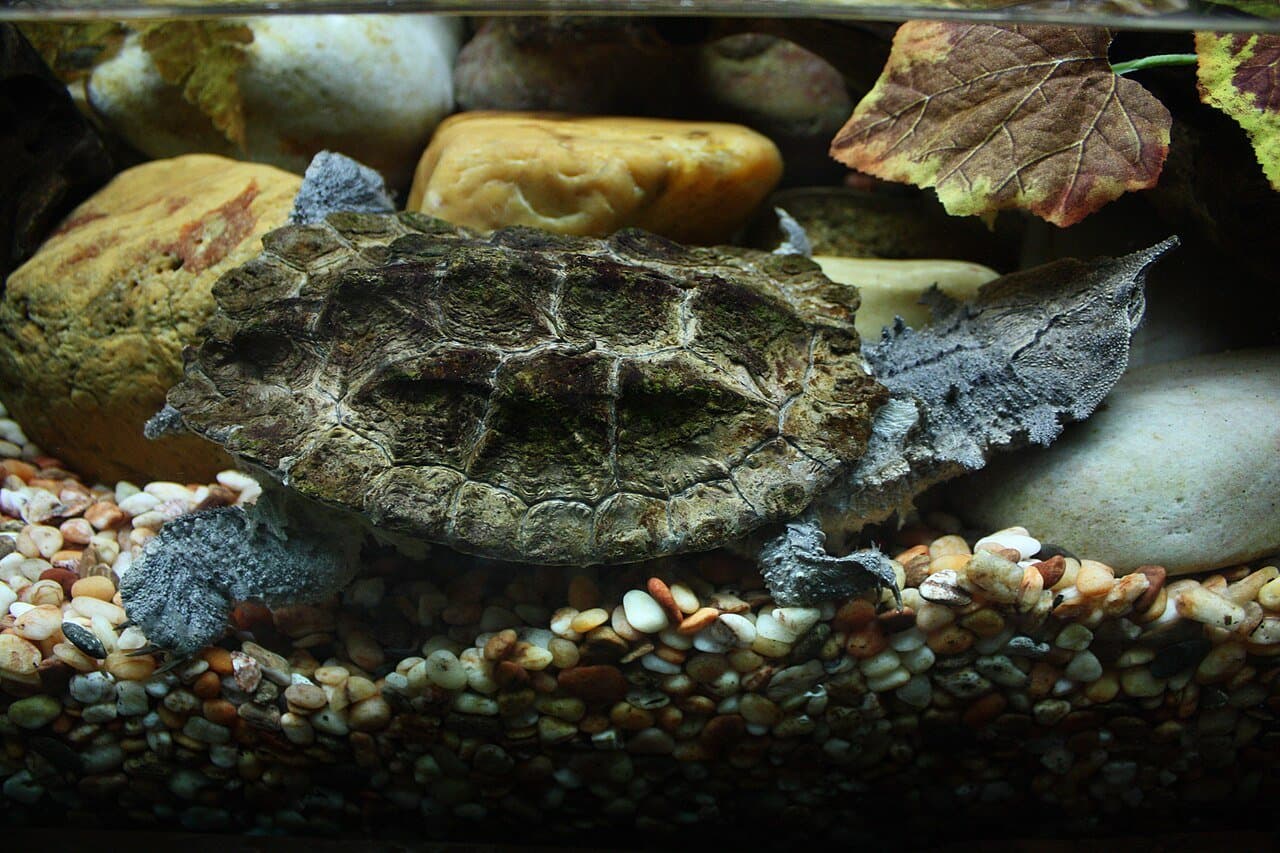 Mata MataChelus fimbriataA camouflaged Amazon turtle with a flat head and snorkel nose that vacuums up fish by suddenly opening its mouth.
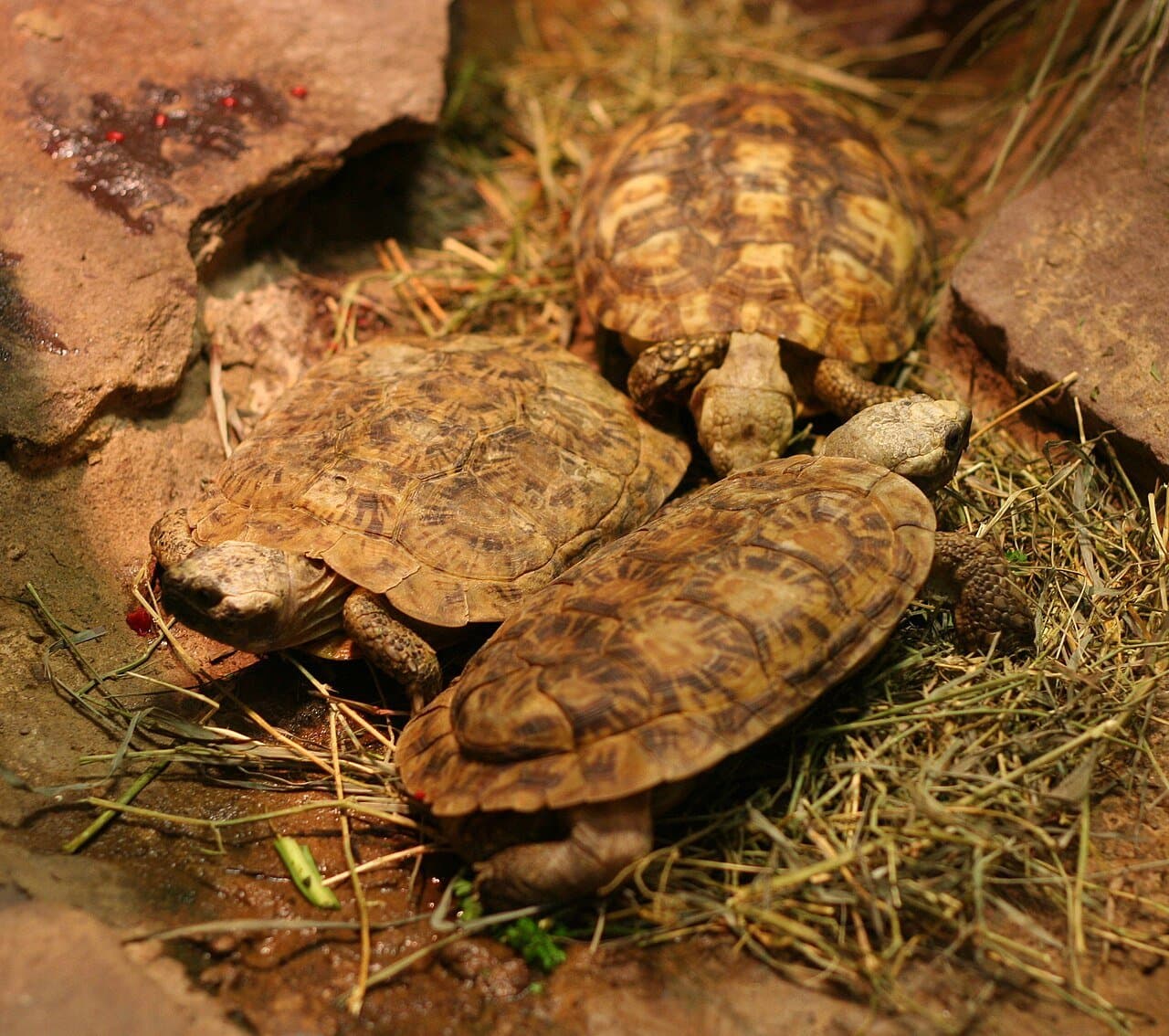 Pancake TortoiseMalacochersus tornieriA critically endangered East African tortoise with a thin, flat, flexible shell that hides in rock cracks instead of in its shell.
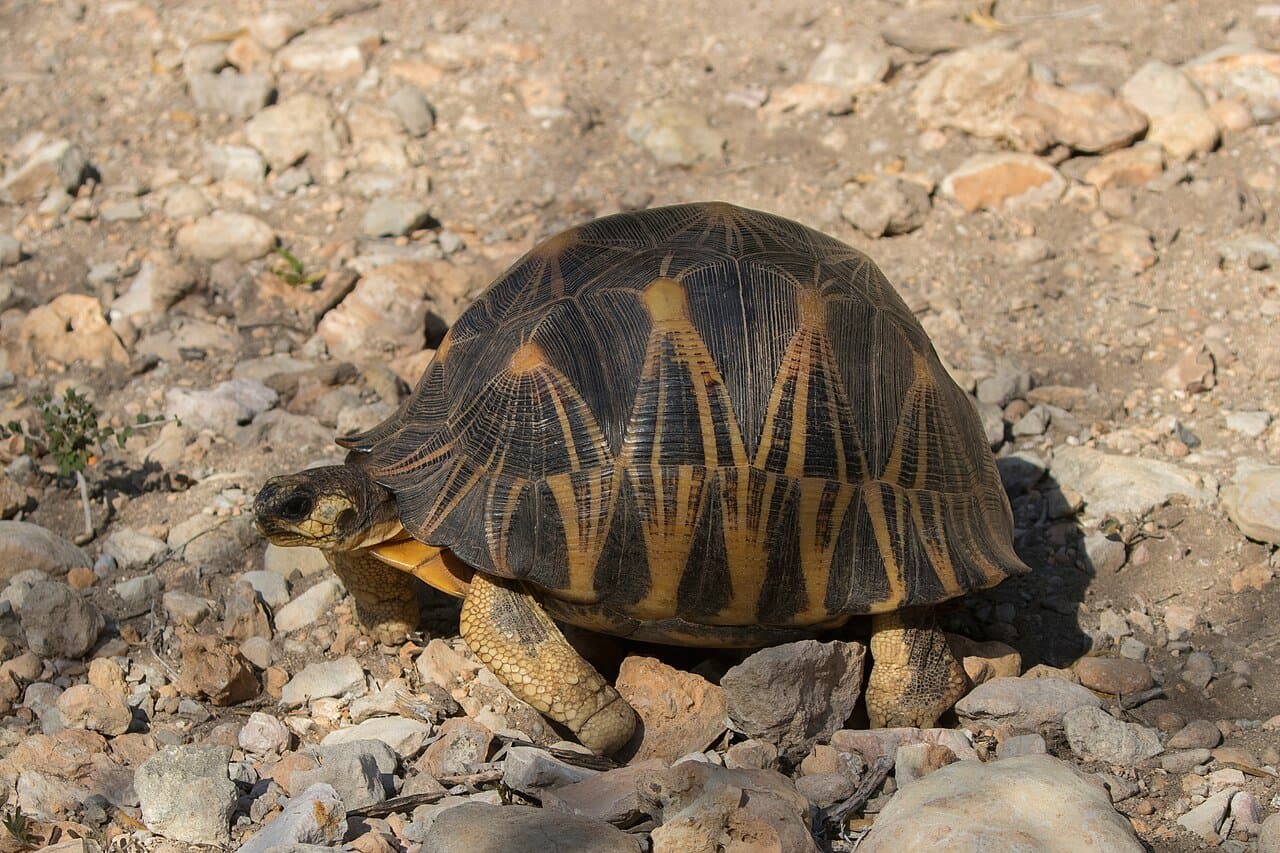 Radiated TortoiseAstrochelys radiataA critically endangered Madagascar tortoise named for the yellow star-like lines on its high, domed shell.