
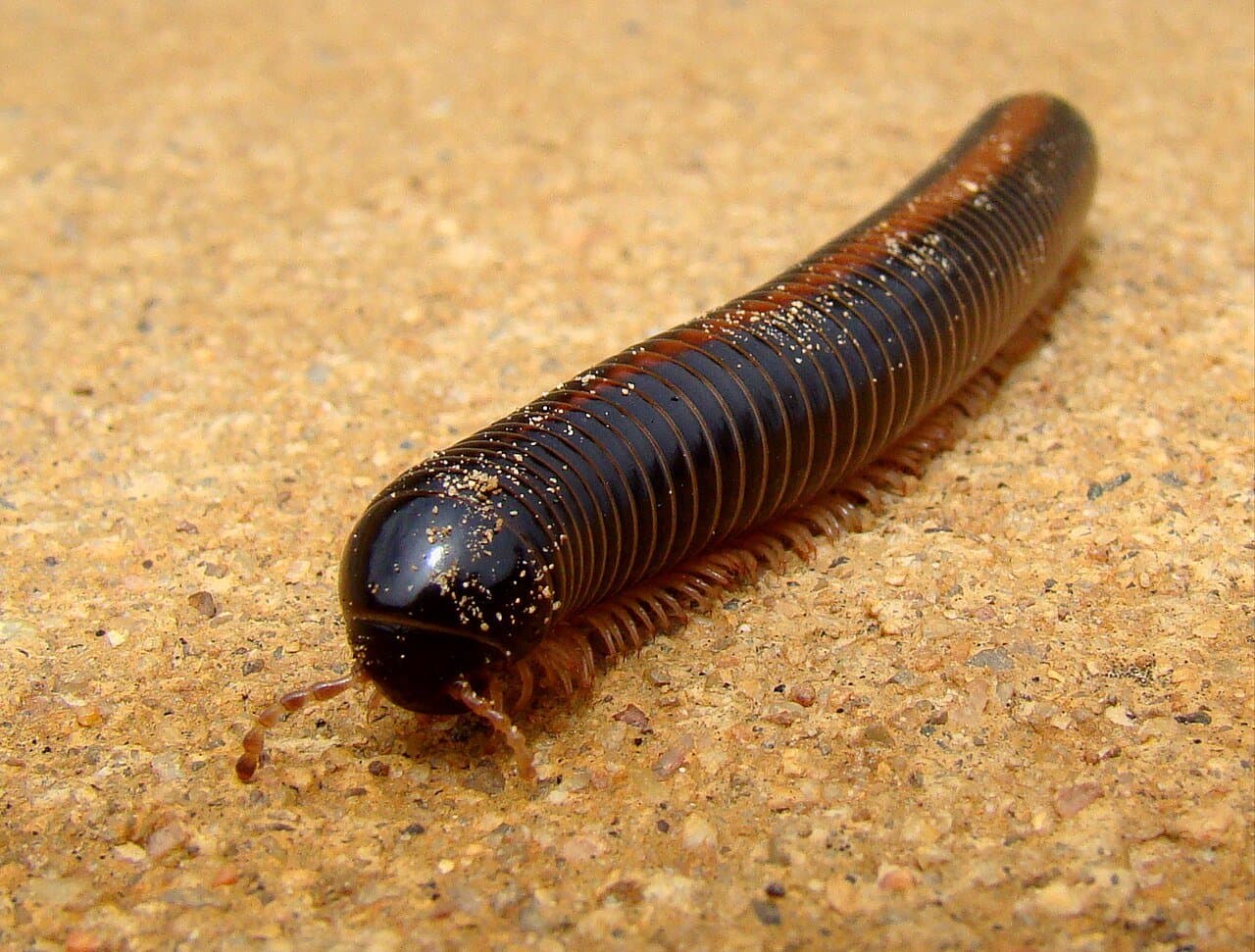
Giant African Millipede
Archispirostreptus gigas
The largest millipede on Earth, a foot-long East African forest recycler that curls into a spiral when threatened.
Checking teacher reviews…
About the Giant African Millipede
Giant African millipedes can reach 13 inches long and have 100 to 300 legs, about four legs on each body segment. They live on the forest floor in lowland East Africa, from Kenya to Mozambique, burrowing in leaf litter and loose soil. They are detritivores that eat rotting logs, leaves and other plant matter, filling the role earthworms play elsewhere.[1]
Quick facts
- Scientific name
- Archispirostreptus gigas[2]
- Size
- Up to 13 inches long.[1]
- Lifespan
- 5 to 7 years in the wild; 7 to 10 in human care.[1]
- Diet
- Detritivore. Rotting logs, leaf litter and plants.[1]
- Habitat
- Forest floor, leaf litter and loose soil.[1]
- Where it lives
- Lowland East Africa, from Kenya to Mozambique.[1]
- Group life
- Nocturnal.[1]
- Babies
- A few hundred eggs, up to 2,000.[1]
- Conservation status
- Least Concern (IUCN Red List, assessed 2017).[2]
Fun facts
Vocabulary
- millipede
- A long arthropod with two pairs of legs on most body segments.
- detritivore
- An animal that eats dead plants and other decaying matter.
- segment
- One of the repeating sections of a body.
- molt
- To shed an old outer covering, like skin or feathers, and grow a new one.
- least concern
- A conservation label meaning a species is widespread and not at risk of dying out soon.
See it in person
- Oakland ZooOakland, California · Children's ZooSee this animal on the zoo's website ↗
These zoos had this animal when we gathered our information, but animals sometimes move. Check the zoo's website or contact the zoo before you visit.
Sources
- [1] Oakland Zoo. “Giant African Millipede.” https://www.oaklandzoo.org/animals/giant-african-millipede/ (accessed 2026-10-02)
- [2] IUCN Red List of Threatened Species. “Archispirostreptus gigas.” https://www.iucnredlist.org/species/103866629/103877116 (accessed 2026-10-02)
Facts last checked 2026-10-02.