Giant Panda
Ailuropoda melanoleuca
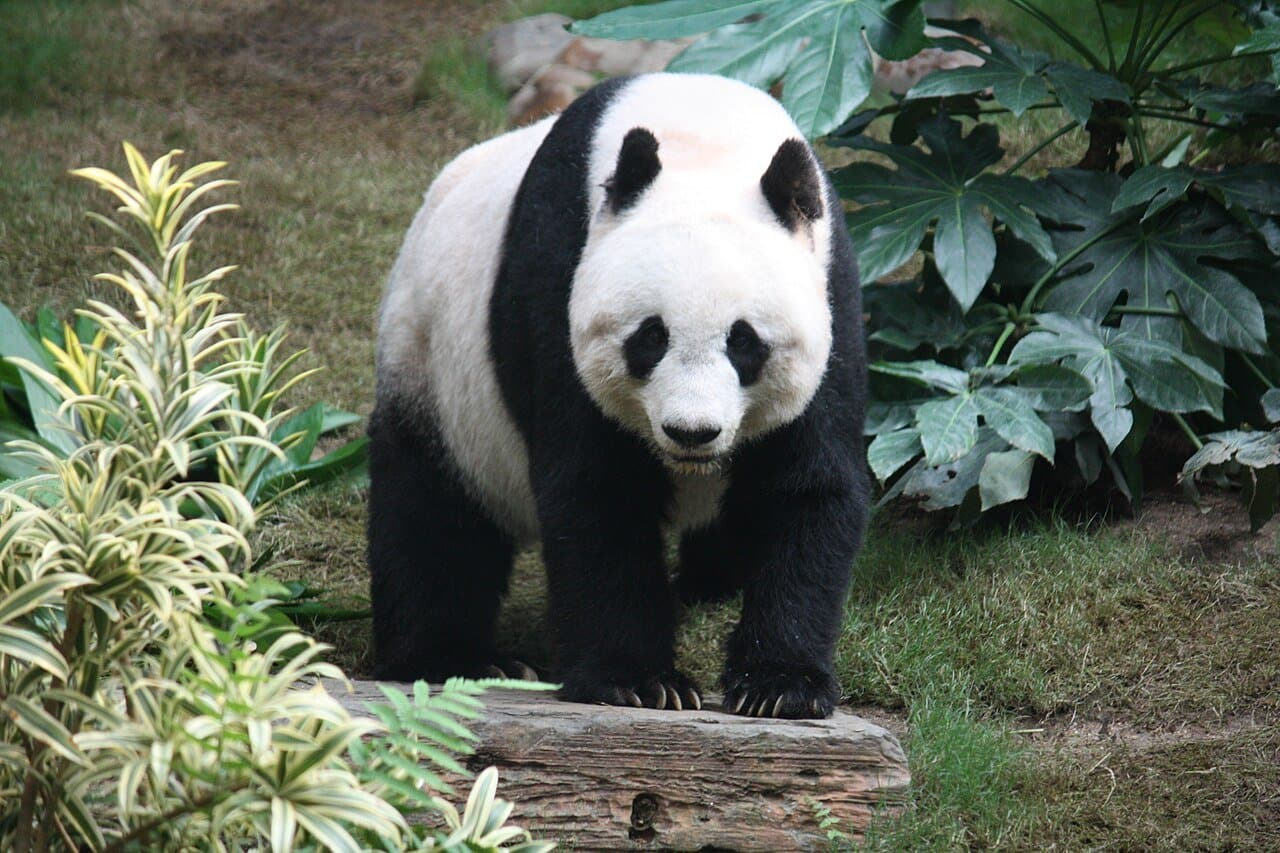
A black-and-white bear of the mountain bamboo forests of southwestern China that eats almost nothing but bamboo.
Checking teacher reviews…
About the Giant Panda
Giant pandas live in six mountain areas of southwestern China, in cool, wet bamboo forests 5,000 to 10,000 feet high. Even though they are bears, they eat almost only bamboo. Their powerful jaws crunch through woody stems, and an extra wrist bone works like a thumb to grip the stalks. Bamboo isn't very nutritious and pandas can't digest it well, so they eat huge amounts and sleep a lot.[1]
Quick facts
- Scientific name
- Ailuropoda melanoleuca[1]
- Weight
- Adult females average about 230 pounds. Males can reach 350 pounds.[1]
- Diet
- Herbivore. Almost entirely bamboo.[1]
- Habitat
- Cool, wet bamboo forests 5,000 to 10,000 feet above sea level.[1]
- Where it lives
- Six mountain areas of southwestern China, in Sichuan, Gansu and Shaanxi provinces.[1]
- Group life
- Adults live alone.[1]
- Babies
- Twins are common, but a mother usually raises only one cub. Cubs are born blind, deaf and nearly hairless.[1]
- Conservation status
- Vulnerable (IUCN Red List, assessed 2016).[2]
Fun facts
Vocabulary
- bamboo
- A tall, fast-growing grass with hard, woody stems.
- herbivore
- An animal that eats only plants.
- digest
- To break down food in the body so it can be used.
- scent-mark
- To leave a smell that sends a message to other animals.
- vulnerable
- A conservation label meaning a species faces a high risk of dying out in the wild.
See it in person
- Zoo AtlantaAtlanta, Georgia · All AnimalsSee this animal on the zoo's website ↗
Sources
- [1] Zoo Atlanta. “Giant Panda.” https://zooatlanta.org/animal/giant-panda/ (accessed 2026-10-02)
- [2] IUCN Red List of Threatened Species. “Ailuropoda melanoleuca (Giant Panda).” https://www.iucnredlist.org/species/712/121745669 (accessed 2026-10-02)
Facts last checked 2026-10-02.