
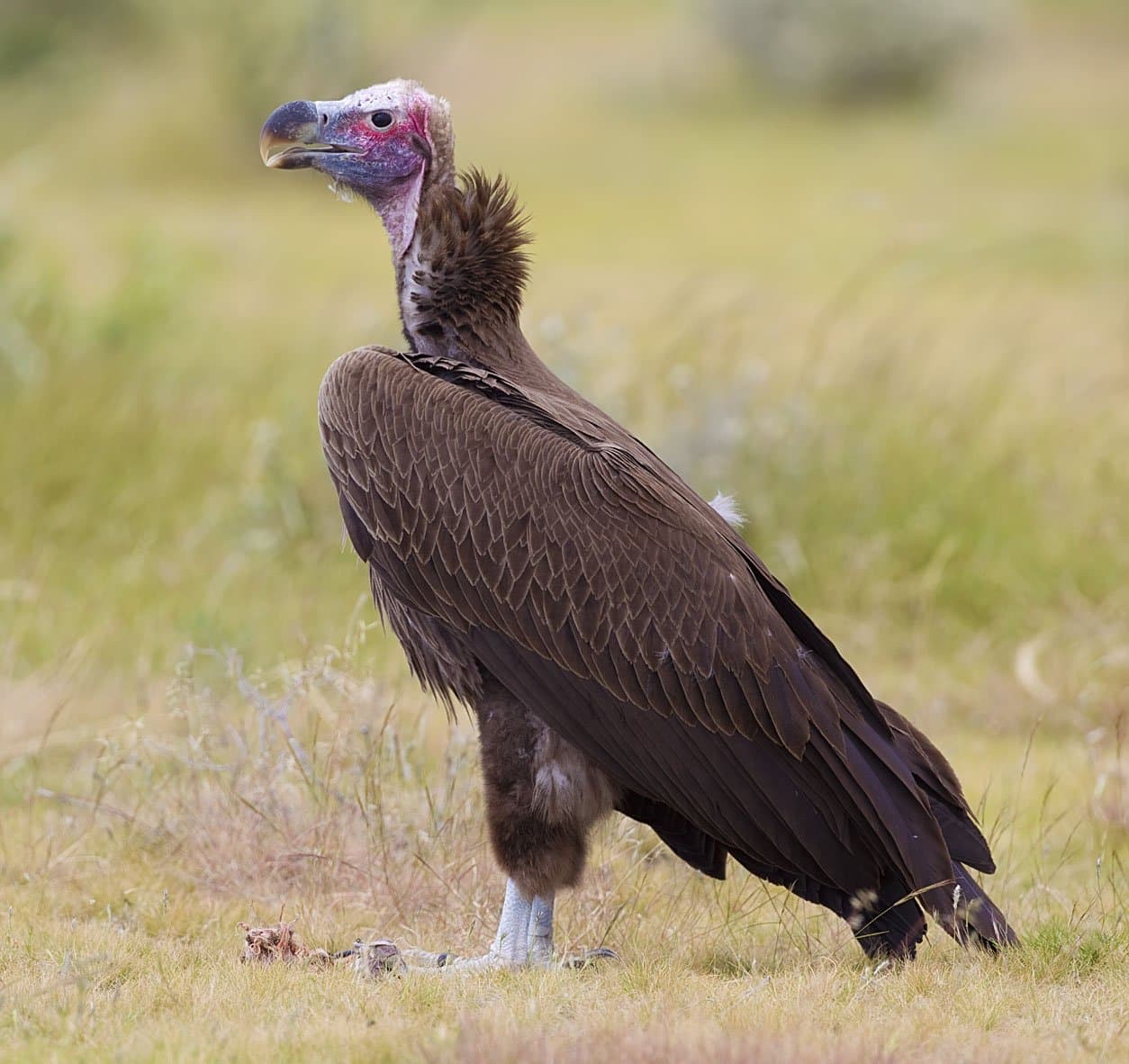
Lappet-Faced Vulture
Torgos tracheliotos
Africa's largest vulture, an endangered scavenger whose strong beak opens carcasses for other vultures.
Checking teacher reviews…
About the Lappet-Faced Vulture
Lappet-faced vultures live in deserts and dry grasslands of sub-Saharan Africa and the Arabian Peninsula. They are the largest vultures in Africa. At a carcass they often arrive first and use their strong beaks to break through tough hide. Vultures find food by smell and by watching for other vultures circling overhead.[1]
Quick facts
- Scientific name
- Torgos tracheliotos[1]
- Lifespan
- Up to 50 years.[1]
- Diet
- Scavenger. Carcasses, plus sometimes small animals or eggs.[1]
- Habitat
- Deserts, dry grasslands and sparsely wooded grasslands.[1]
- Where it lives
- Sub-Saharan Africa and the Arabian Peninsula.[1]
- Group life
- Pairs stay together for several years.[1]
- Babies
- One egg in a loose stick nest on a cliff or tree.[1]
- Conservation status
- Endangered (IUCN Red List, assessed 2016).[2]
Fun facts
Vocabulary
- scavenger
- An animal that feeds on dead animals or leftover food.
- bask
- To lie or perch in the sun to warm up.
- thermal
- A rising column of warm air that birds use to gain height.
- metabolism
- How fast the body uses energy.
- endangered
- A conservation label meaning a species faces a very high risk of dying out in the wild.
See it in person
- Zoo AtlantaAtlanta, Georgia · All AnimalsSee this animal on the zoo's website ↗
Sources
- [1] Zoo Atlanta. “Lappet-faced Vulture.” https://zooatlanta.org/animal/lappet-faced-vulture/ (accessed 2026-10-02)
- [2] IUCN Red List of Threatened Species. “Torgos tracheliotos (Lappet-faced Vulture).” https://www.iucnredlist.org/species/22695238/155542069 (accessed 2026-10-02)
Facts last checked 2026-10-02.
More Birds of Prey
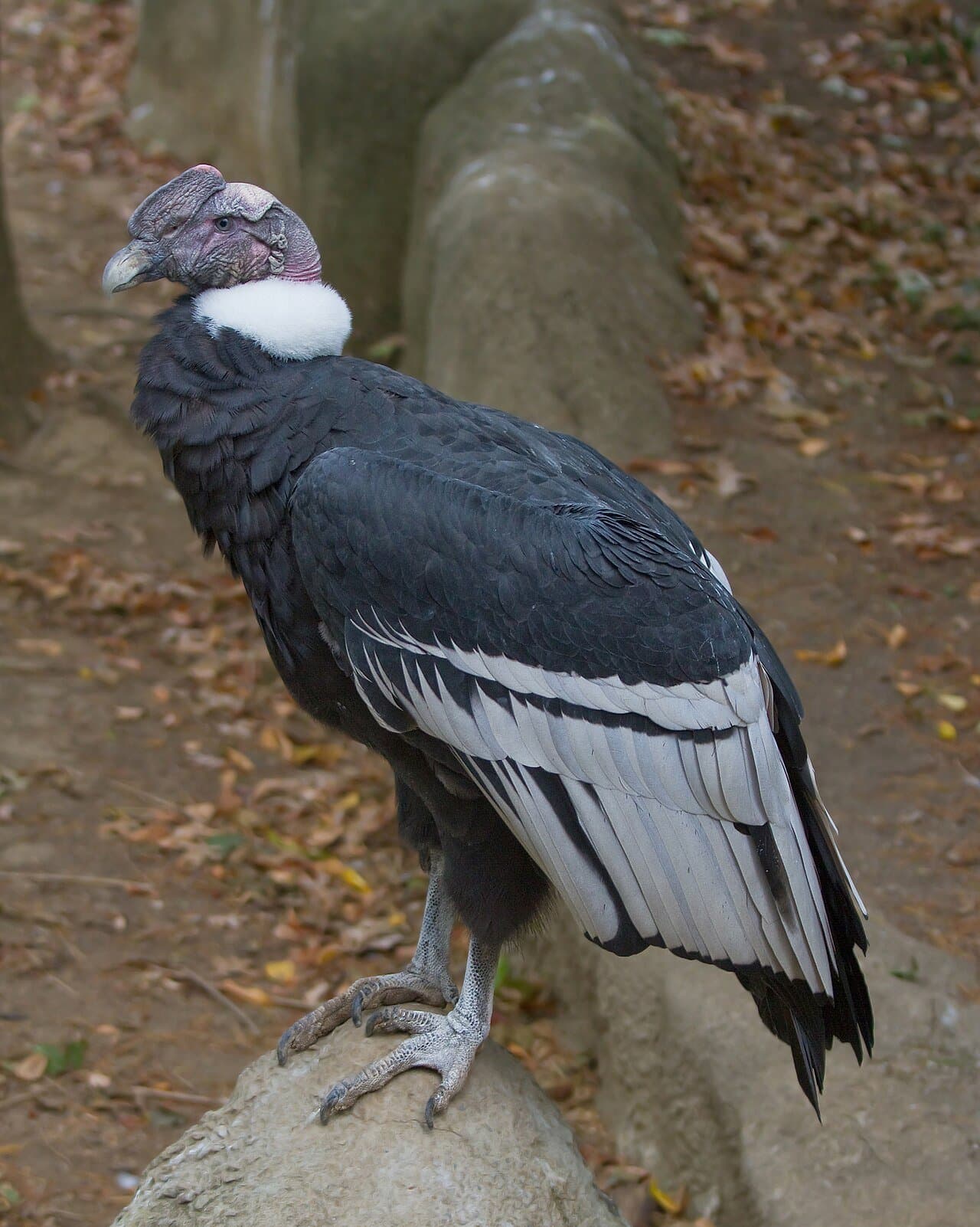 Andean CondorVultur gryphusA huge vulture of the Andes Mountains with a wingspan of about 3.2 meters, the longest of any land bird.
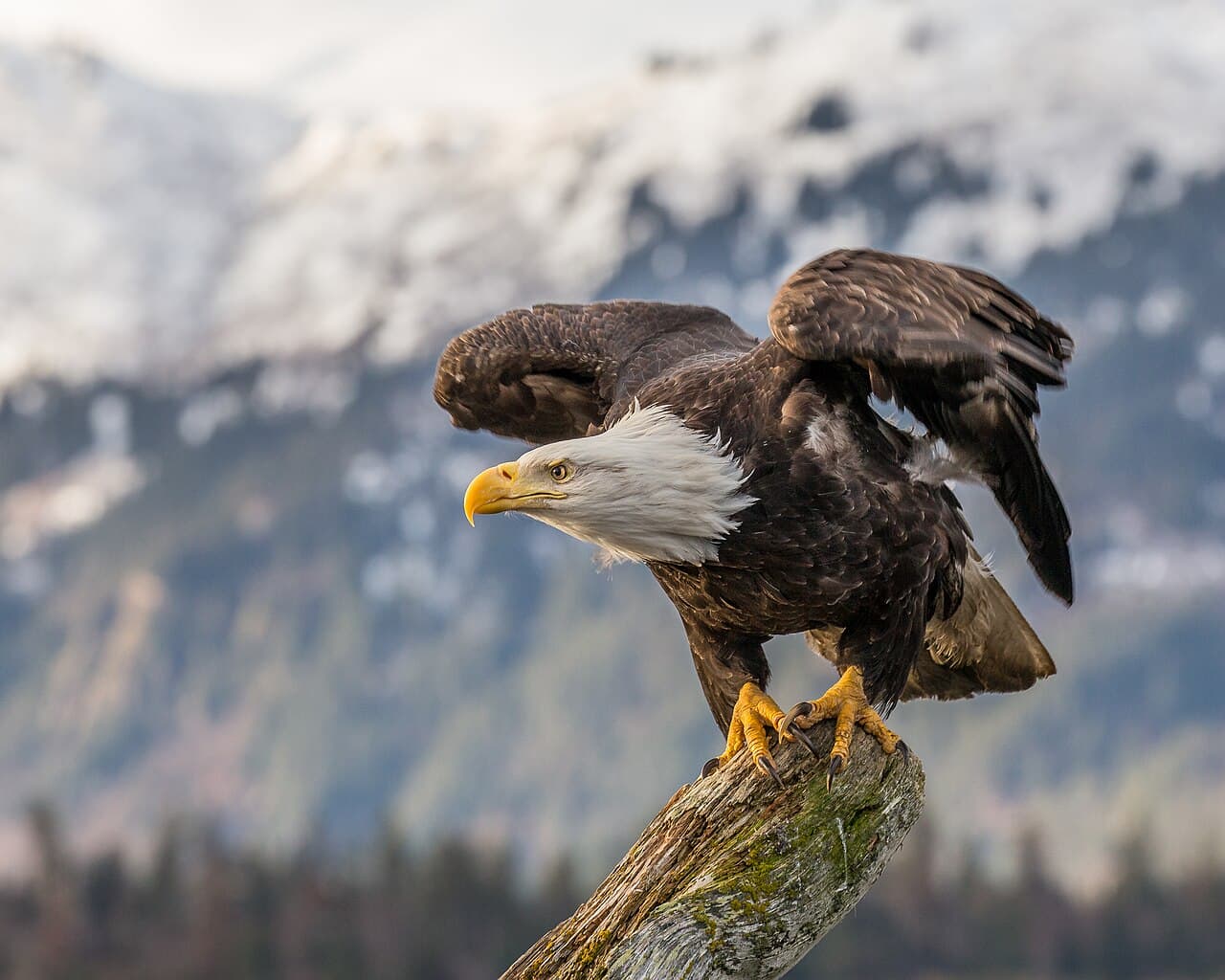 Bald EagleHaliaeetus leucocephalusThe national bird of the United States, a fish-eating eagle that came back from the edge of extinction.
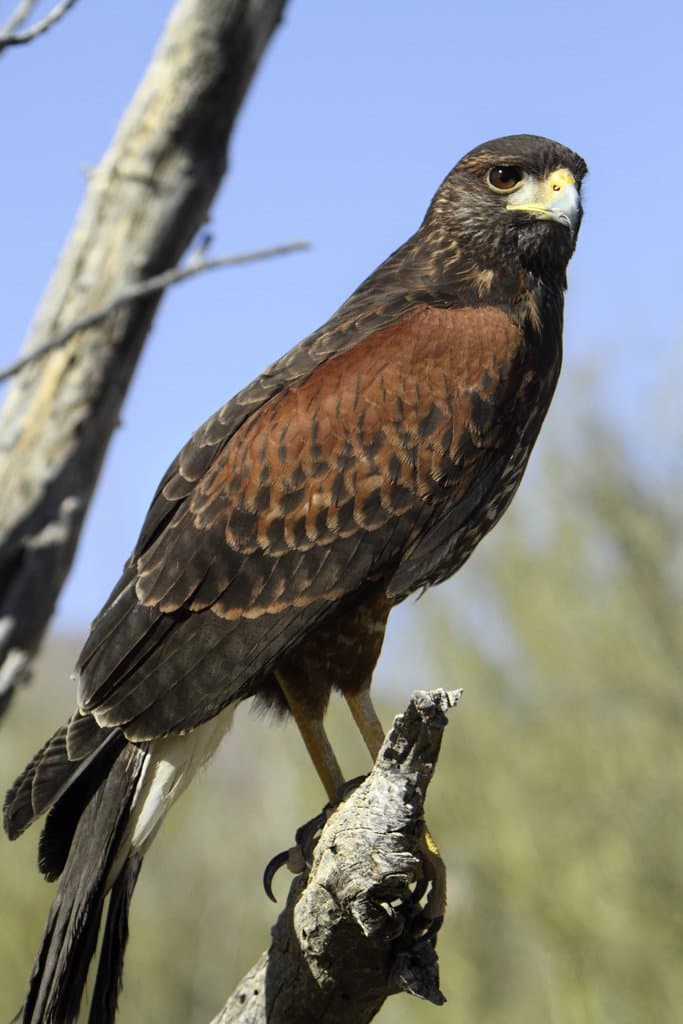 Harris's HawkParabuteo unicinctusA dark brown hawk of the Americas' dry lands, nicknamed the "wolf of the sky" because family groups hunt together.
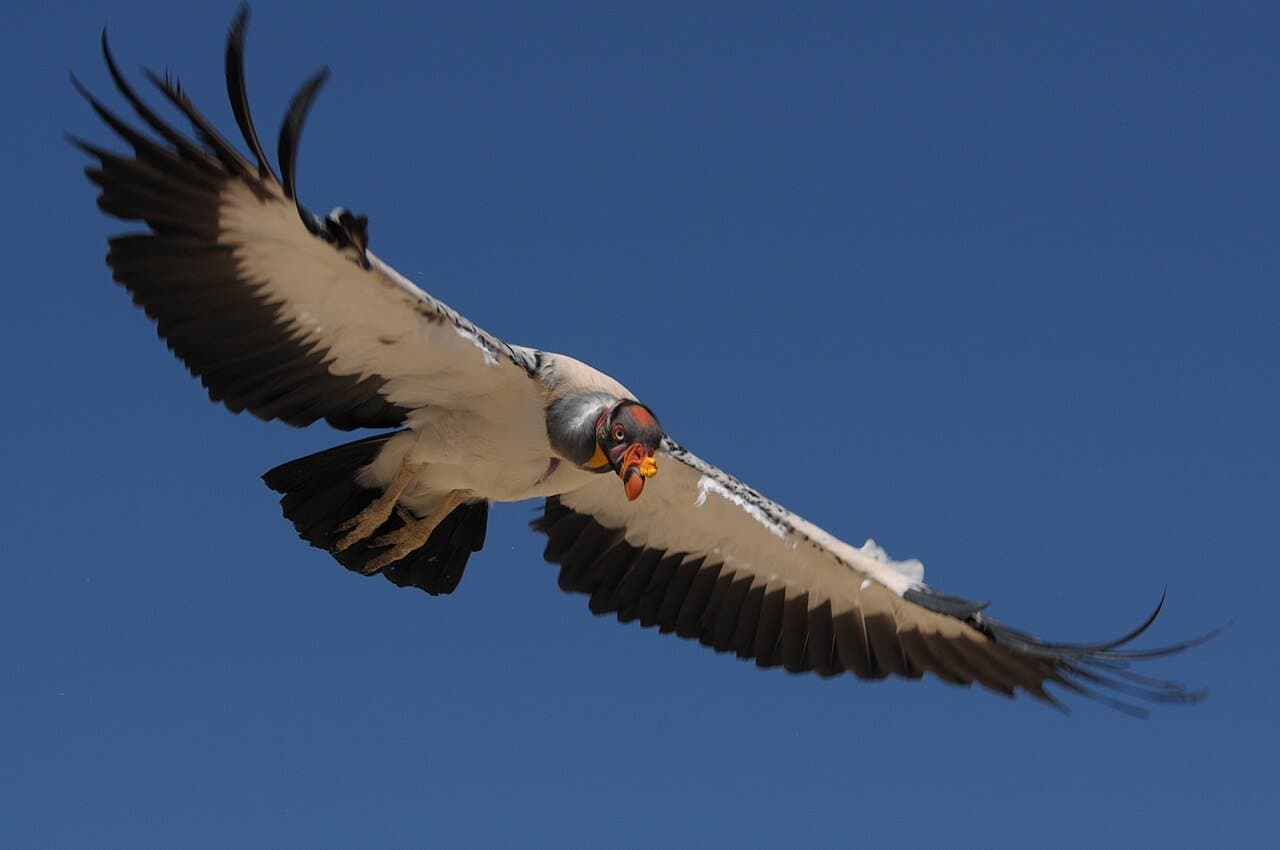 King VultureSarcoramphus papaA large black-and-white vulture of tropical forests from Mexico to Argentina with a brightly colored head.
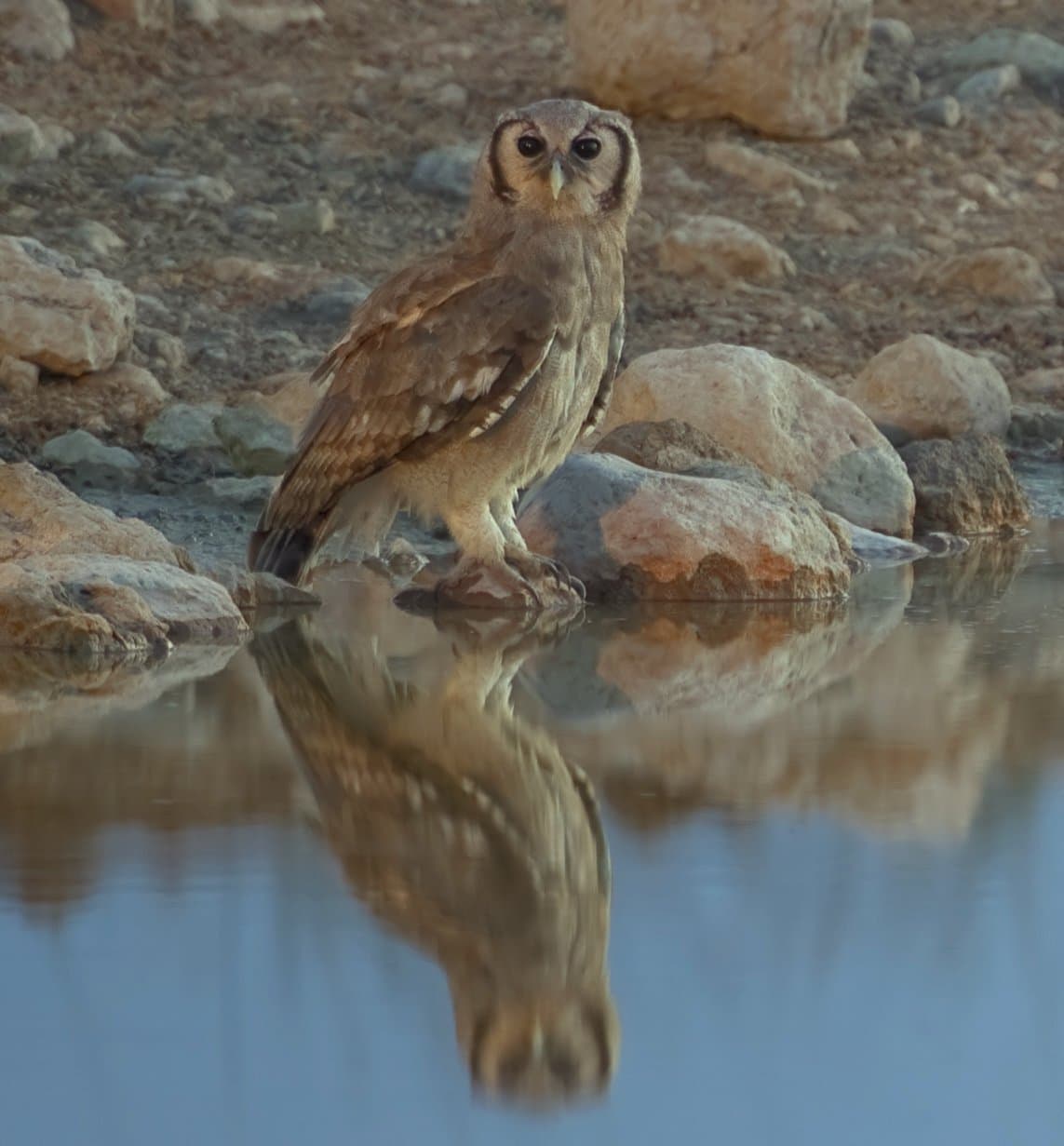 Milky Eagle OwlBubo lacteusOne of the world's larger owls, also called Verreaux's eagle-owl, with bare pink eyelids that show when it blinks.