
Lar Gibbon
Hylobates lar
A white-handed Southeast Asian ape that swings through the treetops and sings loud duets with its mate.
Checking teacher reviews…
About the Lar Gibbon
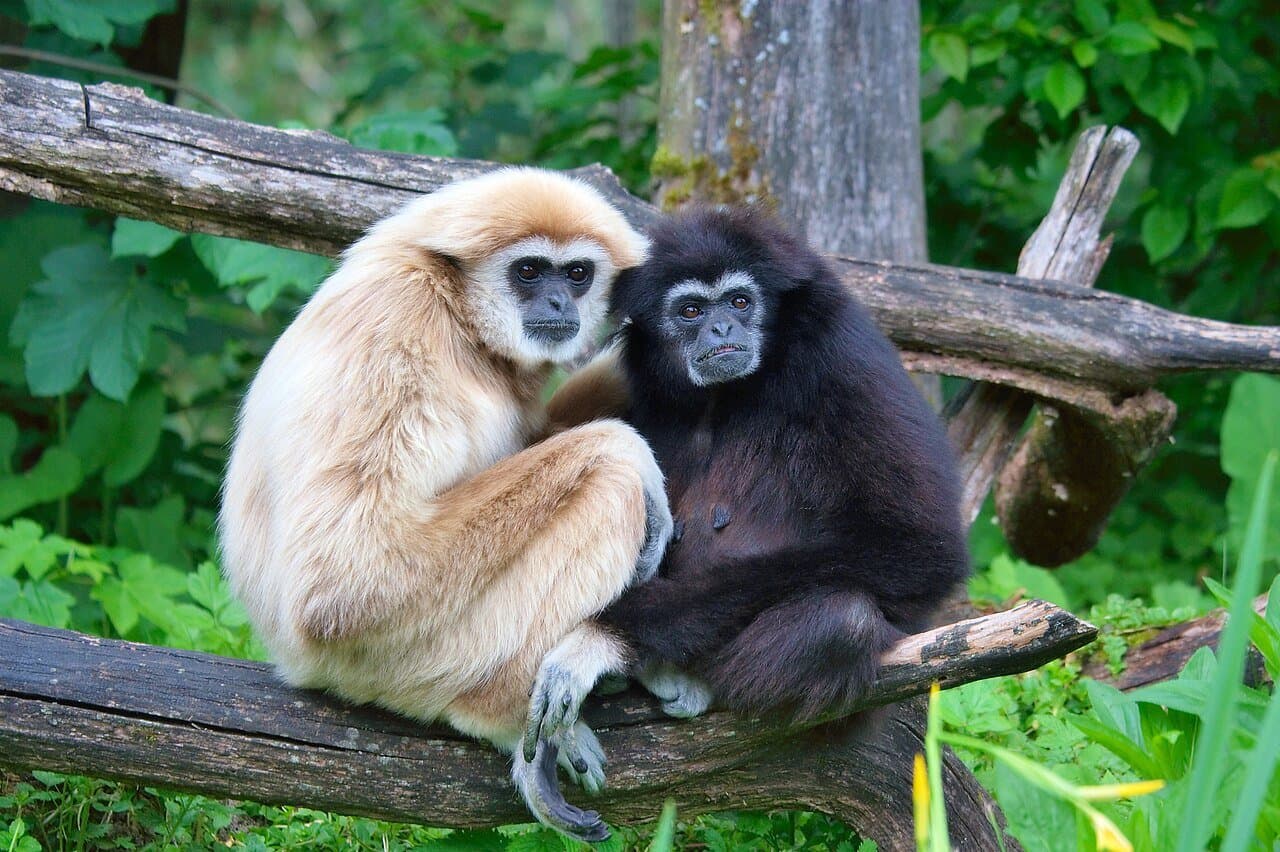
Lar gibbons, also called white-handed gibbons, are lesser apes that weigh 9 to 15 pounds and have no tail. They come in two colors, blonde or dark brown to black. They live high in forests from Myanmar through Thailand to Malaysia and rarely come down. They eat mostly fruit, plus leaves, flowers, insects and eggs. They are picky eaters and taste fruit before deciding to eat it.[1]
Quick facts
- Scientific name
- Hylobates lar[1]
- Weight
- 9 to 15 pounds.[1]
- Lifespan
- About 30 years in the wild; up to 44 in human care.[1]
- Diet
- Mostly fruit, plus leaves, flowers, insects and eggs.[1]
- Habitat
- Dense forests, including bamboo, evergreen and peat swamp forests.[1]
- Where it lives
- Myanmar, Thailand and Malaysia.[1]
- Group life
- Family groups of 2 to 6. Active during the day.[1]
- Babies
- One baby about every 3.5 years.[1]
- Conservation status
- Endangered (IUCN Red List, assessed 2015).[2]
Fun facts
Vocabulary
- brachiate
- To swing from branch to branch using the arms.
- lesser ape
- A gibbon; smaller apes than gorillas, chimpanzees and orangutans.
- duet
- A song performed by two together.
- seed dispersal
- How seeds get carried to new places, like when an animal eats fruit and drops the seeds.
- endangered
- A conservation label meaning a species faces a very high risk of dying out in the wild.
See it in person
- Oakland ZooOakland, California · Tropical RainforestSee this animal on the zoo's website ↗
These zoos had this animal when we gathered our information, but animals sometimes move. Check the zoo's website or contact the zoo before you visit.
Sources
- [1] Oakland Zoo. “White-handed (Lar) Gibbon.” https://www.oaklandzoo.org/animals/white-handed-lar-gibbon/ (accessed 2026-10-02)
- [2] IUCN Red List of Threatened Species. “Hylobates lar (Lar Gibbon).” https://www.iucnredlist.org/species/10548/17967253 (accessed 2026-10-02)
Facts last checked 2026-10-02.
