Patagonian Mara
Dolichotis patagonum
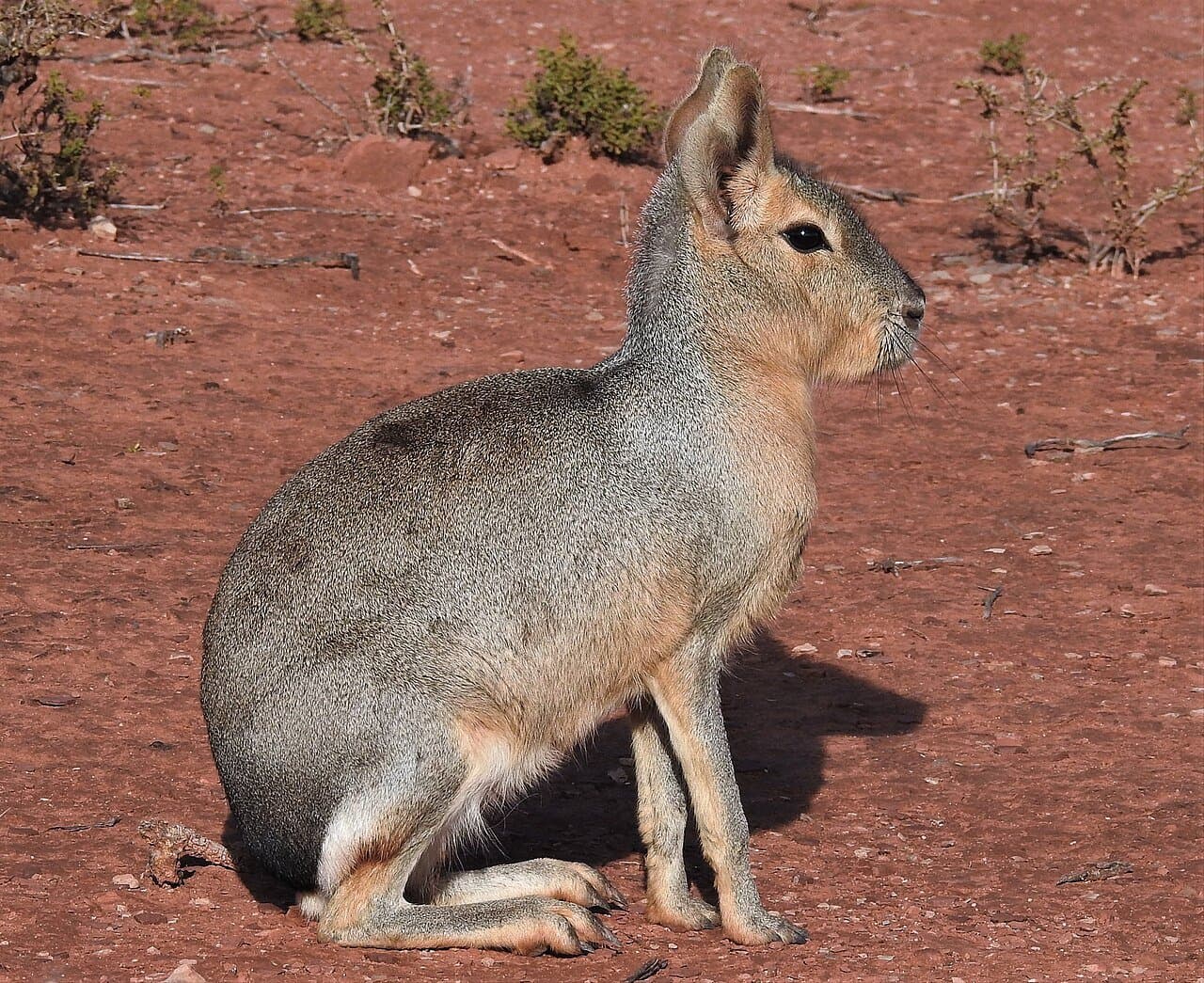
A long-legged Argentine rodent that looks like a cross between a hare and a small deer and can run 35 miles per hour.
Checking teacher reviews…
About the Patagonian Mara
Patagonian maras live in grasslands, shrublands and other dry, open areas of Argentina. They look a bit like hares but are rodents whose closest relatives are guinea pigs and capybaras. Their long legs let them run up to 35 miles per hour, and their big ears help them hear predators and stay cool. They spend more than a third of the day grazing, and their teeth keep growing their whole lives.[1]
Quick facts
- Scientific name
- Dolichotis patagonum[1]
- Weight
- 16 to 20 pounds. Males are slightly larger.[1]
- Diet
- Herbivore. Grasses and shrub leaves, sometimes fruit.[1]
- Habitat
- Grasslands, shrublands and other dry, open lowlands.[1]
- Where it lives
- Central and southern Argentina, including Patagonia.[1]
- Group life
- Pairs mate for life. Pups share communal burrows.[1]
- Babies
- Usually two pups, which stay in the burrow for about six weeks.[1]
- Conservation status
- Near Threatened (IUCN Red List, assessed 2016).[2]
Fun facts
Vocabulary
- rodent
- A mammal with front teeth that keep growing, such as mice, beavers and capybaras.
- stot
- To jump straight up with all four legs at once, often to warn of danger.
- communal
- Shared by a group.
- monogamous
- Having only one mate.
- near threatened
- A conservation label meaning a species may become threatened soon.
See it in person
- Zoo AtlantaAtlanta, Georgia · All AnimalsSee this animal on the zoo's website ↗
Sources
- [1] Zoo Atlanta. “Patagonian Mara.” https://zooatlanta.org/animal/patagonian-mara/ (accessed 2026-10-02)
- [2] IUCN Red List of Threatened Species. “Dolichotis patagonum (Patagonian Mara).” https://www.iucnredlist.org/species/6785/22190337 (accessed 2026-10-02)
Facts last checked 2026-10-02.