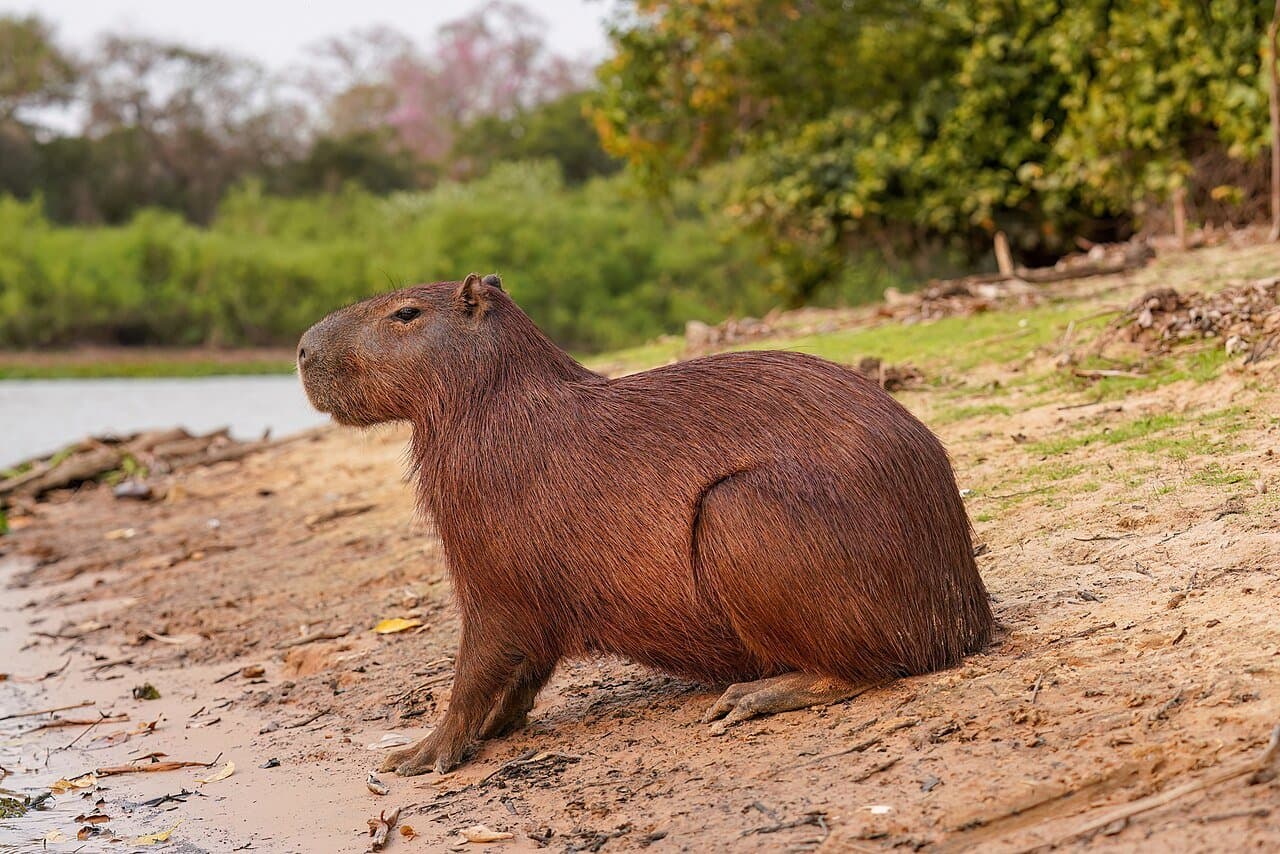
Capybara
Hydrochoerus hydrochaeris
The world's largest rodent, a grass-eating swimmer of South American riverbanks that lives in groups.
Checking teacher reviews…
About the Capybara
Capybaras live east of the Andes in Central and South America, on riverbanks, beside ponds and in marshes. An adult eats 6 to 8 pounds of grass a day. Capybaras have webbed feet and can stay underwater for up to five minutes. Their eyes, ears and nostrils are all near the top of the head.[1]
Quick facts
- Scientific name
- Hydrochoerus hydrochaeris[2]
- Size
- 3.2 to 4.2 feet (100 to 130 cm) long and about 1.6 feet (50 cm) tall at the shoulder.[1]
- Weight
- 60 to 174 pounds (27 to 79 kg).[1]
- Lifespan
- Up to 10 years in the wild. Up to 12 years in human care.[1]
- Diet
- Herbivore. Grasses: 6 to 8 pounds a day.[1]
- Habitat
- Riverbanks, ponds and marshes.[1]
- Where it lives
- Central and South America, east of the Andes.[1]
- Group life
- Groups of about 10, up to 40 in the wet season.[1]
- Babies
- Pregnancy lasts 5 to 6 months. Up to 8 pups, usually about 5.[1]
- Conservation status
- Least Concern (IUCN Red List, assessed 2016).[2]
Fun facts
Vocabulary
- rodent
- A mammal with front teeth that keep growing, such as mice, beavers and capybaras.
- webbed feet
- Feet with skin between the toes that helps with swimming.
- bacteria
- Tiny living things; some help animals digest food.
- marsh
- Low, wet land covered with grasses and reeds.
- herbivore
- An animal that eats only plants.
See it in person
- Montgomery ZooMontgomery, Alabama · South AmericaSee this area on the zoo's website ↗
Sources
- [1] San Diego Zoo Wildlife Alliance. “Capybara.” https://animals.sandiegozoo.org/animals/capybara (accessed 2026-10-02)
- [2] IUCN Red List of Threatened Species. “Hydrochoerus hydrochaeris (Capybara).” https://www.iucnredlist.org/species/10300/22190005 (accessed 2026-10-02)
Facts last checked 2026-10-02.