
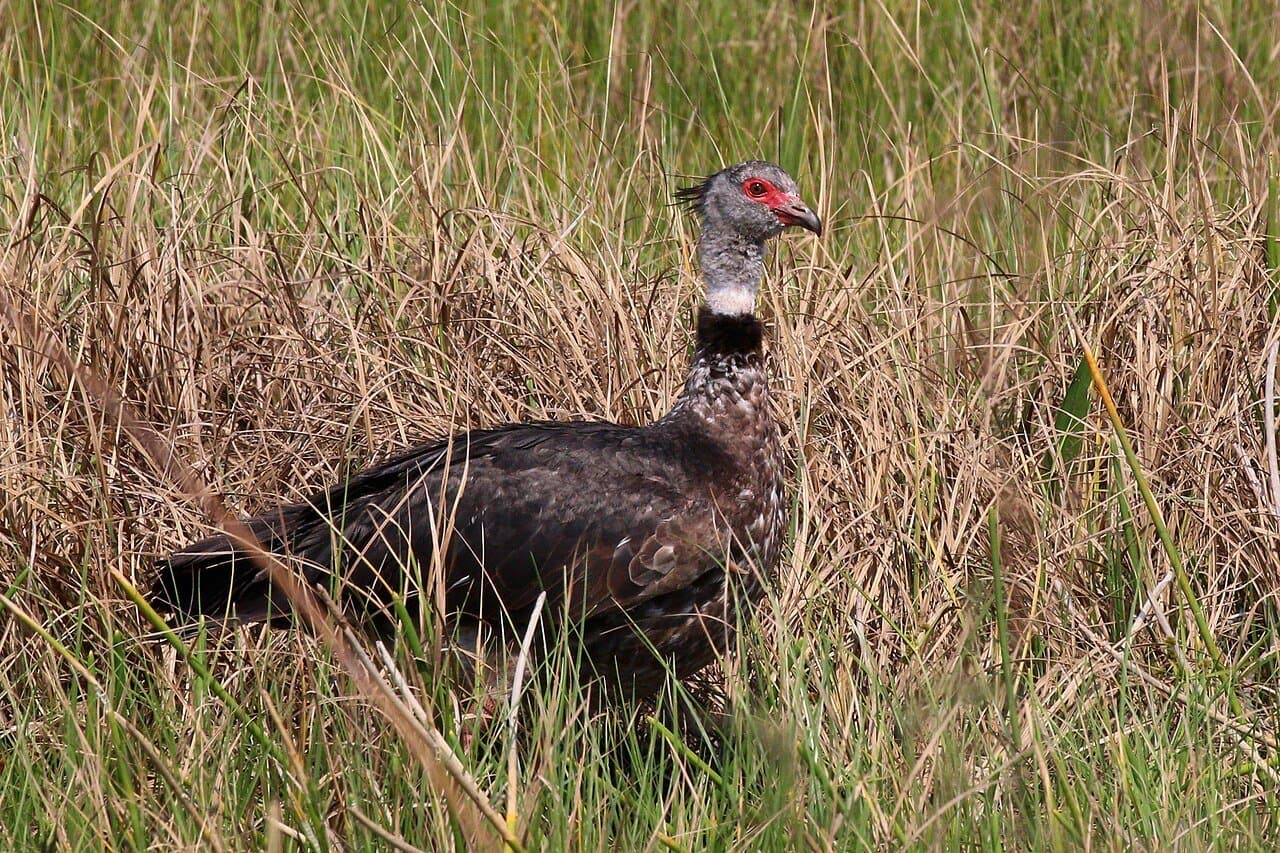
Southern Screamer
Chauna torquata
A South American wetland bird, also called the crested screamer, whose call carries up to 3 km and whose wings have sharp spurs.
Checking teacher reviews…
About the Southern Screamer
Southern screamers live in marshy wetlands of southeastern South America, including Paraguay, Bolivia, northern Argentina, Uruguay and southeastern Peru. They mostly eat grass and water plants, and they graze in groups of up to 100. Their call is so loud it can be heard up to 3 km (about 2 miles) away.[1]
Quick facts
- Scientific name
- Chauna torquata[1]
- Diet
- Mostly grass and water plants, rarely insects or small animals.[1]
- Habitat
- Marshes and wetlands.[1]
- Where it lives
- Southeastern South America: Paraguay, Bolivia, northern Argentina, Uruguay and southeastern Peru.[1]
- Group life
- Grazes in groups of up to 100. Pairs form long-lasting bonds.[1]
- Babies
- 2 to 7 white eggs, incubated for 43 to 46 days. Chicks are independent at about 13 weeks.[1]
- Conservation status
- Least Concern (IUCN Red List, assessed 2024).[2]
Fun facts
Vocabulary
- spur
- A sharp, bony point that sticks out from a bird's wing or leg.
- air sac
- A small pocket of air inside a bird's body.
- graze
- To feed on grass or other low plants.
- wetland
- Land that is covered by shallow water some or all of the year, like a marsh or swamp.
- predator
- An animal that hunts other animals for food.
See it in person
- Montgomery ZooMontgomery, Alabama · South AmericaSee this area on the zoo's website ↗
Sources
- [1] Animal Diversity Web, University of Michigan Museum of Zoology. “Chauna torquata (southern screamer).” https://animaldiversity.org/accounts/Chauna_torquata/ (accessed 2026-10-02)
- [2] IUCN Red List of Threatened Species. “Chauna torquata (Southern Screamer).” https://www.iucnredlist.org/species/22679729/264995009 (accessed 2026-10-02)
Facts last checked 2026-10-02.
More Waterfowl
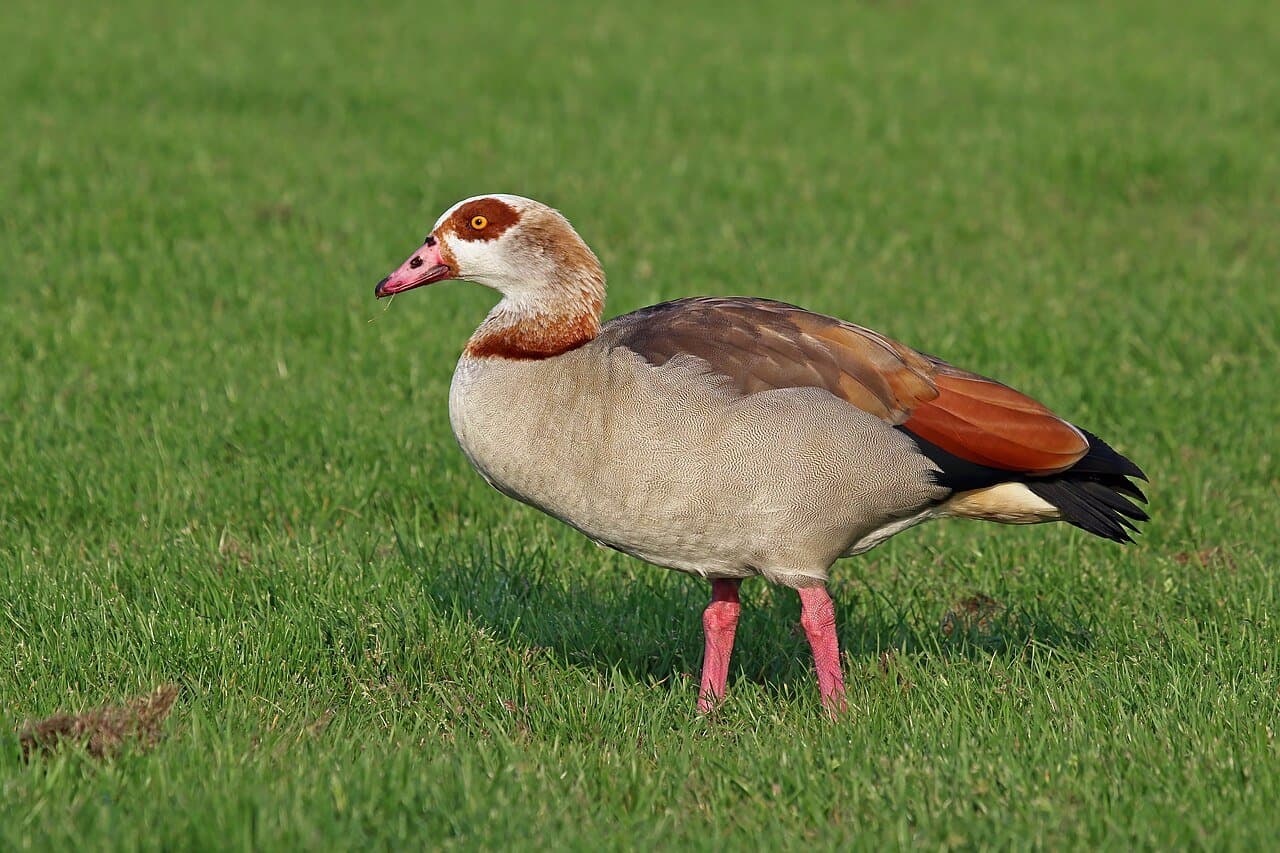 Egyptian GooseAlopochen aegyptiacaA brown African waterbird with dark eye patches that grazes near rivers and lakes and has spread to parts of Europe.
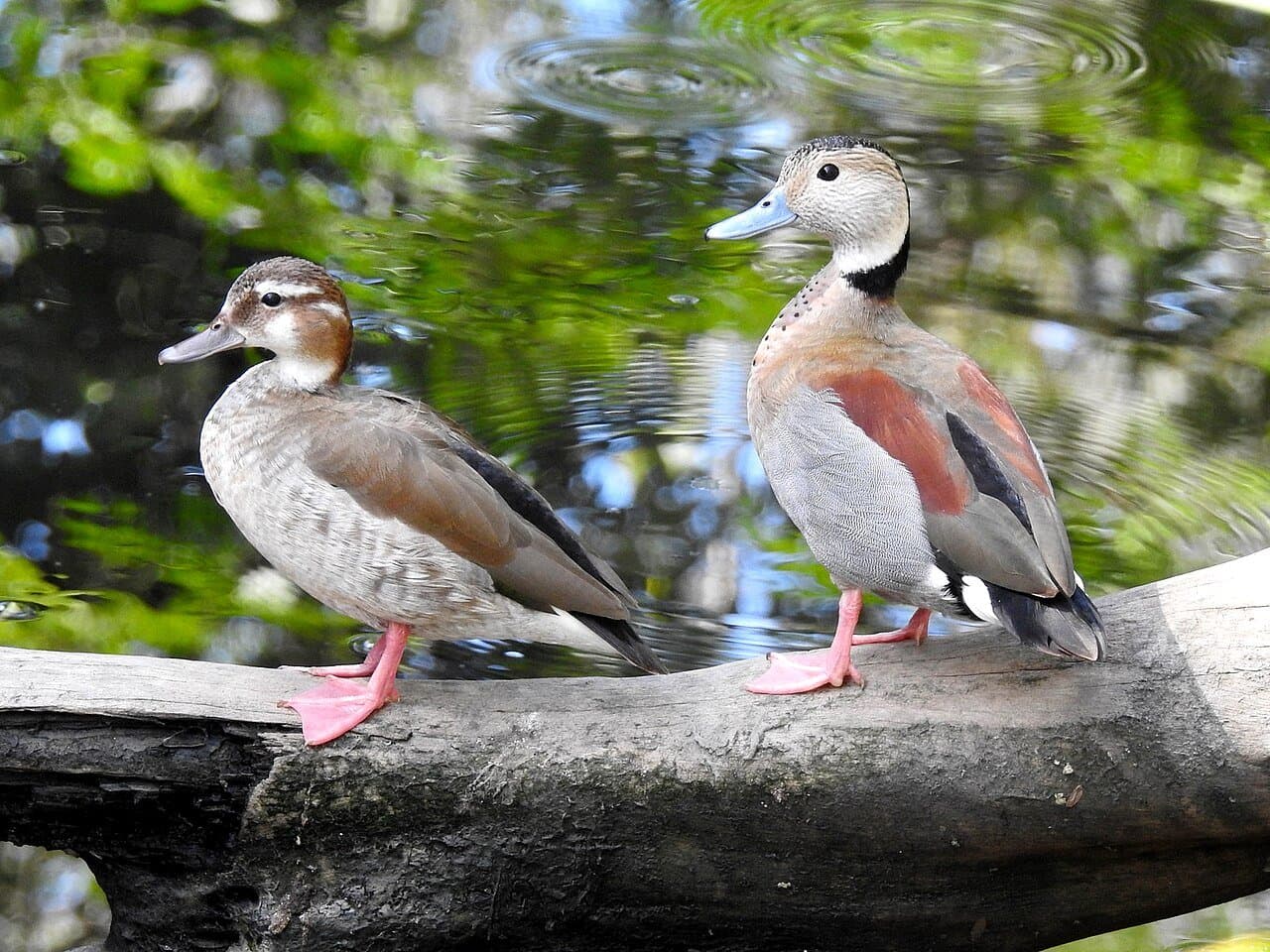 Ringed TealCallonetta leucophrysOne of the world's smallest ducks, a tree-perching duck of South American wetlands that nests in tree holes.
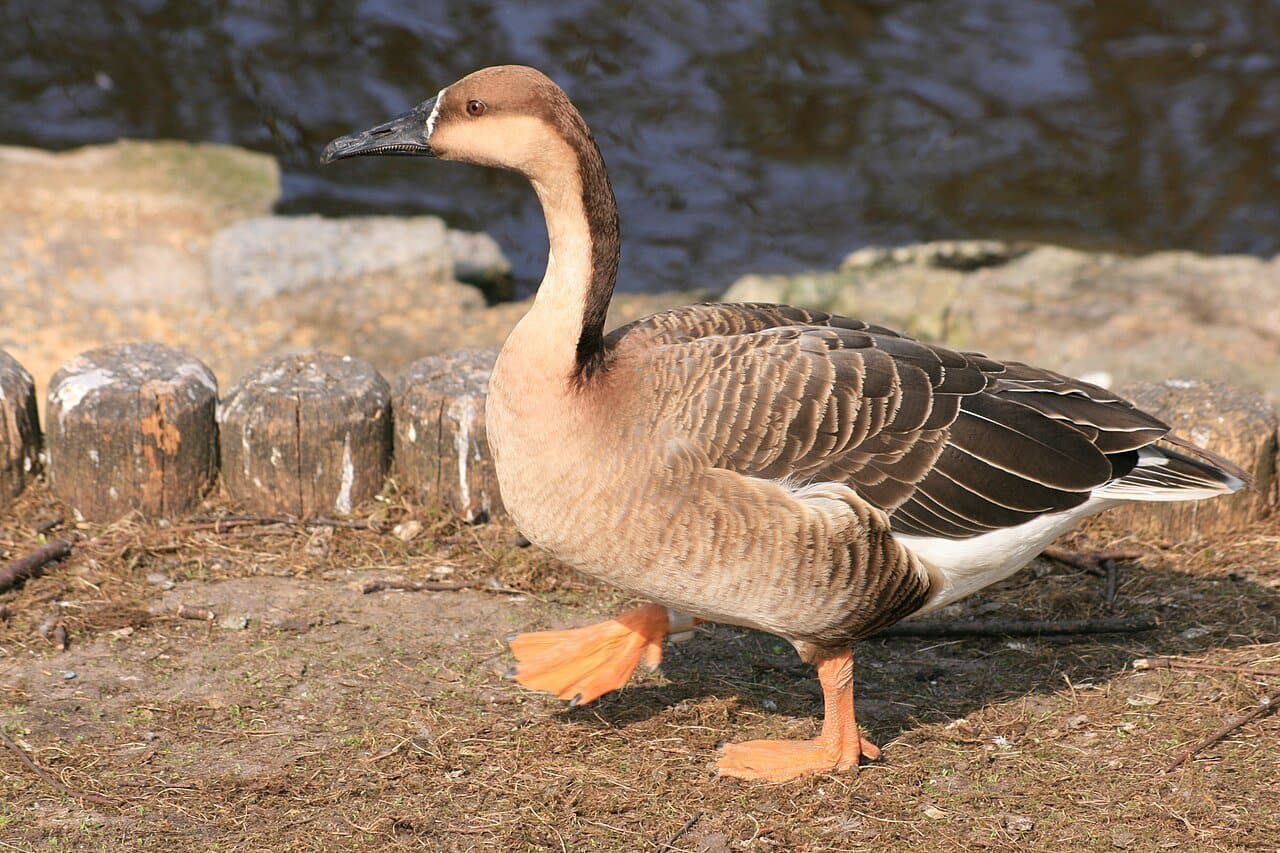 Swan GooseAnser cygnoidesAn endangered long-necked goose of eastern Asia that migrates thousands of kilometers and is the ancestor of the Chinese domestic goose.