
Superb Starling
Lamprotornis superbus
A small, shiny blue-green and orange East African starling that lives in family flocks where helpers raise chicks.
Checking teacher reviews…
About the Superb Starling
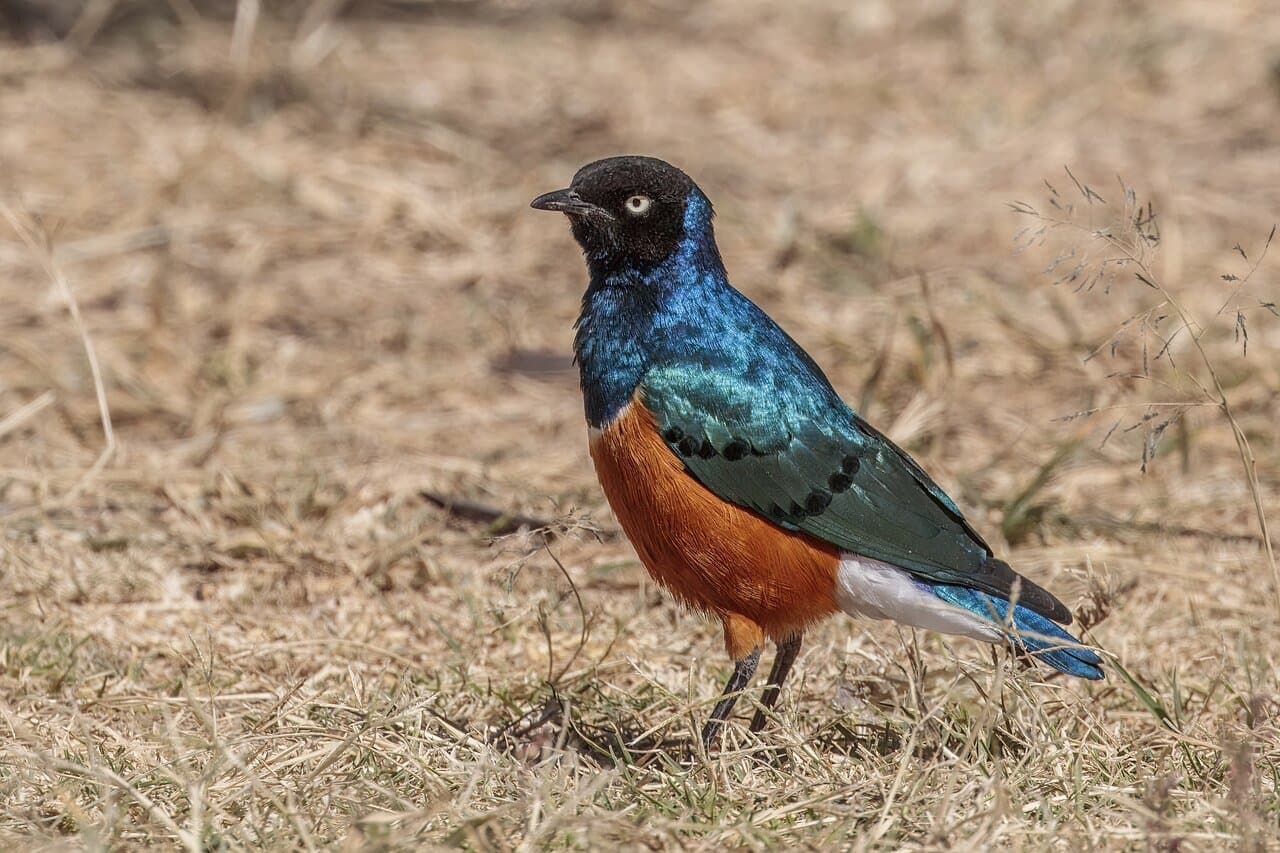
Superb starlings are 6 to 7.5 inches long and weigh less than a fifth of a pound. They have black heads, pale yellow eyes, shimmering blue-green feathers and a red-orange belly, separated by a thin white band. They live in dry woodlands, acacia scrub, grasslands, farms and towns in eastern Africa, eating insects, berries, fruit and seeds.[1]
Quick facts
- Scientific name
- Lamprotornis superbus[1]
- Size
- 6 to 7.5 inches long.[1]
- Lifespan
- About 10 years in the wild.[1]
- Diet
- Omnivore. Insects, berries, fruit and seeds.[1]
- Habitat
- Dry woodlands, acacia scrub, grasslands, farms and towns.[1]
- Where it lives
- Eastern Africa, from Ethiopia and Somalia to Tanzania.[1]
- Group life
- Family flocks of up to 40.[1]
- Babies
- 2 to 5 eggs.[1]
- Conservation status
- Least Concern (IUCN Red List, assessed 2024).[2]
Fun facts
Vocabulary
- cooperative breeding
- When helpers, often older siblings, help raise young that aren't their own.
- iridescent
- Showing shimmering colors that change with the angle of light.
- flock
- A group of birds that live and travel together.
- omnivore
- An animal that eats both plants and other animals.
- least concern
- A conservation label meaning a species is widespread and not at risk of dying out soon.
See it in person
- Oakland ZooOakland, California · African SavannaSee this animal on the zoo's website ↗
These zoos had this animal when we gathered our information, but animals sometimes move. Check the zoo's website or contact the zoo before you visit.
Sources
- [1] Oakland Zoo. “Superb Starling.” https://www.oaklandzoo.org/animals/superb-starling/ (accessed 2026-10-02)
- [2] IUCN Red List of Threatened Species. “Lamprotornis superbus (Superb Starling).” https://www.iucnredlist.org/species/22710767/264231105 (accessed 2026-10-02)
Facts last checked 2026-10-02.


