
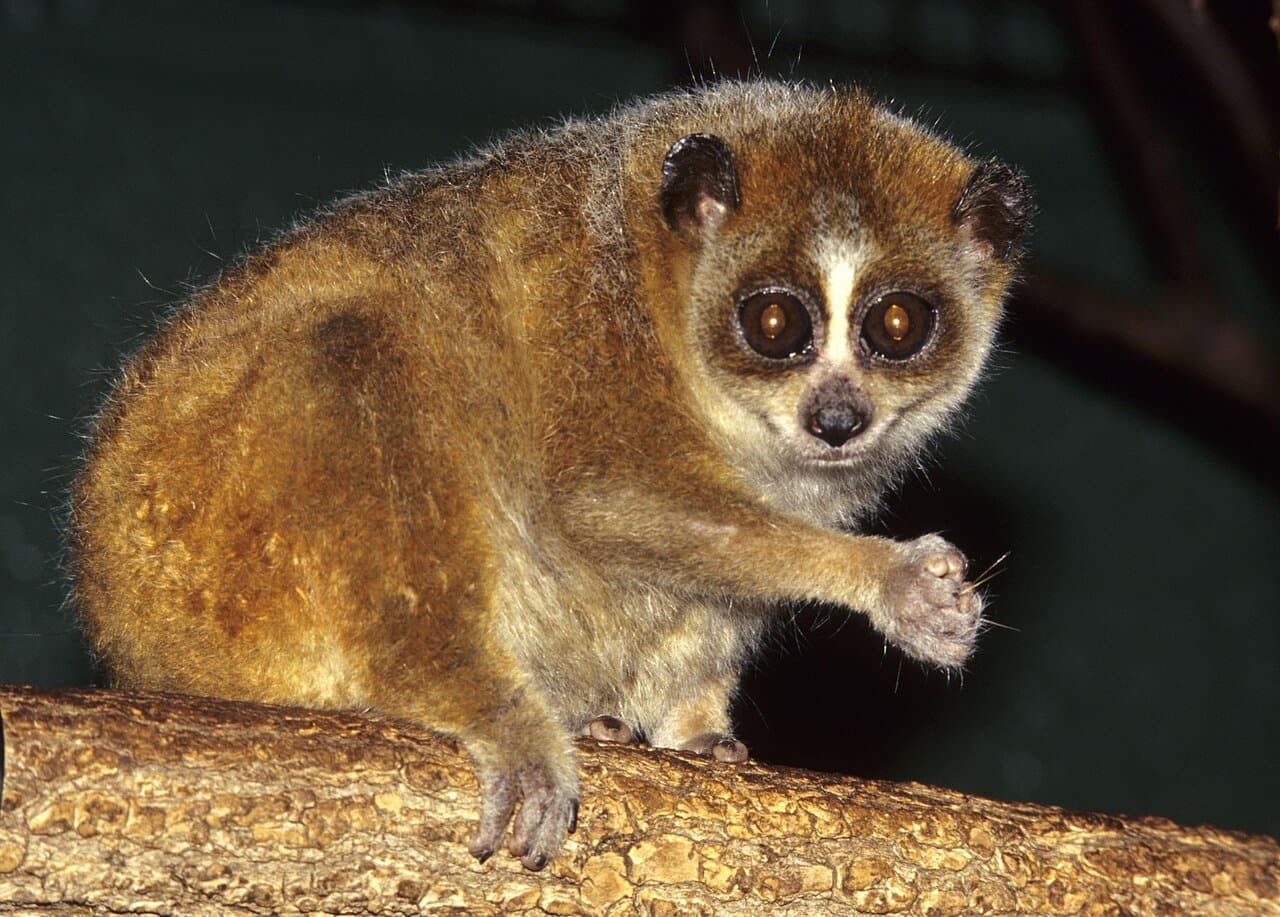
Pygmy Slow Loris
Xanthonycticebus pygmaeus (formerly Nycticebus pygmaeus)
A tiny, big-eyed night primate that licks sap from trees and is one of the few venomous mammals.
Checking teacher reviews…
About the Pygmy Slow Loris
Pygmy slow lorises are smaller than a squirrel, with bodies only 6 to 10 inches long. Light and dark patterns around their eyes look a bit like clown makeup, and the name loris comes from an old Dutch word for clown. They live in forests, usually 10 to 40 feet up in the branches. Their diet is 50 to 70 percent tree sap, plus gum, nectar, insects and some fruit.[1]
Quick facts
- Size
- Body 6 to 10 inches long.[1]
- Lifespan
- 10 to 20 years.[1]
- Diet
- Mostly tree sap and gum, plus nectar, insects and some fruit.[1]
- Habitat
- Deciduous and evergreen forests, 10 to 40 feet off the ground.[1]
- Group life
- Mostly solitary. Nocturnal.[1]
- Babies
- 1 or 2 babies after about a 6-month pregnancy; twins are common.[1]
- Conservation status
- Endangered (IUCN Red List, assessed 2024).[2]
Fun facts
Vocabulary
- venomous
- Able to inject poison by biting or stinging.
- sap
- The juicy liquid that flows inside a plant.
- torpor
- A short, sleep-like state that saves energy.
- primate
- A mammal group that includes lemurs, lorises, monkeys, apes and people.
- endangered
- A conservation label meaning a species faces a very high risk of dying out in the wild.
See it in person
- Smithsonian's National ZooWashington, D.C. · Small Mammal HouseSee this animal on the zoo's website ↗
These zoos had this animal when we gathered our information, but animals sometimes move. Check the zoo's website or contact the zoo before you visit.
Sources
- [1] Smithsonian's National Zoo & Conservation Biology Institute. “Pygmy slow loris.” https://nationalzoo.si.edu/animals/pygmy-slow-loris (accessed 2026-10-08)
- [2] IUCN Red List of Threatened Species. “Xanthonycticebus pygmaeus (Southern Pygmy Loris).” https://www.iucnredlist.org/species/253585790/253586168 (accessed 2026-10-08)
Facts last checked 2026-10-08.

