
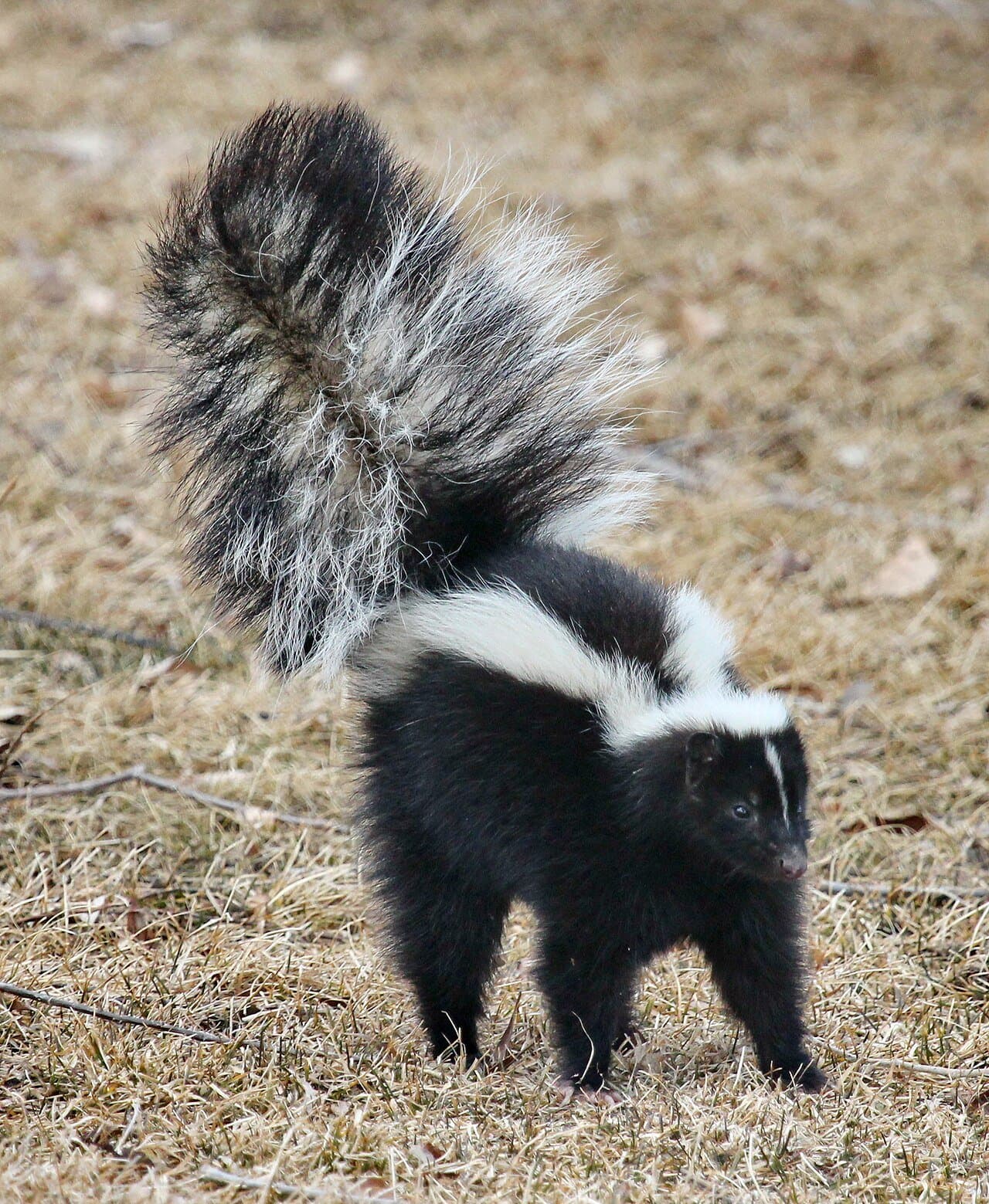
Striped Skunk
Mephitis mephitis
North America's most common skunk, a black-and-white animal famous for its smelly defensive spray.
Checking teacher reviews…
About the Striped Skunk
Striped skunks weigh 1.5 to 13 pounds and are 18 to 32 inches long, and they can lose up to half their weight over winter. They live from southern Canada to northern Mexico in farmland, woods, deserts and plains. They eat insects in spring and summer and switch to small mammals, eggs, frogs and other animals in colder months. They rest in old dens, hollow logs or under buildings.[1]
Quick facts
- Scientific name
- Mephitis mephitis[1]
- Size
- 18 to 32 inches long, including the tail.[1]
- Weight
- 1.5 to 13 pounds.[1]
- Lifespan
- About 7 years in the wild; up to 10 in human care.[1]
- Diet
- Omnivore. Insects in warm months; small mammals, eggs, frogs and reptiles in cold months.[1]
- Habitat
- Open areas and farmland, plus woods, deserts and plains.[1]
- Where it lives
- Southern Canada to northern Mexico.[1]
- Group life
- Solitary. Nocturnal.[1]
- Babies
- 2 to 10 kits after a 59- to 77-day pregnancy.[1]
- Conservation status
- Least Concern (IUCN Red List, assessed 2015).[2]
Fun facts
Vocabulary
- musk
- A strong-smelling substance some animals release.
- gland
- A body part that makes and releases a substance.
- nocturnal
- Active mainly at night.
- omnivore
- An animal that eats both plants and other animals.
- least concern
- A conservation label meaning a species is widespread and not at risk of dying out soon.
See it in person
- Smithsonian's National ZooWashington, D.C. · Small Mammal HouseSee this animal on the zoo's website ↗
These zoos had this animal when we gathered our information, but animals sometimes move. Check the zoo's website or contact the zoo before you visit.
Sources
- [1] Smithsonian's National Zoo & Conservation Biology Institute. “Striped skunk.” https://nationalzoo.si.edu/animals/striped-skunk (accessed 2026-10-08)
- [2] IUCN Red List of Threatened Species. “Mephitis mephitis (Striped Skunk).” https://www.iucnredlist.org/species/41635/45211301 (accessed 2026-10-08)
Facts last checked 2026-10-08.


