
American Flamingo
Phoenicopterus ruber
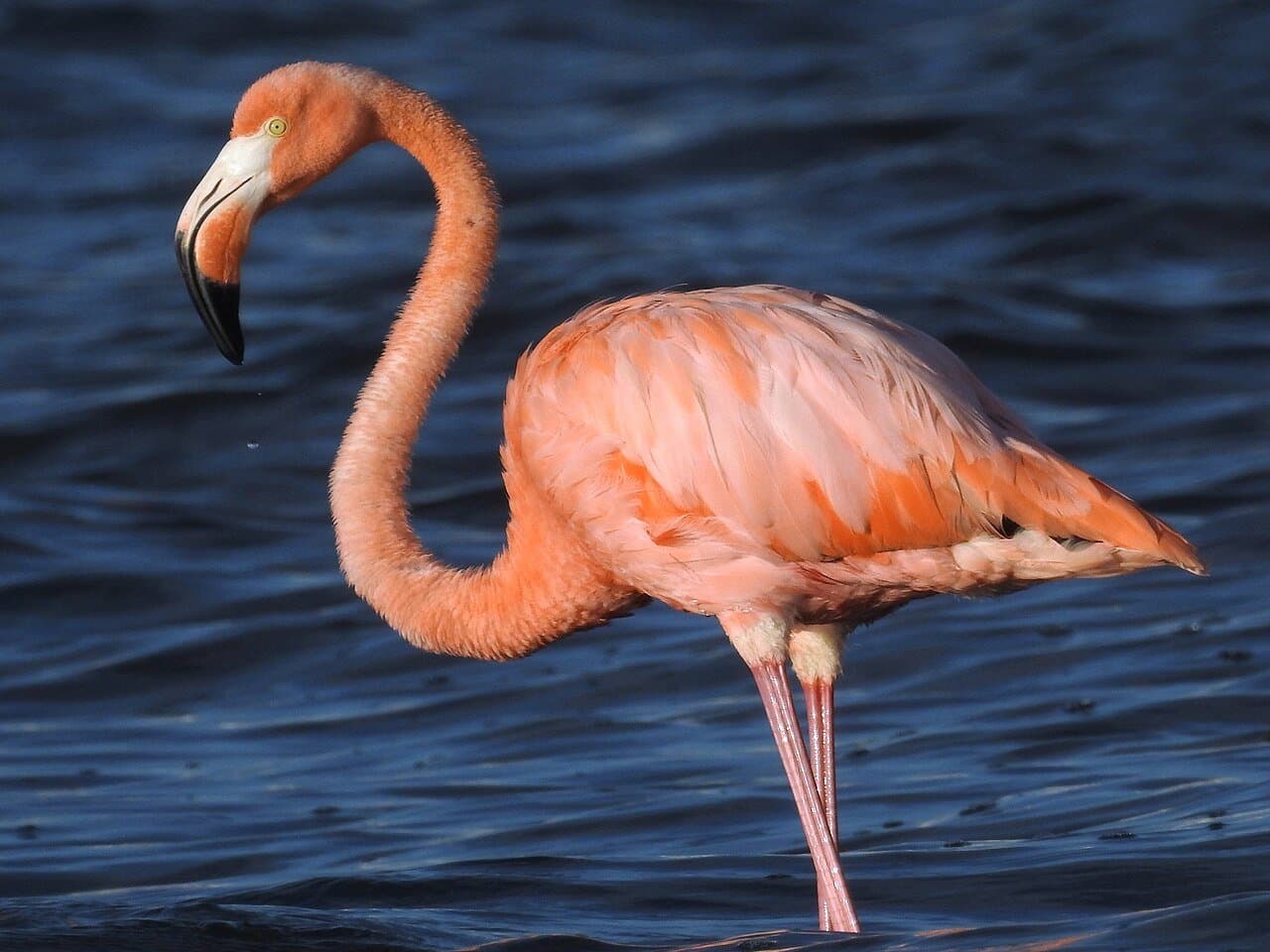
The brightest-colored flamingo, also called the Caribbean flamingo, that filter-feeds with its bill upside down.
Checking teacher reviews…
About the American Flamingo
American flamingos live in Mexico, the Caribbean and the northernmost tip of South America. They feed with their bill held upside down in the water, and comb-like plates called lamellae filter out tiny food. Their pink, red and orange colors come from carotenoid pigments in their food, the same kind of pigments that make carrots orange. American flamingos are the most brightly colored kind.[1]
Quick facts
- Scientific name
- Phoenicopterus ruber[1]
- Size
- Greater flamingos stand 3.9 to 4.7 feet (120 to 145 cm) tall.[1]
- Weight
- Greater flamingos weigh 4.6 to 9 pounds (2.1 to 4.1 kg).[1]
- Lifespan
- 20 to 30 years in the wild. Up to 50 years in zoos.[1]
- Diet
- Filter feeder. Strains tiny food from the water.[1]
- Where it lives
- Mexico, the Caribbean and the northernmost tip of South America.[1]
- Babies
- Usually one egg, laid on a mud mound 12 to 24 inches high. Both parents feed the chick crop milk.[1]
- Conservation status
- Least Concern (IUCN Red List, assessed 2020).[2]
Fun facts
Vocabulary
- filter feeder
- An animal that eats by straining tiny bits of food out of water.
- lamellae
- Thin, comb-like plates inside a flamingo's bill that strain food from water.
- pigment
- A natural substance that gives something its color.
- crop milk
- A liquid some birds make in their throat to feed their chicks.
- subspecies
- A group within a species that lives in a certain area and looks a little different from other groups.
See it in person
- Montgomery ZooMontgomery, Alabama · Flight AviarySee this area on the zoo's website ↗
Sources
- [1] San Diego Zoo Wildlife Alliance. “Flamingo.” https://animals.sandiegozoo.org/animals/flamingo (accessed 2026-10-02)
- [2] IUCN Red List of Threatened Species. “Phoenicopterus ruber (American Flamingo).” https://www.iucnredlist.org/species/22729706/138951737 (accessed 2026-10-02)
Facts last checked 2026-10-02.
More Wading Birds
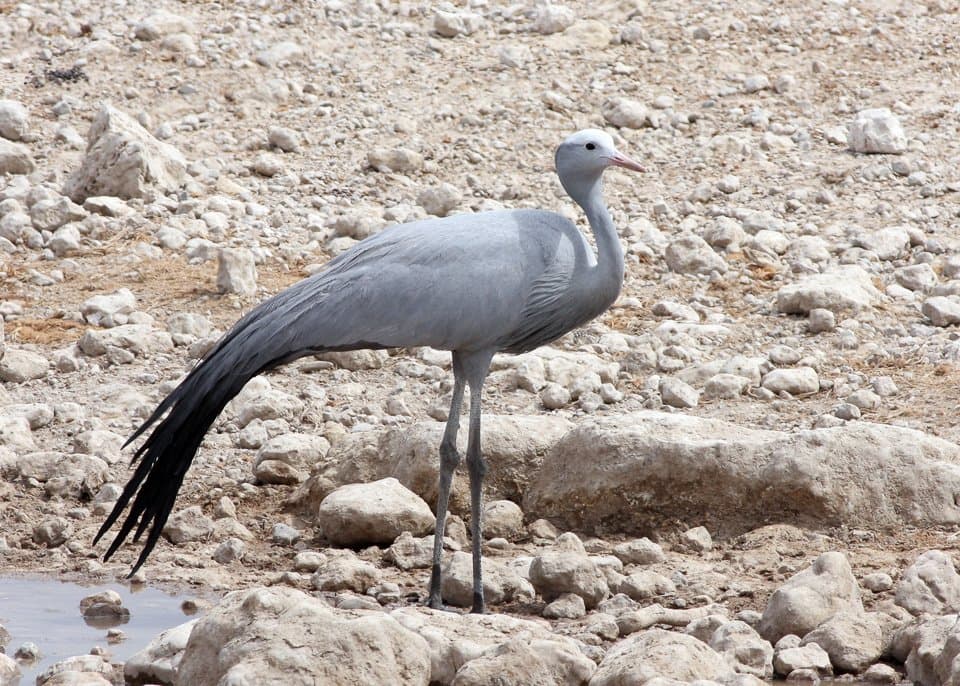 Blue CraneAnthropoides paradiseusThe national bird of South Africa, a blue-gray crane of grasslands famous for courtship dances that can last for hours.
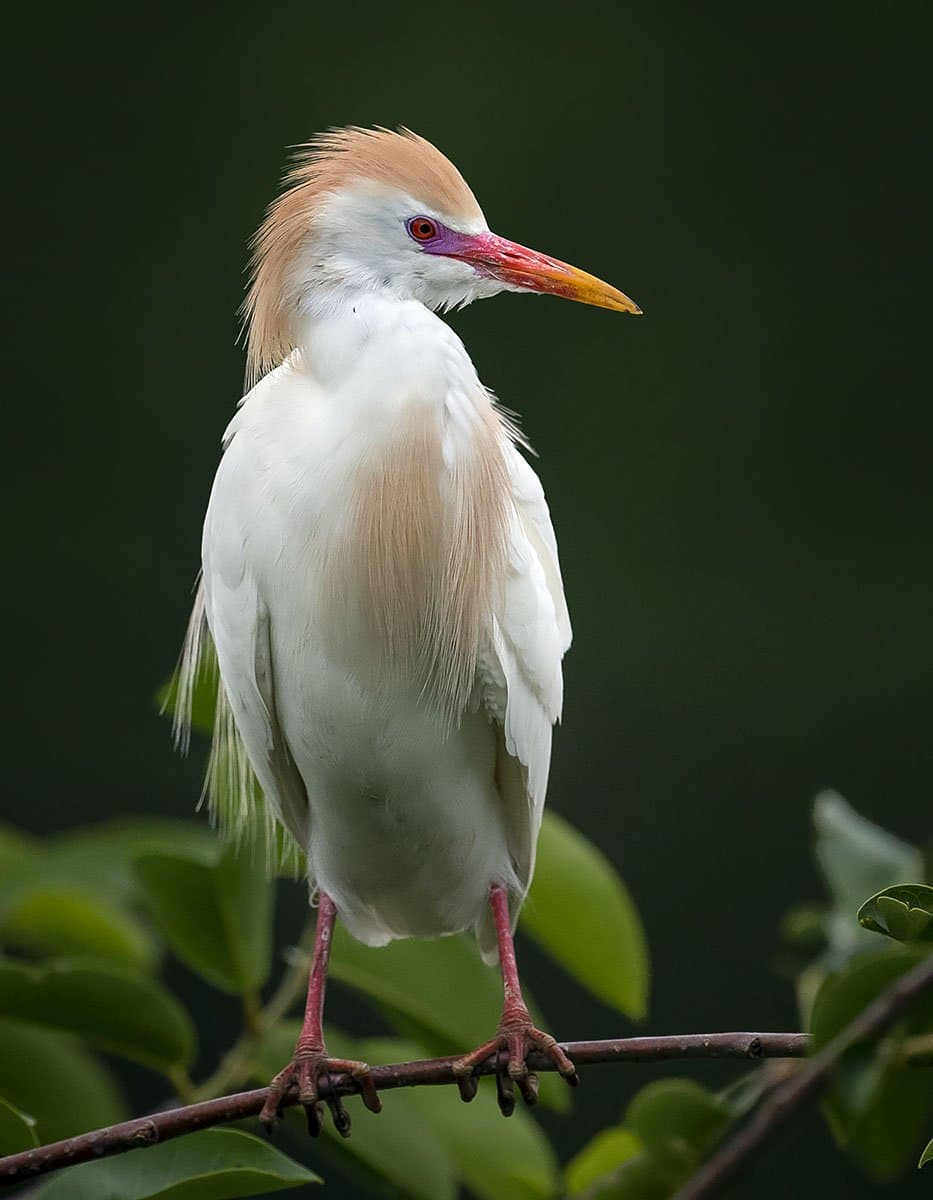 Cattle EgretBubulcus ibisA small white heron that follows grazing animals to catch the insects they stir up, and has spread from Africa around the world.
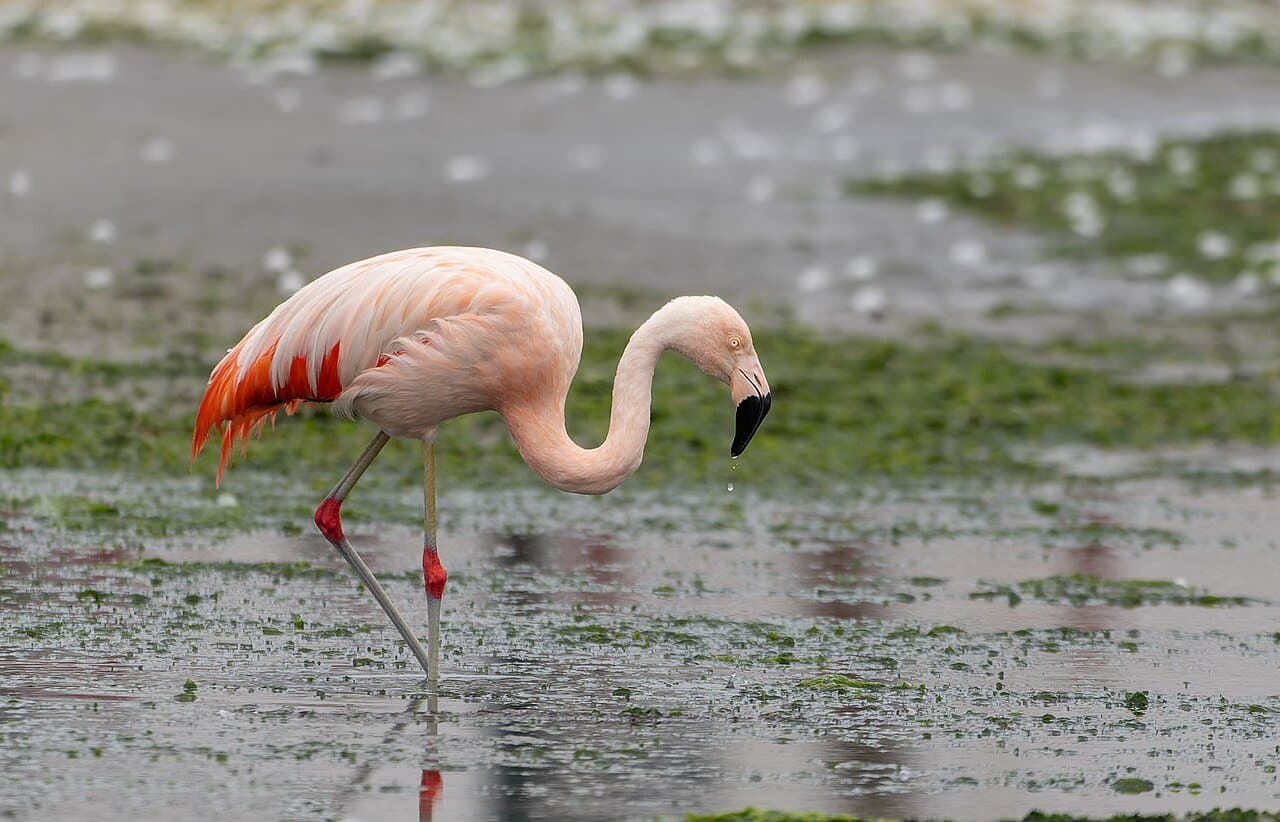 Chilean FlamingoPhoenicopterus chilensisA pink flamingo of the high, cold salt flats of the southern Andes that feeds with its head upside down.
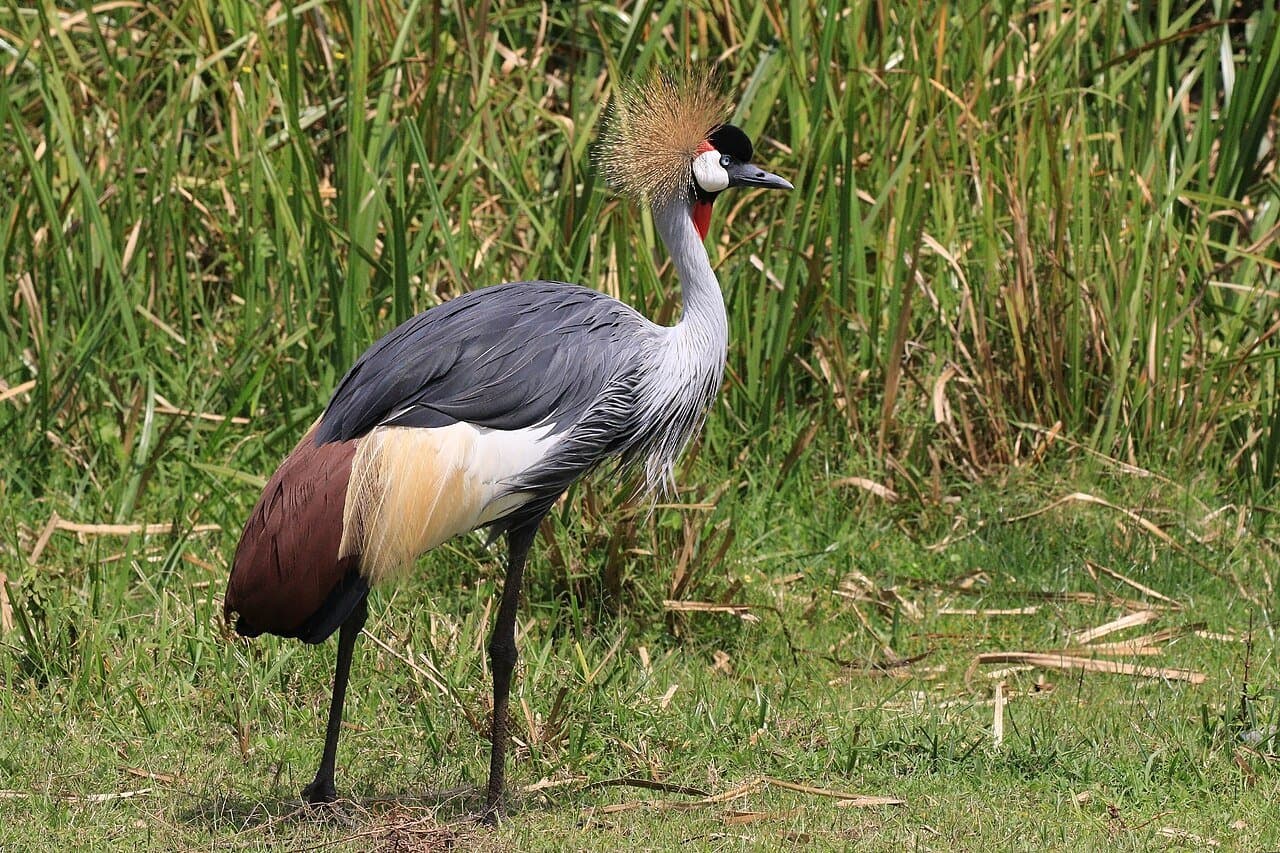 Grey Crowned CraneBalearica regulorum (East African crowned crane: B. r. gibbericeps)An endangered African crane with a crown of stiff golden feathers, shown on the flag of Uganda. Also called the East African crowned crane.
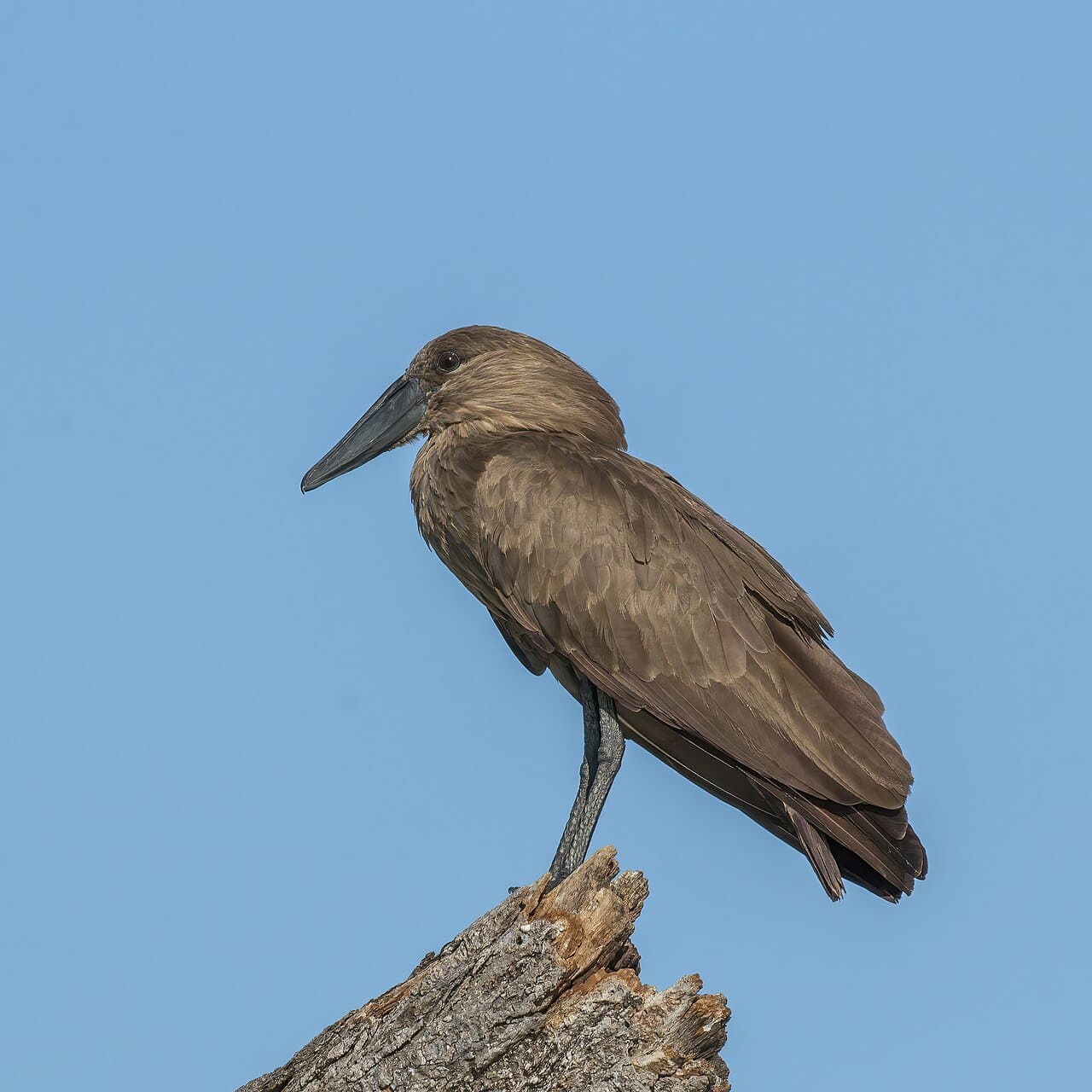 HamerkopScopus umbrettaA brown African wading bird with a hammer-shaped head that builds the biggest nest of any bird in Africa.
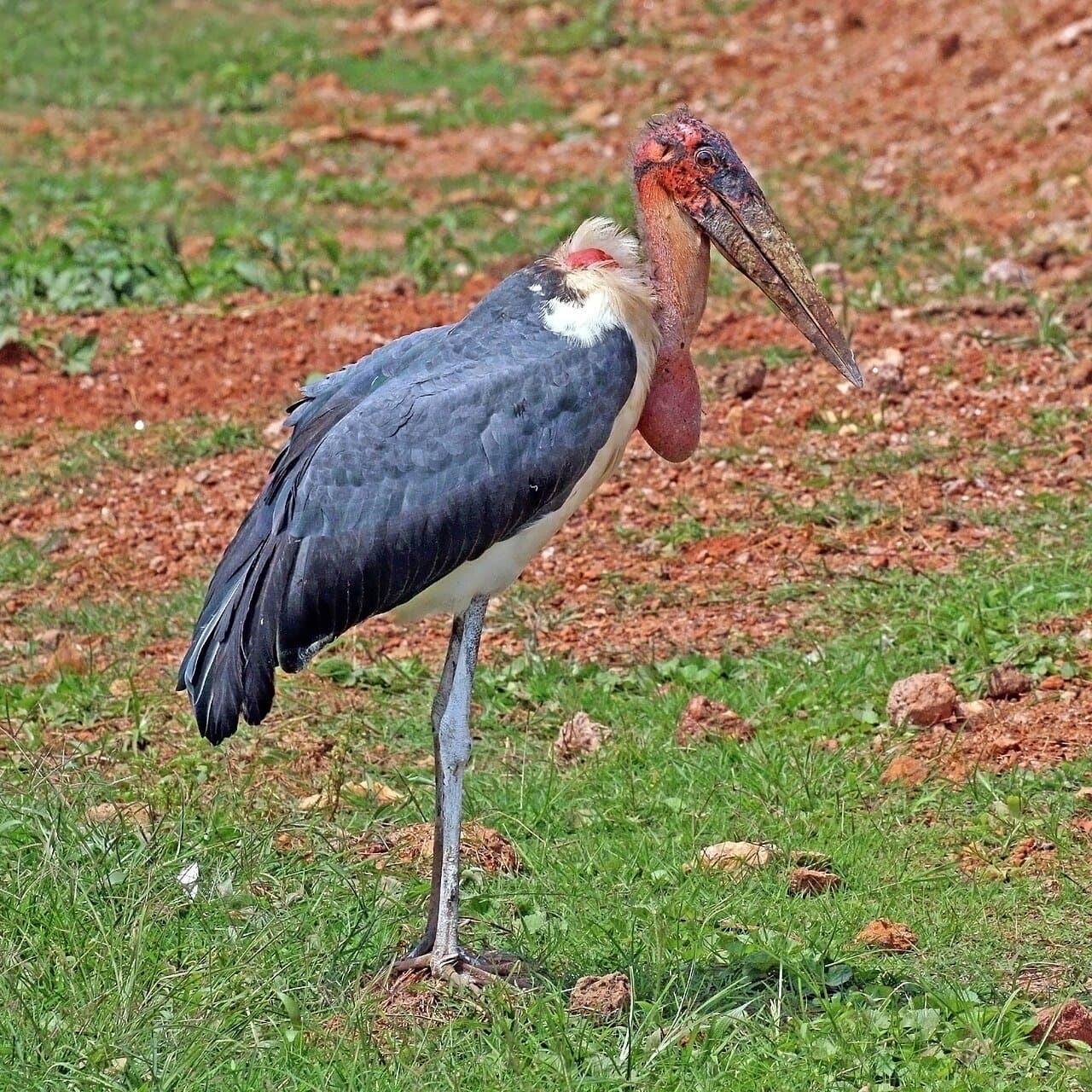 Marabou StorkLeptoptilos crumeniferA huge, bald-headed African stork that feeds mostly on dead animals and often gathers near lakes, rivers, garbage dumps and fishing villages.
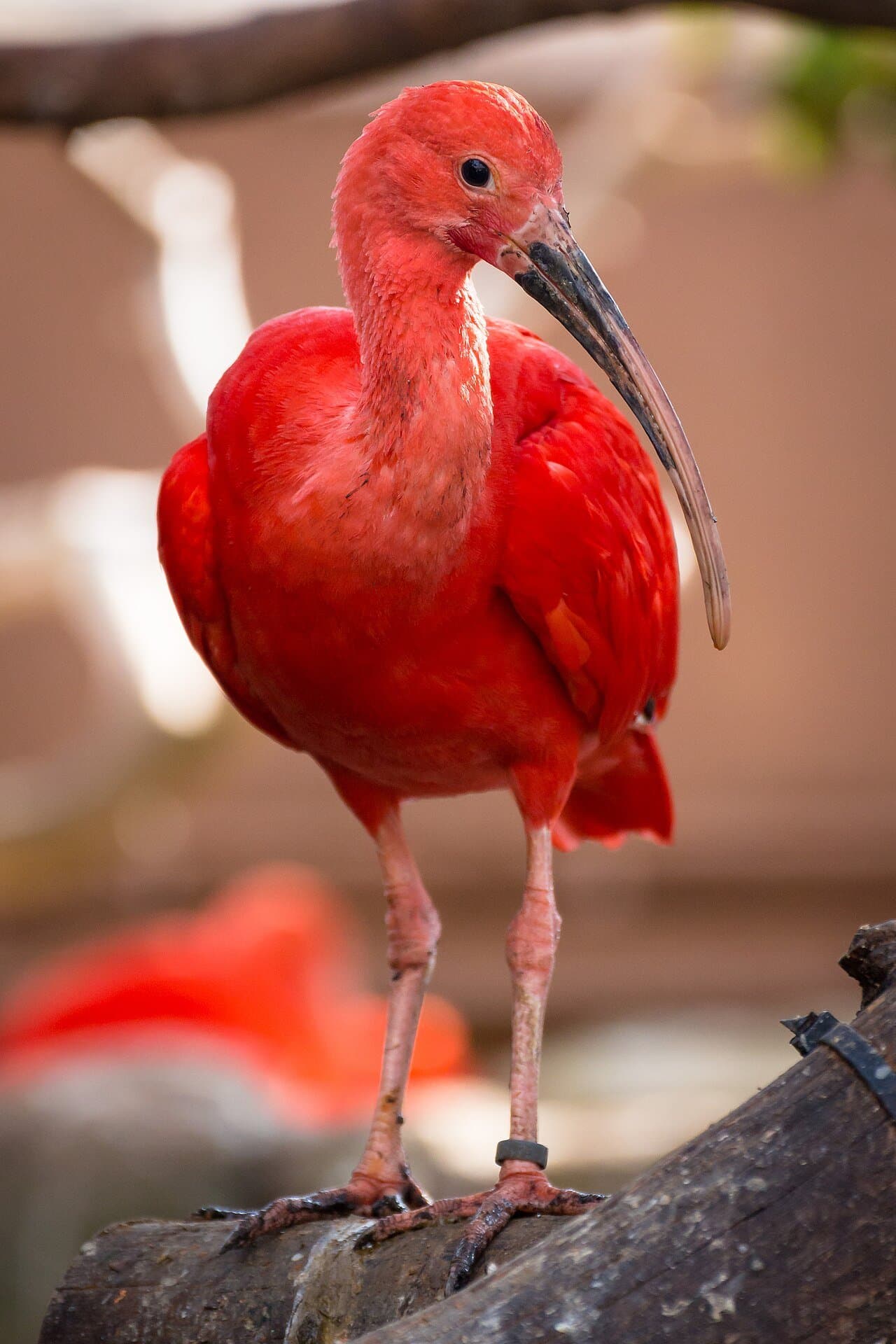 Scarlet IbisEudocimus ruberA bright red wading bird of northern South America that feeds mostly on crayfish and small crabs.
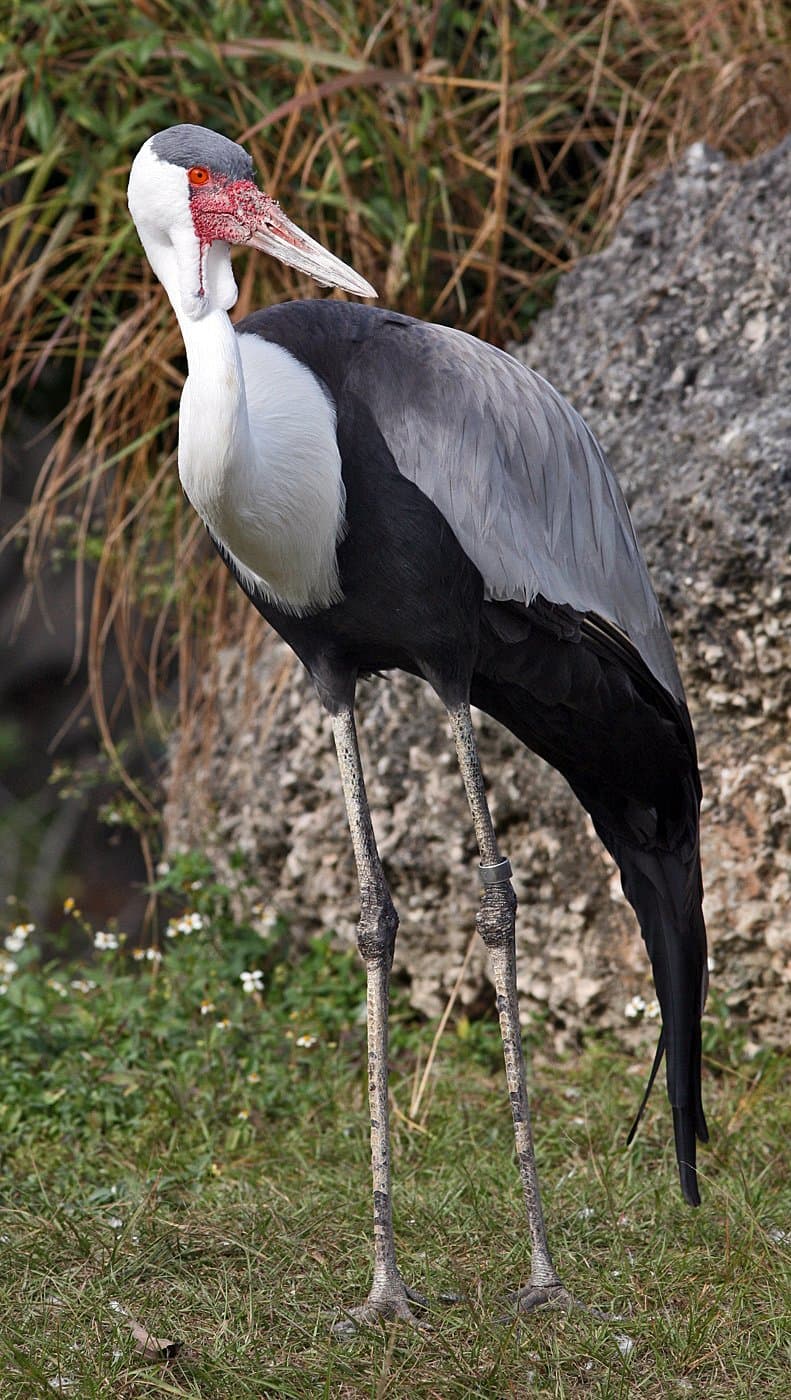 Wattled CraneBugeranus carunculatusA tall African wetland crane with flaps of skin hanging from its chin that shrink when it's nervous and lengthen when it's excited.
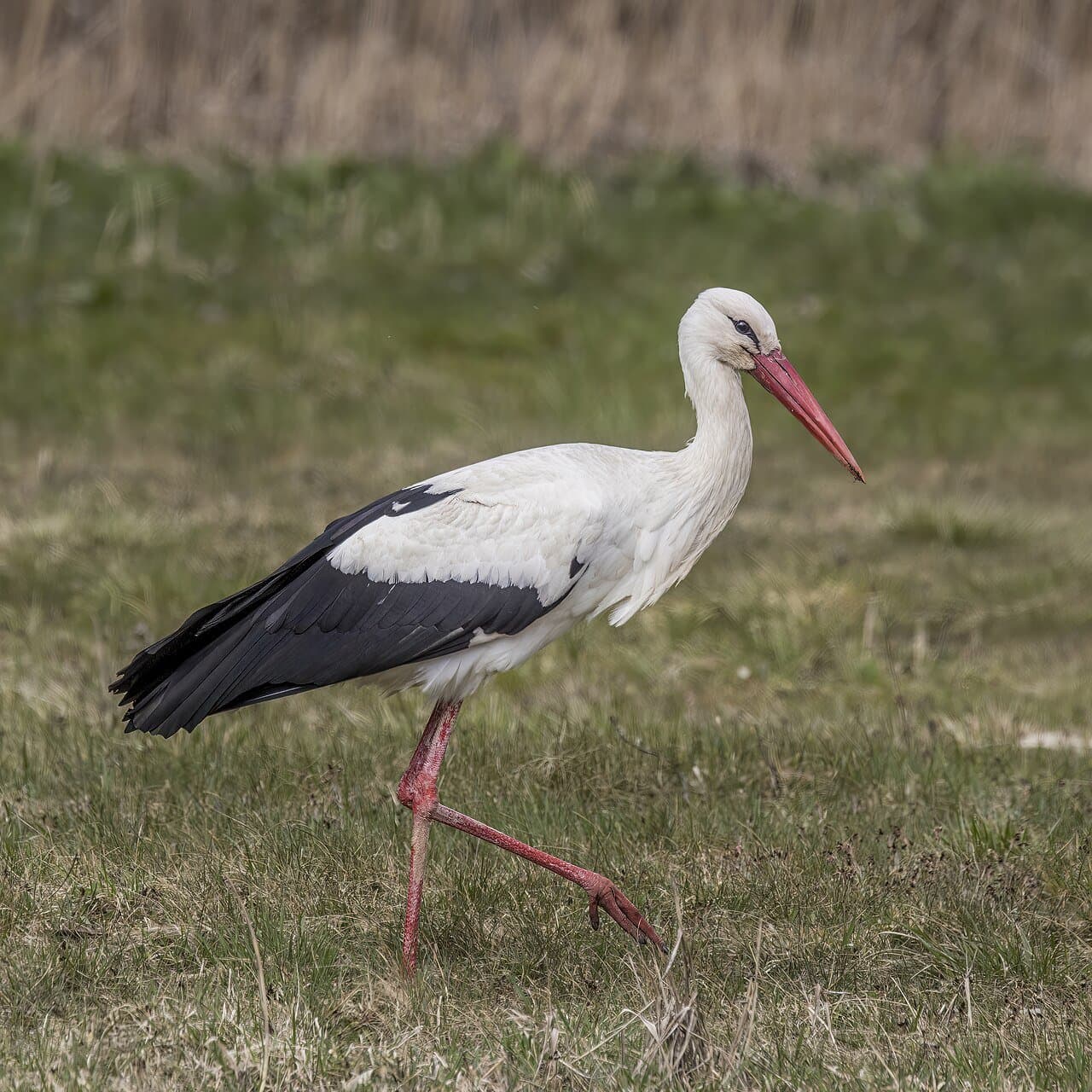 White StorkCiconia ciconiaA big white-and-black bird with a red bill that breeds in Europe, winters in Africa and inspired the story of storks delivering babies.