
Aye-Aye
Daubentonia madagascariensis
A strange-looking nocturnal lemur that taps on trees with a long, thin middle finger to find grubs inside.
Checking teacher reviews…
About the Aye-Aye
Aye-ayes live across Madagascar in rainforests, dry forests and plantations, spending most of their time high in the treetops. They have long, coarse dark fur, large ears, yellow-orange eyes and a bushy tail. Their third finger is long, thin and bendy. They eat fruit, nuts and seeds, using that finger to scoop out the insides of fruit.[1]
Quick facts
- Scientific name
- Daubentonia madagascariensis[1]
- Size
- Body about 14 to 17 inches, plus a long bushy tail.[1]
- Lifespan
- Over 23 years in human care.[1]
- Diet
- Fruits, nuts, seeds, nectar and wood-boring insect larvae.[1]
- Habitat
- Rainforest, deciduous forest, plantations and sometimes dry scrub and mangroves.[1]
- Where it lives
- Throughout Madagascar.[1]
- Group life
- Solitary and nocturnal.[1]
- Conservation status
- Endangered (IUCN Red List, assessed 2018).[2]
Fun facts
Vocabulary
- percussive foraging
- Tapping on something to find food hidden inside.
- larva
- The young stage of an insect that looks different from the adult (plural: larvae).
- omen
- A sign that people believe tells the future.
- nocturnal
- Active mainly at night.
- endangered
- A conservation label meaning a species faces a very high risk of dying out in the wild.
See it in person
- Omaha's Henry Doorly Zoo and AquariumOmaha, Nebraska · Hubbard Expedition MadagascarSee this area on the zoo's website ↗
Sources
- [1] Animal Diversity Web, University of Michigan. “Aye-aye (Daubentonia madagascariensis).” https://animaldiversity.org/accounts/Daubentonia_madagascariensis/ (accessed 2026-10-02)
- [2] IUCN Red List of Threatened Species. “Daubentonia madagascariensis (Aye-aye).” https://www.iucnredlist.org/species/6302/115560793 (accessed 2026-10-02)
Facts last checked 2026-10-02.
More Lemurs
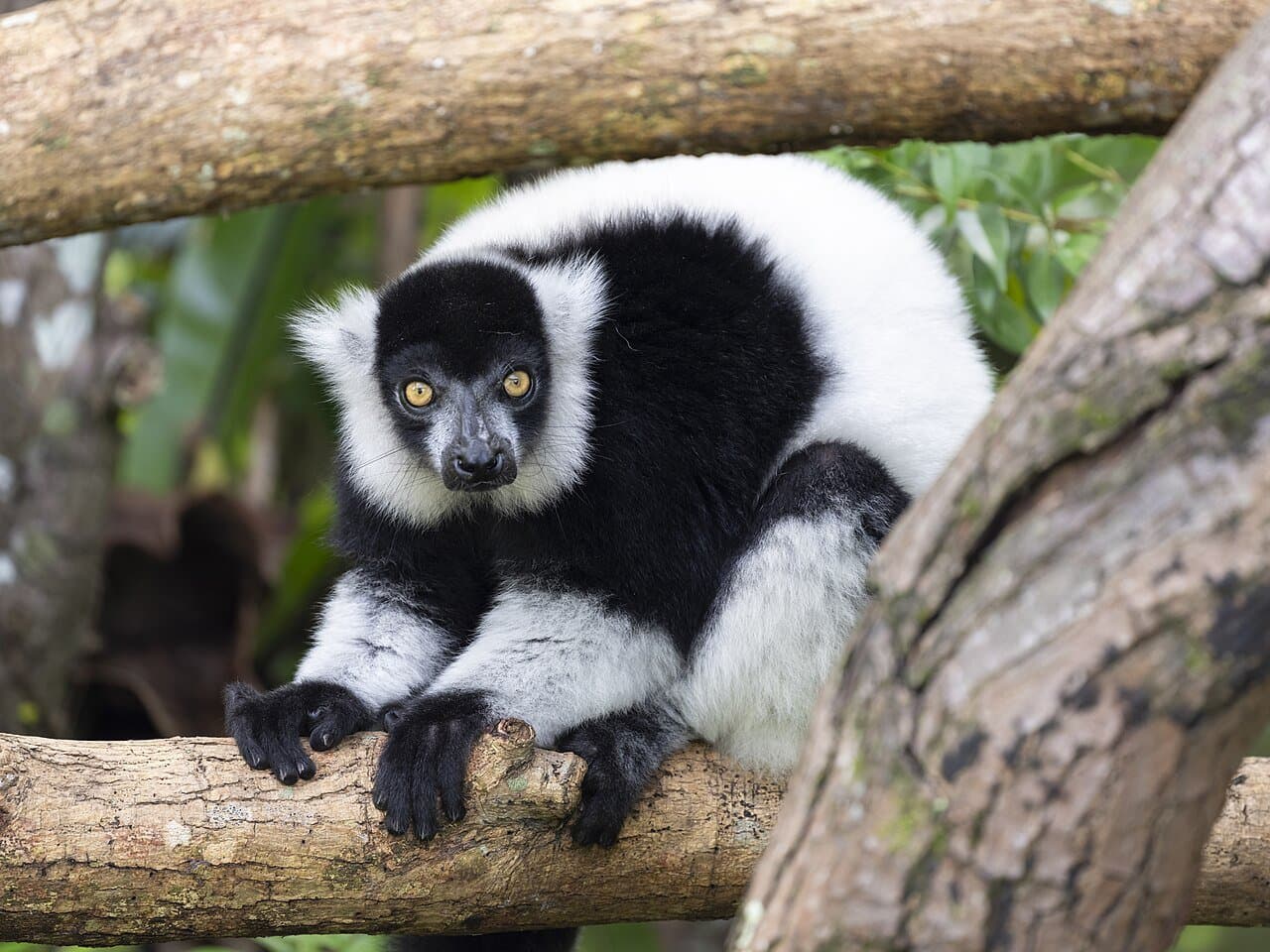 Black-and-White Ruffed LemurVarecia variegataThe largest lemur, a critically endangered fruit-eater of eastern Madagascar's rainforests that raises its babies in nests.Blue-Eyed Black LemurEulemur flavifronsOne of the world's most threatened primates, a blue-eyed Madagascar lemur whose males are black and females are orange.
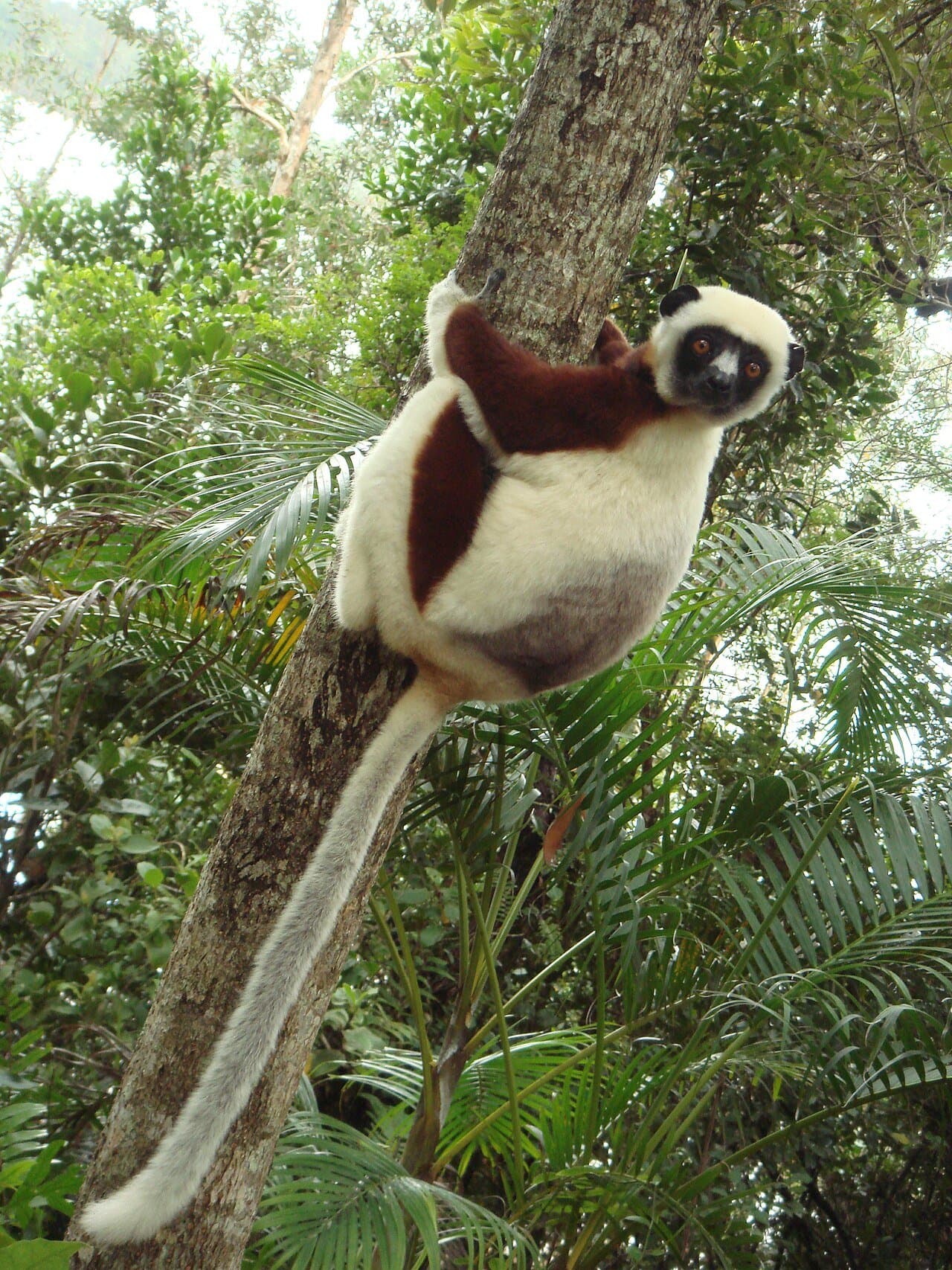 Coquerel's SifakaPropithecus coquereliA white-and-brown lemur of northwestern Madagascar that leaps between trees and hops sideways on the ground.
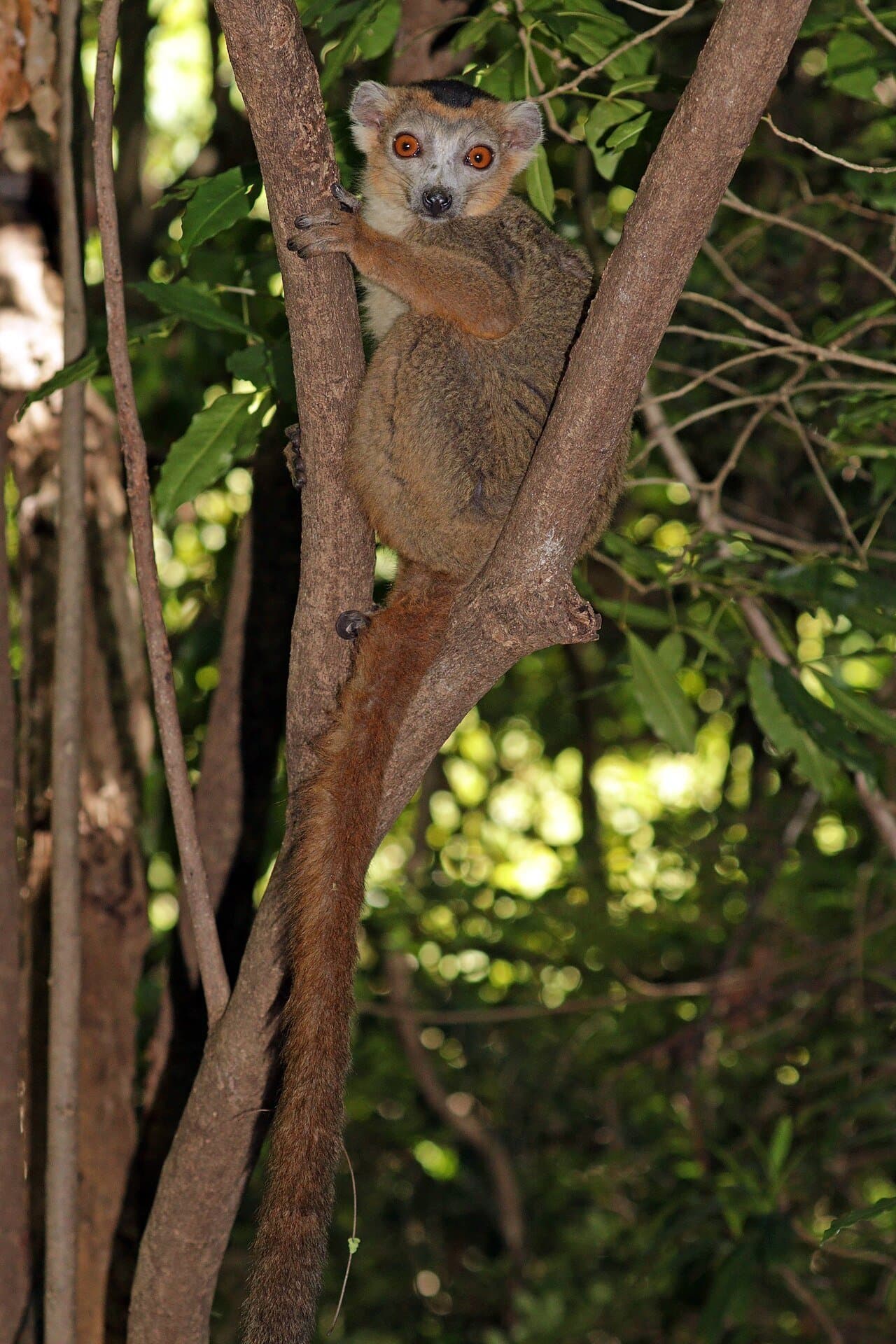 Crowned LemurEulemur coronatusA small, fruit-eating lemur of northern Madagascar whose males and females look so different they were once easy to tell apart at a glance.Gray Mouse LemurMicrocebus murinusOne of the smallest primates in the world, a tiny, big-eyed lemur that weighs about two ounces.Mongoose LemurEulemur mongozA small, gray, critically endangered lemur of northwestern Madagascar and the Comoro Islands that can switch between day and night activity.
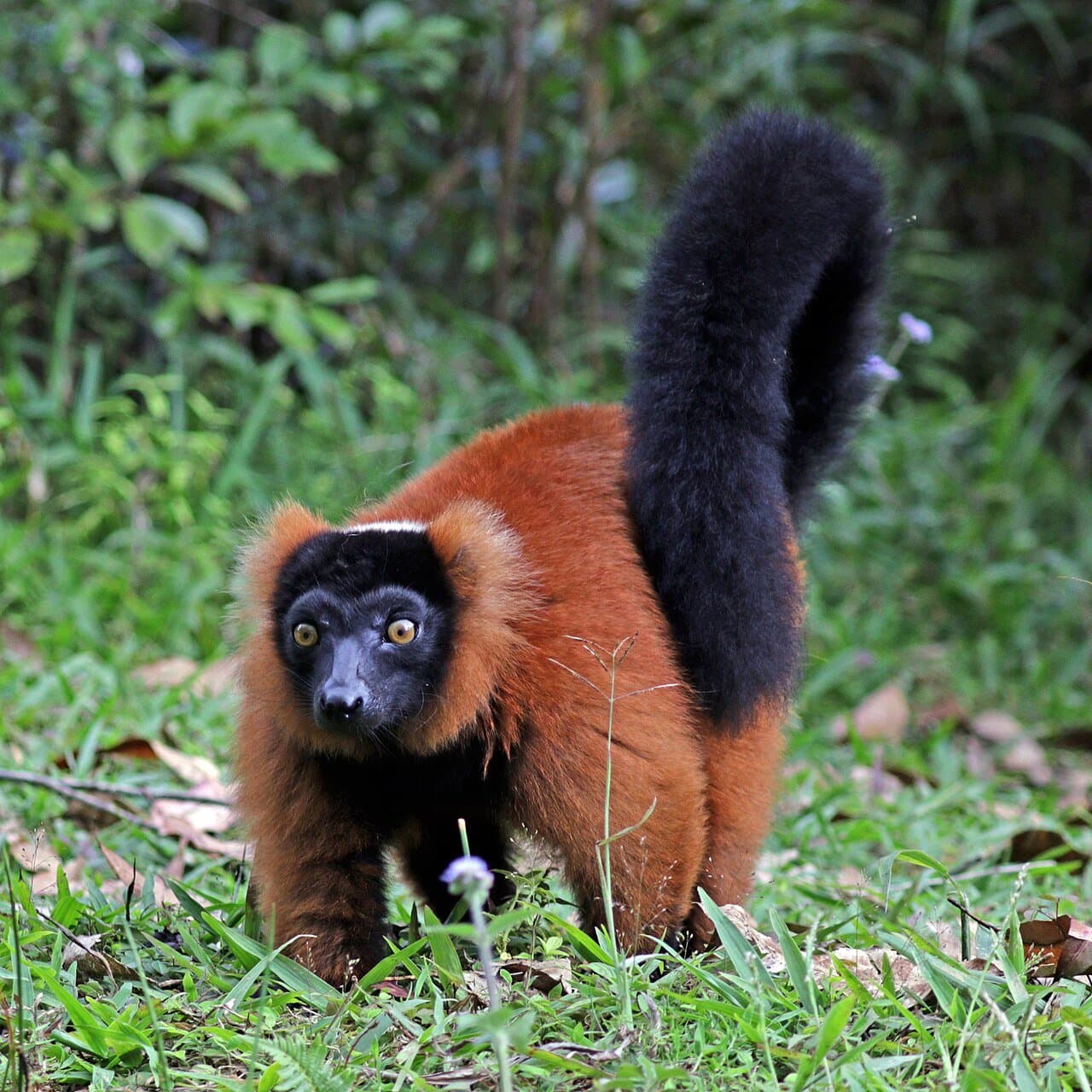 Red Ruffed LemurVarecia rubraA critically endangered orange-red lemur with a black face and a thick neck ruff, found only on Madagascar's Masoala Peninsula.
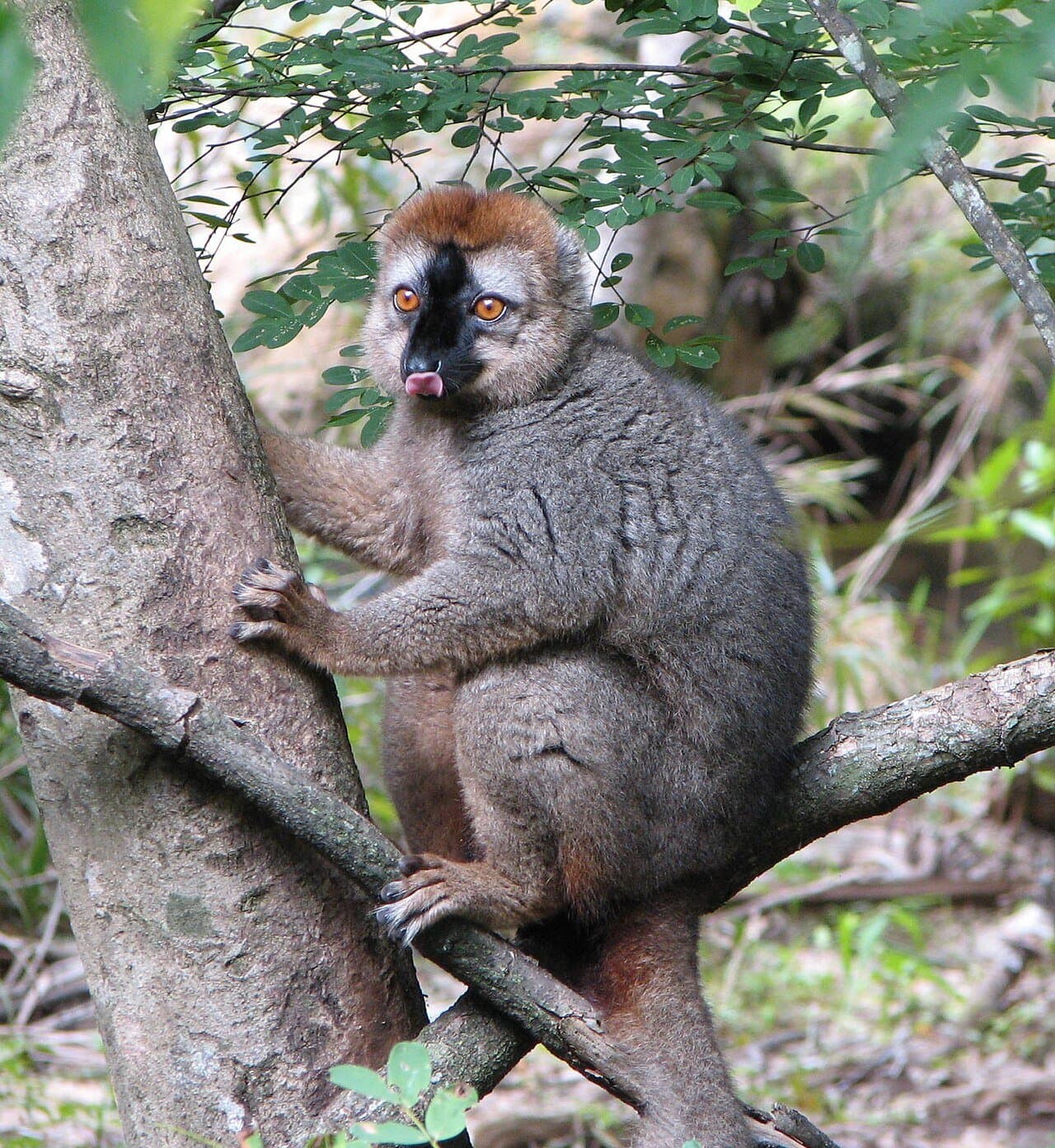 Red-Fronted Brown LemurEulemur rufifronsA fruit-eating Madagascar lemur whose males and females are different colors, and one of the few lemurs not led by females.
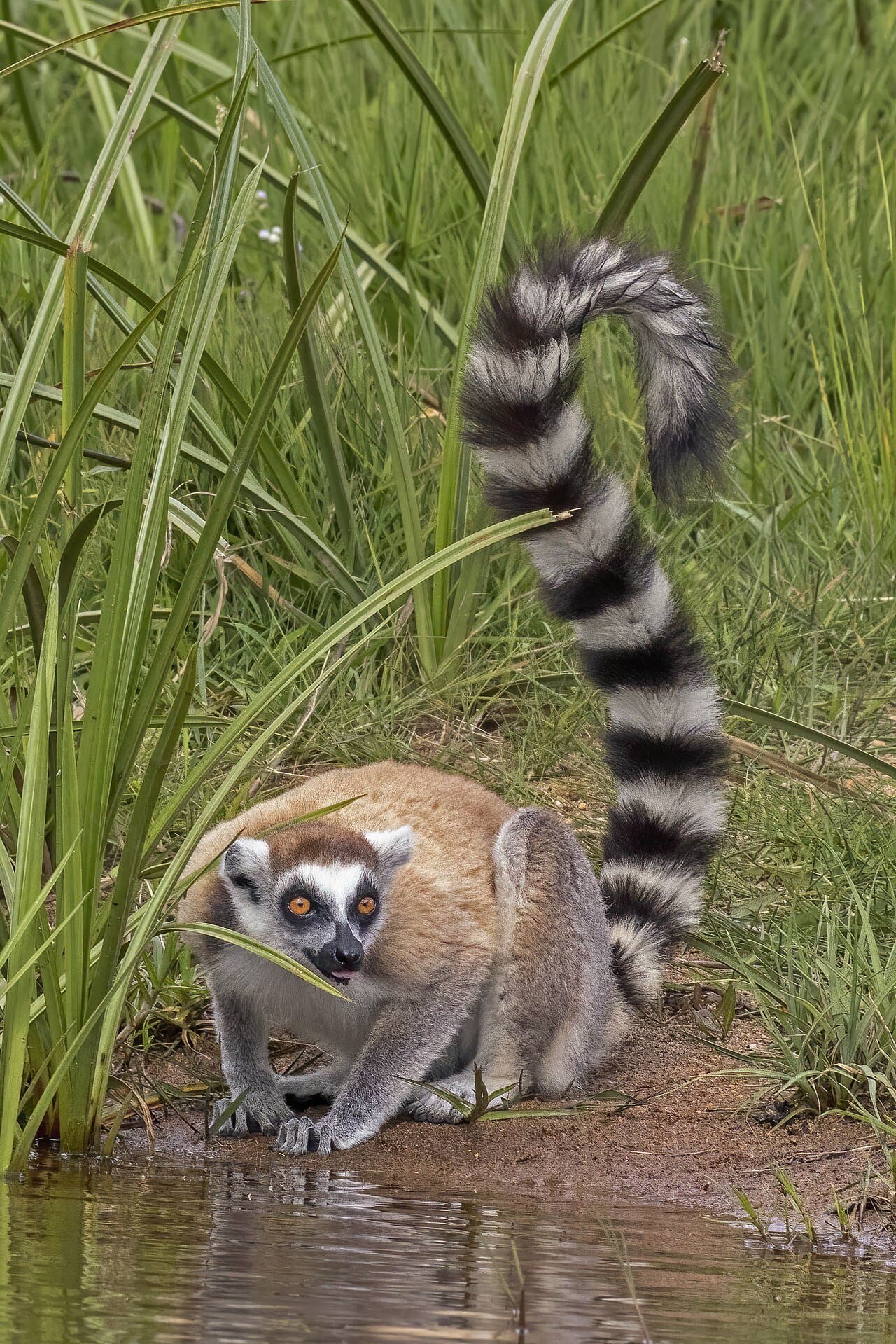 Ring-Tailed LemurLemur cattaAn endangered primate of southwestern Madagascar with a black-and-white striped tail, female-led troops and a love of sunbathing.