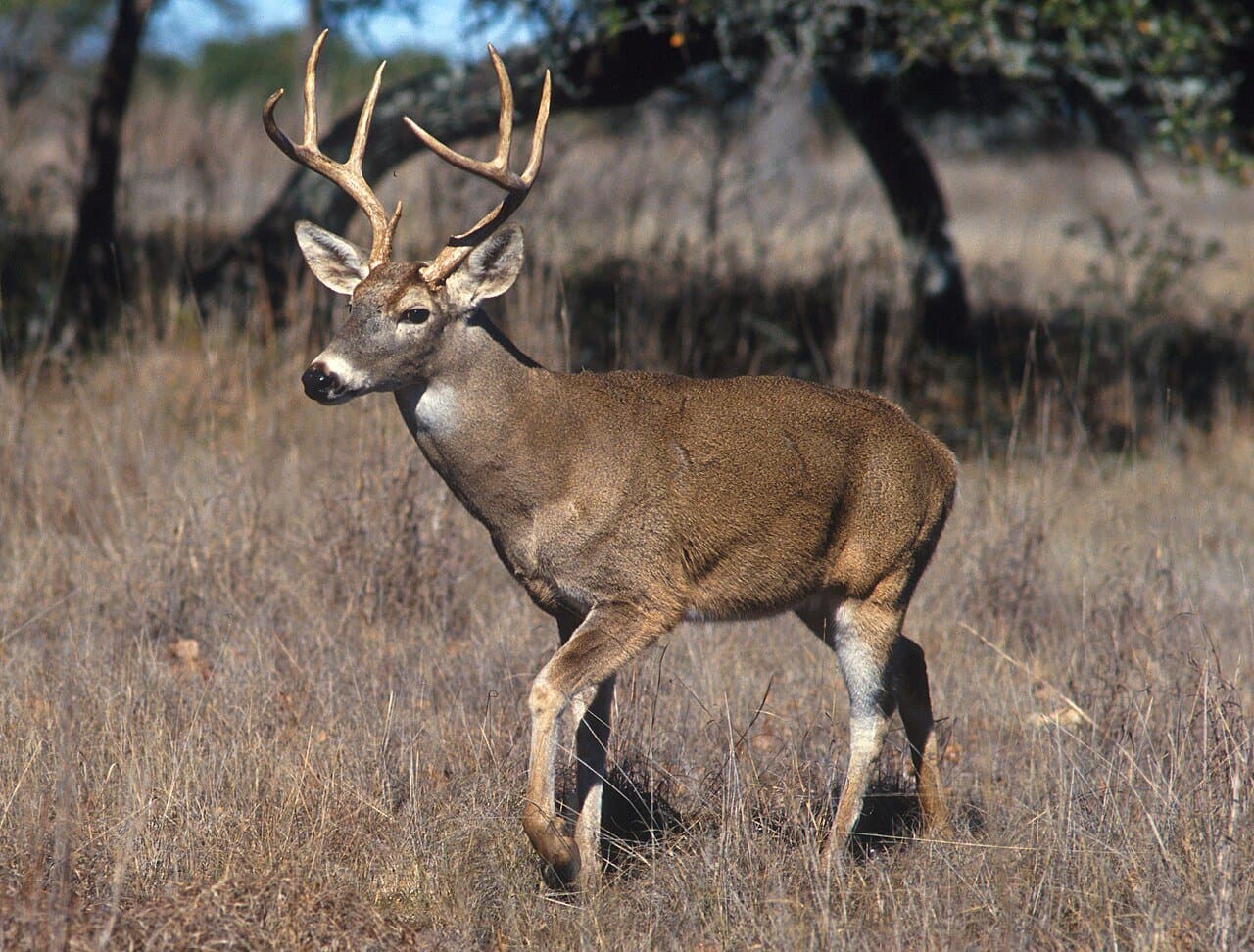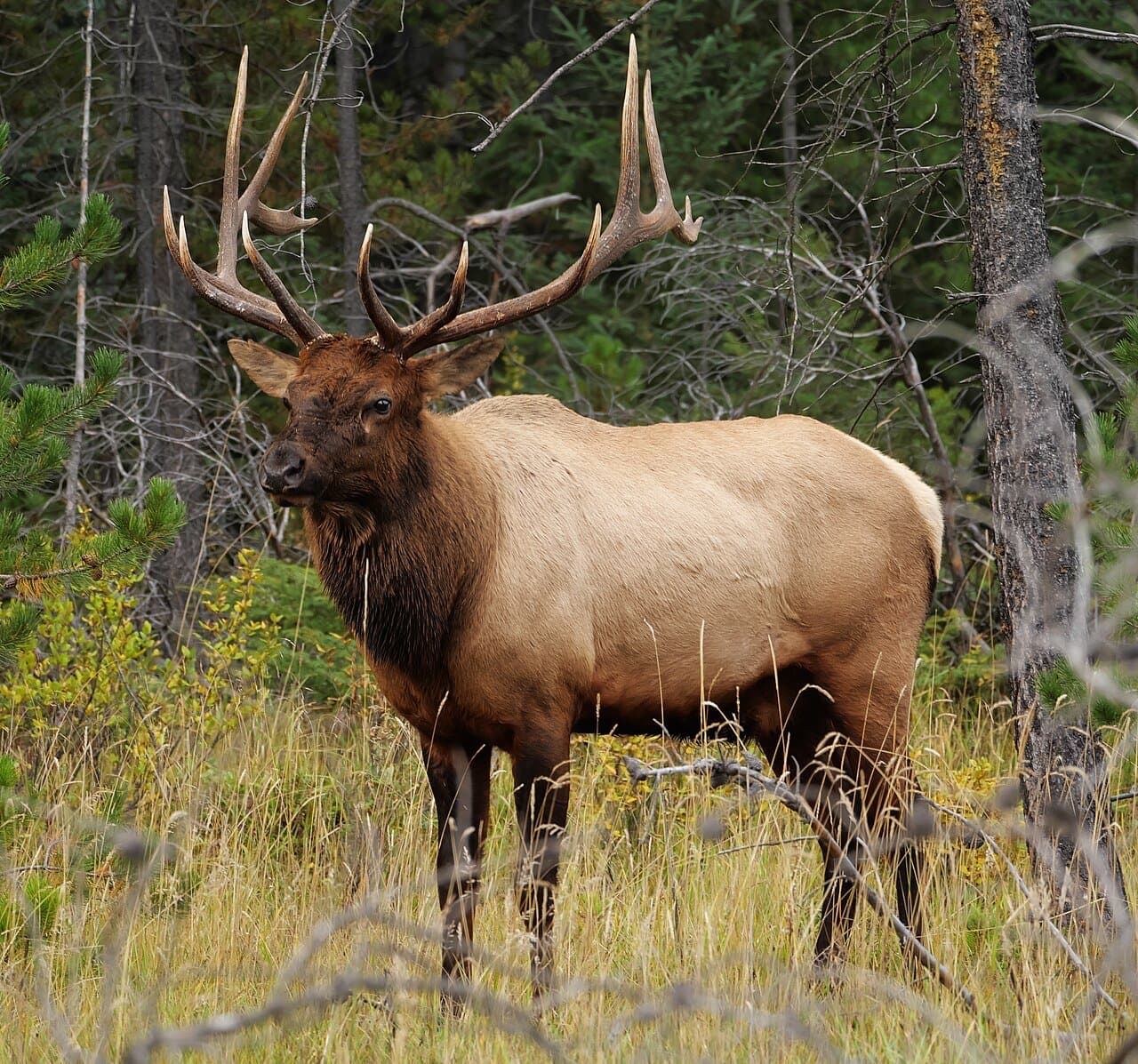
Elk
Cervus canadensis
A large North American deer whose males grow huge antlers every year and fill autumn valleys with high-pitched bugling.
Checking teacher reviews…
About the Elk
Elk eat mostly grasses and small plants, plus some shrubs, about 20 pounds of plants a day. In summer, herds move high into the mountains, and in winter they move down to lower valleys. A bull's antlers can grow up to an inch a day in spring and are covered in soft, fuzzy skin called velvet. Calves are born in late May or June, weigh about 30 pounds, and have spots that fade by late summer.[1]
Quick facts
- Scientific name
- Cervus canadensis[1]
- Size
- Bulls about 5 feet tall at the shoulder. Cows about 4.5 feet.[1]
- Weight
- Bulls 700 to 1,000 pounds (up to 1,100 in fall). Cows about 300 to 500 pounds.[1]
- Lifespan
- 10 to 13 years in the wild.[1]
- Diet
- Herbivore. Mostly grasses and small flowering plants, plus shrubs: about 20 pounds a day.[1]
- Habitat
- Mountain meadows and valleys, moving higher in summer and lower in winter.[1]
- Group life
- Very social herds that can grow to a few hundred elk.[1]
- Babies
- Calves are born from late May into June, weigh about 30 pounds, and have spots.[1]
- Conservation status
- Least Concern (IUCN Red List, assessed 2015).[2]
Fun facts
- Elk antlers can grow up to an inch a day in spring.[1]
- A mature bull's antlers can weigh up to 40 pounds. They fall off every winter.[1]
- A bull elk's bugle starts with deep tones and rises to a high-pitched squeal.[1]
- Rocky Mountain National Park's elk come from 49 elk moved from Yellowstone in 1913-1914.[1]
Vocabulary
- antler
- A branched bony growth on a deer's head that falls off and regrows every year.
- velvet
- The soft, fuzzy skin that covers growing antlers.
- bugle
- The loud, high call a male elk makes in the fall.
- rut
- The mating season of deer and elk.
- bull / cow
- Names for an adult male (bull) and adult female (cow) elk.
See it in person
- Montgomery ZooMontgomery, Alabama · North AmericaSee this area on the zoo's website ↗
Sources
- [1] National Park Service, Rocky Mountain National Park. “Elk.” https://www.nps.gov/romo/learn/nature/elk.htm (accessed 2026-10-02)
- [2] IUCN Red List of Threatened Species. “Cervus canadensis (Wapiti).” https://www.iucnredlist.org/species/55997823/142396828 (accessed 2026-10-02)
Facts last checked 2026-10-02.