
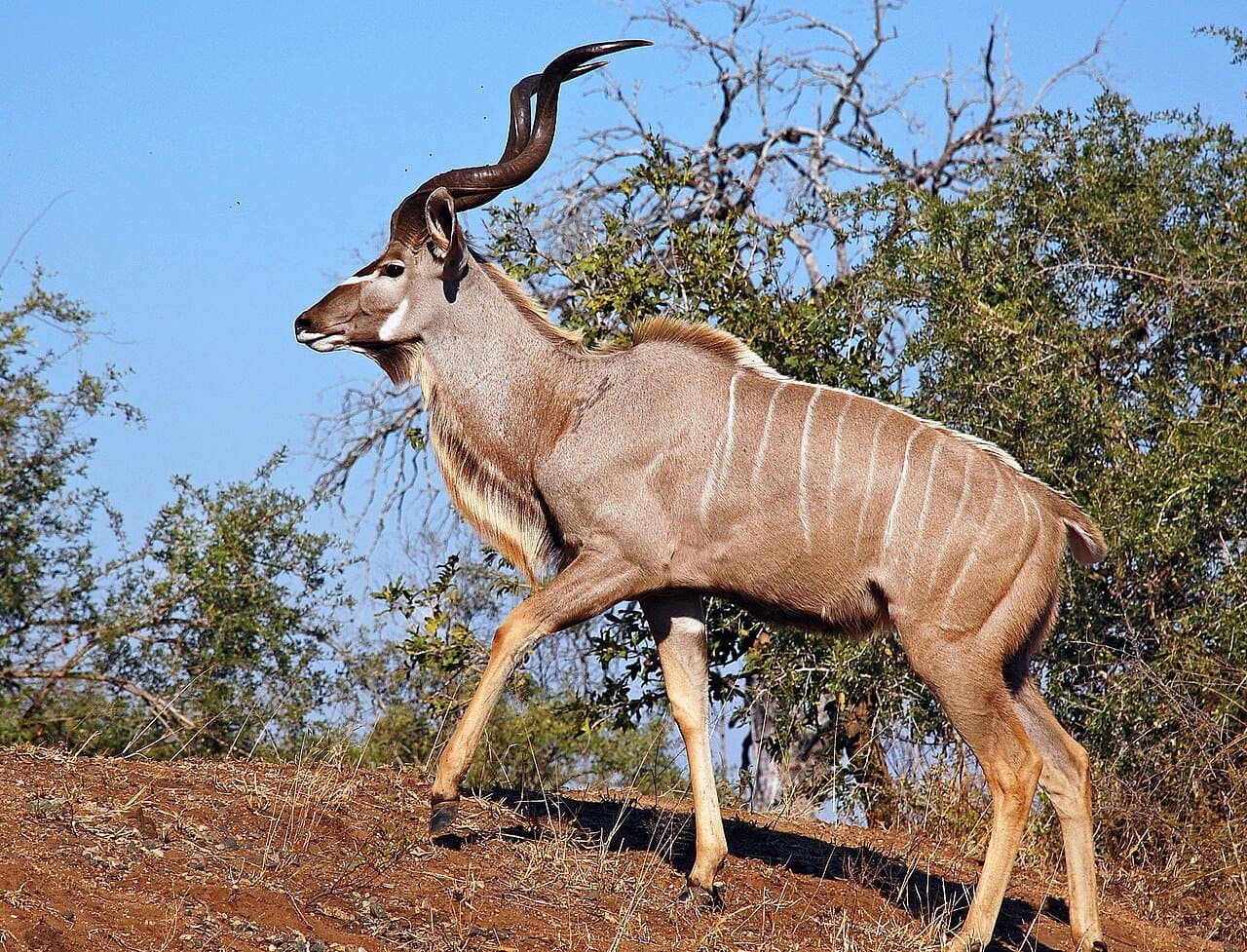
Greater Kudu
Tragelaphus strepsiceros
A large striped antelope of African woodlands whose males grow long, spiral horns with about two and a half twists.
Checking teacher reviews…
About the Greater Kudu
Greater kudu live in woodlands and hilly areas of eastern, central and southern Africa. Their brownish gray coats have thin white stripes that help them hide among trees. Only the males grow the famous spiral horns, which can make two and a half twists. Females live in small groups of six to ten with their young, while males usually live alone.[1][2]
Quick facts
- Scientific name
- Tragelaphus strepsiceros[1]
- Size
- 40 to 60 inches (100 to 150 cm) tall at the shoulder. Females are noticeably smaller than males.[1]
- Weight
- 260 to 700 pounds (120 to 315 kg).[1]
- Lifespan
- Up to 10 years in the wild. Up to 23 years in captivity.[1]
- Diet
- Herbivore. A browser that eats leaves and shoots from many kinds of plants.[1]
- Where it lives
- Eastern, central and southern Africa.[2]
- Group life
- Females form small groups of six to ten with their young. Males are usually solitary.[1]
- Babies
- Pregnancy lasts up to 9 months.[1]
- Conservation status
- Least Concern (IUCN Red List, assessed 2016).[3]
Fun facts
- A male's spiral horns can grow as long as 6 feet (1.8 m), making about two and a half twists.[1]
- Greater kudu have the loudest alarm bark of any African antelope.[2]
- Kudu have a white chevron (V-shaped mark) between their eyes and a crest of long hair along the spine.[1]
- Leopards, African wild dogs and spotted hyenas all hunt kudu.[1]
Vocabulary
- antelope
- A fast, deer-like mammal with hooves and horns, found mostly in Africa and Asia.
- browser
- An animal that eats leaves, twigs and shoots from bushes and trees.
- spiral
- A shape that winds around and around, like a corkscrew.
- chevron
- A V-shaped mark or pattern.
- predator
- An animal that hunts other animals for food.
See it in person
- Montgomery ZooMontgomery, Alabama · AfricaSee this area on the zoo's website ↗
Sources
- [1] African Wildlife Foundation. “Greater kudu vs. lesser kudu.” https://www.awf.org/wildlife-conservation/kudu (accessed 2026-10-02)
- [2] San Diego Zoo Wildlife Alliance. “Spiral-horned Antelope.” https://animals.sandiegozoo.org/animals/spiral-horned-antelope (accessed 2026-10-02)
- [3] IUCN Red List of Threatened Species. “Tragelaphus strepsiceros (Greater Kudu).” https://www.iucnredlist.org/species/22054/166487759 (accessed 2026-10-02)
Facts last checked 2026-10-02.
More Antelopes
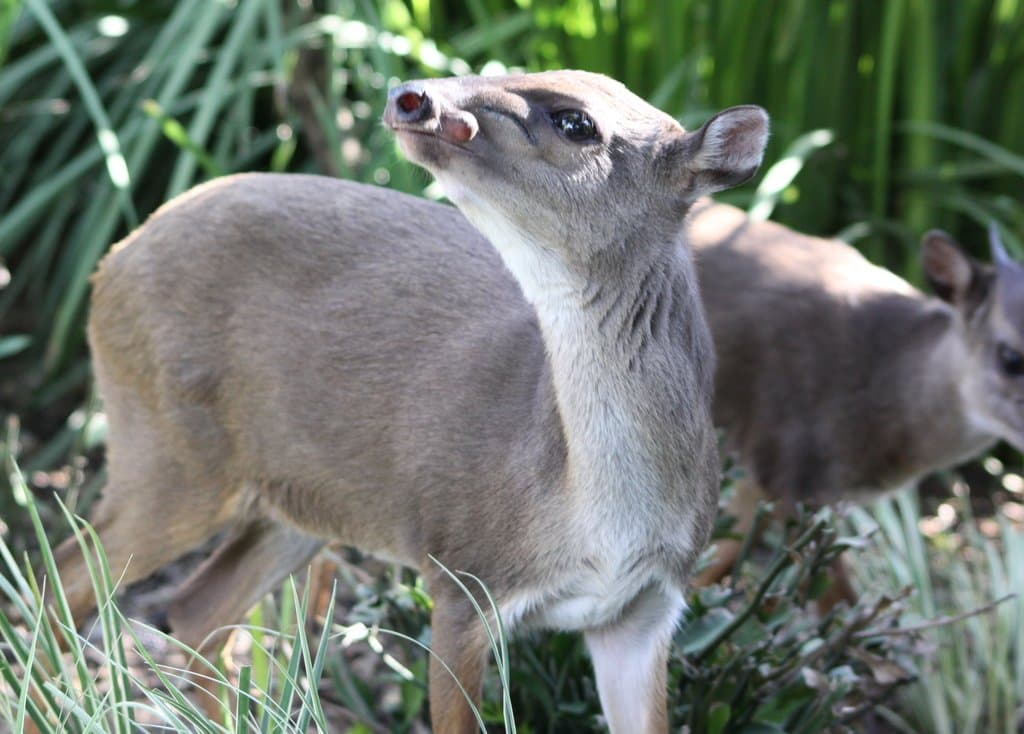 Blue DuikerPhilantomba monticolaA tiny forest antelope of central and southern Africa that weighs only 9 to 13 pounds and lives in pairs.
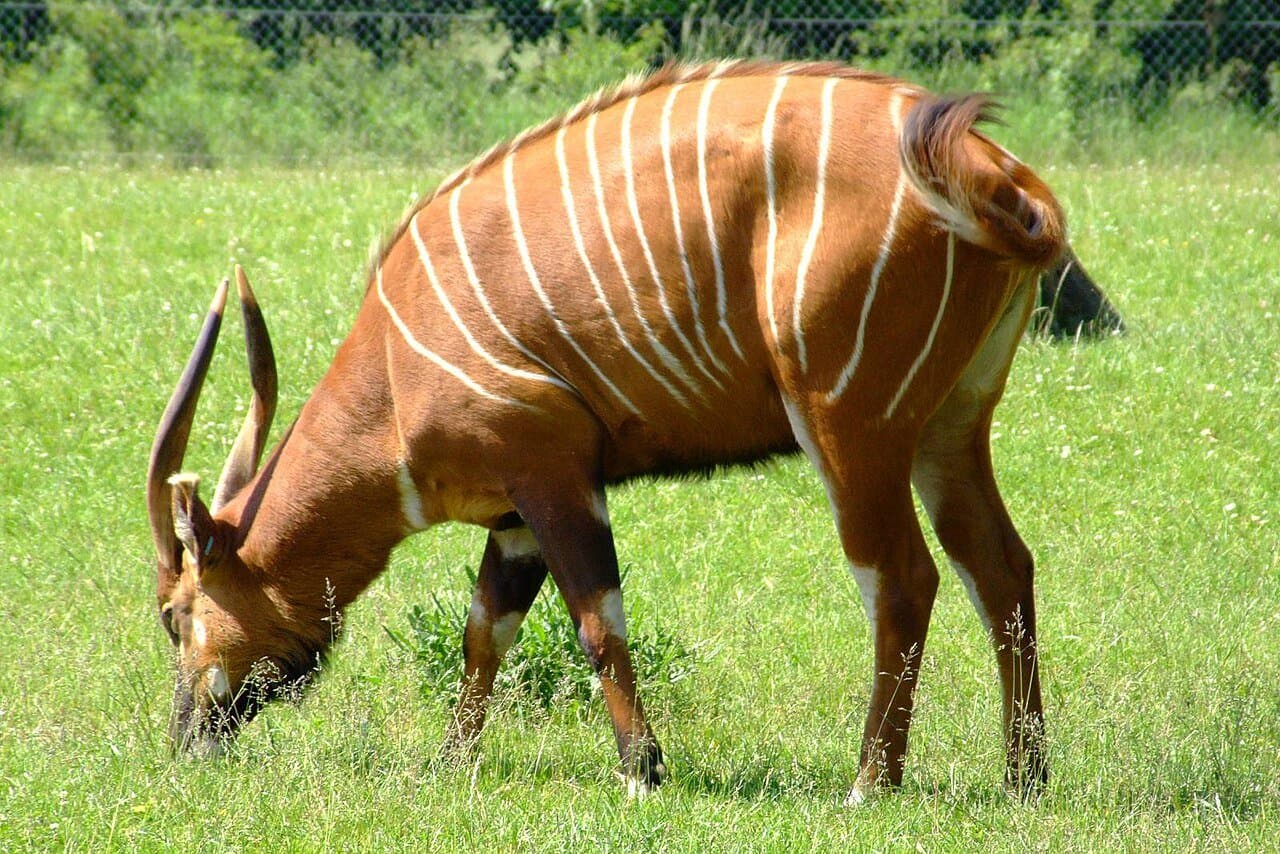 BongoTragelaphus eurycerusA large forest antelope of tropical Africa with 10 to 15 pale stripes down each side and horns up to 3 feet long.
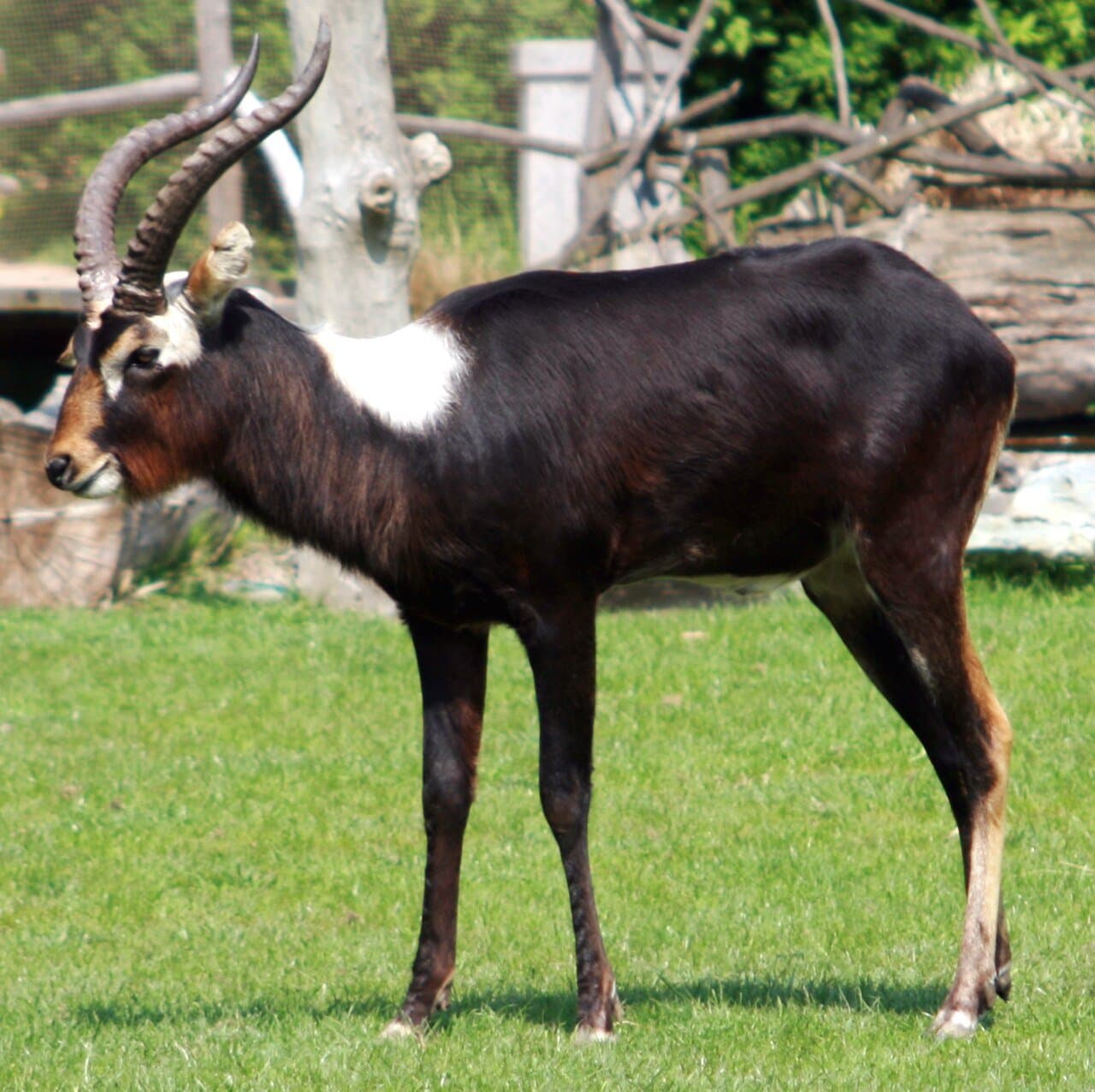 Nile LechweKobus megacerosAn endangered swamp antelope of South Sudan and Ethiopia whose dark males and golden females look like different animals.