
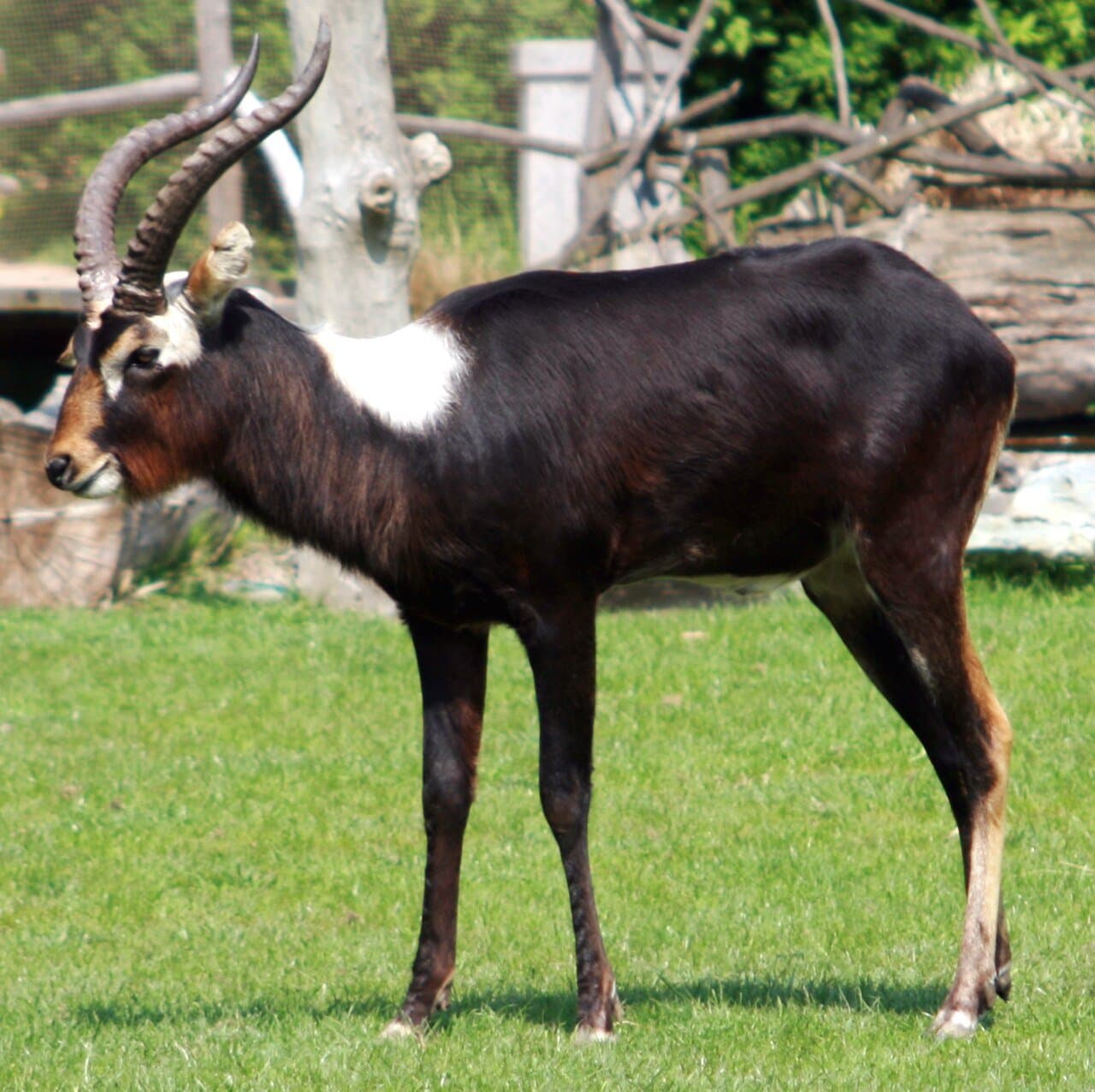
Nile Lechwe
Kobus megaceros
An endangered swamp antelope of South Sudan and Ethiopia whose dark males and golden females look like different animals.
Checking teacher reviews…
About the Nile Lechwe
Nile lechwe live in the swamps and grassy marshes of South Sudan and western Ethiopia. They eat grasses, herbs and water plants. Lechwe are strong swimmers but prefer to wade in shallow water, and their long, narrow hooves help them move through marshy ground. They gather in herds of 50 to 500 animals.[1]
Quick facts
- Scientific name
- Kobus megaceros[1]
- Size
- Males 100 to 105 cm tall at the shoulder. Females 80 to 85 cm.[1]
- Weight
- Males 90 to 120 kg. Females 60 to 90 kg.[1]
- Lifespan
- About 10 to 11.5 years in the wild. Up to 19 years in captivity.[1]
- Diet
- Herbivore. Grasses, herbs and water plants.[1]
- Habitat
- Swamps, flooded grass marshes and steppes.[1]
- Where it lives
- South Sudan and western Ethiopia.[1]
- Group life
- Herds of 50 to 500 animals.[1]
- Babies
- Pregnancy lasts about 235 days. One calf, usually every year.[1]
- Conservation status
- Endangered (IUCN Red List, assessed 2016).[2]
Fun facts
Vocabulary
- antelope
- A fast, deer-like mammal with hooves and horns, found mostly in Africa and Asia.
- marsh
- Low, wet land covered with grasses and reeds.
- wade
- To walk through shallow water.
- lyre
- An old stringed instrument with two curved arms, like a small harp.
- bachelor
- An adult male animal that does not have a mate or territory.
See it in person
- Montgomery ZooMontgomery, Alabama · Africa ForestSee this area on the zoo's website ↗
Sources
- [1] Animal Diversity Web, University of Michigan Museum of Zoology. “Kobus megaceros (Nile lechwe).” https://animaldiversity.org/accounts/Kobus_megaceros/ (accessed 2026-10-02)
- [2] IUCN Red List of Threatened Species. “Kobus megaceros (Nile Lechwe).” https://www.iucnredlist.org/species/11034/50189177 (accessed 2026-10-02)
Facts last checked 2026-10-02.
More Antelopes
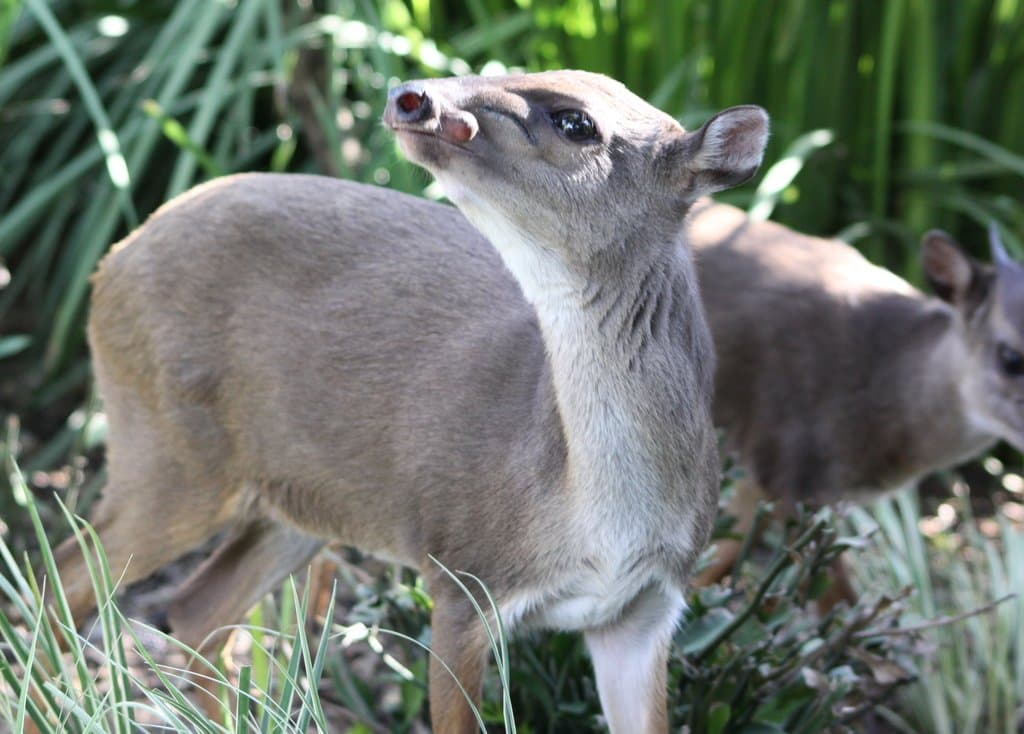 Blue DuikerPhilantomba monticolaA tiny forest antelope of central and southern Africa that weighs only 9 to 13 pounds and lives in pairs.
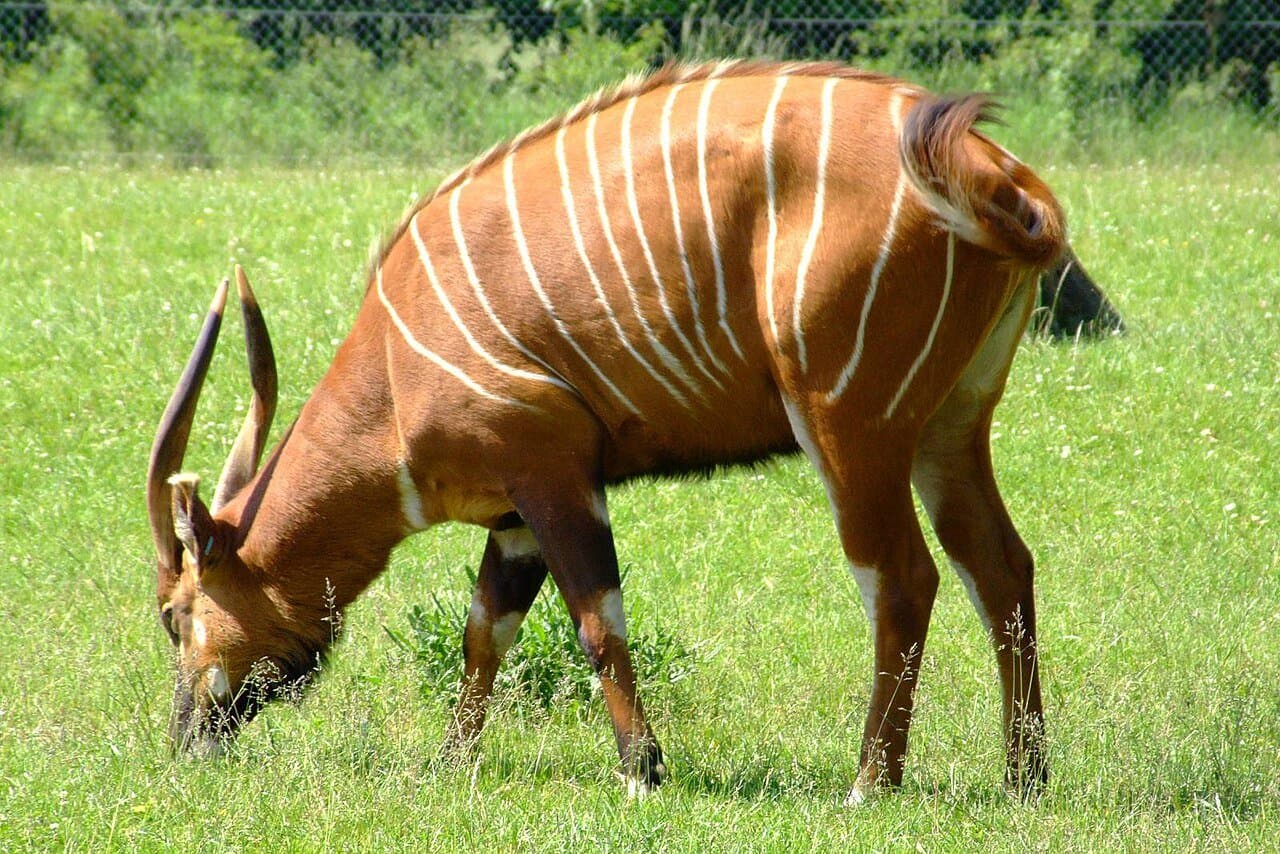 BongoTragelaphus eurycerusA large forest antelope of tropical Africa with 10 to 15 pale stripes down each side and horns up to 3 feet long.
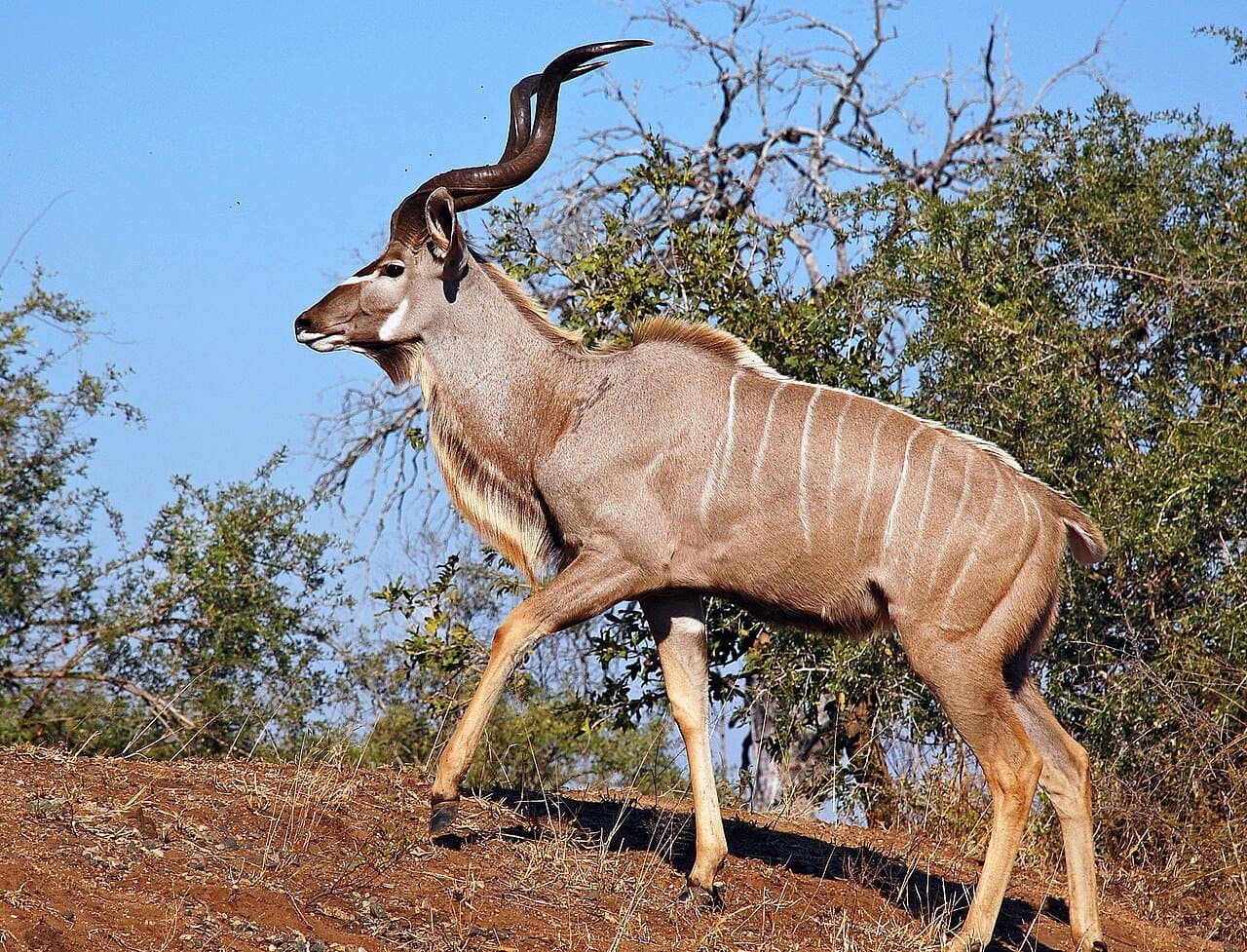 Greater KuduTragelaphus strepsicerosA large striped antelope of African woodlands whose males grow long, spiral horns with about two and a half twists.