
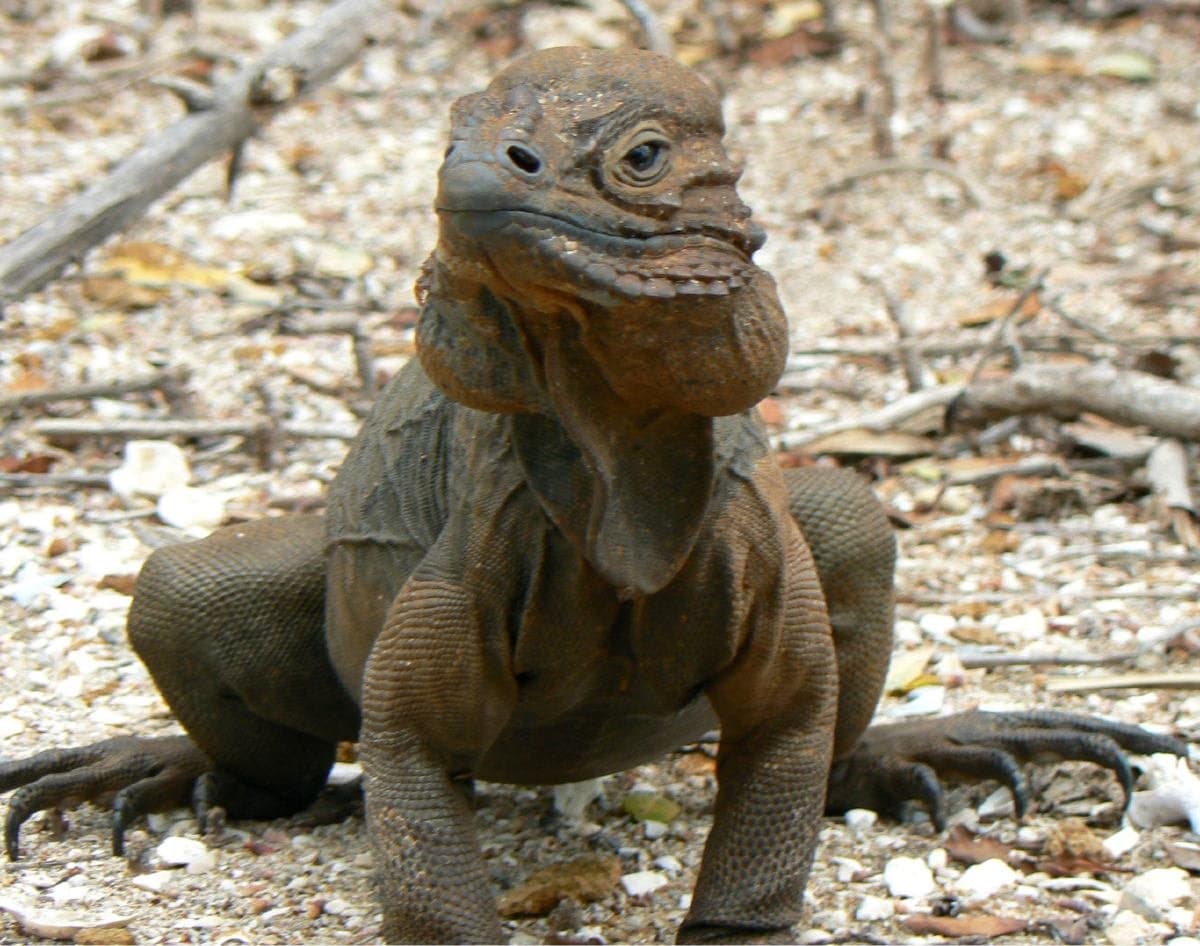
Rhinoceros Iguana
Cyclura cornuta
An endangered plant-eating lizard found only on the Caribbean island of Hispaniola, named for the horn-like scales on its snout.
Checking teacher reviews…
About the Rhinoceros Iguana
Rhinoceros iguanas live only on the island of Hispaniola in the Caribbean Sea. They live in hot, dry forests, scrub and desert. These iguanas mostly eat leaves, fruits, flowers and seeds, and sometimes insects, land crabs or dead animals. Males have larger horn-like scales on their heads than females.[1]
Quick facts
- Scientific name
- Cyclura cornuta[1]
- Lifespan
- 20 years reported in captivity, and possibly much longer in the wild.[1]
- Diet
- Mostly leaves, fruits, flowers and seeds, sometimes insects, land crabs or carrion.[1]
- Habitat
- Dry forest, scrub and desert in places that average at least 27°C (81°F).[1]
- Where it lives
- Only the island of Hispaniola in the Caribbean.[1]
- Babies
- 5 to 20 eggs, laid in a burrow about 40 days after mating.[1]
- Conservation status
- Endangered (IUCN Red List, assessed 2018).[2]
Fun facts
Vocabulary
- iguana
- A large lizard found in warm parts of the Americas.
- scale
- One of the small, hard plates that cover a reptile's skin.
- burrow
- A hole or tunnel dug in the ground by an animal.
- introduced predator
- A hunting animal brought by people to a place where it did not live before.
- endangered
- A conservation label meaning a species faces a very high risk of dying out in the wild.
See it in person
- Montgomery ZooMontgomery, Alabama · Reptile JunctionSee this area on the zoo's website ↗
Sources
- [1] Animal Diversity Web, University of Michigan Museum of Zoology. “Cyclura cornuta (rhinoceros iguana).” https://animaldiversity.org/accounts/Cyclura_cornuta/ (accessed 2026-10-02)
- [2] IUCN Red List of Threatened Species. “Cyclura cornuta (Hispaniolan Rhinoceros Iguana).” https://www.iucnredlist.org/species/6042/3099941 (accessed 2026-10-02)
Facts last checked 2026-10-02.
More Lizards
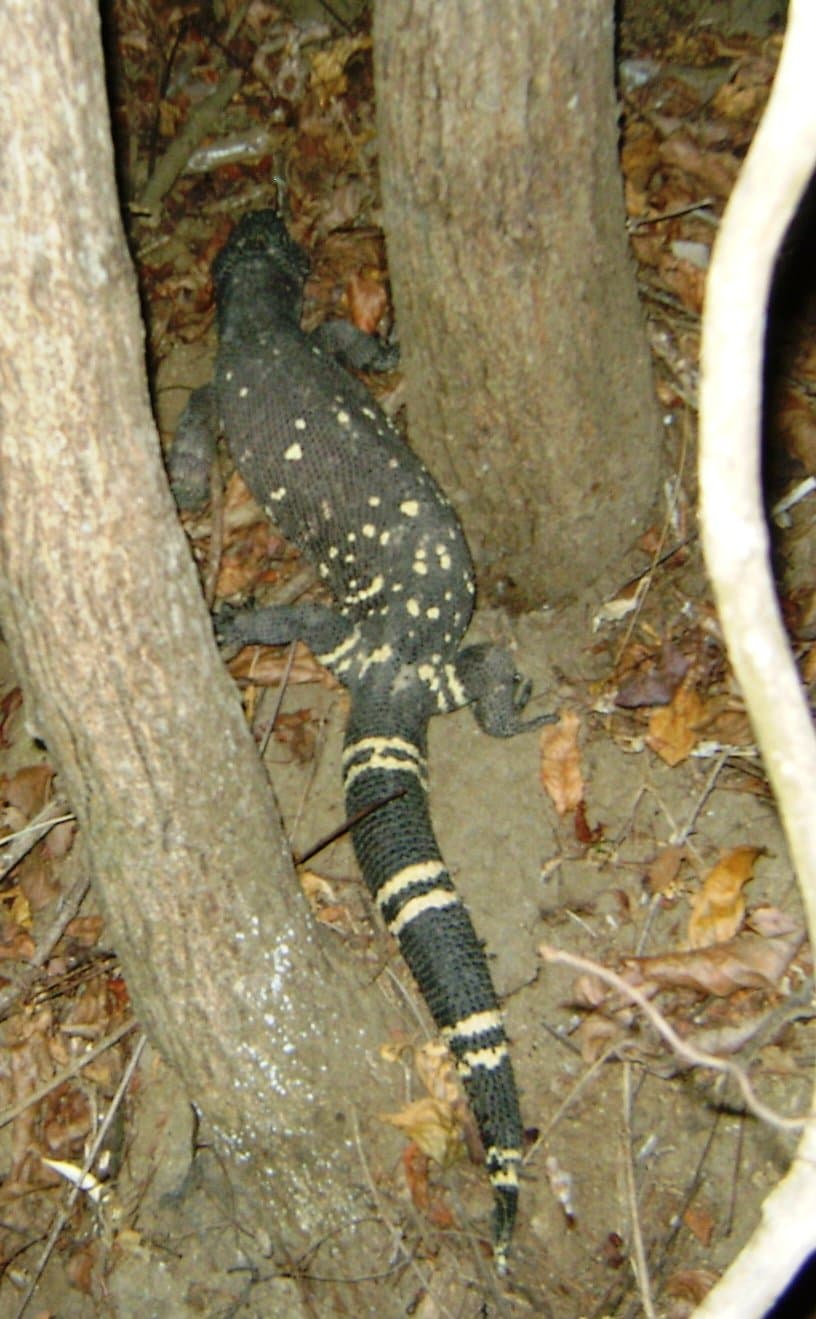 Guatemalan Beaded LizardHeloderma charlesbogertiAn endangered venomous lizard that lives only in one dry valley in eastern Guatemala and helped lead to a diabetes medicine.
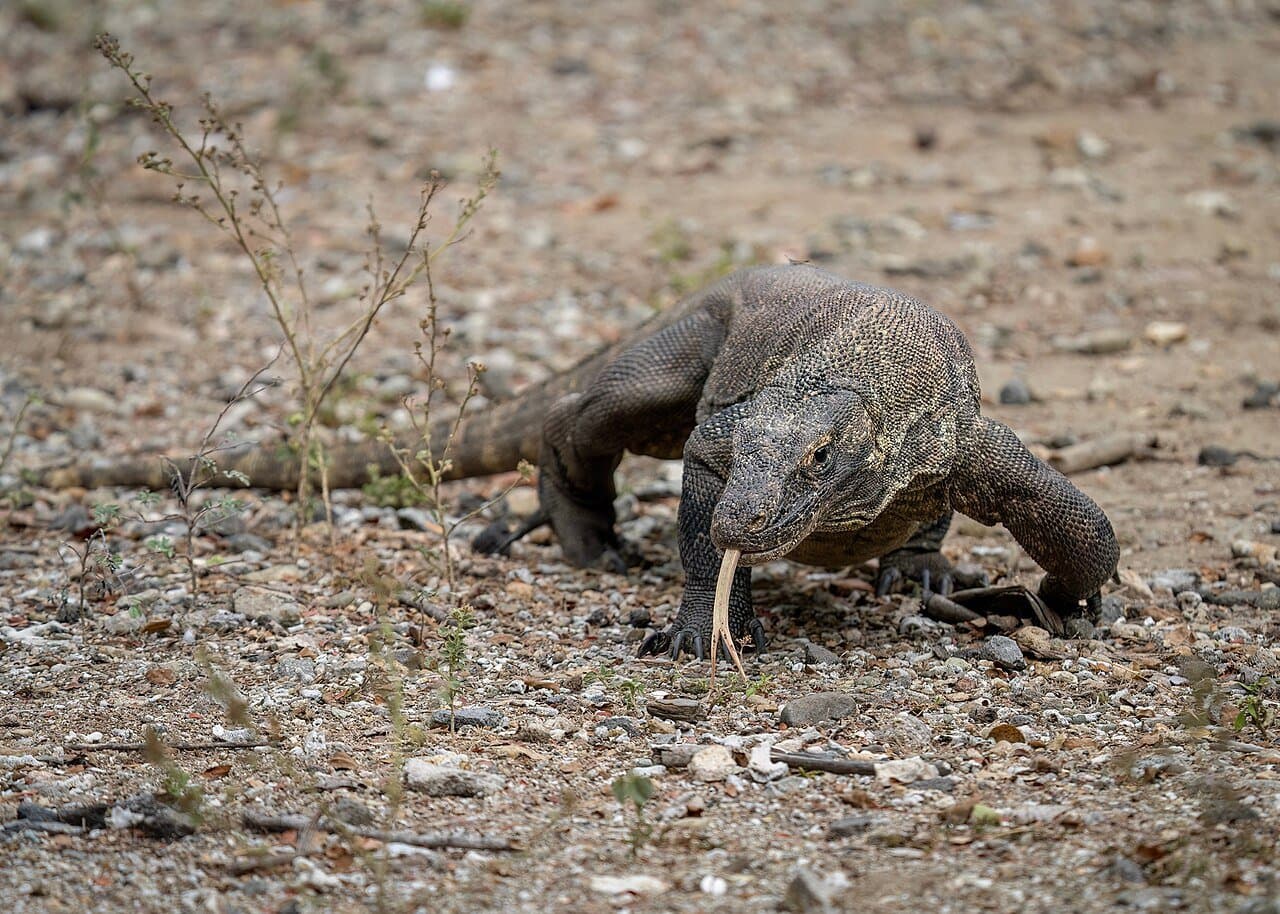 Komodo DragonVaranus komodoensisThe largest living lizard, a venomous predator found only on a few Indonesian islands that can smell food miles away.
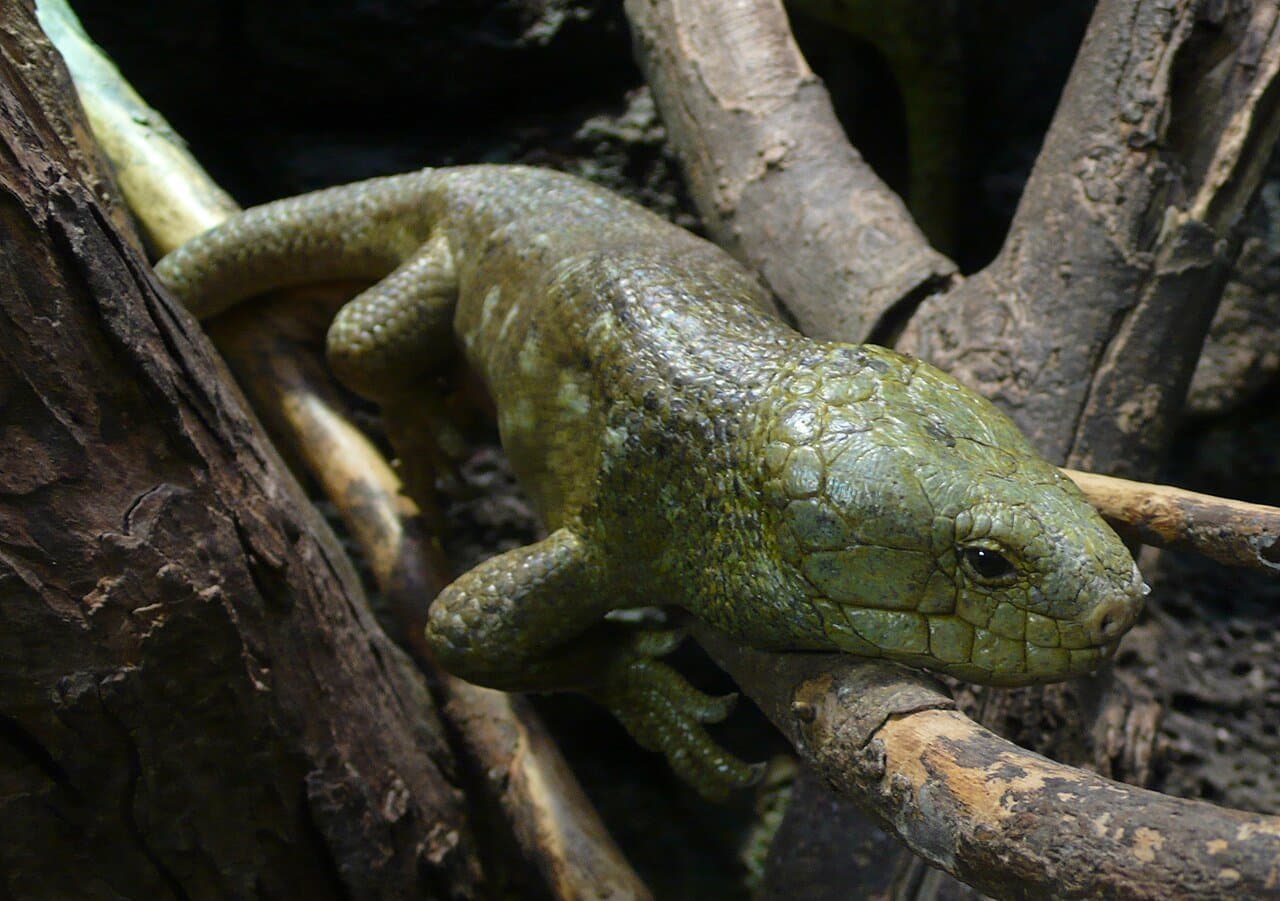 Solomon Islands SkinkCorucia zebrataThe world's largest skink, a tree-dwelling, mostly vegetarian lizard of the Solomon Islands with a tail that can grab branches.