
Impala
Aepyceros melampus
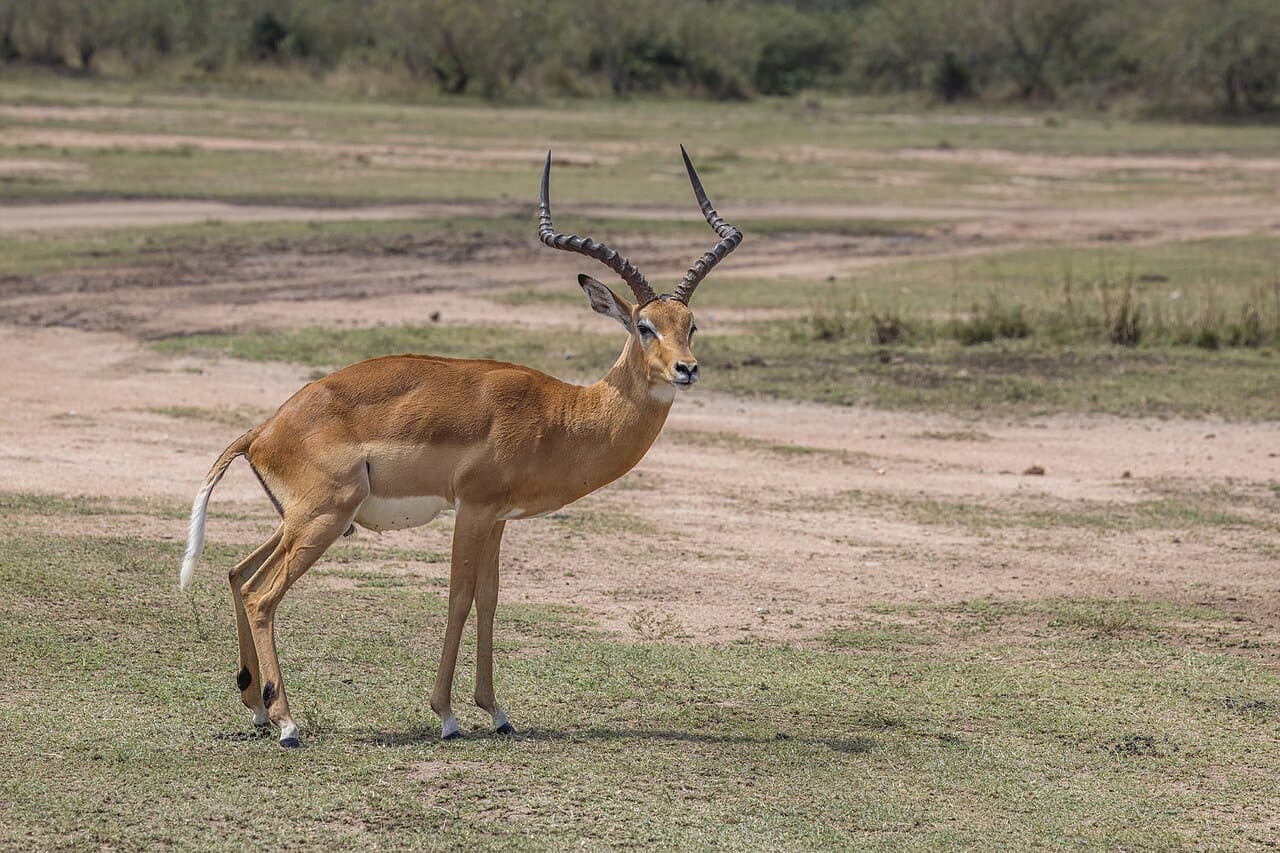
A graceful reddish-brown African antelope whose males have long S-shaped horns.
Checking teacher reviews…
About the Impala
Impalas live in open woodlands and grasslands from South Africa to Kenya, usually near water. They are red-brown with a white belly and black stripes on the tail, forehead and thighs. Only males have horns, which are heavily ridged, S-shaped and up to about 3 feet long. Impalas graze on grass after the rains and switch to browsing leaves in the dry season.[1]
Quick facts
- Scientific name
- Aepyceros melampus[1]
- Lifespan
- About 13 to 15 years in the wild.[1]
- Diet
- Herbivore. Grass in the wet season and leaves in the dry season.[1]
- Habitat
- Open woodland and short to medium grassland, usually near water.[1]
- Where it lives
- Southern and eastern Africa, from South Africa to Kenya.[1]
- Group life
- Female herds of 15 to 100. Active during the day.[1]
- Babies
- Pregnancy lasts about 194 to 200 days.[1]
- Conservation status
- Least Concern (IUCN Red List, assessed 2016).[2]
Fun facts
Vocabulary
- ruminant
- A hoofed animal that chews cud and has a stomach with several chambers.
- grazer
- An animal that eats mostly grass.
- browser
- An animal that eats leaves, twigs and shoots from bushes and trees.
- herd
- A large group of hoofed animals that live together.
- diurnal
- Active mainly during the day.
See it in person
- Omaha's Henry Doorly Zoo and AquariumOmaha, Nebraska · Scott African GrasslandsSee this area on the zoo's website ↗
These zoos had this animal when we gathered our information, but animals sometimes move. Check the zoo's website or contact the zoo before you visit.
Sources
- [1] Animal Diversity Web, University of Michigan. “Impala (Aepyceros melampus).” https://animaldiversity.org/accounts/Aepyceros_melampus/ (accessed 2026-10-02)
- [2] IUCN Red List of Threatened Species. “Aepyceros melampus (Impala).” https://www.iucnredlist.org/species/550/50180828 (accessed 2026-10-02)
Facts last checked 2026-10-02.


