
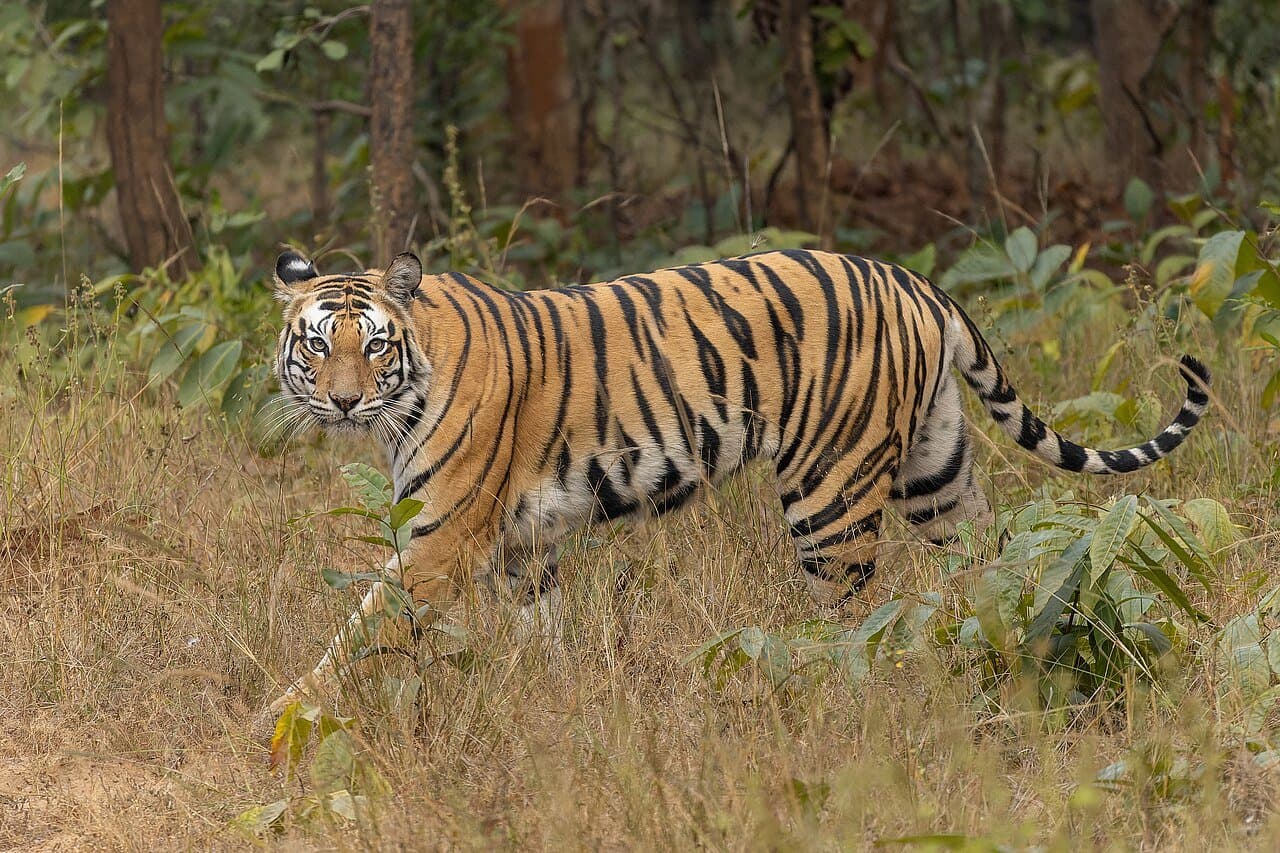
Bengal Tiger
Panthera tigris tigris
An endangered striped big cat of India and nearby countries that hunts alone and is an excellent swimmer.
Checking teacher reviews…
About the Bengal Tiger
Bengal tigers live in India, Bangladesh, Nepal, Bhutan and China. Tigers live in forests, mangrove swamps and grasslands. They hunt large animals such as deer, buffalo and wild boar, but only about 1 in 10 to 20 attacks succeeds. When a tiger does catch large prey, it can eat 18 to 40 kilograms of meat at once. No two tigers have exactly the same stripes.[1][2]
Quick facts
- Scientific name
- Panthera tigris tigris[1]
- Size
- Tigers range from about 2 to 3.7 meters (6.5 to 12 feet) long, depending on the kind.[1]
- Weight
- Tigers weigh 91 to 423 kg (200 to 930 pounds), depending on the kind.[1]
- Lifespan
- Usually 8 to 10 years in the wild. 16 to 18 years in captivity, up to 26.[1]
- Habitat
- Forests, mangrove swamps and grasslands.[2]
- Where it lives
- India, Bangladesh, Nepal, Bhutan and China.[1]
- Group life
- Solitary, except when mating or raising cubs.[2]
- Babies
- Pregnancy lasts about 103 days. Usually 2 to 3 cubs, sometimes up to 7.[1]
- Conservation status
- Endangered (IUCN Red List, tiger, assessed 2021).[3]
Fun facts
- Bengal tigers have the longest canine teeth of any living big cat: 7.5 to 10 cm (3 to 4 inches).[1]
- Tigers can swim across rivers 6 to 8 km wide.[1]
- No two tigers have exactly the same stripes, so scientists use stripes to tell them apart.[2]
- Only about 1 in every 10 to 20 tiger attacks ends in a catch.[1]
Vocabulary
- solitary
- Living alone rather than in a group.
- home range
- The area an animal regularly travels through to find food and shelter.
- canine teeth
- Long, pointed teeth used for gripping and tearing.
- mangrove
- A tree or swamp forest that grows in salty water along tropical coasts.
- endangered
- A conservation label meaning a species faces a very high risk of dying out in the wild.
See it in person
- Montgomery ZooMontgomery, Alabama · AsiaSee this area on the zoo's website ↗
Sources
- [1] Animal Diversity Web, University of Michigan Museum of Zoology. “Panthera tigris (tiger).” https://animaldiversity.org/accounts/Panthera_tigris/ (accessed 2026-10-02)
- [2] Smithsonian's National Zoo & Conservation Biology Institute. “Tiger.” https://nationalzoo.si.edu/animals/tiger (accessed 2026-10-02)
- [3] IUCN Red List of Threatened Species. “Panthera tigris (Tiger).” https://www.iucnredlist.org/species/15955/214862019 (accessed 2026-10-02)
Facts last checked 2026-10-02.
More Big Cats
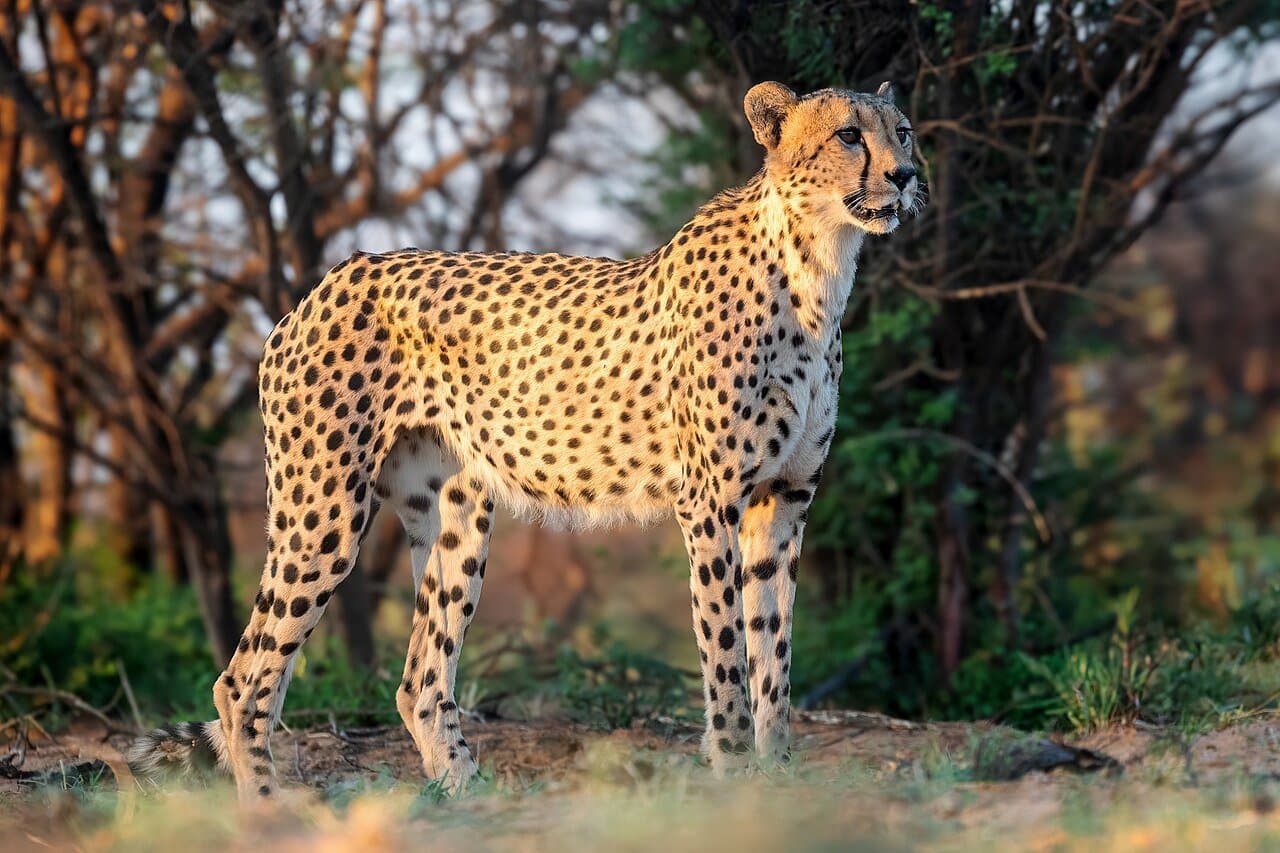 CheetahAcinonyx jubatusA slim spotted cat of African grasslands, built for speed, that can sprint 60 to 70 miles per hour.
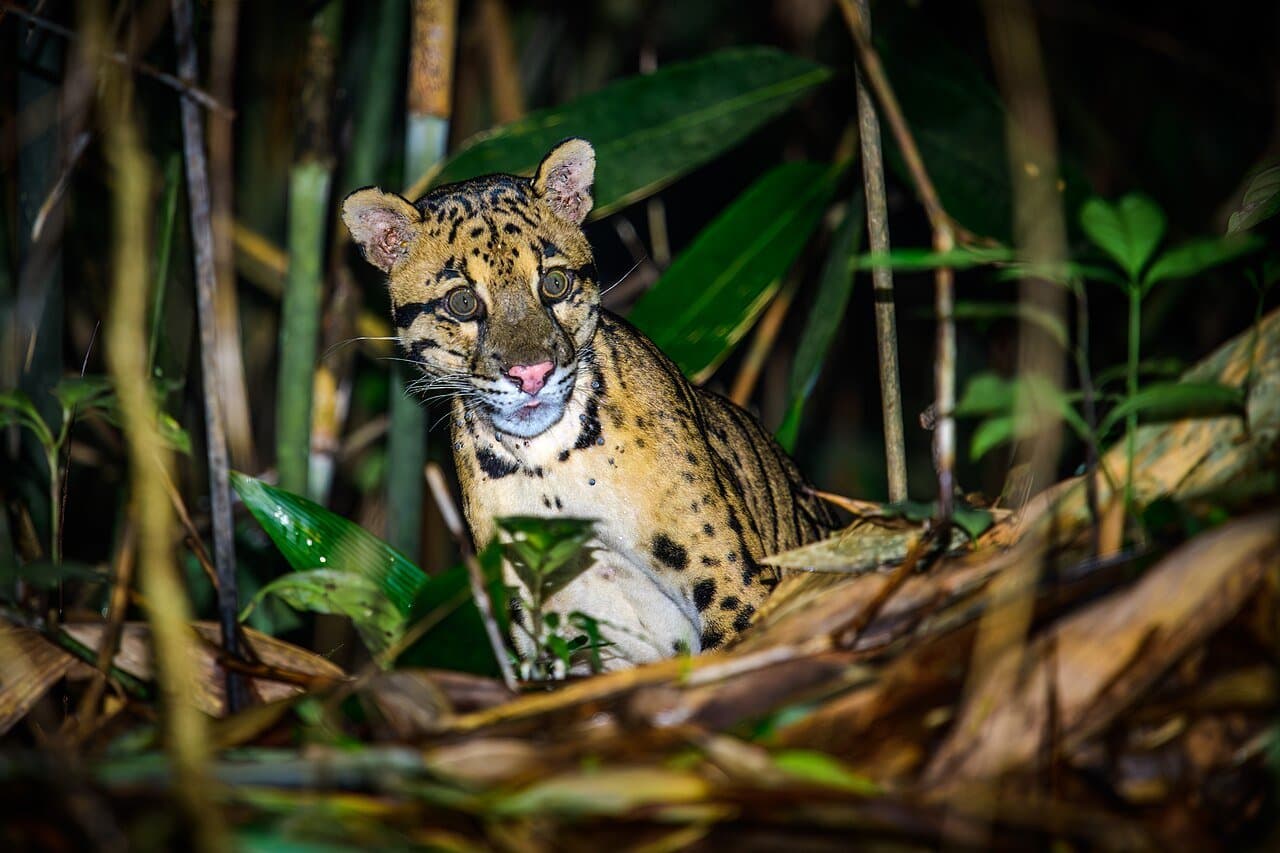 Clouded LeopardNeofelis nebulosaA tree-climbing wild cat of Asian forests with cloud-shaped spots and the longest canine teeth for its skull size of any wild cat.
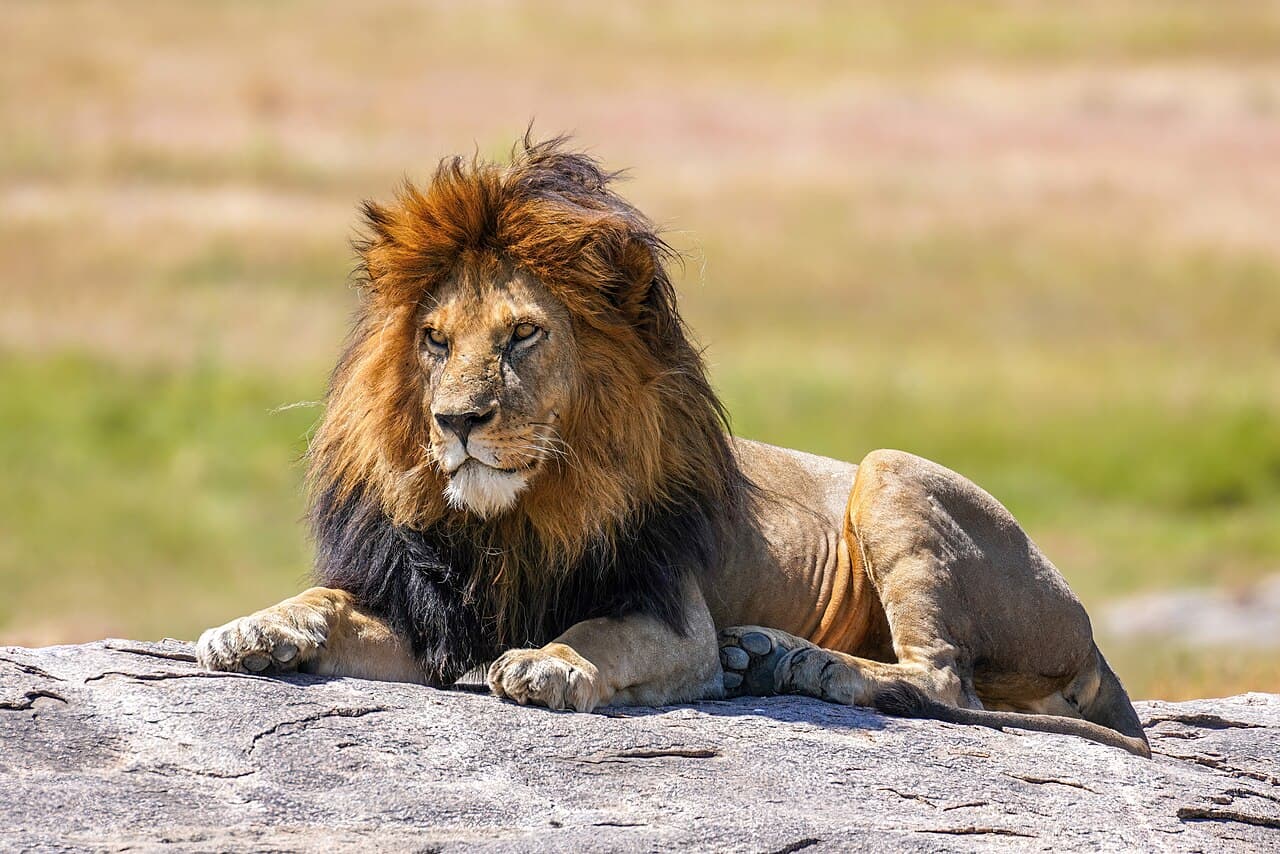 LionPanthera leoA large wild cat of the African savanna that lives in family groups called prides.
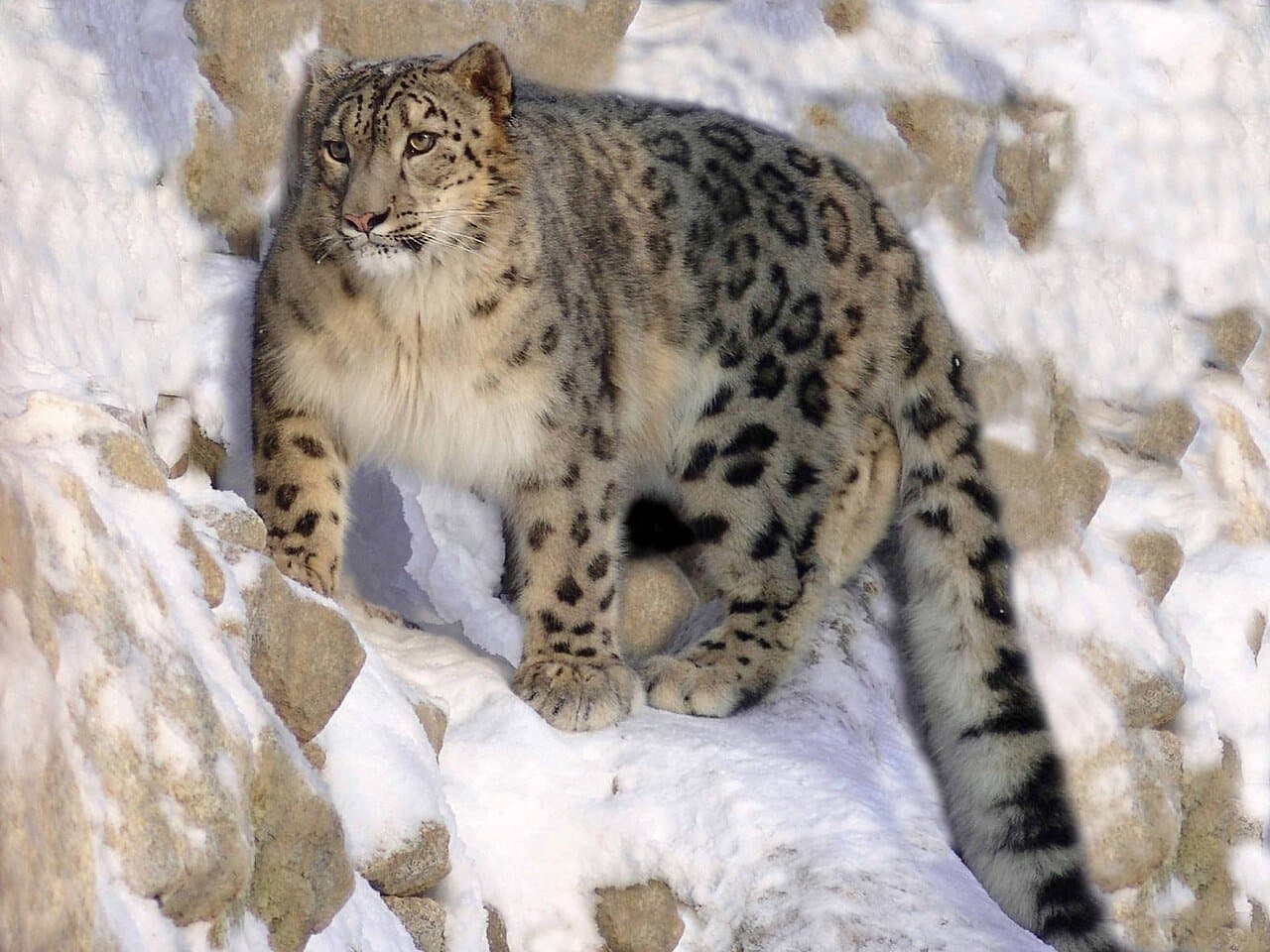 Snow LeopardPanthera unciaA smoky-gray big cat of Central Asia's high mountains with huge furry paws and a long tail it wraps around itself for warmth.
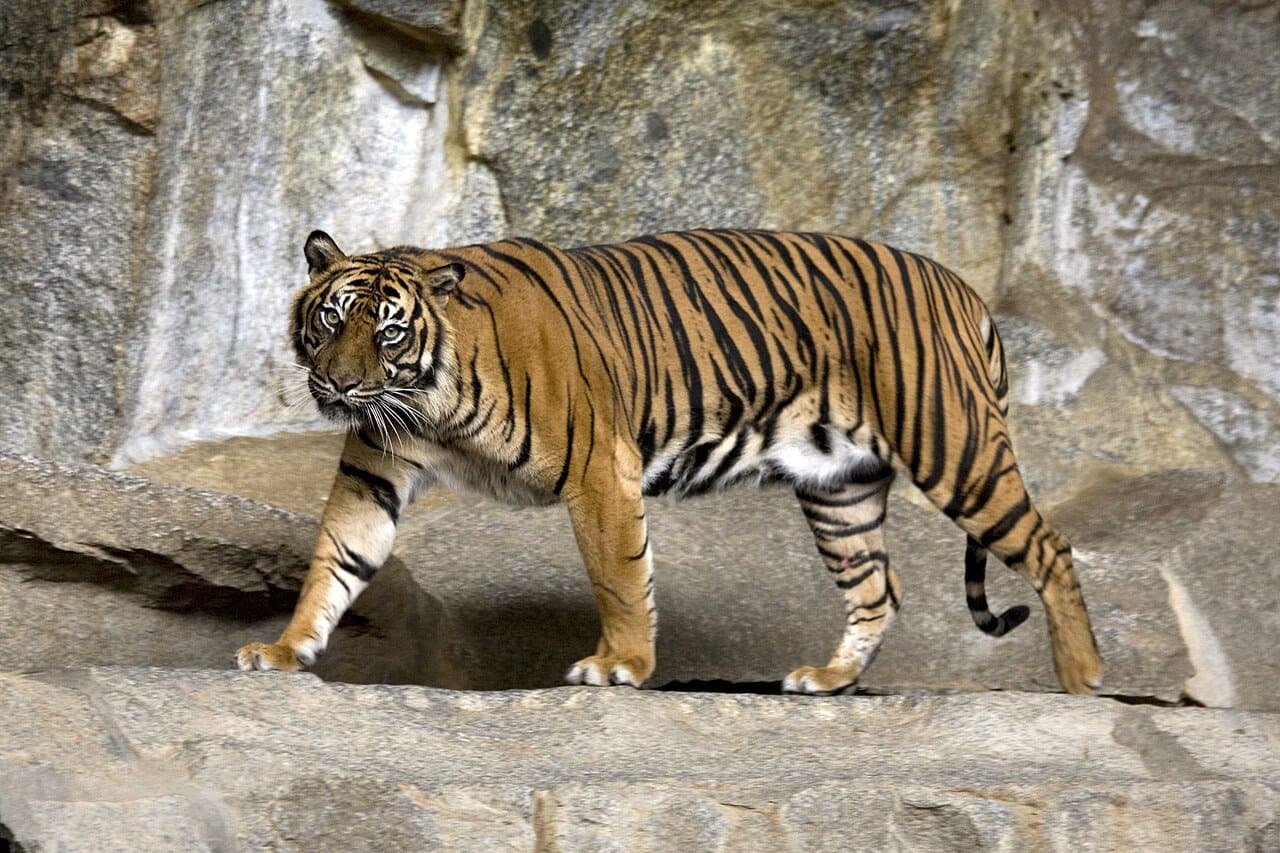 Sumatran TigerPanthera tigris sumatraeThe smallest tiger, found only on the Indonesian island of Sumatra, with closely set stripes and webbed toes for swimming.