
California Condor
Gymnogyps californianus
North America's biggest bird, a critically endangered bald-headed scavenger with a wingspan up to 9 feet.
Checking teacher reviews…
About the California Condor
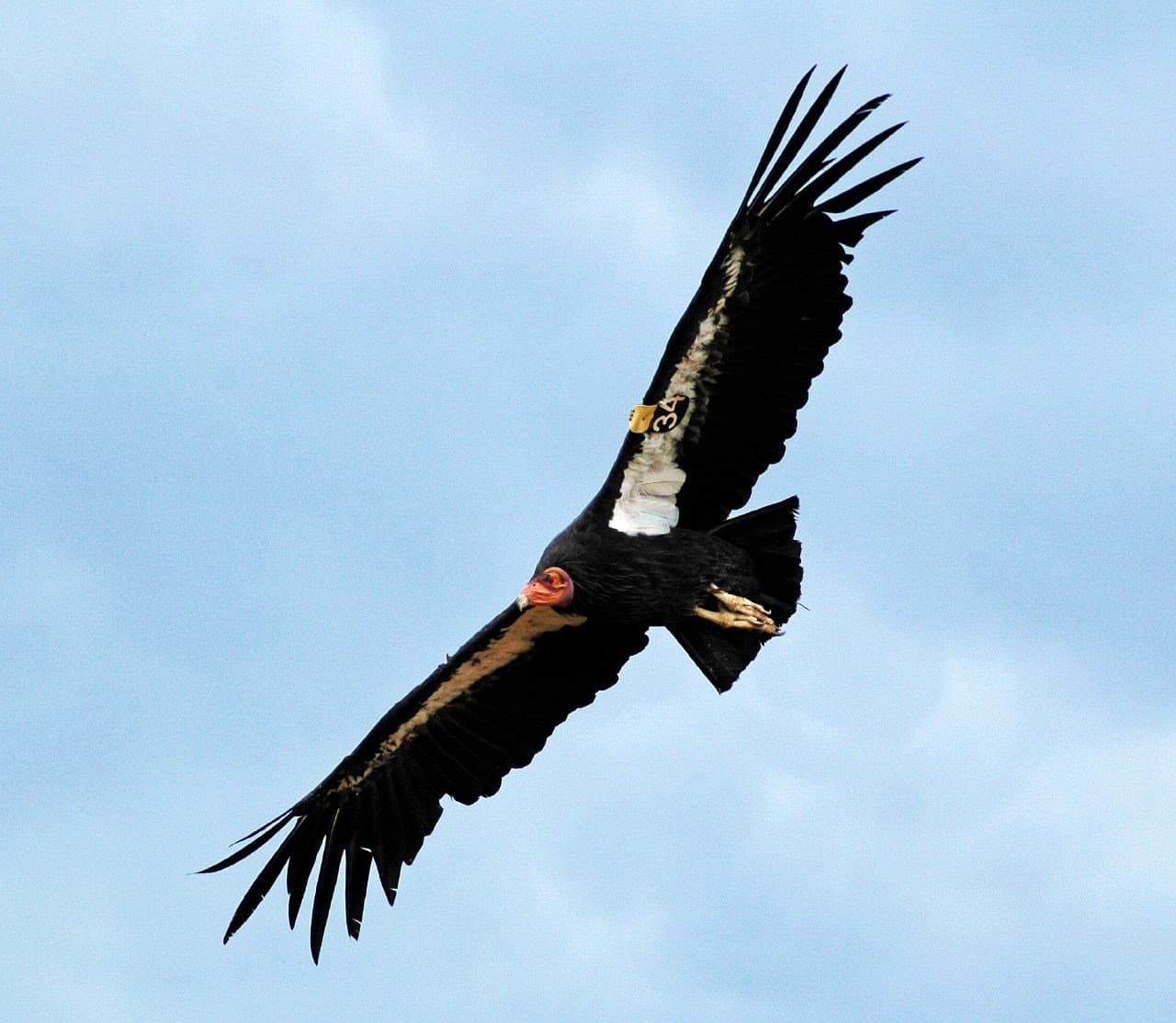
California condors have wings up to 9 feet across, the widest of any North American bird. They are mostly black with a white stripe under each wing, long finger-like wing feathers and a bald head that turns pink, orange or yellow as they age. Today they live almost only in California, using cliffs and big trees for nests and open scrub to search for carcasses.[1]
Quick facts
- Scientific name
- Gymnogyps californianus[1]
- Size
- Wingspan up to 9 feet.[1]
- Lifespan
- About 20 years in the wild.[1]
- Diet
- Scavenger. Carcasses of deer, cattle, sheep and marine mammals.[1]
- Habitat
- Rocky cliffs, forests, open scrubland and some desert.[1]
- Where it lives
- California.[1]
- Babies
- One egg.[1]
- Conservation status
- Critically Endangered (IUCN Red List, assessed 2020).[2]
Fun facts
Vocabulary
- condor
- A very large vulture of the Americas.
- crop
- A pouch in a bird's throat that stores food.
- carrion
- The meat of an animal that is already dead.
- scavenger
- An animal that eats dead plants or animals it finds.
- critically endangered
- A conservation label meaning a species faces an extremely high risk of dying out in the wild.
See it in person
- Oakland ZooOakland, California · California TrailSee this animal on the zoo's website ↗
These zoos had this animal when we gathered our information, but animals sometimes move. Check the zoo's website or contact the zoo before you visit.
Sources
- [1] Oakland Zoo. “California Condor.” https://www.oaklandzoo.org/animals/california-condor/ (accessed 2026-10-02)
- [2] IUCN Red List of Threatened Species. “Gymnogyps californianus (California Condor).” https://www.iucnredlist.org/species/22697636/181151405 (accessed 2026-10-02)
Facts last checked 2026-10-02.


