
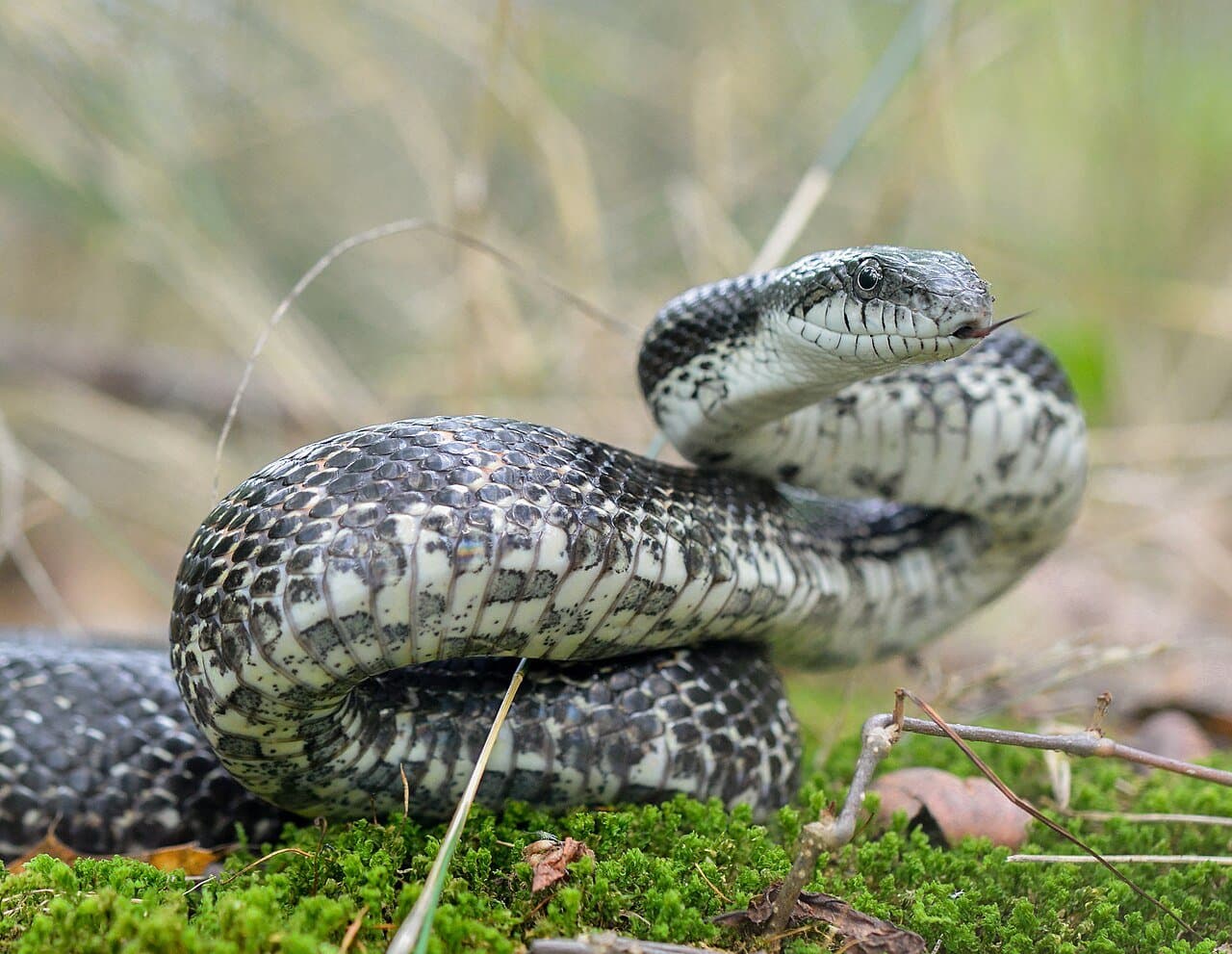
Gray Rat Snake
Pantherophis spiloides
A harmless, tree-climbing constrictor of the eastern and southeastern United States that eats rodents, birds and eggs.
Checking teacher reviews…
About the Gray Rat Snake
Gray rat snakes live in the southeastern United States, north to southern Indiana and west to Louisiana. They live in pinelands, cypress swamps, marshes, farmland and even neighborhoods. They are gray with dark blotches. Gray rat snakes are not venomous; they squeeze their prey, which includes small mammals, frogs, lizards, birds and eggs. They are often found in trees.[1]
Quick facts
- Scientific name
- Pantherophis spiloides[2]
- Size
- Adults average 36 to 72 inches (91 to 183 cm). The longest recorded was about 84 inches.[1]
- Lifespan
- 15 to 20 years in the wild.[1]
- Diet
- Small mammals, frogs, lizards, birds and eggs. Kills by constriction.[1]
- Habitat
- Pinelands, cypress swamps, marshes, farmland and neighborhoods.[1]
- Where it lives
- Southeastern United States, north to southern Indiana and west to Louisiana.[1]
- Babies
- 5 to 27 eggs, laid in summer in rotting plants or hollow logs. They hatch in fall.[1]
- Conservation status
- Least Concern (IUCN Red List, assessed 2016).[2]
Fun facts
Vocabulary
- constrictor
- A snake that kills prey by wrapping around it and squeezing.
- venomous
- Able to inject poison by biting or stinging.
- blotch
- A large, uneven spot or mark.
- mimic
- To copy the sounds or actions of something else.
- cypress swamp
- A wetland forest of cypress trees growing in standing water.
See it in person
- Montgomery ZooMontgomery, Alabama · Reptile JunctionSee this area on the zoo's website ↗
Sources
- [1] SeaWorld Parks & Entertainment Animal Info. “Gray Rat Snake.” https://seaworld.org/animals/facts/reptiles/gray-rat-snake/ (accessed 2026-10-02)
- [2] IUCN Red List of Threatened Species. “Pantherophis spiloides (Midland Rat Snake).” https://www.iucnredlist.org/species/90069659/90069671 (accessed 2026-10-02)
Facts last checked 2026-10-02.
More Snakes
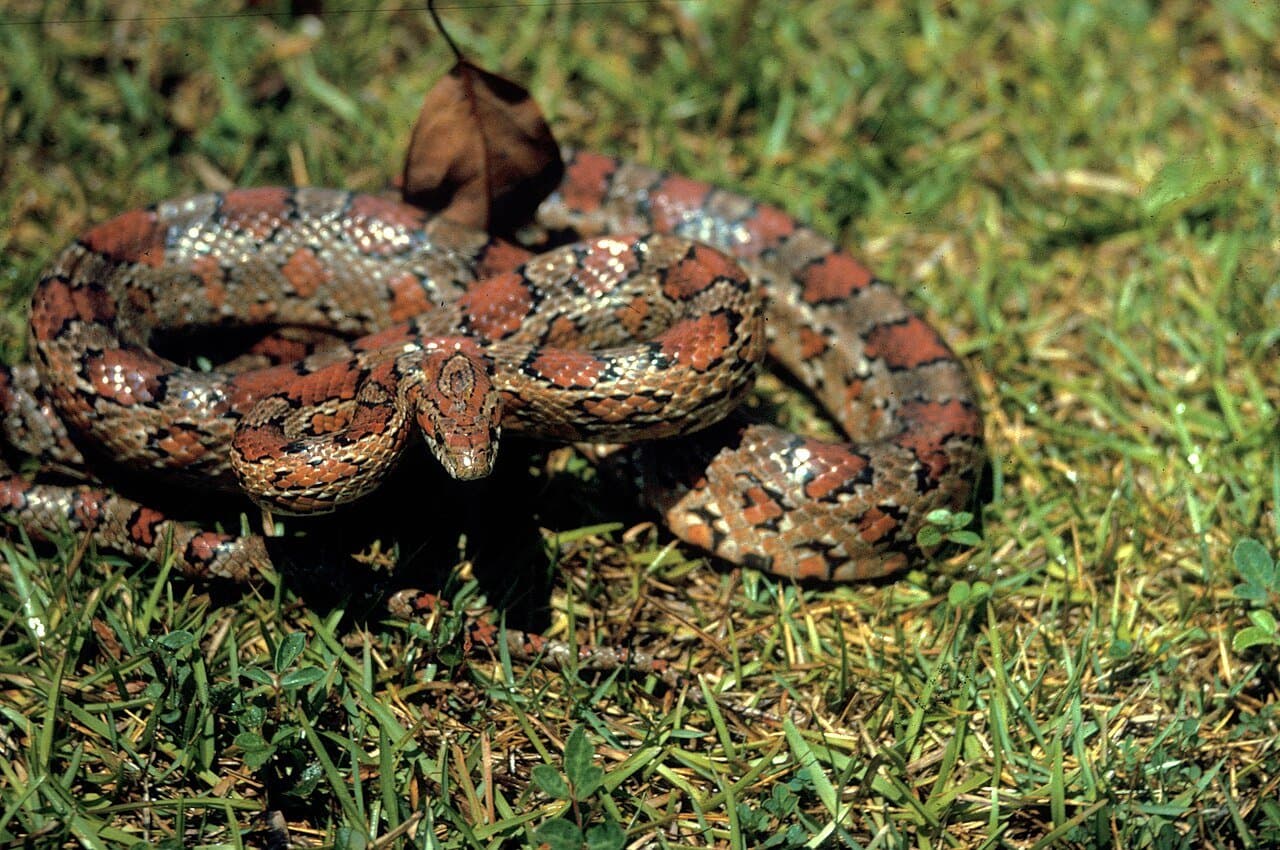 Corn SnakePantherophis guttatusA harmless orange-and-red constrictor of the eastern United States, also called the red rat snake, with a belly like Flint corn.
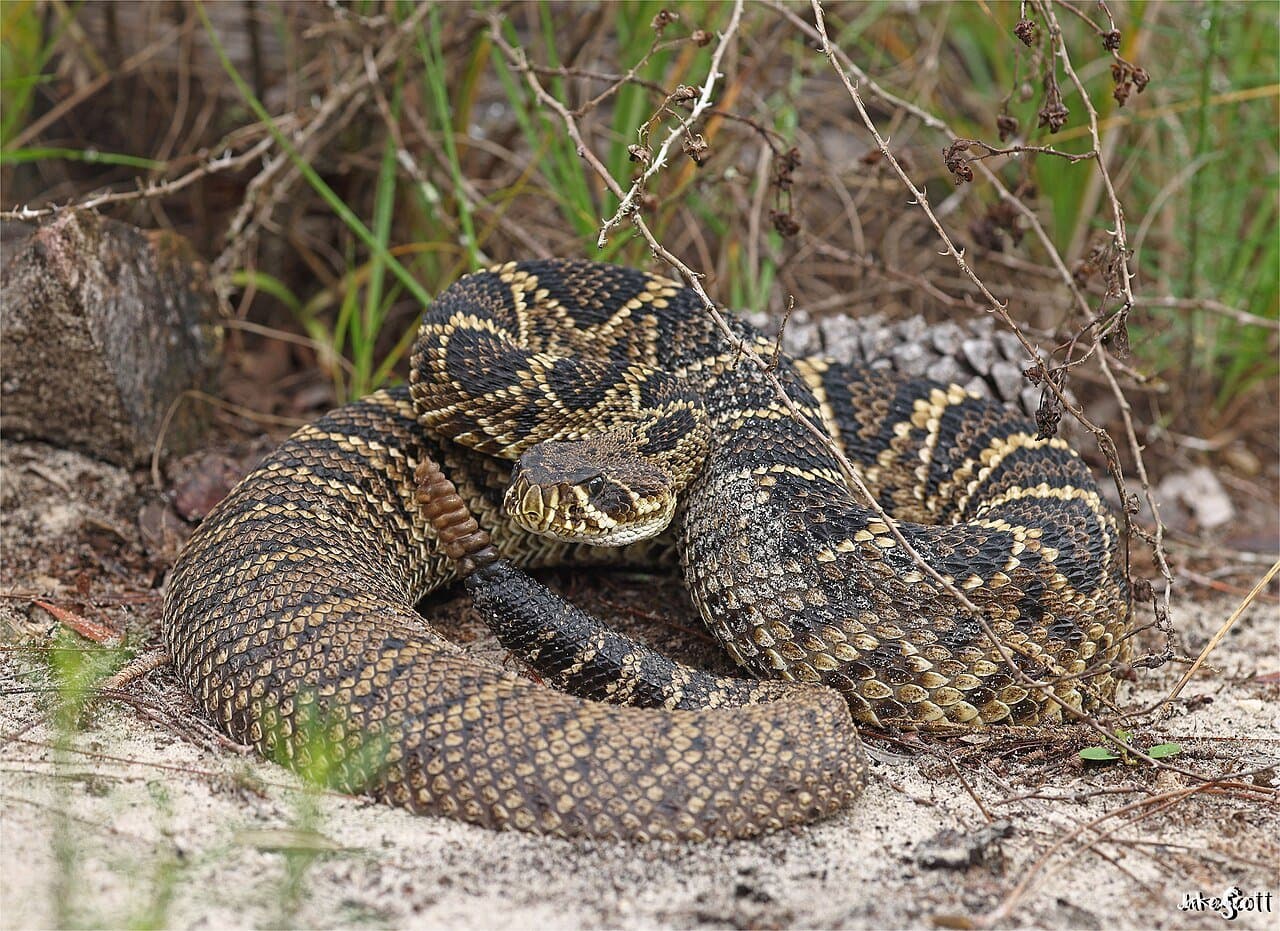 Eastern Diamondback RattlesnakeCrotalus adamanteusThe largest venomous snake in the United States, a quiet, reclusive rattlesnake of southeastern pine forests.
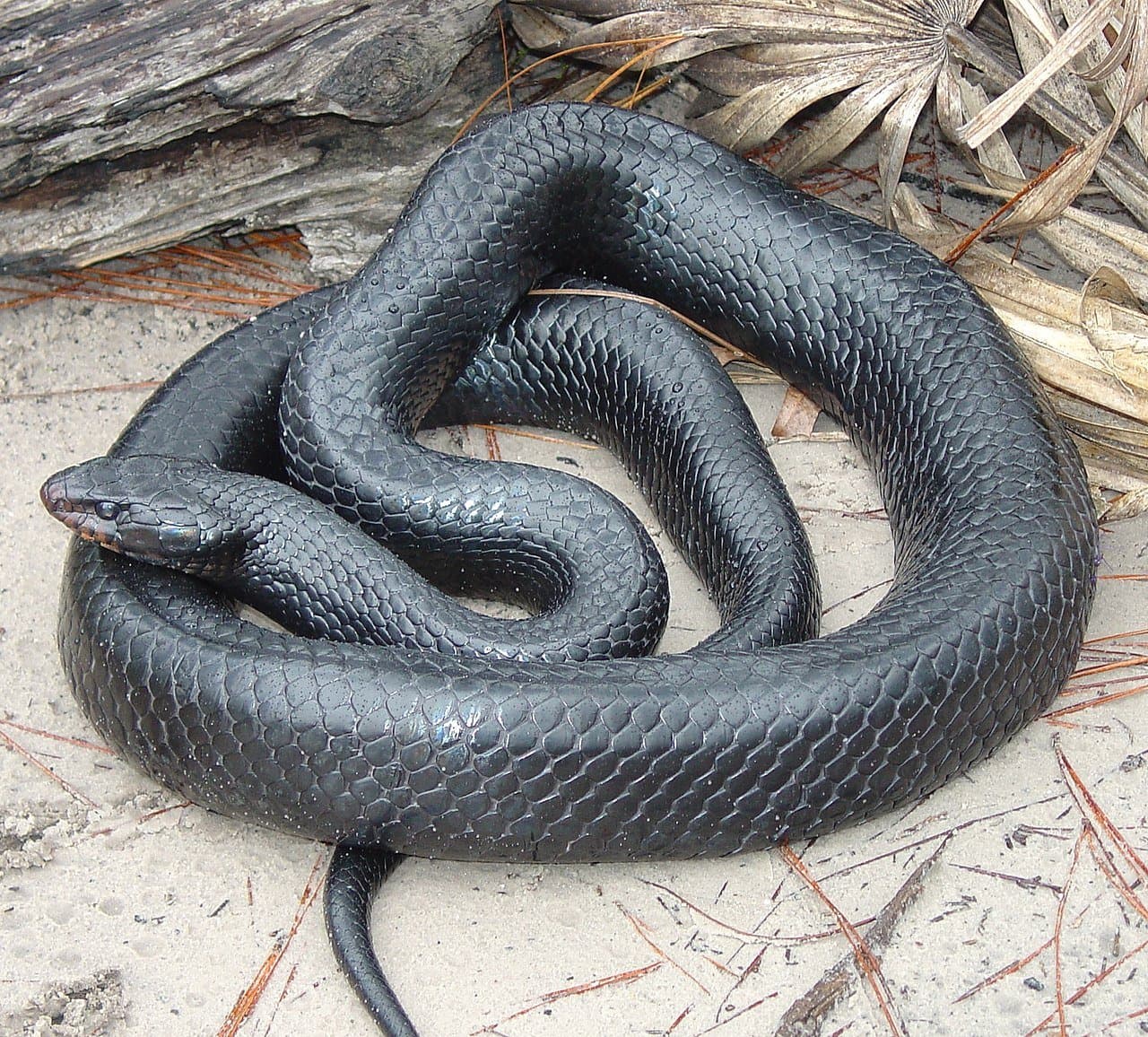 Eastern Indigo SnakeDrymarchon couperiThe largest native nonvenomous snake in the United States, a glossy black snake that shines blue in sunlight and even eats rattlesnakes.
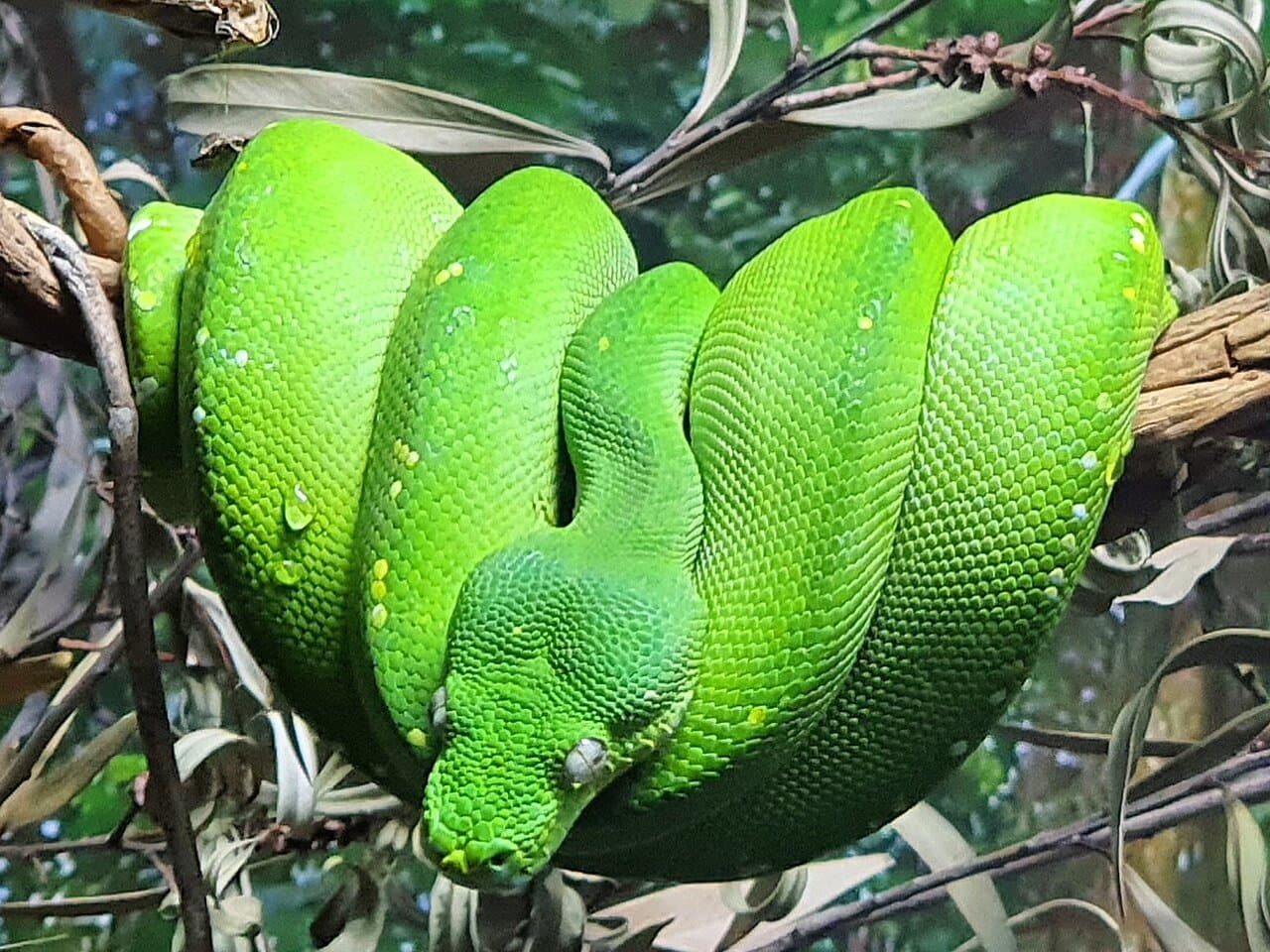 Green Tree PythonMorelia viridisA bright green rainforest python of New Guinea and northern Australia whose babies hatch yellow or red and later turn green.
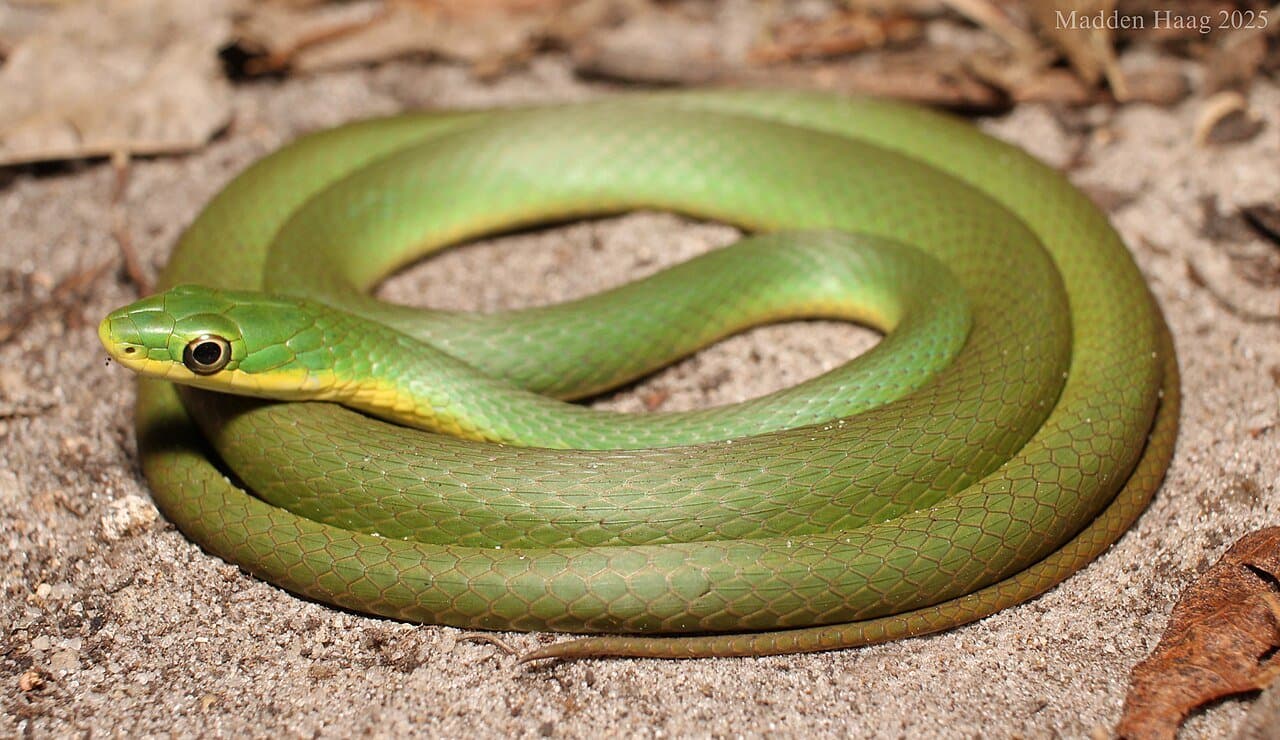 Rough Green SnakeOpheodrys aestivusA slender, harmless green snake of the southeastern United States that lives in shrubs and trees and eats insects and spiders.
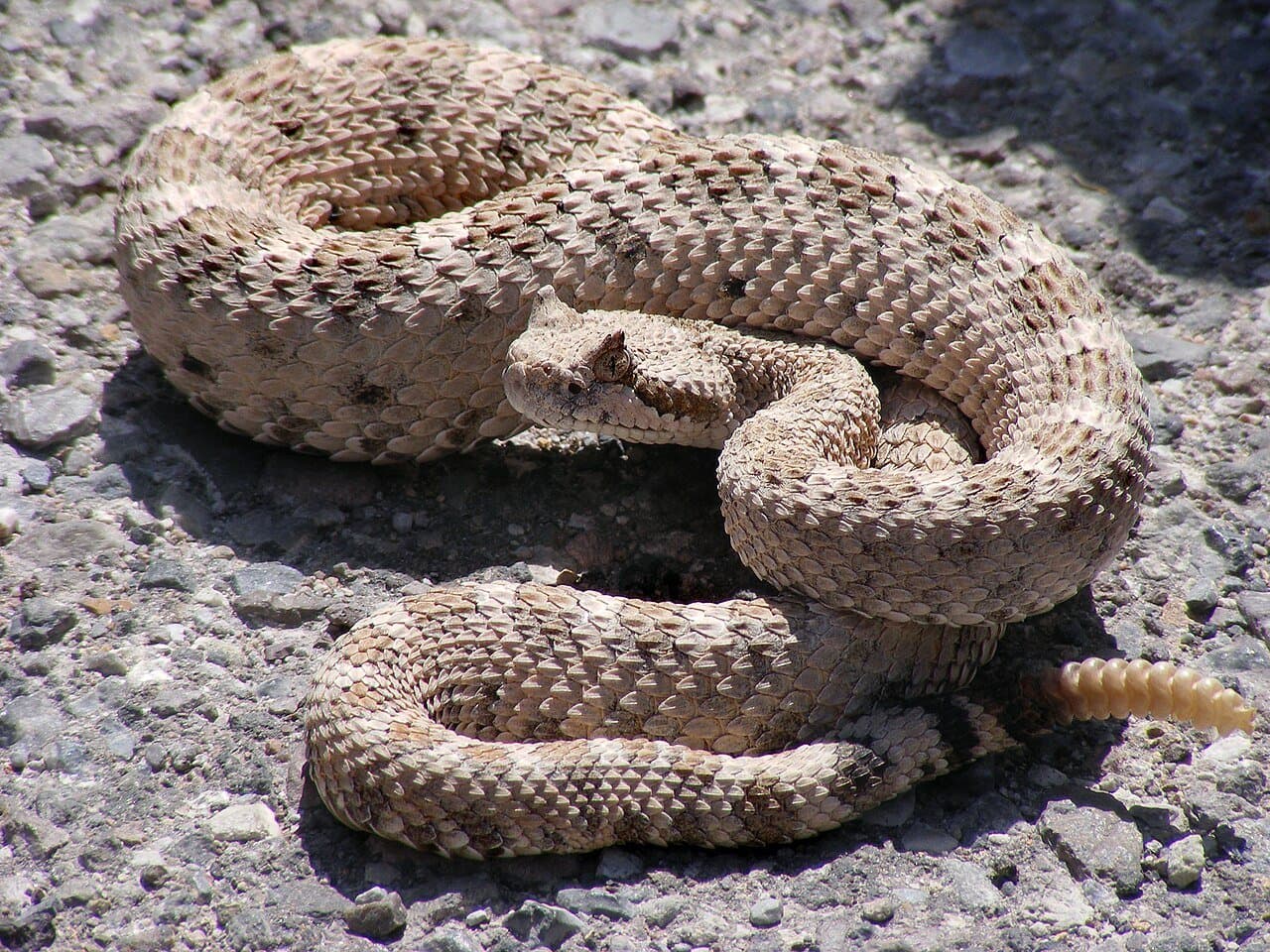 SidewinderCrotalus cerastesA small desert rattlesnake of the southwestern U.S. and Mexico that moves sideways across loose sand, making it the fastest rattlesnake.