
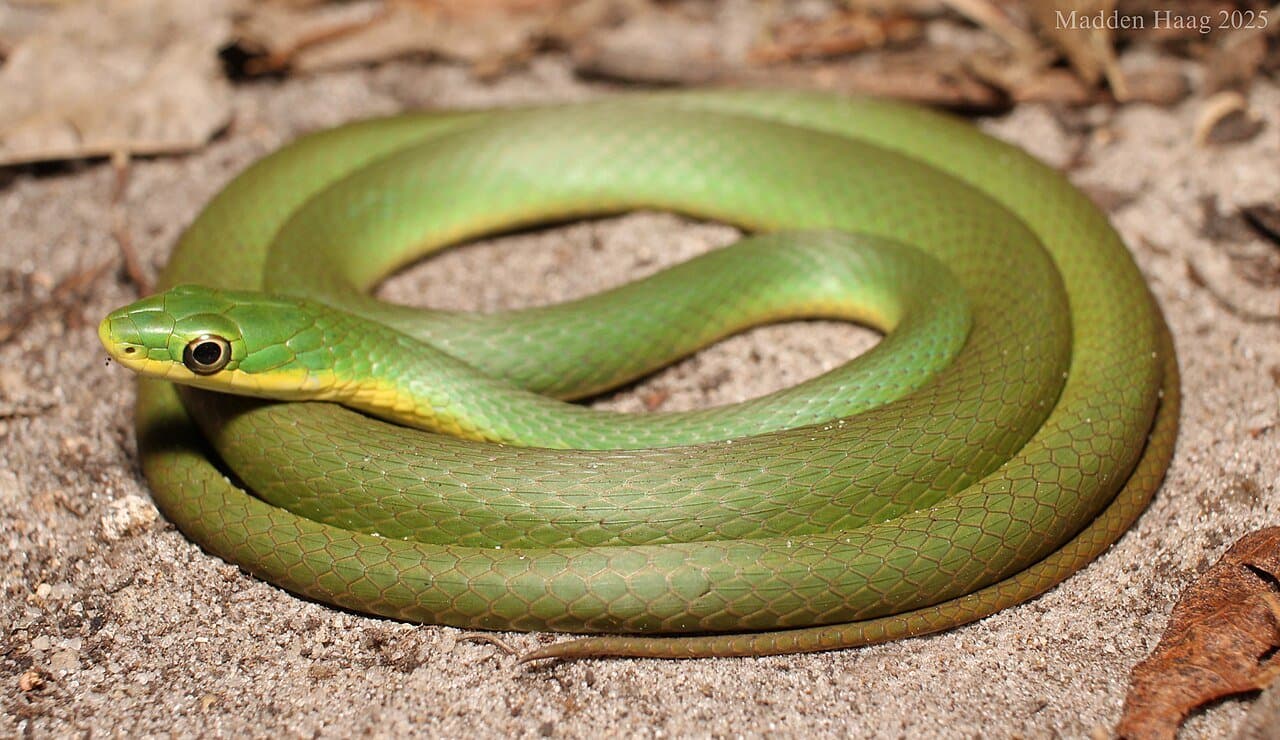
Rough Green Snake
Opheodrys aestivus
A slender, harmless green snake of the southeastern United States that lives in shrubs and trees and eats insects and spiders.
Checking teacher reviews…
About the Rough Green Snake
Rough green snakes live across the southeastern United States, from southern New Jersey to the Florida Keys and west to Texas and northern Mexico. They climb in shrubs, trees and hedgerows near water and sleep coiled at the ends of branches. Their green color hides them well, and instead of biting, they flee into thick plants. They eat crickets, grasshoppers, other insects and spiders.[1]
Quick facts
- Scientific name
- Opheodrys aestivus[1]
- Size
- Average about 95 cm (37 inches) for females and 89 cm (35 inches) for males.[1]
- Lifespan
- About 5 years on average, up to 8.[1]
- Diet
- Insectivore. Crickets, grasshoppers, other insects and spiders.[1]
- Habitat
- Trees, shrubs, hedgerows and fields near water.[1]
- Where it lives
- Southeastern United States, from southern New Jersey to the Florida Keys and west to Oklahoma, Texas and northern Mexico.[1]
- Babies
- 3 to 12 soft-shelled eggs.[1]
- Conservation status
- Least Concern (IUCN Red List, assessed 2007).[2]
Fun facts
Vocabulary
- camouflage
- Colors or patterns that help an animal blend in with its surroundings.
- insectivore
- An animal that eats mostly insects.
- hedgerow
- A row of bushes or small trees along the edge of a field.
- antenna
- A thin feeler on an insect's head (plural: antennae).
- ultraviolet
- A kind of light from the sun that people can't see.
See it in person
- Montgomery ZooMontgomery, Alabama · Reptile JunctionSee this area on the zoo's website ↗
Sources
- [1] Animal Diversity Web, University of Michigan Museum of Zoology. “Opheodrys aestivus (rough green snake).” https://animaldiversity.org/accounts/Opheodrys_aestivus/ (accessed 2026-10-02)
- [2] IUCN Red List of Threatened Species. “Opheodrys aestivus.” https://www.iucnredlist.org/species/63859/12722881 (accessed 2026-10-02)
Facts last checked 2026-10-02.
More Snakes
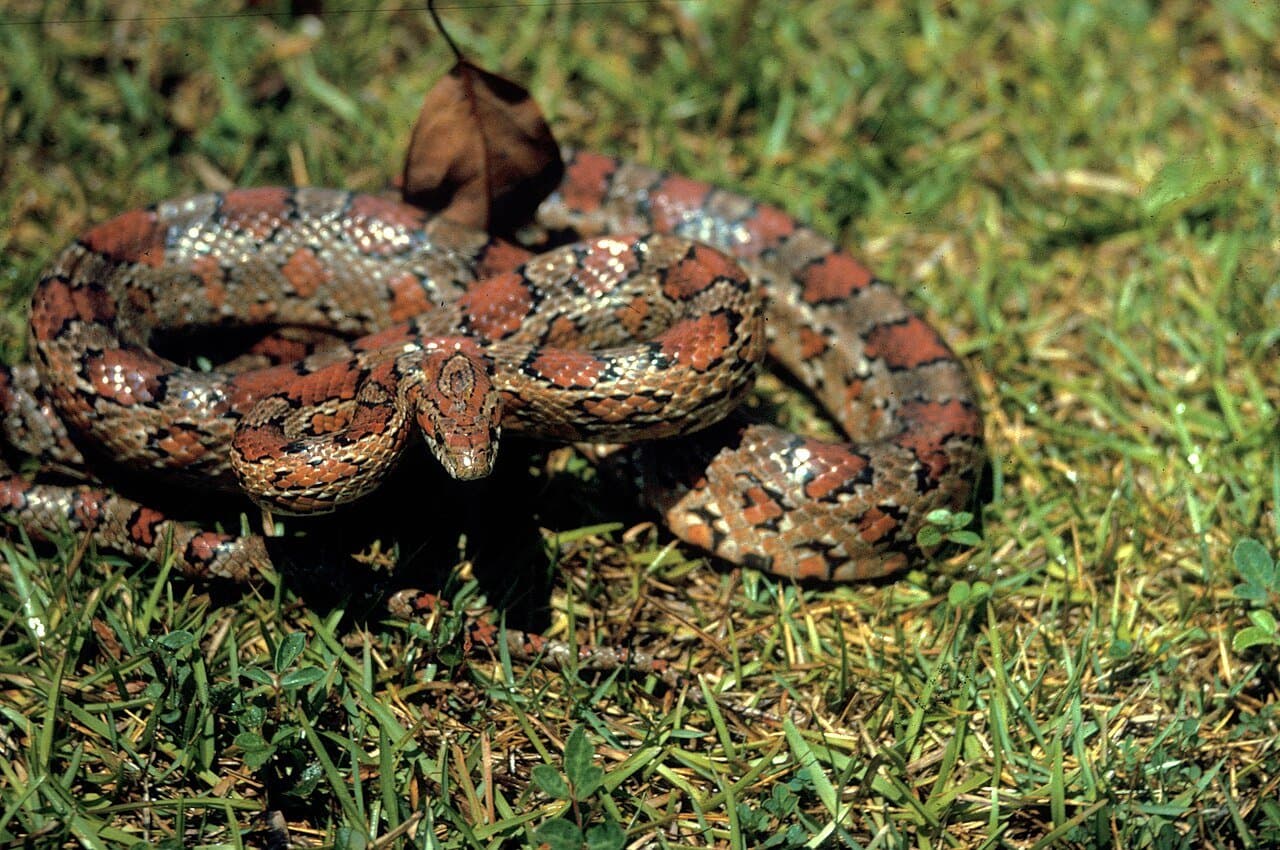 Corn SnakePantherophis guttatusA harmless orange-and-red constrictor of the eastern United States, also called the red rat snake, with a belly like Flint corn.
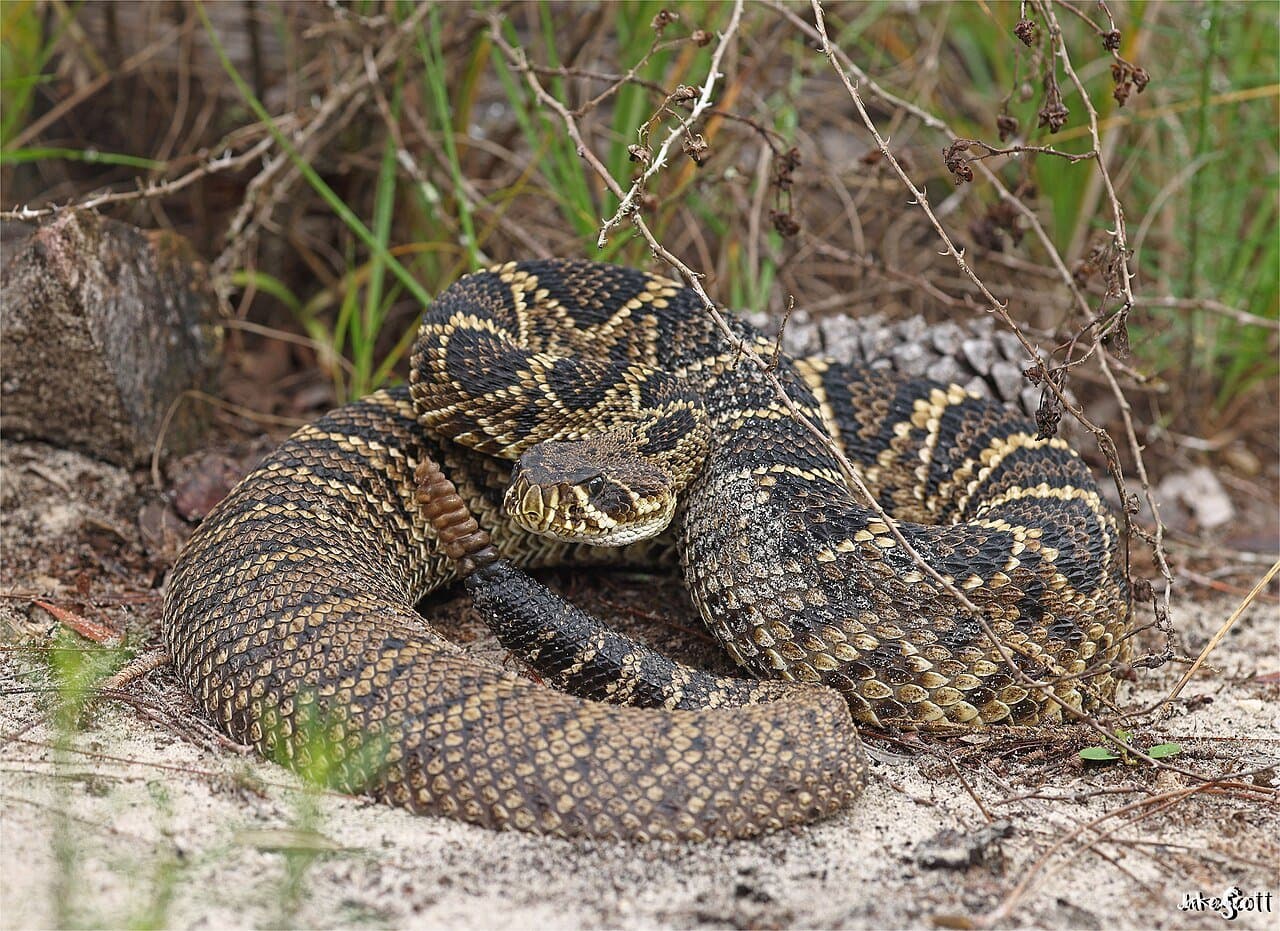 Eastern Diamondback RattlesnakeCrotalus adamanteusThe largest venomous snake in the United States, a quiet, reclusive rattlesnake of southeastern pine forests.
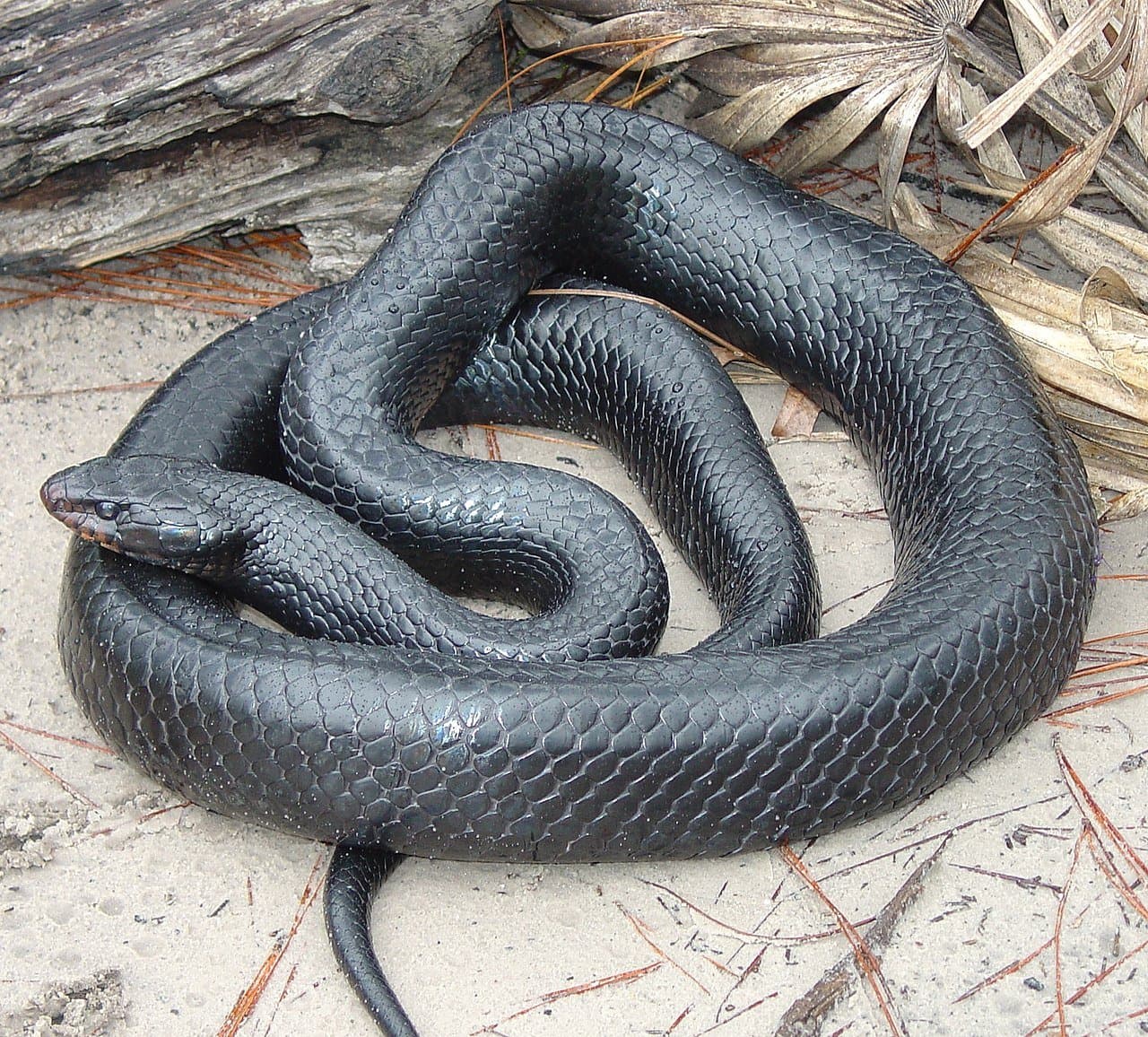 Eastern Indigo SnakeDrymarchon couperiThe largest native nonvenomous snake in the United States, a glossy black snake that shines blue in sunlight and even eats rattlesnakes.
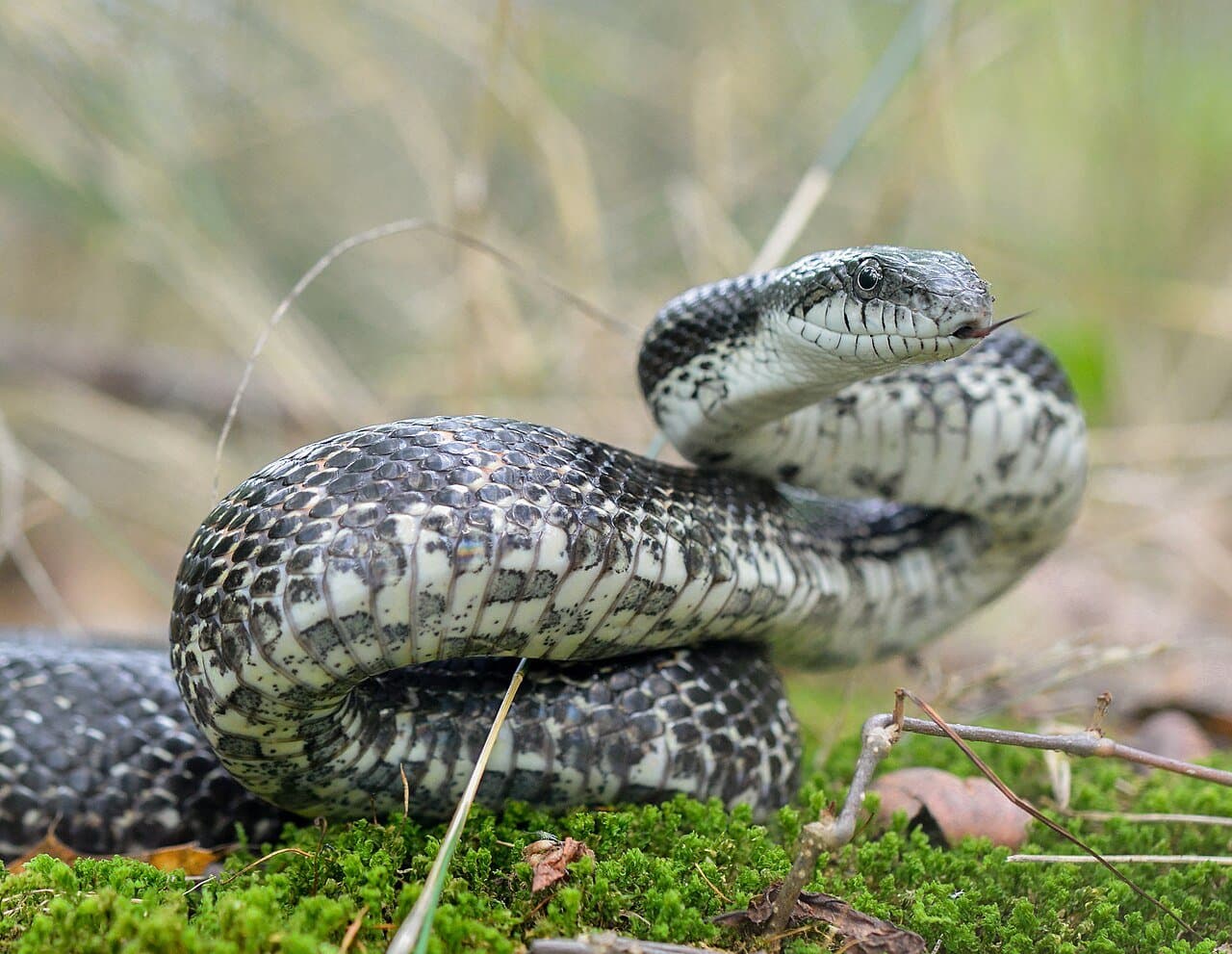 Gray Rat SnakePantherophis spiloidesA harmless, tree-climbing constrictor of the eastern and southeastern United States that eats rodents, birds and eggs.
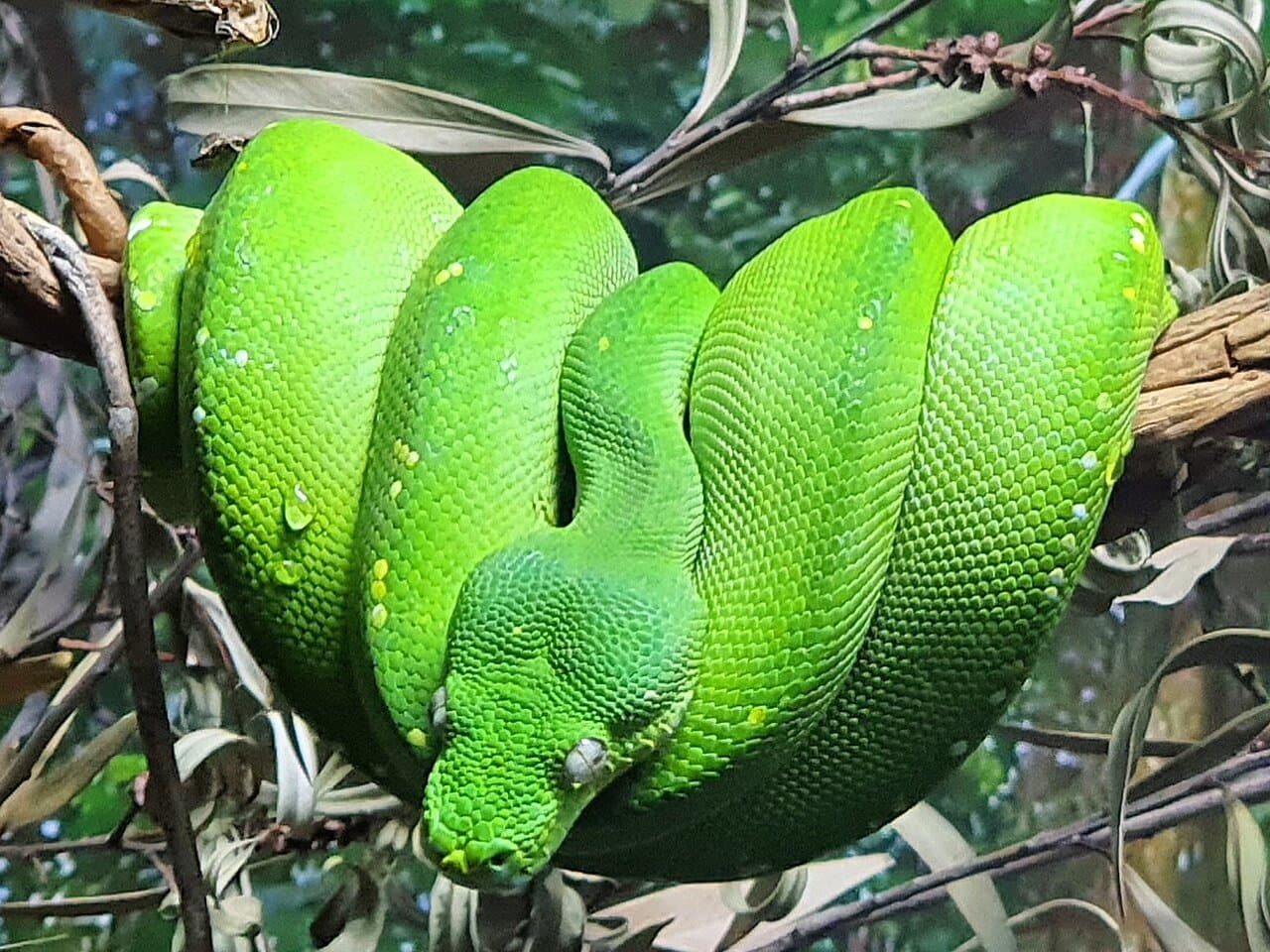 Green Tree PythonMorelia viridisA bright green rainforest python of New Guinea and northern Australia whose babies hatch yellow or red and later turn green.
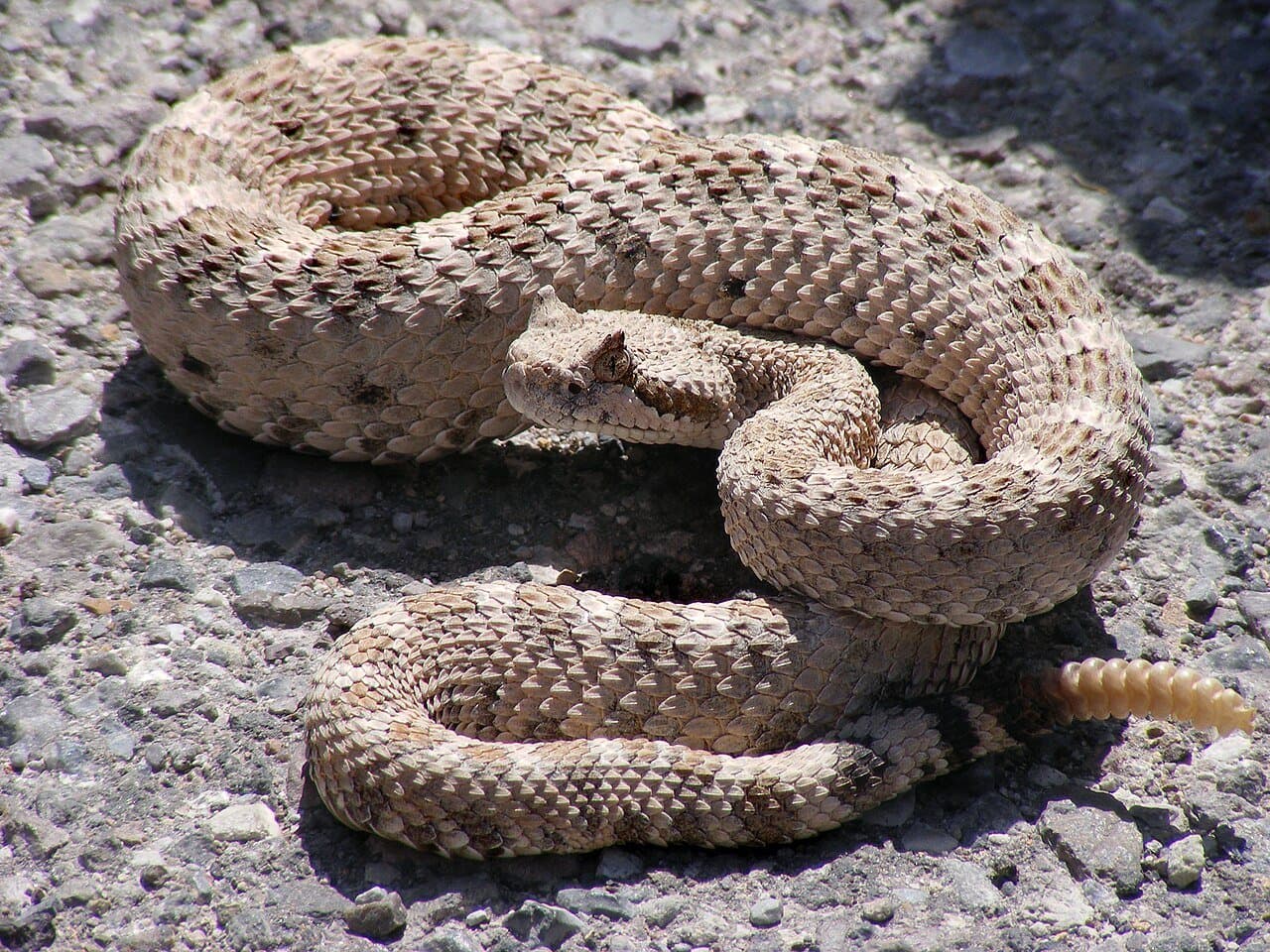 SidewinderCrotalus cerastesA small desert rattlesnake of the southwestern U.S. and Mexico that moves sideways across loose sand, making it the fastest rattlesnake.