
White-Faced Whistling Duck
Dendrocygna viduata
A long-necked duck of Africa and South America with a white face that whistles instead of quacking and often perches in trees.
Checking teacher reviews…
About the White-Faced Whistling Duck
White-faced whistling ducks live in South America, sub-Saharan Africa and parts of the Caribbean and Central America. They are 14 to 18 inches long and weigh 1 to 2 pounds. Adults have a black-and-white head and a chestnut-brown breast. They're named for their high-pitched whistling calls, and because they often perch in branches, they're also called tree ducks. They eat grass, seeds and water snails.[1]
Quick facts
- Scientific name
- Dendrocygna viduata[2]
- Size
- 14 to 18 inches long.[1]
- Weight
- 1 to 2 pounds.[1]
- Diet
- Grass, seeds and aquatic mollusks.[1]
- Where it lives
- South America, sub-Saharan Africa and parts of Central America and the Caribbean.[1]
- Group life
- Nests alone, in small groups or in loose colonies.[1]
- Babies
- 4 to 13 eggs, incubated 26 to 28 days.[1]
- Conservation status
- Least Concern (IUCN Red List, assessed 2016).[2]
Fun facts
Vocabulary
- molt
- To shed old feathers and grow new ones.
- mollusk
- A soft-bodied animal often with a shell, such as a snail.
- perch
- To sit on a branch or other high spot.
- waterfowl
- Ducks, geese and swans.
- least concern
- A conservation label meaning a species is widespread and not at risk of dying out soon.
See it in person
- Omaha's Henry Doorly Zoo and AquariumOmaha, Nebraska · Scott African GrasslandsSee this area on the zoo's website ↗
- Omaha's Henry Doorly Zoo and AquariumOmaha, Nebraska · Hubbard Gorilla ValleySee this area on the zoo's website ↗
Sources
- [1] Oregon Zoo. “White-faced whistling duck.” https://www.oregonzoo.org/animals/white-faced-whistling-duck (accessed 2026-10-02)
- [2] IUCN Red List of Threatened Species. “Dendrocygna viduata (White-faced Whistling-duck).” https://www.iucnredlist.org/species/22679763/92829021 (accessed 2026-10-02)
Facts last checked 2026-10-02.
More Waterfowl
Abyssinian Blue-Winged GooseCyanochen cyanopteraA brown goose with powder-blue wing patches that lives only in the highlands of Ethiopia and whistles instead of honking.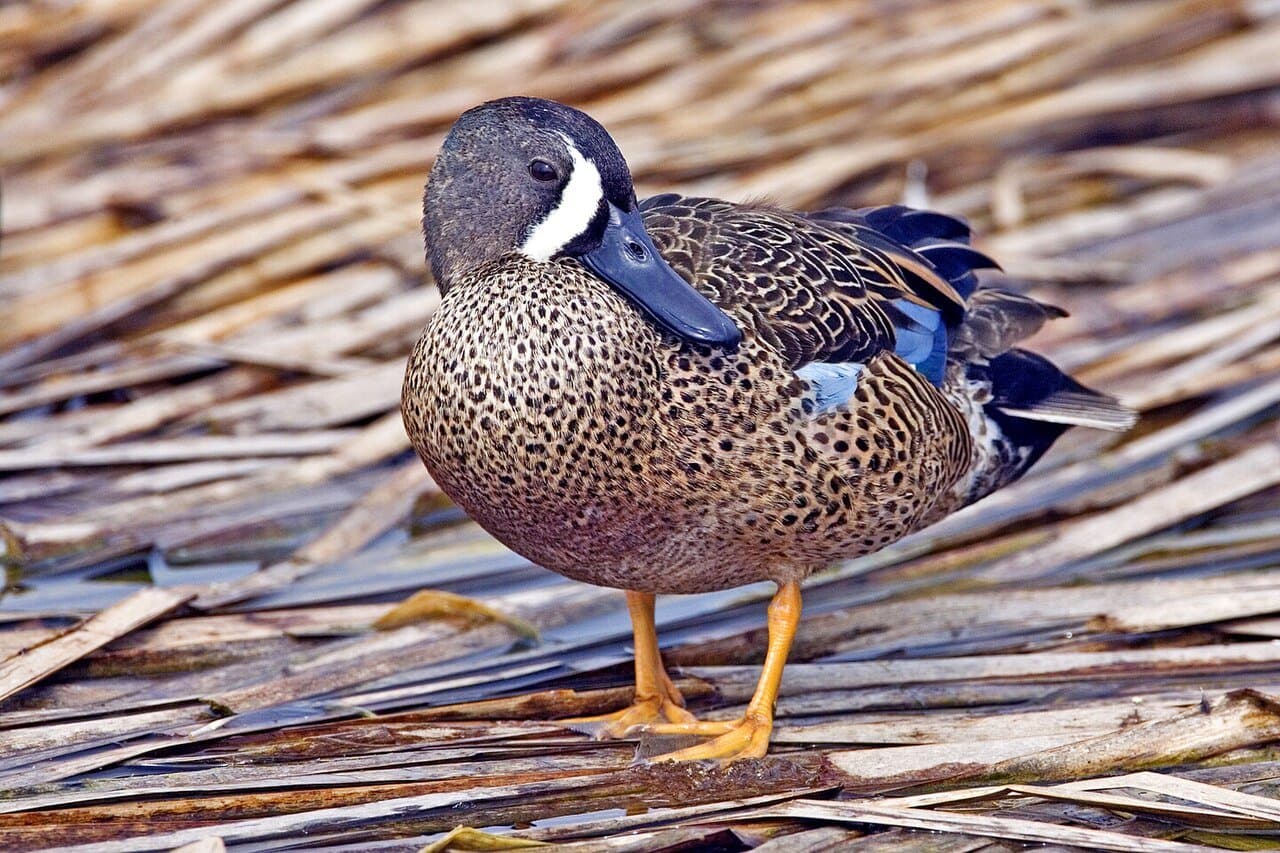 Blue-Winged TealSpatula discorsA small dabbling duck that flies from North America as far as South America each fall, flashing a powder-blue wing patch.Cape TealAnas capensisA small, speckled gray African duck with a pink bill that can dive and swim underwater with its wings folded.
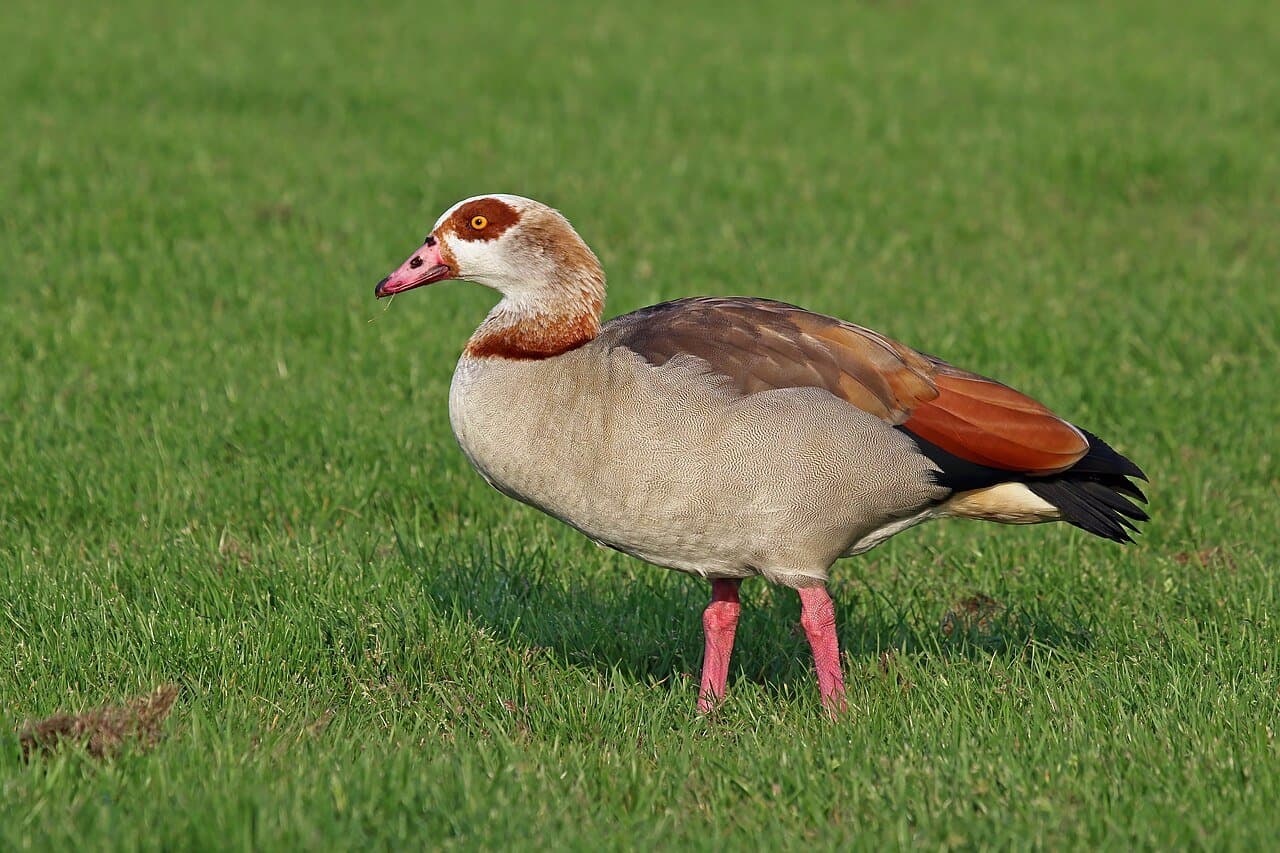 Egyptian GooseAlopochen aegyptiacaA brown African waterbird with dark eye patches that grazes near rivers and lakes and has spread to parts of Europe.
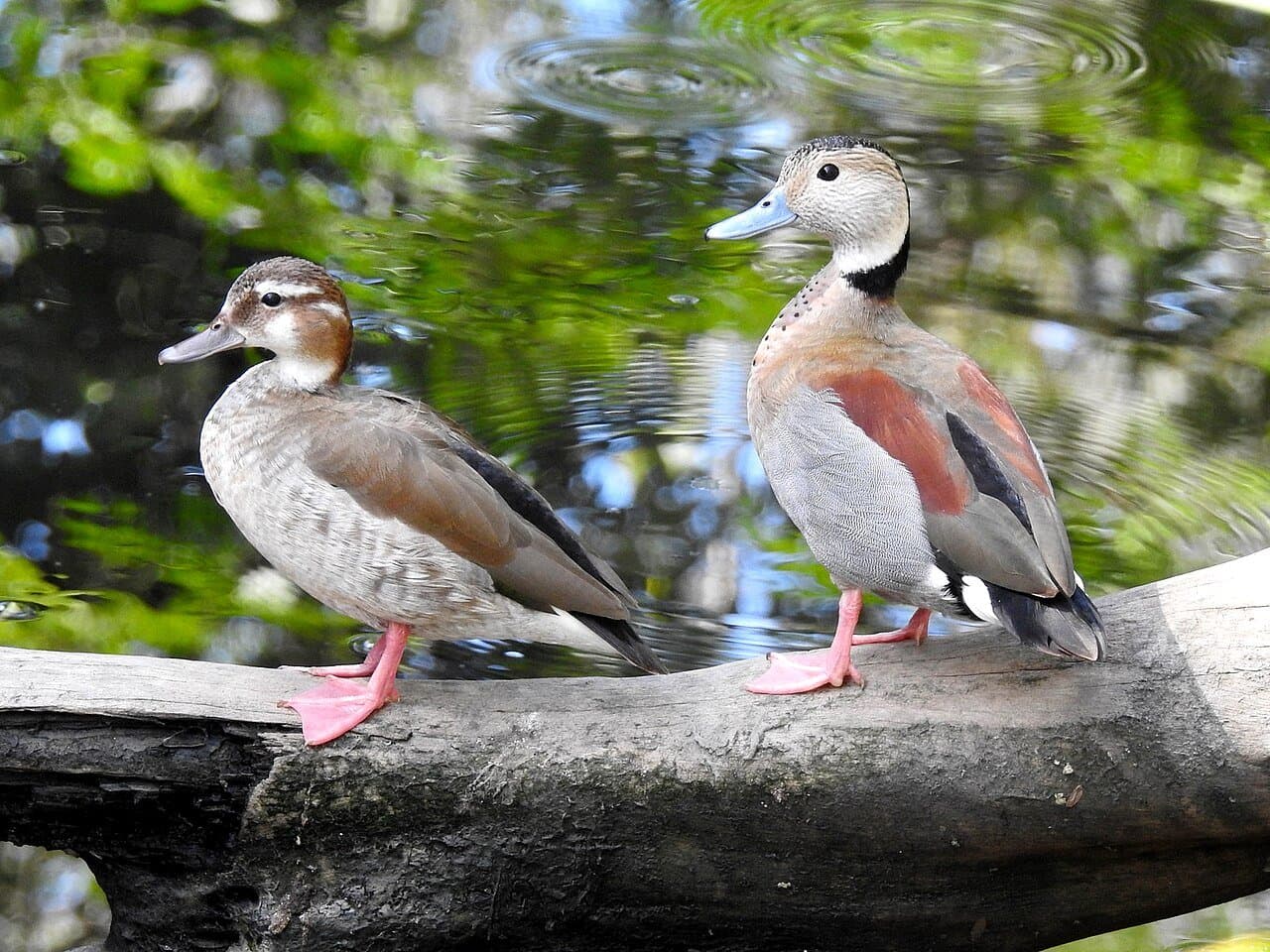 Ringed TealCallonetta leucophrysOne of the world's smallest ducks, a tree-perching duck of South American wetlands that nests in tree holes.
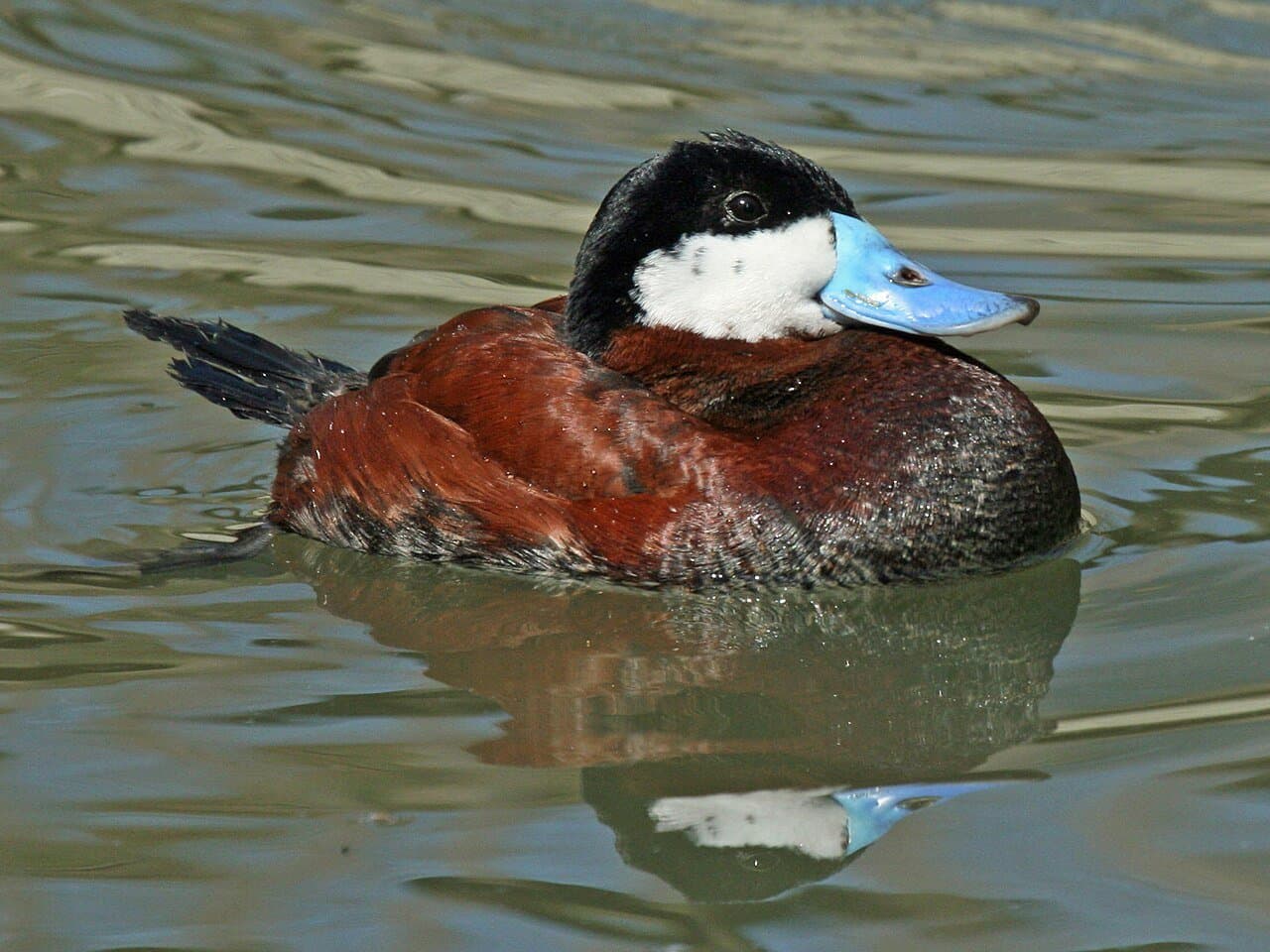 Ruddy DuckOxyura jamaicensisA small diving duck of the Americas with a bright blue bill, whose males drum their bills to make bubbles when courting.
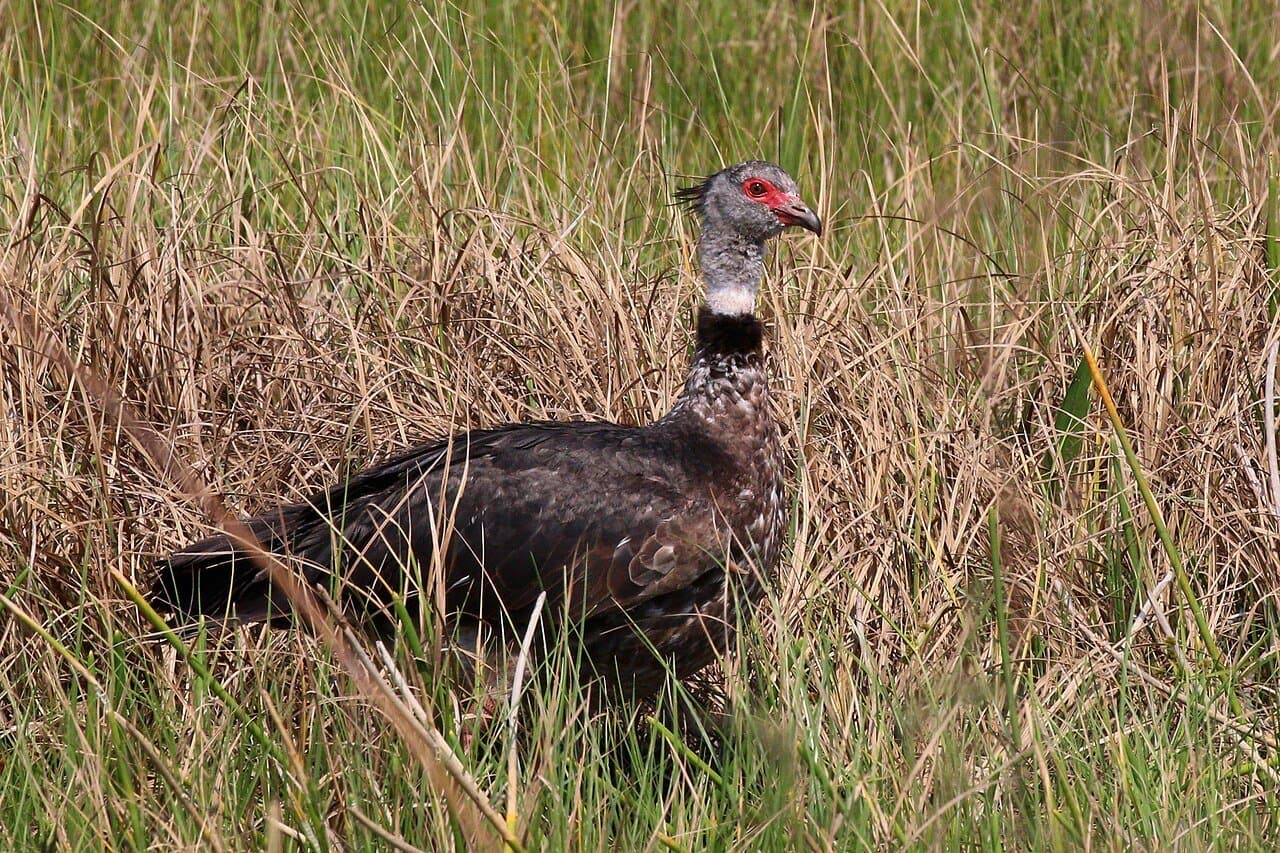 Southern ScreamerChauna torquataA South American wetland bird, also called the crested screamer, whose call carries up to 3 km and whose wings have sharp spurs.Spur-Winged GoosePlectropterus gambensisAfrica's largest waterfowl, a black-and-white goose with a sharp spur on each wing and a diet that can make it poisonous.
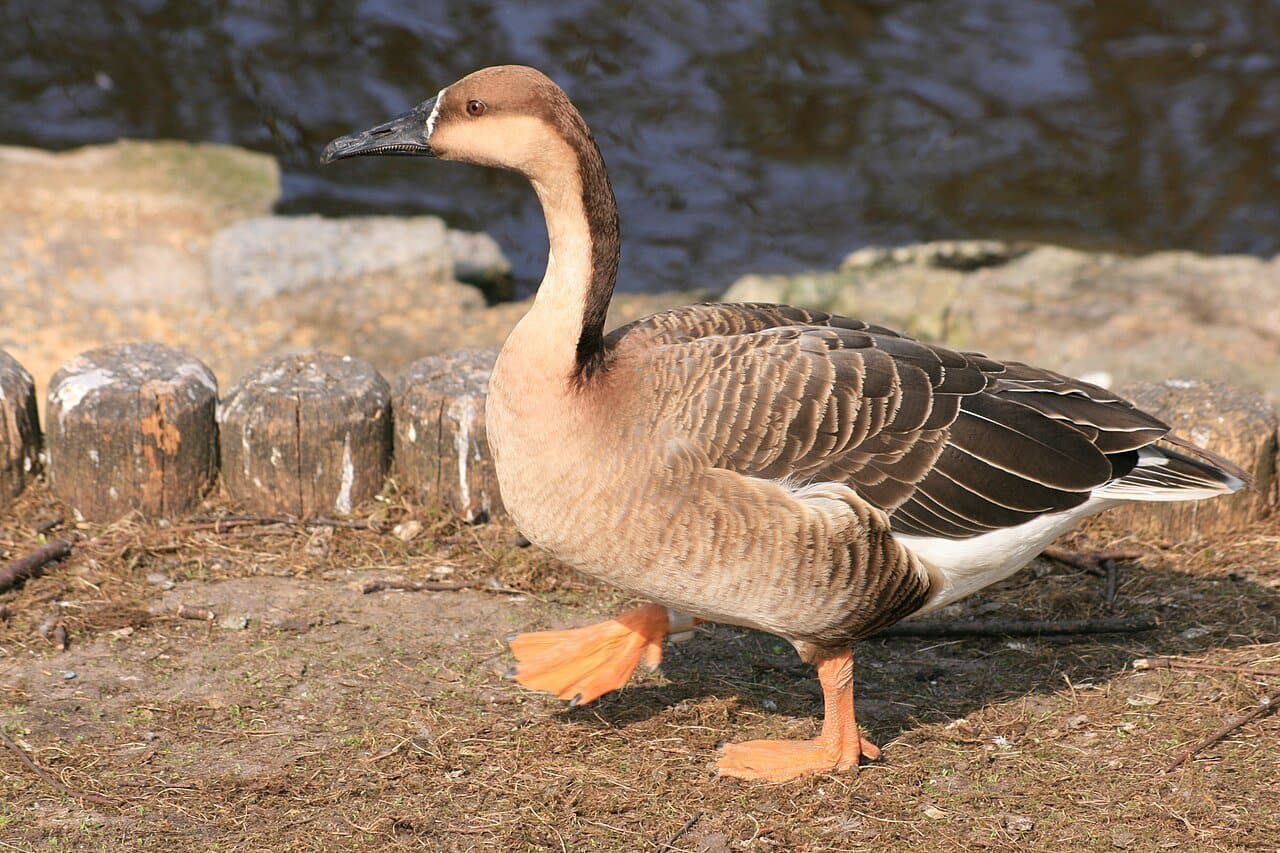 Swan GooseAnser cygnoidesAn endangered long-necked goose of eastern Asia that migrates thousands of kilometers and is the ancestor of the Chinese domestic goose.
Blue-Winged TealSpatula discorsA small dabbling duck that flies from North America as far as South America each fall, flashing a powder-blue wing patch.Cape TealAnas capensisA small, speckled gray African duck with a pink bill that can dive and swim underwater with its wings folded.Egyptian GooseAlopochen aegyptiacaA brown African waterbird with dark eye patches that grazes near rivers and lakes and has spread to parts of Europe.Ringed TealCallonetta leucophrysOne of the world's smallest ducks, a tree-perching duck of South American wetlands that nests in tree holes.Ruddy DuckOxyura jamaicensisA small diving duck of the Americas with a bright blue bill, whose males drum their bills to make bubbles when courting.Southern ScreamerChauna torquataA South American wetland bird, also called the crested screamer, whose call carries up to 3 km and whose wings have sharp spurs.Spur-Winged GoosePlectropterus gambensisAfrica's largest waterfowl, a black-and-white goose with a sharp spur on each wing and a diet that can make it poisonous.Swan GooseAnser cygnoidesAn endangered long-necked goose of eastern Asia that migrates thousands of kilometers and is the ancestor of the Chinese domestic goose.