
Impala
Aepyceros melampus
A graceful reddish-brown African antelope whose males have long S-shaped horns.
Checking teacher reviews…
About the Impala
Impalas live in open woodlands and grasslands from South Africa to Kenya, usually near water. They are red-brown with a white belly and black stripes on the tail, forehead and thighs. Only males have horns, which are heavily ridged, S-shaped and up to about 3 feet long. Impalas graze on grass after the rains and switch to browsing leaves in the dry season.[1]
Quick facts
- Scientific name
- Aepyceros melampus[1]
- Lifespan
- About 13 to 15 years in the wild.[1]
- Diet
- Herbivore. Grass in the wet season and leaves in the dry season.[1]
- Habitat
- Open woodland and short to medium grassland, usually near water.[1]
- Where it lives
- Southern and eastern Africa, from South Africa to Kenya.[1]
- Group life
- Female herds of 15 to 100. Active during the day.[1]
- Babies
- Pregnancy lasts about 194 to 200 days.[1]
- Conservation status
- Least Concern (IUCN Red List, assessed 2016).[2]
Fun facts
Vocabulary
- ruminant
- A hoofed animal that chews cud and has a stomach with several chambers.
- grazer
- An animal that eats mostly grass.
- browser
- An animal that eats leaves, twigs and shoots from bushes and trees.
- herd
- A large group of hoofed animals that live together.
- diurnal
- Active mainly during the day.
See it in person
- Omaha's Henry Doorly Zoo and AquariumOmaha, Nebraska · Scott African GrasslandsSee this area on the zoo's website ↗
Sources
- [1] Animal Diversity Web, University of Michigan. “Impala (Aepyceros melampus).” https://animaldiversity.org/accounts/Aepyceros_melampus/ (accessed 2026-10-02)
- [2] IUCN Red List of Threatened Species. “Aepyceros melampus (Impala).” https://www.iucnredlist.org/species/550/50180828 (accessed 2026-10-02)
Facts last checked 2026-10-02.
More Antelopes
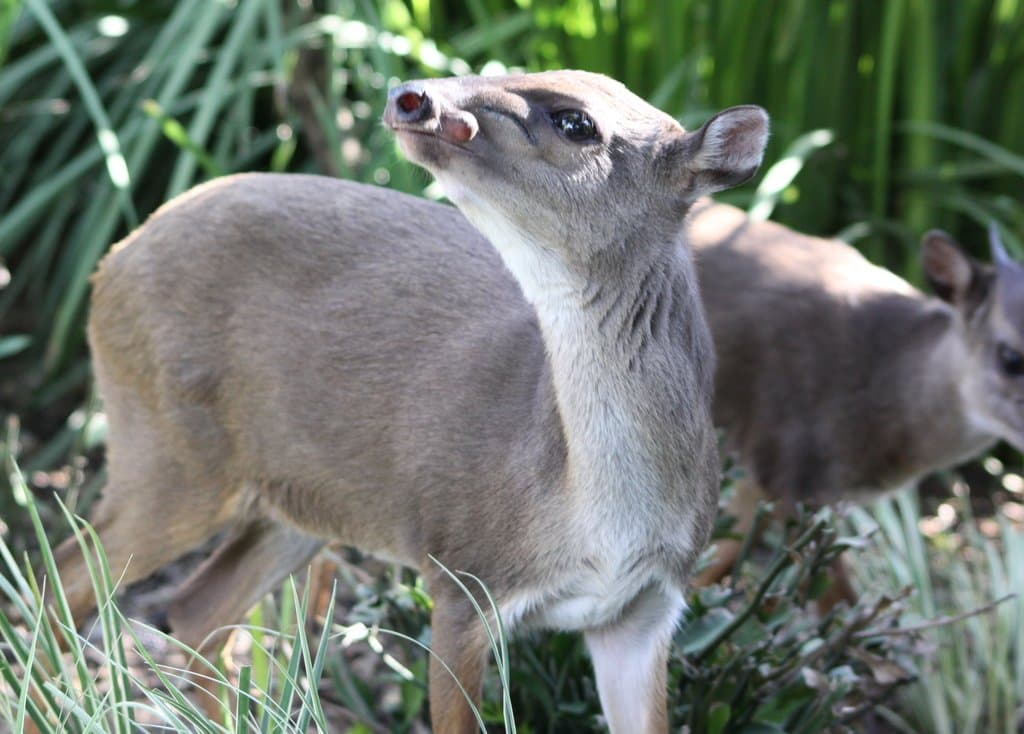 Blue DuikerPhilantomba monticolaA tiny forest antelope of central and southern Africa that weighs only 9 to 13 pounds and lives in pairs.
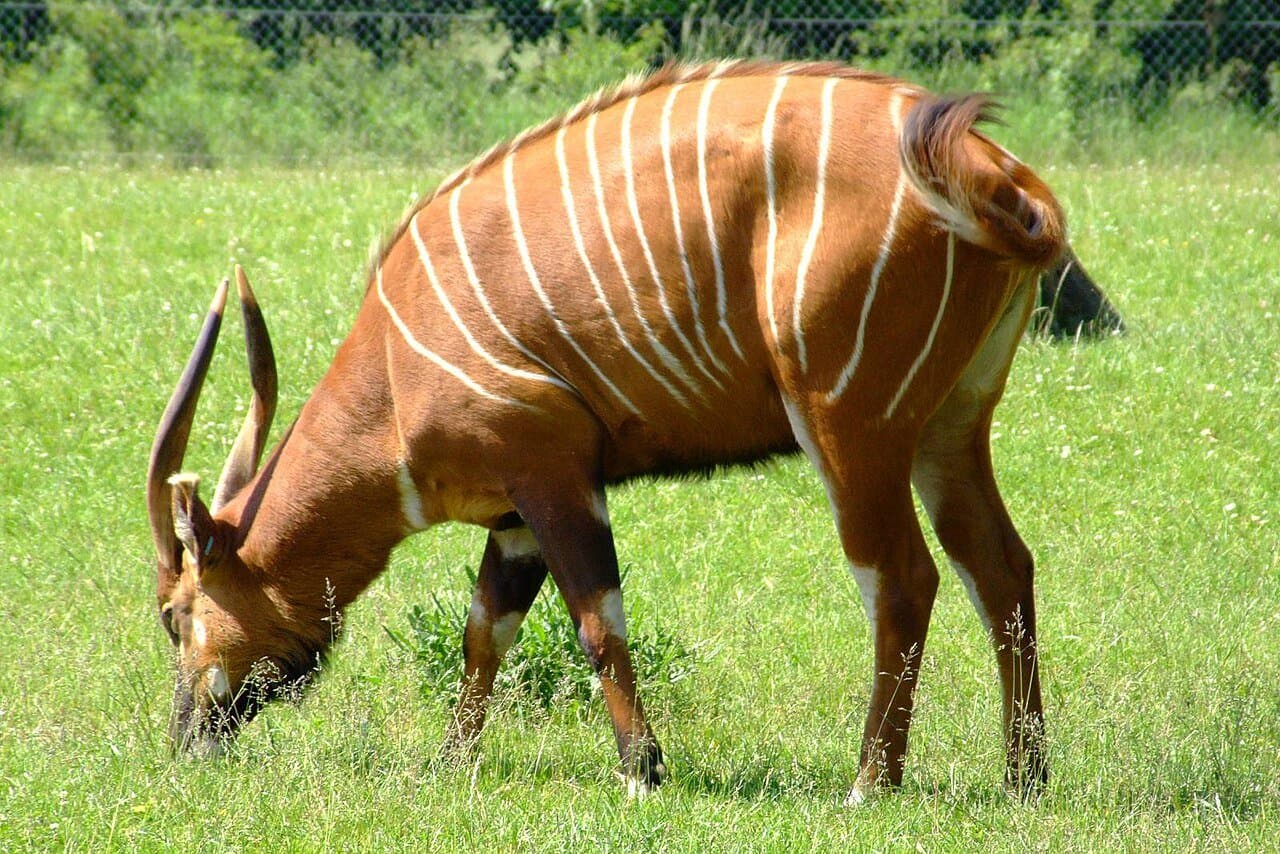 BongoTragelaphus eurycerusA large forest antelope of tropical Africa with 10 to 15 pale stripes down each side and horns up to 3 feet long.
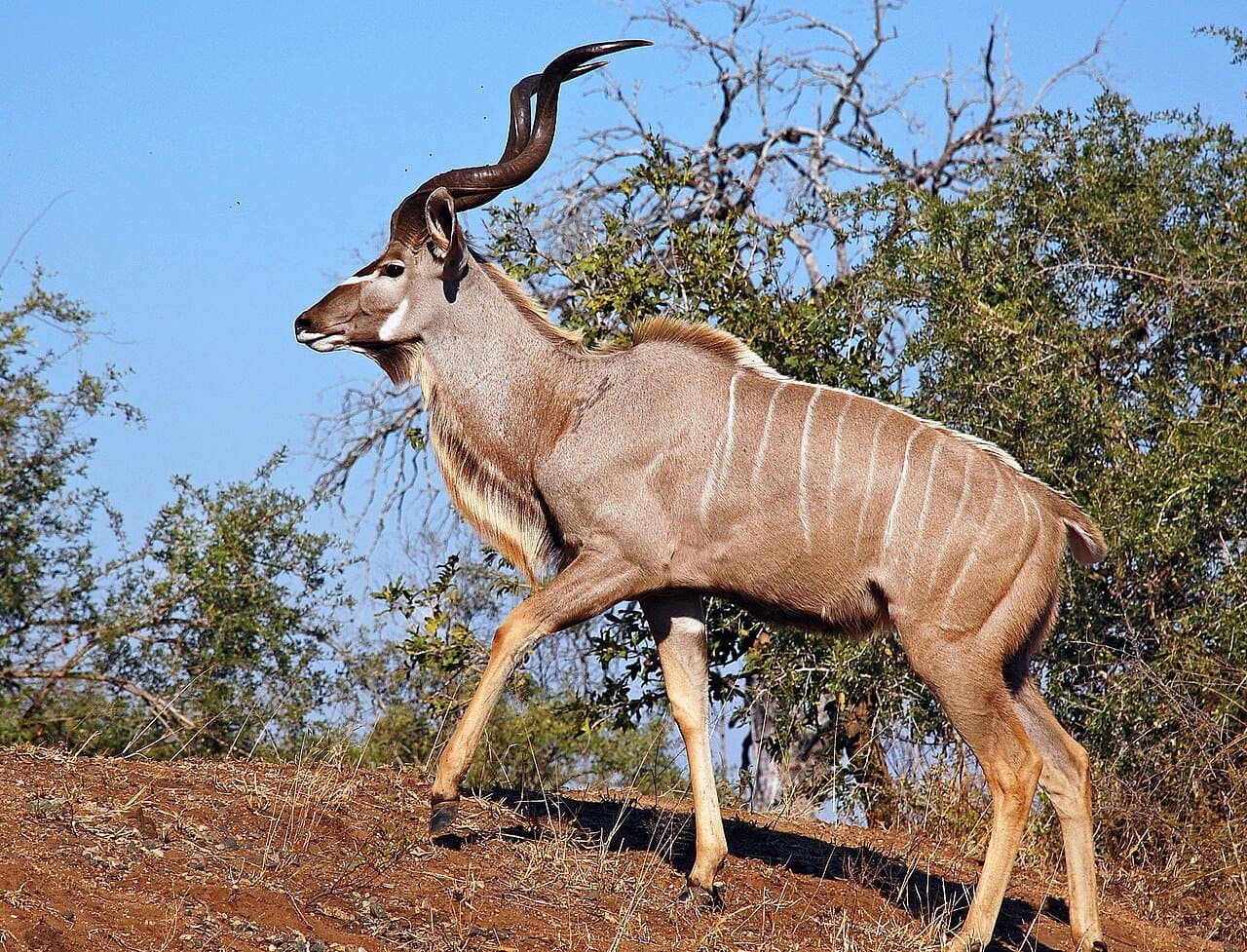 Greater KuduTragelaphus strepsicerosA large striped antelope of African woodlands whose males grow long, spiral horns with about two and a half twists.KlipspringerOreotragus oreotragusA small, sure-footed African antelope that hops from rock to rock on tiny hooves the size of a dime.
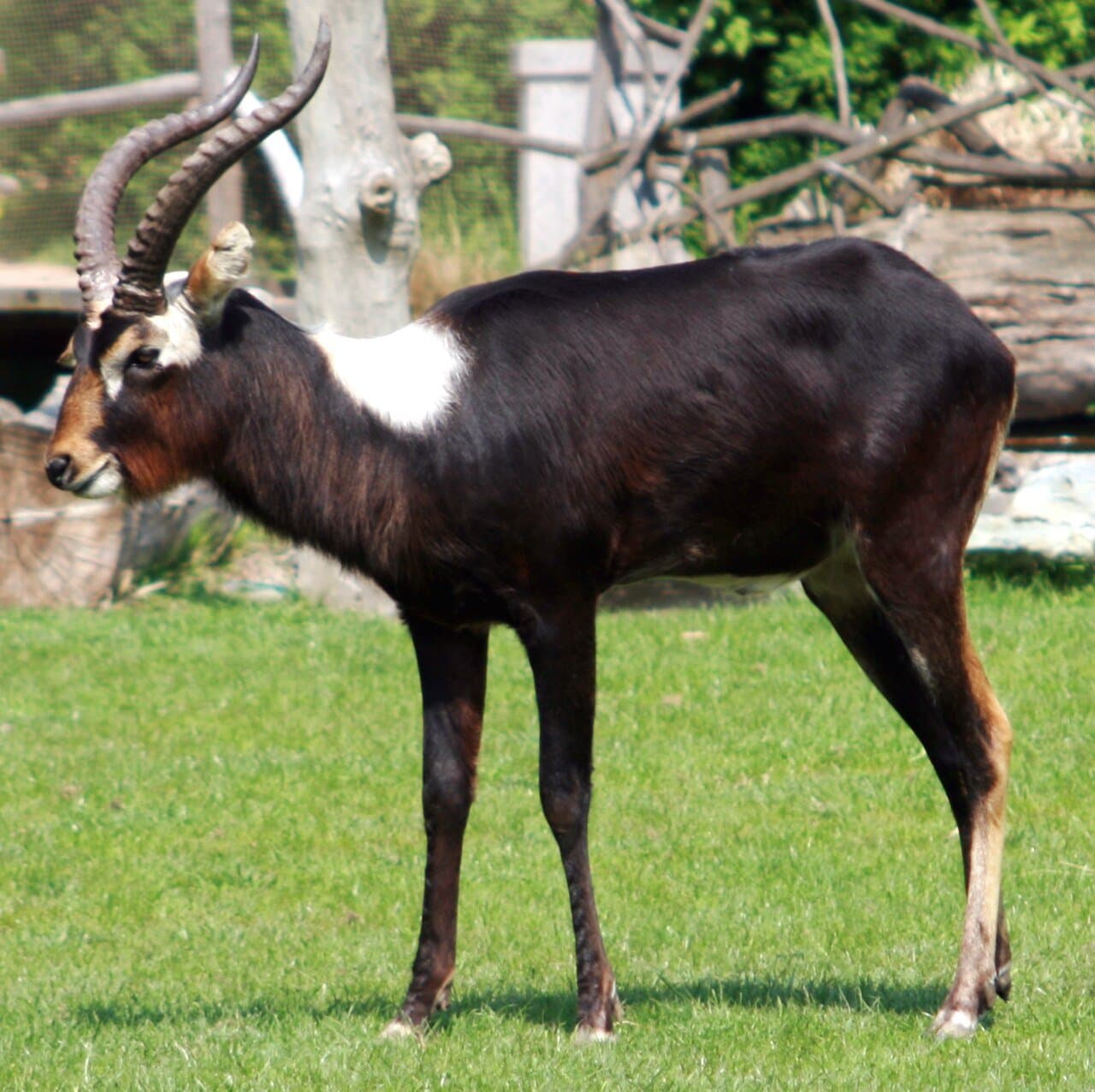 Nile LechweKobus megacerosAn endangered swamp antelope of South Sudan and Ethiopia whose dark males and golden females look like different animals.Sable AntelopeHippotragus nigerA large, powerful African antelope whose black males carry huge curved horns.Yellow-Backed DuikerCephalophus silvicultorThe largest of the forest duikers, a dark, shy African antelope with a bright yellow patch on its back.