
Yellow-Backed Duiker
Cephalophus silvicultor
The largest of the forest duikers, a dark, shy African antelope with a bright yellow patch on its back.
Checking teacher reviews…
About the Yellow-Backed Duiker
Yellow-backed duikers live in forests of western and central Africa, from Guinea-Bissau to Uganda and south to Angola and Zambia. They weigh 99 to 176 pounds and have black or brown coats with a yellow triangle on the back near the tail. Both sexes have short, cone-shaped horns. They eat mostly fruit, plus leaves, seeds, buds, bark and shoots.[1]
Quick facts
- Scientific name
- Cephalophus silvicultor[1]
- Size
- About 3.8 to 4.8 feet long.[1]
- Weight
- 99 to 176 pounds.[1]
- Lifespan
- About 10 to 12 years in the wild.[1]
- Diet
- Mostly fruit, plus leaves, seeds, buds, bark and shoots.[1]
- Habitat
- Forests with thick undergrowth.[1]
- Where it lives
- Western and central Africa.[1]
- Group life
- Solitary; rests by day and feeds at night.[1]
- Conservation status
- Near Threatened (IUCN Red List, assessed 2016).[2]
Fun facts
Vocabulary
- duiker
- A small to medium African antelope; the name means "diver" because it dives into bushes.
- frugivore
- An animal that eats mostly fruit.
- undergrowth
- Bushes and small plants growing under trees.
- territory
- An area an animal lives in and defends.
- near threatened
- A conservation label meaning a species may soon be at risk of dying out if things don't improve.
See it in person
- Omaha's Henry Doorly Zoo and AquariumOmaha, Nebraska · Hubbard Gorilla ValleySee this area on the zoo's website ↗
Sources
- [1] Animal Diversity Web, University of Michigan. “Yellow-backed duiker (Cephalophus silvicultor).” https://animaldiversity.org/accounts/Cephalophus_silvicultor/ (accessed 2026-10-02)
- [2] IUCN Red List of Threatened Species. “Cephalophus silvicultor (Yellow-backed Duiker).” https://www.iucnredlist.org/species/4150/50184147 (accessed 2026-10-02)
Facts last checked 2026-10-02.
More Antelopes
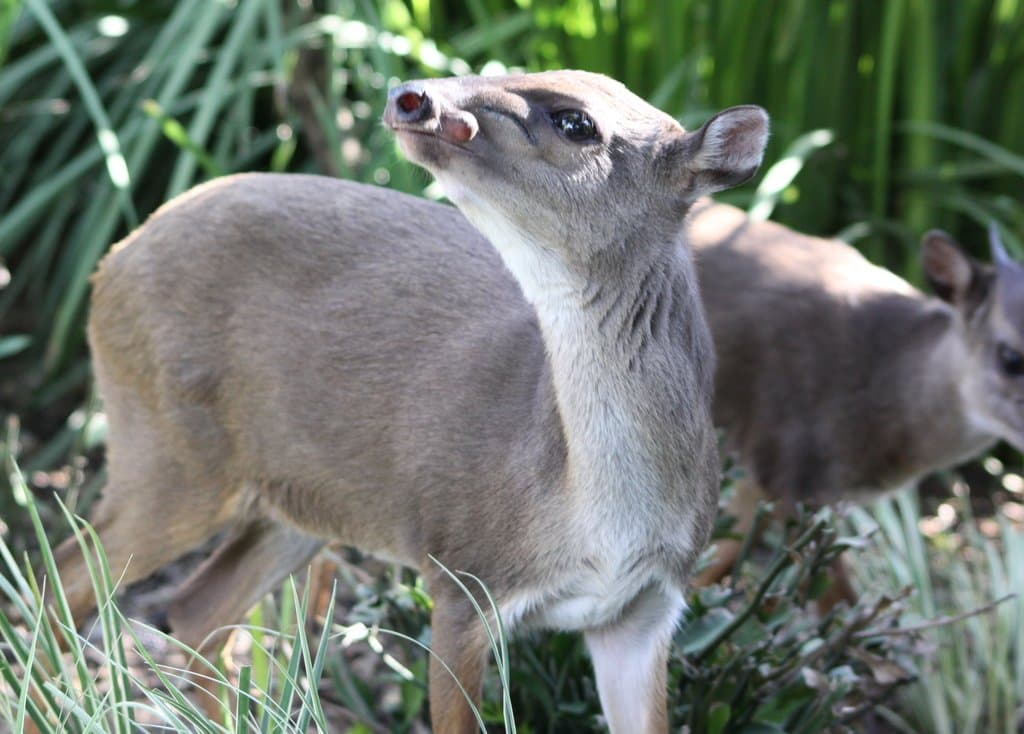 Blue DuikerPhilantomba monticolaA tiny forest antelope of central and southern Africa that weighs only 9 to 13 pounds and lives in pairs.
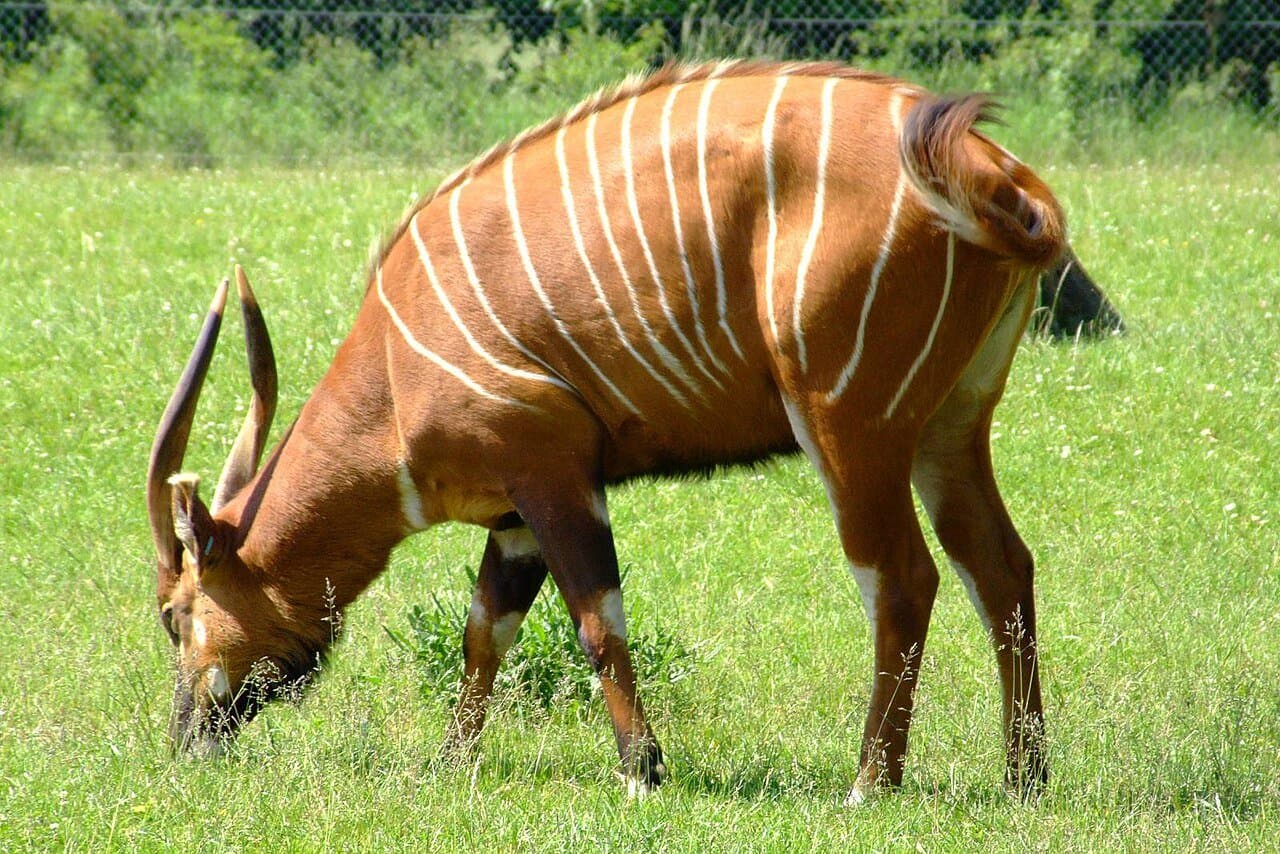 BongoTragelaphus eurycerusA large forest antelope of tropical Africa with 10 to 15 pale stripes down each side and horns up to 3 feet long.
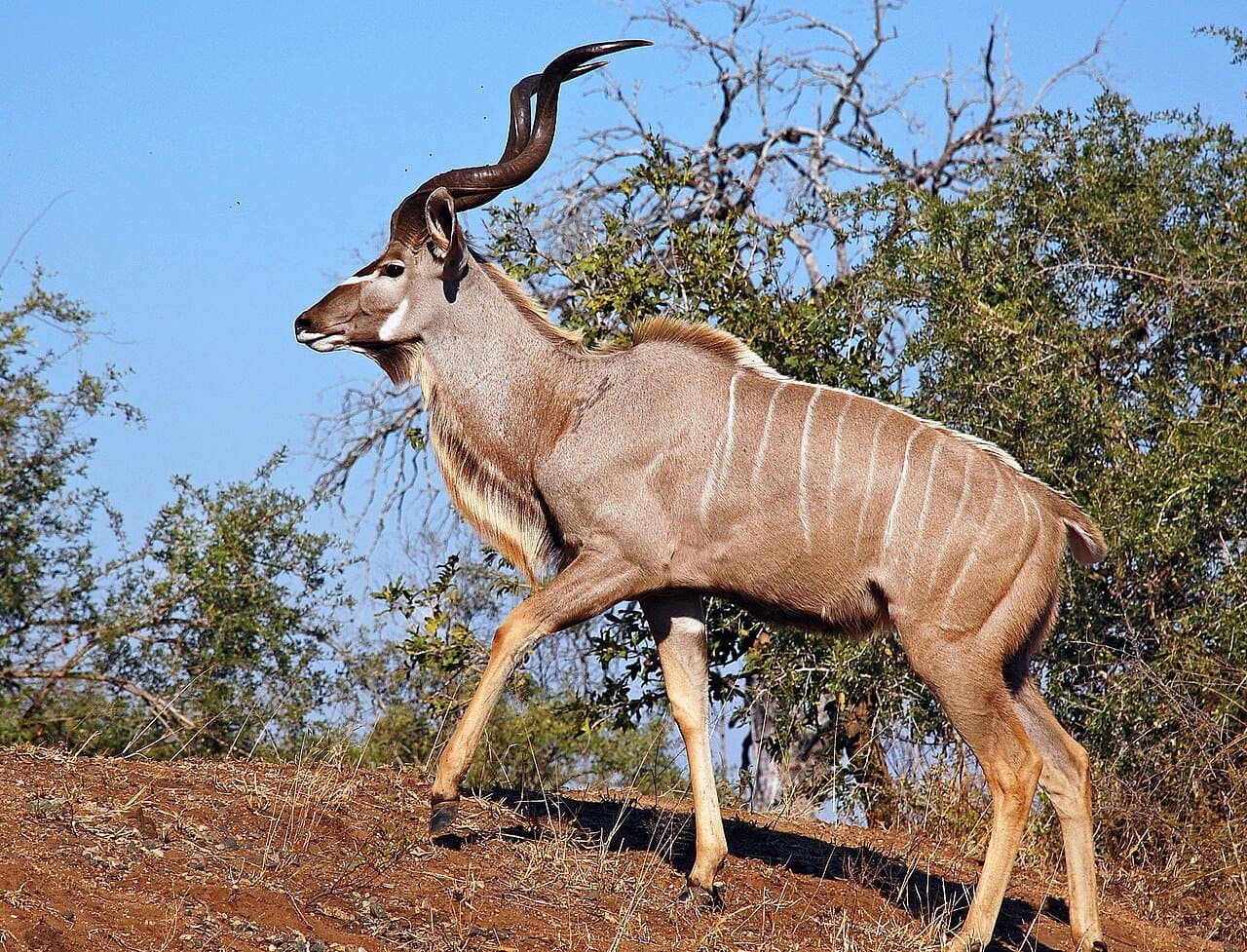 Greater KuduTragelaphus strepsicerosA large striped antelope of African woodlands whose males grow long, spiral horns with about two and a half twists.ImpalaAepyceros melampusA graceful reddish-brown African antelope whose males have long S-shaped horns.KlipspringerOreotragus oreotragusA small, sure-footed African antelope that hops from rock to rock on tiny hooves the size of a dime.
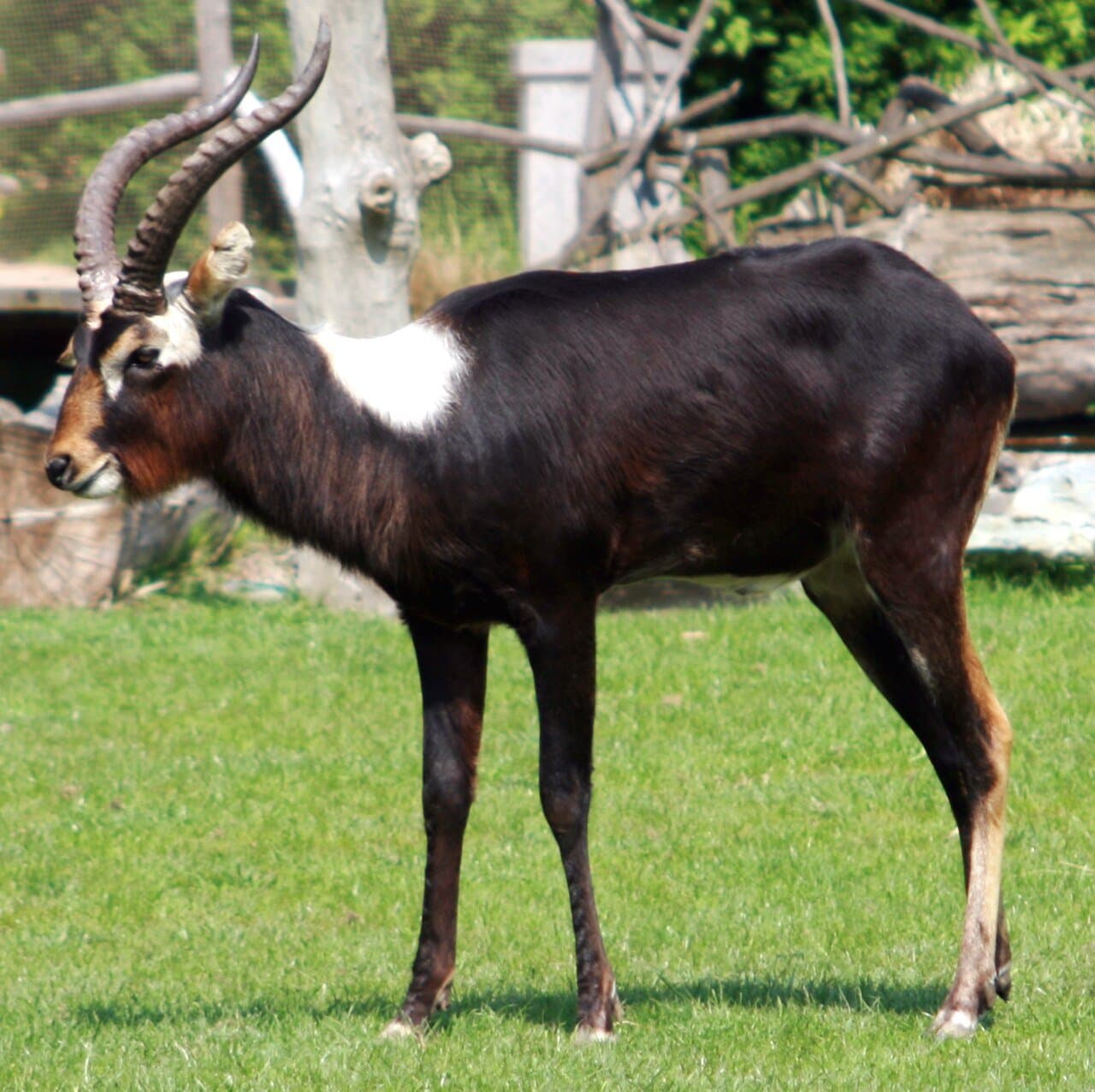 Nile LechweKobus megacerosAn endangered swamp antelope of South Sudan and Ethiopia whose dark males and golden females look like different animals.Sable AntelopeHippotragus nigerA large, powerful African antelope whose black males carry huge curved horns.