
Klipspringer
Oreotragus oreotragus
A small, sure-footed African antelope that hops from rock to rock on tiny hooves the size of a dime.
Checking teacher reviews…
About the Klipspringer
Klipspringers stand about 2 feet tall at the shoulder and weigh 22 to 40 pounds. Their stiff, hollow hairs give them a grizzled look and protect them from heat. Each hoof is about the size of a dime and works a little like a suction cup, so a klipspringer can jump onto a landing spot the size of a silver dollar. They live among rocky hills called kopjes and eat leaves, blossoms, fruit and lichen.[1]
Quick facts
- Scientific name
- Oreotragus oreotragus[1]
- Size
- About 2 feet tall at the shoulder.[1]
- Weight
- 22 to 40 pounds.[1]
- Diet
- Herbivore. Leaves, blossoms, fruit and lichen.[1]
- Habitat
- Rocky hills, kopjes, riverbeds and mountains up to 13,000 feet.[1]
- Where it lives
- Africa.[1]
- Group life
- Monogamous pairs or small family groups.[1]
- Conservation status
- Least Concern (IUCN Red List, assessed 2016).[2]
Fun facts
Vocabulary
- kopje
- A rocky hill that rises out of the flat African grassland (say "KOP-ee").
- antelope
- A fast, hoofed, horned animal related to cattle and goats.
- sentinel
- An animal that keeps watch for danger while others eat or rest.
- browse
- Leaves and twigs that animals eat from bushes and trees.
- least concern
- A conservation label meaning a species is widespread and not at risk of dying out soon.
See it in person
- Omaha's Henry Doorly Zoo and AquariumOmaha, Nebraska · Scott African GrasslandsSee this area on the zoo's website ↗
Sources
- [1] San Diego Zoo Wildlife Alliance. “Klipspringer.” https://animals.sandiegozoo.org/animals/klipspringer (accessed 2026-10-02)
- [2] IUCN Red List of Threatened Species. “Oreotragus oreotragus (Klipspringer).” https://www.iucnredlist.org/species/15485/50191264 (accessed 2026-10-02)
Facts last checked 2026-10-02.
More Antelopes
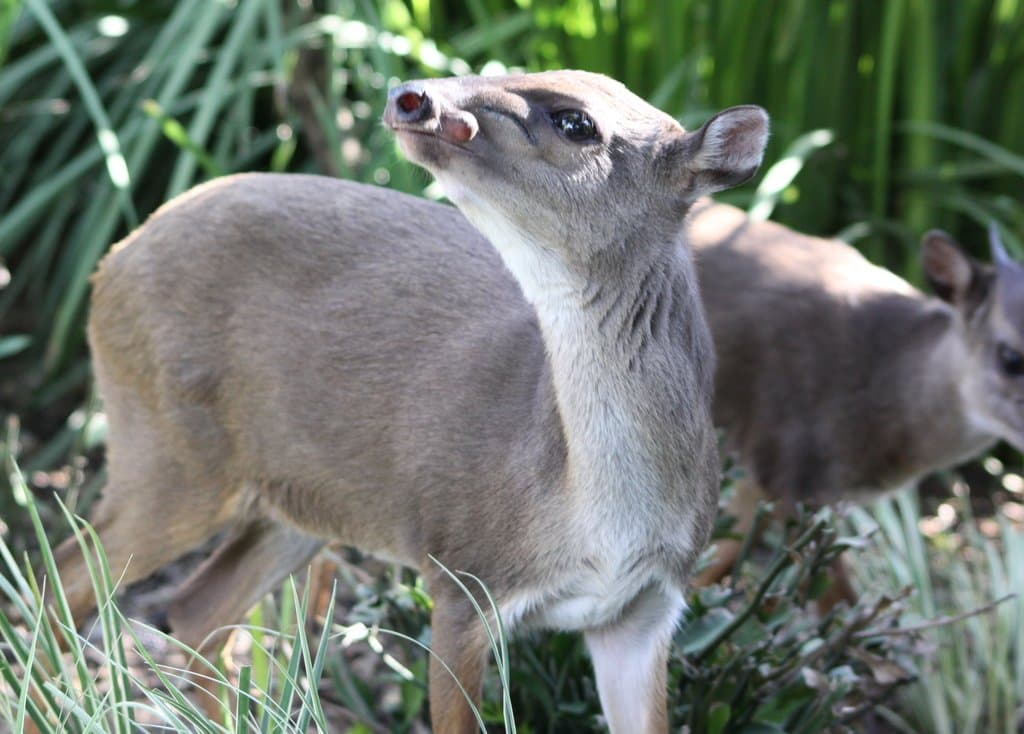 Blue DuikerPhilantomba monticolaA tiny forest antelope of central and southern Africa that weighs only 9 to 13 pounds and lives in pairs.
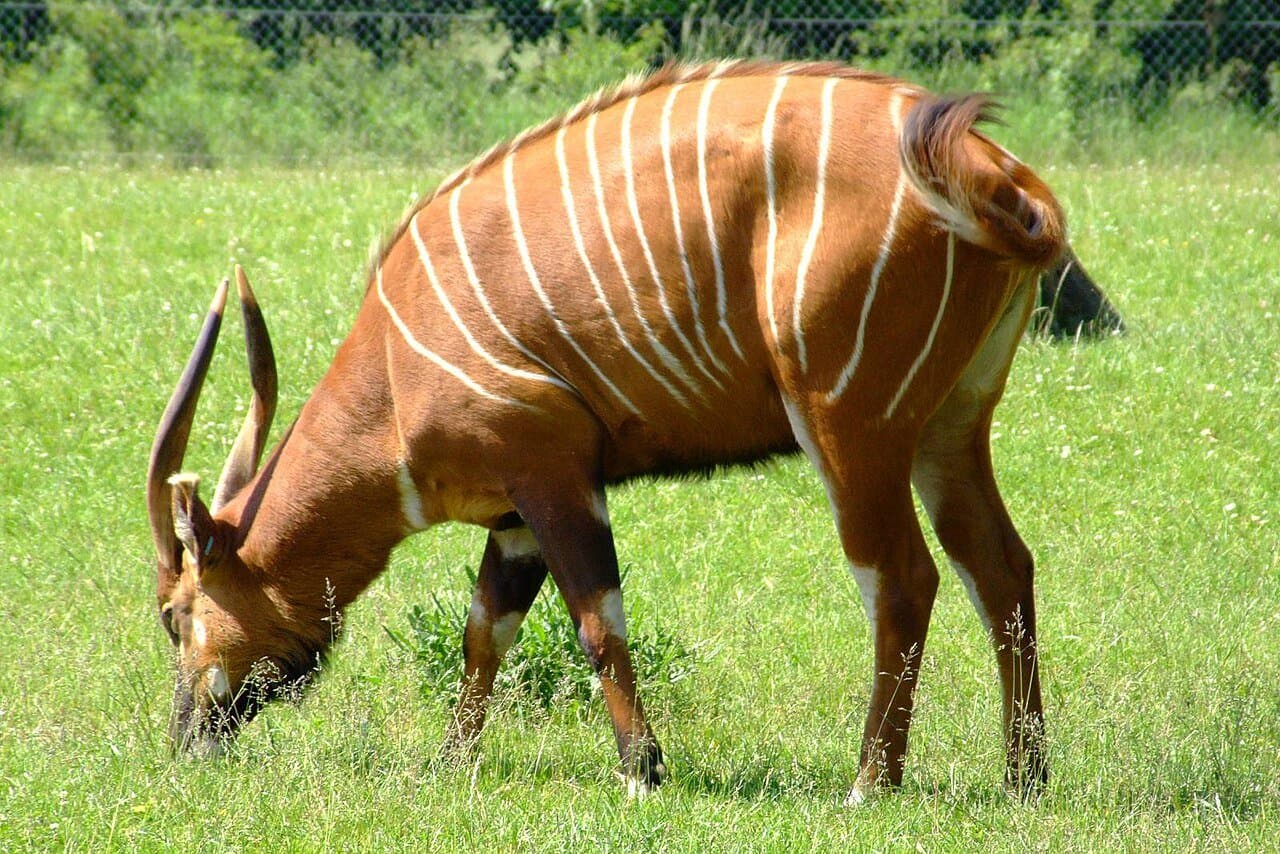 BongoTragelaphus eurycerusA large forest antelope of tropical Africa with 10 to 15 pale stripes down each side and horns up to 3 feet long.
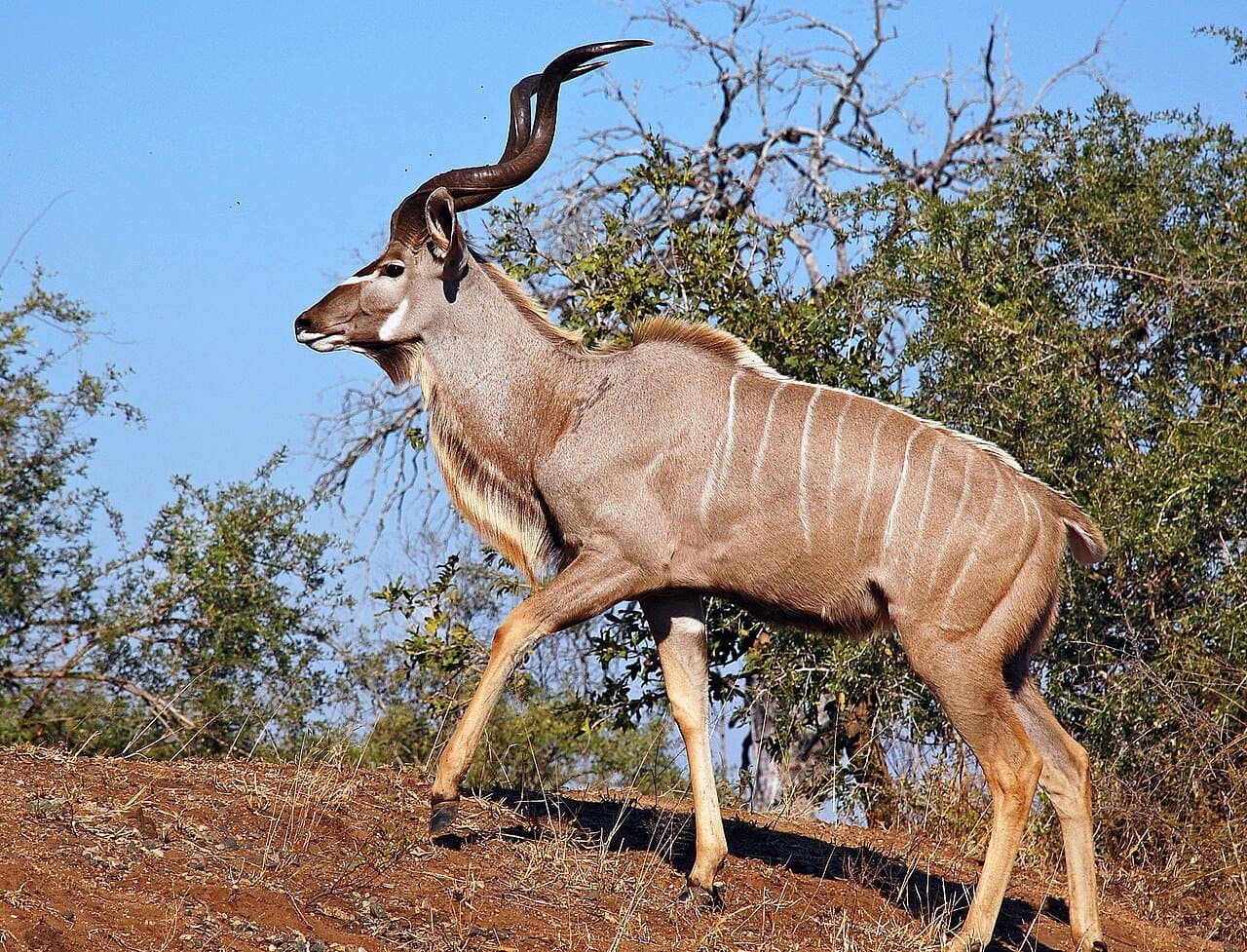 Greater KuduTragelaphus strepsicerosA large striped antelope of African woodlands whose males grow long, spiral horns with about two and a half twists.ImpalaAepyceros melampusA graceful reddish-brown African antelope whose males have long S-shaped horns.
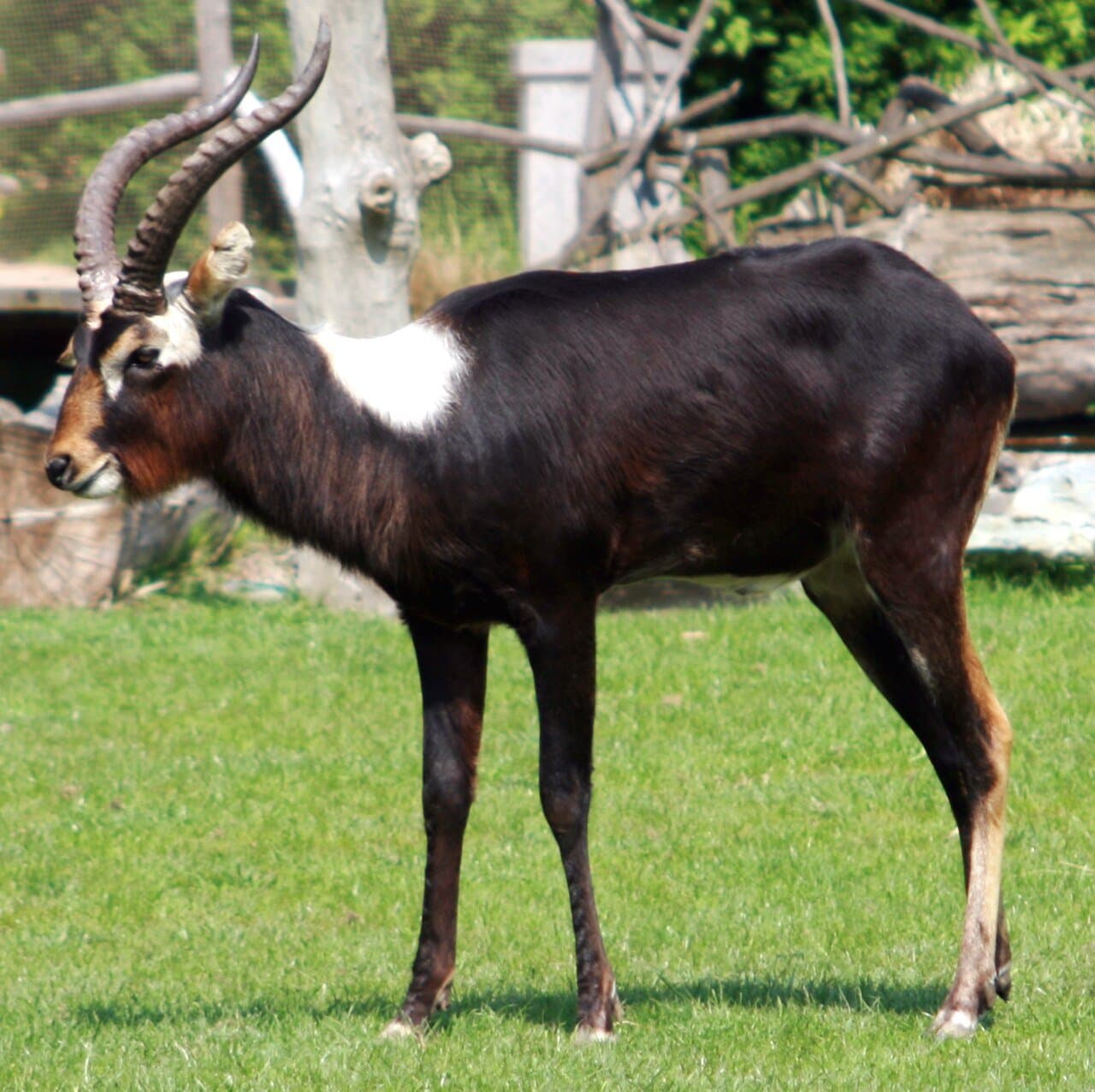 Nile LechweKobus megacerosAn endangered swamp antelope of South Sudan and Ethiopia whose dark males and golden females look like different animals.Sable AntelopeHippotragus nigerA large, powerful African antelope whose black males carry huge curved horns.Yellow-Backed DuikerCephalophus silvicultorThe largest of the forest duikers, a dark, shy African antelope with a bright yellow patch on its back.